Understanding measurements Worksheets for Ages 5-8 - Page 2
28 filtered results
-
From - To
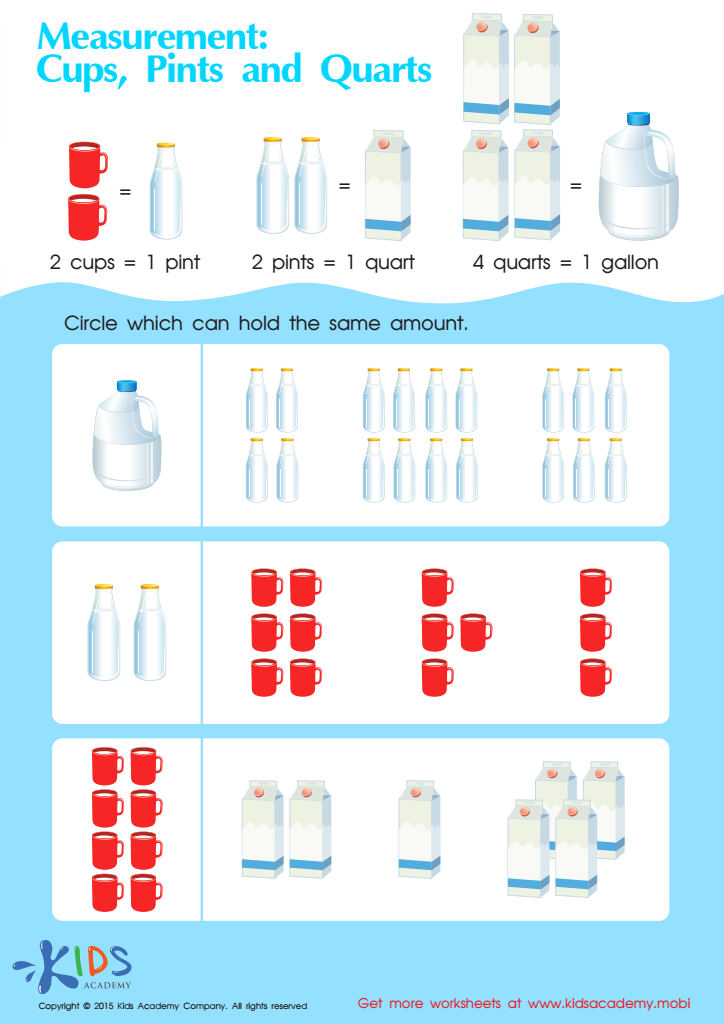
Cups, Pints and Quarts 2 Worksheet
 Assign to My Students
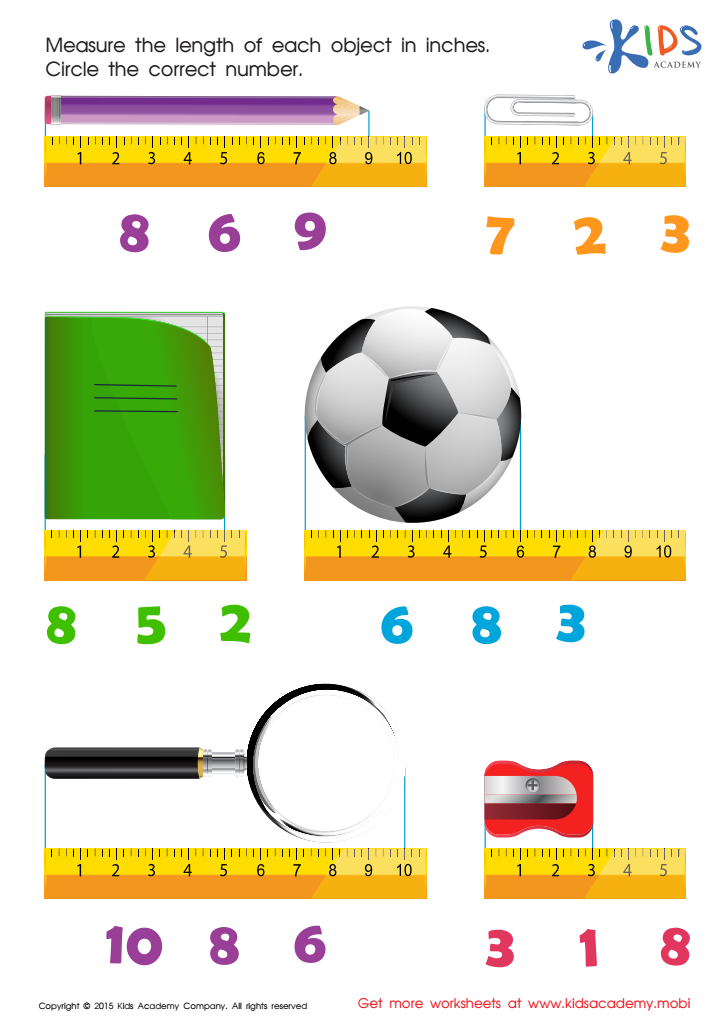
Learning measuring objects in inches Worksheet
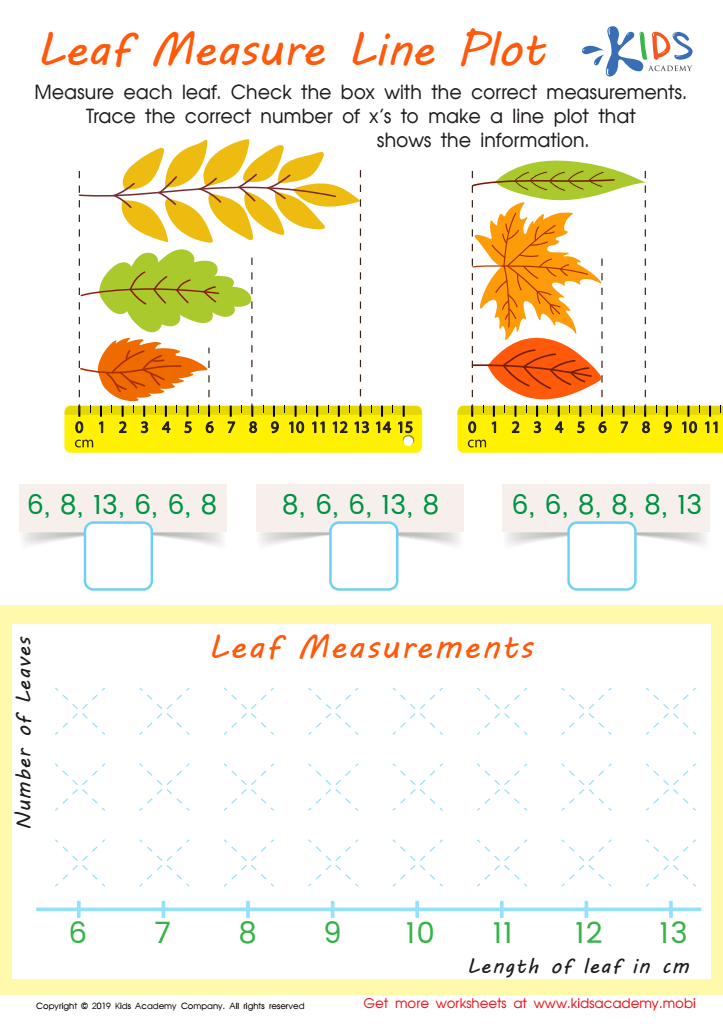
Leaf Measure Line Plot Worksheet
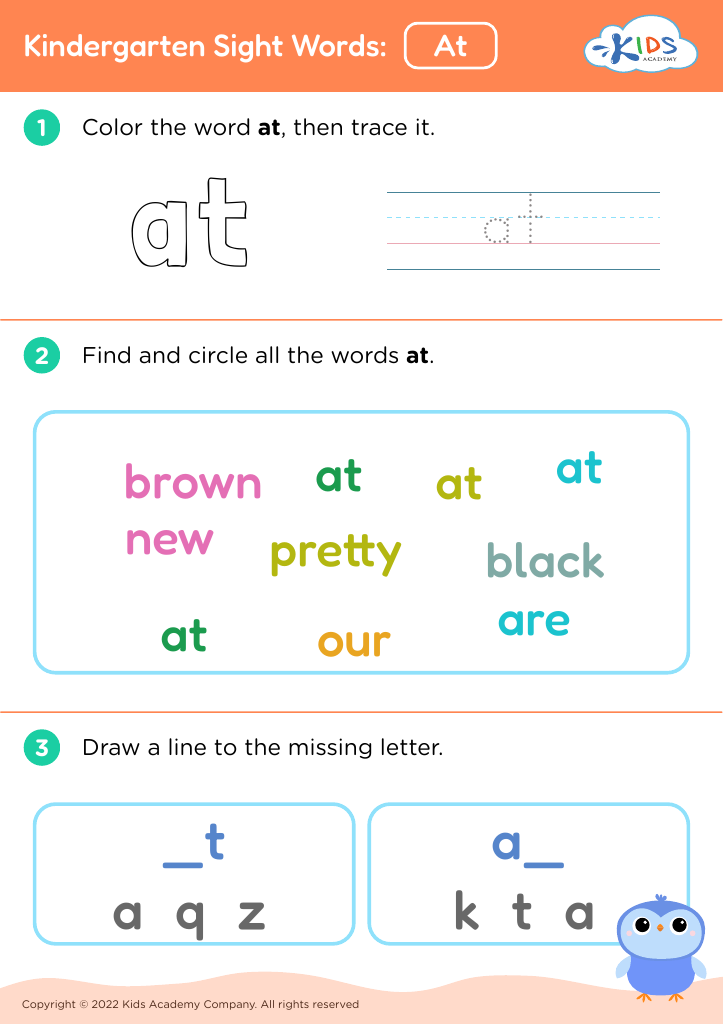



.jpg)


Understanding measurements is essential for children ages 5-8, as it lays the groundwork for crucial mathematical and practical skills. At this early stage, children are naturally curious, making it an ideal time for them to explore concepts like length, weight, volume, and time. By engaging with measurements, children develop critical thinking abilities and improve their problem-solving skills, as they learn to use tools like rulers and scales.
Measurements also enhance children's everyday life experiences. For instance, when cooking with a parent, children can practice using cups and teaspoons, linking math to real-life situations. This not only makes learning fun but helps them understand the practical applications of mathematics in daily tasks.
Moreover, understanding measurements supports the development of spatial awareness and encourages children to express their ideas more accurately. Teachers and parents who emphasize measurement can foster a lifelong appreciation for math and science. This foundational knowledge instills confidence, paving the way for more complex concepts later on. Ultimately, by prioritizing measurements in early education, we equip children with vital skills that will benefit them academically and in practical contexts throughout their lives.








