Understanding number sequence Worksheets for Ages 5-8
8 filtered results
-
From - To
Discover the perfect tools to help young learners master number sequences with our "Understanding Number Sequence Worksheets for Ages 5-8". Designed by educational experts, these engaging worksheets empower children to recognize and predict numerical patterns, enhancing their confidence in mathematics. Perfect for both classroom and home use, each printable worksheet features fun, interactive activities crafted to strengthen counting skills and logical thinking. Tailored to meet varying levels of ability, these exercises ensure that every child progresses at their own pace. Explore our vibrant collection today and set the foundation for future mathematical success with Kids Academy!
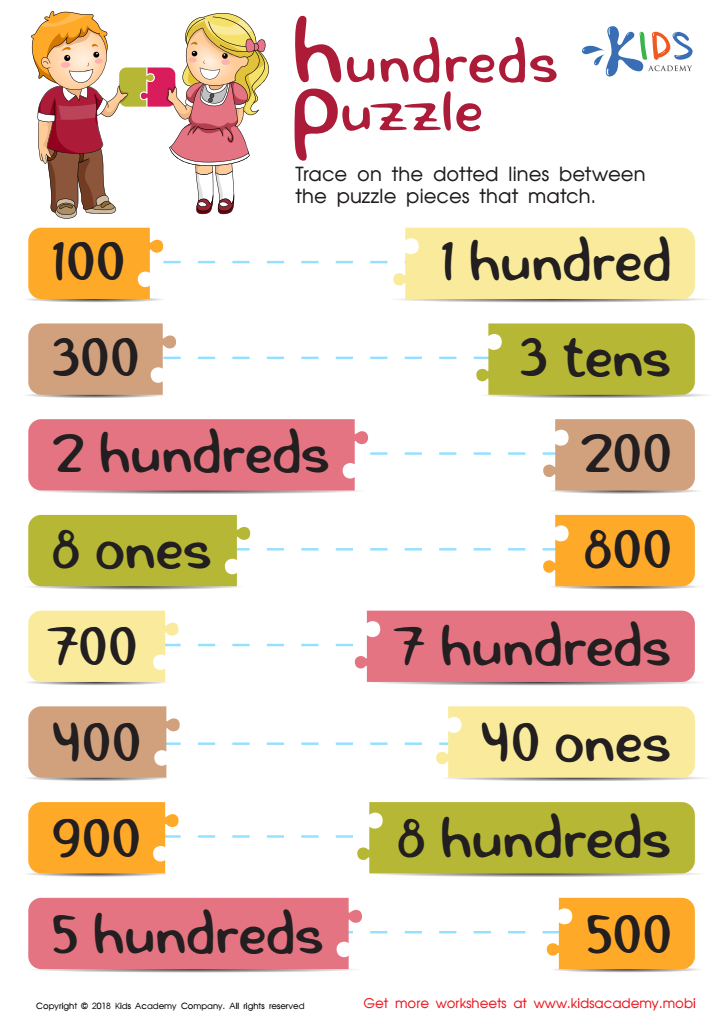
Hundreds Puzzle Worksheet
 Assign to My Students
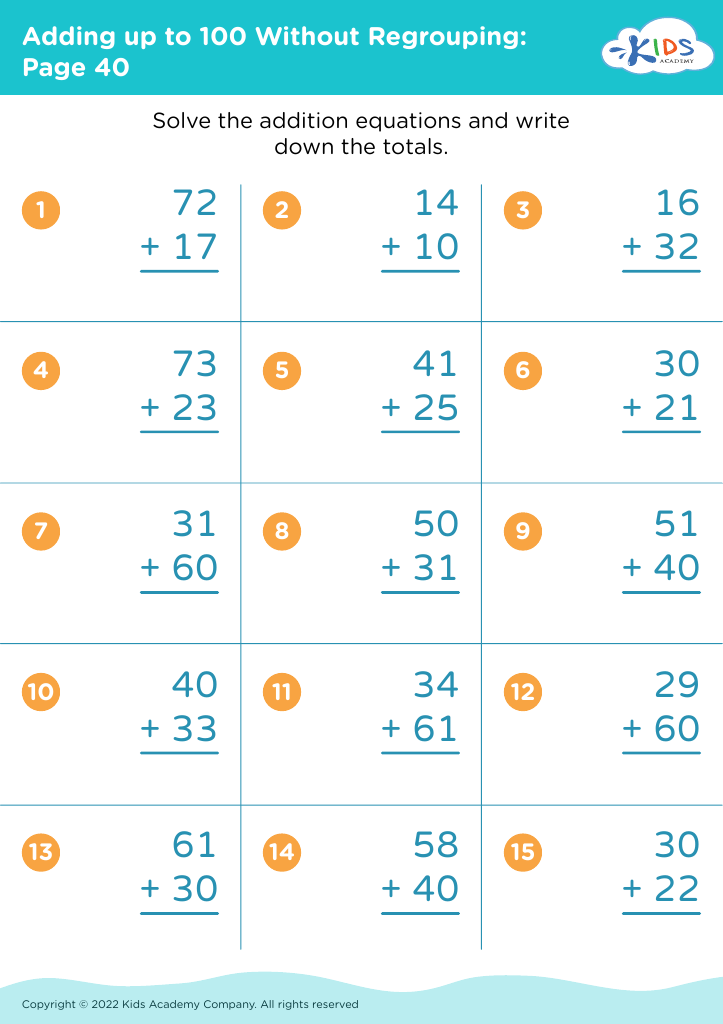
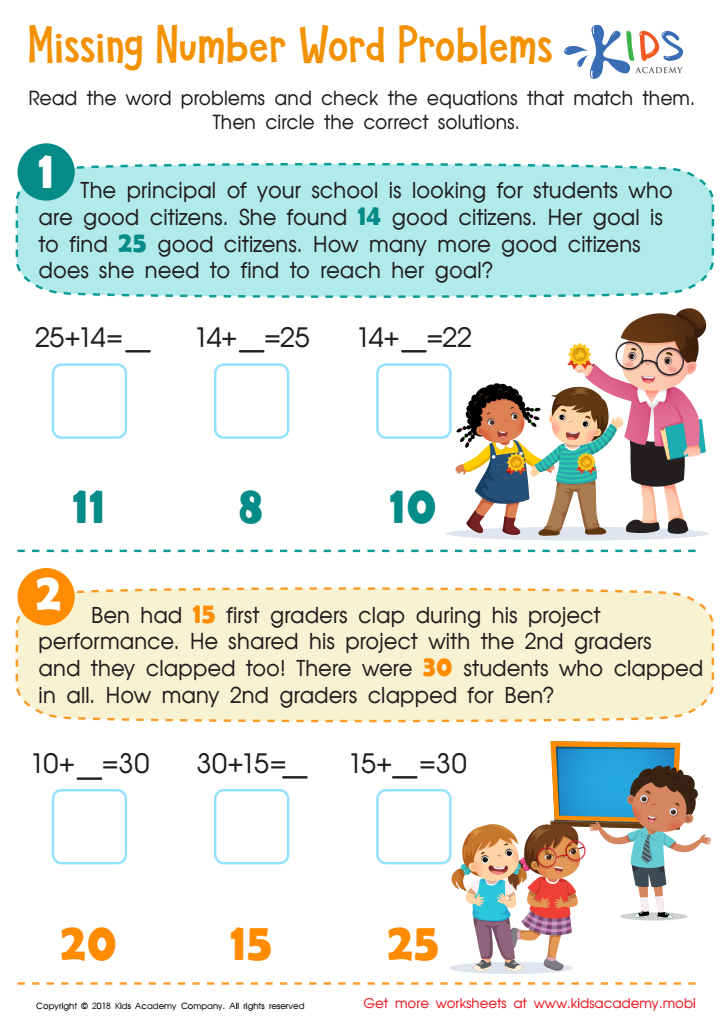
Missing Number Word Problems Worksheet
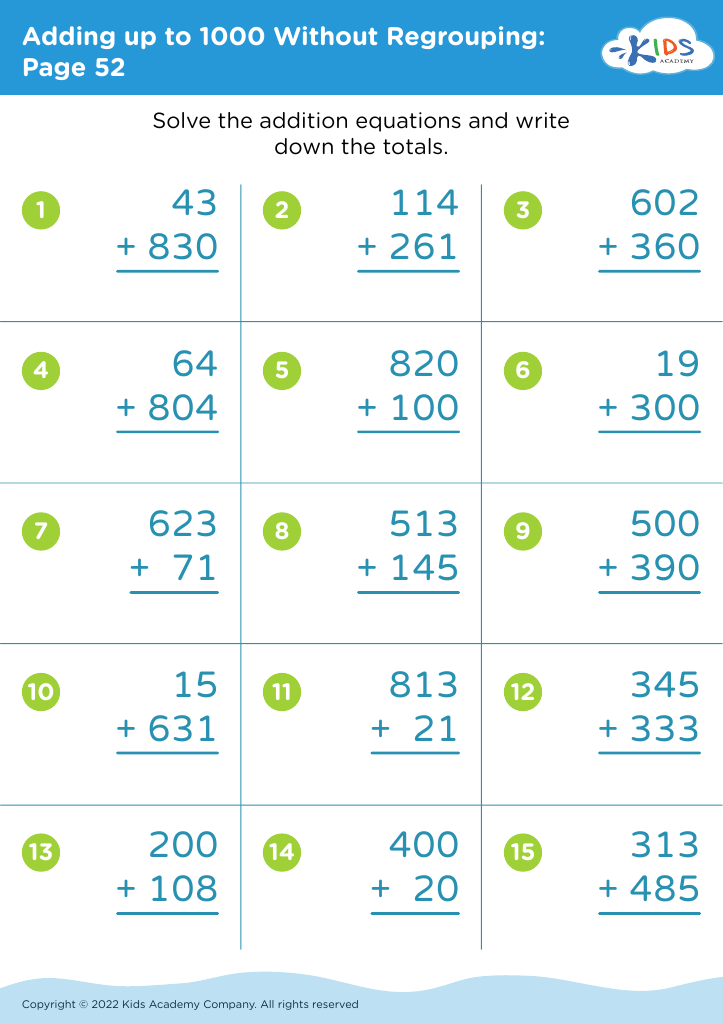
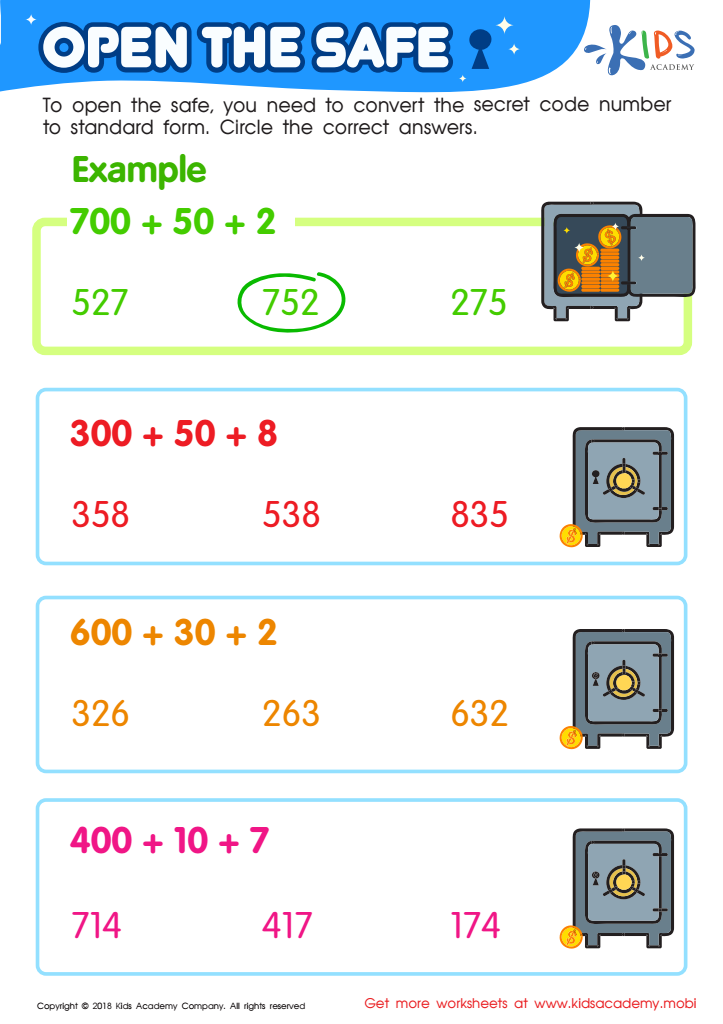
Open the Safe Worksheet
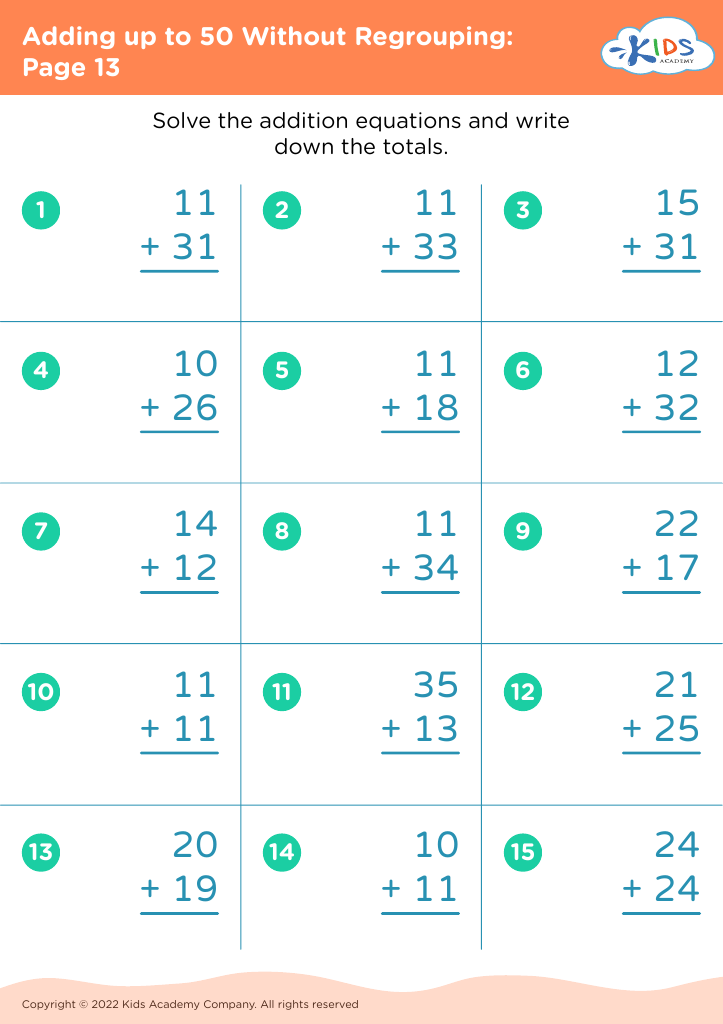
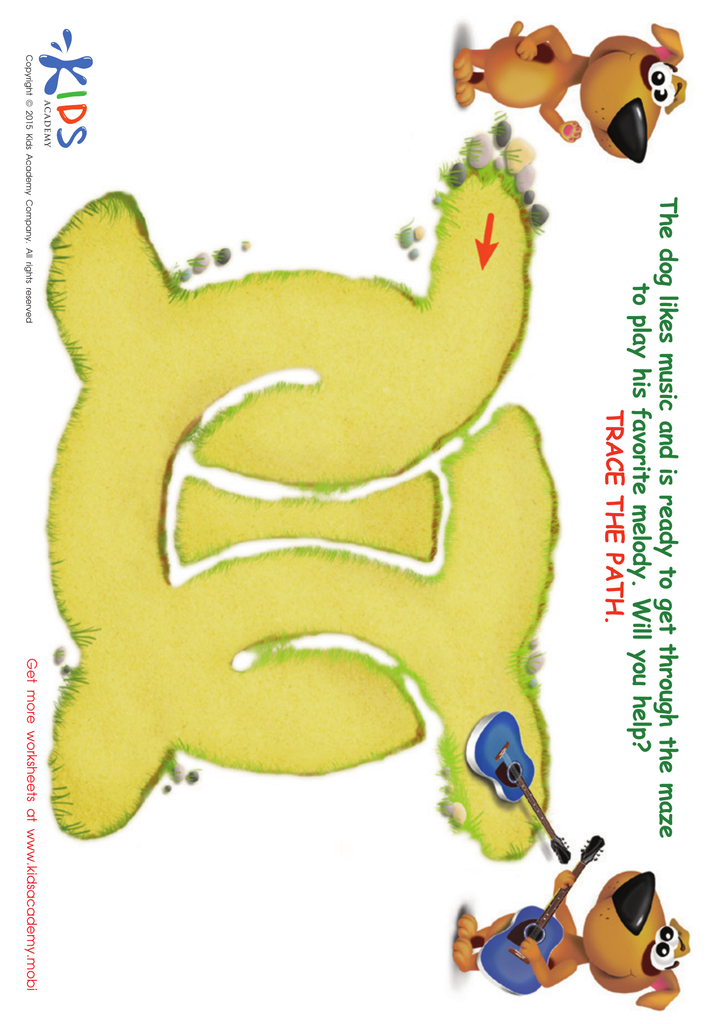
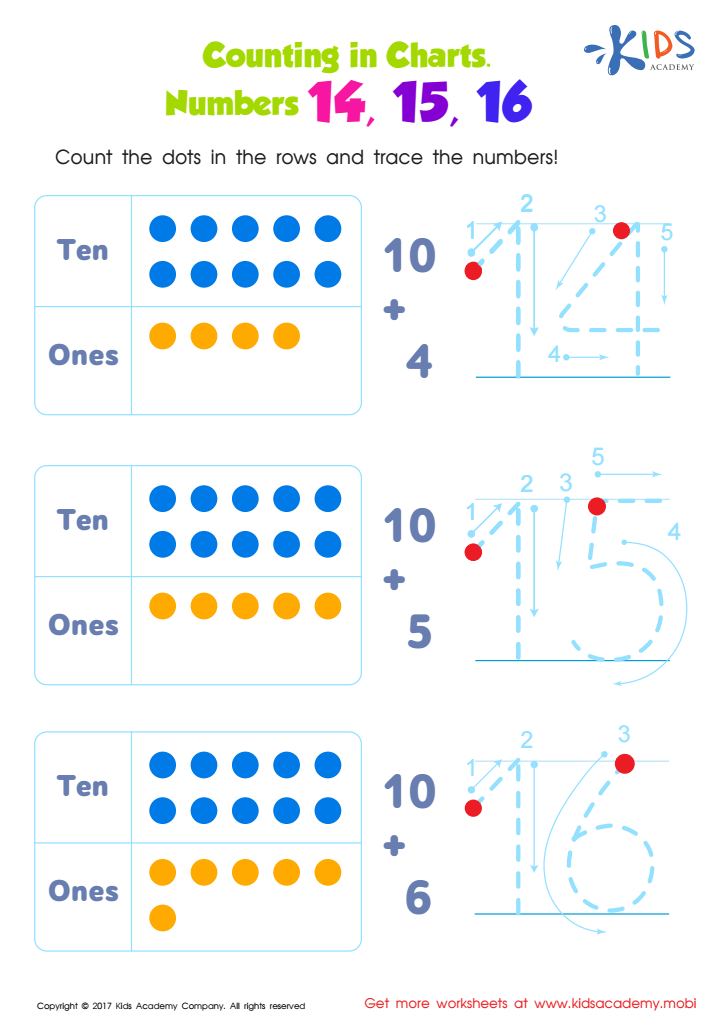
Number Tracing Worksheet








Understanding number sequences is foundational for young children ages 5-8 because it serves as a building block for more advanced mathematical concepts. At this critical developmental stage, children are establishing numerical literacy, which is essential for their future academic success.
Firstly, recognizing number sequences helps children understand the concept of order and the relative positioning of numbers, which is vital when performing tasks such as counting, addition, and subtraction. If children grasp that numbers follow a specific sequence, they can more easily predict what comes next, laying the groundwork for more complex problem-solving skills.
Secondly, number sequences enhance pattern recognition, which is a key cognitive skill not just in mathematics, but also in literacy and scientific thinking. Patterns allow children to make educated guesses and identify relationships among numbers, fostering both logical reasoning and creativity.
Moreover, familiarity with number sequences aids in developing fluency in basic arithmetic. This fluency is akin to learning letter sounds in reading; once mastered, children can decode more complicated 'mathematical stories' or problems with greater ease.
Finally, understanding number sequences instills confidence and fosters a positive attitude towards mathematics. Early successes in grasping these sequences bolster children's self-esteem and encourage a growth mindset, which is that abilities can be developed through dedication and hard work. Effective parent and teacher support in mastering these sequences can thus play a profound role in a child's long-term educational journey.








