Understanding pollination Worksheets for Ages 5-8
4 filtered results
-
From - To
Explore our "Understanding Pollination Worksheets" designed for children ages 5-8! These engaging resources help young learners grasp the essential process of pollination in a fun and interactive way. Our worksheets feature colorful illustrations and simple activities that explain how plants reproduce and the vital role of pollinators like bees and butterflies. Each worksheet encourages creativity and critical thinking, making it perfect for classroom or home use. Foster a love for nature and science in your child while reinforcing important learning skills. Download and watch them enjoy discovering the wonders of pollination today! Perfect for early grade educators and parents alike.
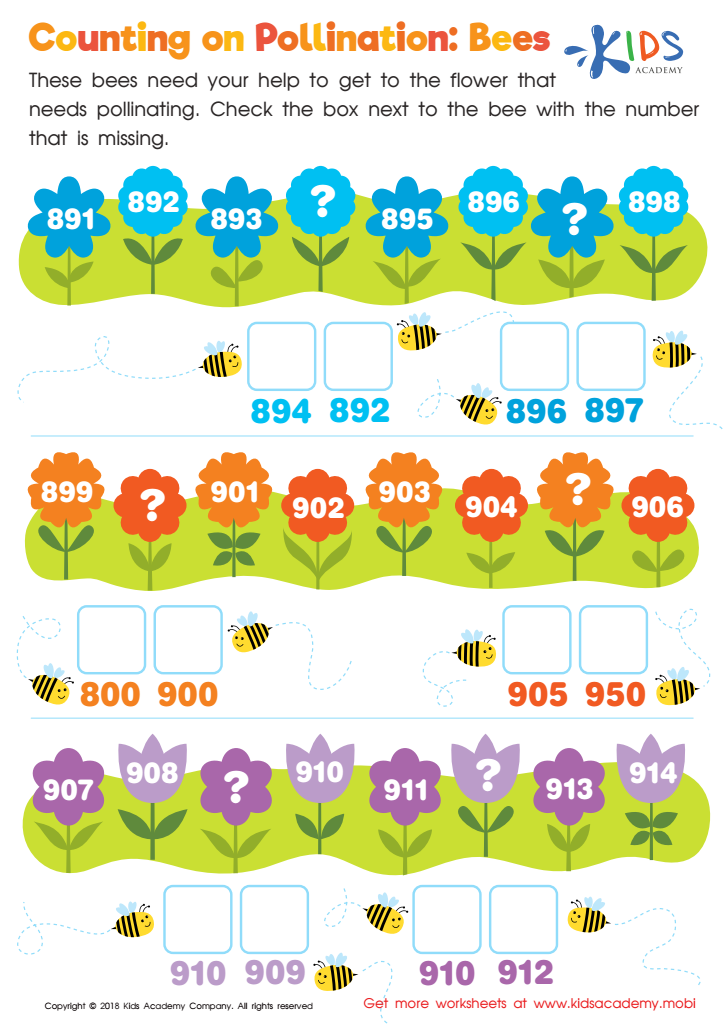
Counting on Pollination: Bees Worksheet
 Assign to My Students
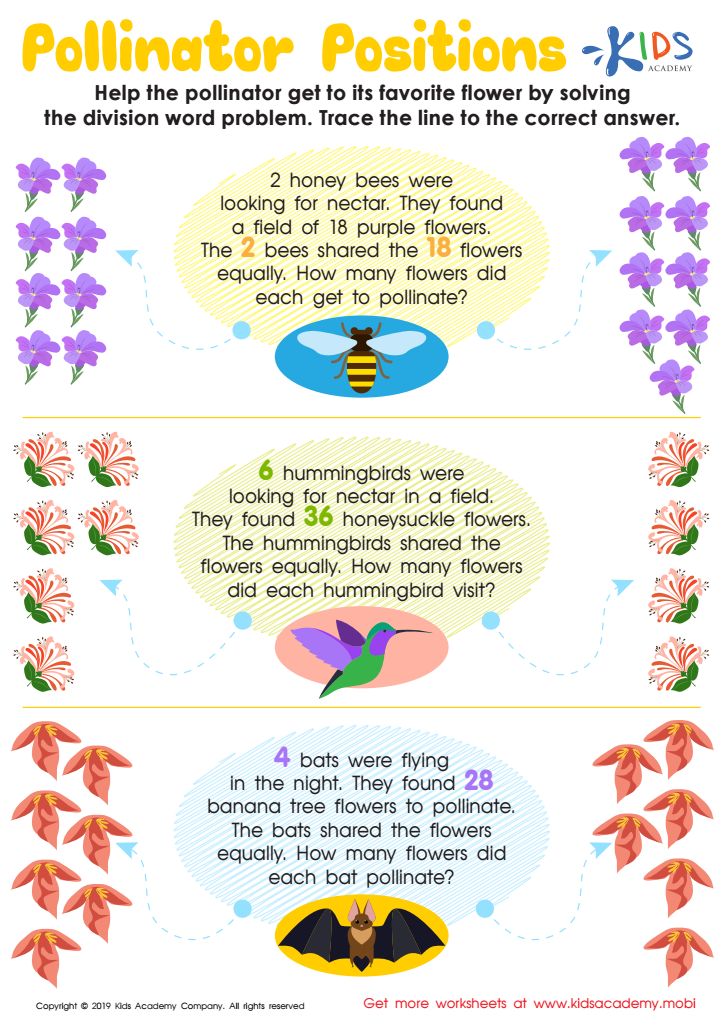
Pollinator Positions Worksheet
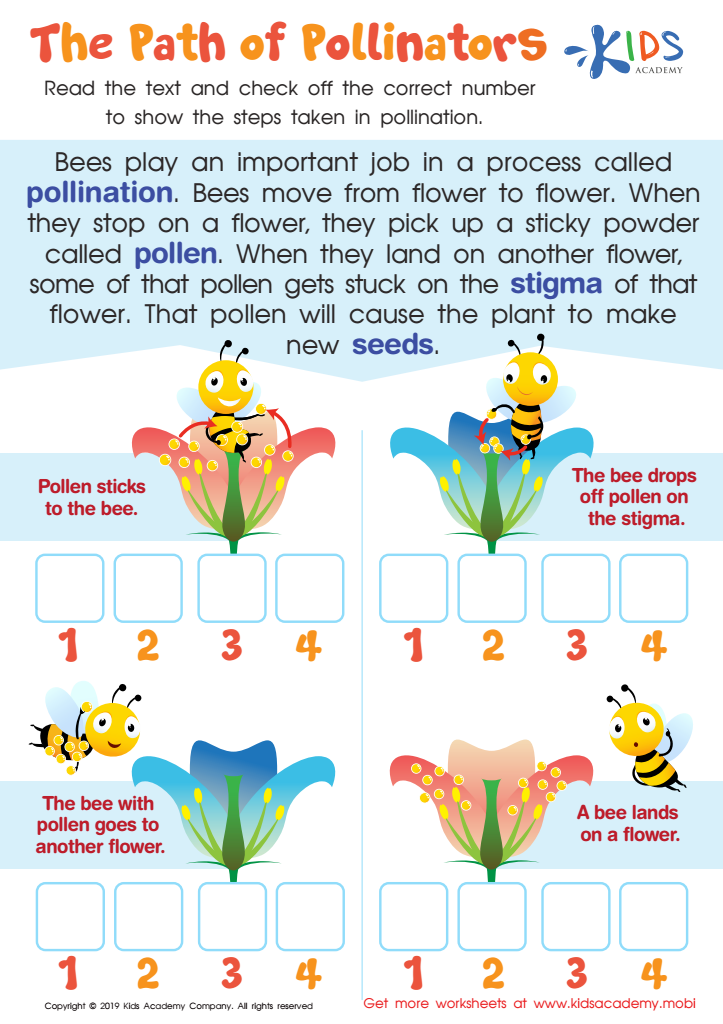
The Path of Pollinators Worksheet
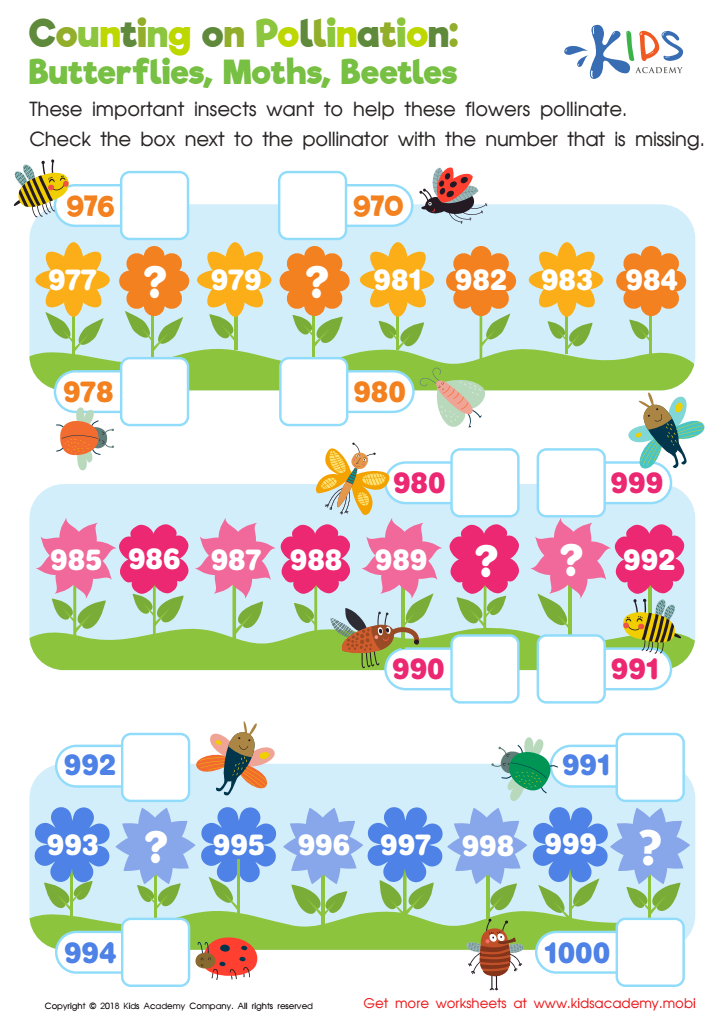
Counting on Pollination: Butterflies, Moths, Beetles Worksheet







.jpg)
Understanding pollination is crucial for children aged 5-8, as it deeply connects them to the natural world and reinforces essential concepts in science. For parents and teachers, cultivating knowledge about pollination offers multifaceted benefits. First, it introduces young learners to the importance of plants and their reproduction, highlighting how flowers, bees, butterflies, and other pollinators work together in ecosystems. This knowledge fosters curiosity about nature, encouraging outdoor exploration and observation.
Moreover, learning about pollination provides a foundation for discussions on biodiversity, environmental stewardship, and food sources—key topics in today’s world. Children become aware of how plants support life by producing oxygen and food, promoting healthy eating habits while also understanding their contributions to the food chain.
Empowering children with this knowledge helps them develop critical thinking skills and empathy for living creatures. It lays the groundwork for a generation that appreciates the delicate balance of ecosystems, nurturing future advocates for ecological conservation. Overall, teaching kids about pollination not only impacts their academic journey but also instills values of care, responsibility, and curiosity about the environment. In fostering this understanding, parents and teachers promote a lifelong appreciation for nature and science.








