Understanding prefixes Worksheets for Ages 5-8
8 filtered results
-
From - To
Discover the joy of learning with our "Understanding Prefixes Worksheets for Ages 5-8"! Tailored to young learners, these engaging worksheets help children grasp how prefixes alter word meanings. Through fun and educational activities, kids will explore common prefixes like "un-", "re-", and "pre-", broadening their vocabulary and boosting their reading skills. These printables are perfect for classroom use or at-home practice, offering a foundation for future linguistic success. Parents and educators will love how these worksheets make learning prefixes enjoyable and interactive, setting children on a path to becoming confident and proficient readers and writers. Explore today!
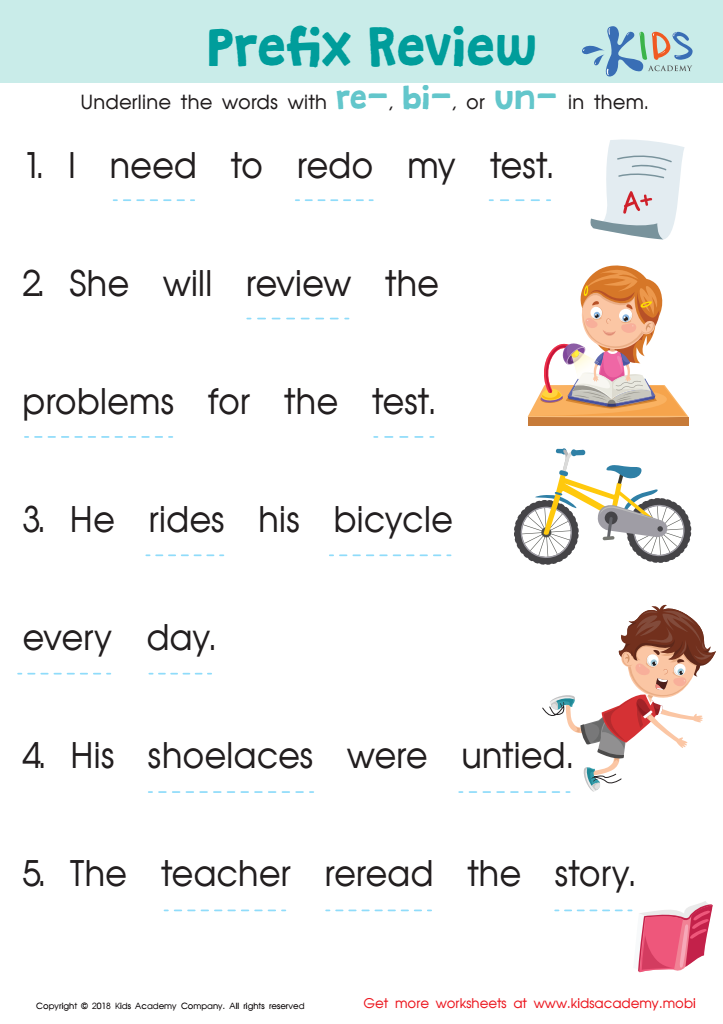
Prefix Review Worksheet
 Assign to My Students
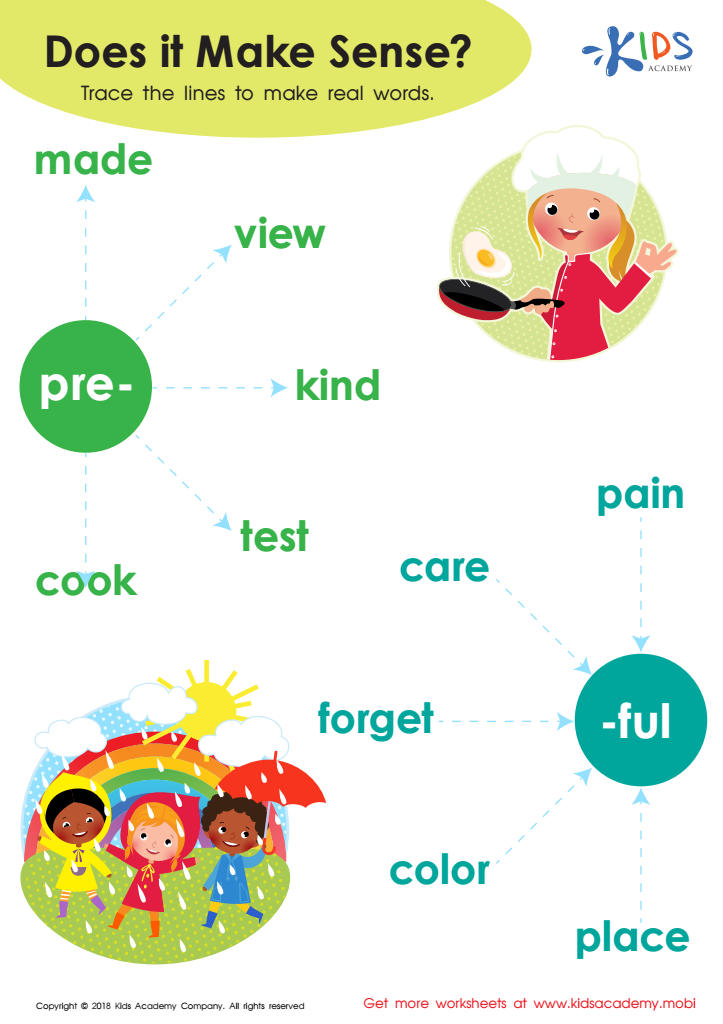
Prefix pre– and Suffix ful– Worksheet
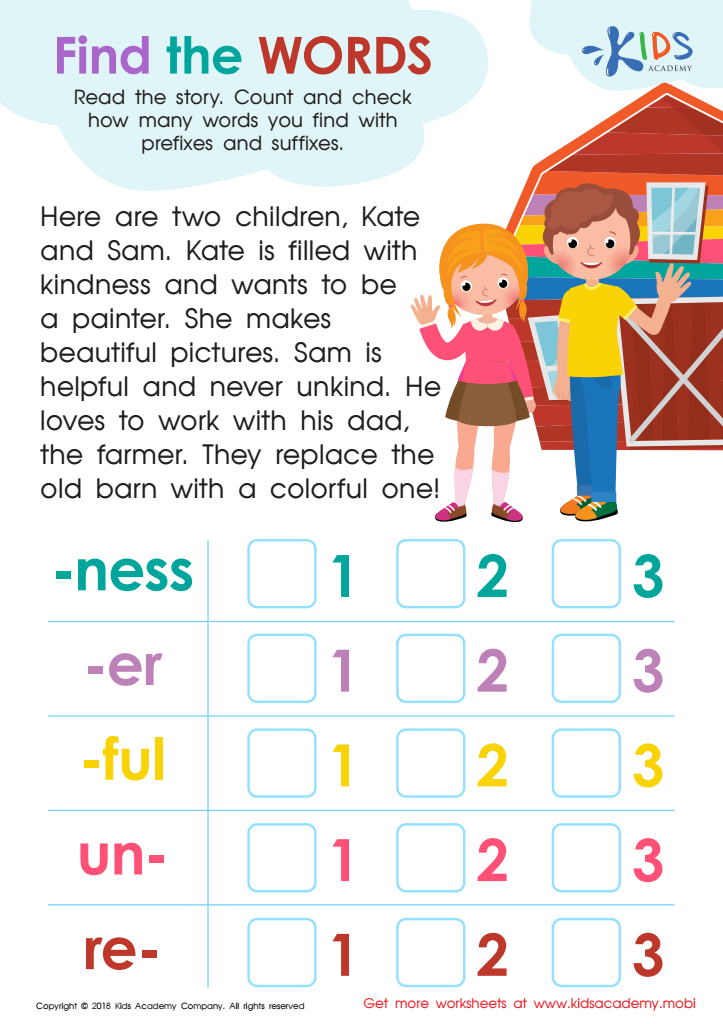
Prefix and Suffix Worksheet For Grade 3
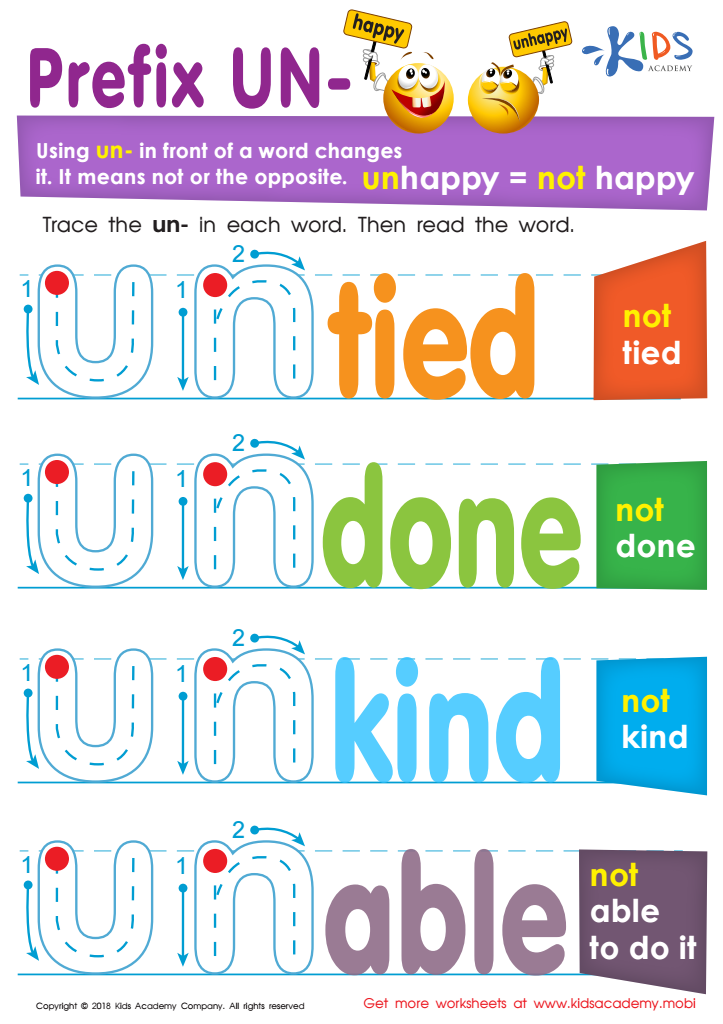
Prefix Un- Worksheet
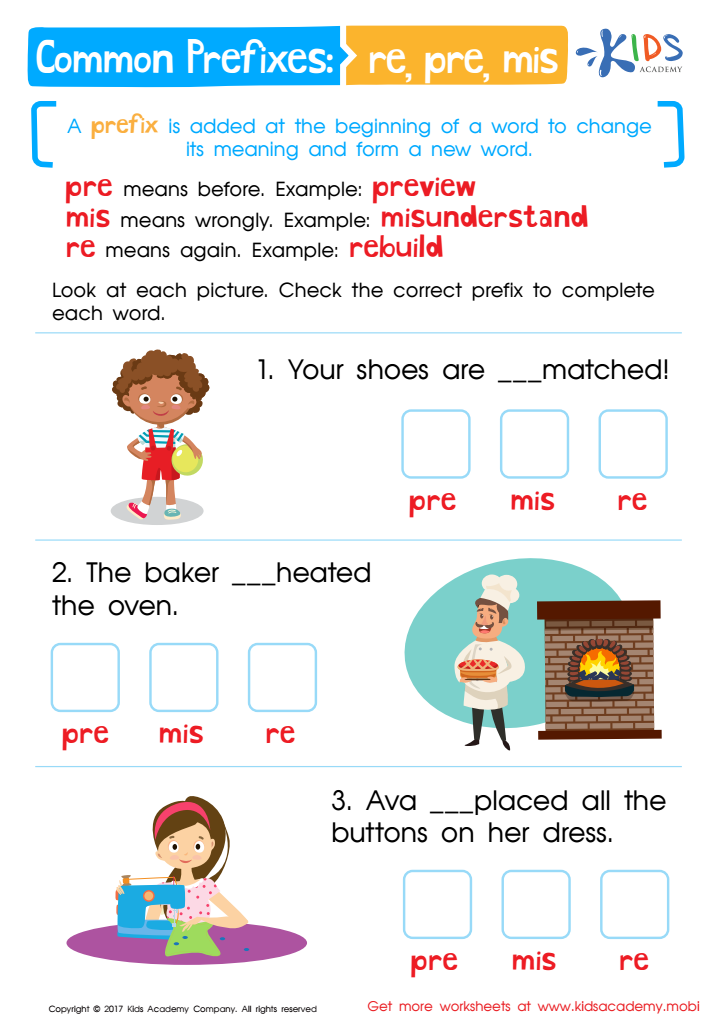
Common Prefixes Worksheet: RE, PRE, MIS
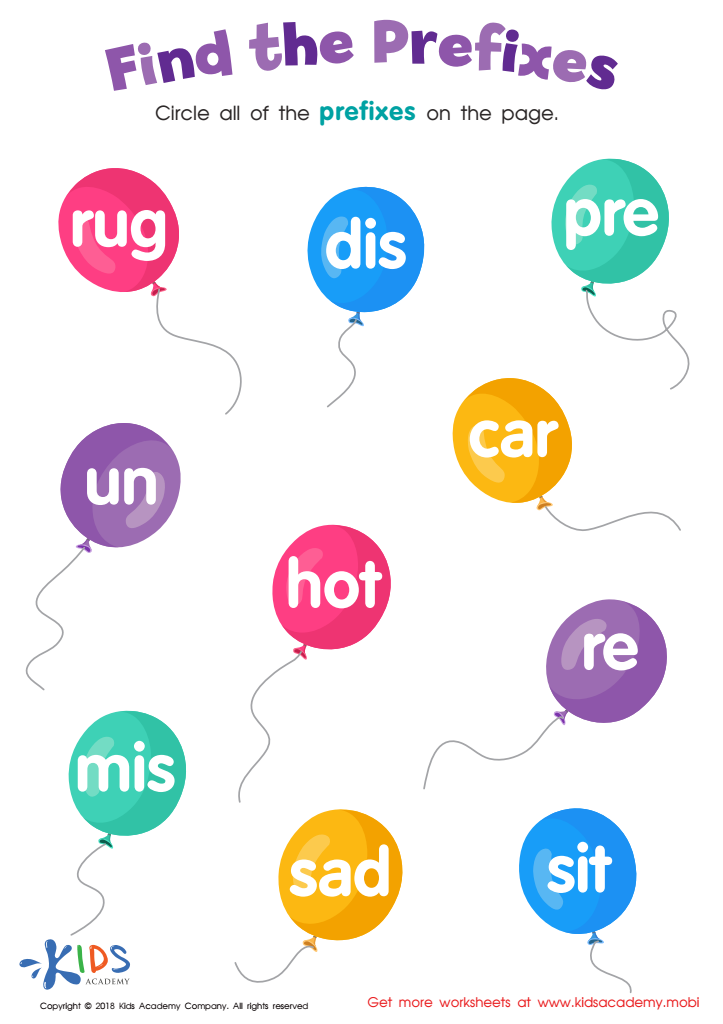
Reading: Find the Prefixes Worksheet
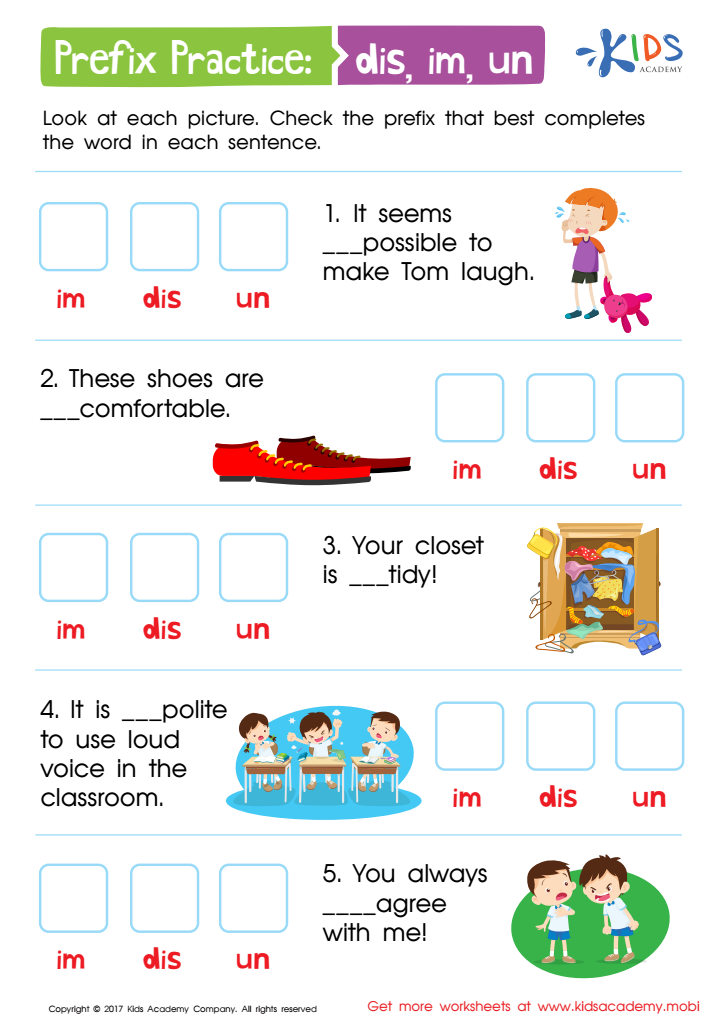
Prefix Practice Worksheet: DIS, IM, UM
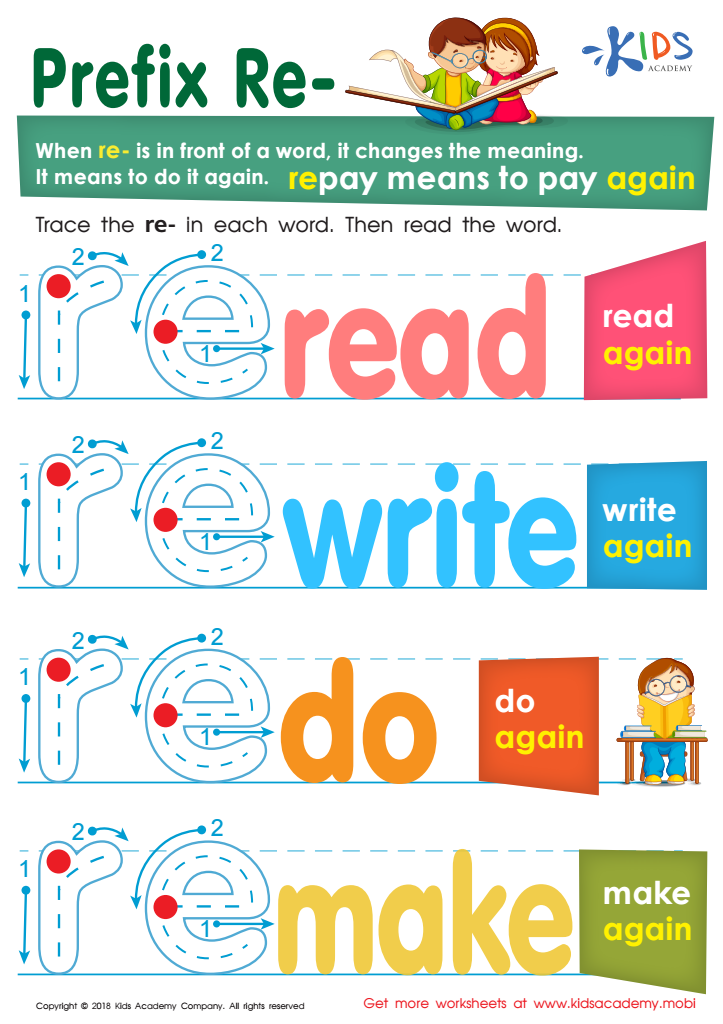
Prefix Re- Worksheet


.jpg)




Understanding prefixes is essential for young children aged 5-8 as it lays the foundation for strong vocabulary, reading comprehension, and overall language development. Prefixes, which are added to the beginning of root words to change their meaning, help children decode unfamiliar words and grasp their meanings more easily. For example, in the words "unhappy" and "rewrite," the prefixes "un-" and "re-" alter the meaning of the base words "happy" and "write," respectively.
By learning prefixes, children can expand their vocabulary more efficiently; they do not need to learn entirely new words but can use familiar prefixes to understand and form new words. This skill enhances their reading comprehension, as they can infer the meanings of complex words encountered in texts, making them more confident and proficient readers.
Moreover, knowledge of prefixes enhances students' spelling skills and word recognition. They become more adept at breaking down words into parts, which aids in correct pronunciation and spelling. Understanding prefixes also bolsters creative thinking and writing, as children can construct more vivid and varied sentences.
Given the crucial role of lexical development in early education, parents and teachers should emphasize prefixes to empower children with the tools for lifelong linguistic and academic success. This foundation helps set the stage for advanced language skills in later years.








