Understanding Simple Machines Worksheets for Ages 5-8
4 filtered results
-
From - To
Discover engaging "Understanding Simple Machines Worksheets for Ages 5-8" that make learning fun and interactive! These thoughtfully designed worksheets introduce young learners to the basics of simple machines, including levers, pulleys, inclined planes, wheels, and axles. Each activity encourages curiosity and hands-on experimentation, helping children grasp essential concepts through puzzles, diagrams, and creative exercises. Created specifically for early learners, our worksheets support critical thinking and problem-solving skills while fostering a love for science and engineering. Perfect for use in the classroom or at home, these resources empower children to explore the mechanics around them in an enjoyable and educational way!
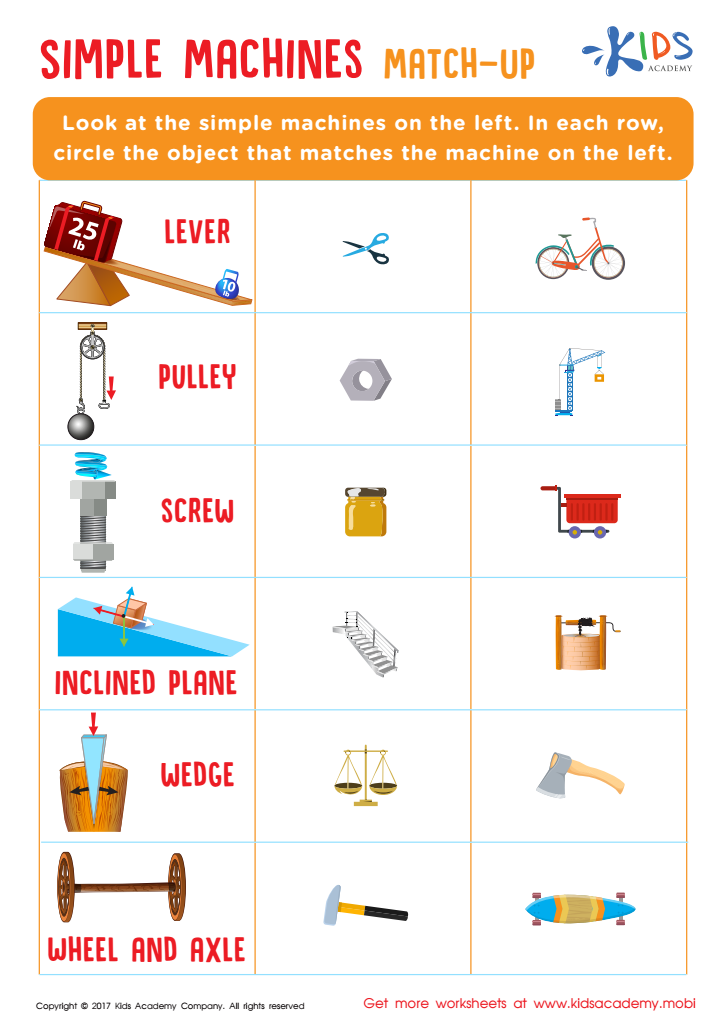
Simple Machines Worksheet
 Assign to My Students
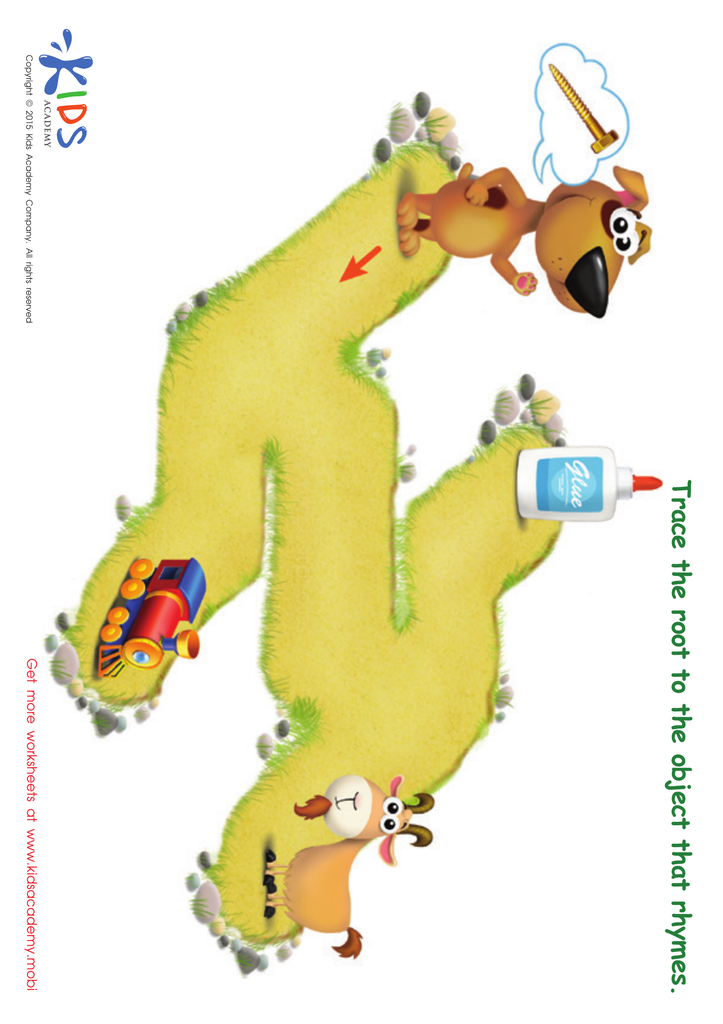
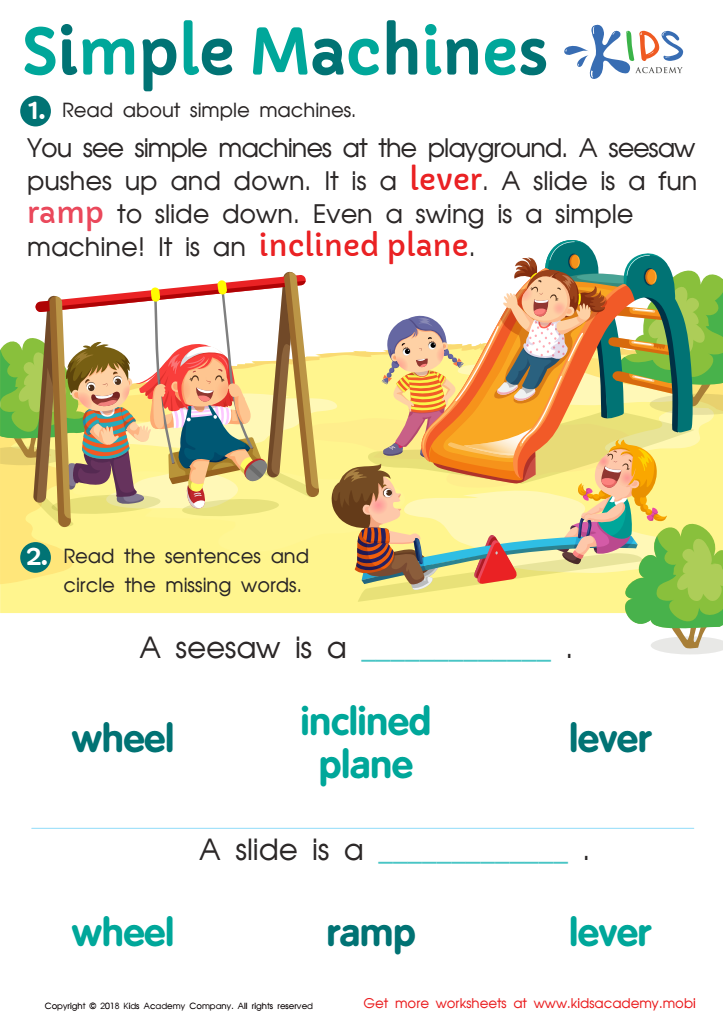
Simple Machines Worksheet
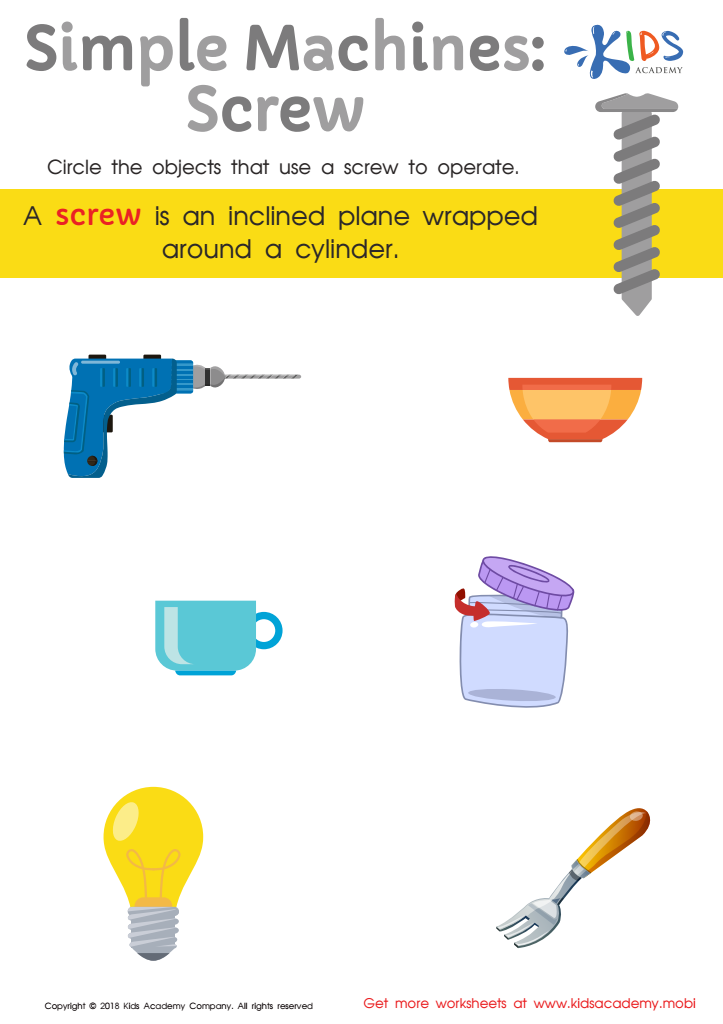
Simple Machines: Screw Worksheet







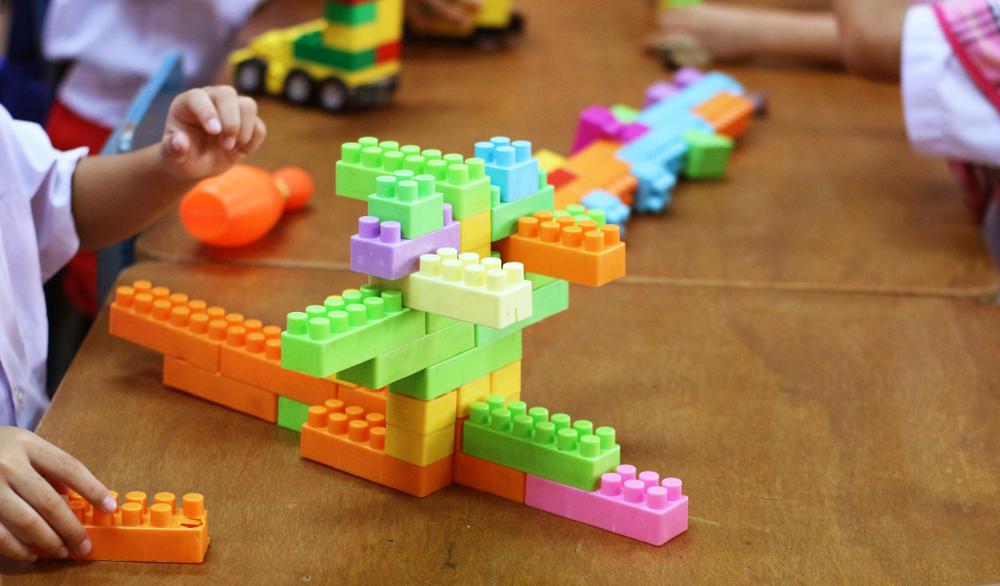
Parents and teachers should care about understanding simple machines for children aged 5-8 because this foundational knowledge fosters curiosity and problem-solving skills. At this age, children are naturally inquisitive about how things work, and exploring simple machines such as levers, pulleys, inclined planes, wheels, and axles can help satisfy that curiosity. These basic concepts are essential for developing critical thinking abilities, as children begin to understand the principles of force and motion.
Incorporating lessons on simple machines into everyday activities allows children to see firsthand how these concepts apply to real life. Whether building with blocks, playing in a playground, or even completing household tasks, they'll recognize the relevance of these machines. Additionally, learning about simple machines fosters creativity and innovation, encouraging children to design and create their own solutions to everyday challenges.
Furthermore, developing an understanding of simple machines lays the groundwork for future learning in science and engineering. It nurtures a mindset that can lead to greater interest in STEM fields, opening up pathways for innovative thinkers. By caring about this subject, parents and teachers can help children build confidence, enhance their observational skills, and develop a lifelong love for learning.








