Understanding water cycle Worksheets for Ages 5-8
3 filtered results
-
From - To
Discover our engaging "Understanding Water Cycle Worksheets" designed for ages 5-8! These colorful, interactive worksheets introduce young learners to the essential stages of the water cycle, including evaporation, condensation, precipitation, and collection. Through fun activities like drawing, matching, and coloring, children will develop a foundational understanding of this vital environmental process. Perfect for classroom or at-home learning, our worksheets encourage exploration and inquiry while fostering creativity. Parents and educators can easily access and print these resources to enhance science lessons, making learning about nature exciting and accessible. Dive into the water cycle today and watch young minds flourish!
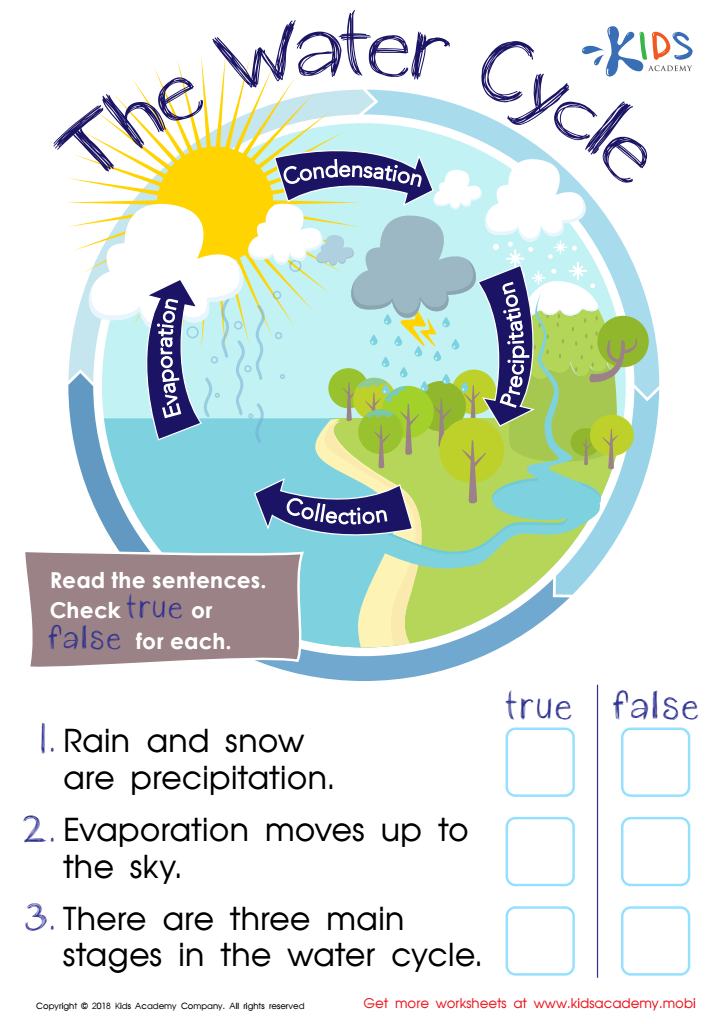
The Water Cycle Worksheet
 Assign to My Students
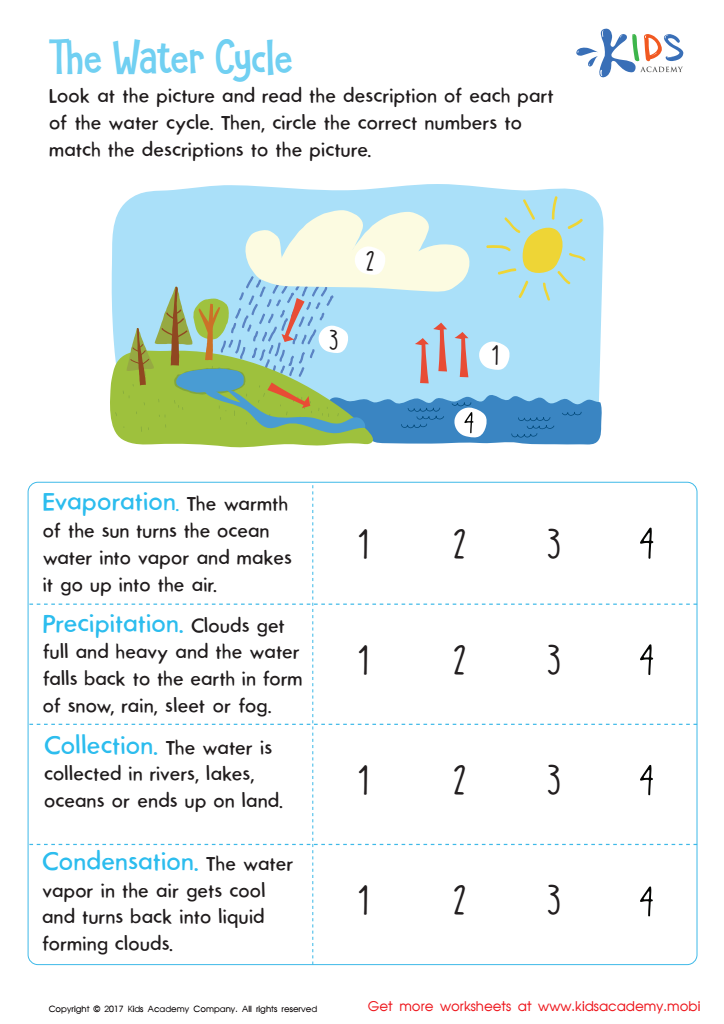
The Water Cycle Worksheet
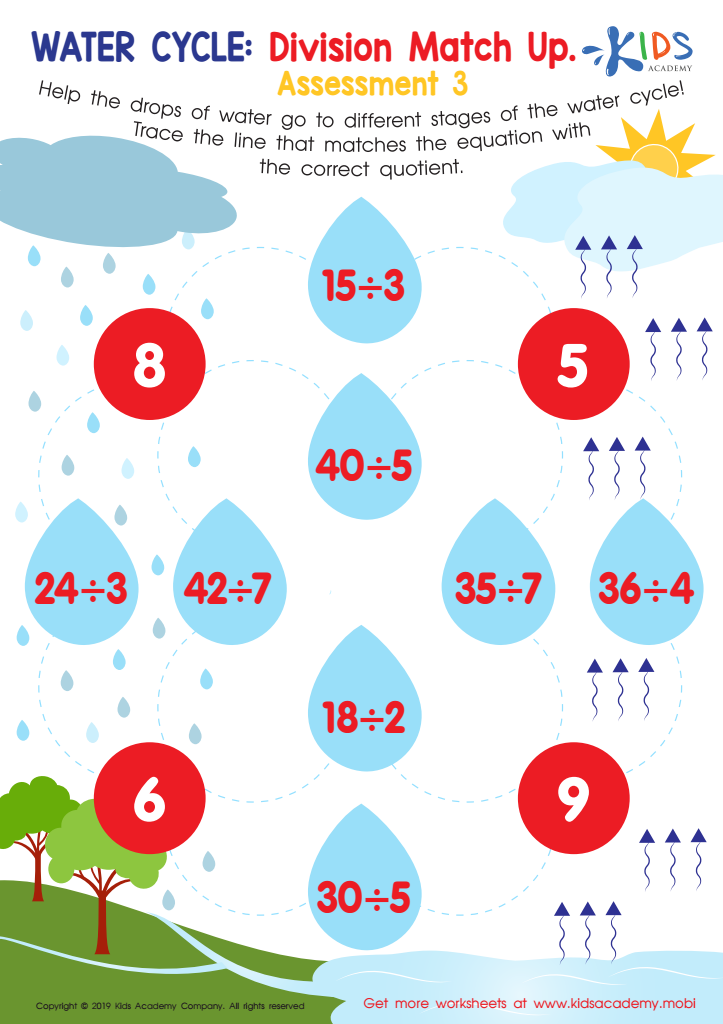
Water Cycle Division Match Up Assessment 3 Worksheet







Understanding the water cycle is essential for children aged 5-8 because it forms the foundation of their scientific knowledge and environmental awareness. First, it helps them grasp the significance of water in their daily lives. Kids learn that water is not just a resource to drink and play in, but a vital part of ecosystems and weather patterns. This understanding encourages them to value and conserve water, a crucial life skill that promotes sustainable living from a young age.
Moreover, learning about the water cycle fosters curiosity and inquiry. Engaging students with interactive lessons about evaporation, condensation, and precipitation ignites their imagination and encourages critical thinking. This curiosity nurtures their enthusiasm for science, laying the groundwork for more advanced concepts later on.
Additionally, a solid grasp of the water cycle can inspire a sense of responsibility towards their environment. By linking the water cycle to local ecosystems and climate issues, children begin to understand their impact on the world and the importance of protecting it.
In conclusion, teaching the water cycle to young learners equips them with knowledge about a fundamental natural process, instilling a sense of care for the environment and fostering a lifelong interest in science.








