Uppercase identification Worksheets for Ages 5-8
5 filtered results
-
From - To
Discover the joy of learning with our Uppercase Identification Worksheets for ages 5-8! Designed to enhance early literacy skills, these engaging worksheets help young learners recognize and differentiate uppercase letters. Each worksheet features colorful visuals and fun activities that captivate children's attention, making letter identification an exciting adventure. Perfect for classroom or at-home practice, these resources align with educational standards and promote independent learning. Parents and teachers can easily guide kids through a variety of tasks aimed at building a strong foundation for reading and writing. Download your free worksheets today and watch your child's confidence soar as they master uppercase letters!
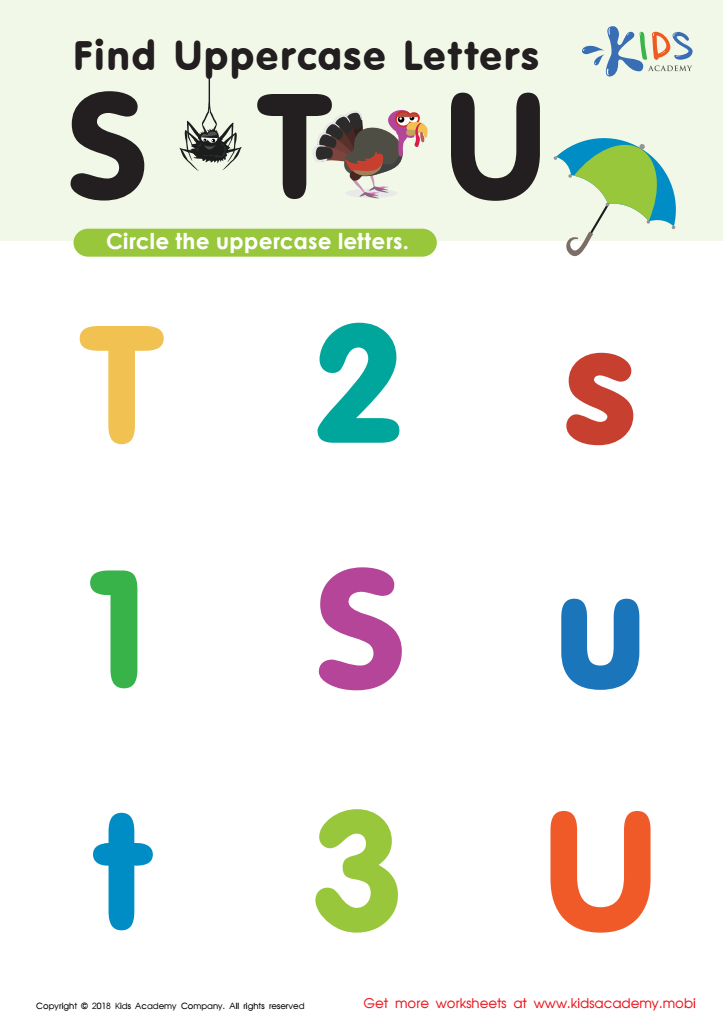
Find Uppercase Letters Worksheet
 Assign to My Students
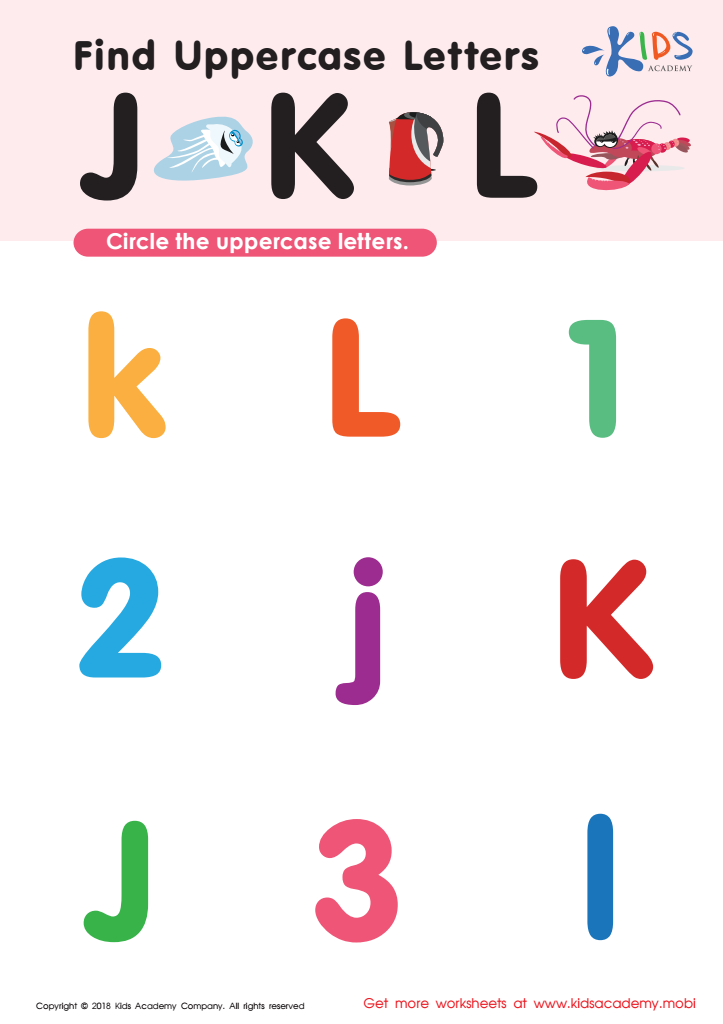
Find Uppercase Letters J, K, and L Worksheet
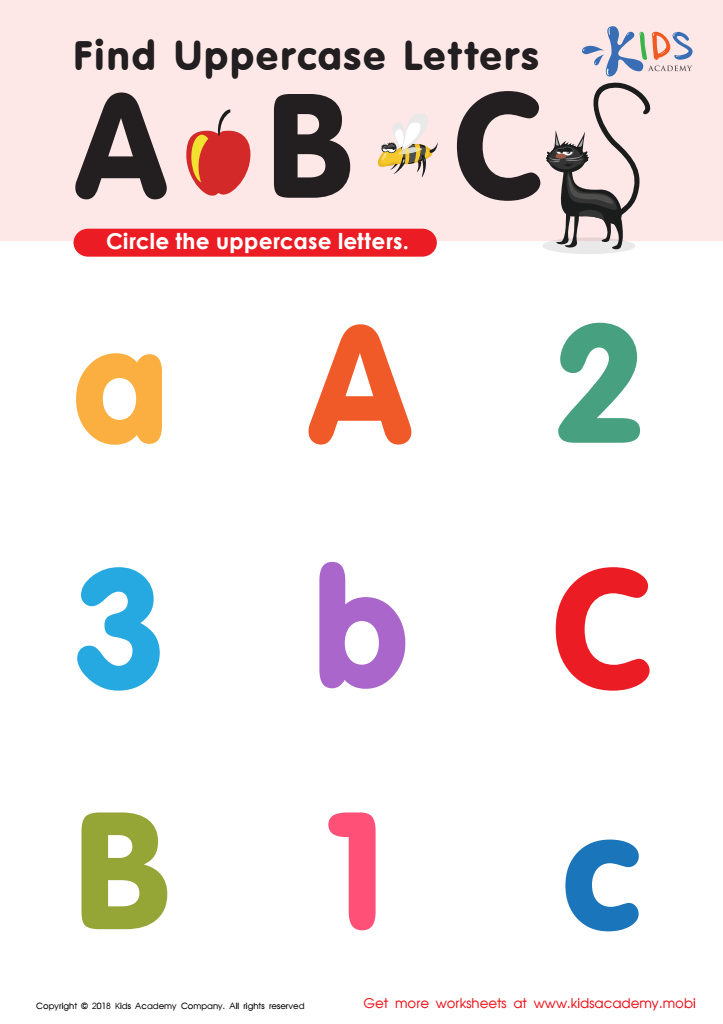
Find Uppercase Letters A, B, and C Worksheet
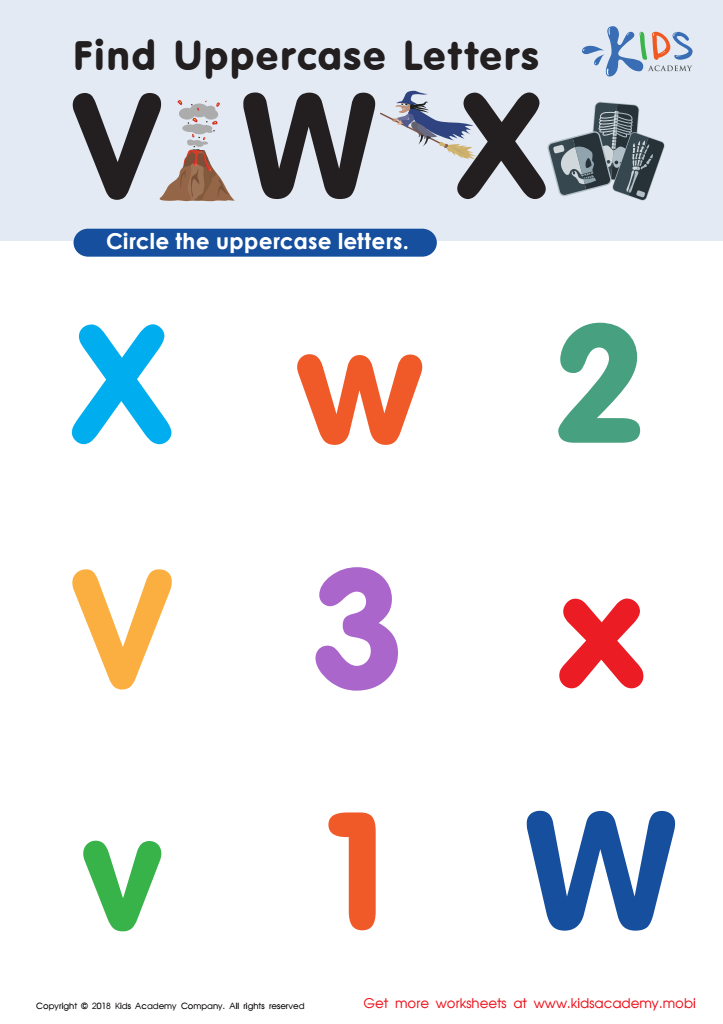
Find Uppercase Letters V, W, X Worksheet
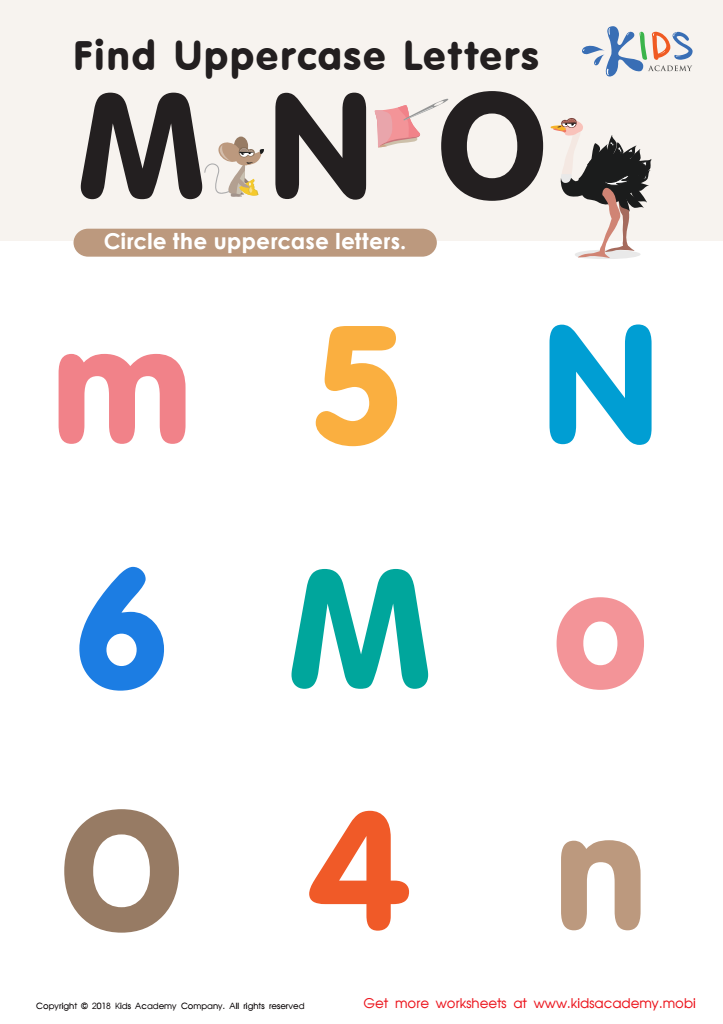
Find Uppercase Letters M, N, and O Worksheet








Uppercase letter identification is a fundamental skill for children aged 5-8, and it is essential for both parents and teachers to prioritize its development. Mastering uppercase letters establishes a foundation for reading and writing proficiency. Recognizing these letters is crucial for early literacy, helping children connect sounds to letters, recognize their names, and navigate written language.
Additionally, uppercase letters often appear in key contexts, such as the first letter of sentences and proper nouns. If children struggle with uppercase recognition, they may find reading comprehension challenging and experience frustration with writing. This could lead to negative attitudes toward literacy.
Moreover, engaging in uppercase identification can foster skills like cognitive processing, memory, and fine motor development when combined with activities involving writing the letters. Parents and teachers can create a fun and supportive environment through games, flashcards, and everyday experiences, such as reading signs or labels.
When children feel confident in their uppercase letter identification, they gain the skills necessary for successful reading and writing, promoting a lifelong love of learning. Thus, strong uppercase recognition is vital, and adults play a pivotal role in nurturing this early literacy skill.








