Visual representation of fractions Worksheets for Ages 5-8
8 filtered results
-
From - To
Explore our engaging Visual Representation of Fractions Worksheets tailored for children aged 5-8! These educational resources help young learners comprehend fractions through colorful visuals and relatable examples. Designed to simplify complex concepts, our worksheets include pie charts, number lines, and interactive activities that promote hands-on learning. Children will gain confidence in recognizing fractions, understanding parts of a whole, and developing essential math skills. Perfect for classroom use or at-home practice, these worksheets make learning fractions fun and accessible. Start your child’s journey in mastering fractions today with our downloadable worksheets that encourage curiosity and foster mathematical understanding!
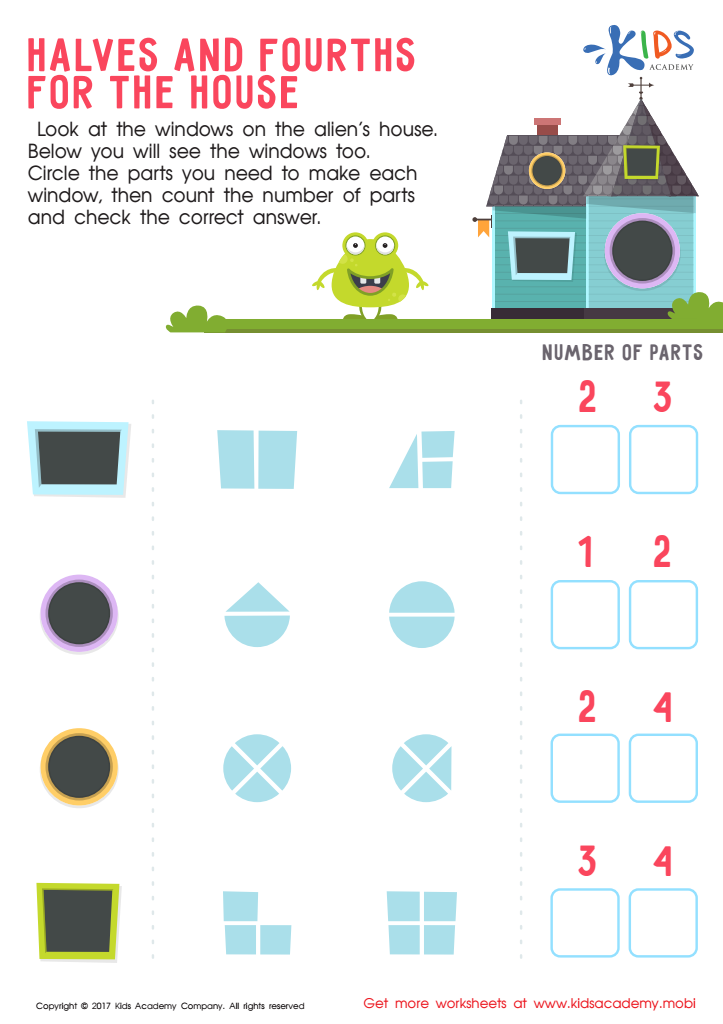
Halves and Fourths for the House Worksheet
 Assign to My Students
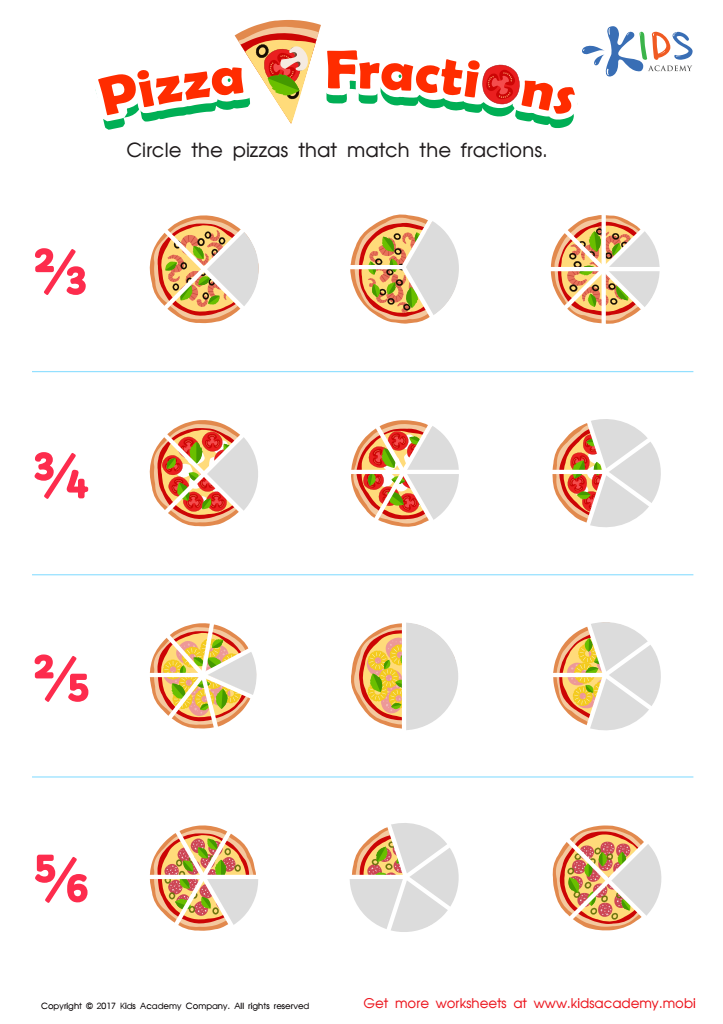
Fractions: Pizza Printable
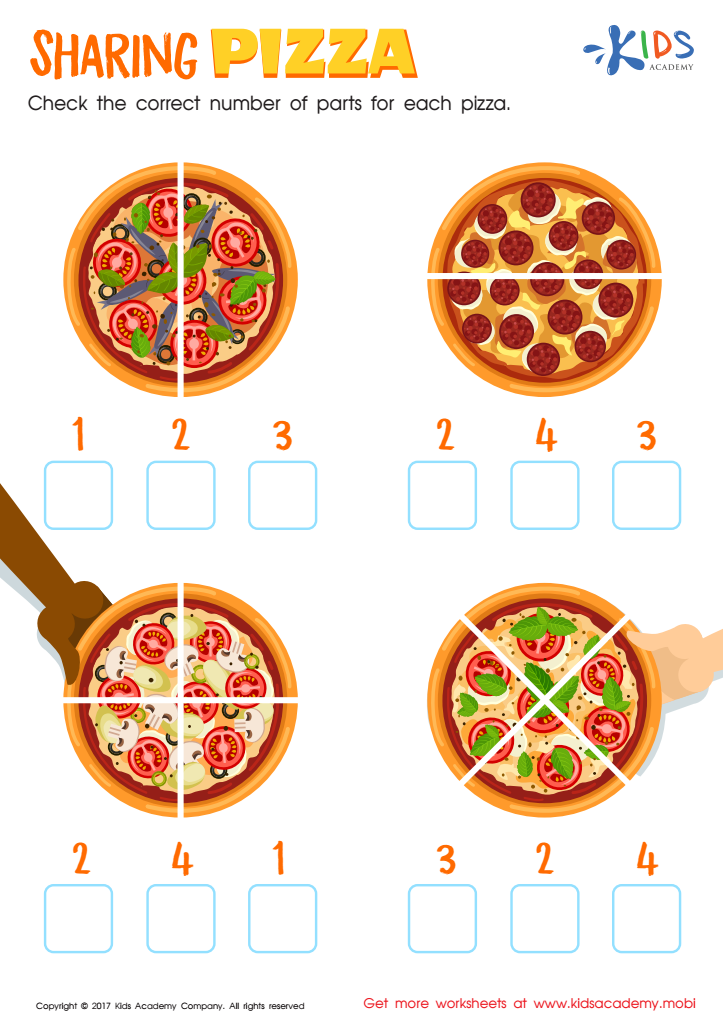
Sharing Pizza Worksheet
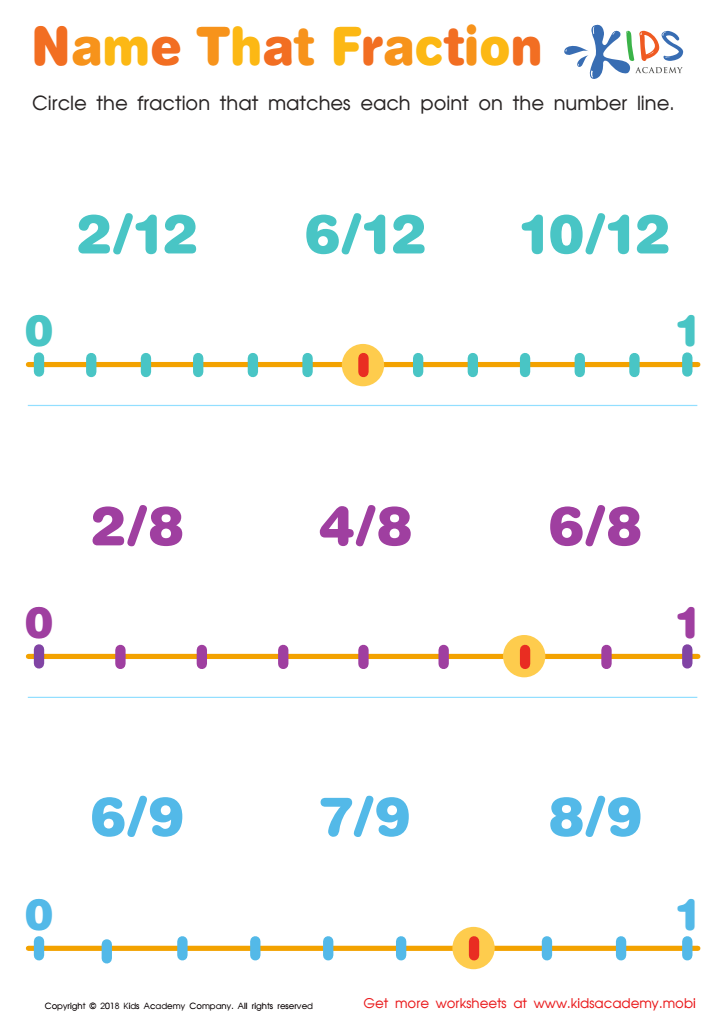
Name That Fraction Worksheet
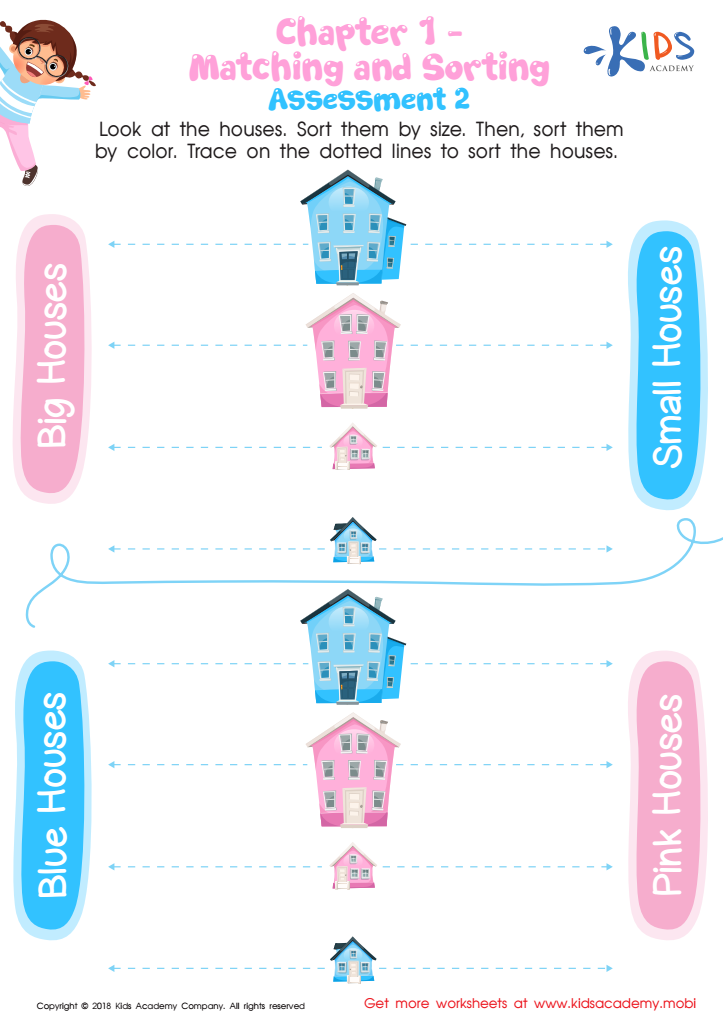
Matching and Sorting for Preschool: Assessment 2 Worksheet






Visual representation of fractions is crucial for children aged 5-8 as it forms the foundation for their mathematical understanding. At this early stage, kids inherently learn better through visuals, and concepts like fractions can be abstract and challenging. Visual aids—such as pie charts, blocks, or number lines—help to break down these complexities into manageable parts, allowing children to grasp how fractions represent parts of a whole.
When parents or teachers utilize visual representations, they facilitate active participation. Children can see, touch, and manipulate the fraction models, making the learning experience more engaging and concrete. This hands-on interaction helps reinforce understanding and retention.
Moreover, visual representations strengthen problem-solving skills, as kids begin to recognize patterns and relationships in fractions, scaffolding their understanding for more complex mathematical concepts later on. Also, using visuals makes learning collaborative and fun, inviting discussions and teamwork among peers which further enhances their social skills.
In summary, visual representations not only promote a deeper comprehension of fractions but also make learning accessible and enjoyable. By investing time and resources into these methods, parents and teachers significantly boost children’s mathematical confidence and competence, laying a strong foundation for future learning.








