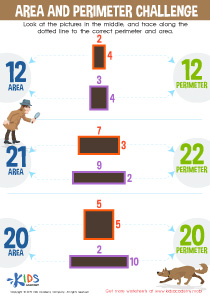
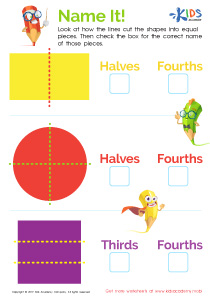
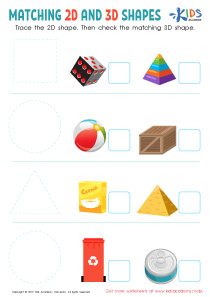
Visual discrimination 2D Shapes Worksheets for Ages 5-8
5 filtered results
-
From - To
Enhance your child's visual discrimination skills with our engaging 2D Shapes Worksheets designed for ages 5 to 8! These interactive worksheets provide a fun way for young learners to identify, compare, and differentiate between various shapes. Each activity is thoughtfully crafted to challenge and develop critical thinking while fostering early math skills. Ideal for home or classroom use, our worksheets include colorful illustrations and diverse exercises that keep kids motivated and excited about learning. Perfect for reinforcing shape recognition, visual perception, and problem-solving abilities, our resources make learning enjoyable and effective! Unlock the world of shapes today with our delightful worksheets!
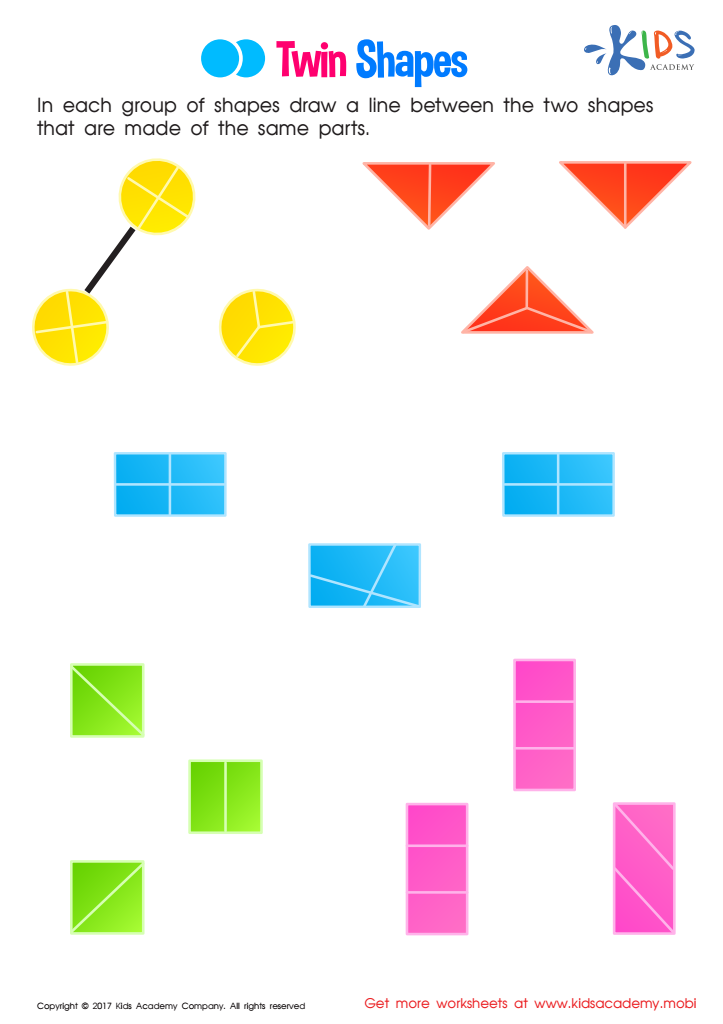
Twin Shapes Worksheet
 Assign to My Students


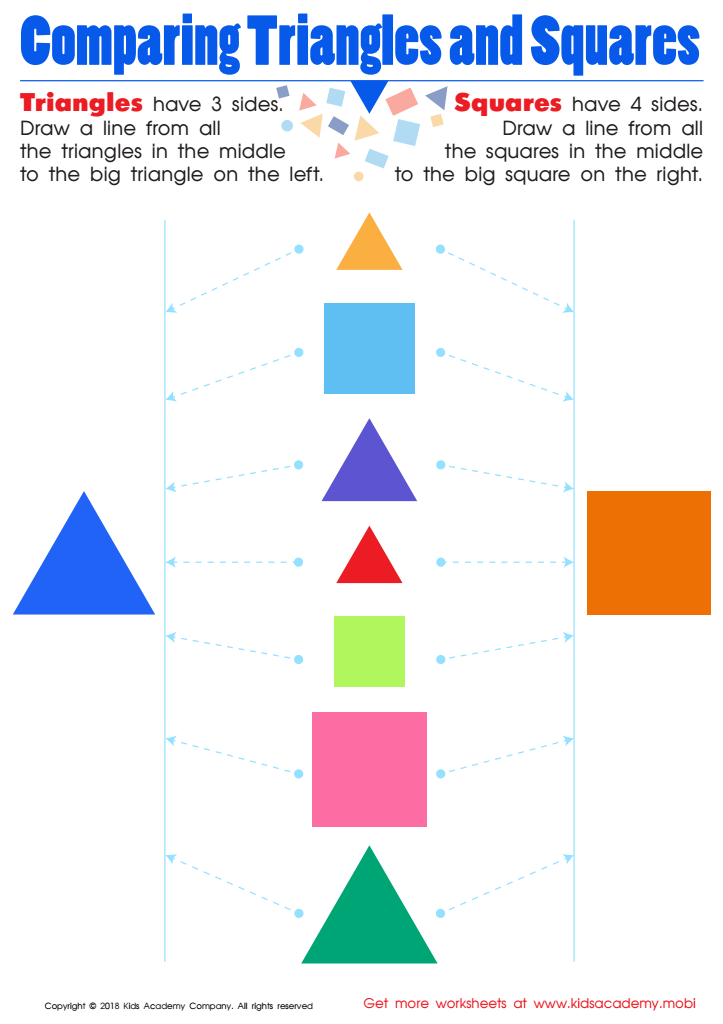
Comparing Triangles Squares Worksheet
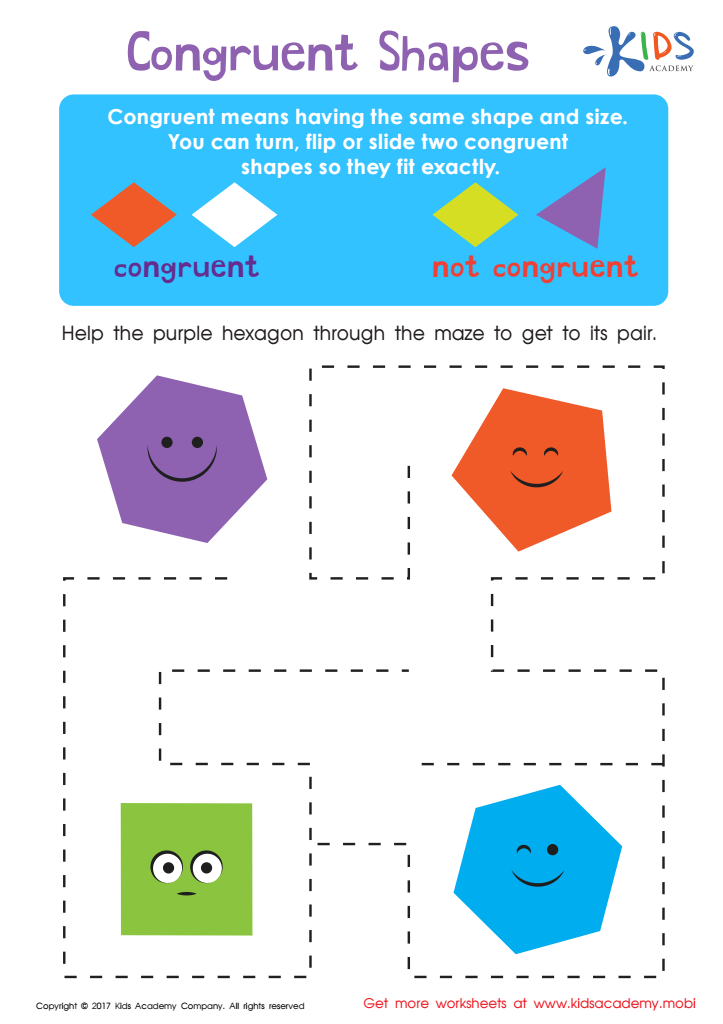
Congruent Shapes Worksheet
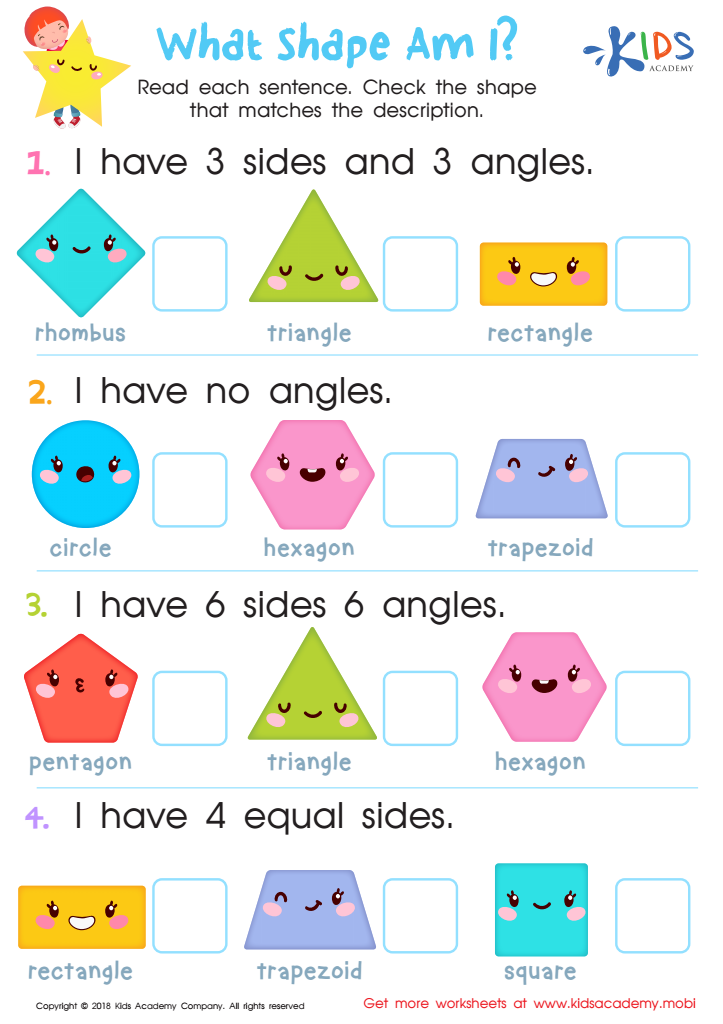
What Shape Am I? Worksheet
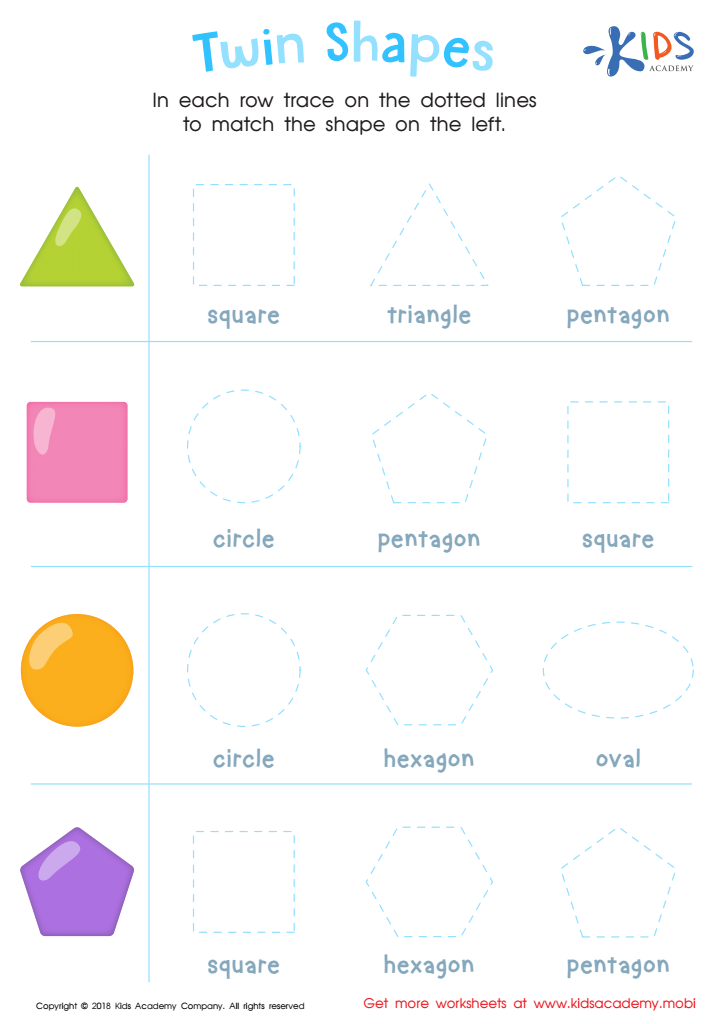
Twin Shapes Dot-to-Dot Worksheet








Visual discrimination of 2D shapes is crucial for children aged 5 to 8, impacting their cognitive development and academic success. This skill involves the ability to recognize, compare, and differentiate between various shapes, which lays the foundation for more complex concepts in mathematics, geometry, and spatial awareness. When children develop strong visual discrimination skills, they enhance their problem-solving abilities and critical thinking capabilities, which are vital for lifelong learning.
Parents and teachers should care about this aspect of early education as it influences not only math skills but also reading readiness. Shapes are integral in phonics, as letters can be understood in terms of their visual characteristics—a circle (O), a triangle (A), or straight lines (B).
Moreover, engaging children in activities that promote shape recognition and discrimination fosters creativity and encourages them to identify patterns and relationships in their environment. This also supports teamwork and communication when children collaborate on shape-based projects. By focusing on visual discrimination of 2D shapes, educators and caregivers can provide children with a strong foundation, paving the way for future academic success and a better understanding of the world around them.