Cognitive Development Adding up to 100 Worksheets for Ages 5-8
4 filtered results
-
From - To
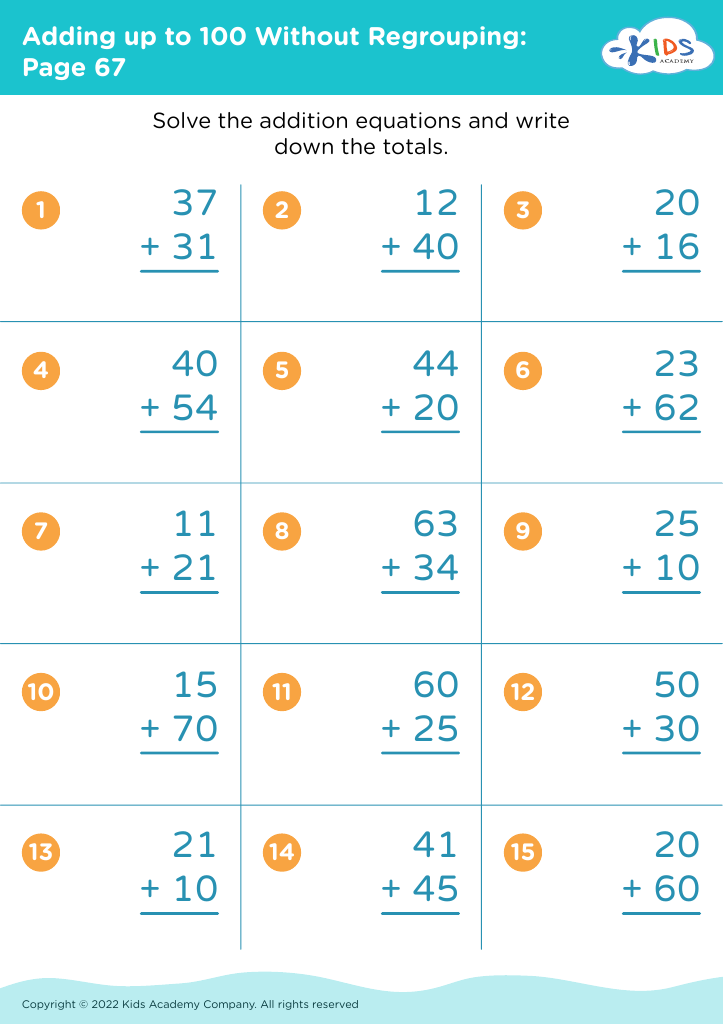
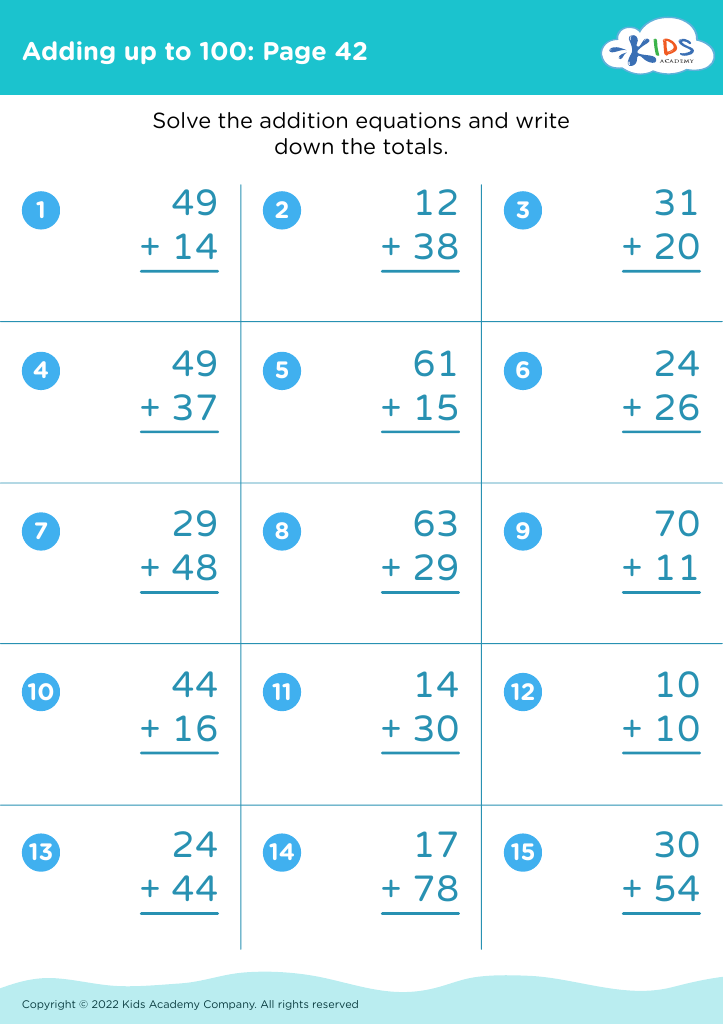
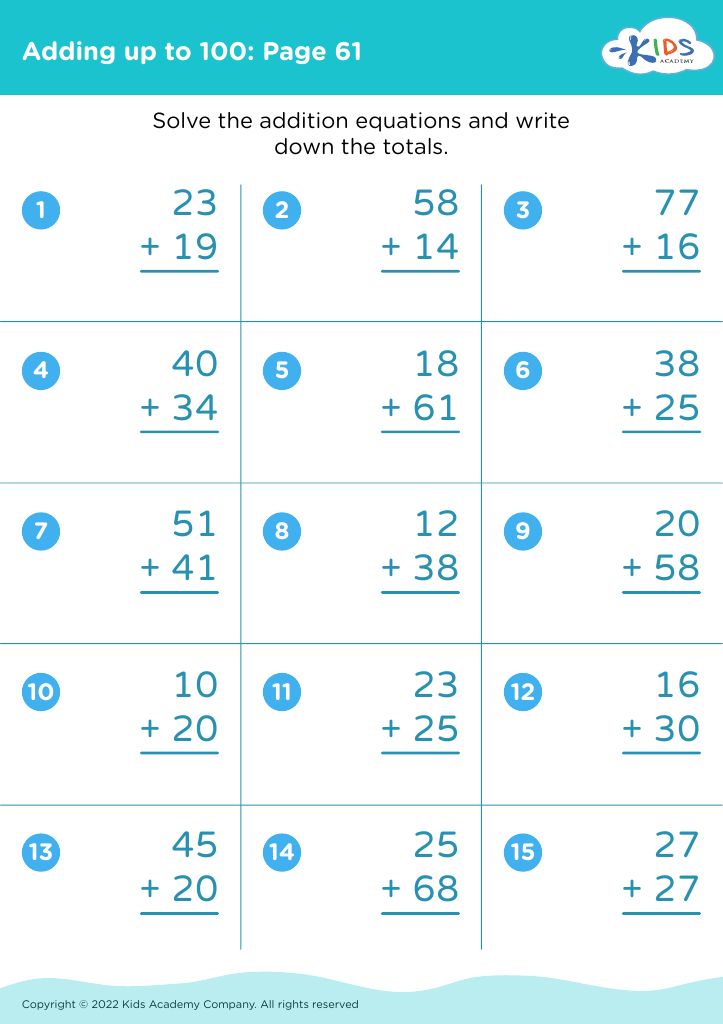
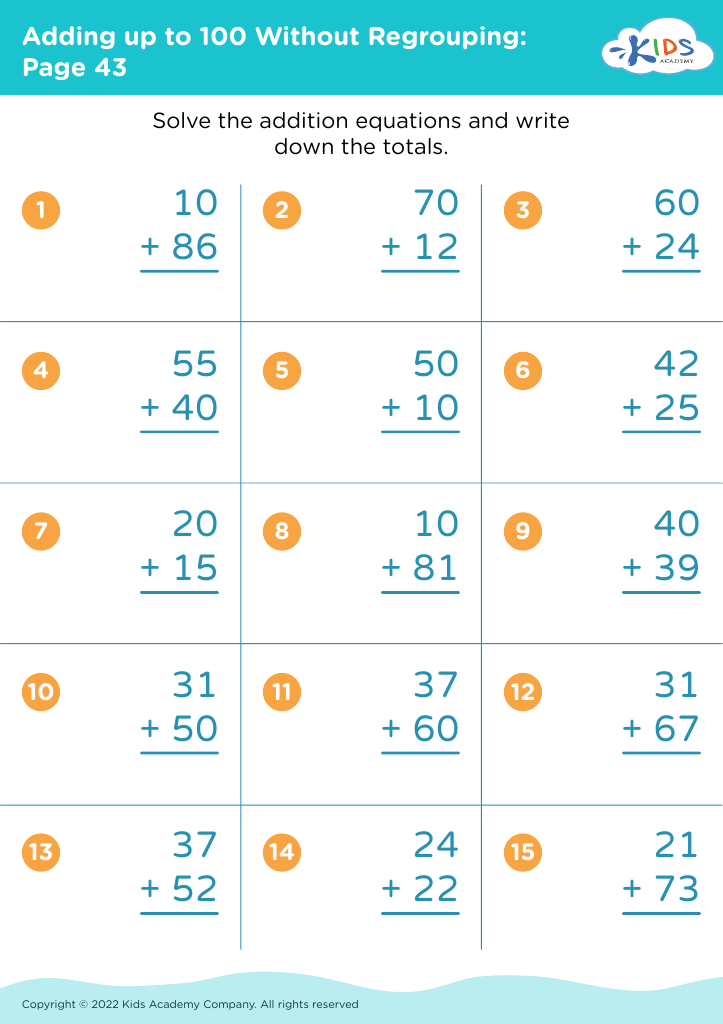
Boost your child's cognitive skills with our "Cognitive Development: Adding up to 100 Worksheets for Ages 5-8.” Designed by educational experts, and tailored for young learners, these engaging worksheets focus on foundational math skills through fun activities. Perfect for home or classroom use, they help children enhance their addition abilities while fostering critical thinking, problem-solving, and attention to detail. Each worksheet is crafted to build confidence and develop cognitive skills in small, digestible steps. Keep your child excited about learning math with colorful, stimulating exercises, ensuring a solid understanding of addition up to 100. Give them a head start on a successful academic journey!


%20(1).jpg)




Cognitive development in early childhood, particularly the ability to add up to 100, is crucial for several reasons. For children aged 5-8, focusing on these foundational math skills helps cultivate critical thinking, problem-solving abilities, and numerical understanding, which are essential for later academic success and daily life.
At this developmental stage, the brain is highly adaptable, and children are especially receptive to learning new concepts. Mastery of addition up to 100 is not merely a math skill; it translates into improved mental arithmetic, which can boost a child’s confidence in handling numbers both in school and beyond. Furthermore, these skills are integrated within various aspects of the wider curriculum, supporting subjects such as science and technology, and cultivating a comprehensive educational foundation.
From a developmental perspective, this form of math training also enhances memory, attention, and logical reasoning. Parents and teachers should invest in structured and engaging educational activities that promote cognitive growth, ensuring children can grasp these concepts effectively. Interactive games, practical examples, and consistent practice can make learning addition fun and meaningful, ensuring that kids develop a positive attitude towards math. Ultimately, supporting cognitive development in early childhood opens doors to continued academic achievements and enriches the child's overall intellectual growth.








