Enhancing problem-solving abilities Adding up to 100 Worksheets for Ages 5-8
3 filtered results
-
From - To
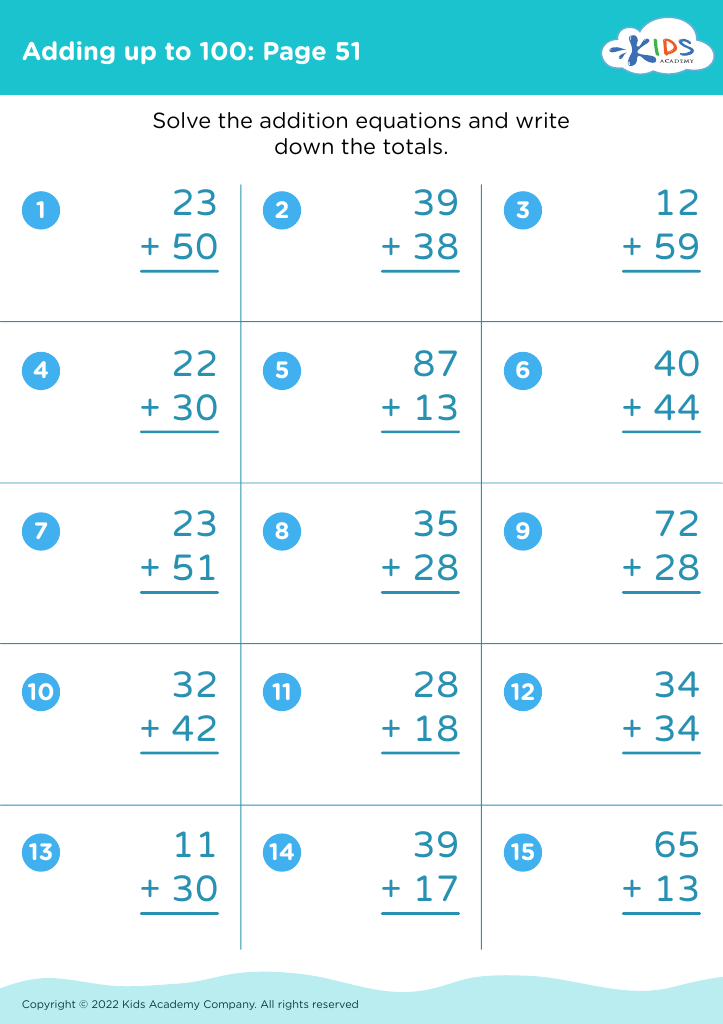
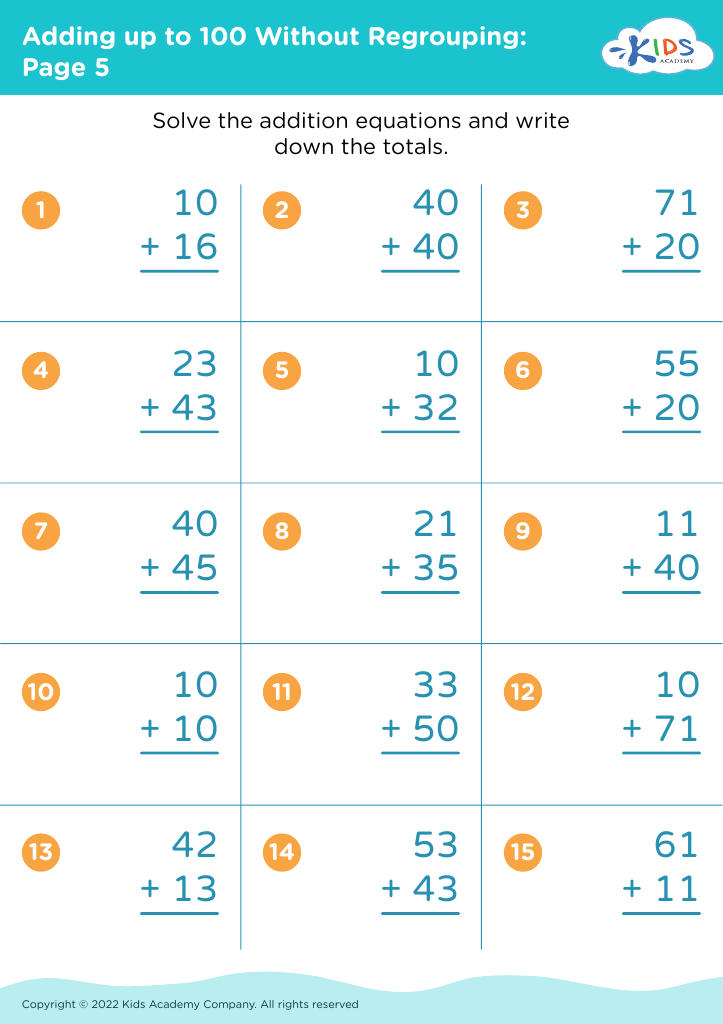
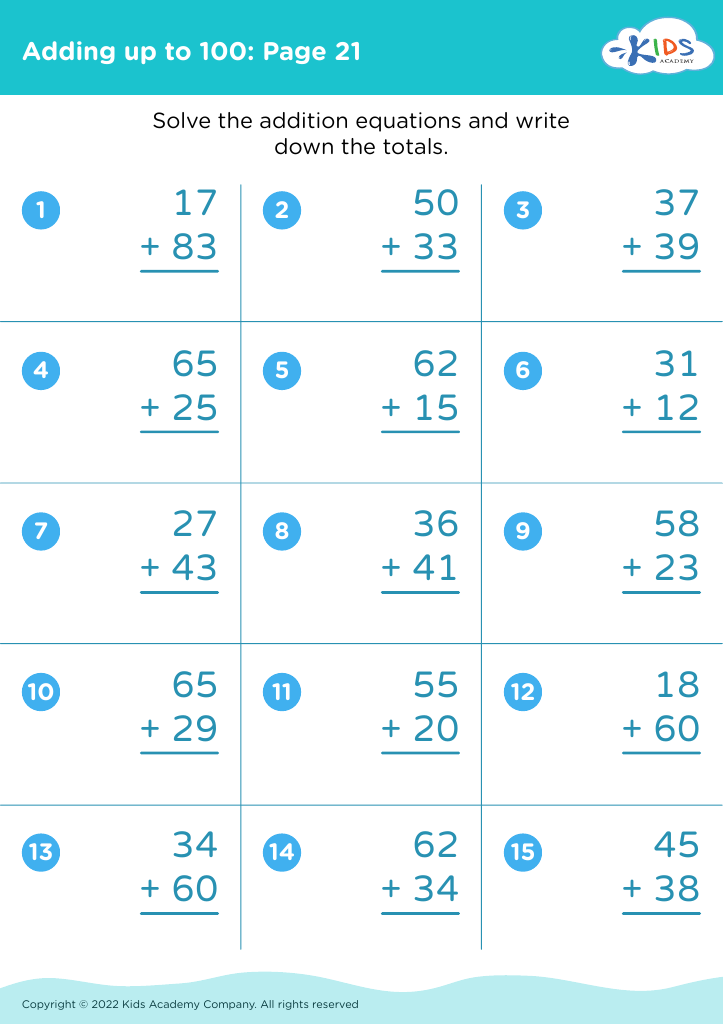
Enhance your child's problem-solving abilities with our "Adding up to 100 Worksheets for Ages 5-8"! These carefully designed worksheets help young learners develop crucial math skills in a fun and engaging way. As children practice addition within 100, they build strong number sense, improve their calculation speed, and boost overall confidence in math. Perfect for home or classroom use, our worksheets offer a variety of problems that stimulate critical thinking and apply math concepts to real-life situations. Set your child on a path to success and watch them thrive with our effective and educational resources.


%20(1).jpg)




Enhancing problem-solving abilities in young children, ages 5-8, by focusing on mathematical skills such as adding up to 100 is crucial for their cognitive and academic development. At this formative age, children’s brains are highly receptive to learning, and building a solid foundation in mathematics sets them up for future success in more complex subjects. Problem-solving abilities foster critical thinking, logical reasoning, and perseverance, which are essential life skills beyond academics.
When children are proficient in adding numbers up to 100, they develop confidence and a positive attitude toward math, demystifying a subject that can often seem daunting. This early confidence can decrease math anxiety, which is a common issue as students progress through their education. Furthermore, these skills are applicable across various real-life contexts, such as handling money, measuring quantities in cooking, or figuring out time intervals.
Parents and teachers play a pivotal role in nurturing these abilities through engaging activities, interactive games, and consistent practice. By showing enthusiasm and support, they can make learning enjoyable, which further stimulates a child’s curiosity and willingness to tackle challenges. Fundamentally, investing effort into enhancing young children’s math skills and problem-solving capabilities lays the groundwork for lifelong learning and success.








