Identify shapes Adding up to 100 Worksheets for Ages 5-8
4 filtered results
-
From - To
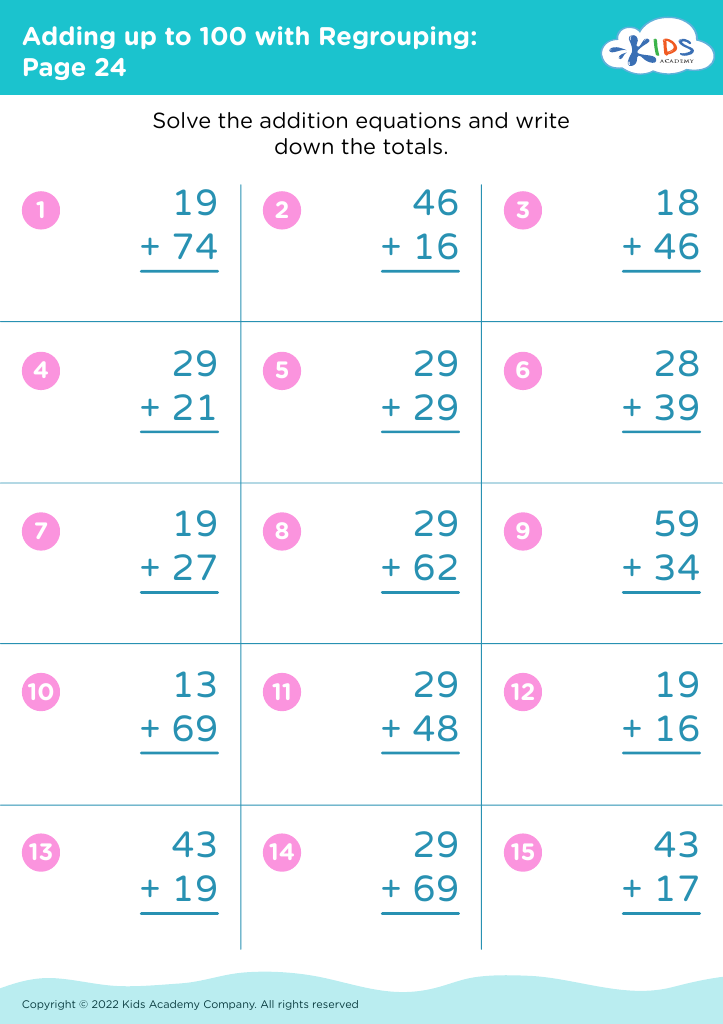
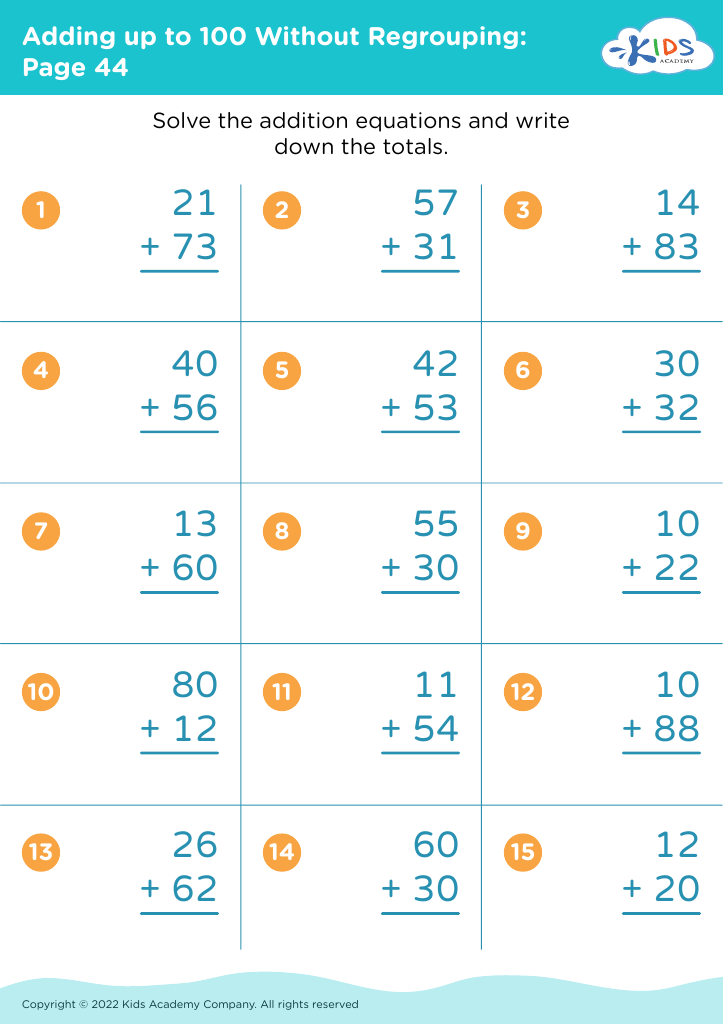
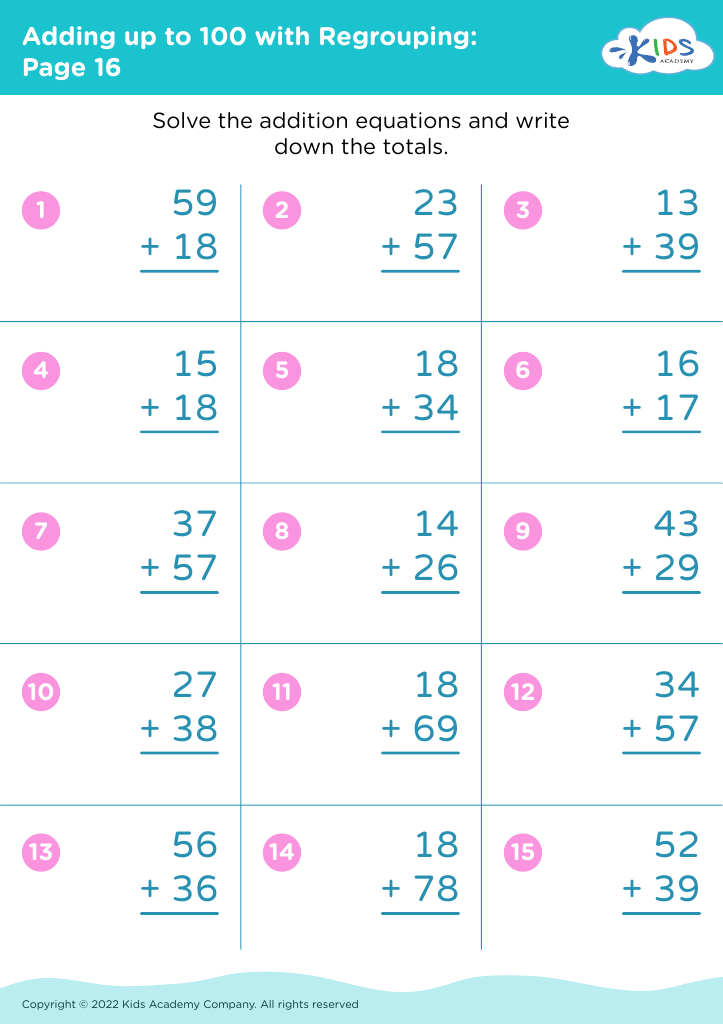
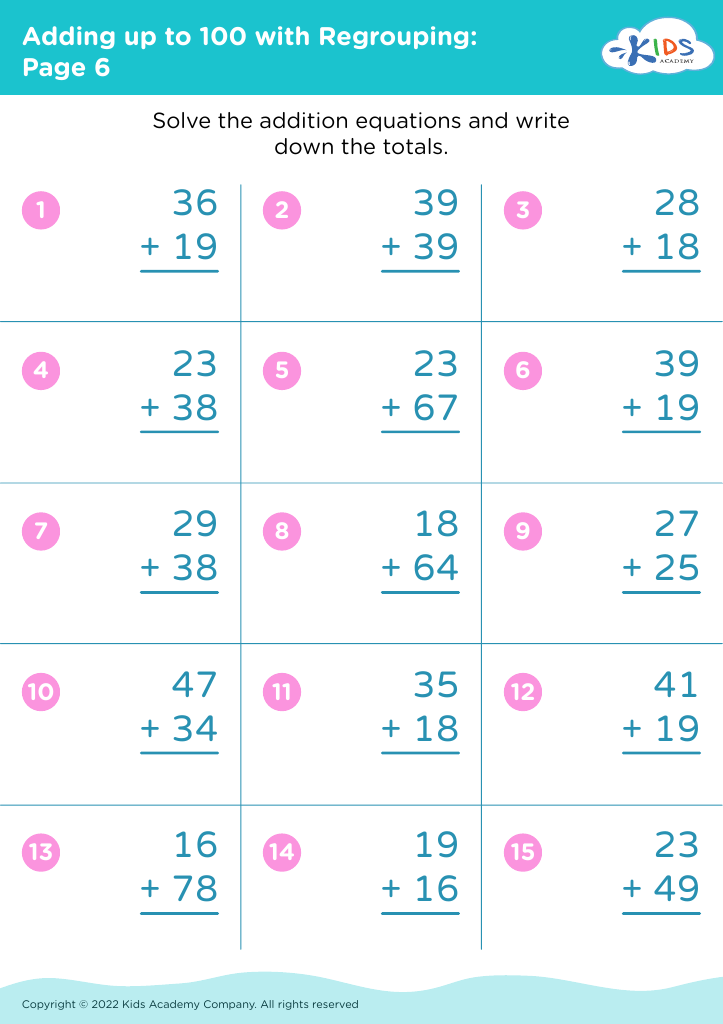
Boost your child's understanding of both shapes and basic arithmetic with our "Identify Shapes Adding up to 100 Worksheets for Ages 5-8." These delightful, engaging worksheets combine learning about shapes with adding numbers up to 100, offering a dual approach to developing essential math skills. Tailored specifically for young minds, each printable activity is designed to keep children intrigued and motivated. Your child will explore different shapes while practicing addition, laying a strong foundation for future mathematical success. Enhance your little one's learning journey today by providing a fun and educational experience with our expertly crafted worksheets.



%20(1).jpg)



Understanding shapes and mastering basic addition, such as adding up to 100, are both crucial foundational skills for children aged 5-8. These skills collectively pave the way for more complex mathematical and cognitive processes. Here's why parents and teachers should prioritize these activities:
Shapes Identification: 1. Cognitive Development: Recognizing and differentiating shapes enhances spatial awareness and visual processing skills. This is essential in subjects like geometry and for everyday problem-solving. 2. Language Skills: Discussing shapes introduces children to specific vocabulary (e.g., circle, triangle, rectangle), enhancing language and descriptive skills. 3. Fine Motor Skills: Activities like drawing shapes improve hand-eye coordination and fine motor skilI crucial for writing. 4. Creativity and Imagination: Shapes are the building blocks for more complex drawings and creations, fostering creativity.
Adding Up to 100: 1. Numeracy Skills: Basic addition forms the bedrock for all subsequent math learning. Mastering addition up to 100 ensures a solid understanding of early arithmetic operations. 2. Confidence Building: Successfully tackling addition problems boosts children's numerical confidence, encouraging a positive attitude towards math. 3. Core Competencies: This skill aids in understanding place value, number relationships, and enables mental math strategies critical for future math problems.
In essence, combining shape identification with addition skills sets children up for success. It nurtures a well-rounded mathematical competence and cognitive versatility, providing a strong academic foundation while fostering life-long learning skills.








