Simplifying Fractions Adding up to 100 Worksheets for Ages 5-8
3 filtered results
-
From - To
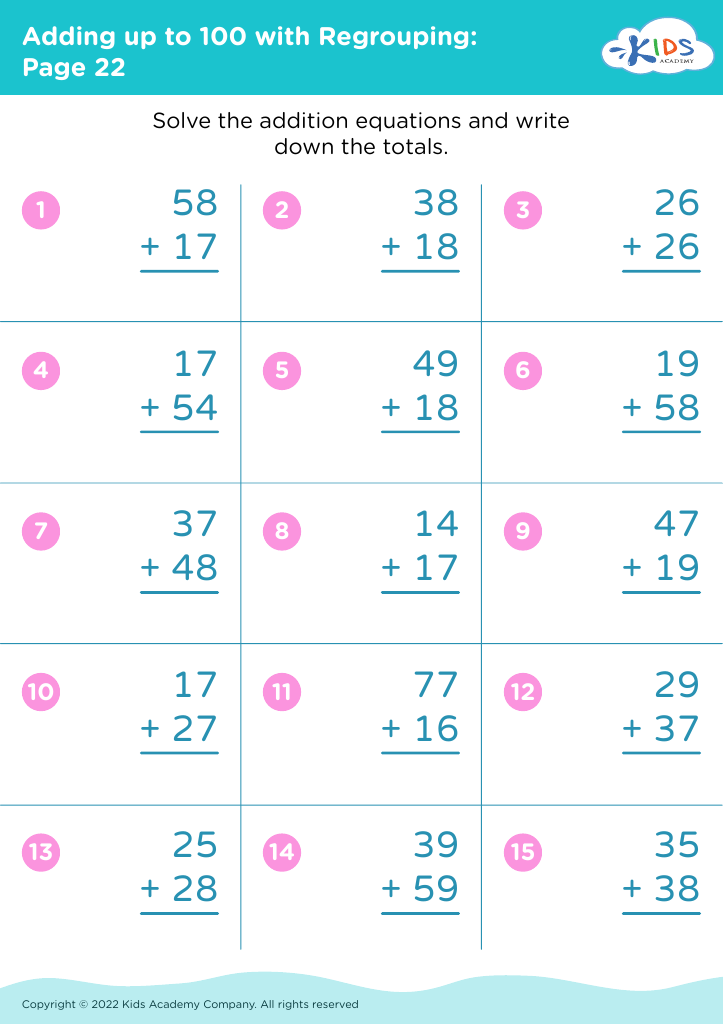
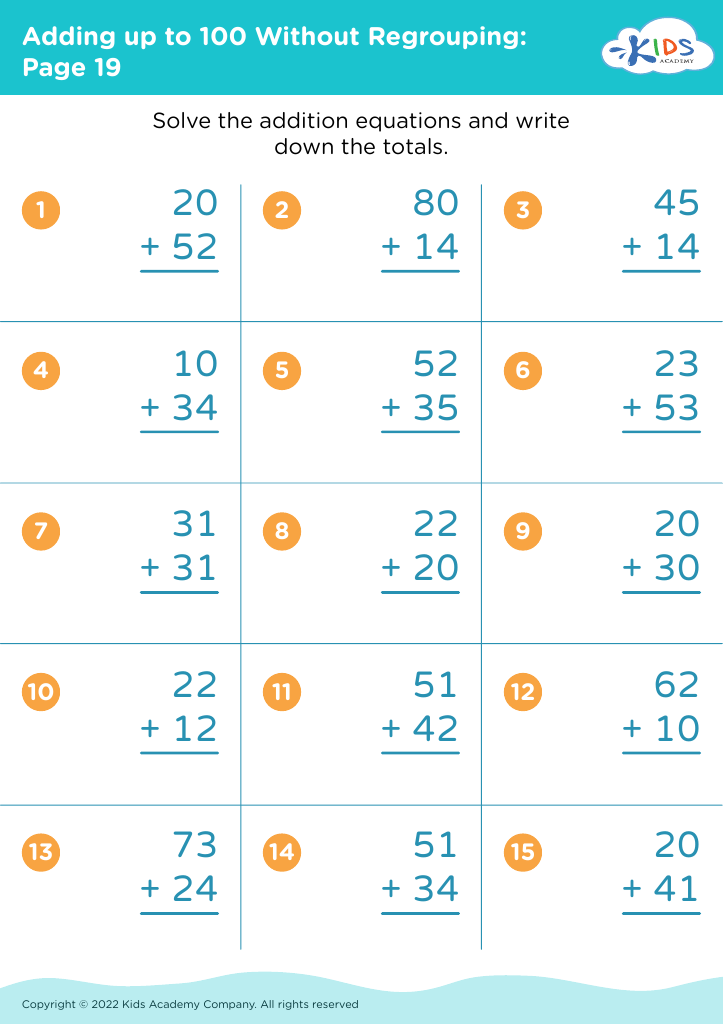
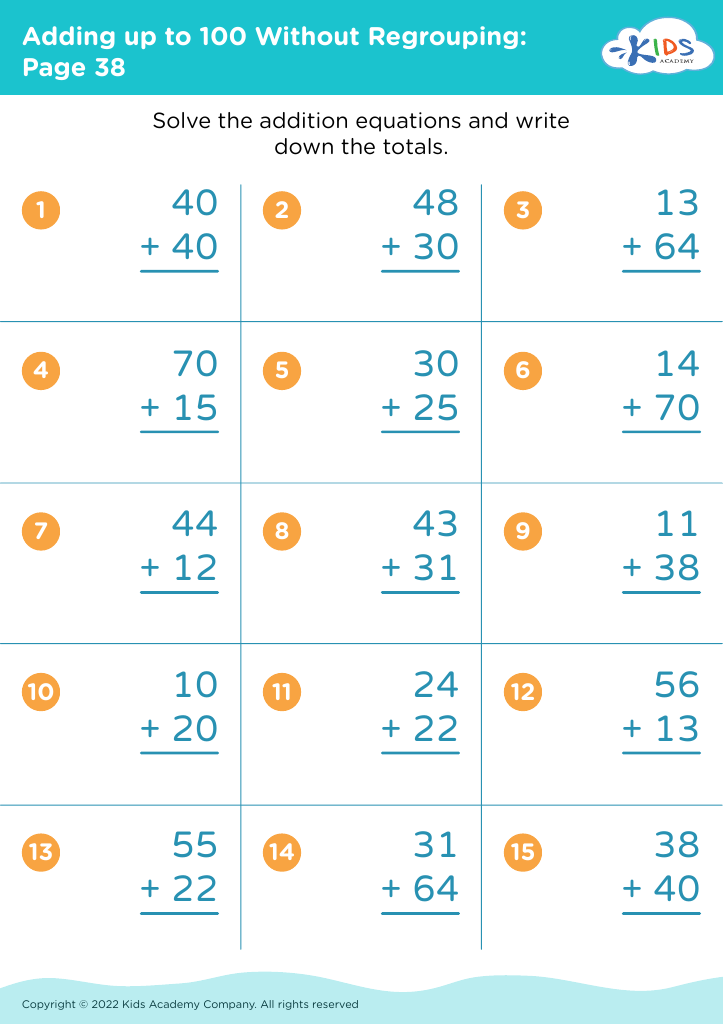
Discover our engaging "Simplifying Fractions Adding up to 100" worksheets, tailored for ages 5-8. These worksheets provide a fun and educational way to introduce young students to fraction concepts and addition skills. Packed with vibrant illustrations and clear instructions, children will learn to simplify fractions while practicing their addition skills up to 100. Designed to build a strong mathematical foundation, these activities promote problem-solving, critical thinking, and confidence in math. Perfect for classroom use or at-home practice, our worksheets make math enjoyable and accessible for early learners. Start simplifying fractions today with our expertly crafted resources!






%20(1).jpg)
Parents and teachers play a crucial role in foundational math development for children aged 5-8, and simplifying fractions adding up to 100 can significantly aid this journey. Firstly, engaging in such activities helps children develop a strong sense of numbers. Fractions and their simplification require a basic understanding of division and multiplication, key skills they will use throughout their education.
Mathematically engaging tasks such as simplifying fractions also improve problem-solving abilities. Through these exercises, children learn to break down complex problems into manageable steps, fostering critical thinking.
Furthermore, fractions are everywhere in everyday life, from cooking to shopping. Introducing them early helps children understand their practical applications. By practicing with relatable concepts adding up to 100, children are better motivated as the activity connects to their real-world understanding.
This practice also boosts confidence. Mastering the simplification of fractions gives children a sense of achievement and encourages them to tackle more challenging tasks in the future. Besides, early familiarity ensures proficiency, making it less intimidating when they encounter more advanced fractions in later grades.
In summary, focusing on simplifying fractions adding up to 100 for children aged 5-8 sets a strong mathematical foundation, promotes real-world connections, and enhances problem-solving skills, ultimately contributing to a child’s long-term academic success.








