Filters

232 filtered results

Clear all filters
Favorites
With answer key
Interactive

232 filtered results

Difficulty Level

Grade


Check out this FREE Trial Lesson on Adding Up to 5 for age 5-8!

Exactly the Same, or Not

Favorites
With answer key
Interactive
  • 5-8
  • Counting practice
  • Adding Up to 5
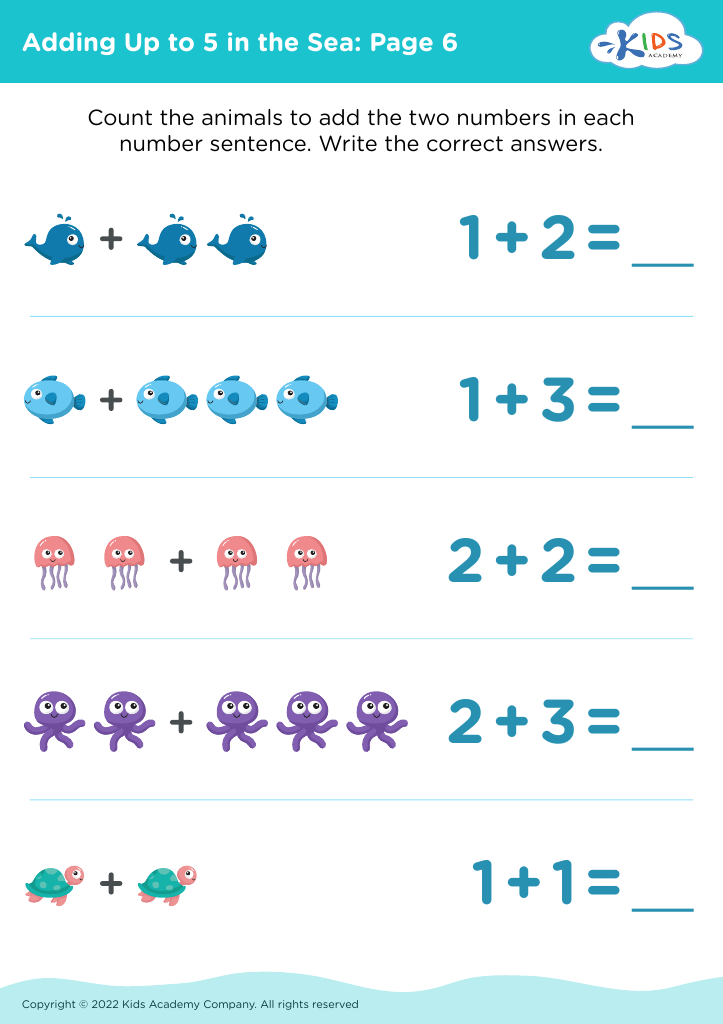
Adding Up to 5 in the Sea: Page 6

Adding Up to 5 in the Sea: Page 6

Adding Up to 5 in the Sea: Page 6
Worksheet
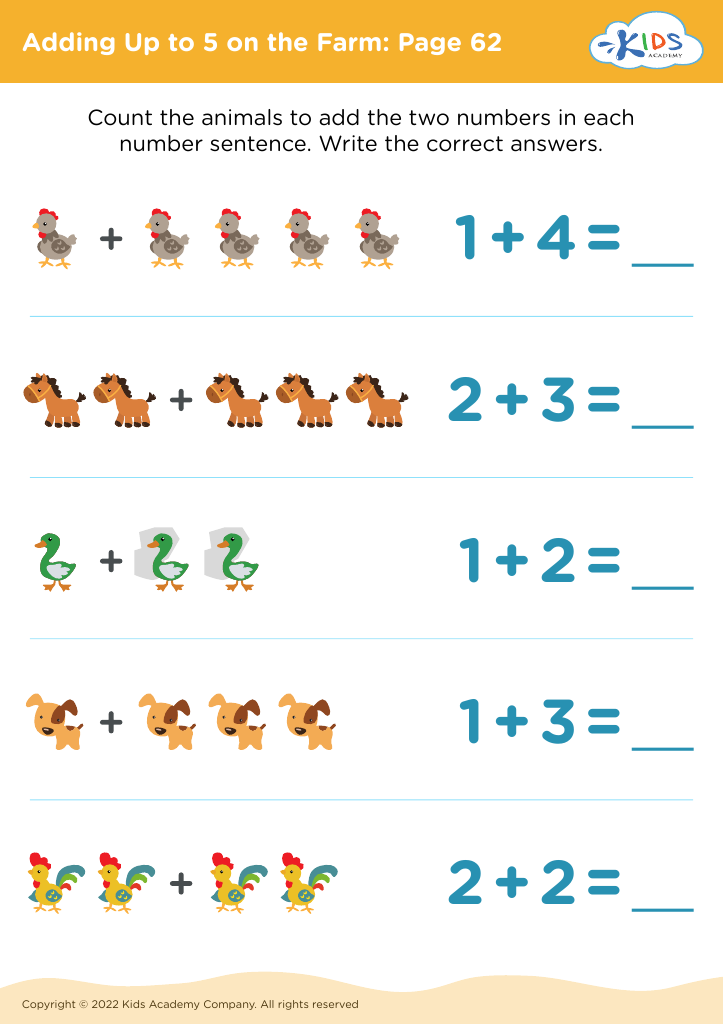
Adding Up to 5 on the Farm: Page 62
Worksheet
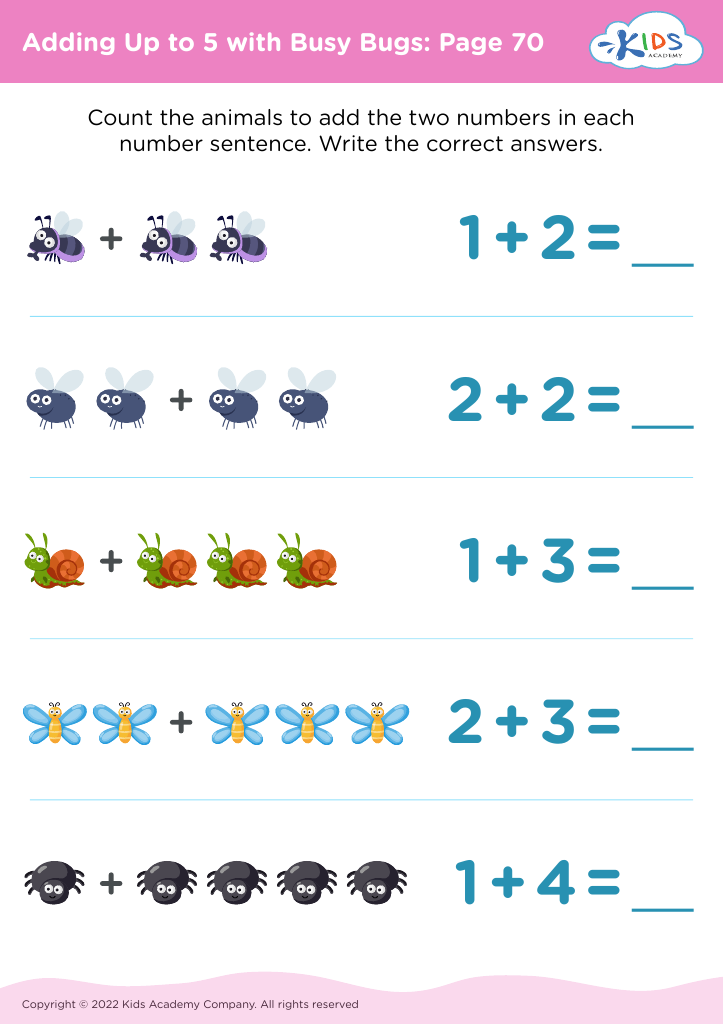
Adding Up to 5 with Busy Bugs: Page 70
Worksheet
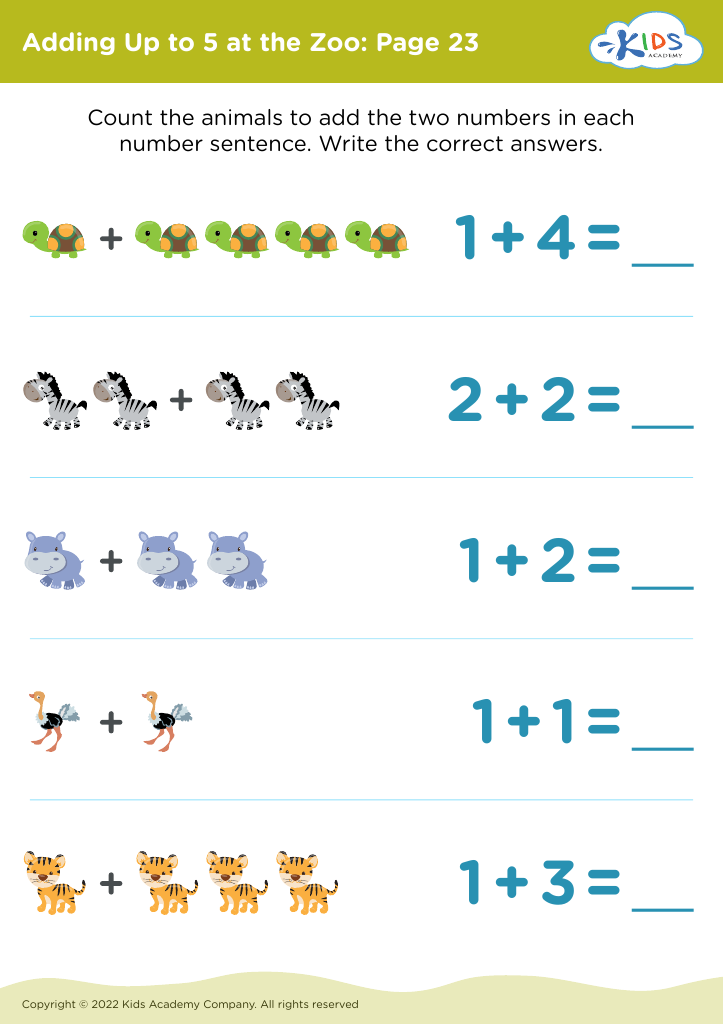
Adding Up to 5 at the Zoo: Page 23
Worksheet
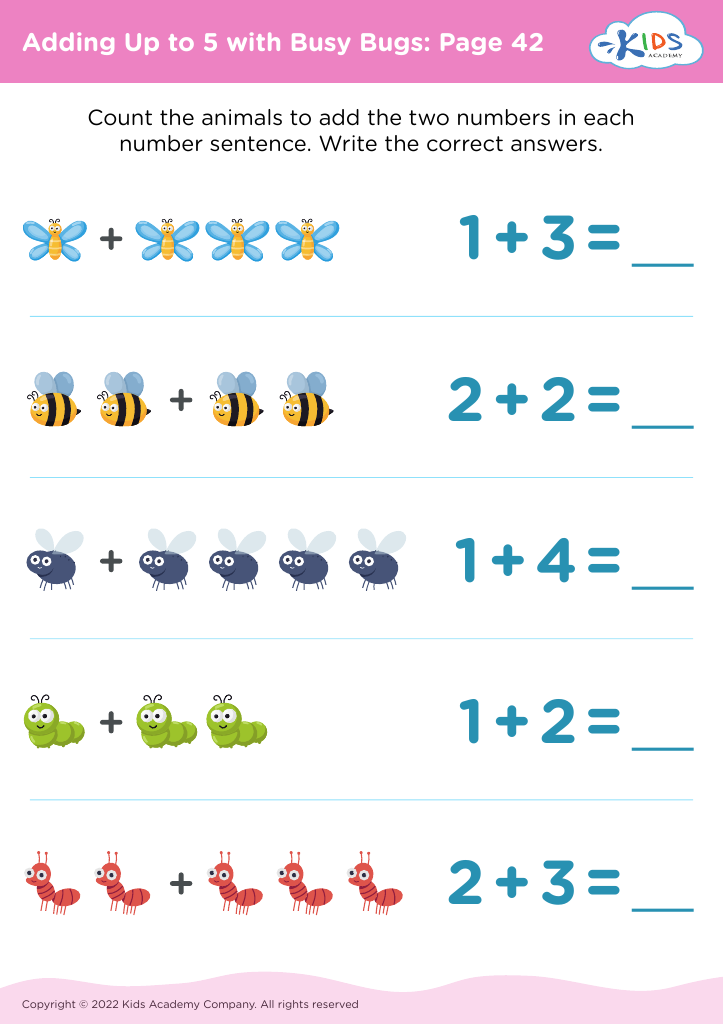
Adding Up to 5 with Busy Bugs: Page 42
Worksheet
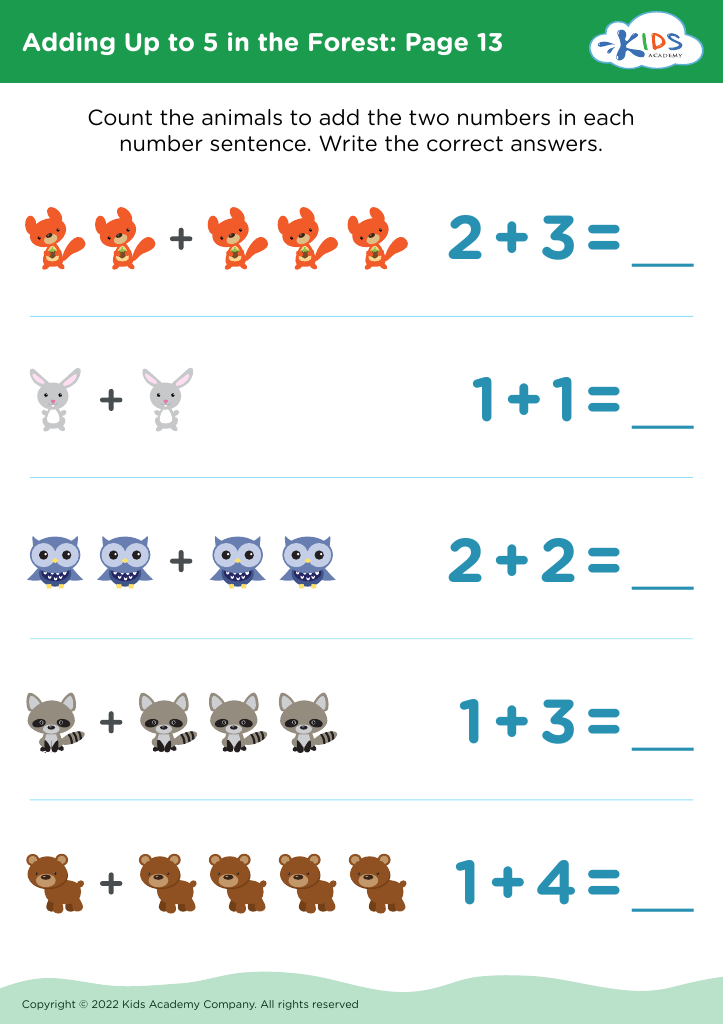
Adding Up to 5 in the Forest: Page 13
Worksheet
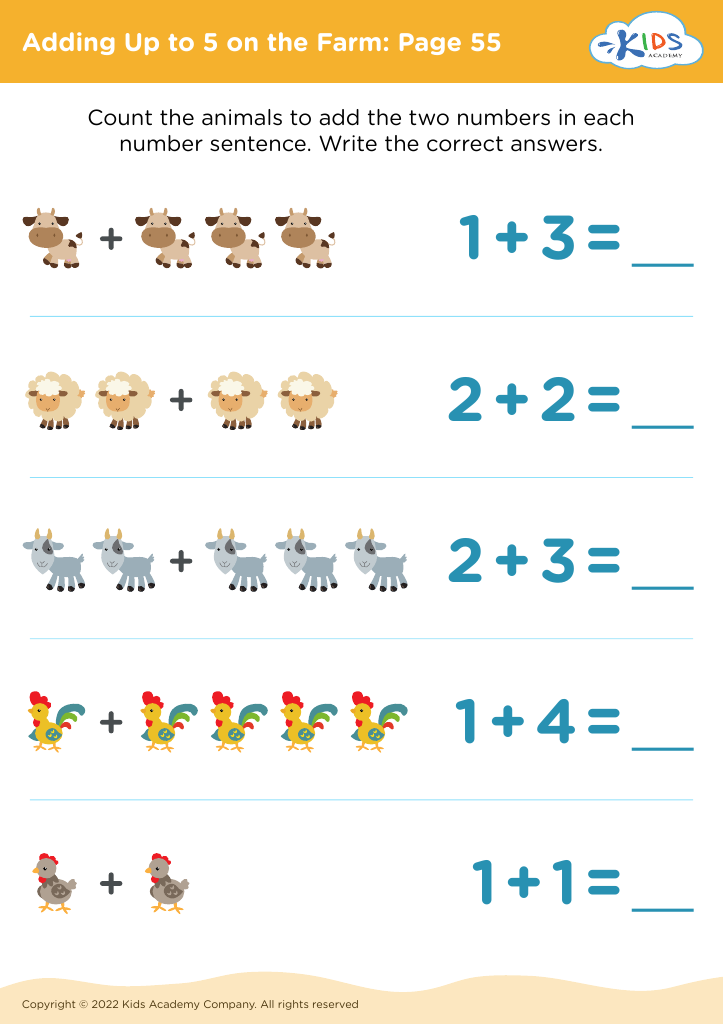
Adding Up to 5 on the Farm: Page 55
Worksheet
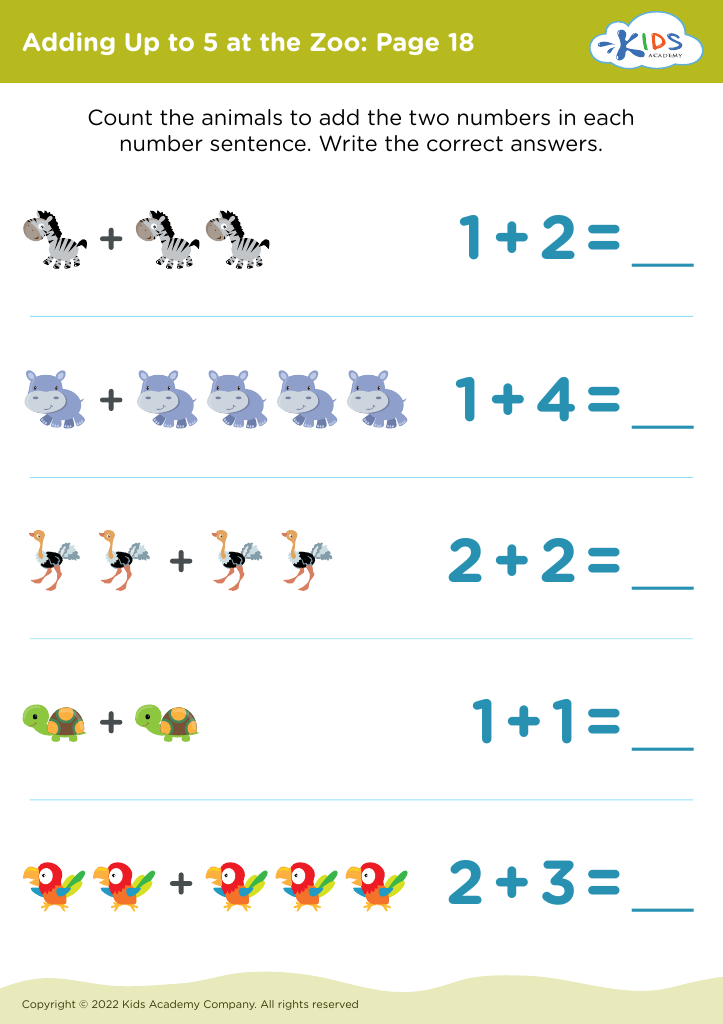
Adding Up to 5 at the Zoo: Page 18
Worksheet
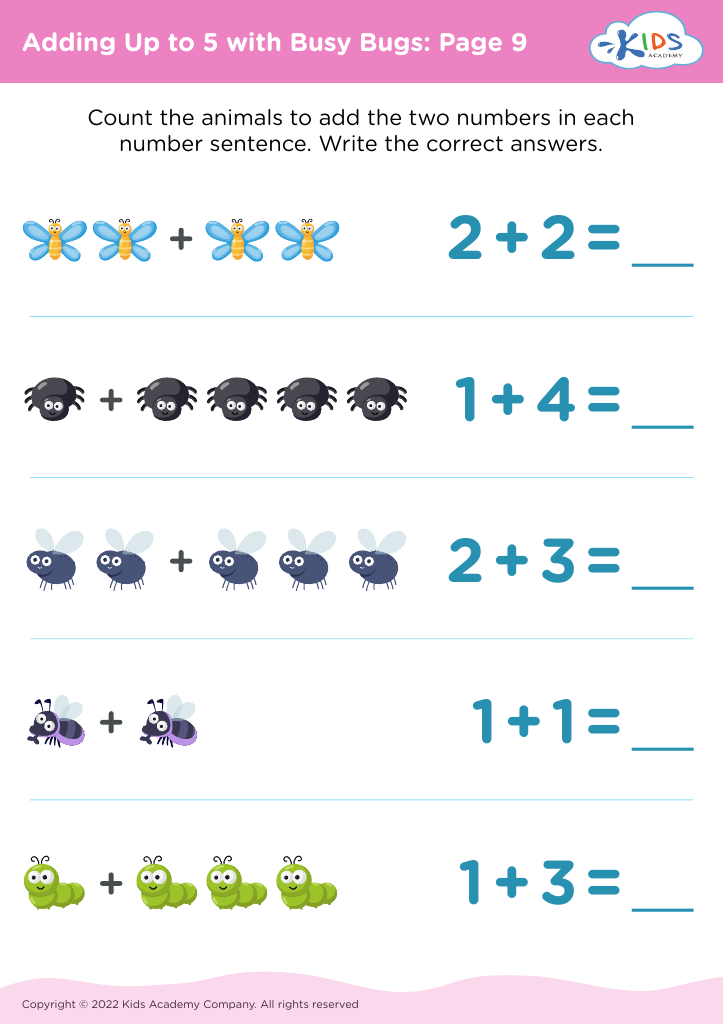
Adding Up to 5 with Busy Bugs: Page 9
Worksheet
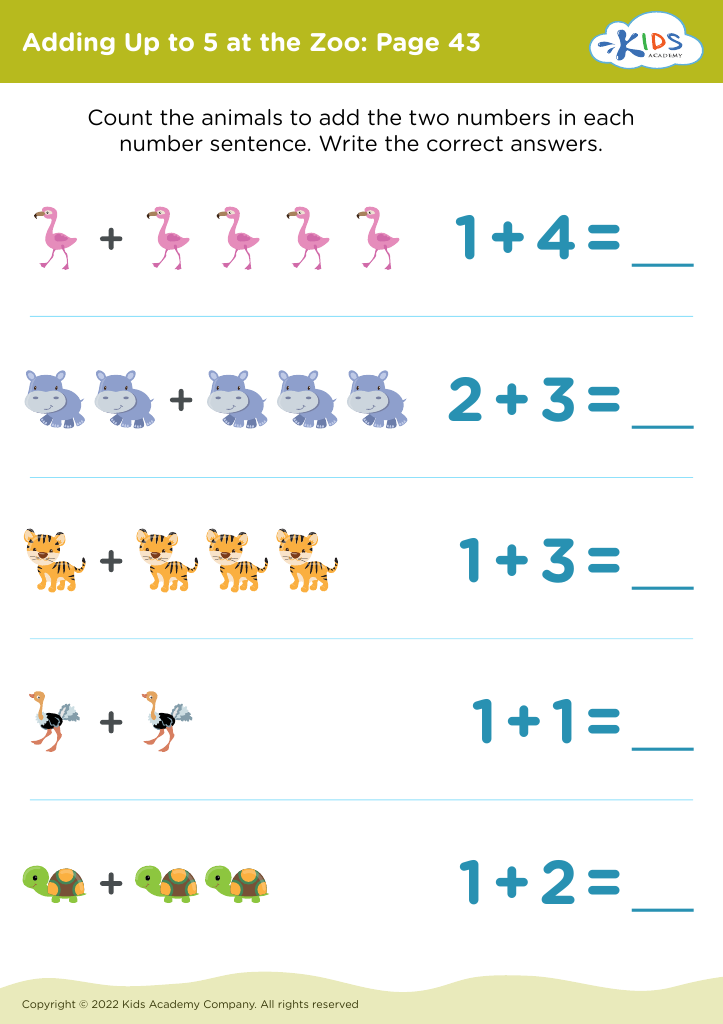
Adding Up to 5 at the Zoo: Page 43
Worksheet
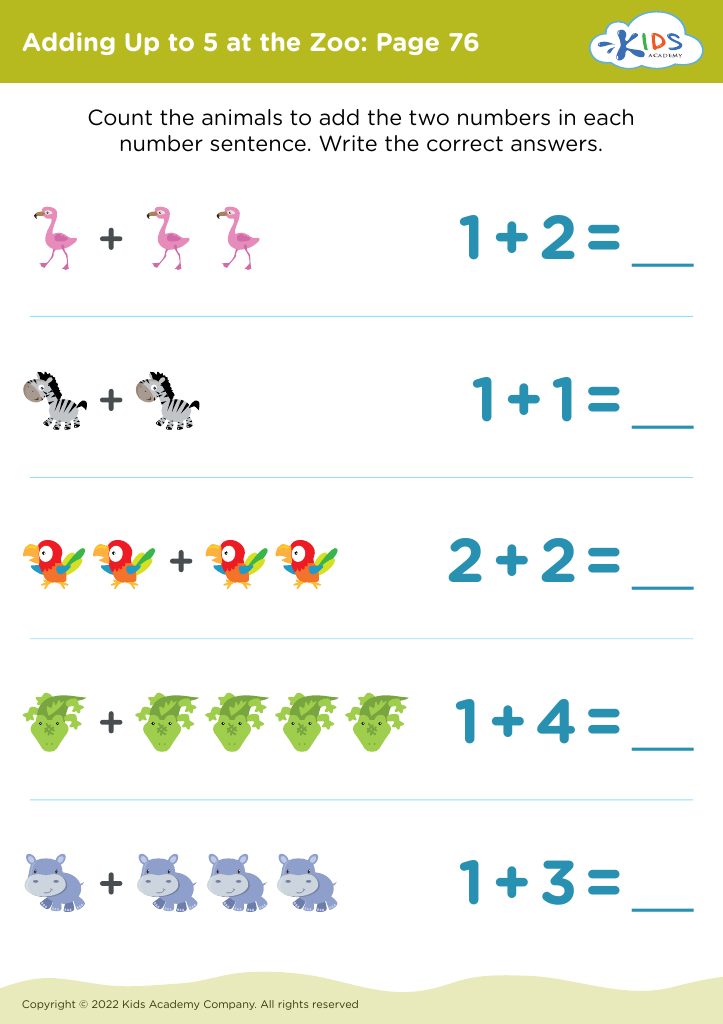
Adding Up to 5 at the Zoo: Page 76
Worksheet
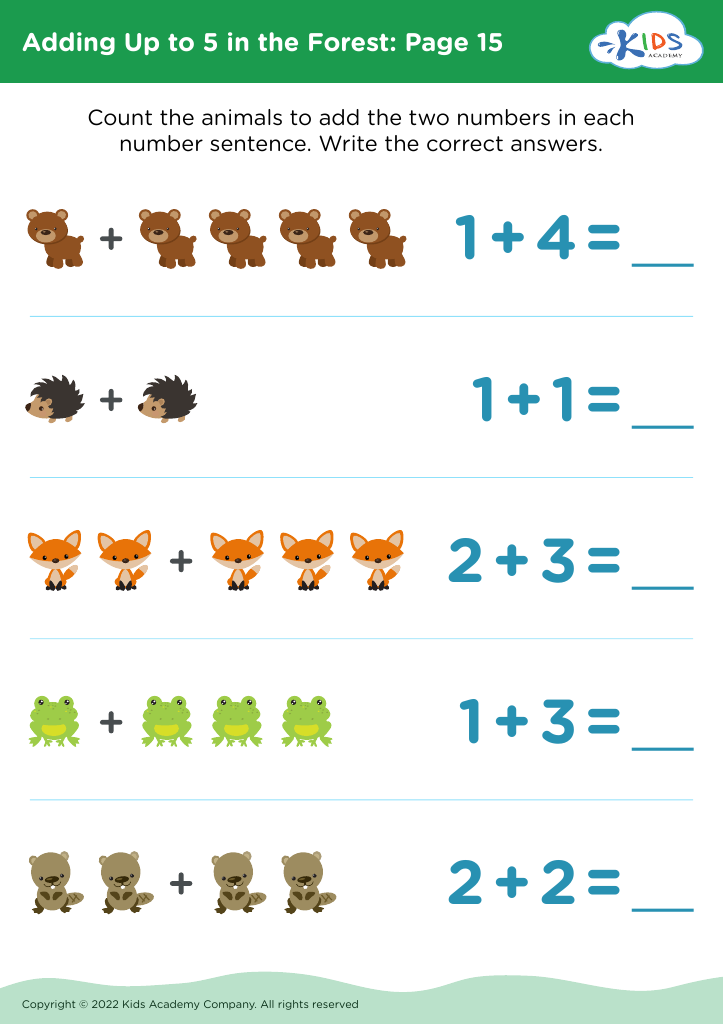
Adding Up to 5 in the Forest: Page 15
Worksheet
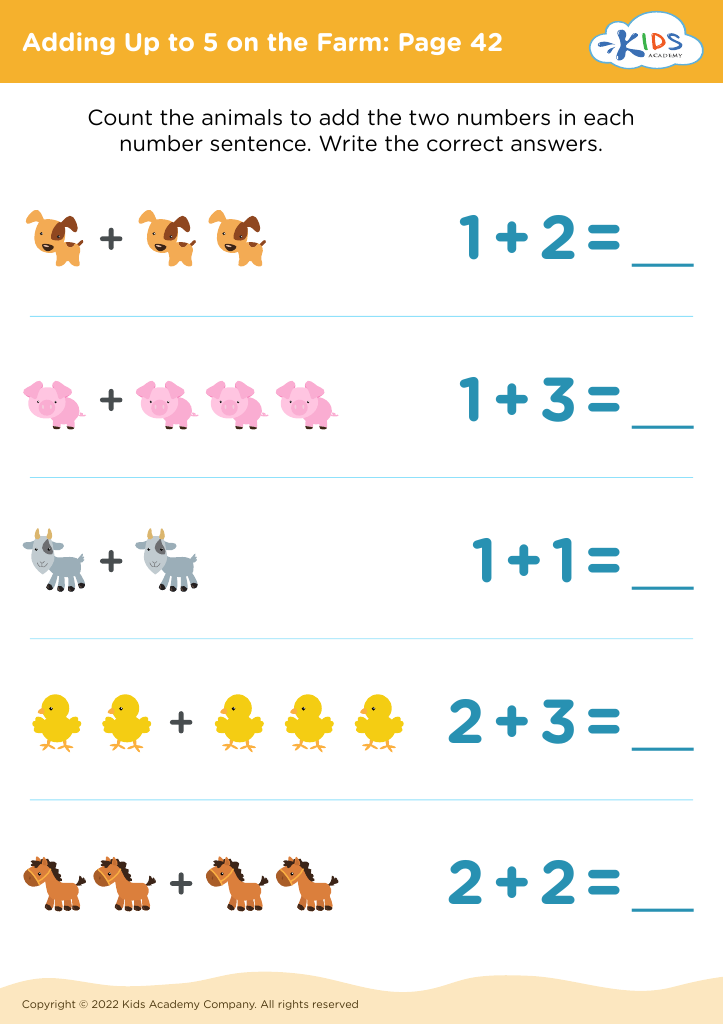
Adding Up to 5 on the Farm: Page 42
Worksheet
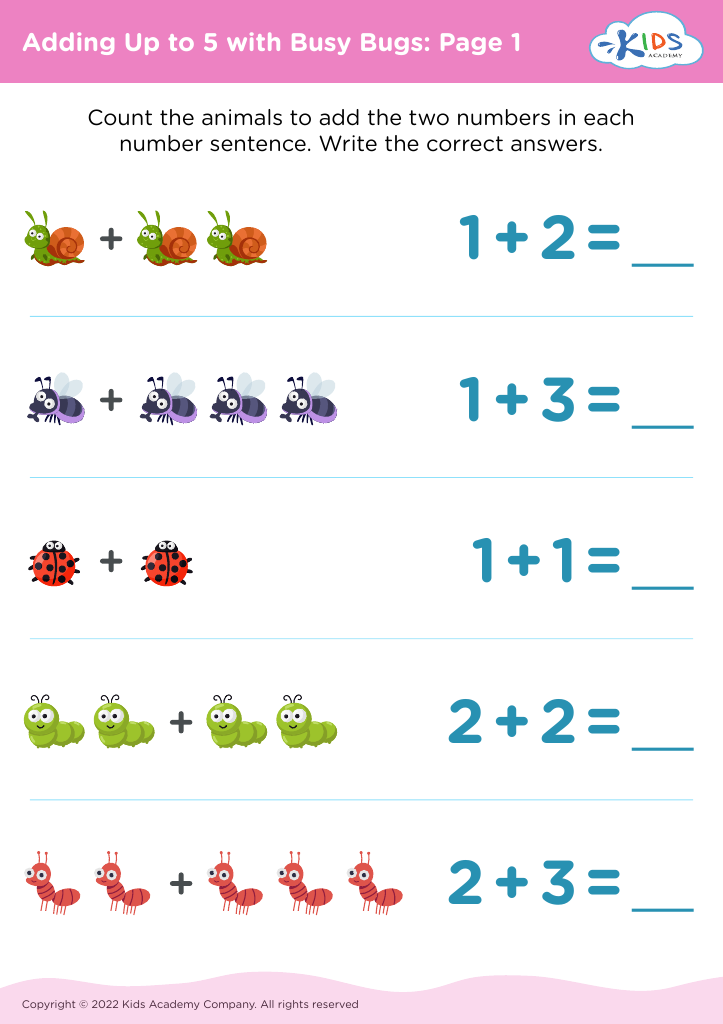
Adding Up to 5 with Busy Bugs: Page 1
Worksheet
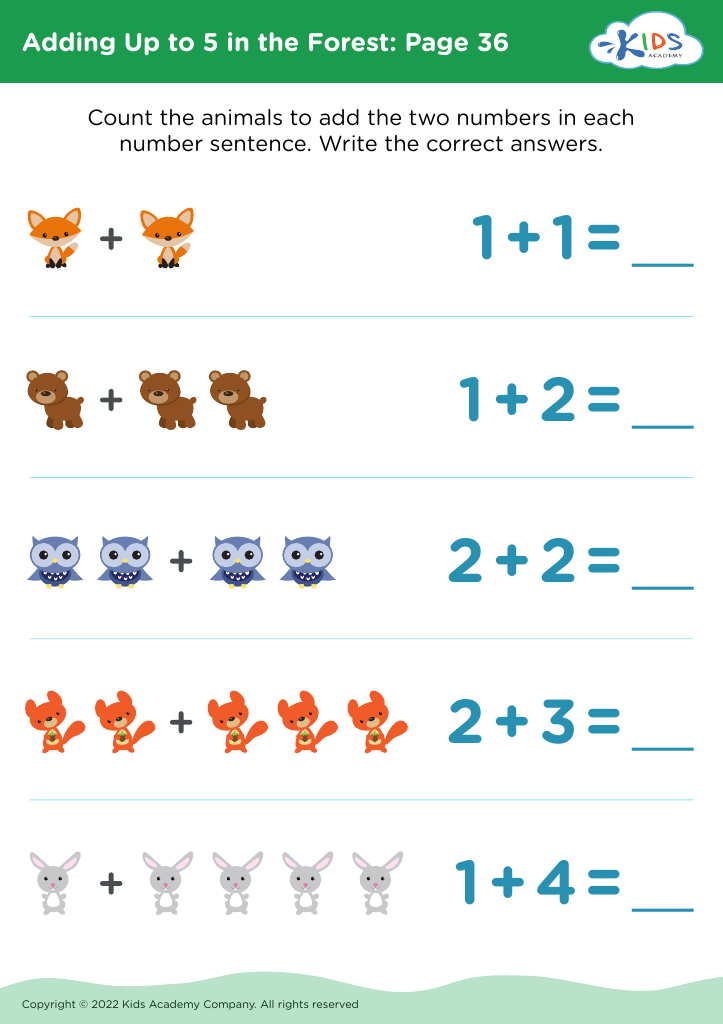
Adding Up to 5 in the Forest: Page 36
Worksheet
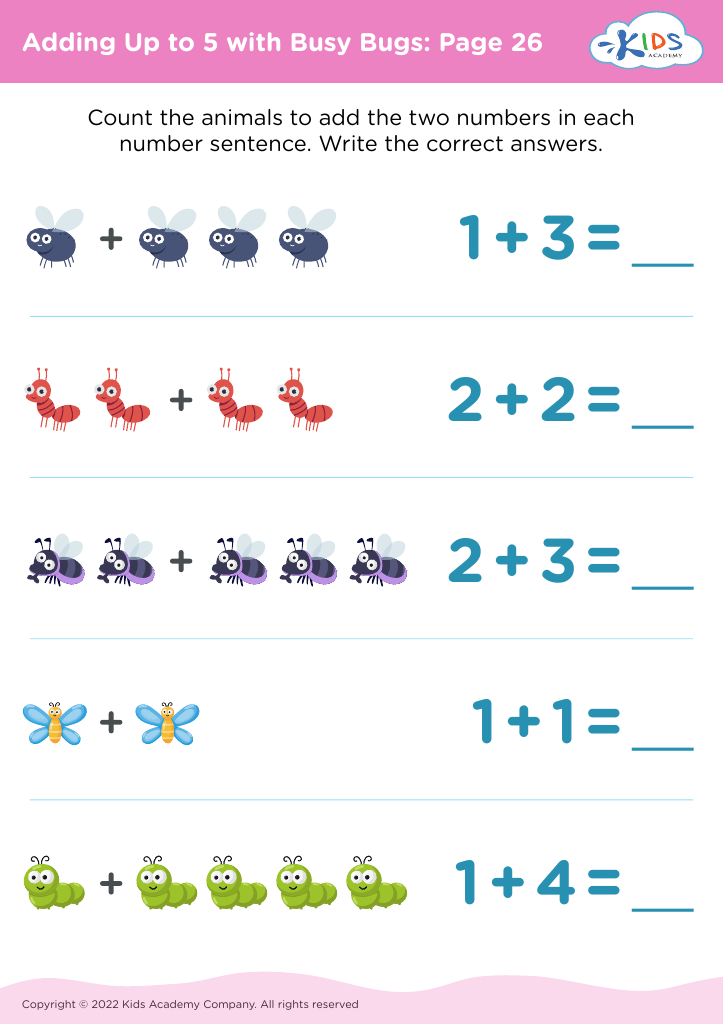
Adding Up to 5 with Busy Bugs: Page 26
Worksheet
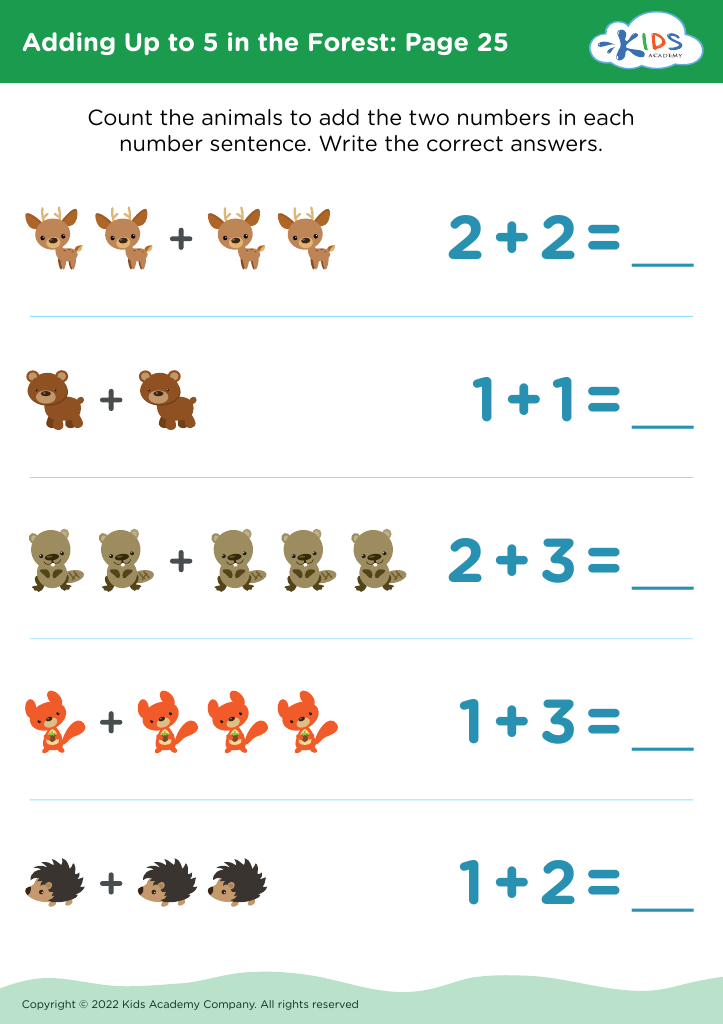
Adding Up to 5 in the Forest: Page 25
Worksheet
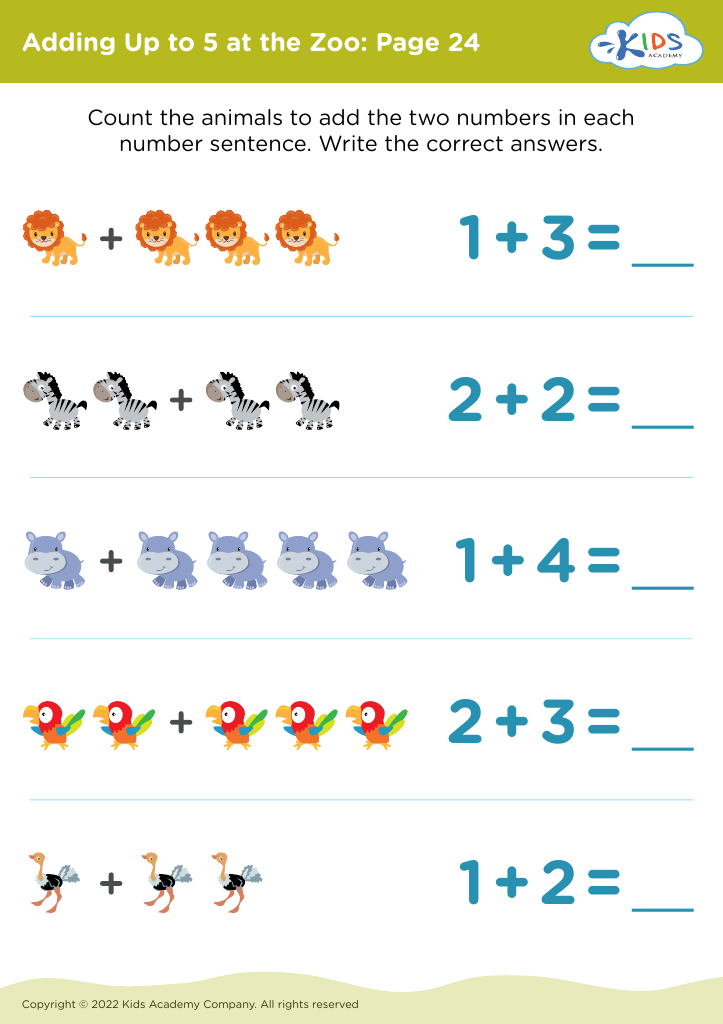
Adding Up to 5 at the Zoo: Page 24
Worksheet
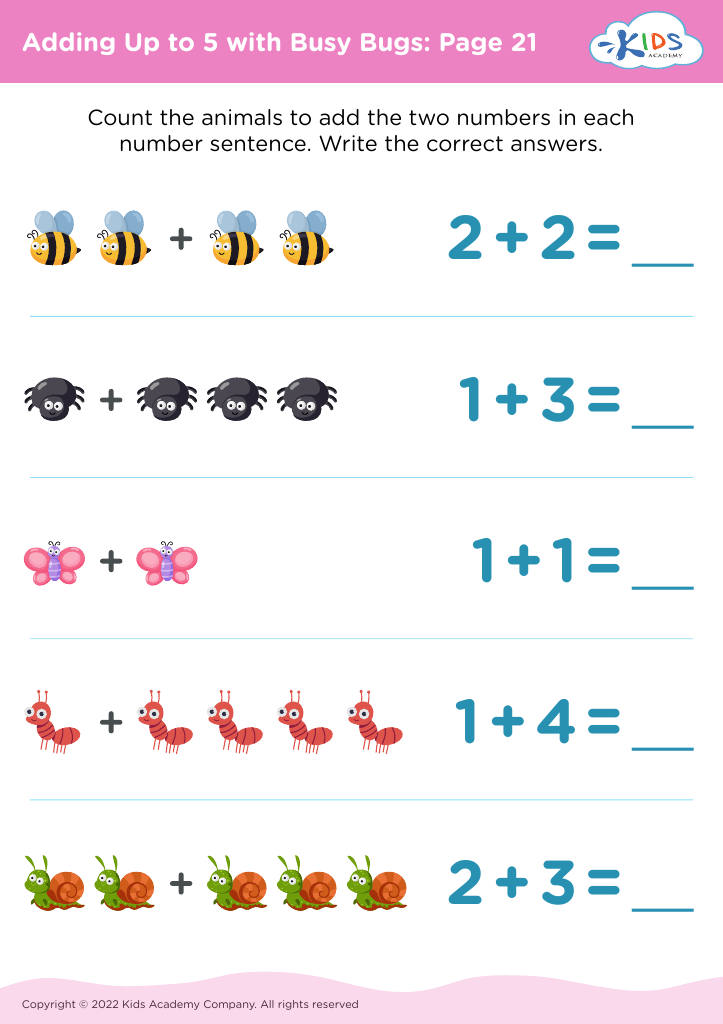
Adding Up to 5 with Busy Bugs: Page 21
Worksheet
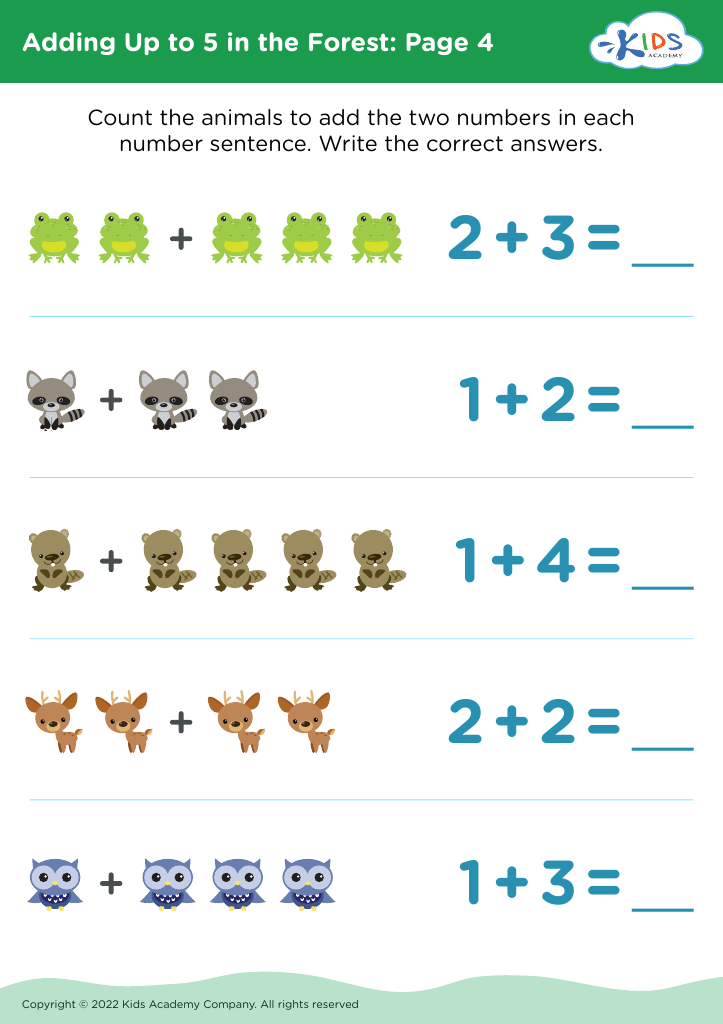
Adding Up to 5 in the Forest: Page 4
Worksheet
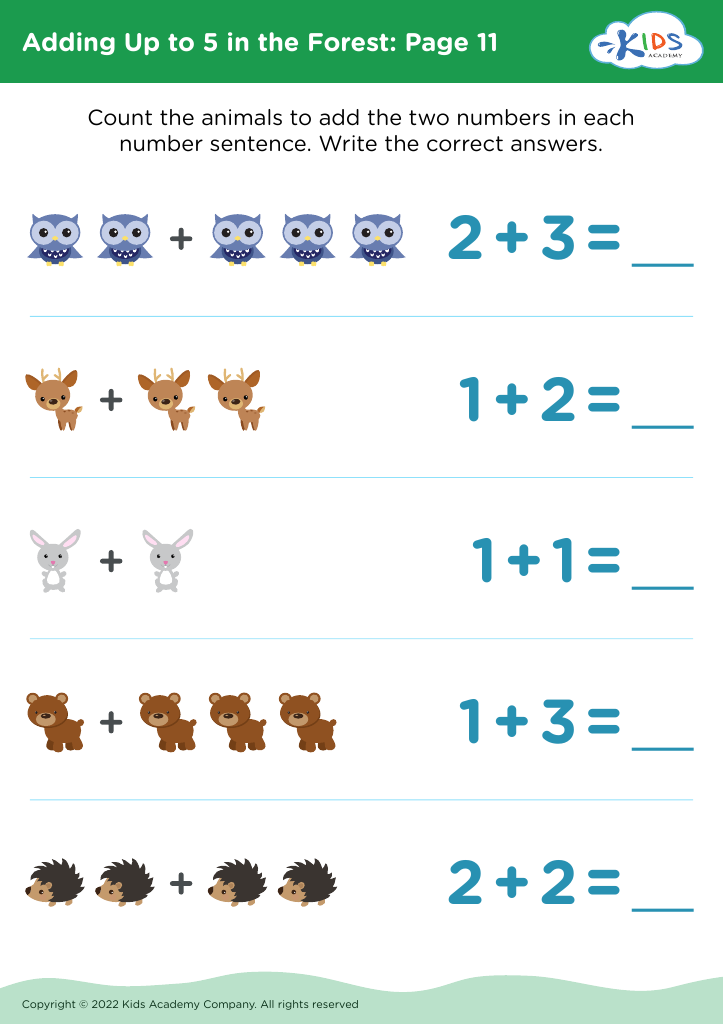
Adding Up to 5 in the Forest: Page 11
Worksheet
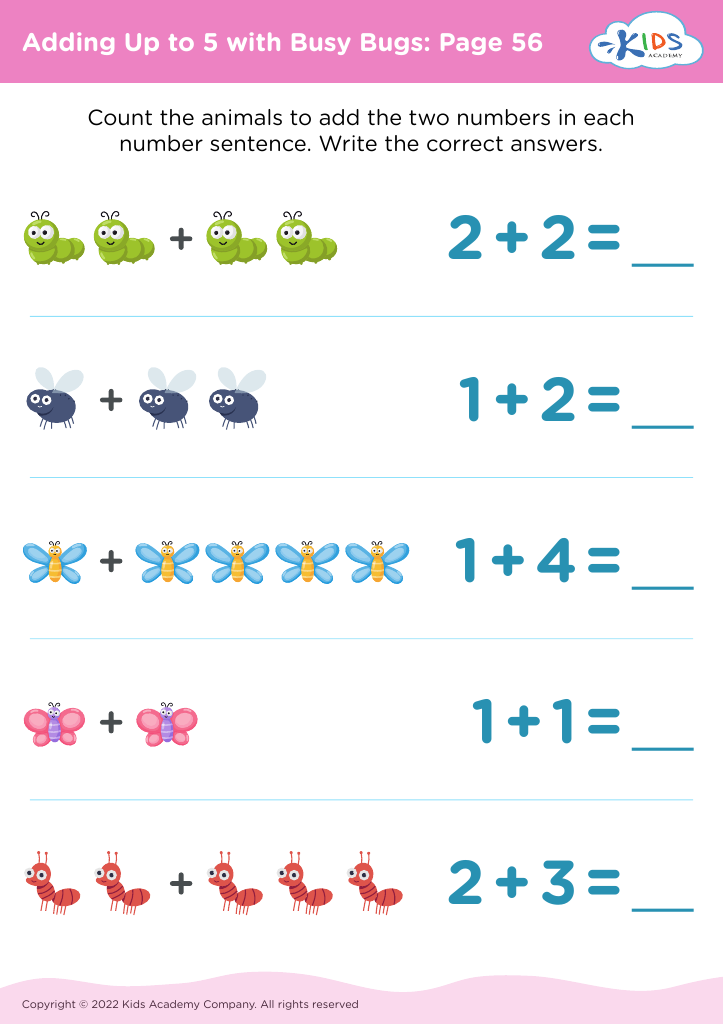
Adding Up to 5 with Busy Bugs: Page 56
Worksheet
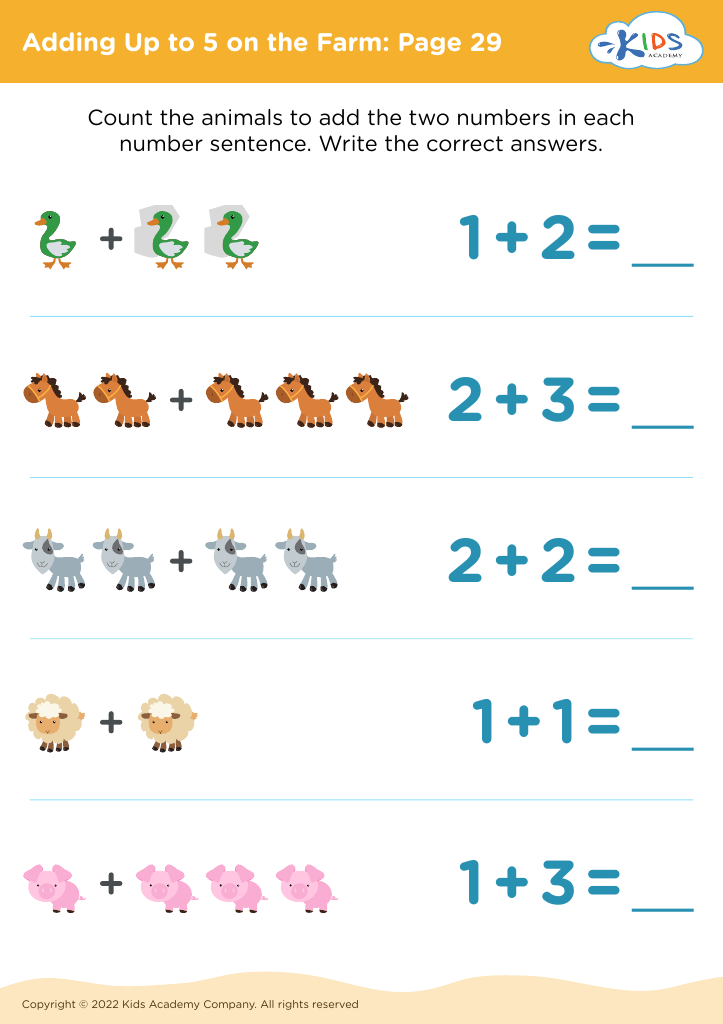
Adding Up to 5 on the Farm: Page 29
Worksheet
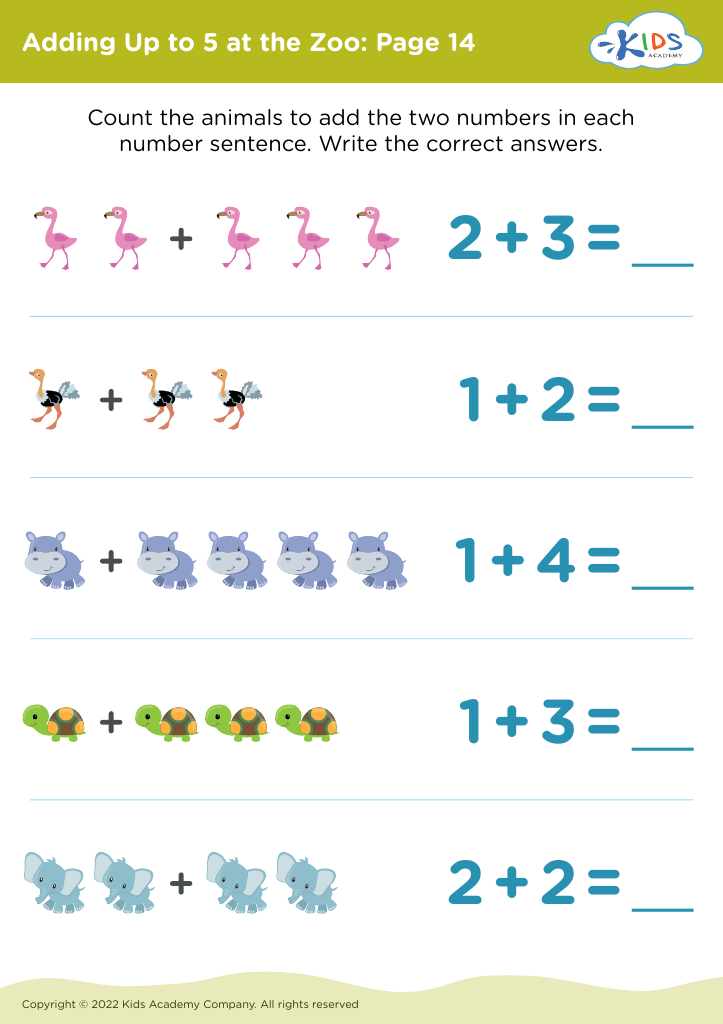
Adding Up to 5 at the Zoo: Page 14
Worksheet


Counting practice, especially adding up to 5, is crucial for children aged 5-8 for several reasons. This foundational skill in mathematics fosters a child's comprehension of numbers and basic arithmetic, which are essential for later academic success. At this age, children's cognitive development is significantly influenced by the interactions and activities they engage in. Incorporating counting and simple addition exercises in daily routines helps to reinforce their learning and make math a natural part of their lives.

When parents or teachers focus on counting practice, they promote not only numeric familiarity but also critical thinking and problem-solving skills. Children learn to manipulate numbers, understand relationships between quantities, and develop spatial awareness. Moreover, early math skills are strongly linked to future math competency and overall academic achievement.

Engaging children in counting activities individually or in groups also enhances social skills like cooperation and communication. It builds confidence and fosters a positive attitude toward math, reducing anxiety as they progress to more complex concepts. Ultimately, caring about counting practice lays the groundwork for lifelong learning, equipping children with essential tools for academic and real-world situations. Encouraging and implementing these practices can yield lasting benefits throughout their educational journey.