Hand-eye Coordination Adding Up to 5 Worksheets for Ages 5-8
15 filtered results
-
From - To
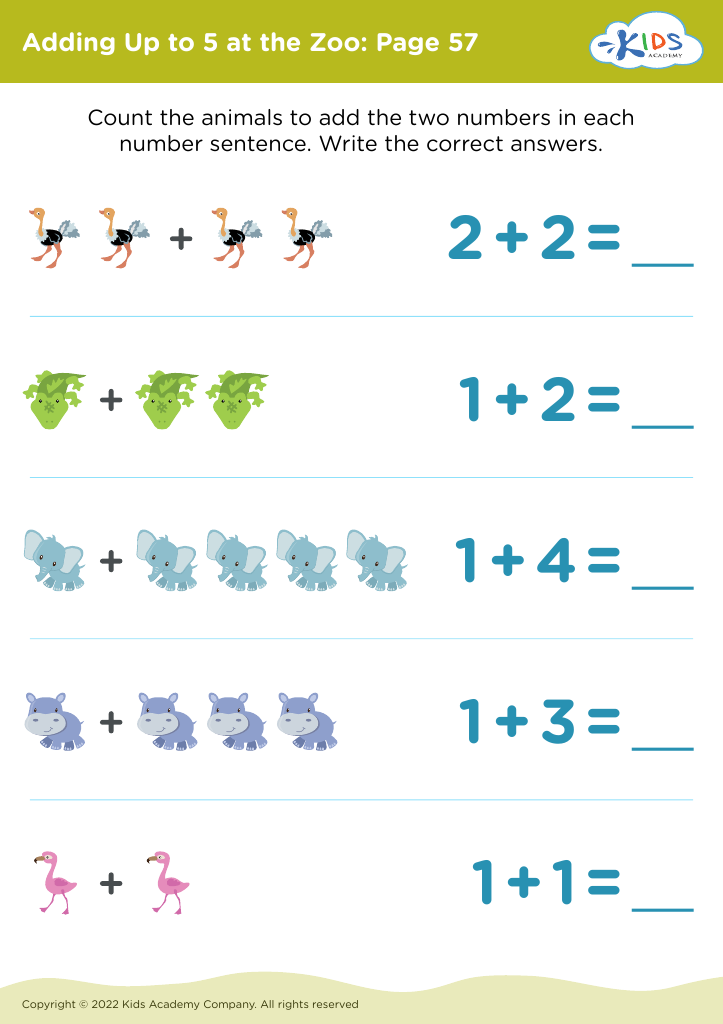
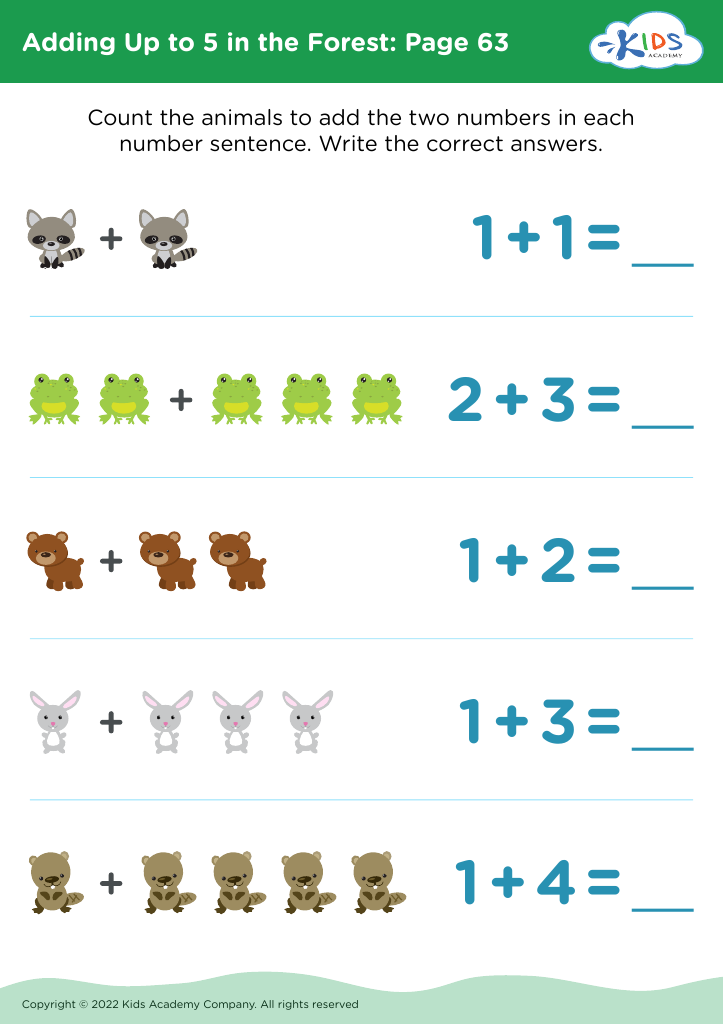
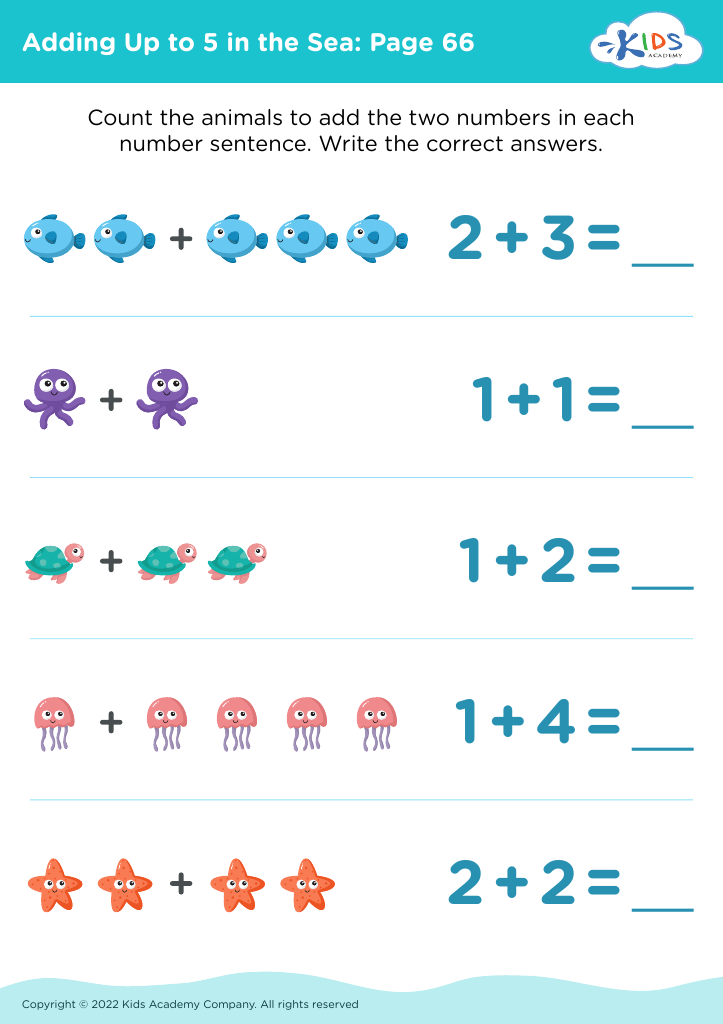
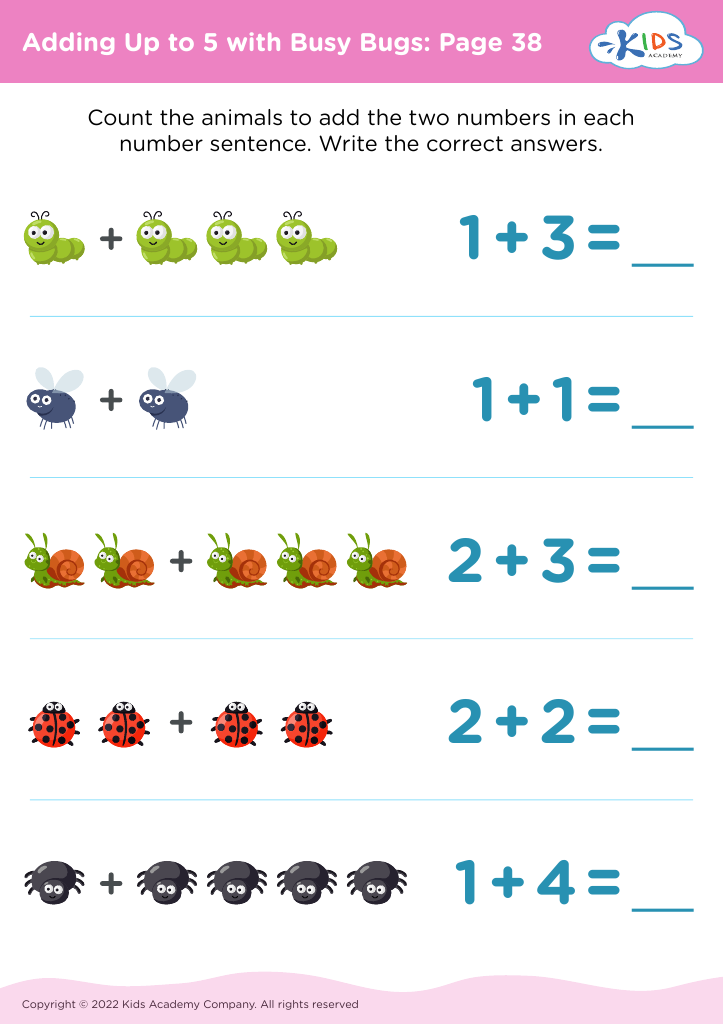
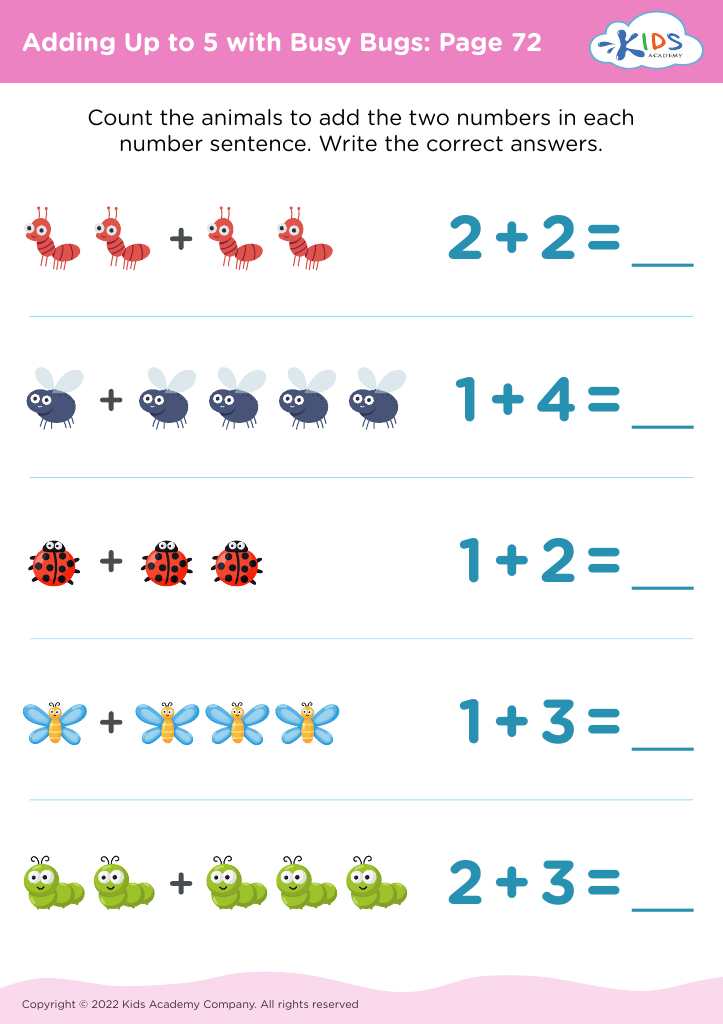
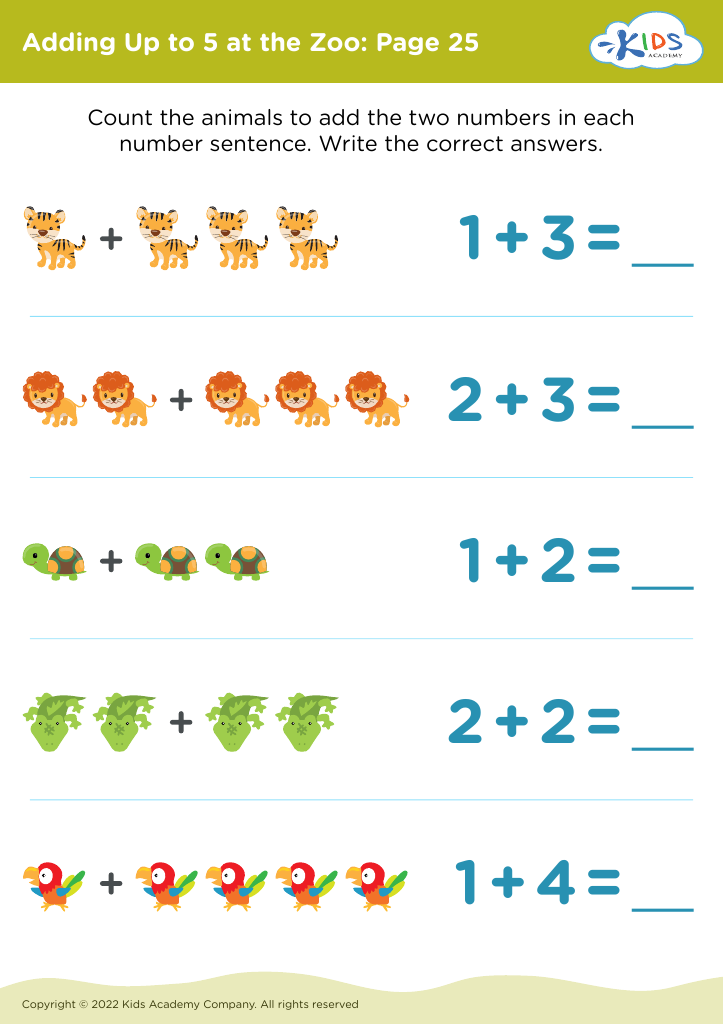
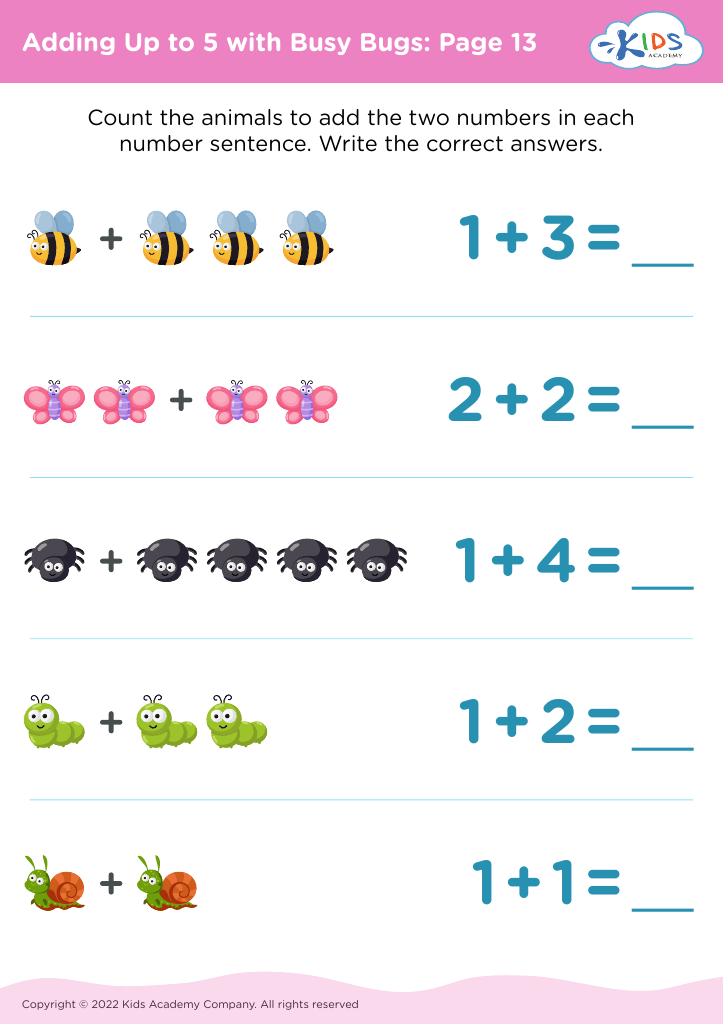
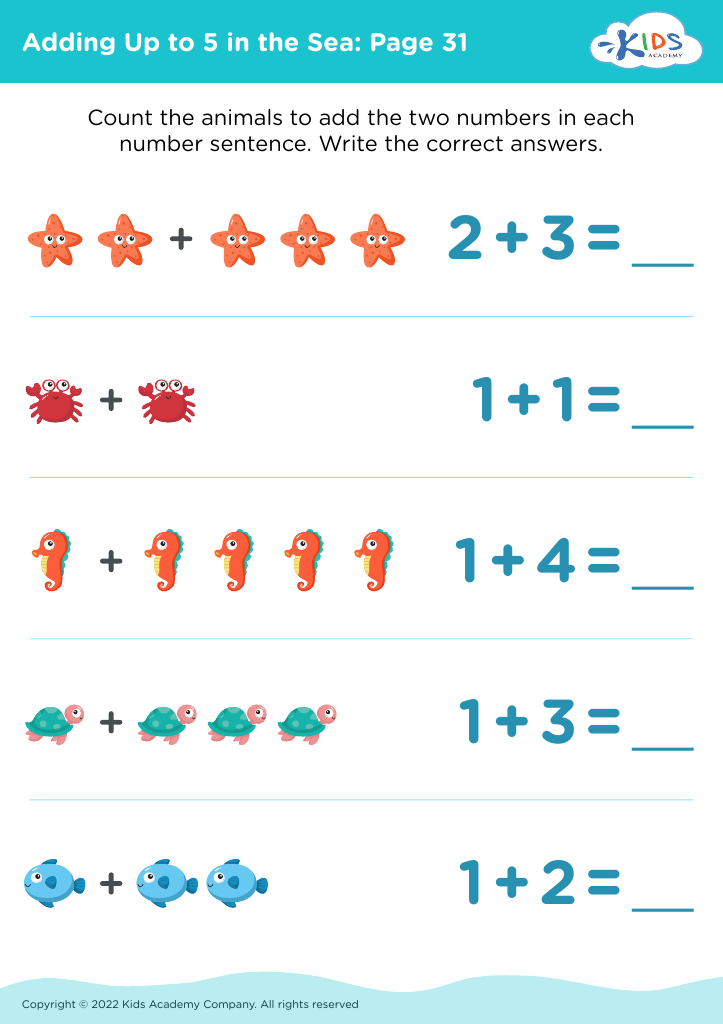
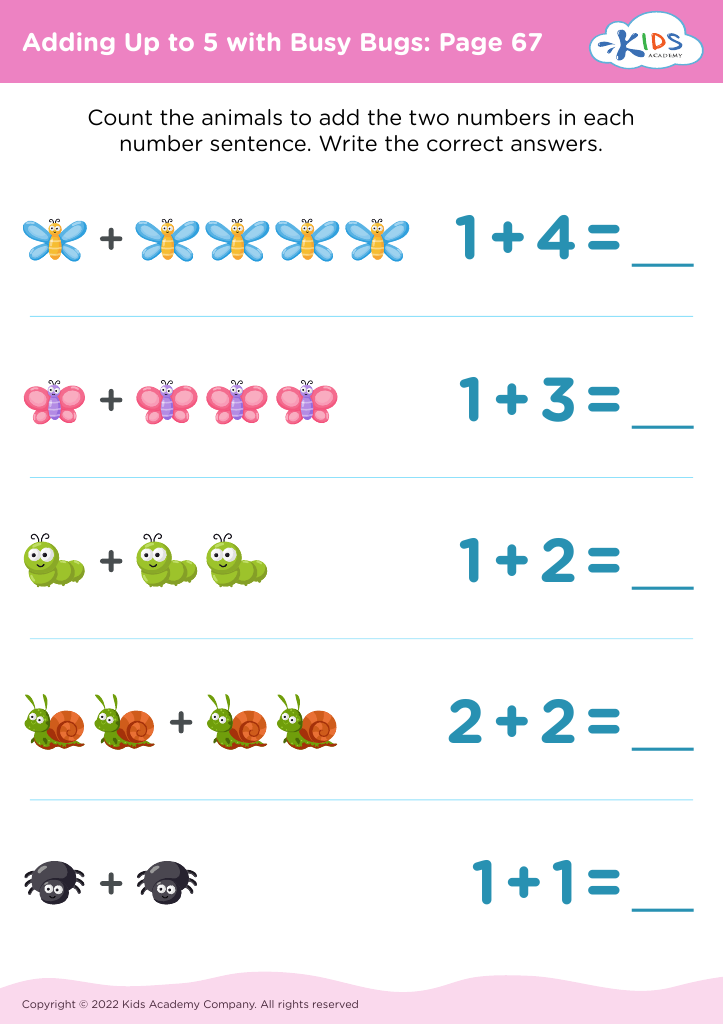
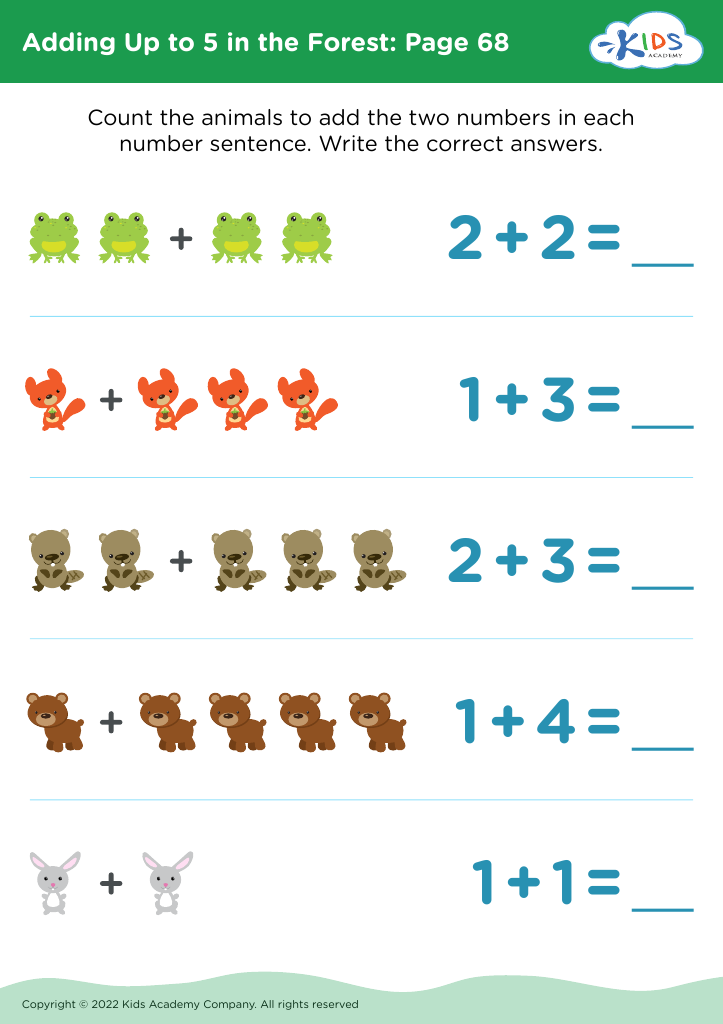
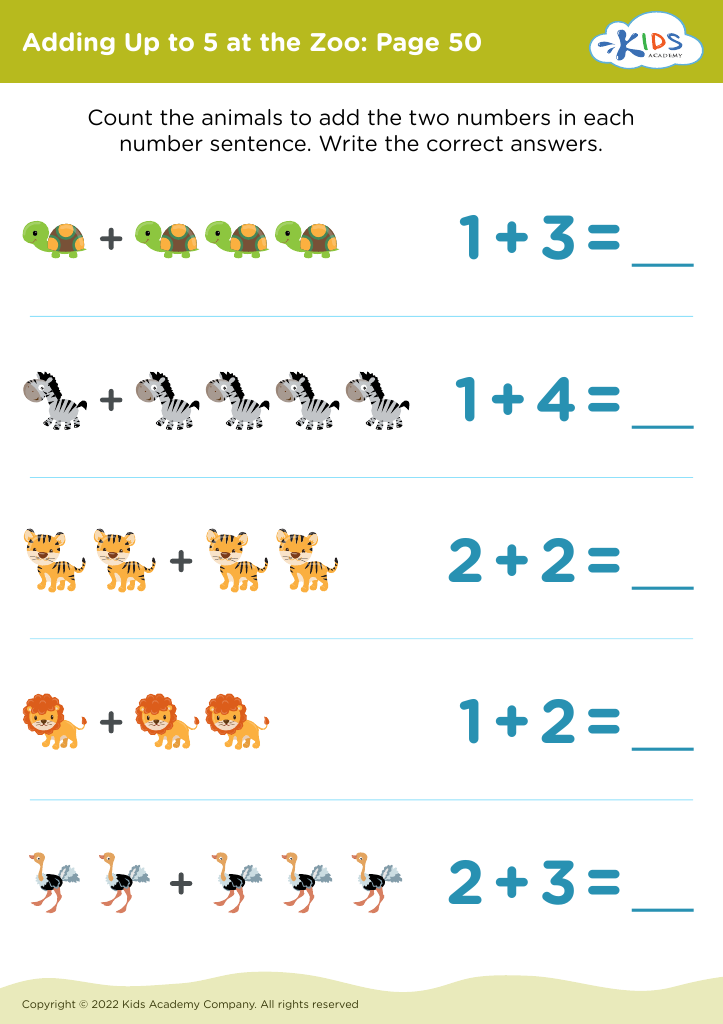
Boost your child's hand-eye coordination and math skills with our engaging "Hand-eye Coordination Adding Up to 5 Worksheets" designed for ages 5-8. These fun, printable worksheets combine exciting visual elements and interactive challenges to help young learners practice addition in a hands-on way. As children connect numbers and symbols, they enhance their fine motor skills while gaining confidence in math. Each worksheet cleverly incorporates activities that captivate and motivate students, making learning an enjoyable experience. Support your child's development with these easy-to-use resources and lay a strong foundation in math skills while fostering coordination and focus! Perfect for home or classroom use!
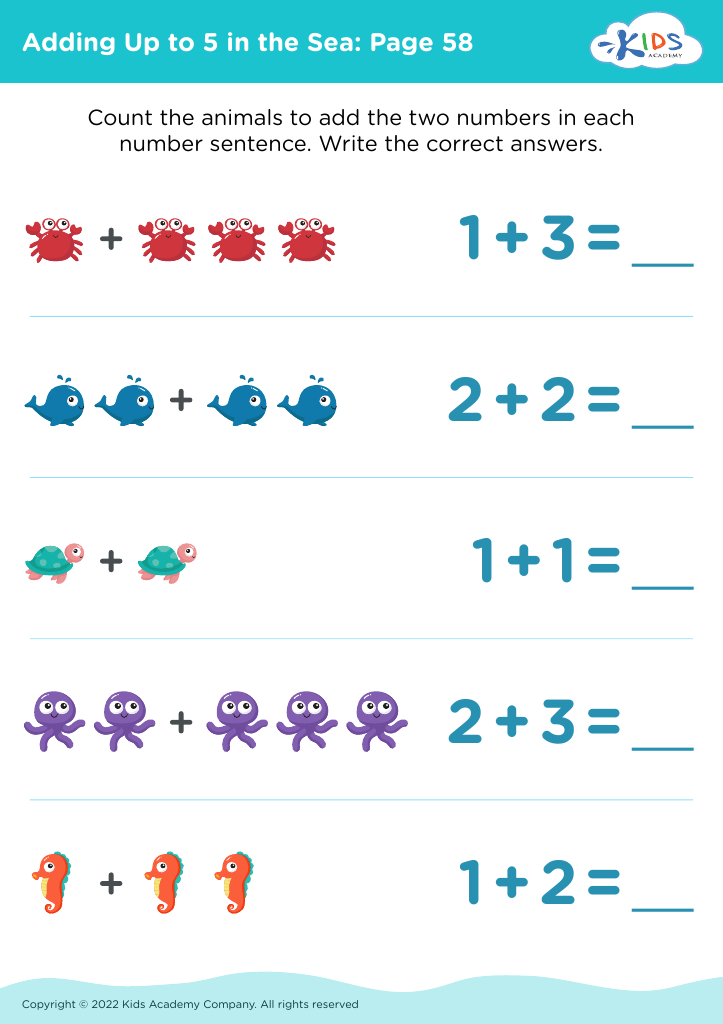
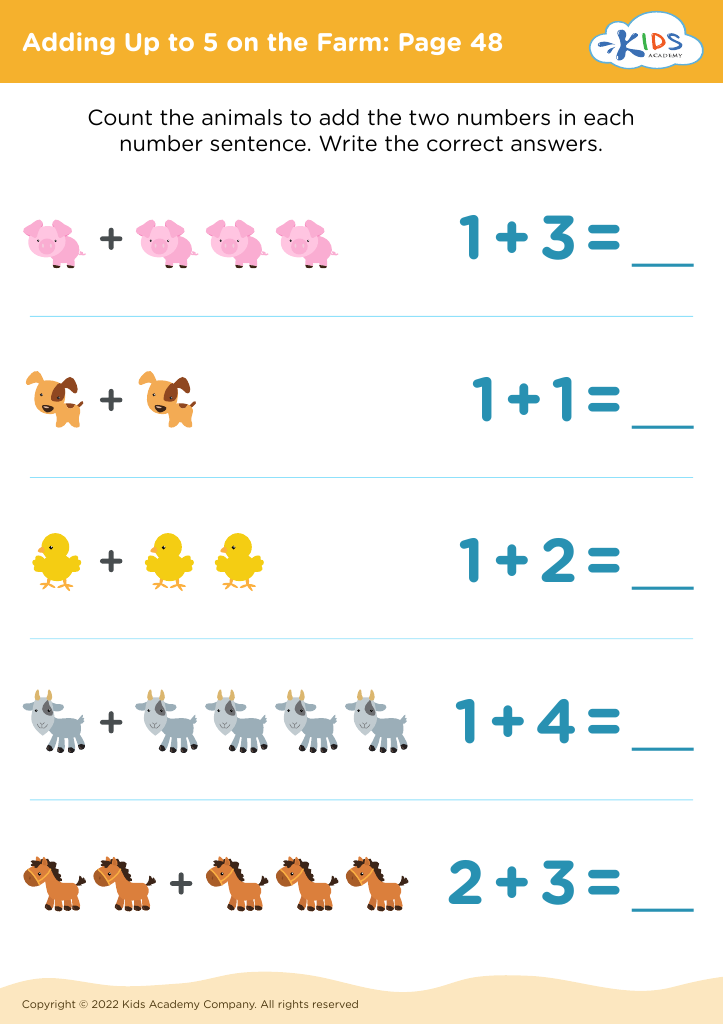
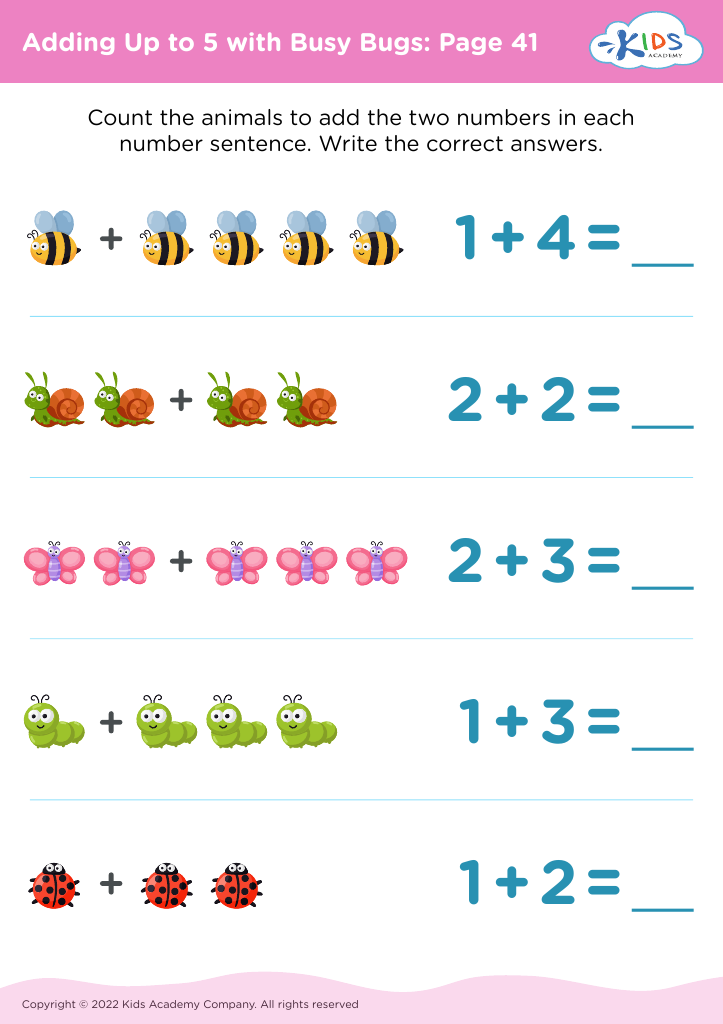
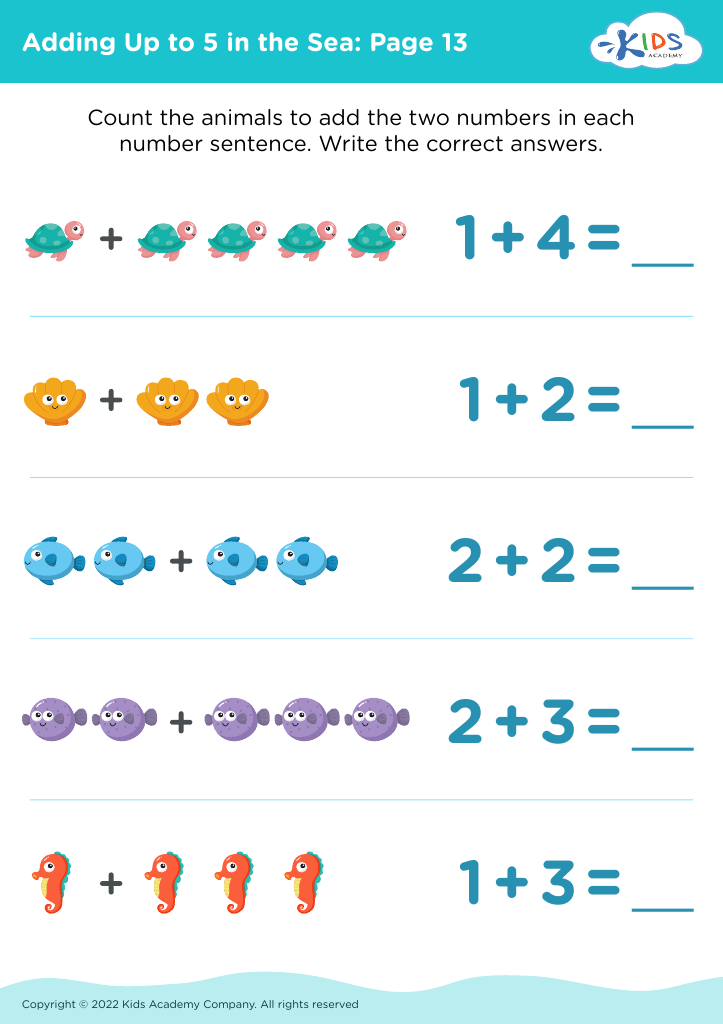






%20(1).jpg)

Hand-eye coordination is a crucial skill for children aged 5-8, particularly when developing basic math skills, such as adding up to 5. During this foundational stage, children learn to associate numbers with visual representations, enhancing their ability to perform math tasks. Good hand-eye coordination allows children to manipulate objects, such as counting cubes or number beads, which not only reinforces counting skills but also enables them to visualize numeric concepts effectively.
When parents and teachers emphasize hand-eye coordination along with examining arithmetic, they cultivate a multi-sensory approach to learning. This strengthens cognitive development and mathematical proficiency, making math more engaging and less intimidating for young learners. Moreover, activities that promote hand-eye coordination, such as block building or interactive games, keep lessons lively and enjoyable. This engagement fosters a positive attitude towards math—a crucial factor in long-term academic success.
By integrating hand-eye coordination exercises into daily math interactions, parents and teachers provide children with the tools they need to excel in arithmetic, build a strong foundation for future mathematical understanding, and enhance fine motor skills that are essential in various aspects of learning and daily life. Careful attention to this skill can lead to lifelong confidence and competence in mathematics.








