Improving concentration Adding Up to 5 Worksheets for Ages 5-8
13 filtered results
-
From - To
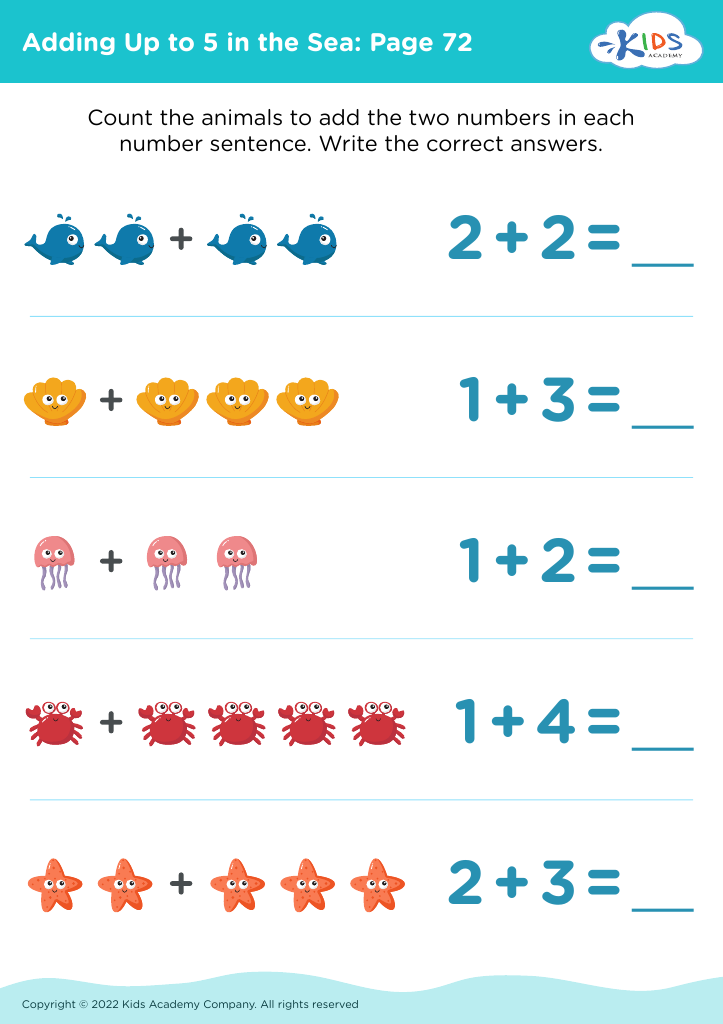
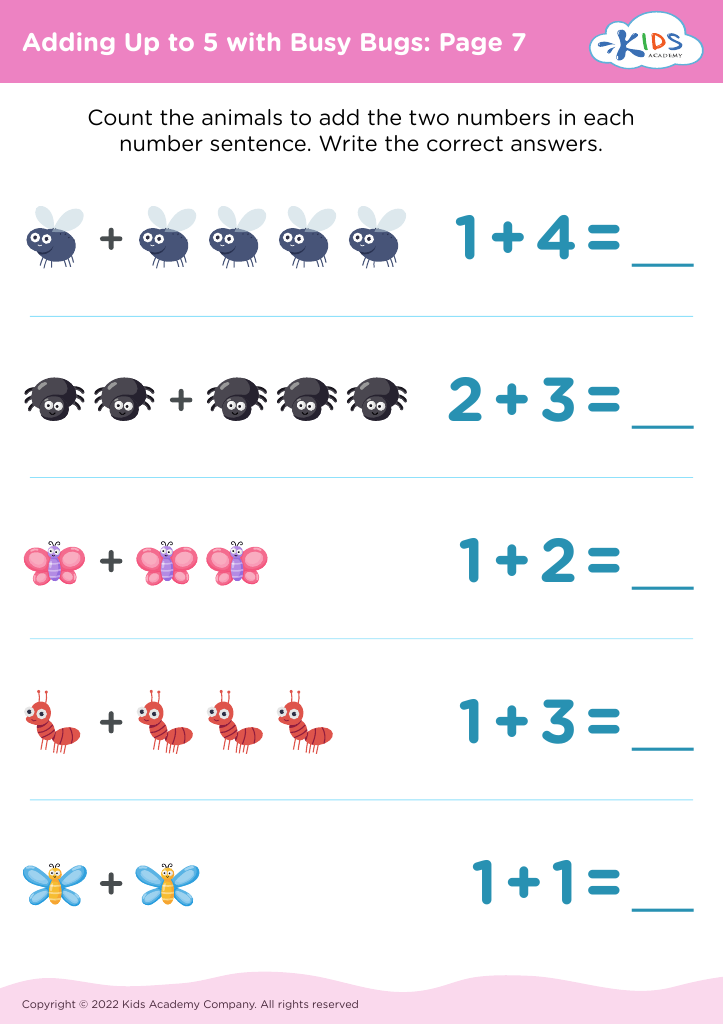
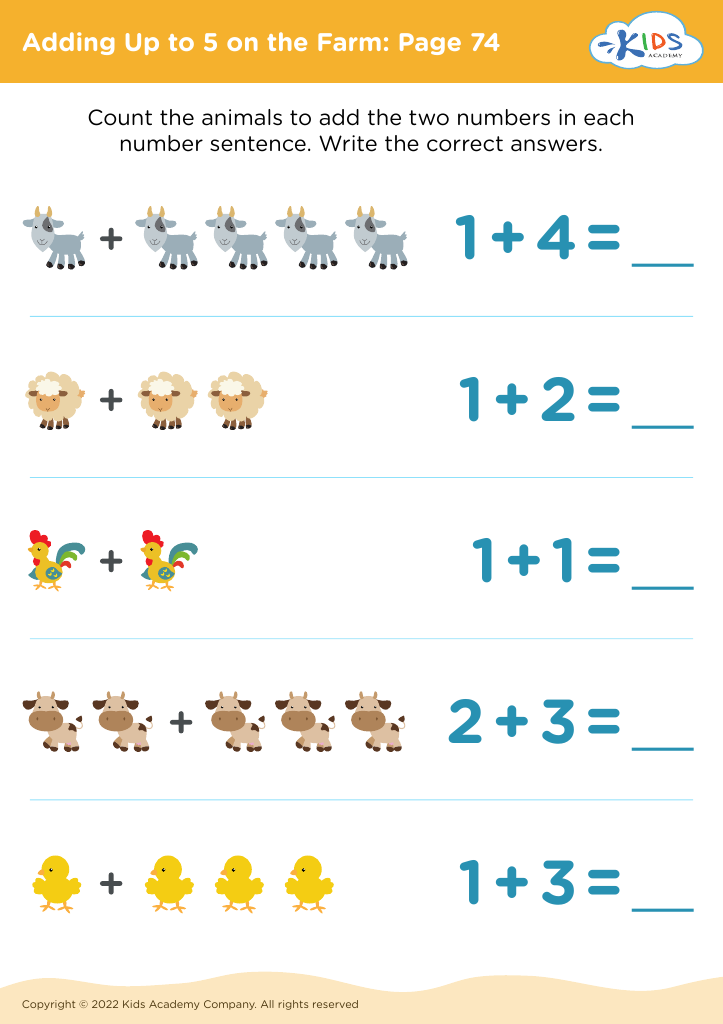
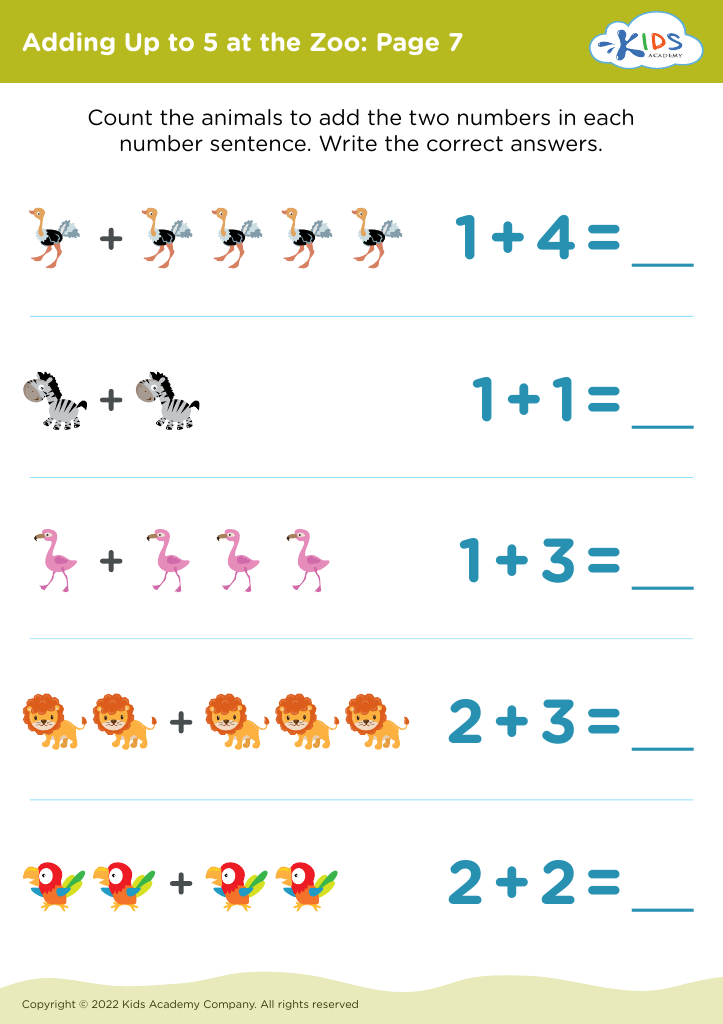
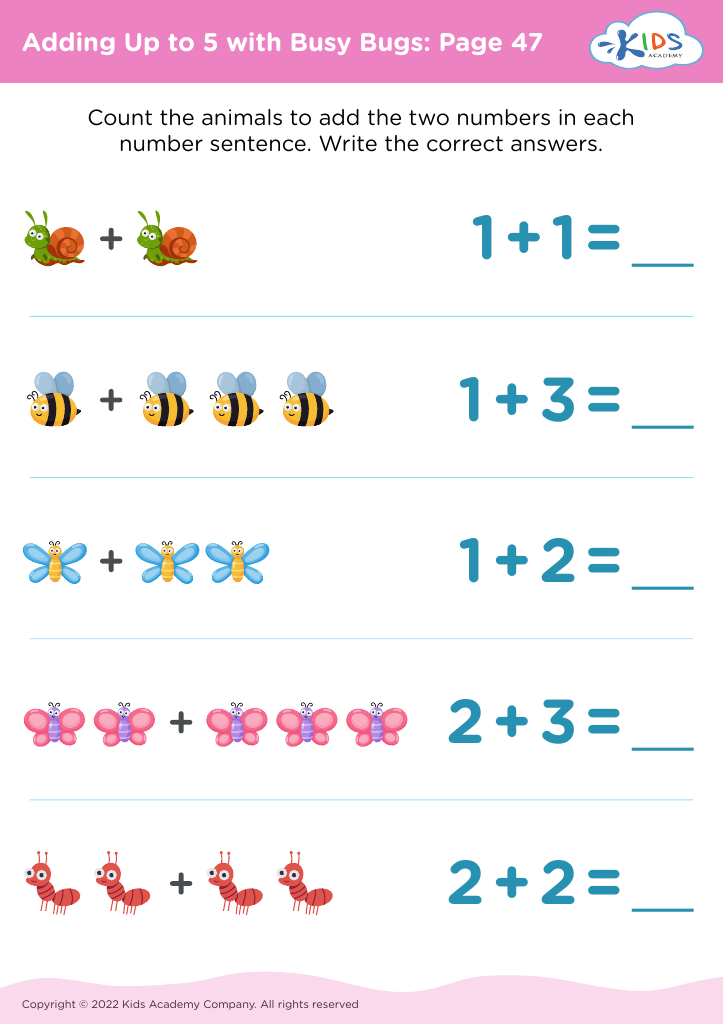
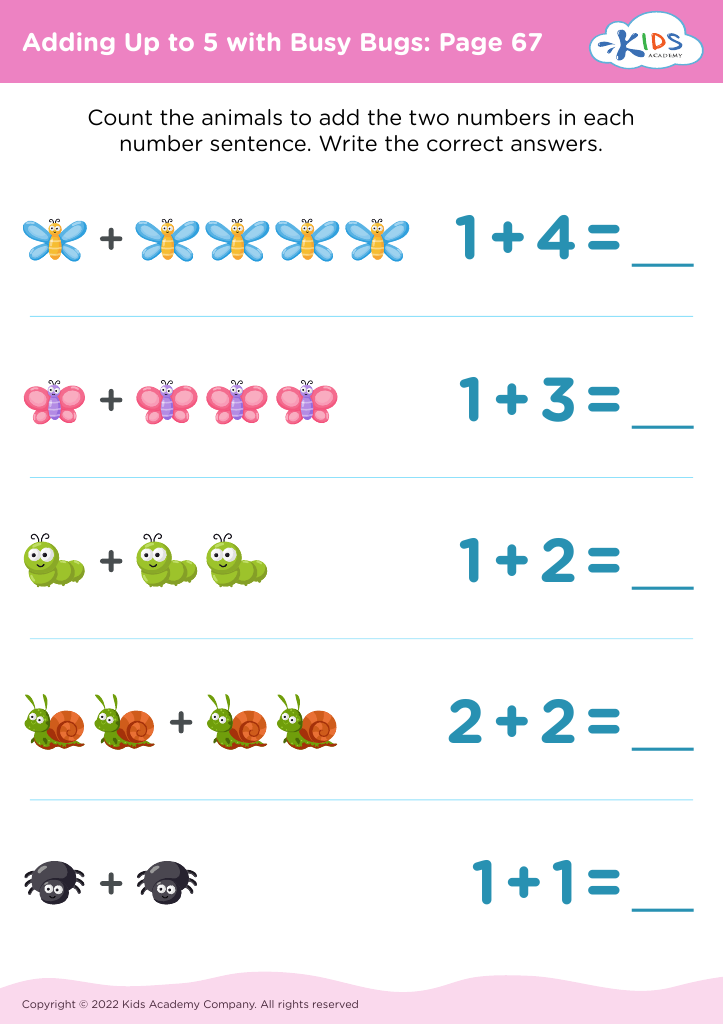
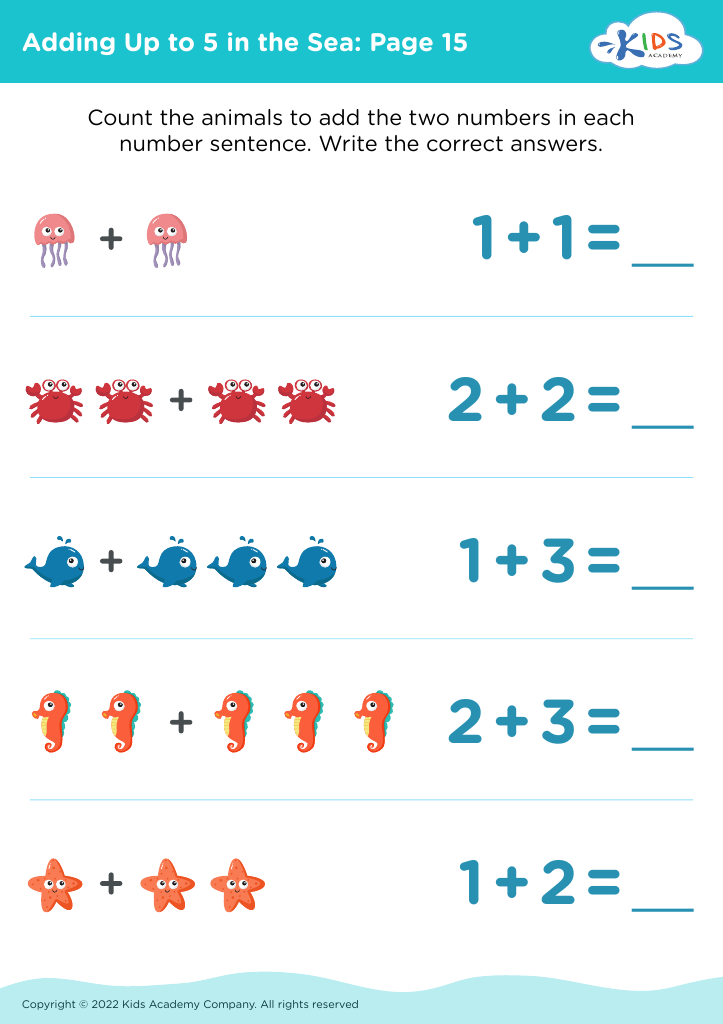
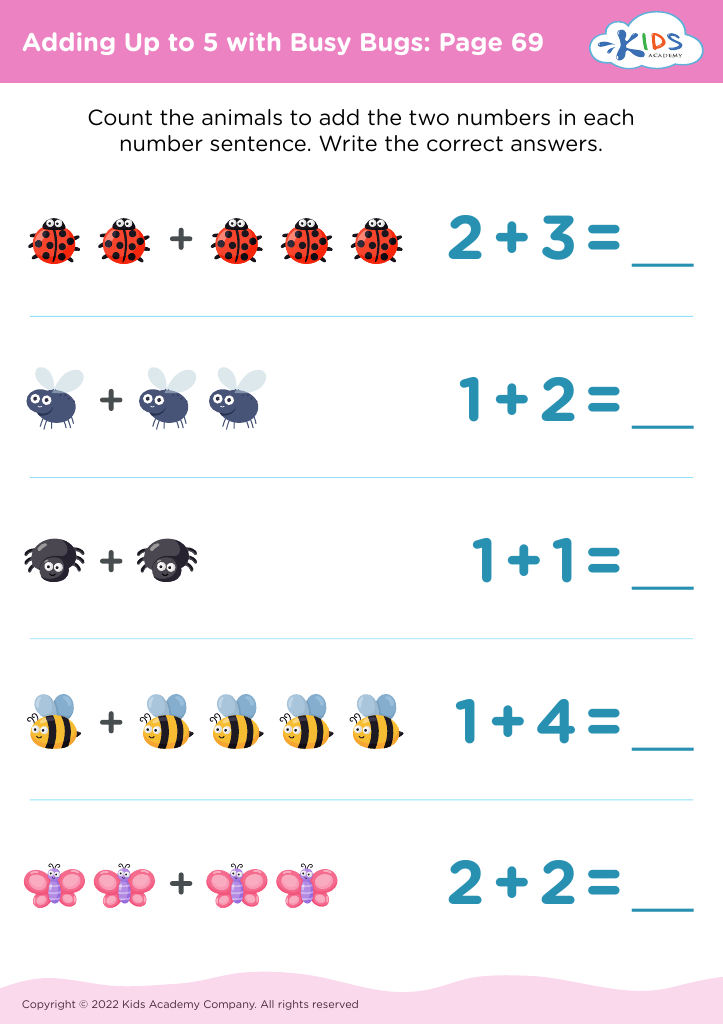
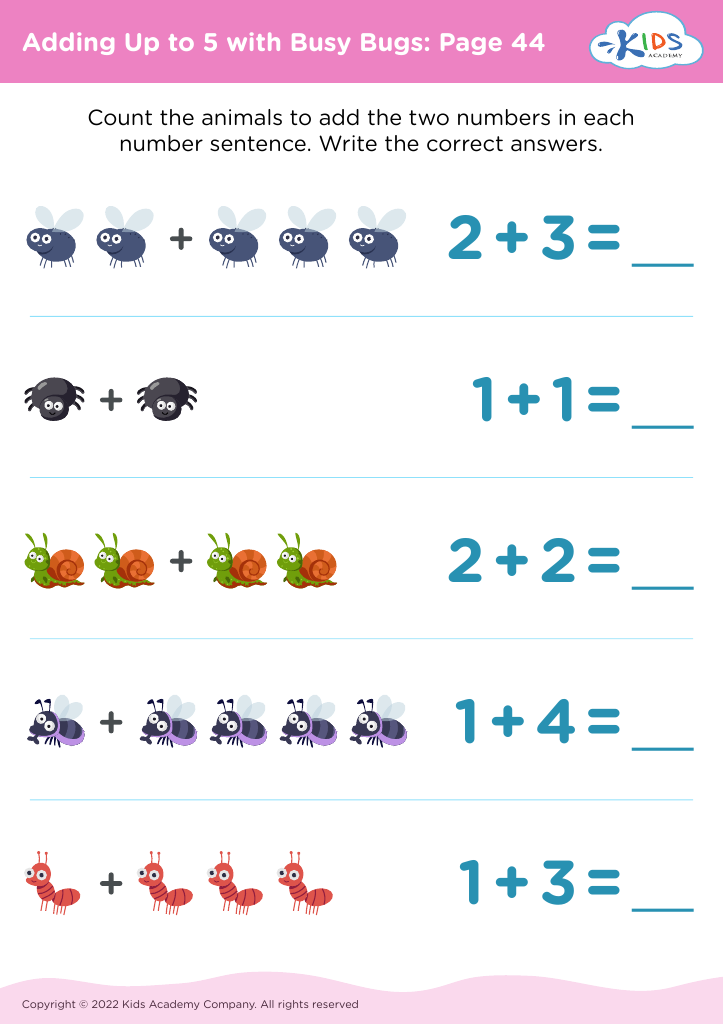
Boost your child’s focus and math skills with our “Improving Concentration Adding Up to 5 Worksheets” designed for ages 5-8. These engaging worksheets aim to help young learners enhance their concentration through colorful activities focused on basic addition. Each worksheet includes fun problems, images, and interactive tasks that captivate children's attention, making learning both effective and enjoyable. By systematically solving addition questions, kids will reinforce their arithmetic skills and improve their ability to stay focused. Ideal for both classroom and at-home practice, these printables foster a strong foundation in math while nurturing kids' cognitive development.
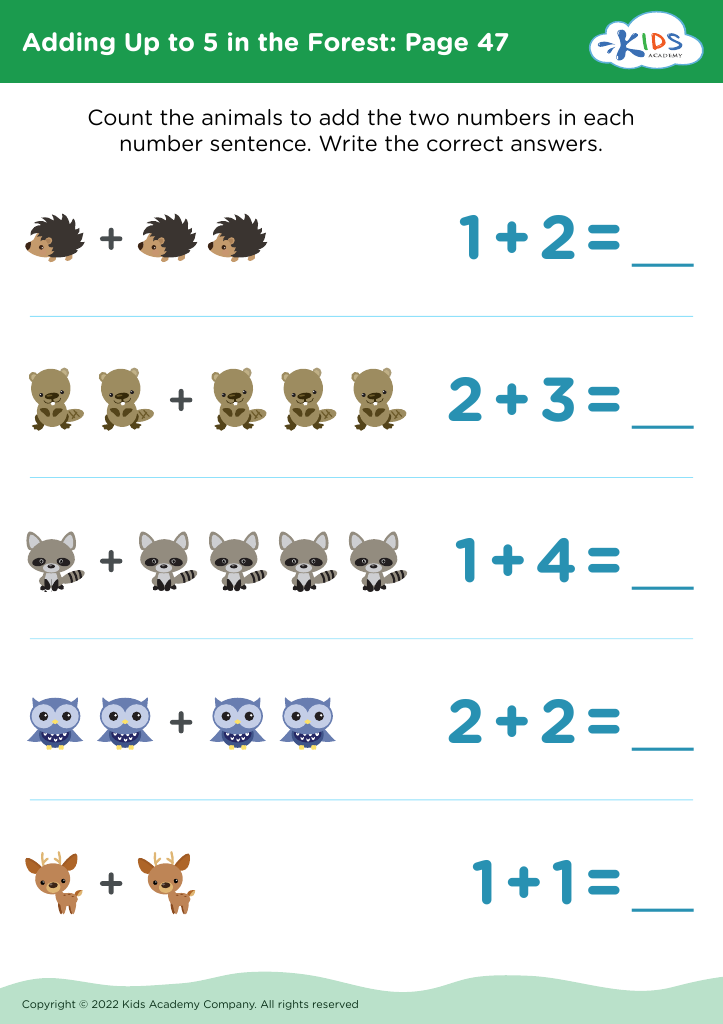
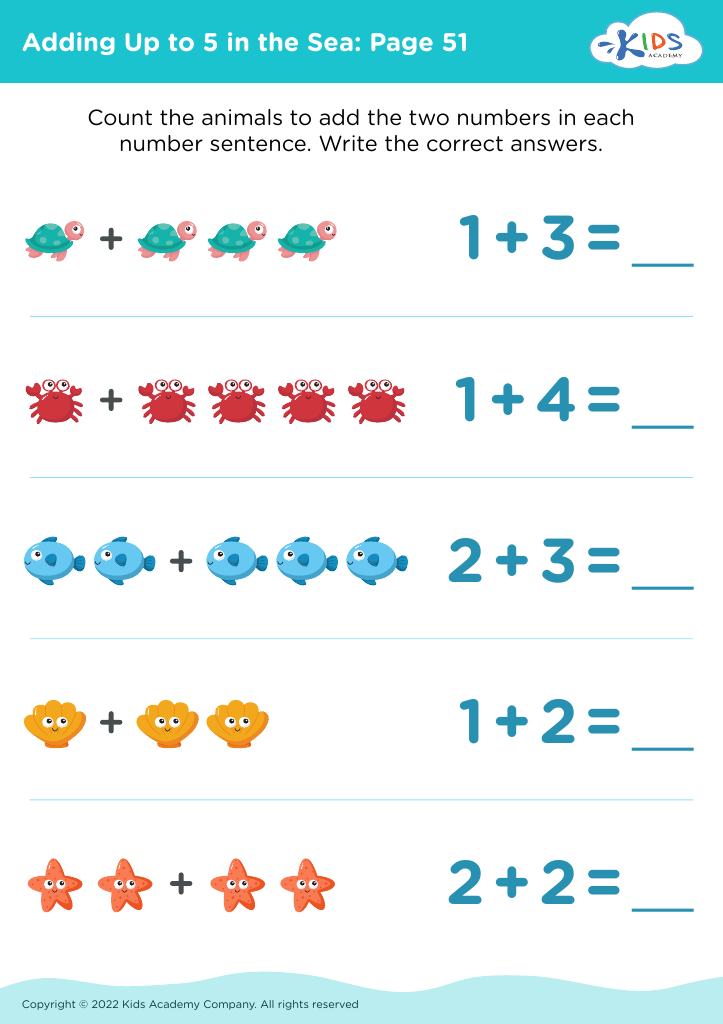
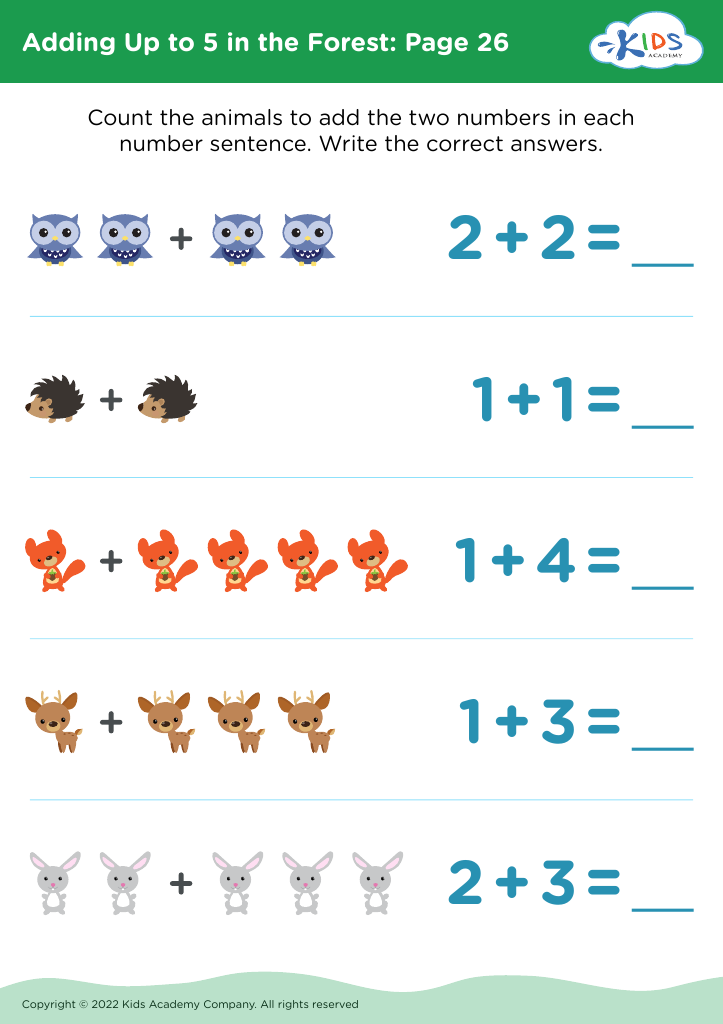
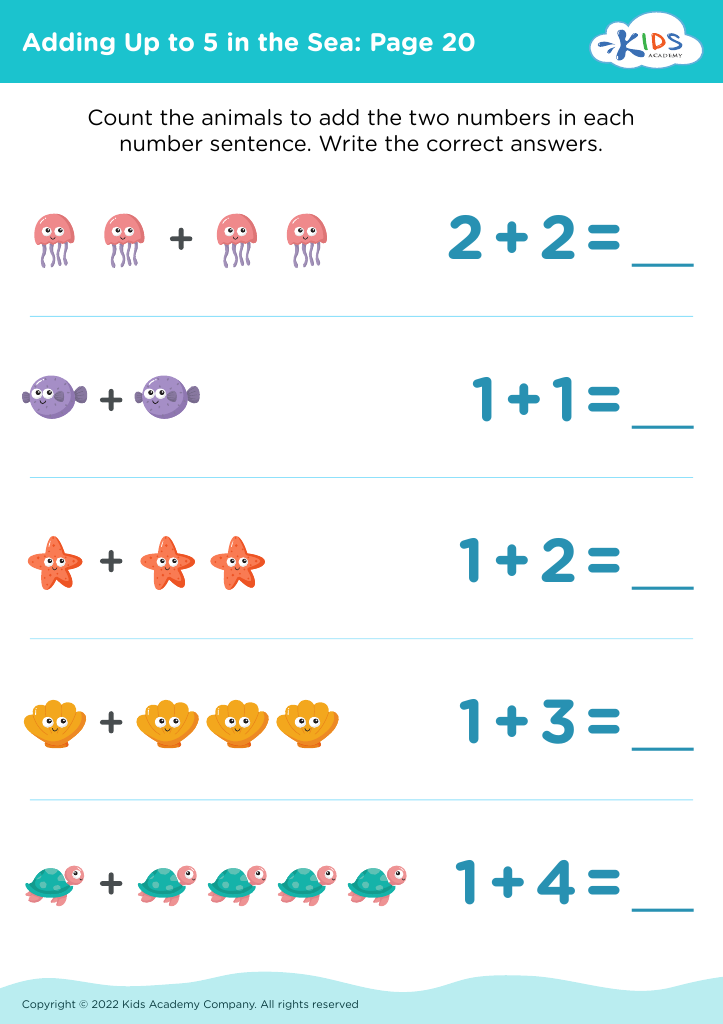





.jpg)


Parents and teachers should place a high emphasis on improving concentration for children, particularly in foundational math skills such as adding up to 5, during the ages of 5-8 because these are formative years for cognitive and academic development. At this age, children are building the critical thinking and problem-solving skills that will serve as the foundation for their future learning. Concentration skills enable children to focus on tasks, follow instructions, and develop perseverance – all of which are essential for academic success.
For math, specifically, mastering basic addition sets the stage for understanding more complex arithmetic and mathematical concepts later on. When children are taught to add up to 5 effectively, they gain confidence in their abilities, which fosters a positive attitude toward learning. Strong concentration skills ensure they can remain attentive, manage distractions, and fully engage with the material presented to them. This focused practice helps to reinforce neural pathways in the brain, solidifying their understanding and recall abilities.
Furthermore, improved concentration boosts overall classroom behavior and participation, creating a more conducive learning environment. It ensures that children get the most out of their educational experiences, helping achieve their academic potential and setting them up for lifelong learning success. Thus, concentrating on improving these skills in early education can have significant and far-reaching effects.








