Filters

16 filtered results

Clear all filters
Favorites
With answer key
Interactive

16 filtered results

Difficulty Level

Grade


Discover engaging "Counting Practice Adding up to 50 Worksheets for Ages 5-8" at Kids Academy! These expertly designed worksheets help young learners build essential math skills through fun and interactive activities. Perfect for kindergarten through second grade, kids will master addition up to 50 as they solve puzzles, complete number patterns, and count objects. With colorful, easy-to-follow exercises, children develop confidence in their counting and addition abilities. Ideal for both classroom and home use, these worksheets make learning enjoyable and effective. Equip your child with the tools they need to succeed in math with Kids Academy!
Check out this FREE Trial Lesson on Adding up to 50 for age 5-8!

A

Favorites
With answer key
Interactive
  • 5-8
  • Counting practice
  • Adding up to 50
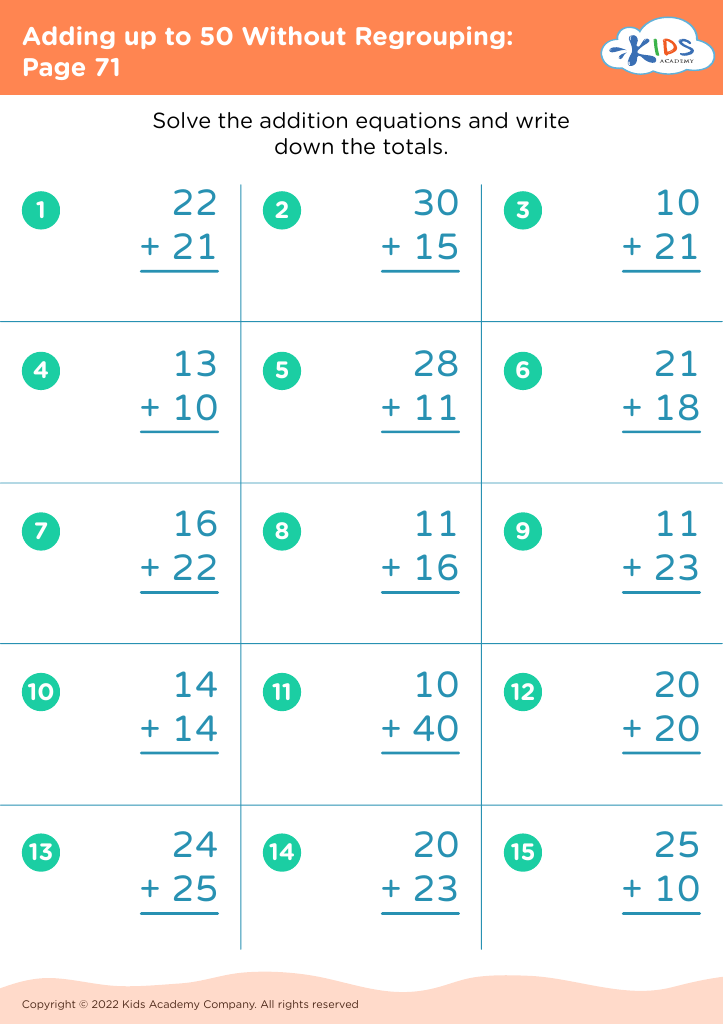
Adding up to 50 Without Regrouping: Page 71
Worksheet
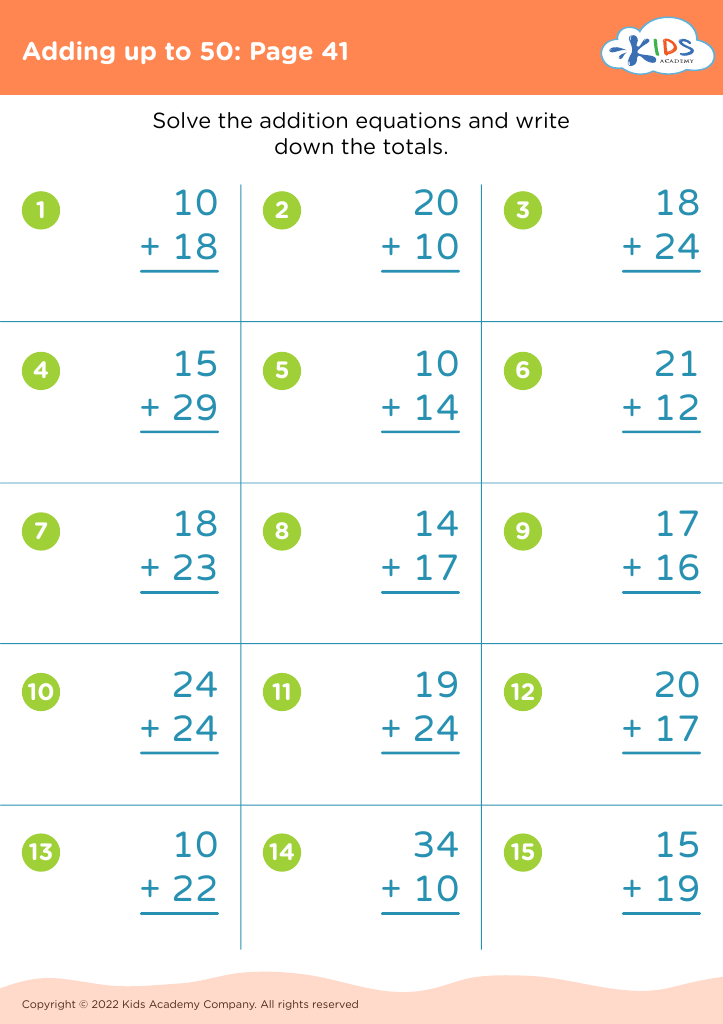
Adding up to 50: Page 41

Adding up to 50: Page 41

Adding up to 50: Page 41
Worksheet
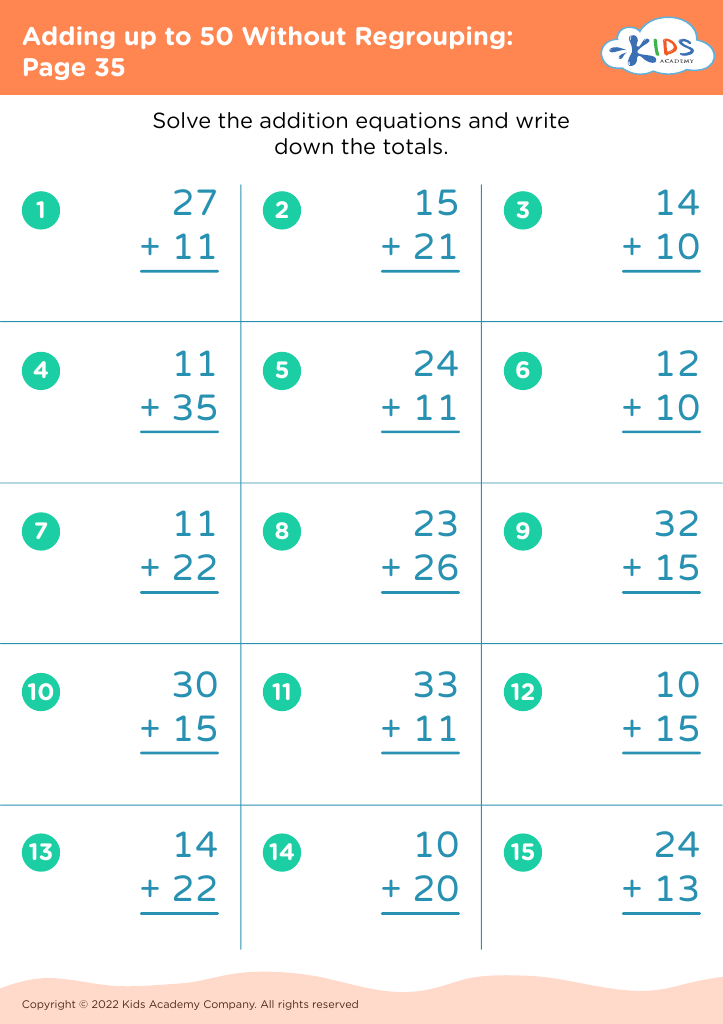
Adding up to 50 Without Regrouping: Page 35
Worksheet
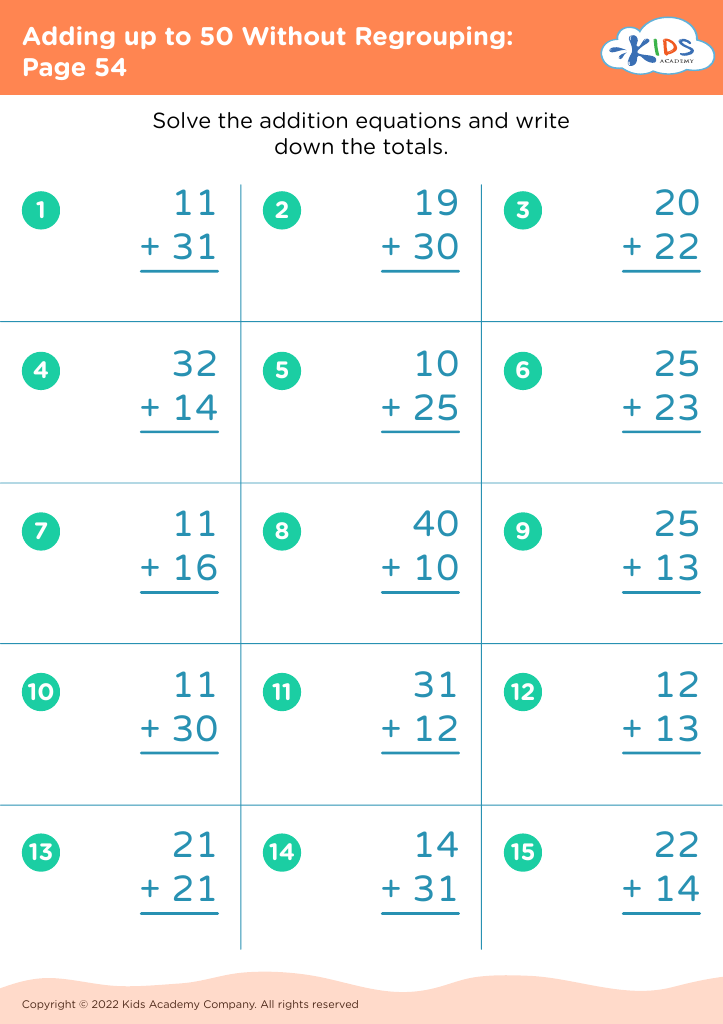
Adding up to 50 Without Regrouping: Page 54
Worksheet
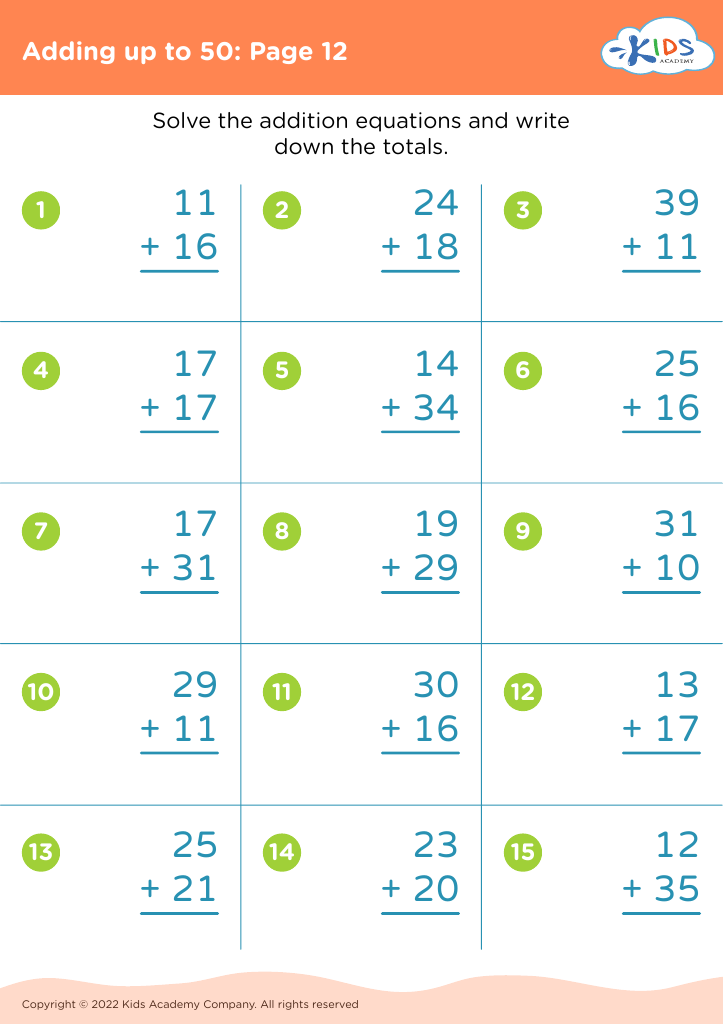
Adding up to 50: Page 12

Adding up to 50: Page 12

Adding up to 50: Page 12
Worksheet
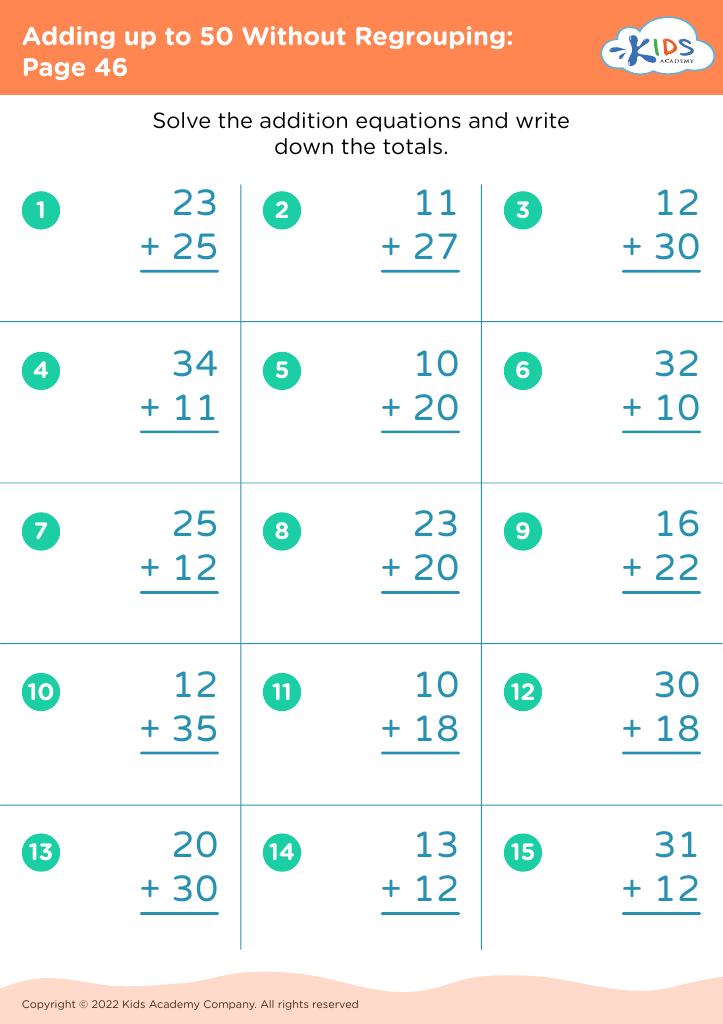
Adding up to 50 Without Regrouping: Page 46
Worksheet
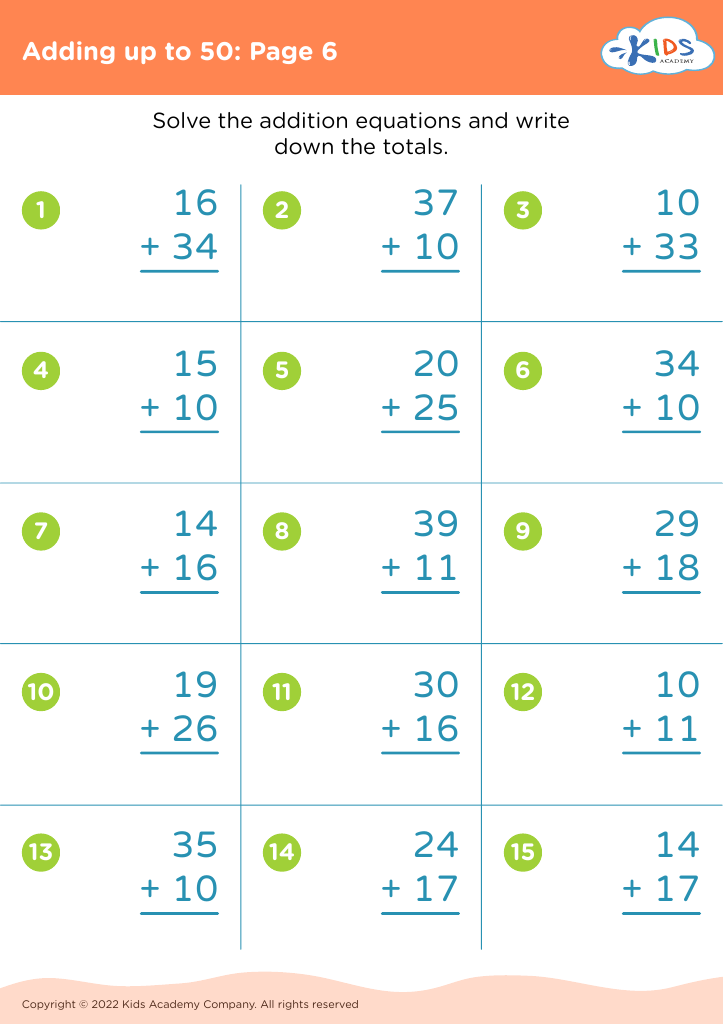
Adding up to 50: Page 6

Adding up to 50: Page 6

Adding up to 50: Page 6
Worksheet
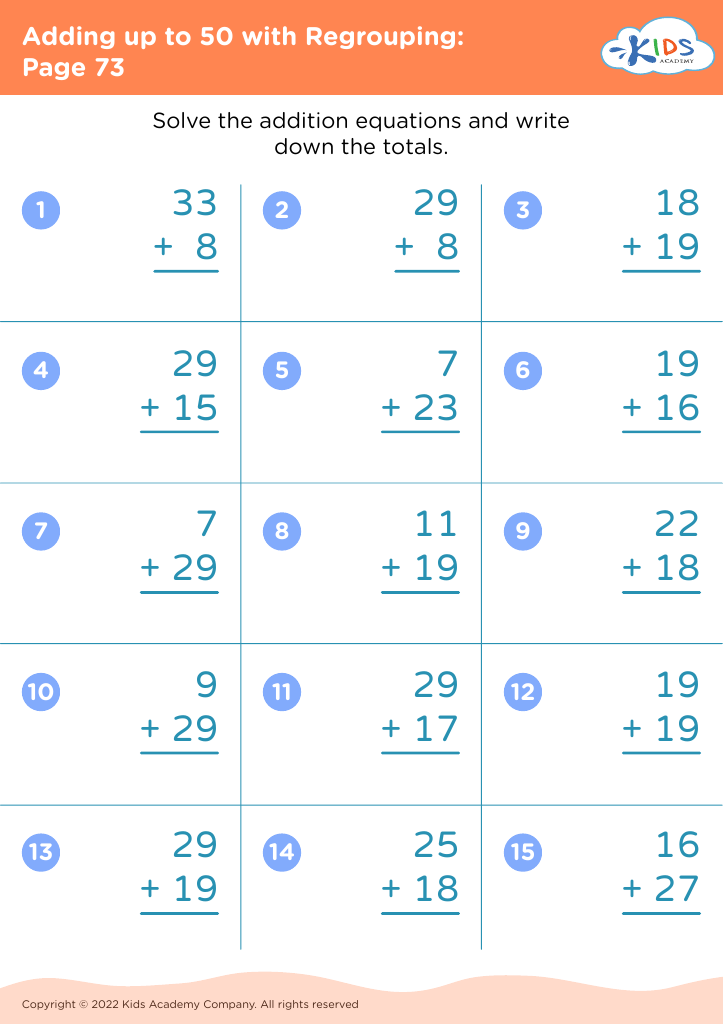
Adding up to 50 with Regrouping: Page 73
Worksheet
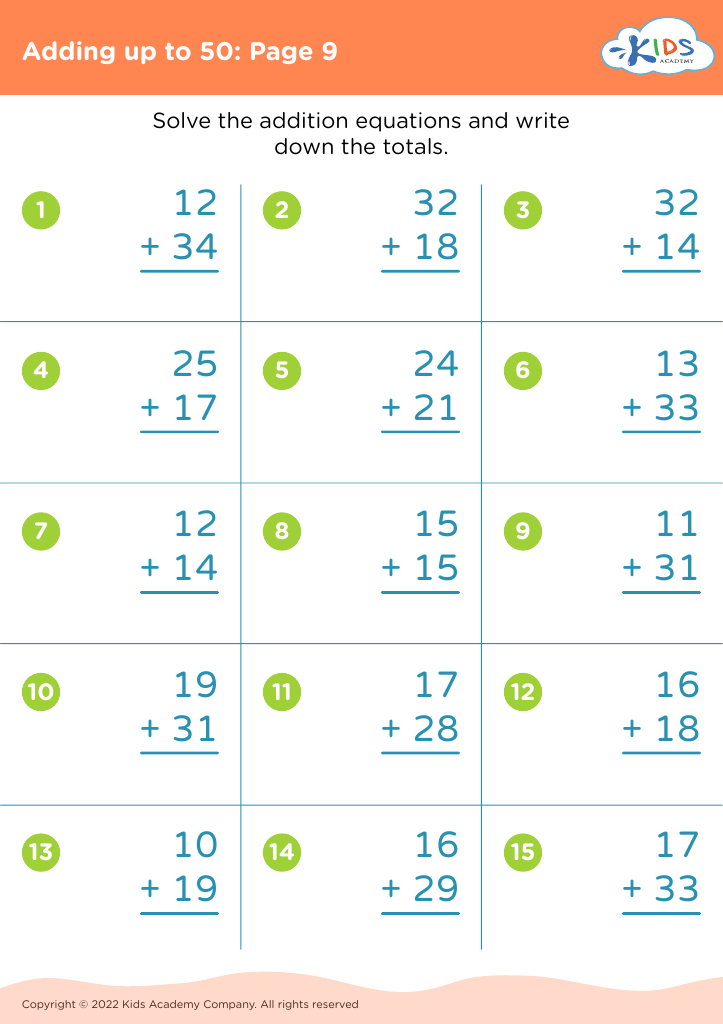
Adding up to 50: Page 9

Adding up to 50: Page 9

Adding up to 50: Page 9
Worksheet
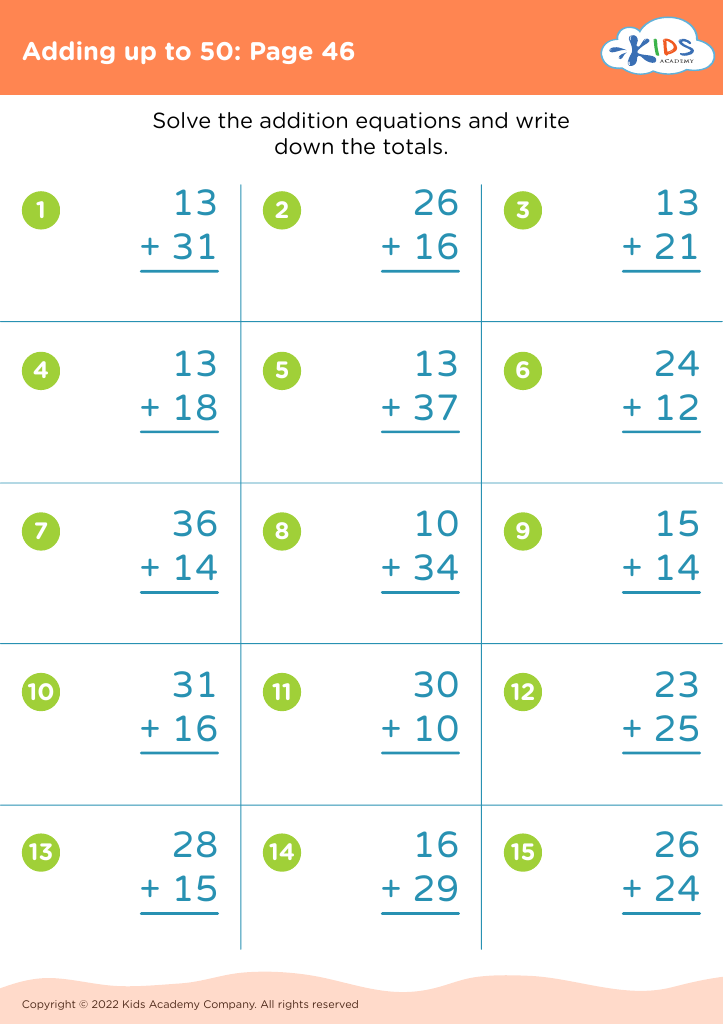
Adding up to 50: Page 46

Adding up to 50: Page 46

Adding up to 50: Page 46
Worksheet
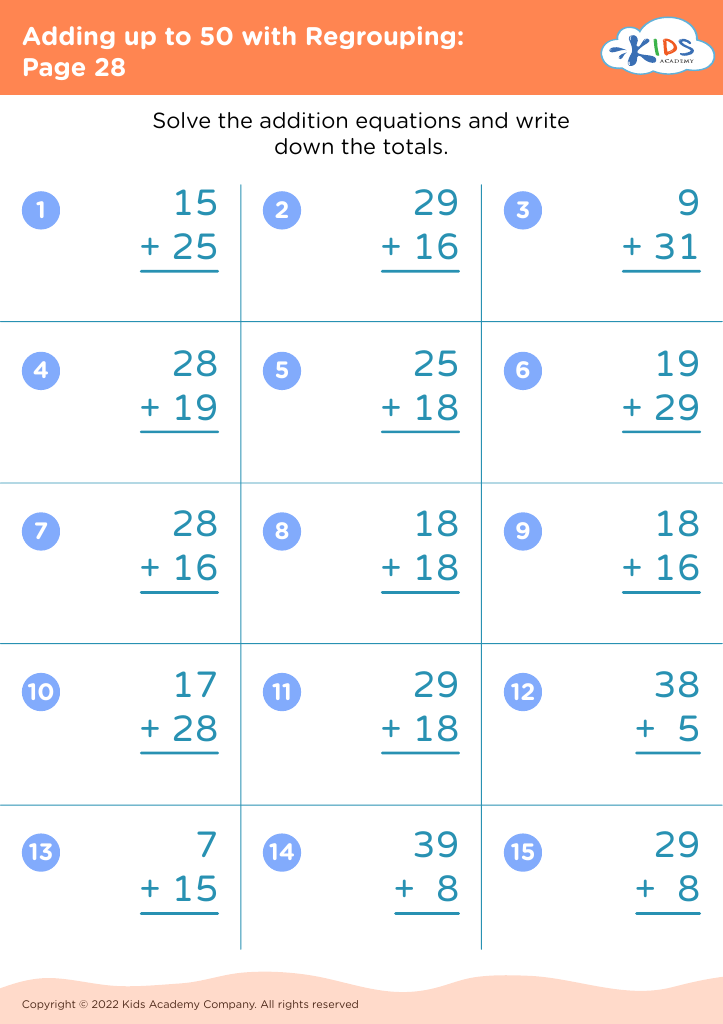
Adding up to 50 with Regrouping: Page 28
Worksheet
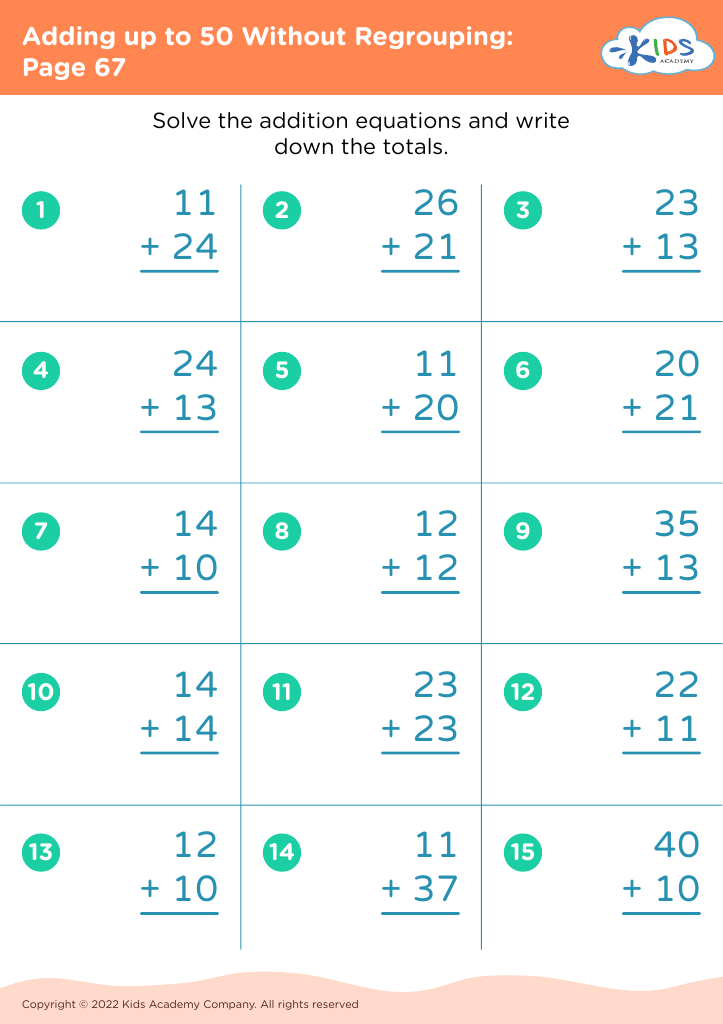
Adding up to 50 Without Regrouping: Page 67
Worksheet
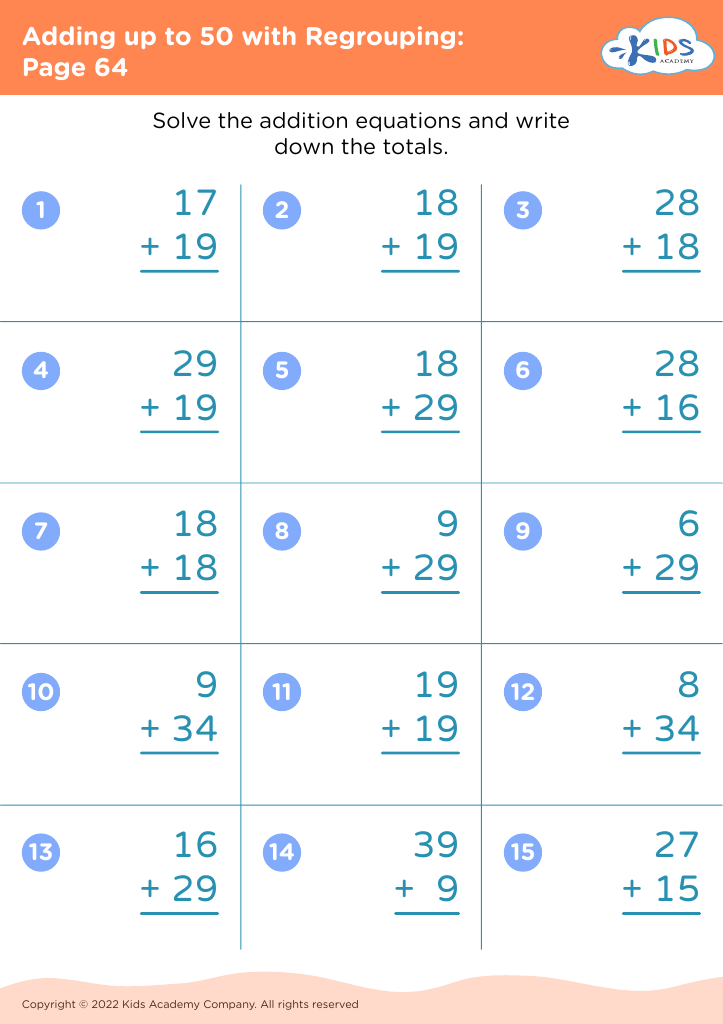
Adding up to 50 with Regrouping: Page 64
Worksheet
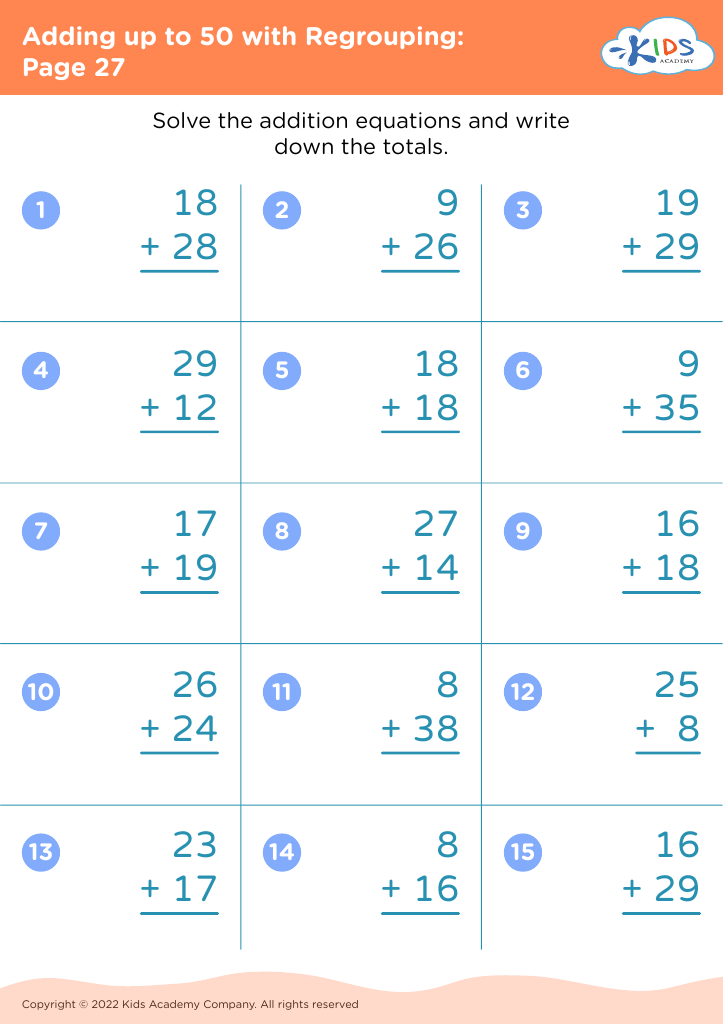
Adding up to 50 with Regrouping: Page 27
Worksheet
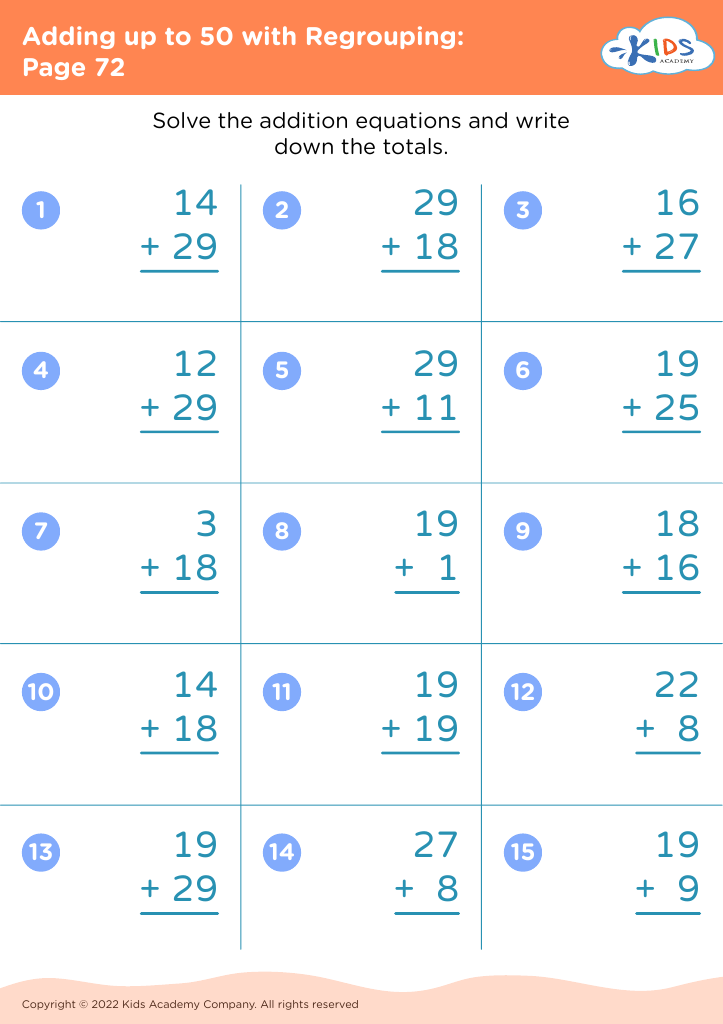
Adding up to 50 with Regrouping: Page 72
Worksheet
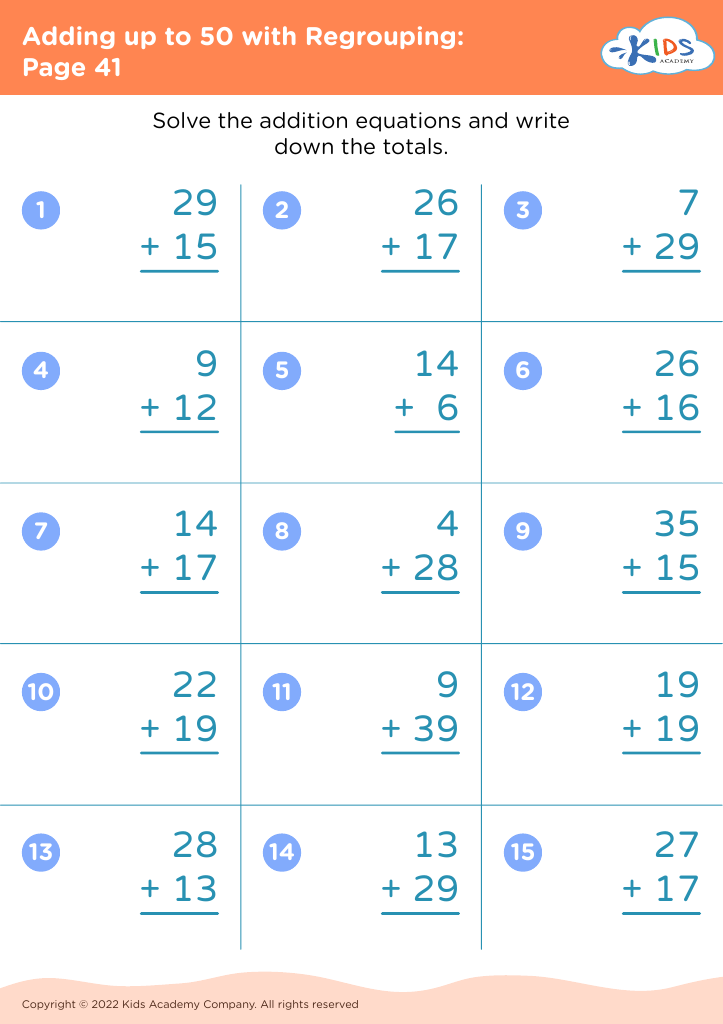
Adding up to 50 with Regrouping: Page 41
Worksheet


Counting practice and adding up to 50 for children ages 5-8 is crucial for several reasons. Firstly, a strong foundation in these basic math skills sets the stage for future mathematical understanding. Mastering simple addition and counting helps children build confidence in their abilities, which is essential for tackling more complex concepts later on.

Secondly, these early math skills are not just about numbers; they also enhance cognitive development. Counting helps improve children’s memory, attention to detail, and logical thinking. Adding numbers up to 50 allows children to understand the concept of quantity and how numbers relate to each other, fostering critical thinking and problem-solving skills.

For parents and teachers, it is important to support and encourage these practices because they directly impact academic success. Early proficiency in counting and addition can lead to a better grasp of subjects such as algebra, geometry, and even science. Ignoring or not adequately emphasizing these skills might result in children falling behind, feeling frustrated, and developing a negative attitude toward math.

Lastly, counting practice and addition are practical life skills. From handling money to measuring ingredients in a recipe, these skills are used daily. Ensuring that children master these basics will prepare them for real-world tasks and pave the way for lifelong math competency.