Filters

43 filtered results

Clear all filters
Favorites
With answer key
Interactive

43 filtered results

Difficulty Level

Grade


Subject

    Check out this FREE Trial Lesson on Adding up to 50 for age 5-8!

    P

    Favorites
    With answer key
    Interactive
    • 5-8
    • Number Recognition
    • Adding up to 50
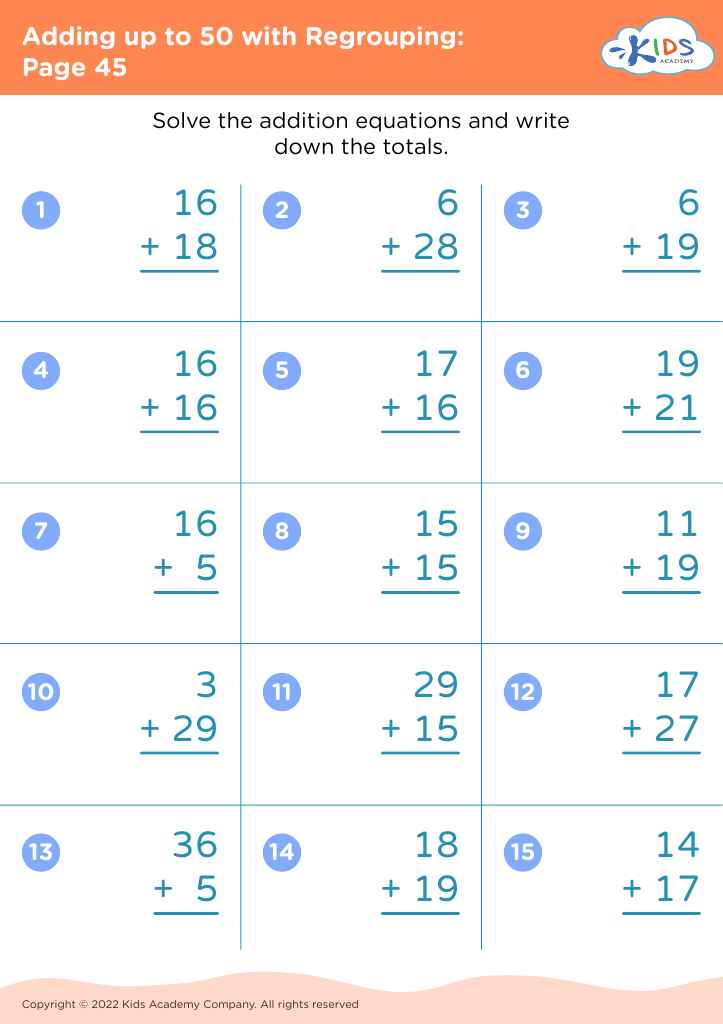
    Adding up to 50 with Regrouping: Page 45
    Adding up to 50 with Regrouping: Page 45
    Adding up to 50 with Regrouping: Page 45
    Worksheet
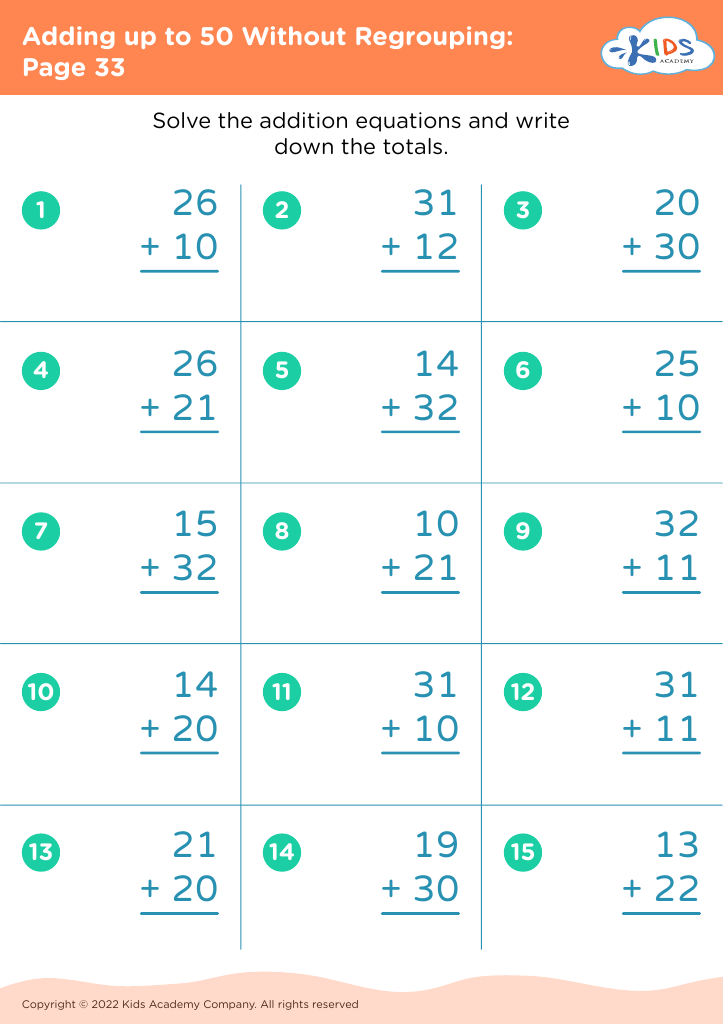
    Adding up to 50 Without Regrouping: Page 33
    Adding up to 50 Without Regrouping: Page 33
    Adding up to 50 Without Regrouping: Page 33
    Worksheet
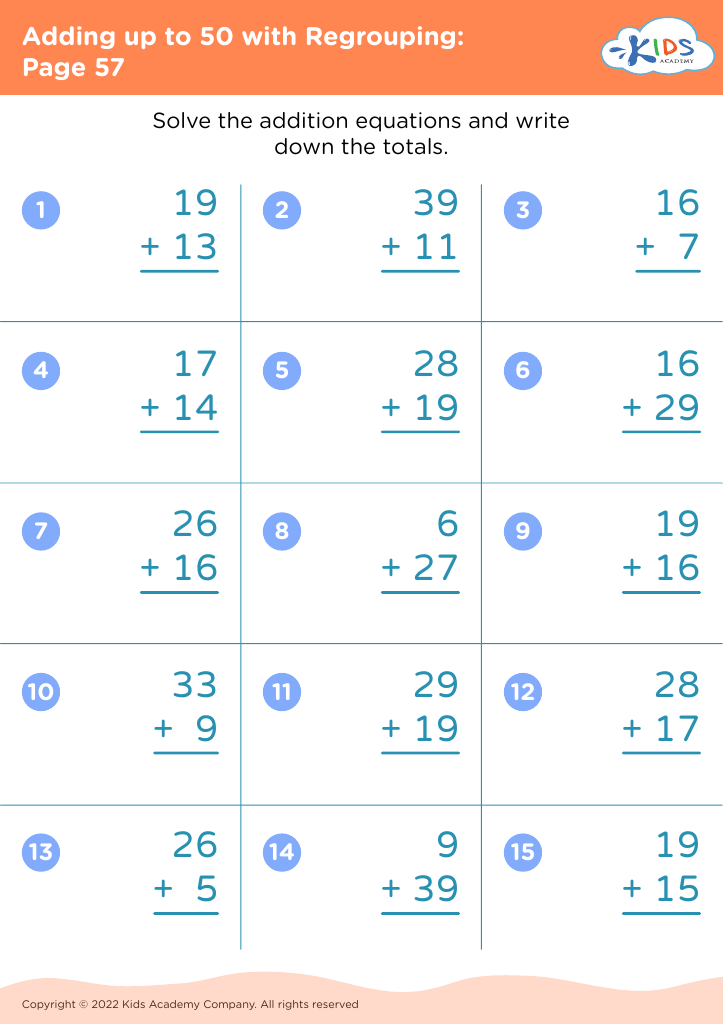
    Adding up to 50 with Regrouping: Page 57
    Adding up to 50 with Regrouping: Page 57
    Adding up to 50 with Regrouping: Page 57
    Worksheet
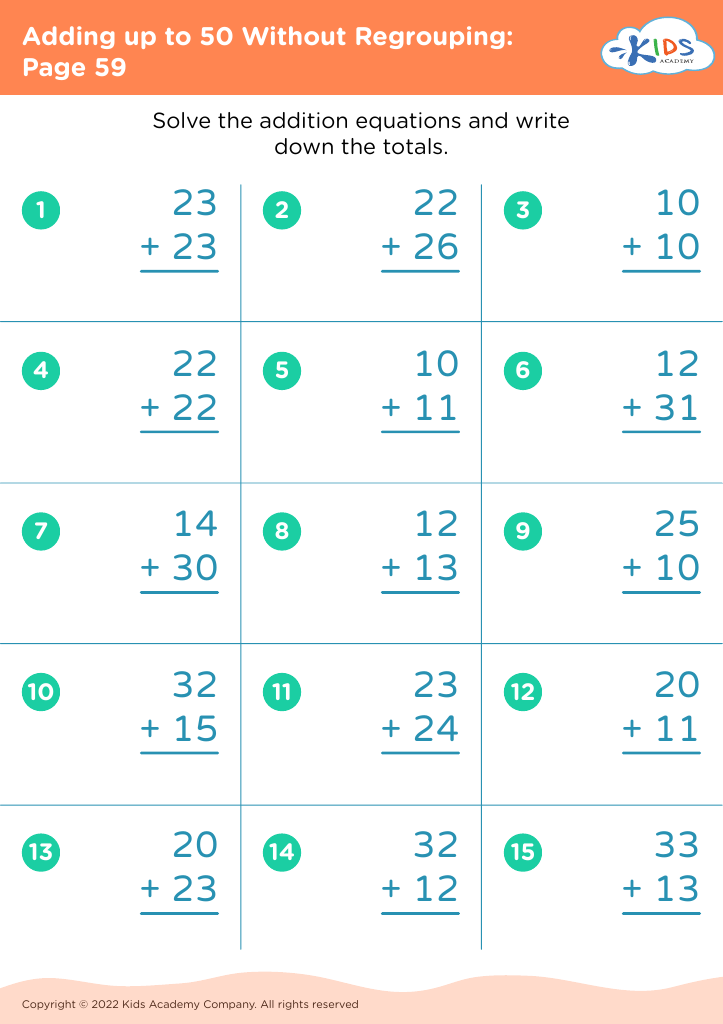
    Adding up to 50 Without Regrouping: Page 59
    Adding up to 50 Without Regrouping: Page 59
    Adding up to 50 Without Regrouping: Page 59
    Worksheet
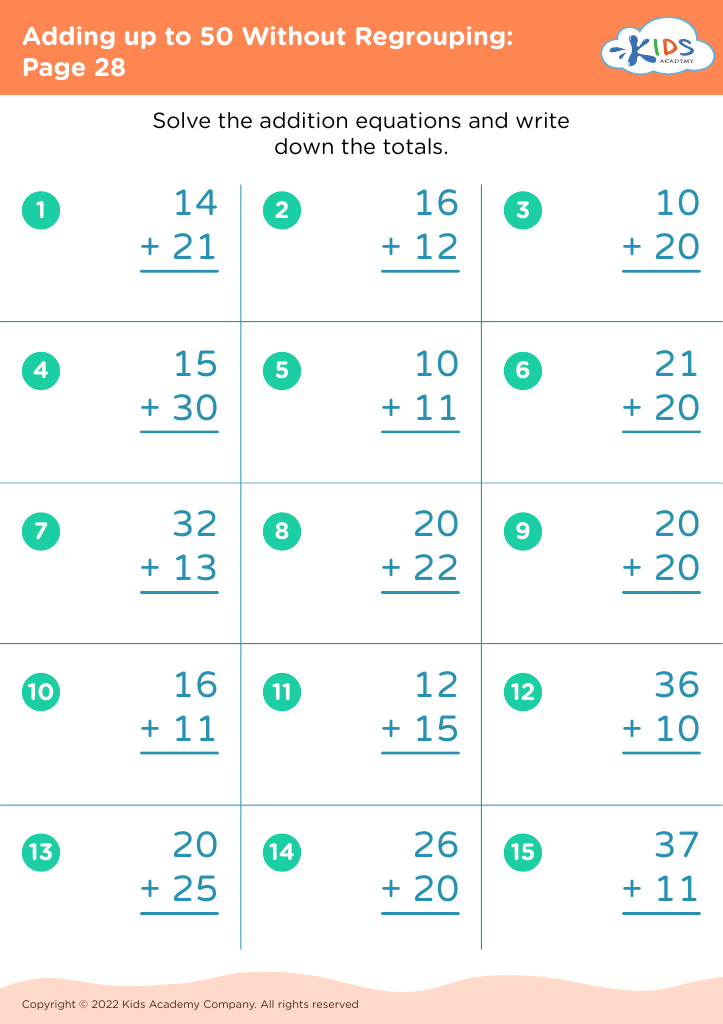
    Adding up to 50 Without Regrouping: Page 28
    Adding up to 50 Without Regrouping: Page 28
    Adding up to 50 Without Regrouping: Page 28
    Worksheet
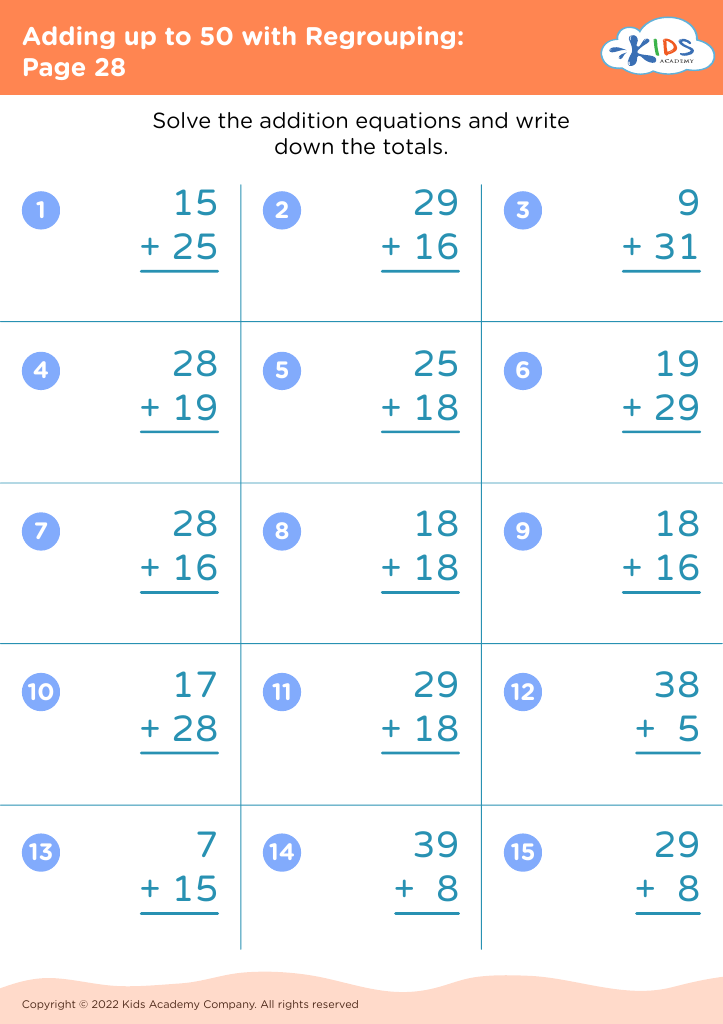
    Adding up to 50 with Regrouping: Page 28
    Adding up to 50 with Regrouping: Page 28
    Adding up to 50 with Regrouping: Page 28
    Worksheet
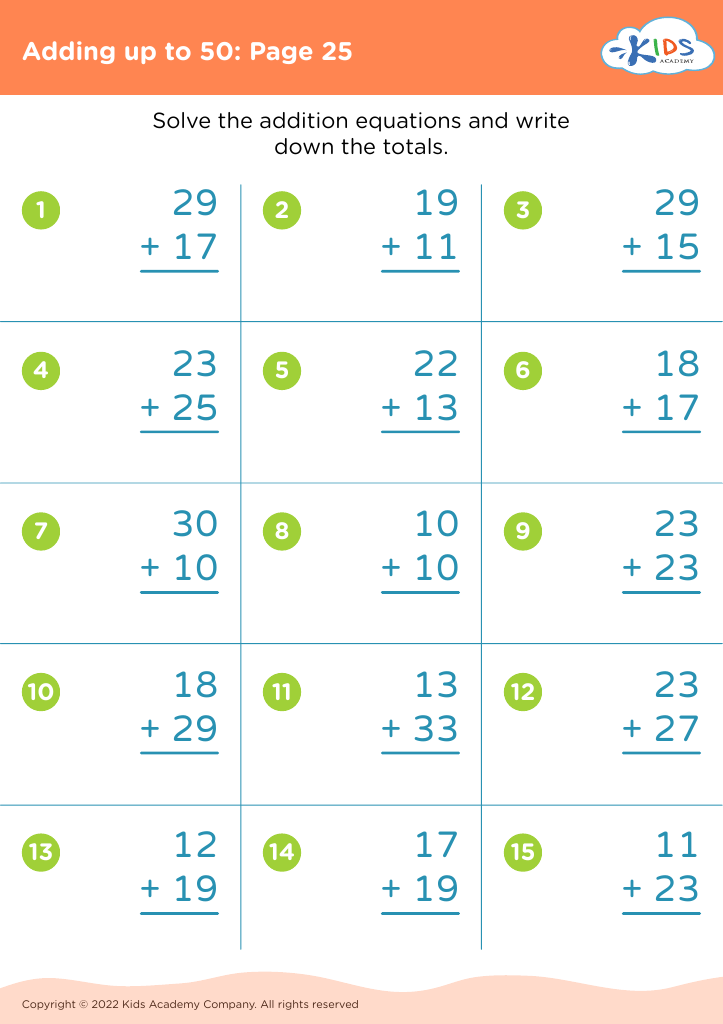
    Adding up to 50: Page 25
    Adding up to 50: Page 25

    Adding up to 50: Page 25

    Adding up to 50: Page 25
    Worksheet
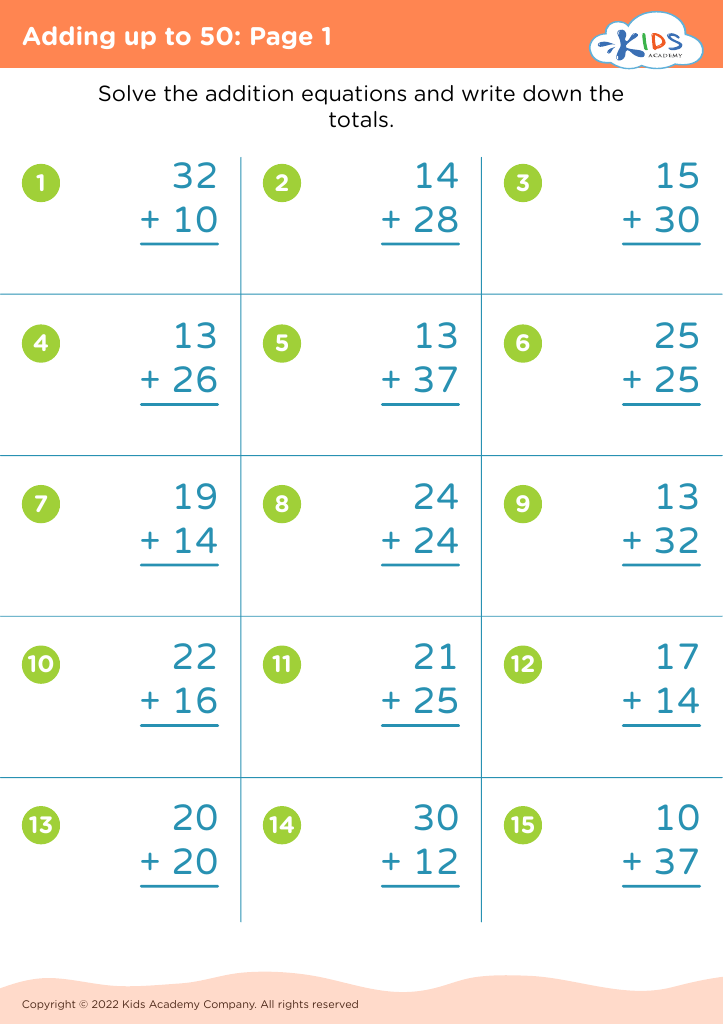
    Adding up to 50: Page 1
    Adding up to 50: Page 1

    Adding up to 50: Page 1

    Adding up to 50: Page 1
    Worksheet
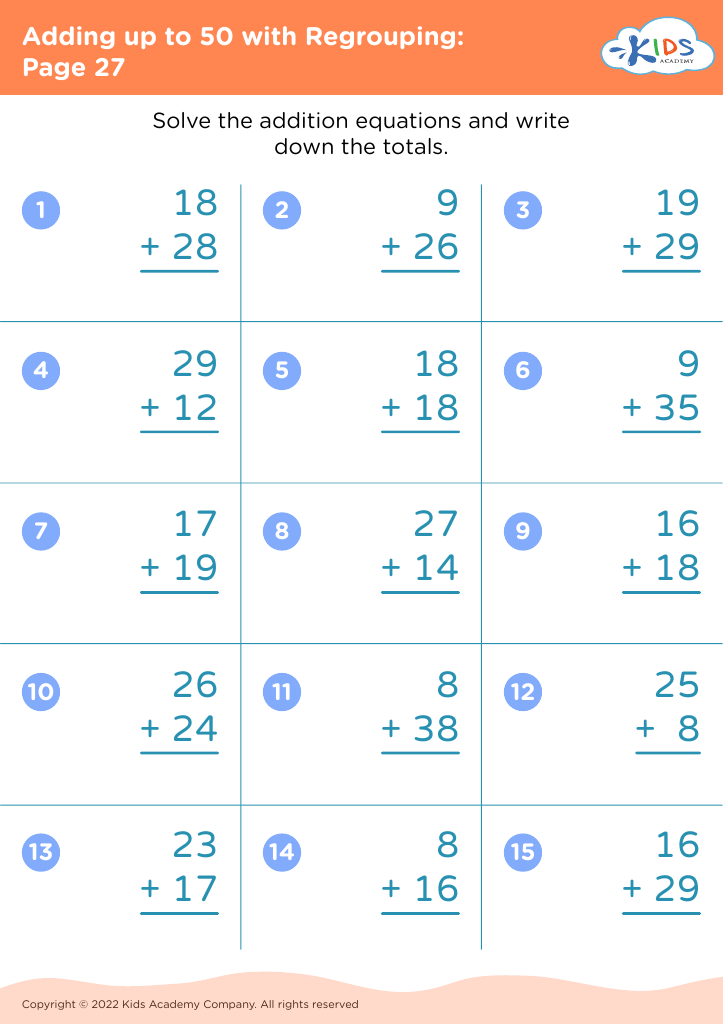
    Adding up to 50 with Regrouping: Page 27
    Adding up to 50 with Regrouping: Page 27
    Adding up to 50 with Regrouping: Page 27
    Worksheet
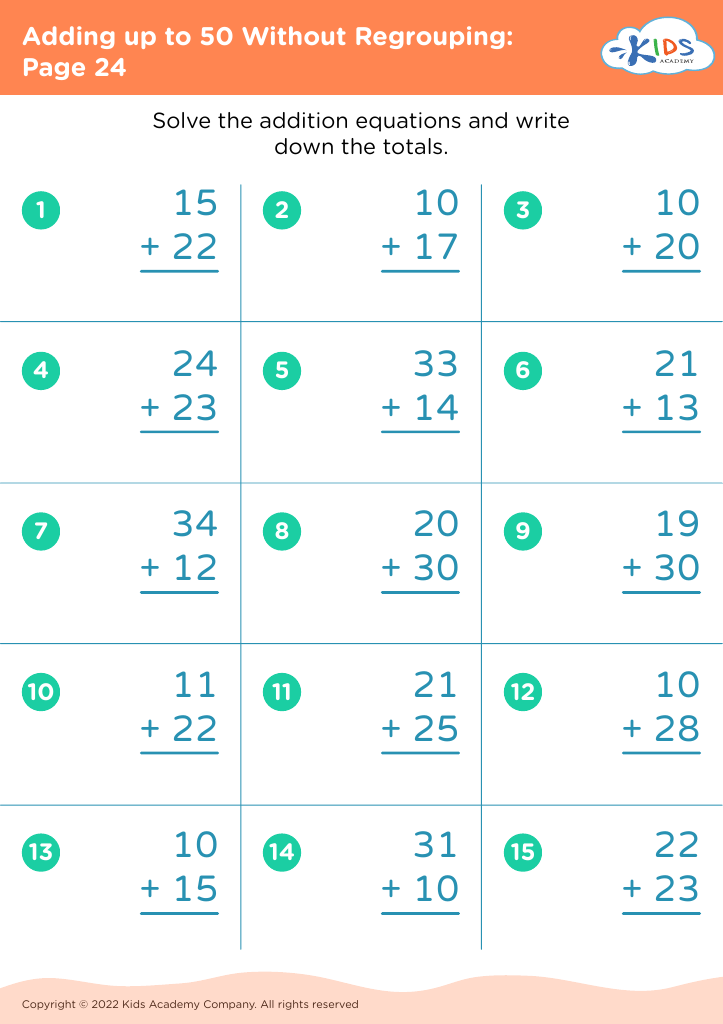
    Adding up to 50 Without Regrouping: Page 24
    Adding up to 50 Without Regrouping: Page 24
    Adding up to 50 Without Regrouping: Page 24
    Worksheet
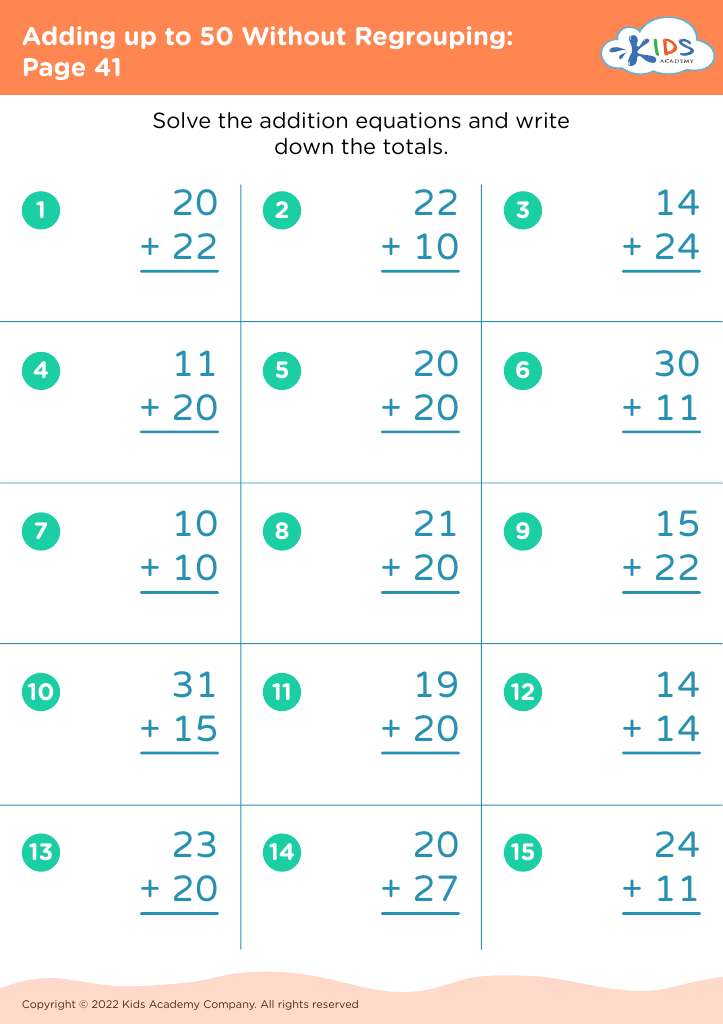
    Adding up to 50 Without Regrouping: Page 41
    Adding up to 50 Without Regrouping: Page 41
    Adding up to 50 Without Regrouping: Page 41
    Worksheet
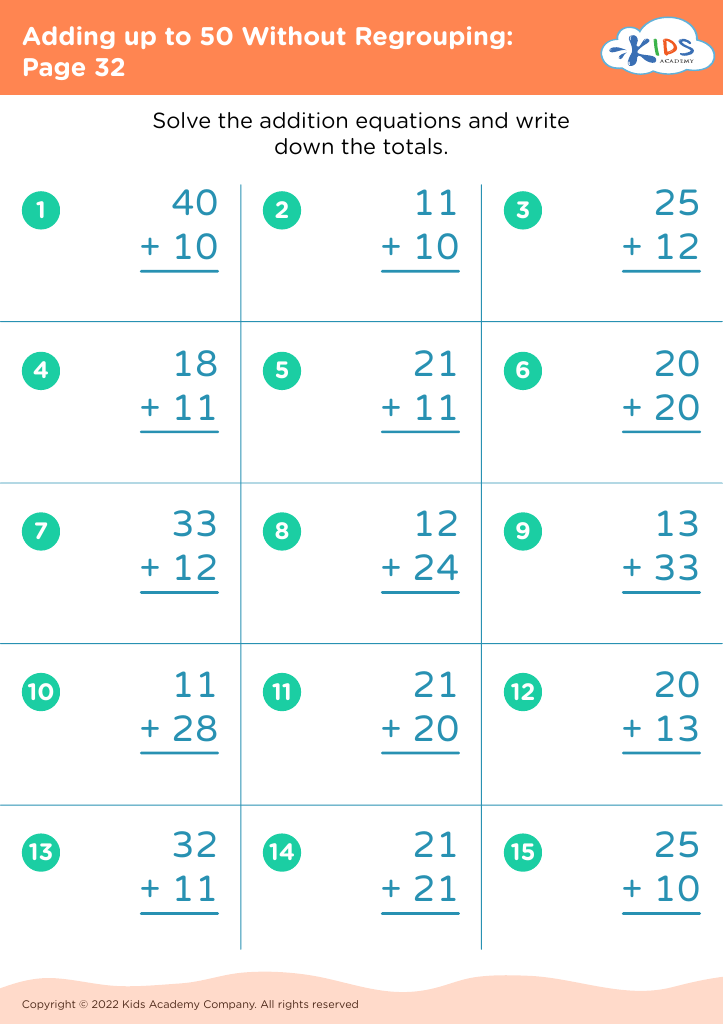
    Adding up to 50 Without Regrouping: Page 32
    Adding up to 50 Without Regrouping: Page 32
    Adding up to 50 Without Regrouping: Page 32
    Worksheet
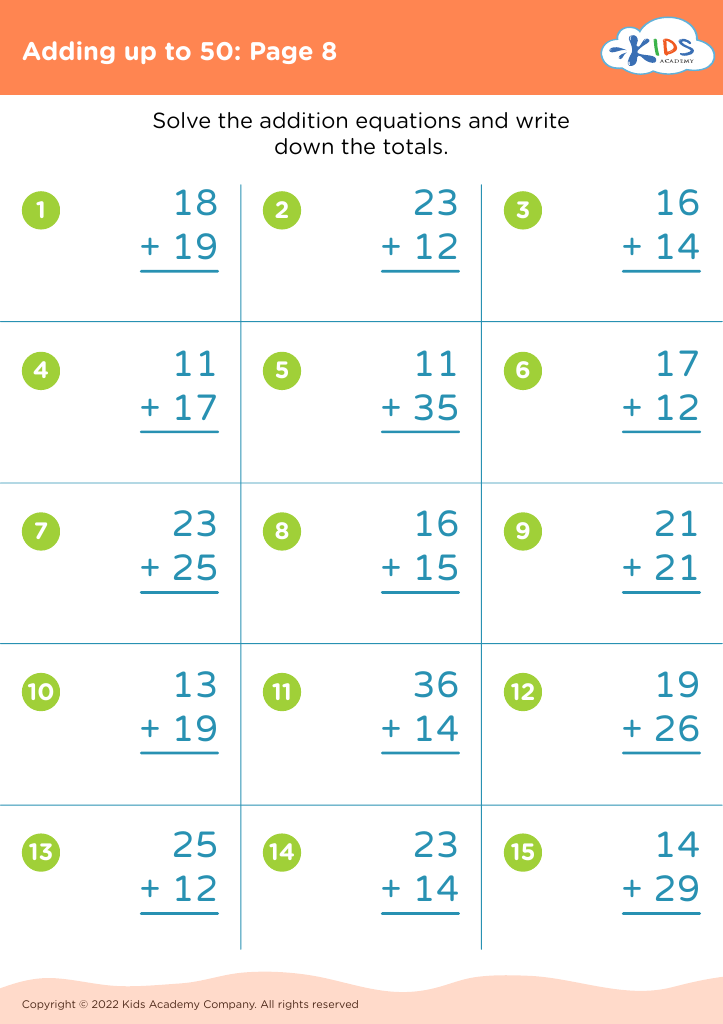
    Adding up to 50: Page 8
    Adding up to 50: Page 8

    Adding up to 50: Page 8

    Adding up to 50: Page 8
    Worksheet
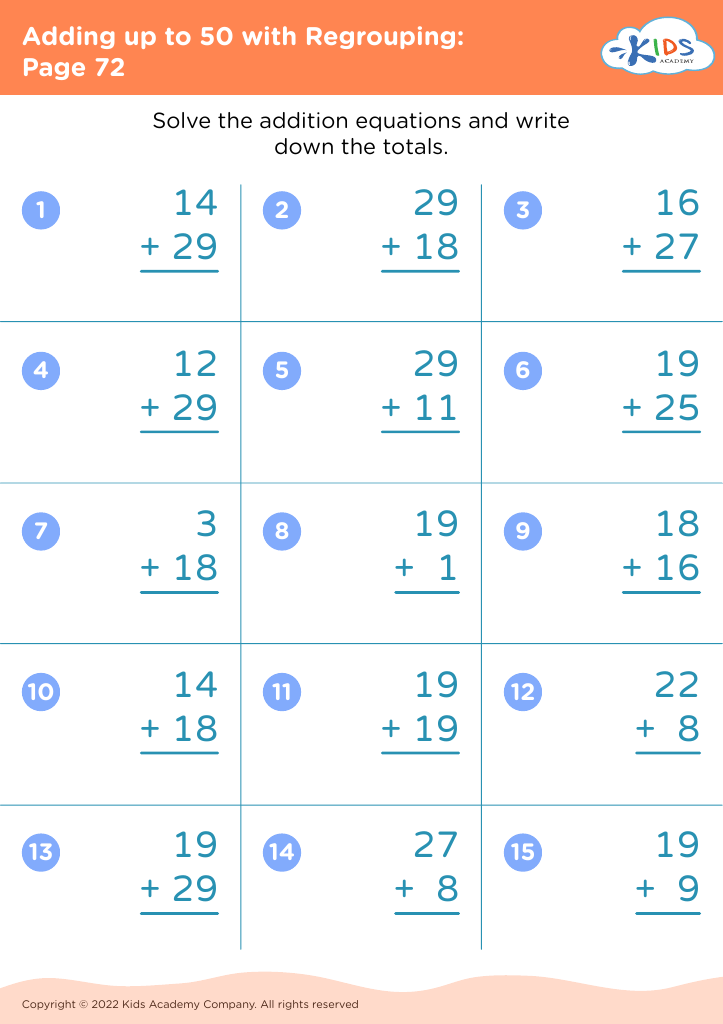
    Adding up to 50 with Regrouping: Page 72
    Adding up to 50 with Regrouping: Page 72
    Adding up to 50 with Regrouping: Page 72
    Worksheet
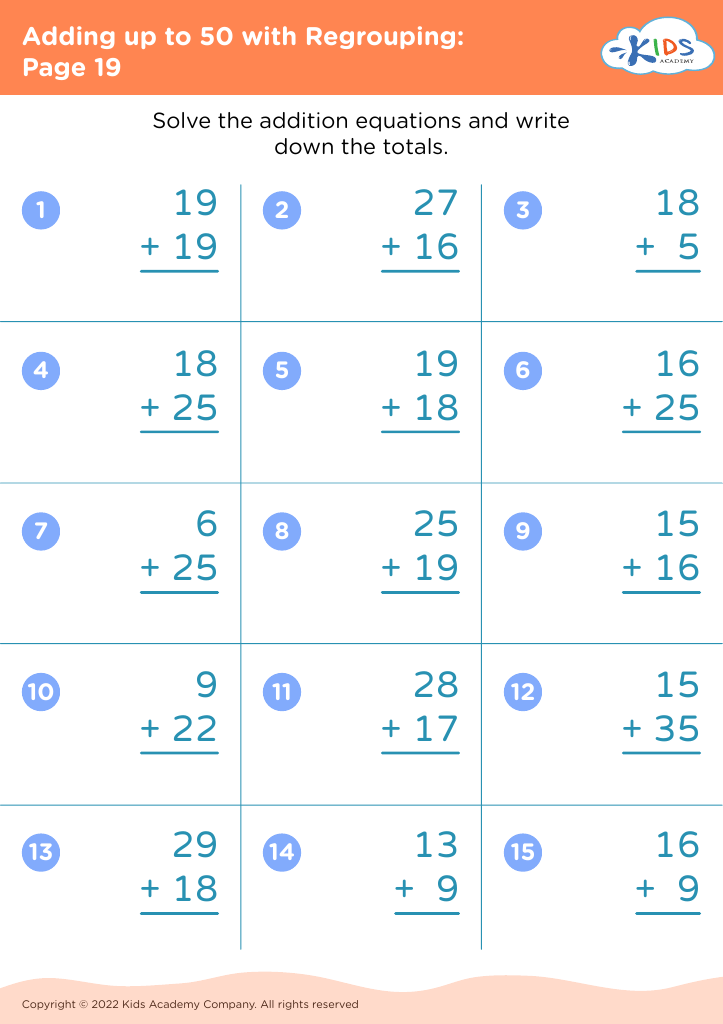
    Adding up to 50 with Regrouping: Page 19
    Adding up to 50 with Regrouping: Page 19
    Adding up to 50 with Regrouping: Page 19
    Worksheet
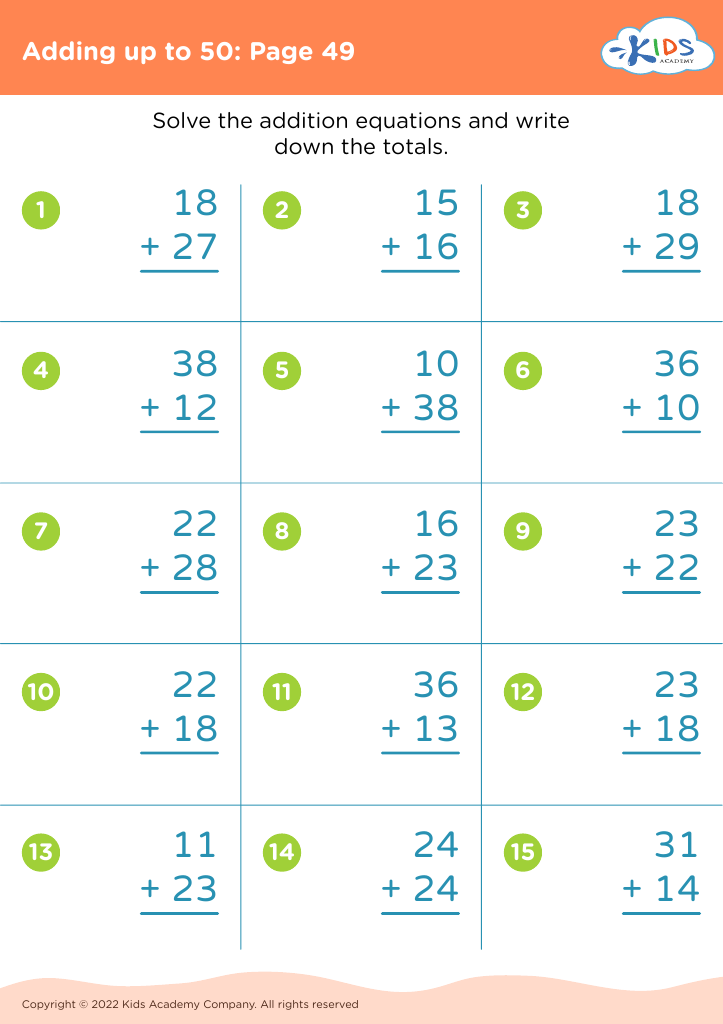
    Adding up to 50: Page 49
    Adding up to 50: Page 49

    Adding up to 50: Page 49

    Adding up to 50: Page 49
    Worksheet
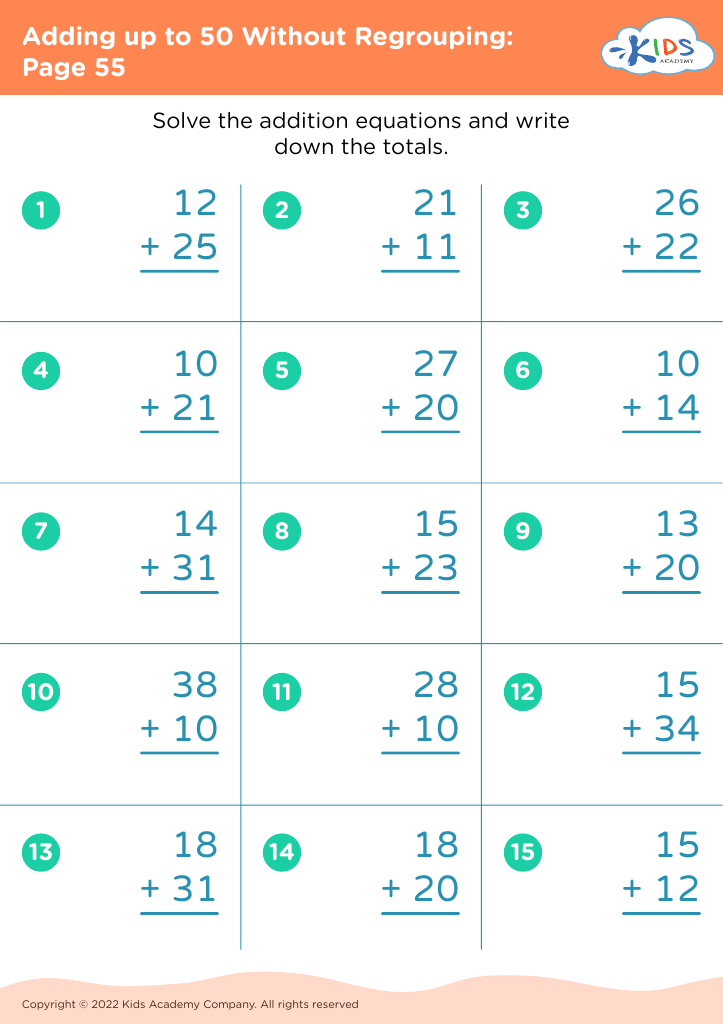
    Adding up to 50 Without Regrouping: Page 55
    Adding up to 50 Without Regrouping: Page 55
    Adding up to 50 Without Regrouping: Page 55
    Worksheet
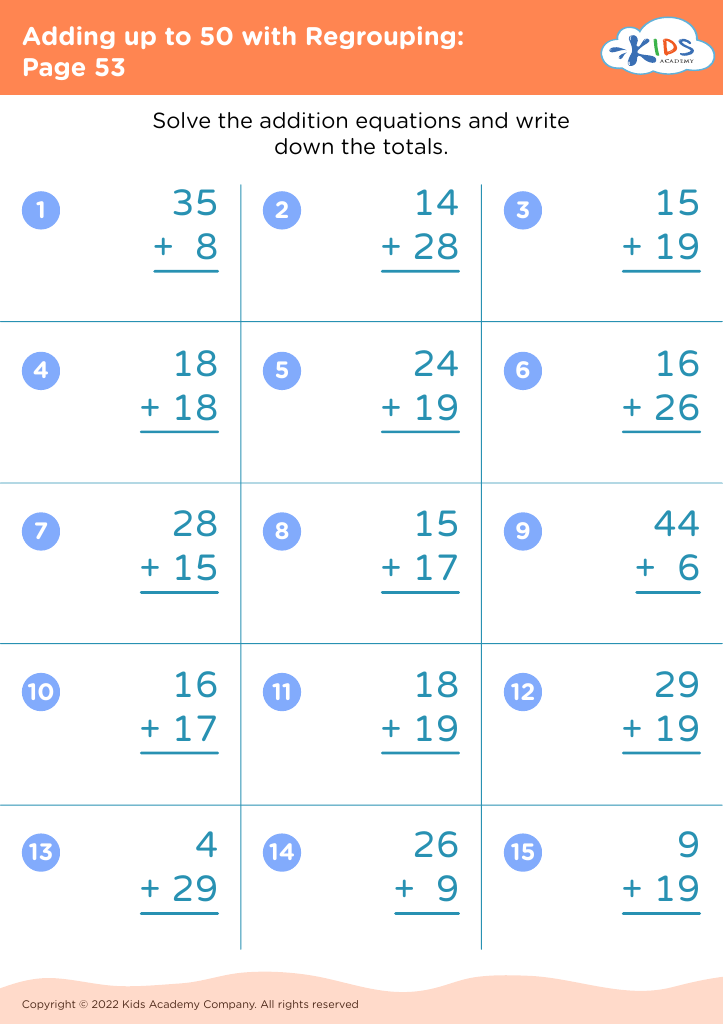
    Adding up to 50 with Regrouping: Page 53
    Adding up to 50 with Regrouping: Page 53
    Adding up to 50 with Regrouping: Page 53
    Worksheet
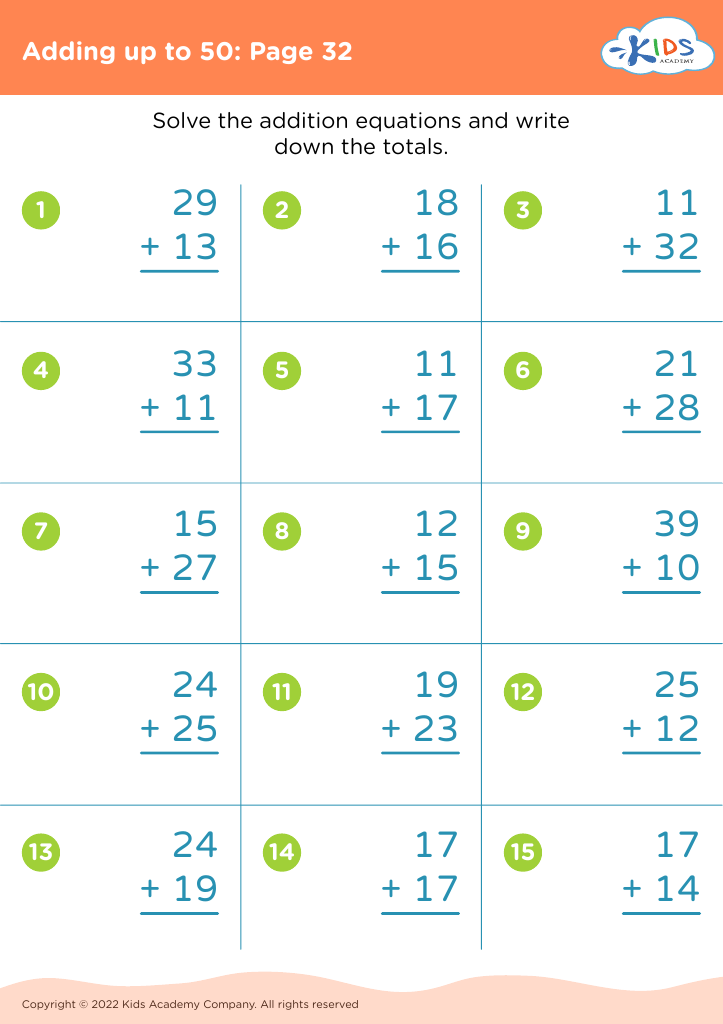
    Adding up to 50: Page 32
    Adding up to 50: Page 32

    Adding up to 50: Page 32

    Adding up to 50: Page 32
    Worksheet


    Number recognition and basic addition up to 50 are foundational skills for young children, especially between the ages of 5-8. These skills form the basis for more complex mathematical concepts they will encounter in later years.

    When children recognize numbers and understand how to add them, it enhances their understanding of the number system. They start to see numbers as quantities that can be manipulated and combined in different ways. This basic numeracy is crucial for everyday tasks such as telling time, handling money, measuring, and cooking.

    Moreover, practicing these early math skills helps in developing a child's cognitive abilities, such as critical thinking and problem-solving. As they learn to recognize patterns and relationships between numbers, they sharpen their logical thinking and memory.

    Parents and teachers play a pivotal role in fostering these skills. By using engaging activities – like number games, flashcards, or real-life scenarios – they can make learning fun and effective. Encouraging children to practice math in everyday situations also helps them see its relevance, nurturing a positive attitude towards learning.

    Investing time and effort in helping children master number recognition and addition up to 50 lays a strong foundation for their future academic success and confidence in mathematics.