Basic arithmetic skills Addition and Subtraction Word Problems Worksheets for Ages 5-8
3 filtered results
-
From - To
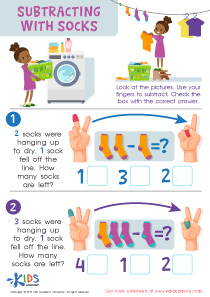
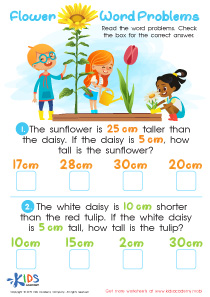
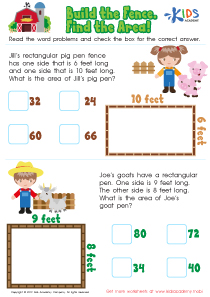
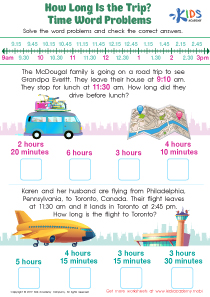
Enhance your child's understanding of basic arithmetic with our engaging Addition and Subtraction Word Problems Worksheets, specially designed for ages 5-8. These printable resources foster critical thinking and problem-solving skills through fun, relatable scenarios. Each worksheet presents age-appropriate challenges to help young learners grasp concepts in a playful context, promoting confidence in their math abilities. The diverse exercises encourage students to apply addition and subtraction in real-life situations, reinforcing their learning through practice. Perfect for classroom use, homework, or extra-curricular skill-building, these worksheets are an essential tool to support your child's mathematical journey. Start inspiring their love for math today!
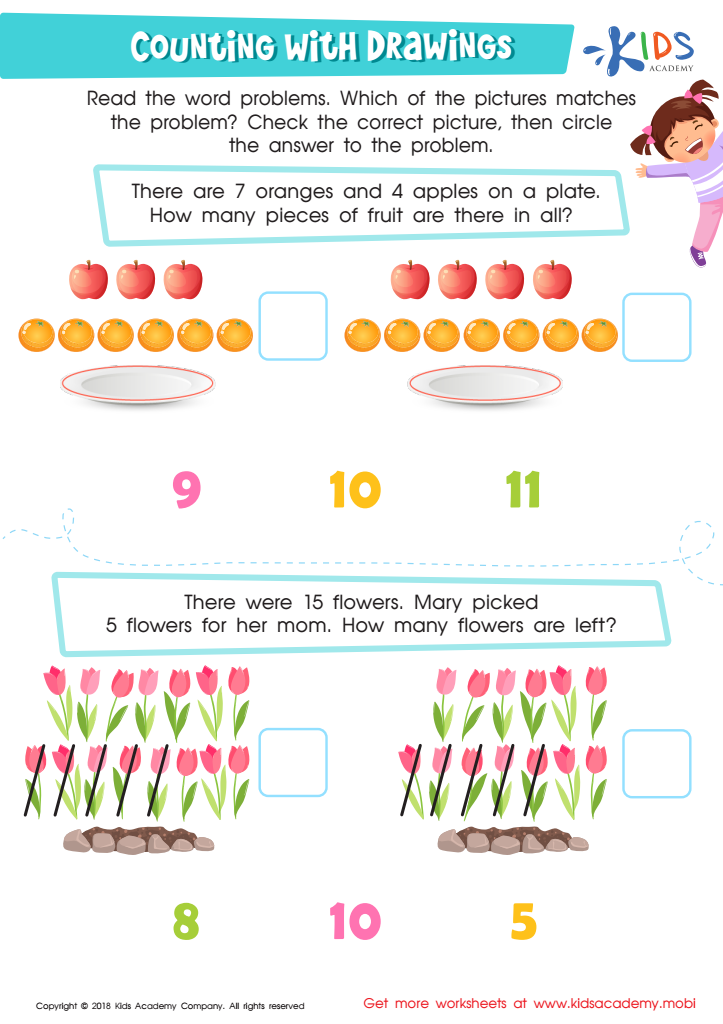
Counting with Drawings: Fruits & Chocolates Worksheet
 Assign to My Students
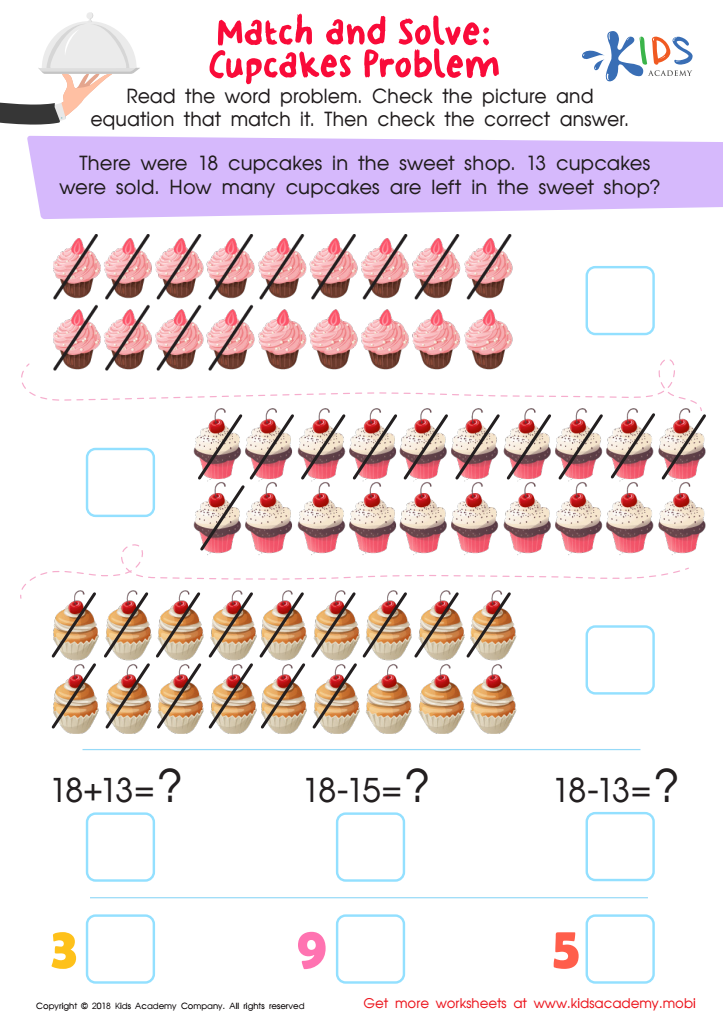
Match and Solve: Cupcakes Problem Worksheet
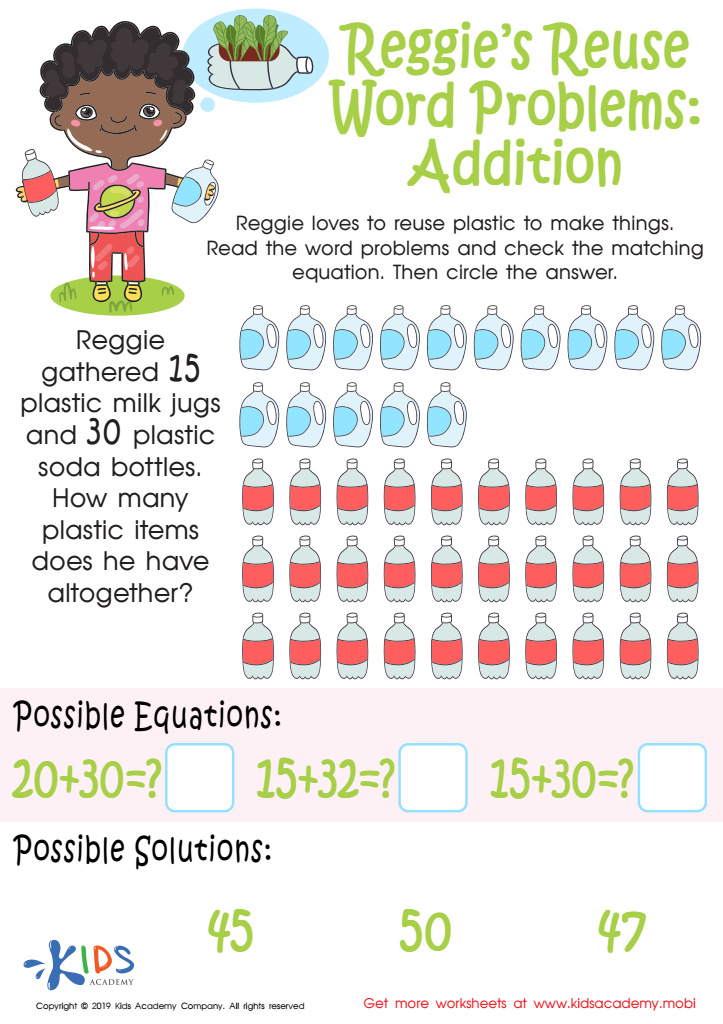
Reggie's Reuse Word Problems: Addition Worksheet








Basic arithmetic skills, particularly in addition and subtraction word problems, are crucial for children aged 5-8 as they lay the foundation for mathematical understanding and critical thinking. Mastering these skills fosters a sense of competence and confidence in young learners, which is essential for academic success. Word problems help children develop the ability to translate real-life situations into mathematical equations, promoting critical thinking and problem-solving abilities.
Additionally, these skills aid in the development of language and comprehension, as children learn to interpret word problems correctly. Understanding context is key to finding the right solution, making it a vital part of their overall cognitive development. Furthermore, strong arithmetic skills prepare students for more advanced math concepts in later grades, ensuring they do not fall behind.
For parents and teachers, focusing on these areas allows them to engage children in meaningful conversations about math in everyday life, thereby making learning more relevant and enjoyable. As children master addition and subtraction word problems, they move beyond rote memorization, becoming active participants in their education, which is essential for lifelong learning. This engagement helps shape students into confident,-capable individuals ready to tackle future challenges in mathematics and beyond.