Counting skills Addition and Subtraction Word Problems Worksheets for Ages 5-8
11 filtered results
-
From - To
Explore our Counting Skills Addition and Subtraction Word Problems Worksheets tailored for children aged 5-8! These engaging worksheets help young learners develop essential math skills through fun and relatable word problems. As kids solve each problem, they'll practice counting, addition, and subtraction in a hands-on way that enhances their comprehension and critical thinking. Perfect for classroom activities or at-home learning, our resources stimulate curiosity while fostering a strong mathematical foundation. Start your child's math journey today and watch them grow confident in their counting abilities and problem-solving skills. Dive into an exciting world of numbers and stories with our comprehensive worksheets!
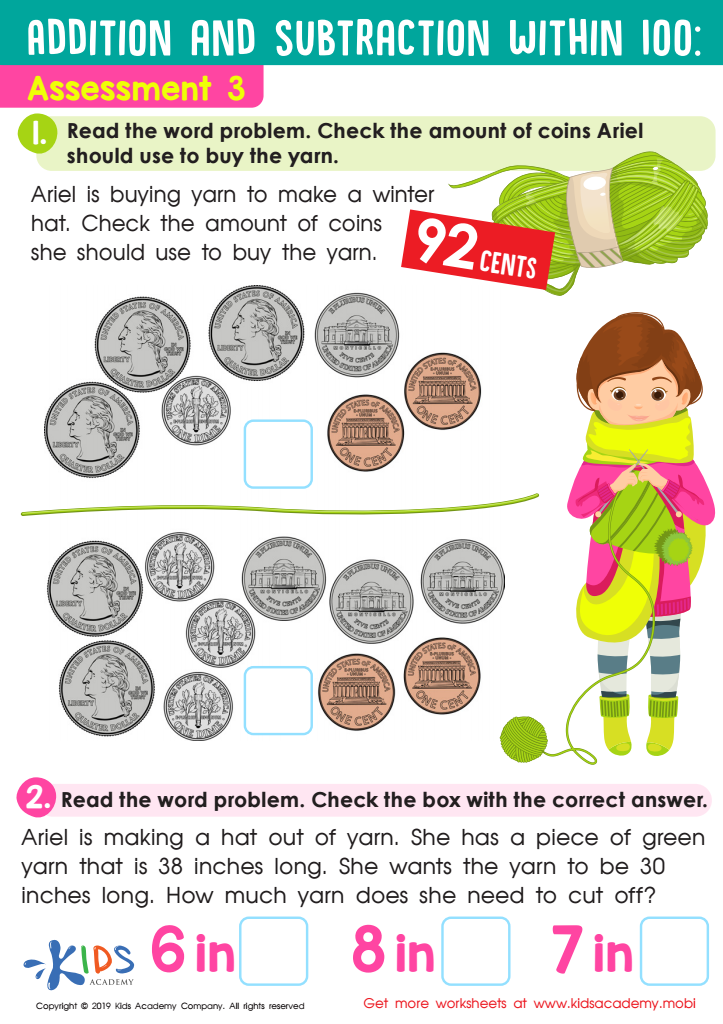
Assessment 3 Math Worksheet
 Assign to My Students
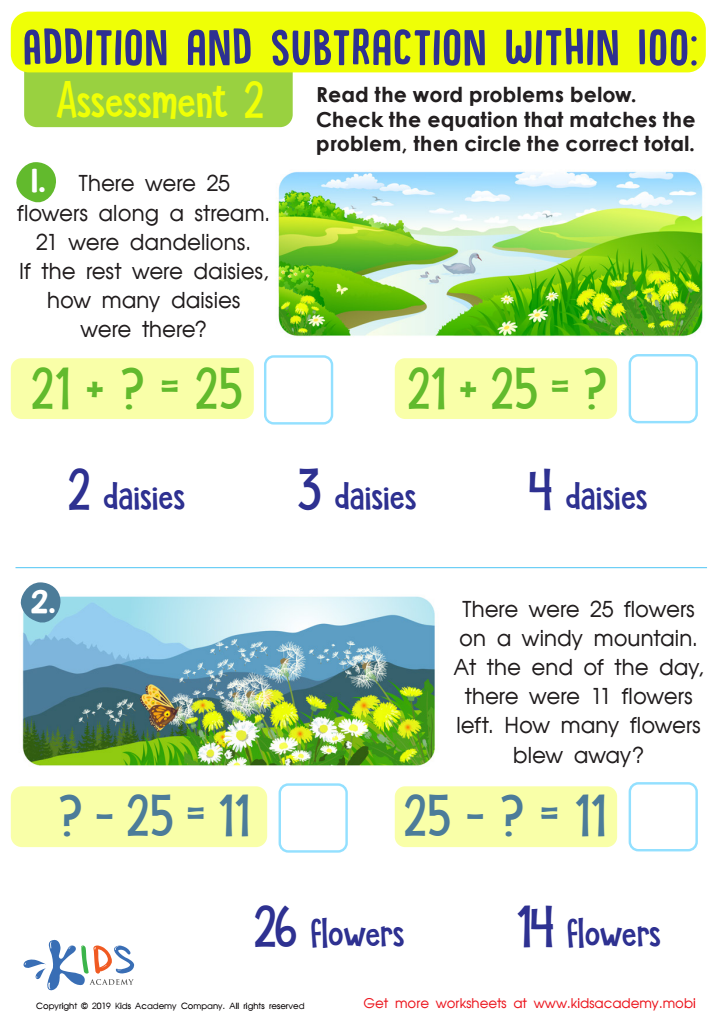
Assessment 2 Math Worksheet
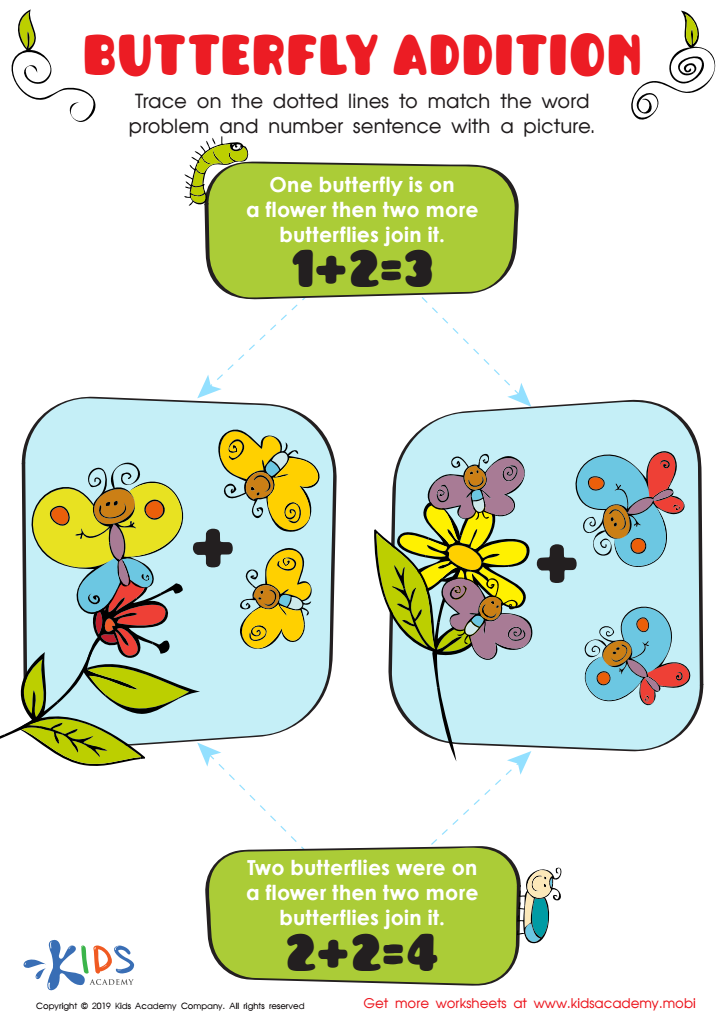
Butterfly Addition Worksheet
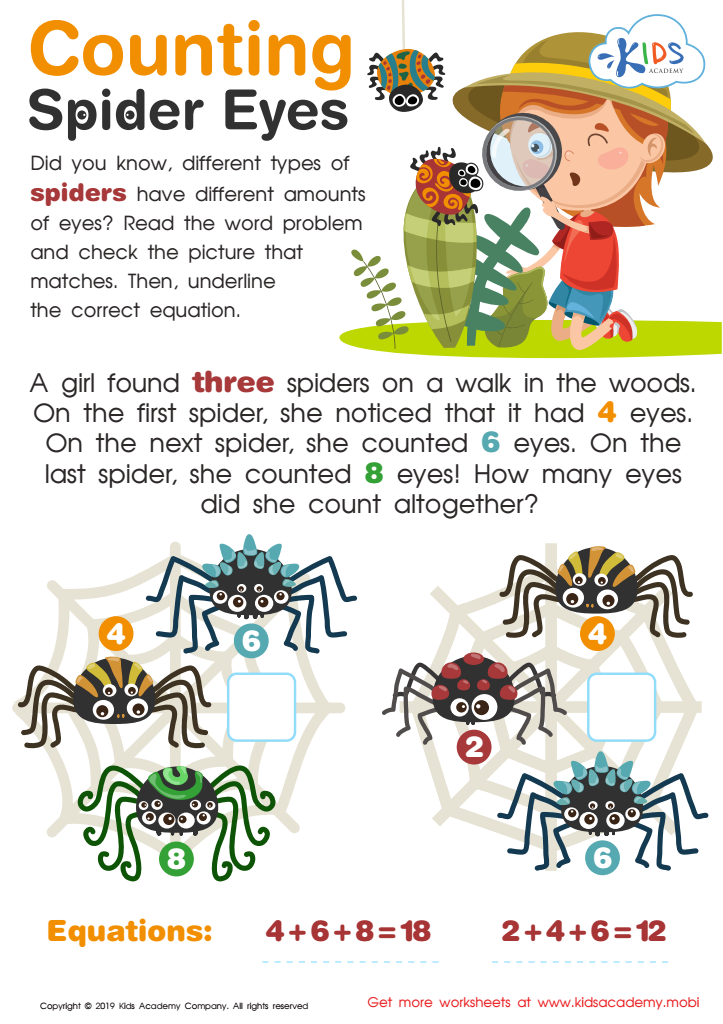
Counting Spider Eyes Worksheet
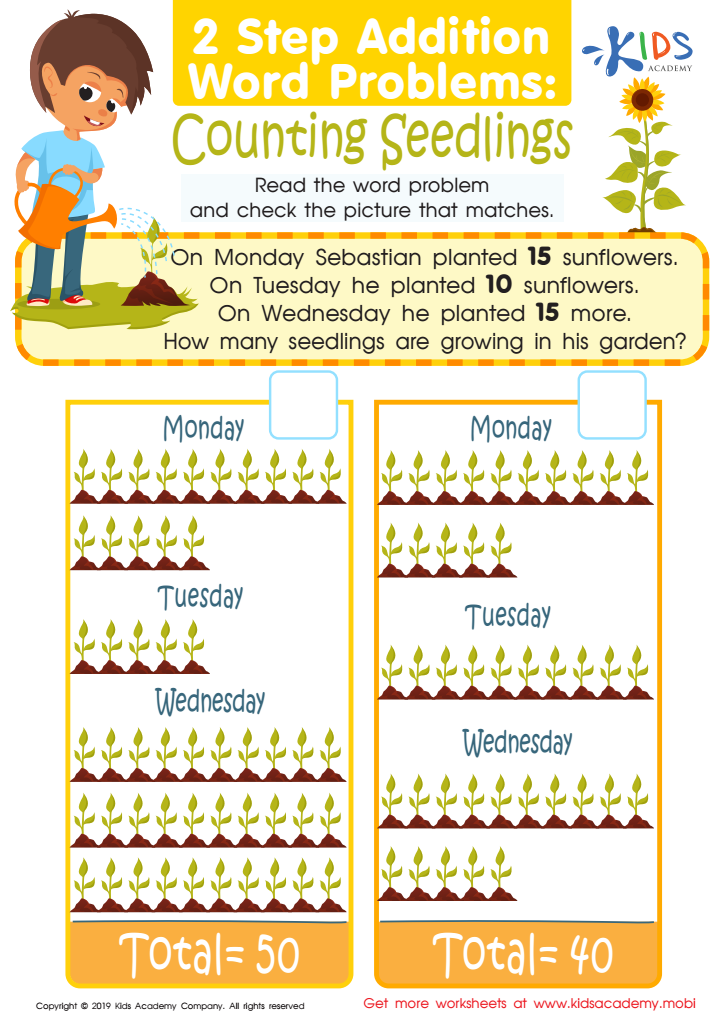
Counting Seedlings Worksheet
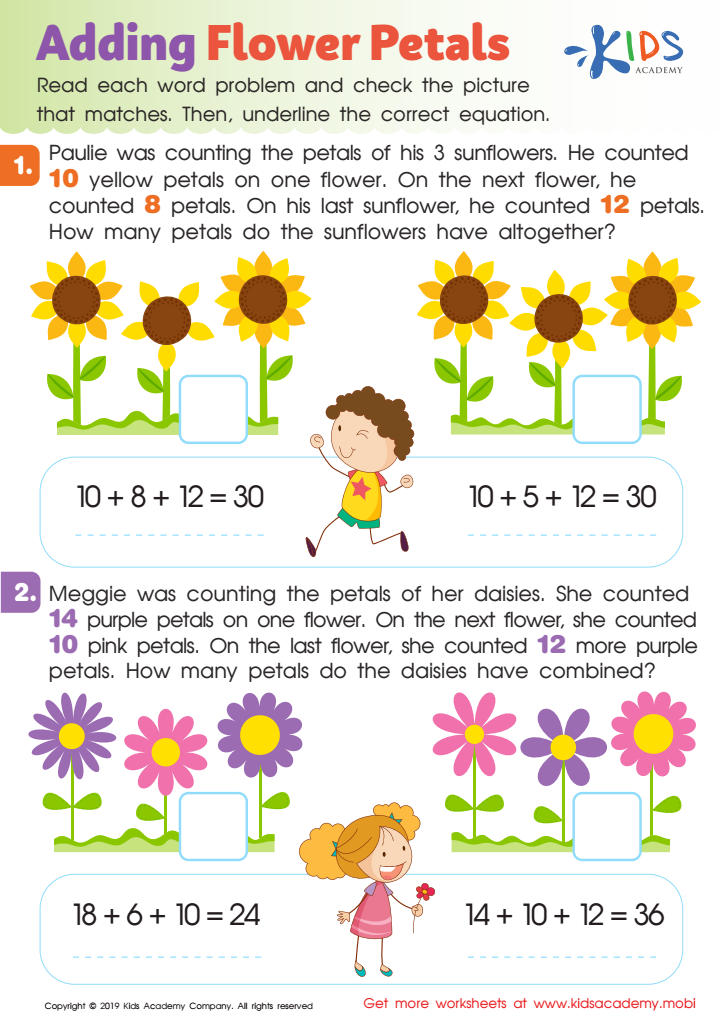
Adding Flower Petals Worksheet
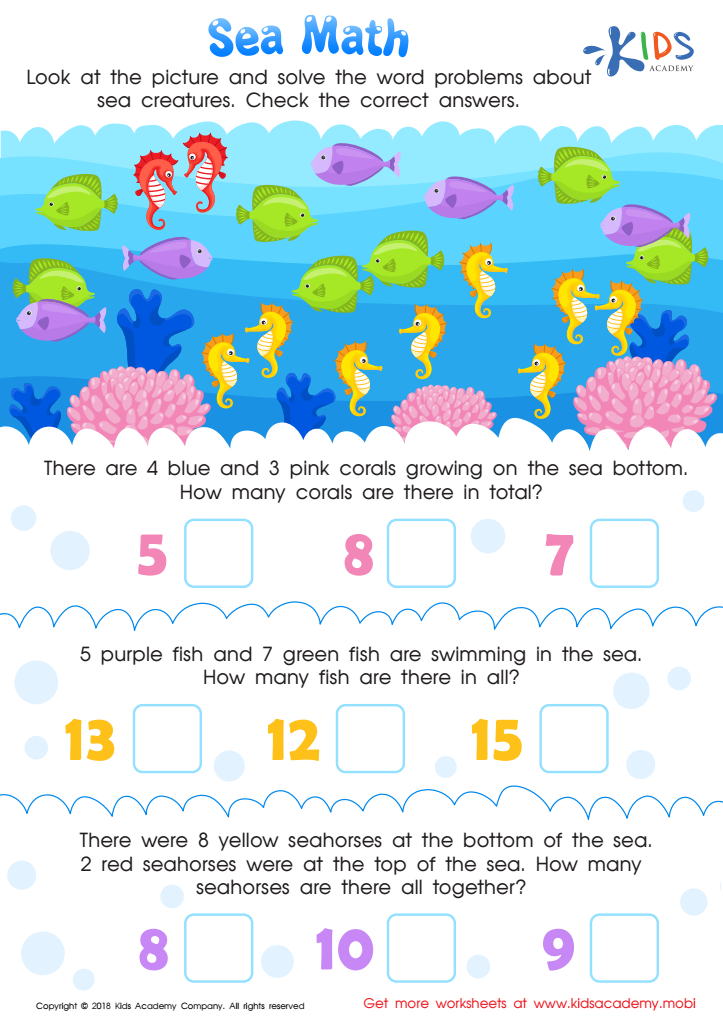
Sea Math Worksheet
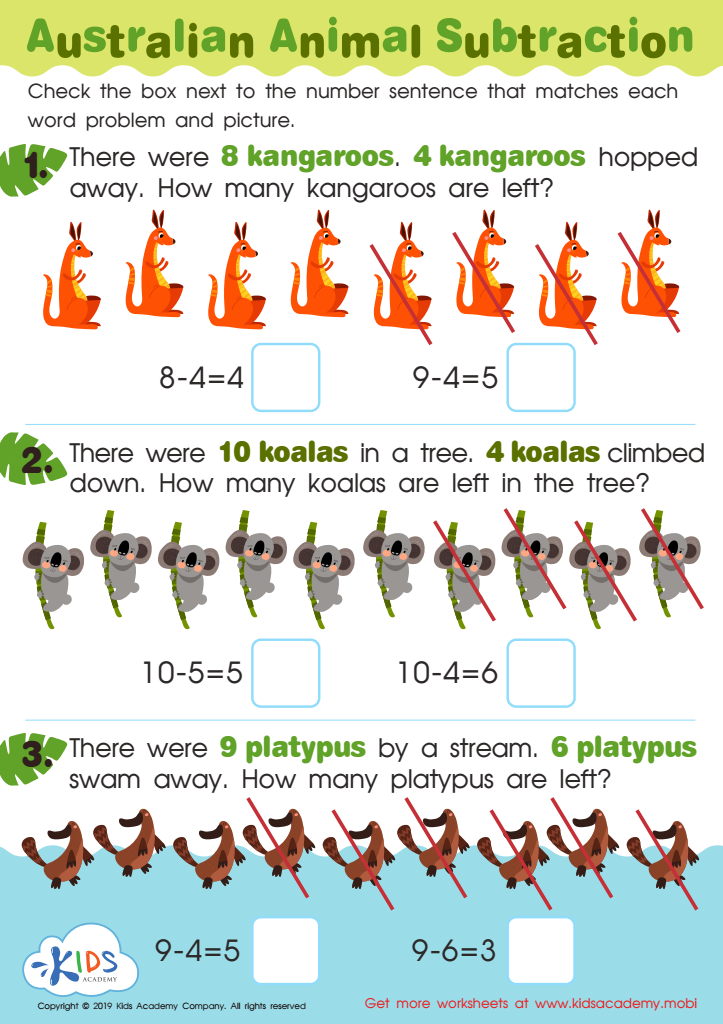
Australian Animal Subtraction Worksheet
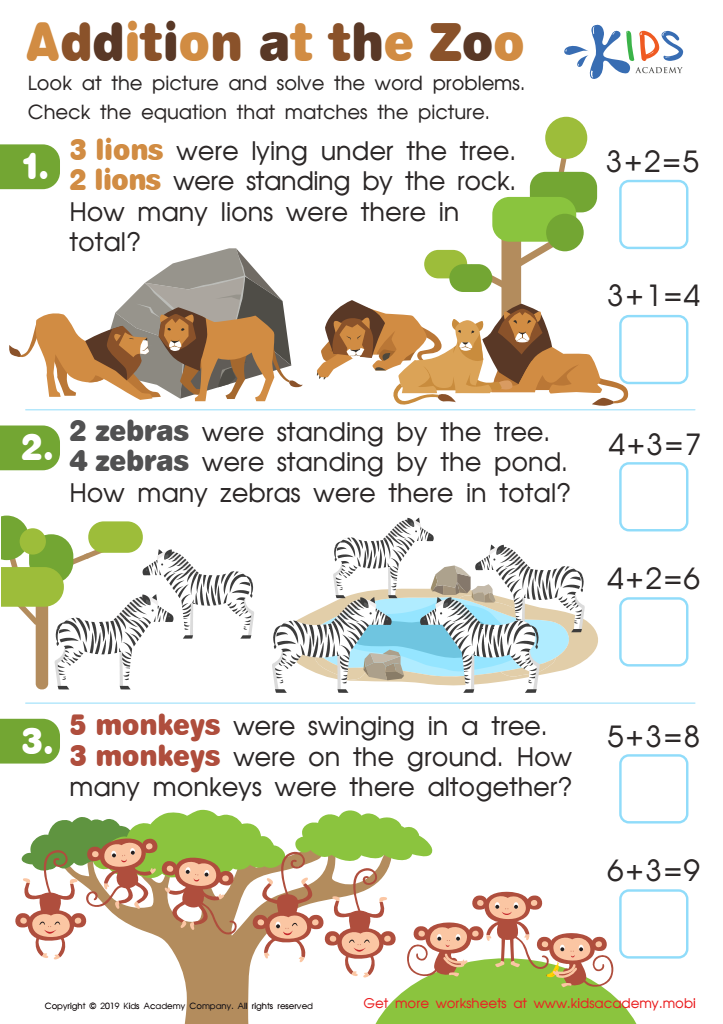
Addition at the Zoo Worksheet
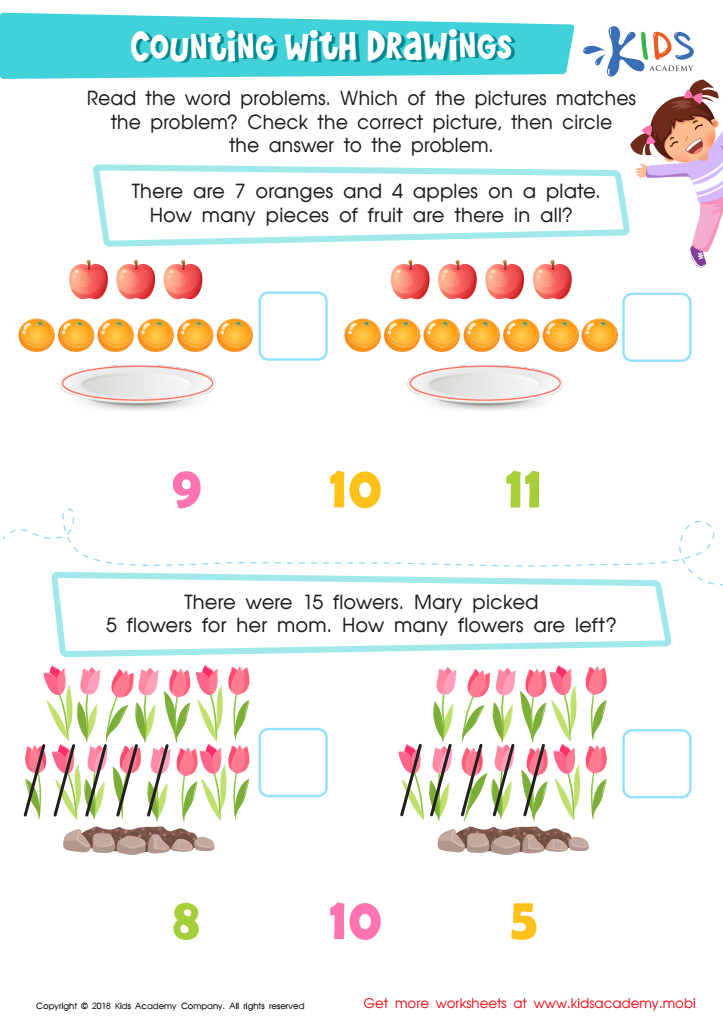
Counting with Drawings:Fruits & Flowers Worksheet
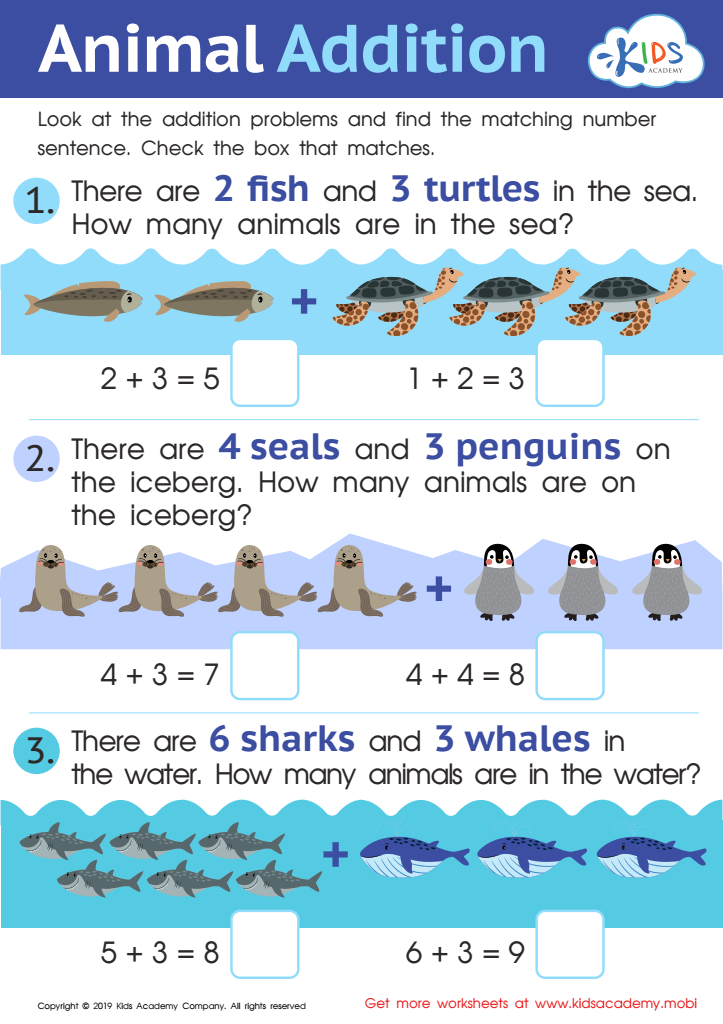
Animal Addition Worksheet








Counting skills and the ability to solve addition and subtraction word problems are foundational mathematical concepts that significantly influence a child's academic journey and everyday life. For children aged 5-8, developing these skills not only lays the groundwork for more complex mathematics but also enhances critical thinking, problem-solving abilities, and logical reasoning.
Parents and teachers should care about this because mastery of counting and basic arithmetic fosters confidence in young learners. When children can confidently solve word problems, they are more likely to engage with math in higher grades, reducing math anxiety and building a positive attitude towards the subject. Furthermore, understanding word problems encourages literacy skills as children learn to interpret and analyze written information, bridging math with reading comprehension.
Additionally, real-life applications of addition and subtraction through word problems help children understand the practicality of math. This connection to daily experiences aids in creating a more rounded worldview where they recognize the value of math in everyday tasks such as shopping, cooking, or planning activities. As such, investing time in fostering these skills has a cascading effect on a child's educational trajectory and engagement with learning.