Visual Learning Addition and Subtraction Word Problems Worksheets for Ages 5-8
5 filtered results
-
From - To
Discover our engaging Visual Learning Addition and Subtraction Word Problems Worksheets, specially designed for children ages 5-8. These worksheets utilize colorful images and relatable scenarios, making math concepts accessible and enjoyable for young learners. By integrating visual elements, children can enhance their comprehension and build problem-solving skills while developing a strong foundation in addition and subtraction. Our resources encourage creativity and critical thinking, helping educators and parents support their child's mathematical journey. Perfect for classroom and home use, these worksheets offer a fun way to boost confidence and foster a love for learning math. Start exploring today!
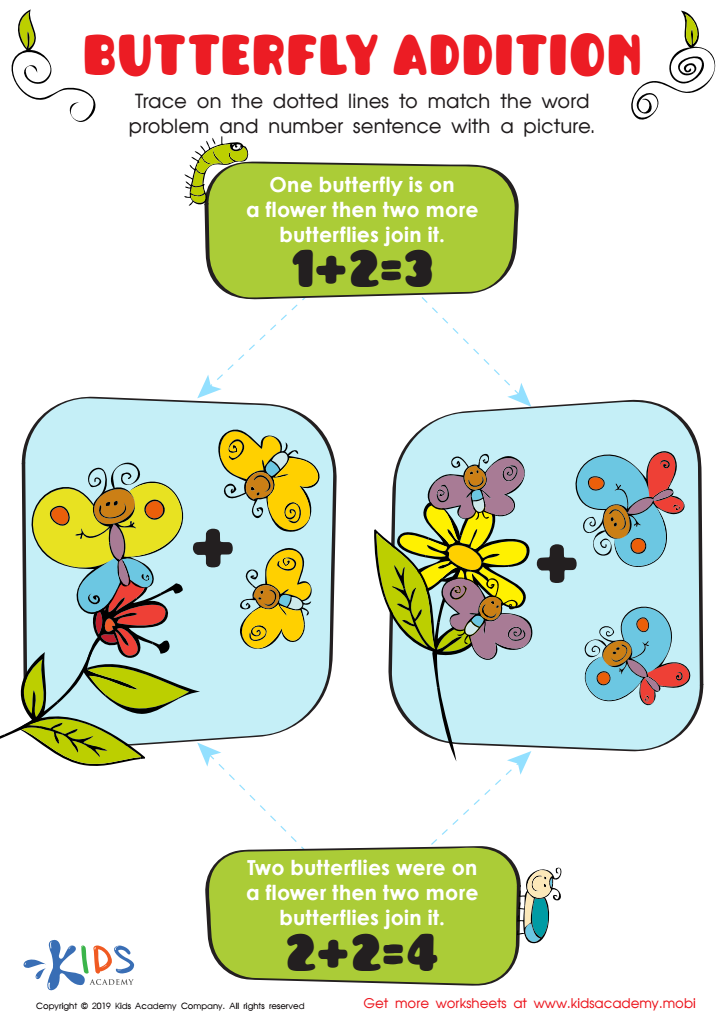
Butterfly Addition Worksheet
 Assign to My Students
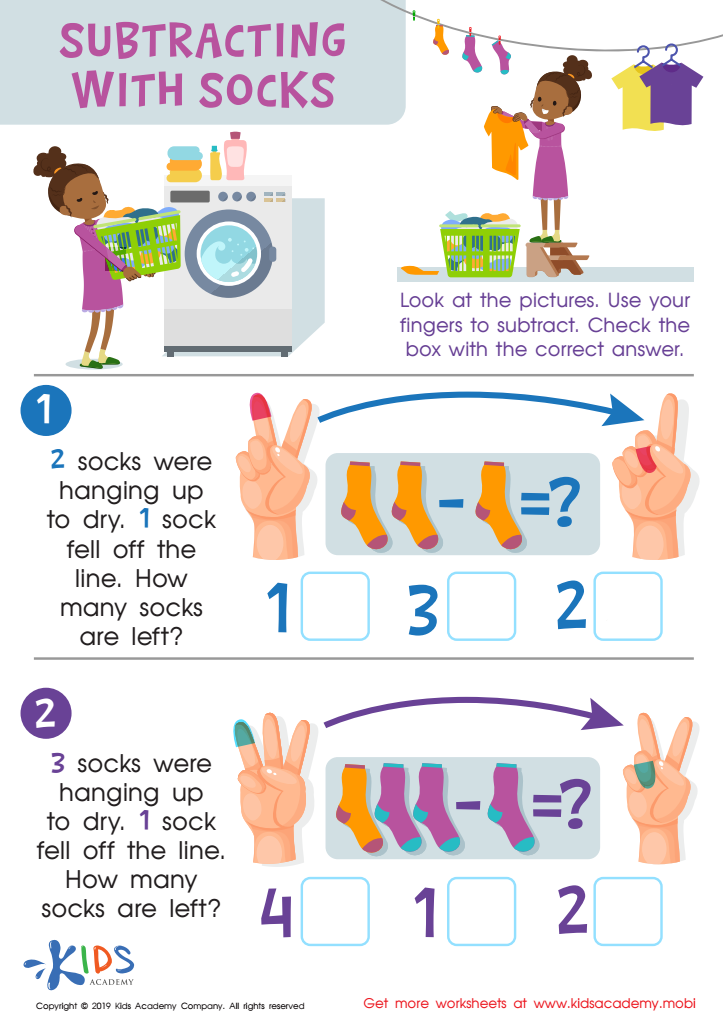
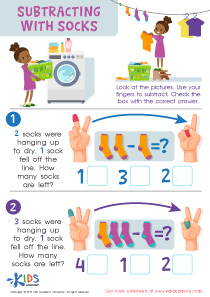
Subtracting Socks Worksheet
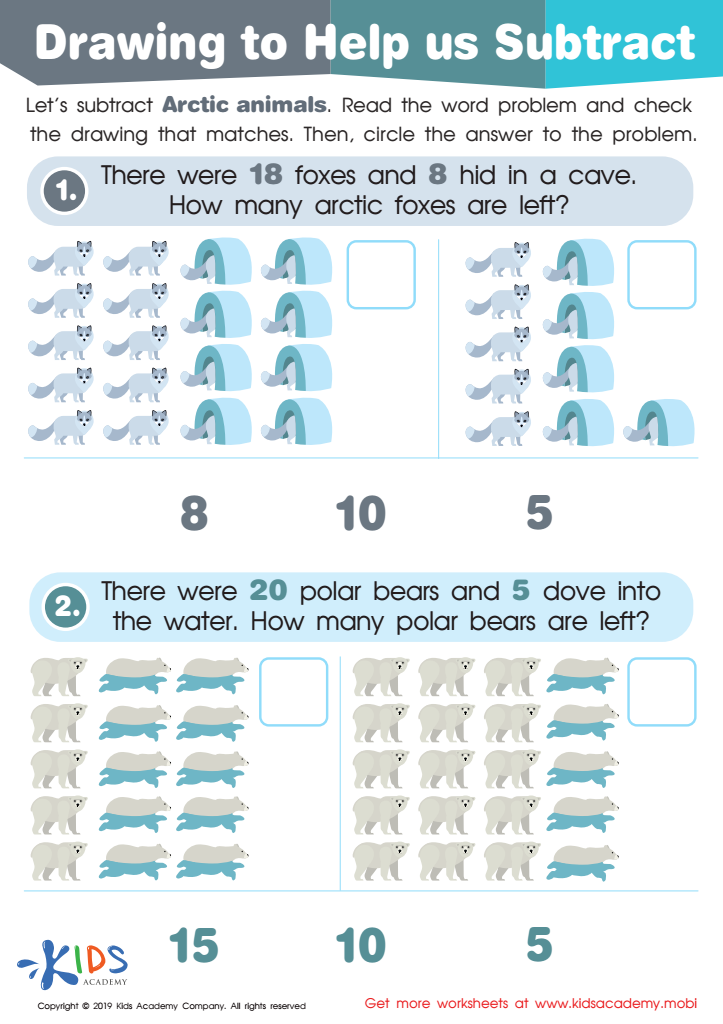
Drawing to Help Us Subtract Worksheet
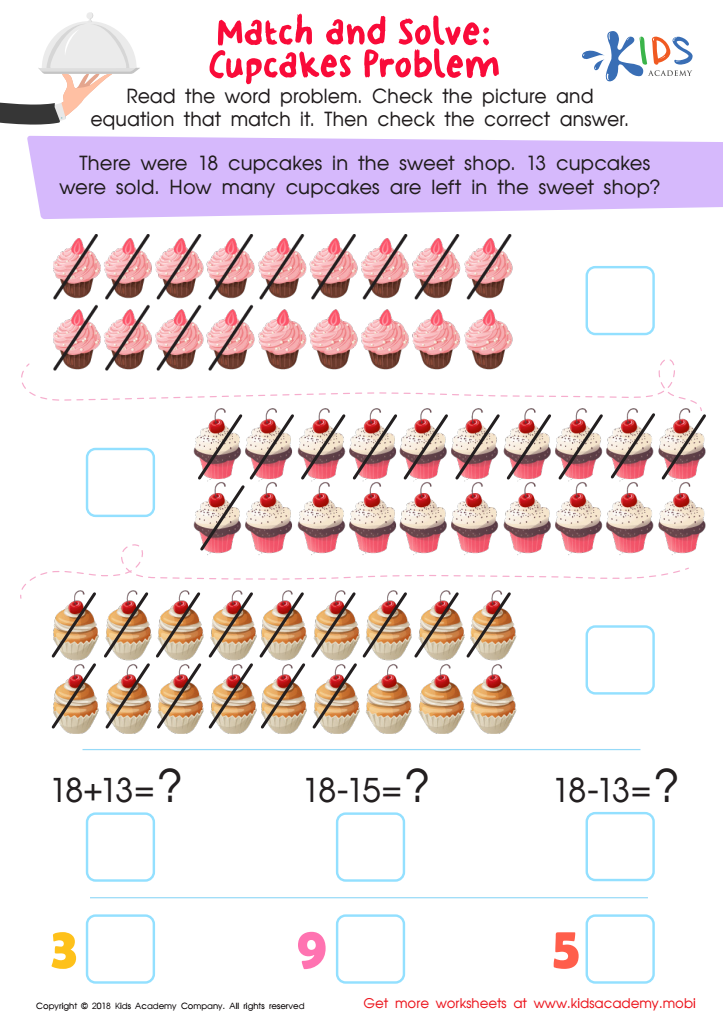
Match and Solve: Cupcakes Problem Worksheet
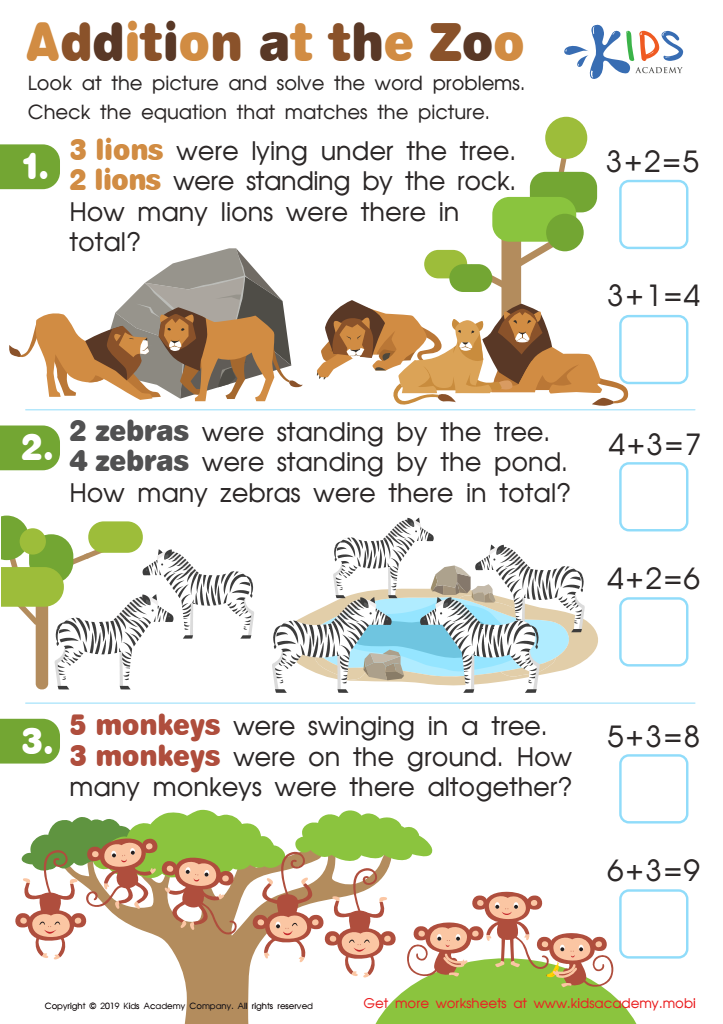
Addition at the Zoo Worksheet








Visual Learning Addition and Subtraction Word Problems for ages 5-8 is crucial for developing foundational math skills in early learners. This age group is in a critical stage of cognitive development, where visual aids can enhance understanding and retention of mathematical concepts. By incorporating visual strategies, such as diagrams, illustrations, or physical representations, children can better comprehend abstract concepts like addition and subtraction.
First, visual learning engages diverse learning styles, making math accessible to all students, whether they are visual, auditory, or kinesthetic learners. It promotes active participation, allowing children to manipulate and visualize quantities, fostering deeper engagement and interest.
Furthermore, visual problem-solving encourages critical thinking and reasoning skills. Children learn to break down word problems into manageable steps, improving their analytical abilities and leading to better problem-solving strategies. This forms a strong foundation for more advanced mathematics later in their education.
Parents and teachers should care about these methods as they not only boost numerical fluency but also develop essential cognitive and social-emotional skills. By supporting visual learning approaches, caregivers can help children cultivate a love for math, increase confidence, and prepare them for future academic challenges.