Basic addition practice Addition & Subtraction Worksheets for Ages 5-8
19 filtered results
-
From - To
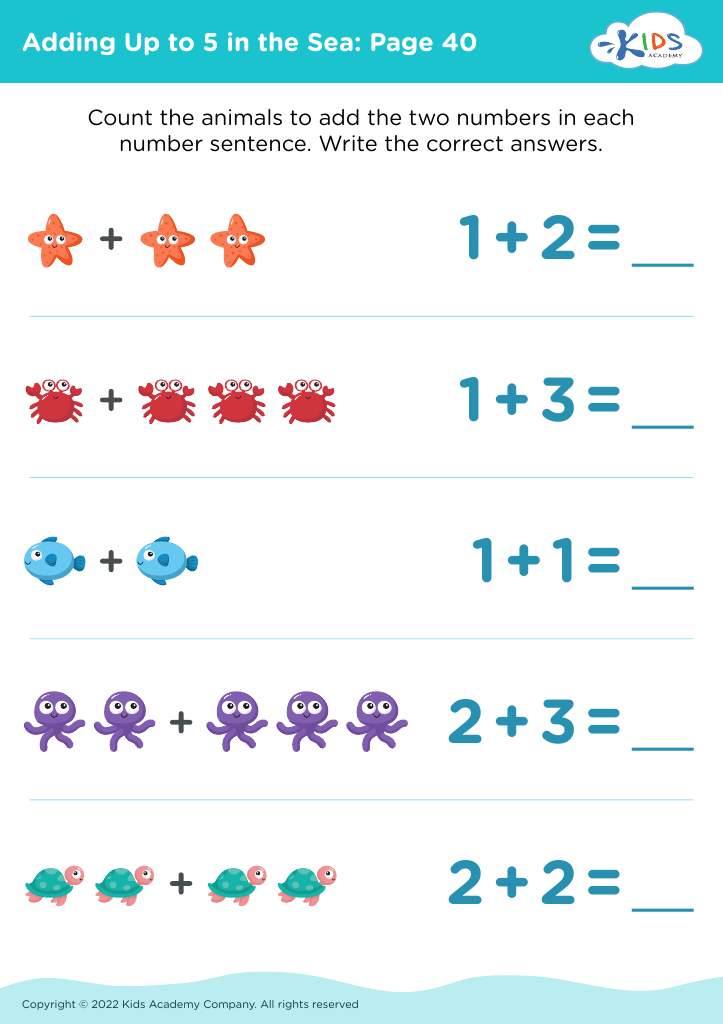
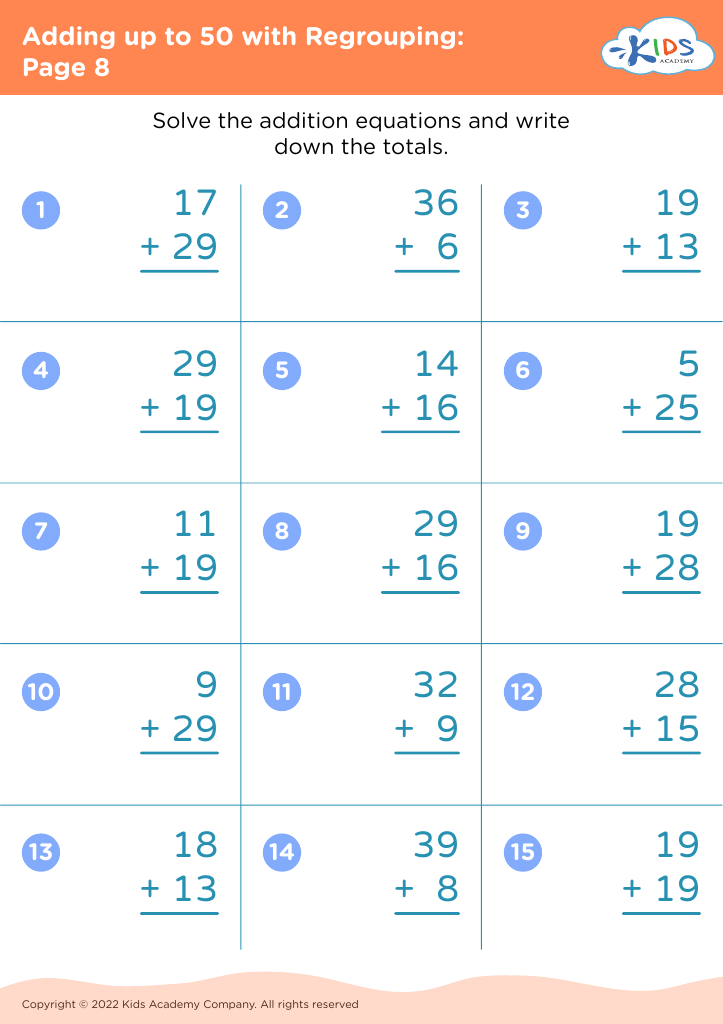
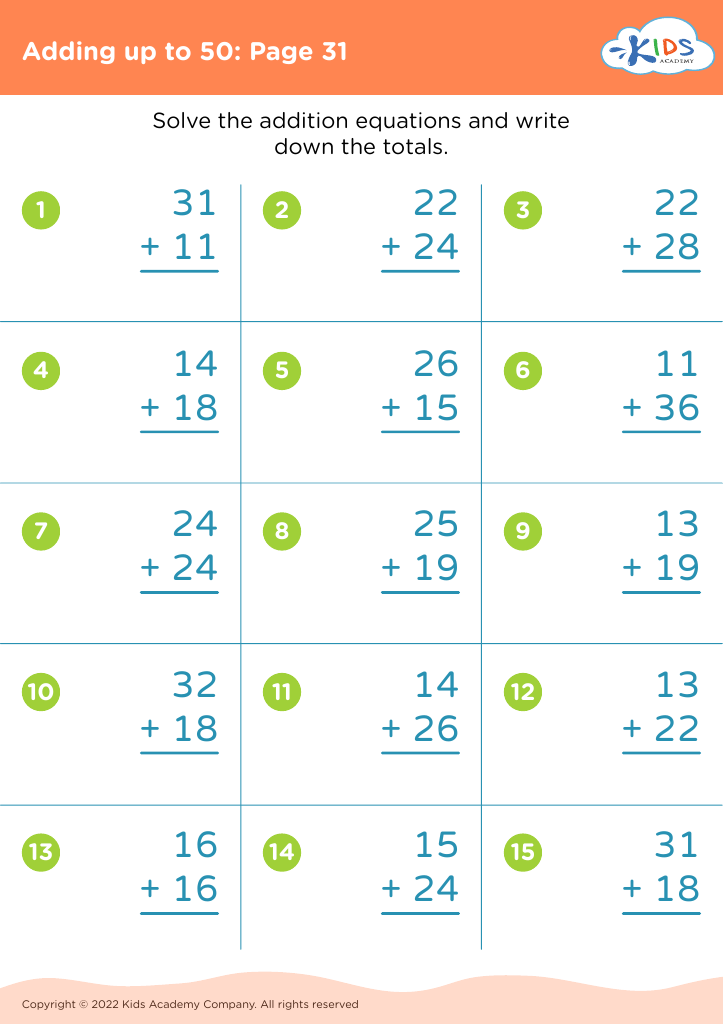
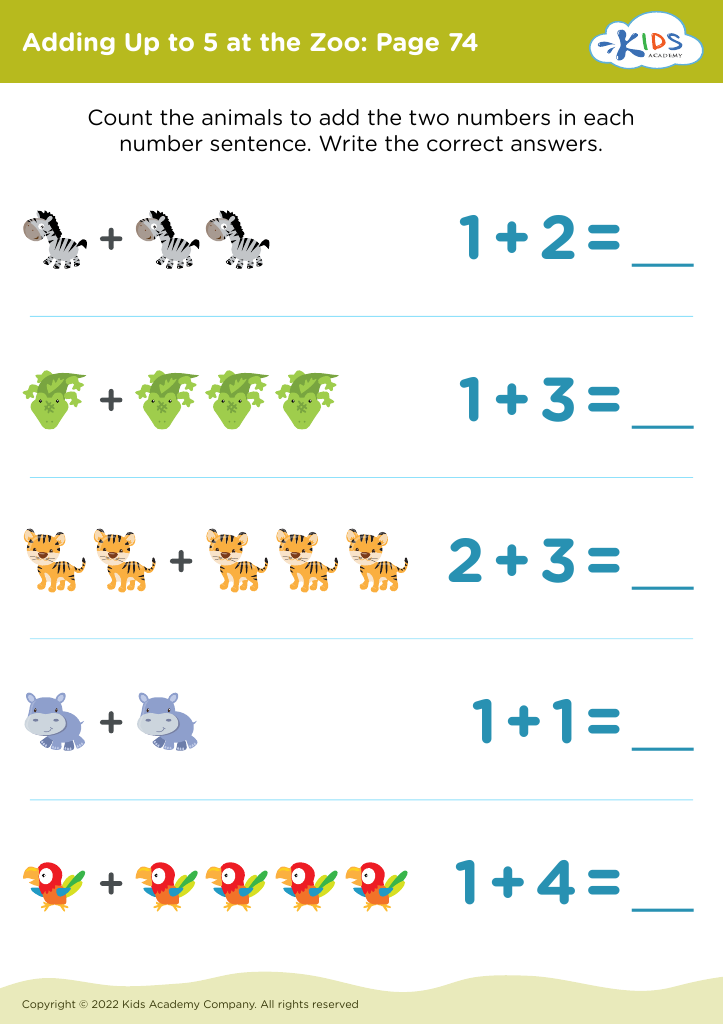
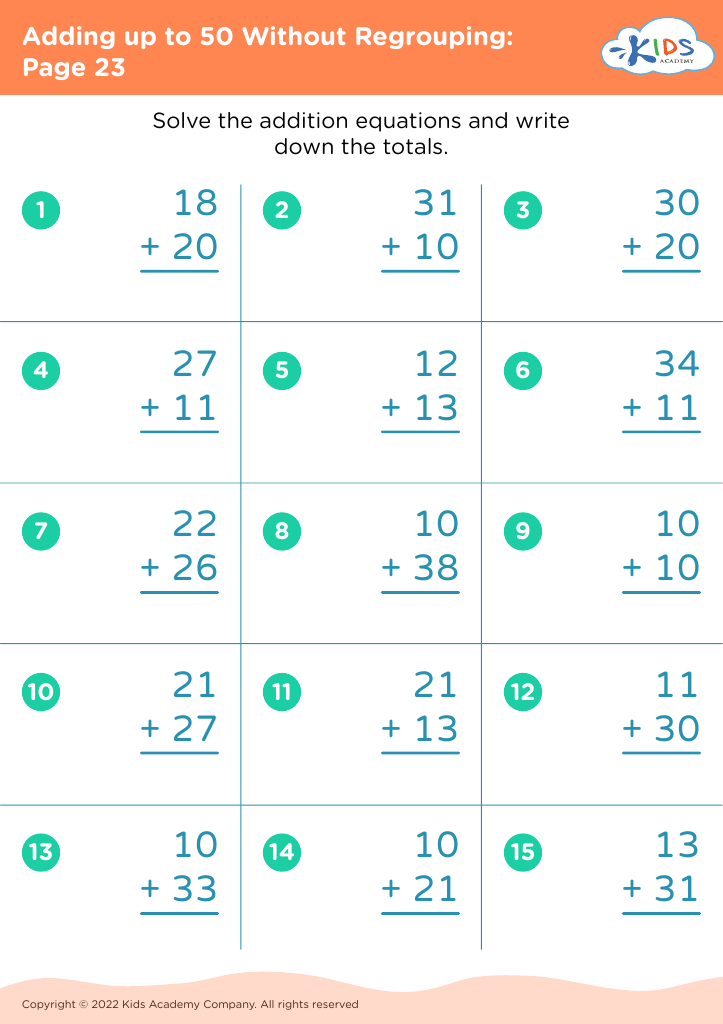
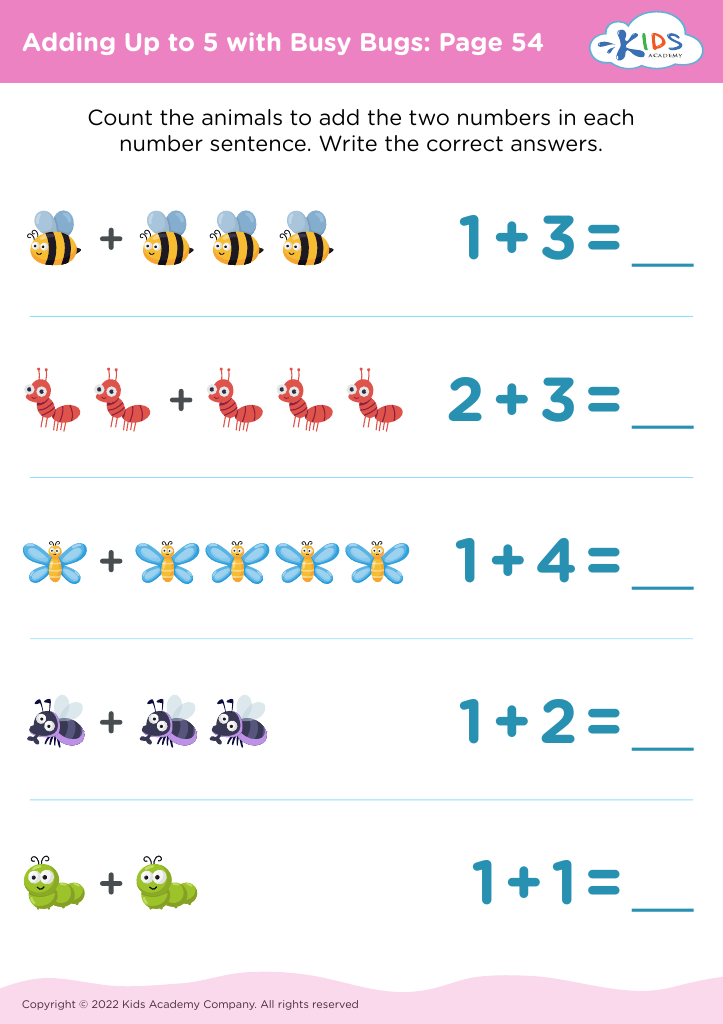
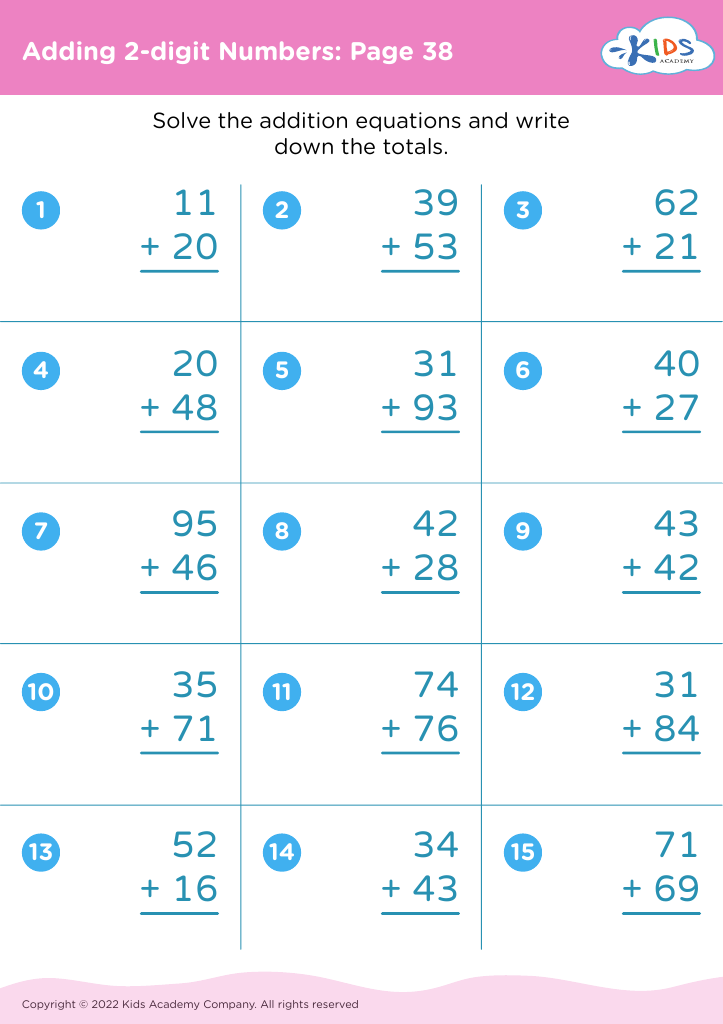
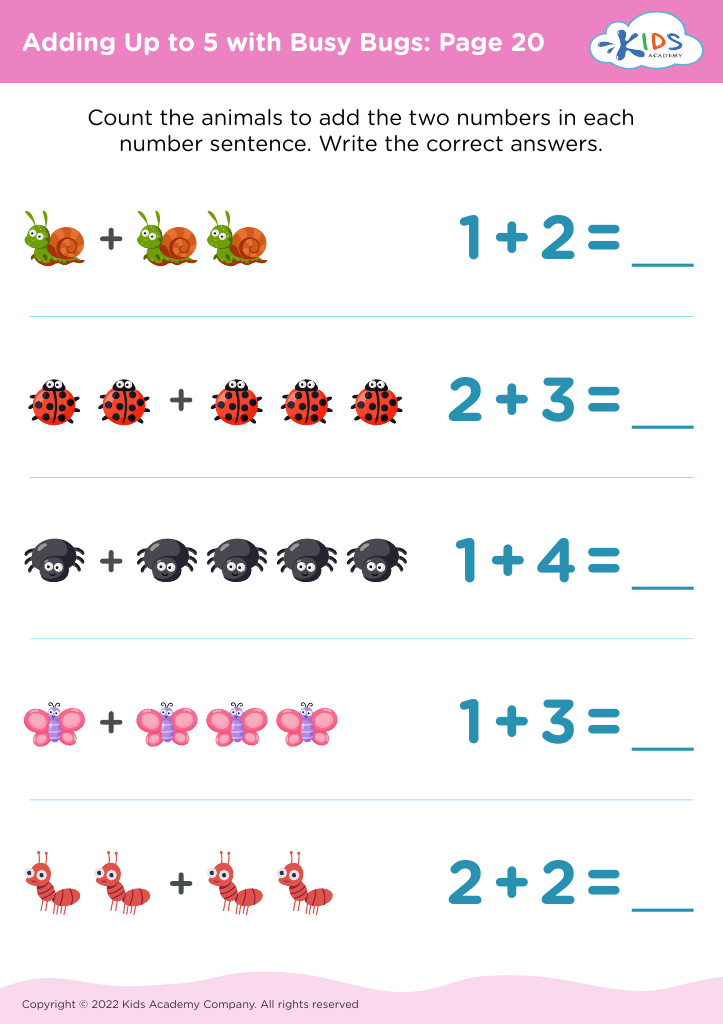
Perfect for young learners aged 5-8, our Basic Addition & Subtraction Worksheets offer essential practice to master early math skills. These worksheets, crafted by educational experts, feature engaging and fun exercises that make learning enjoyable. Children will enhance their ability to add and subtract through progressively challenging problems, fostering a strong mathematical foundation. With colorful, interactive designs, each worksheet captivates children’s interest and encourages independent learning. Accessible and printable, these resources are ideal for both classroom use and homeschooling. Start developing your child’s addition and subtraction skills today with our comprehensive and enjoyable worksheets!
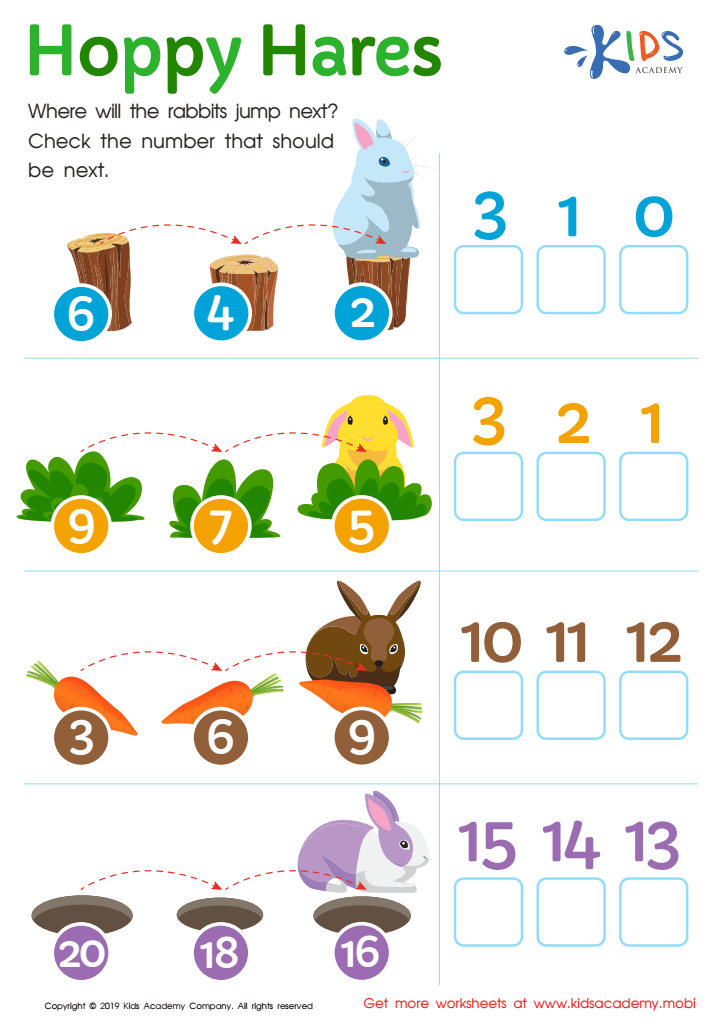
Hoppy Hares Worksheet
 Assign to My Students
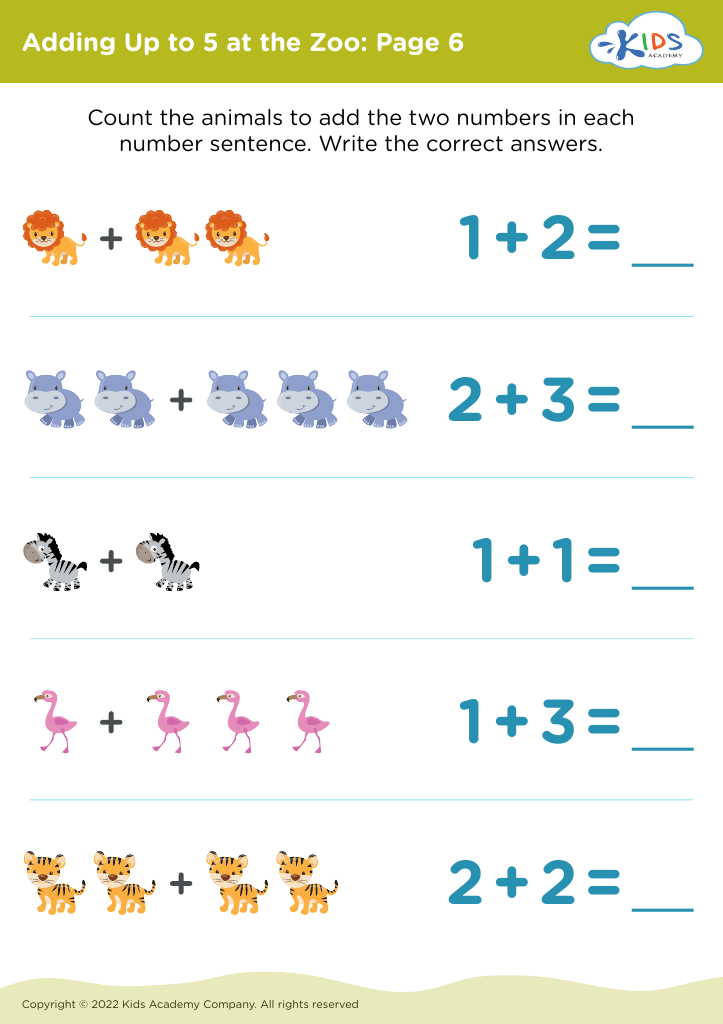
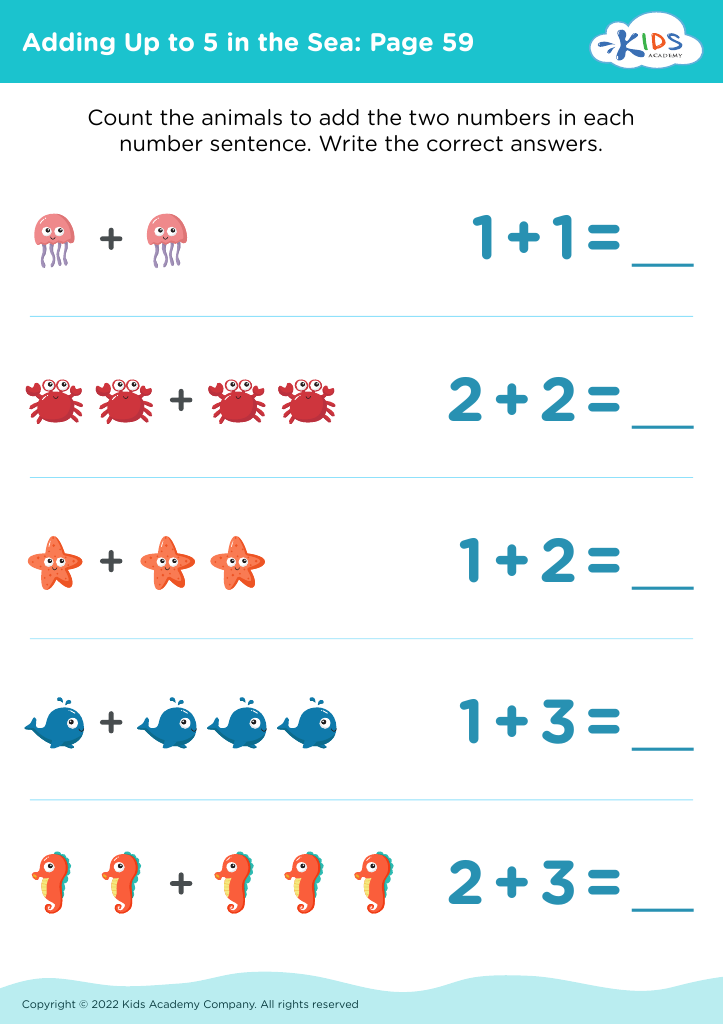
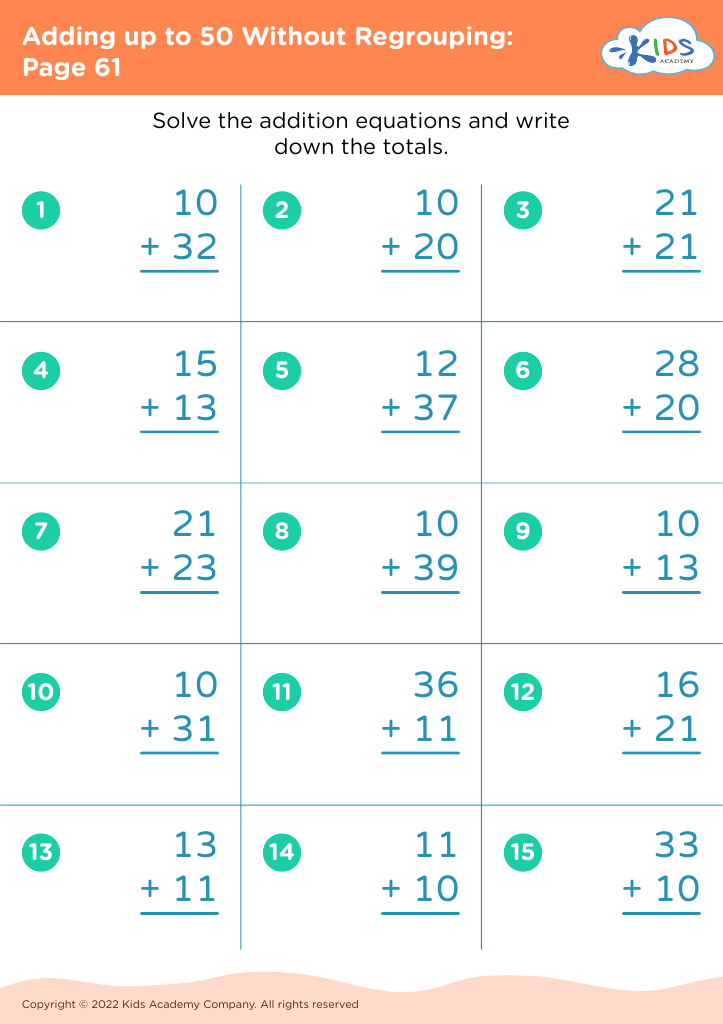
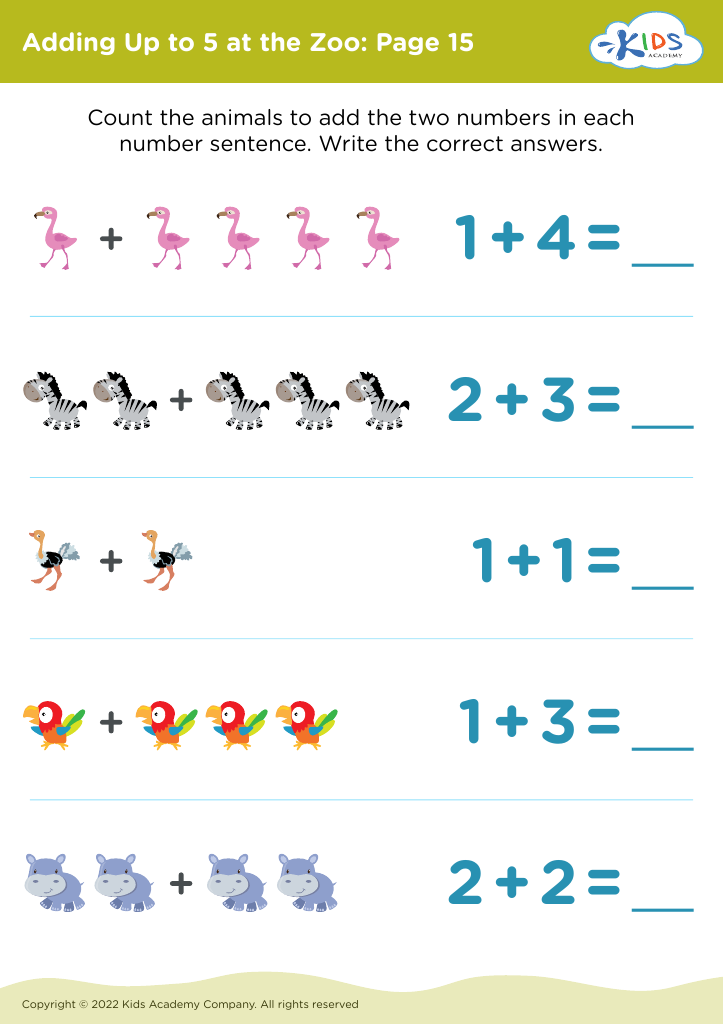
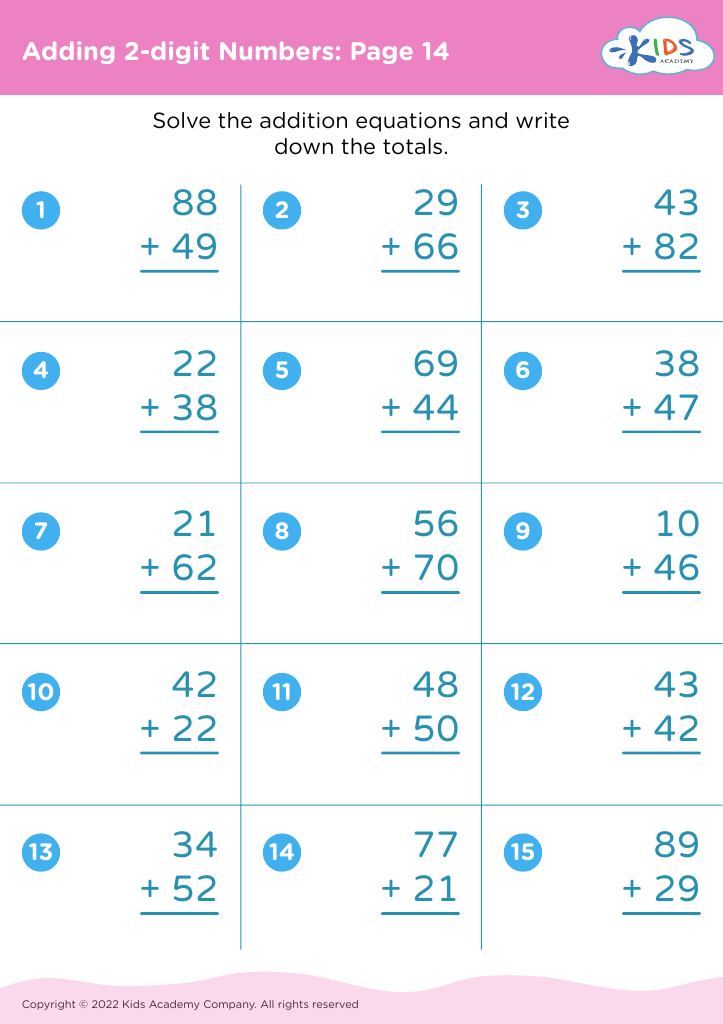
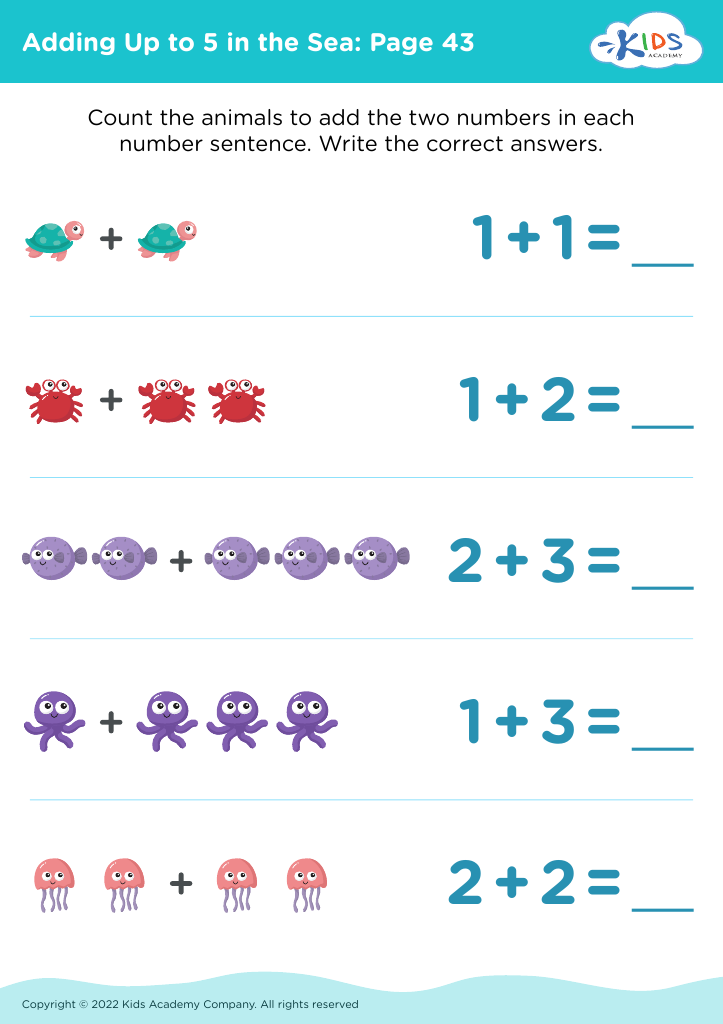
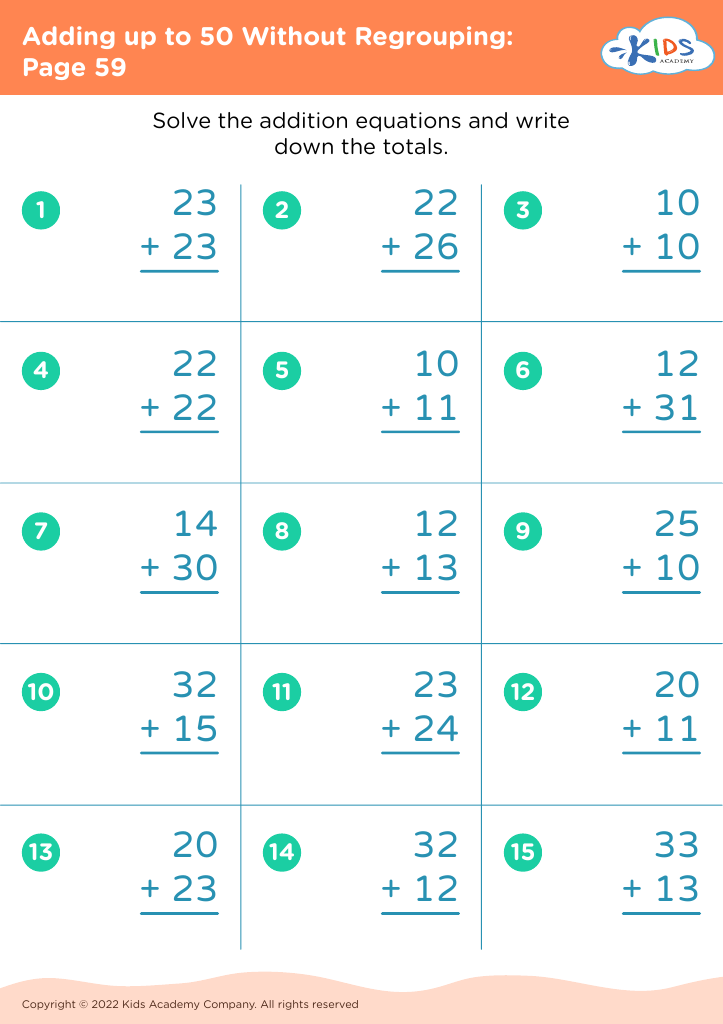
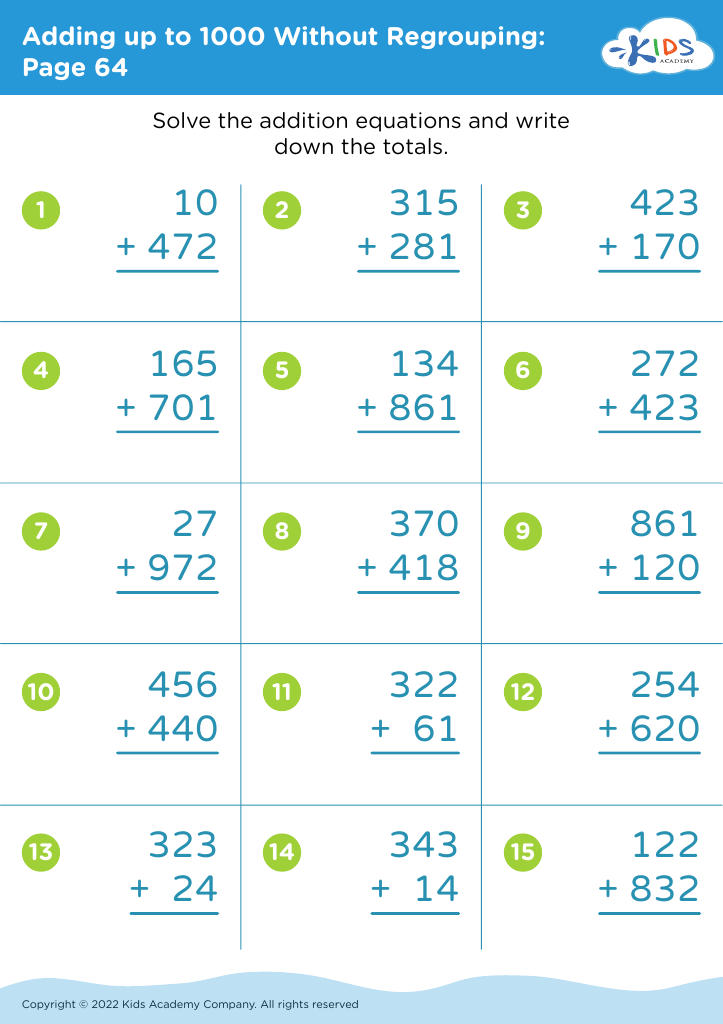
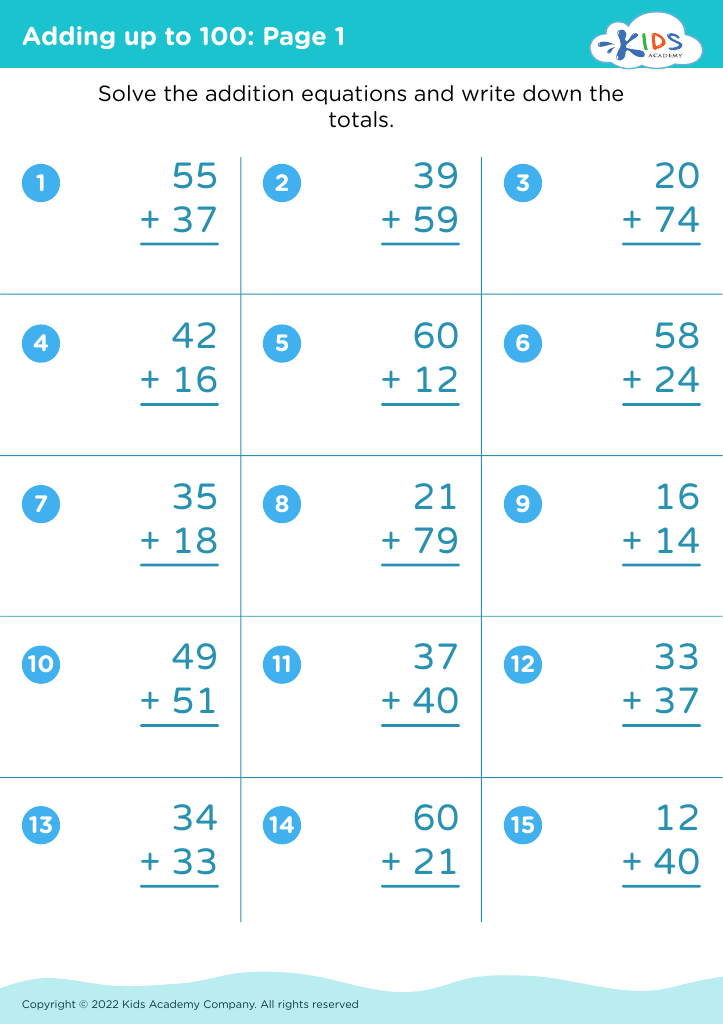
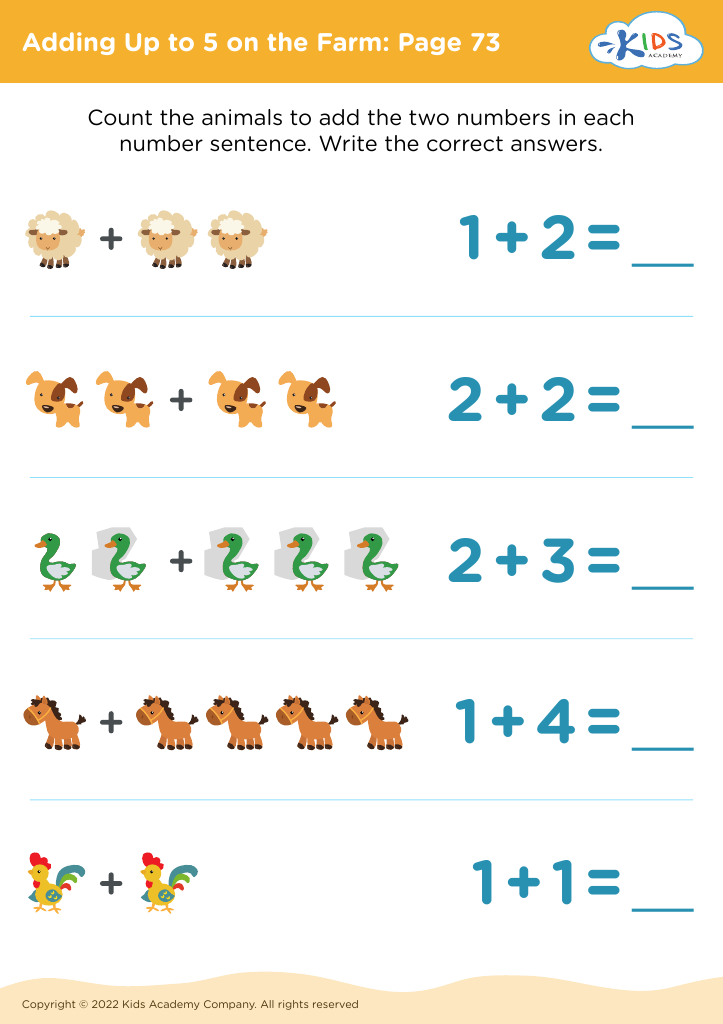








Parents and teachers should deeply care about basic addition and subtraction practice for children aged 5-8 because these skills form the foundation for all future mathematics learning. During these early years, children are developing their cognitive abilities and understanding of numbers, which is crucial for both academic success and everyday problem-solving.
Basic arithmetic, such as addition and subtraction, helps children grasp the concept of numbers and their relationships, fostering numerical literacy. Through hands-on practice, kids learn to recognize patterns, develop logical thinking, and enhance their memory retention. Mastery of these fundamental operations boosts their confidence, reduces math anxiety, and creates a positive attitude toward more complex mathematical concepts they will encounter later on.
Moreover, early math skills are often predictive of later academic achievement not just in math but also in other subjects like science and engineering, enhancing overall educational development. Interactive and engaging practice also promotes critical life skills such as concentration, attention to detail, and perseverance.
For teachers and parents, prioritizing these basic skills ensures that children have the necessary tools to tackle future challenges successfully. Supporting young learners in a fun, engaging way also strengthens parent-child and teacher-student relationships, promoting a cooperative and encouraging learning environment.








