Cognitive Development Addition & Subtraction Worksheets for Ages 5-8 - Page 3
122 filtered results
-
From - To
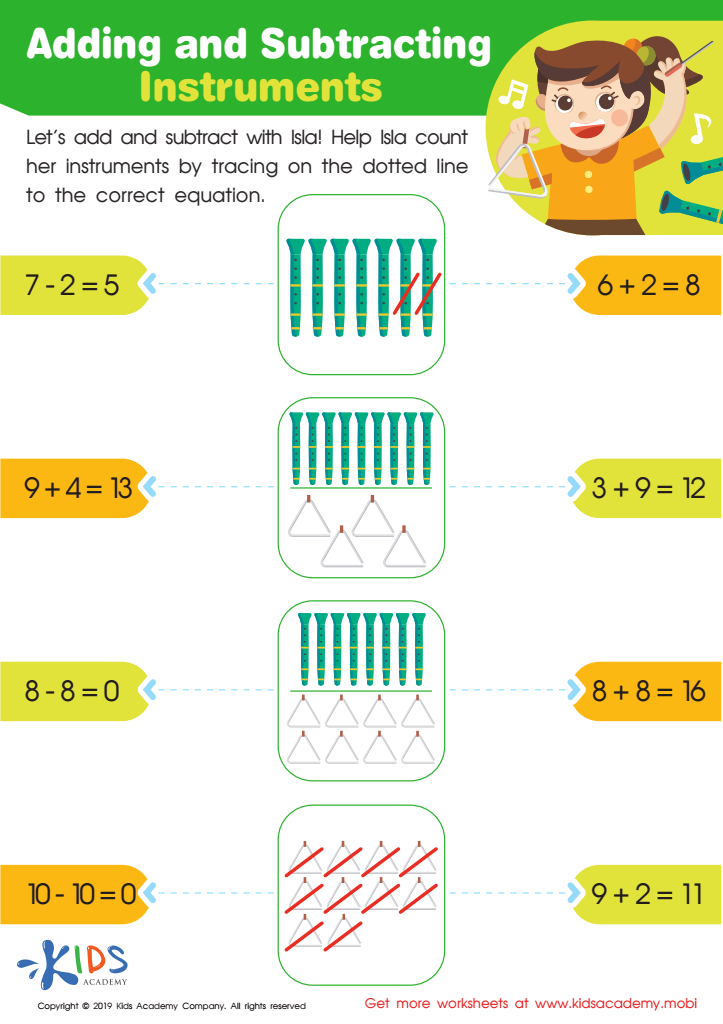
Adding and Subtracting: Instruments Worksheet
 Assign to My Students
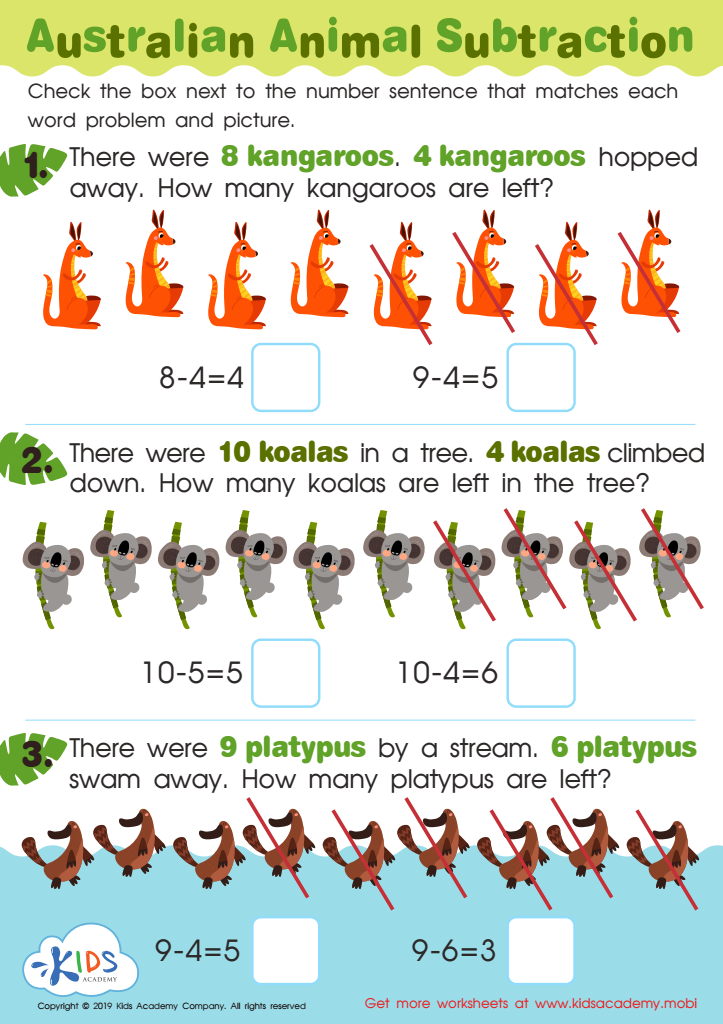
Australian Animal Subtraction Worksheet
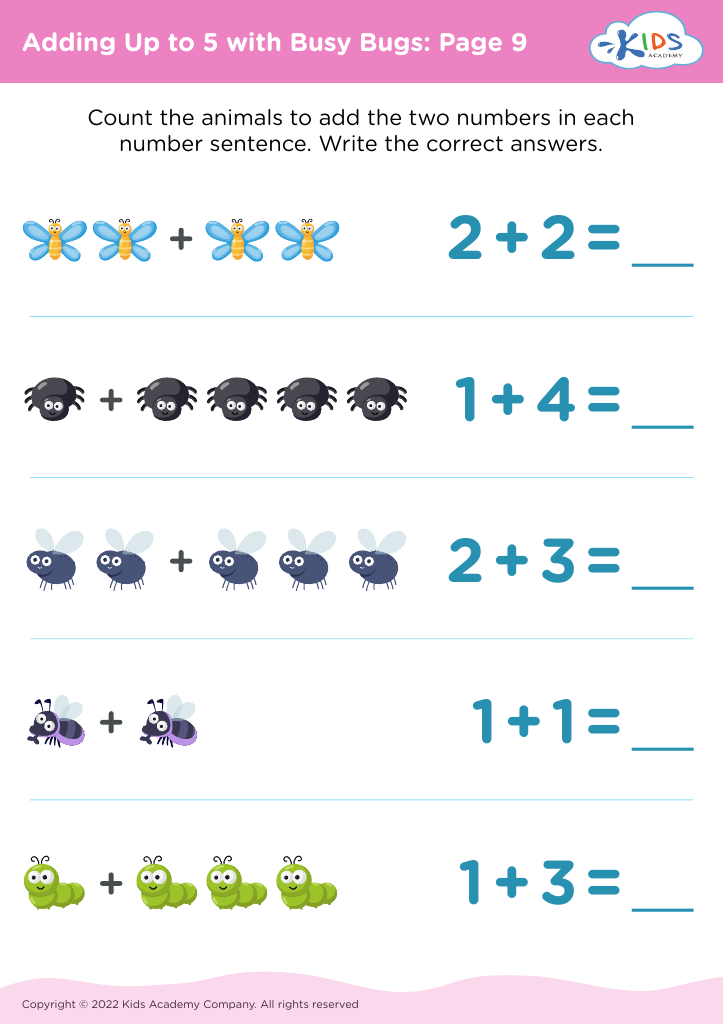
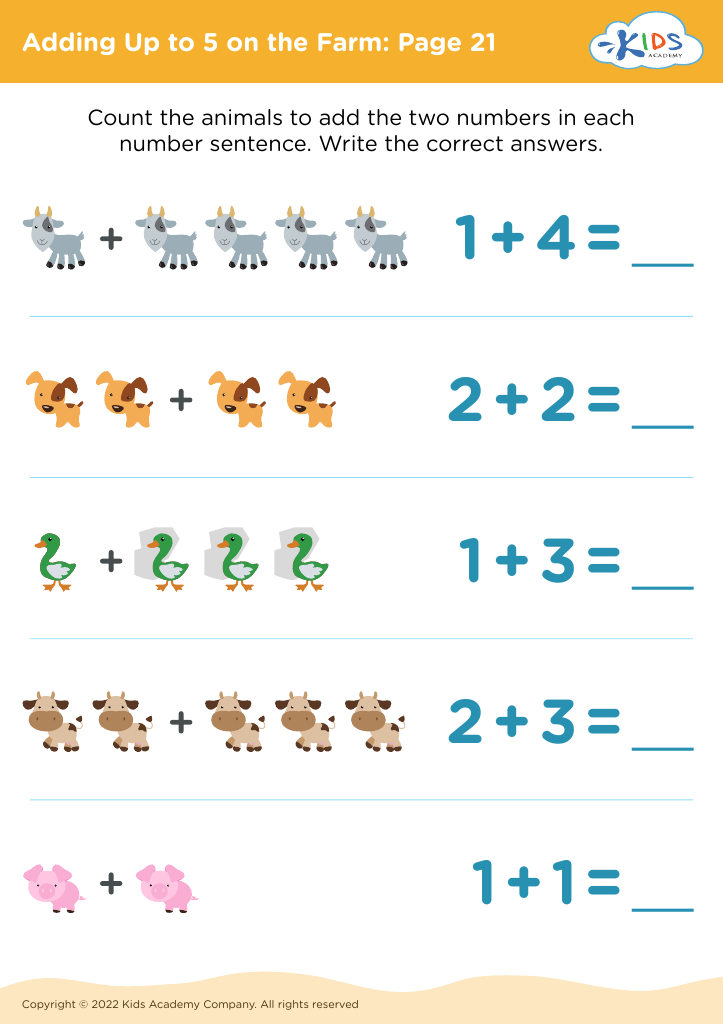
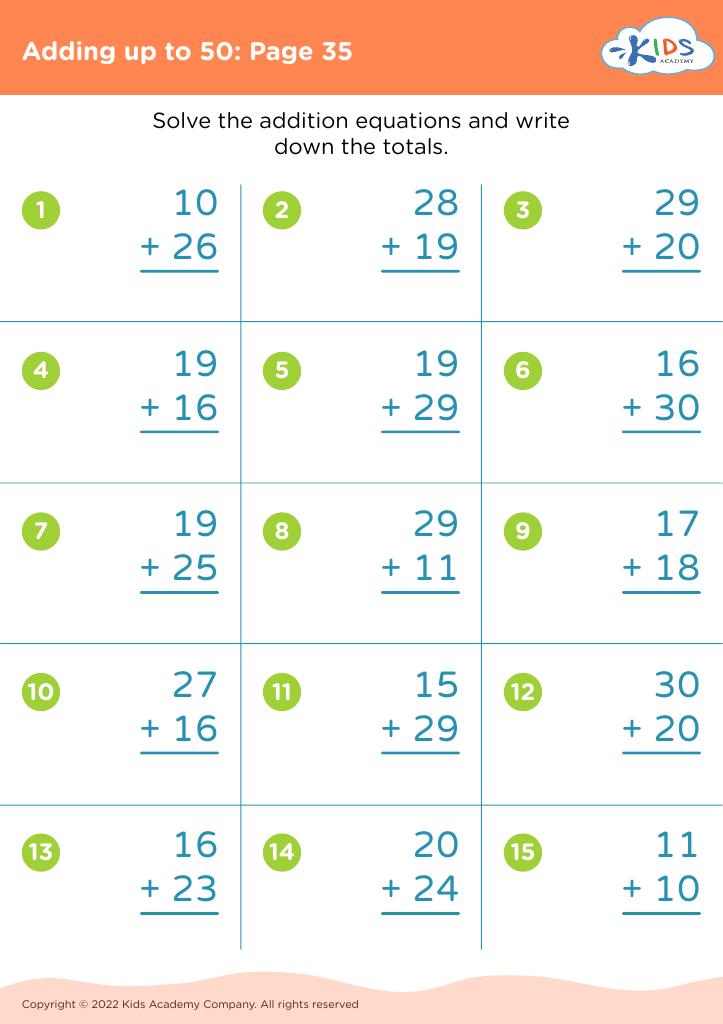
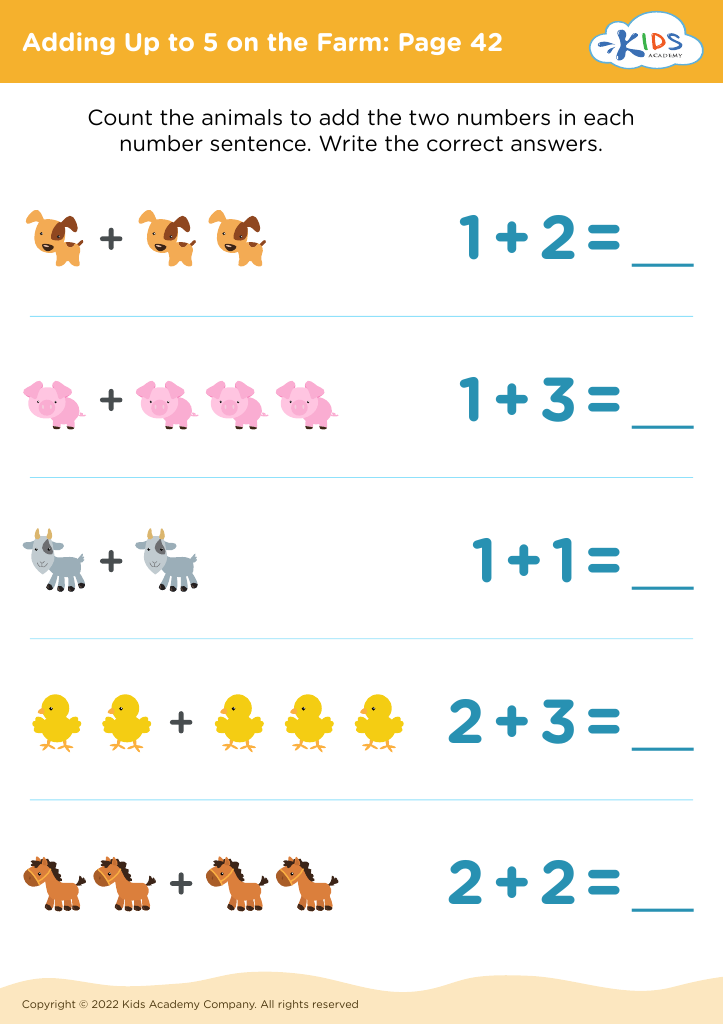
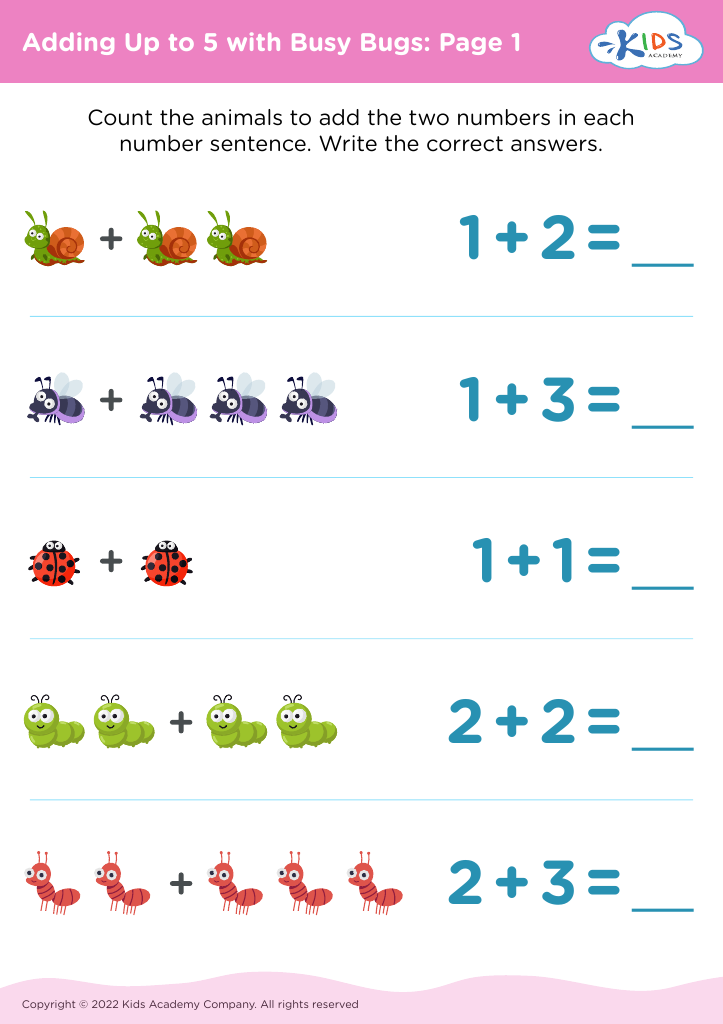
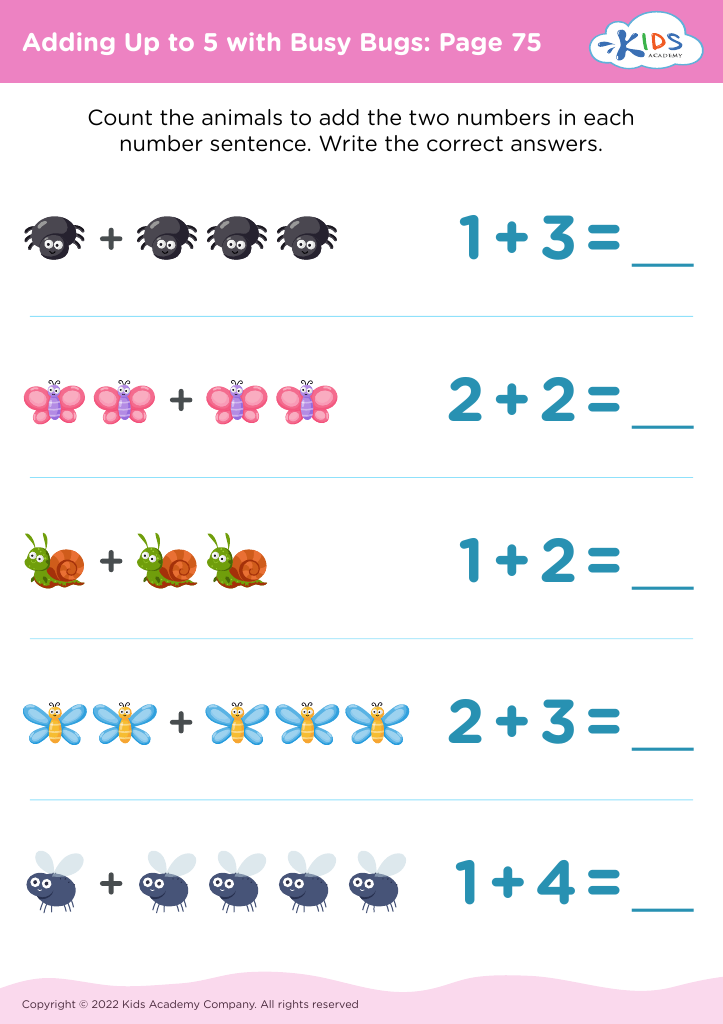
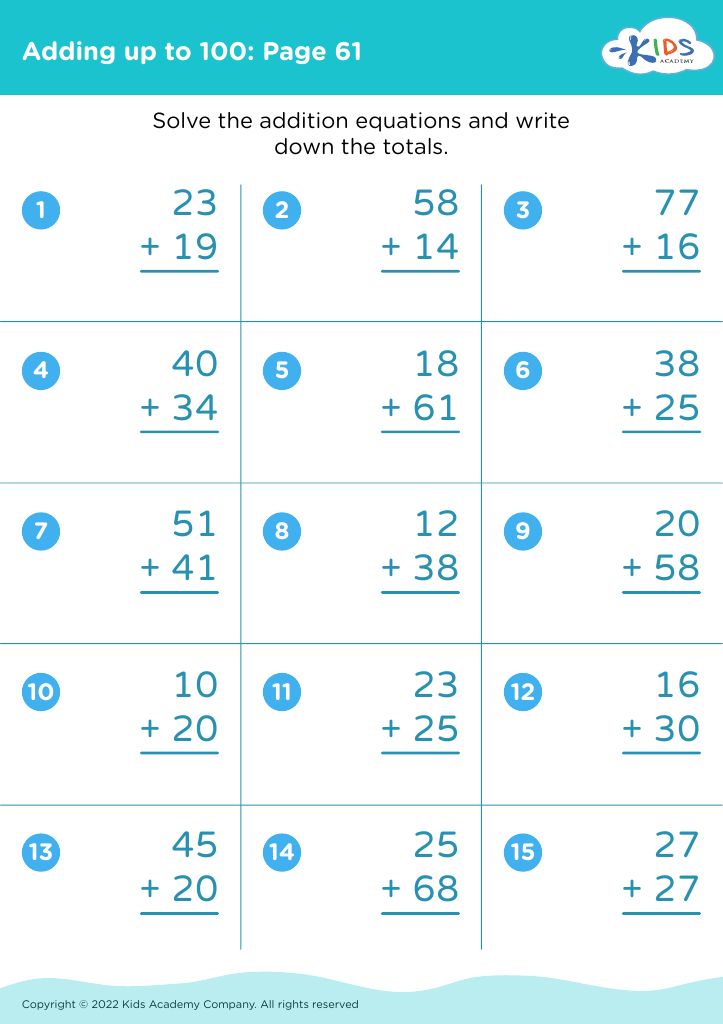
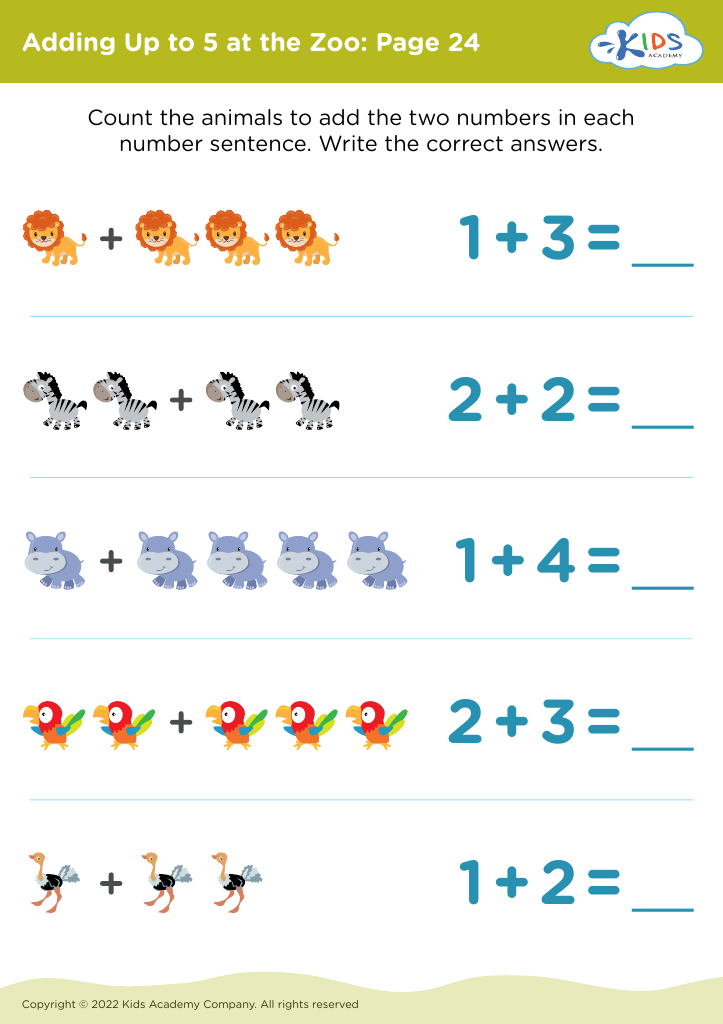
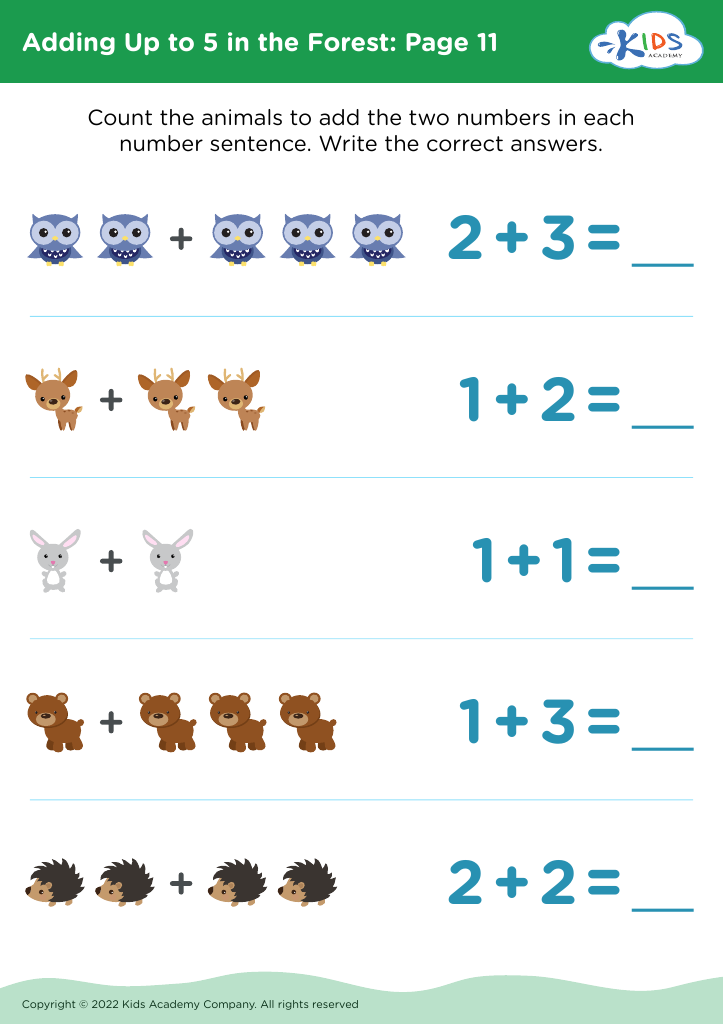
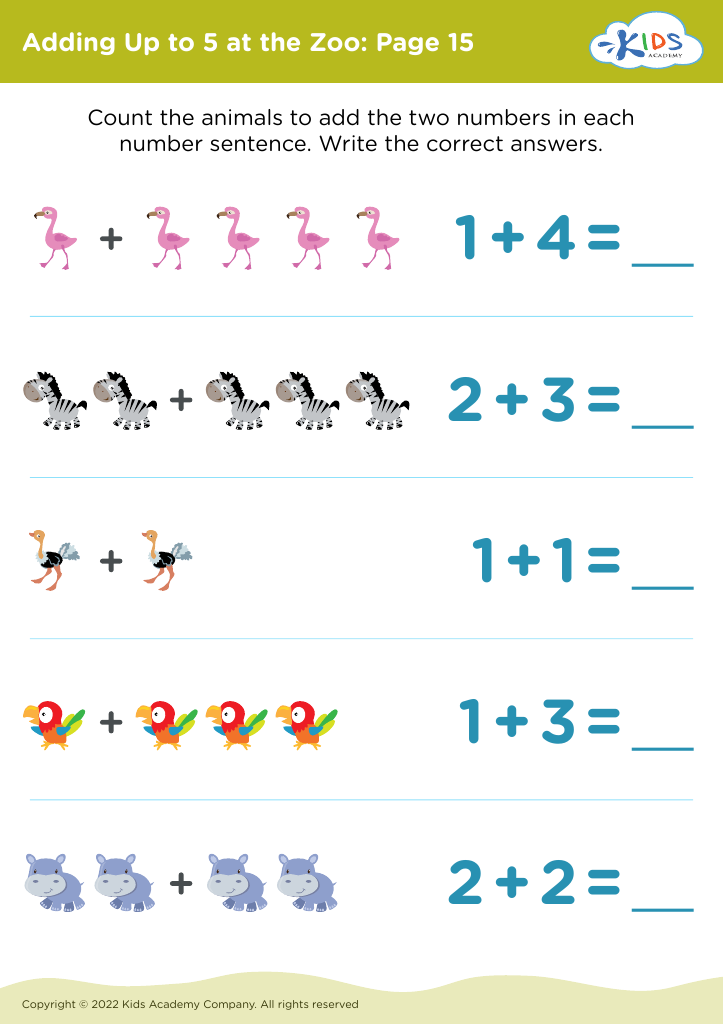
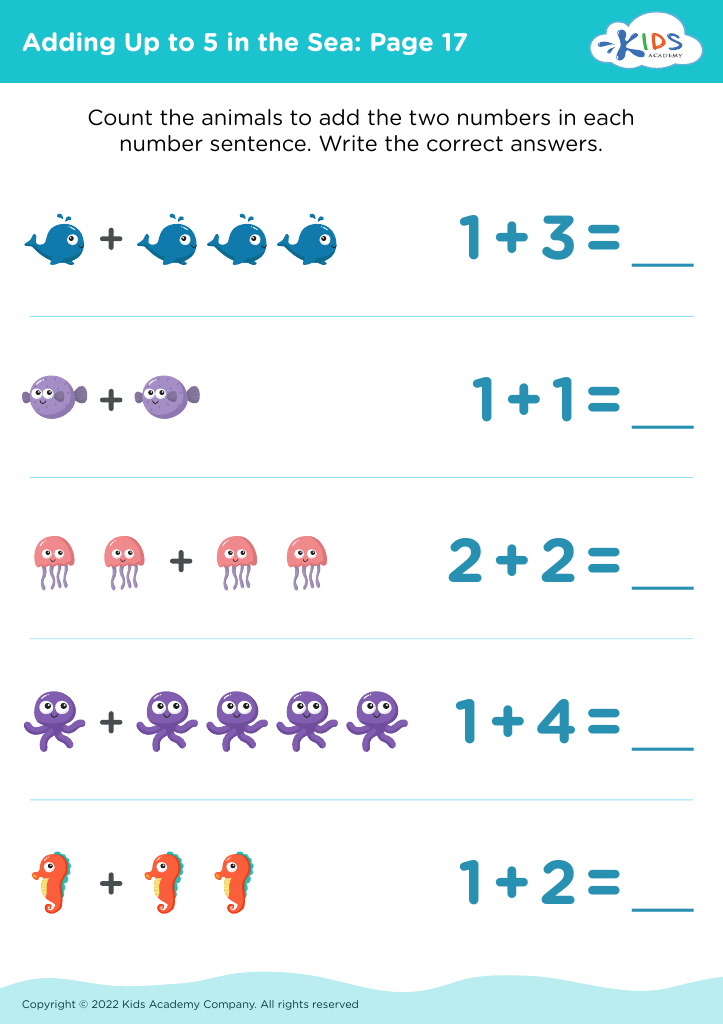
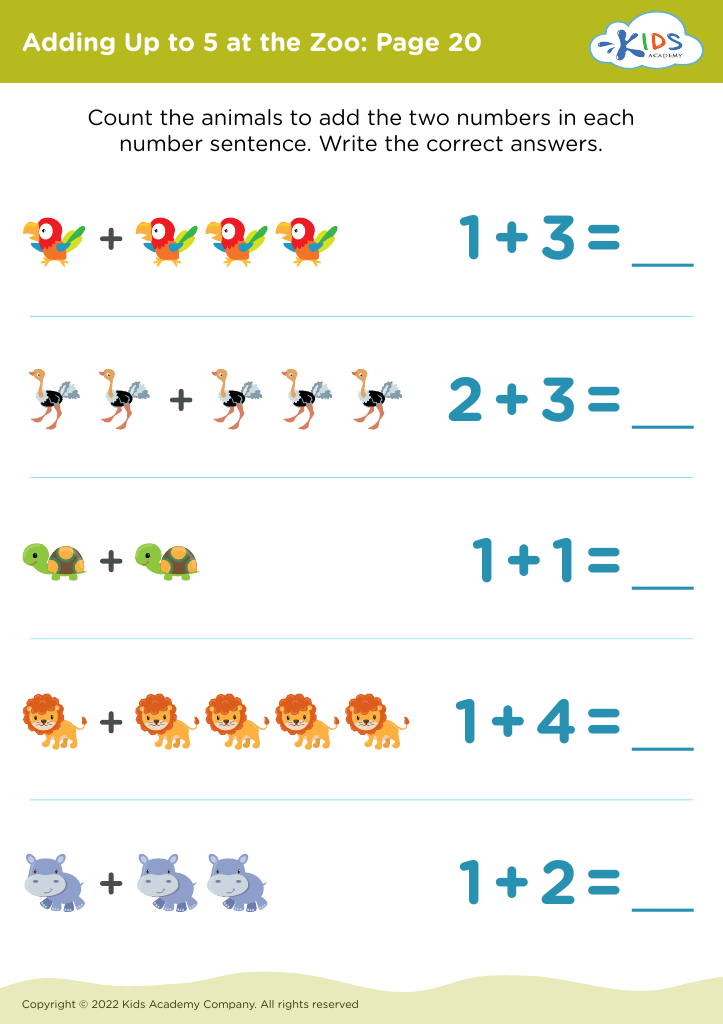
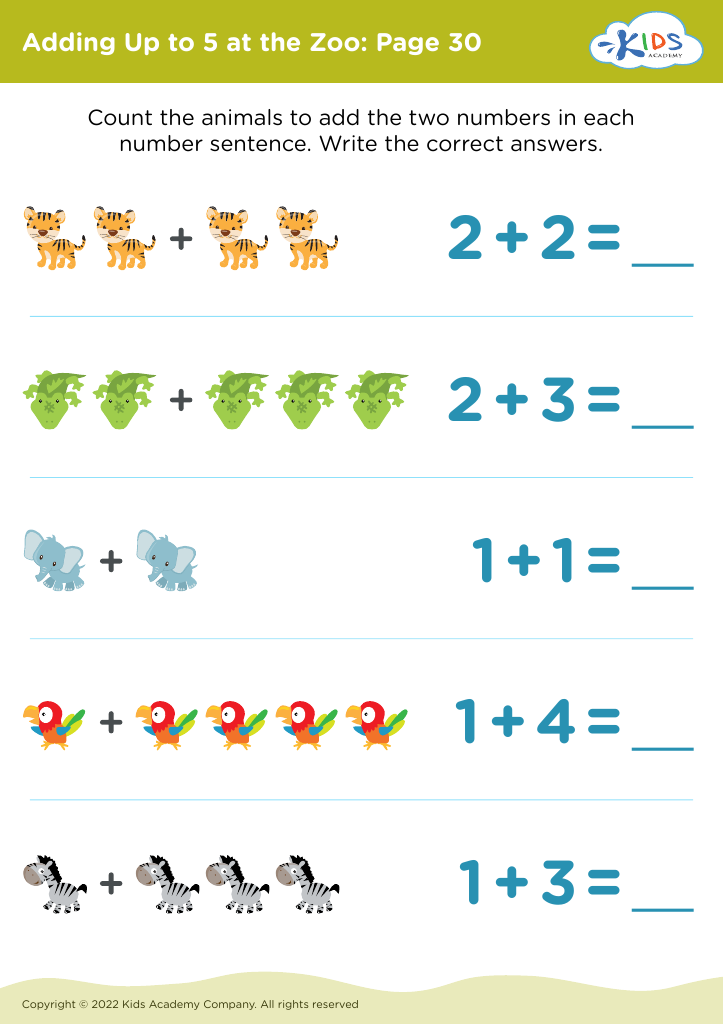
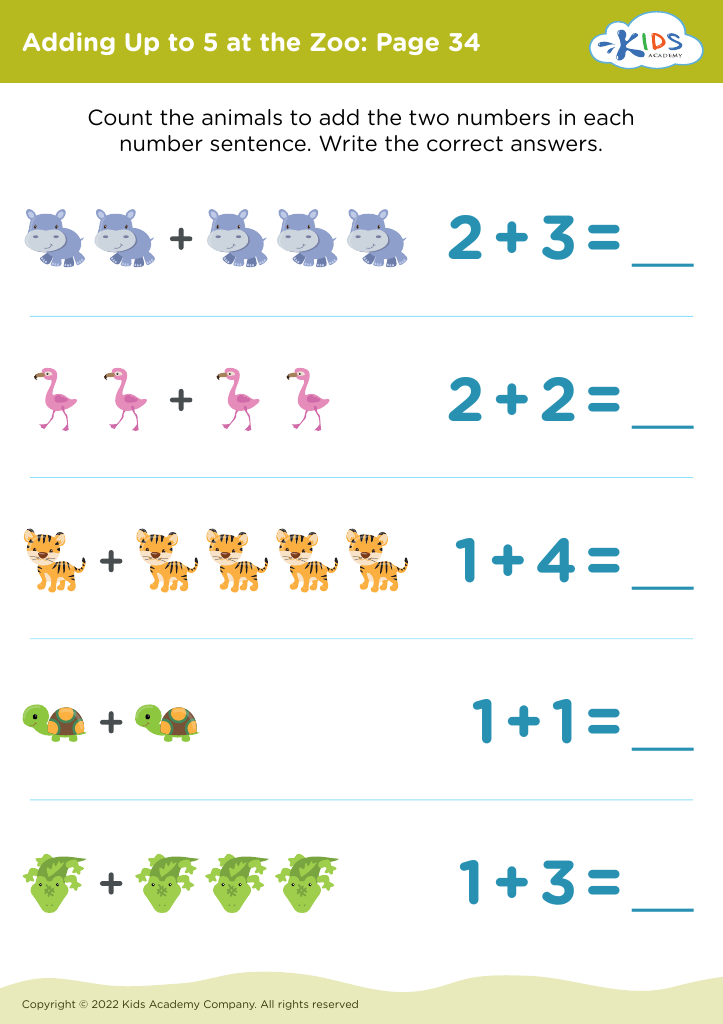
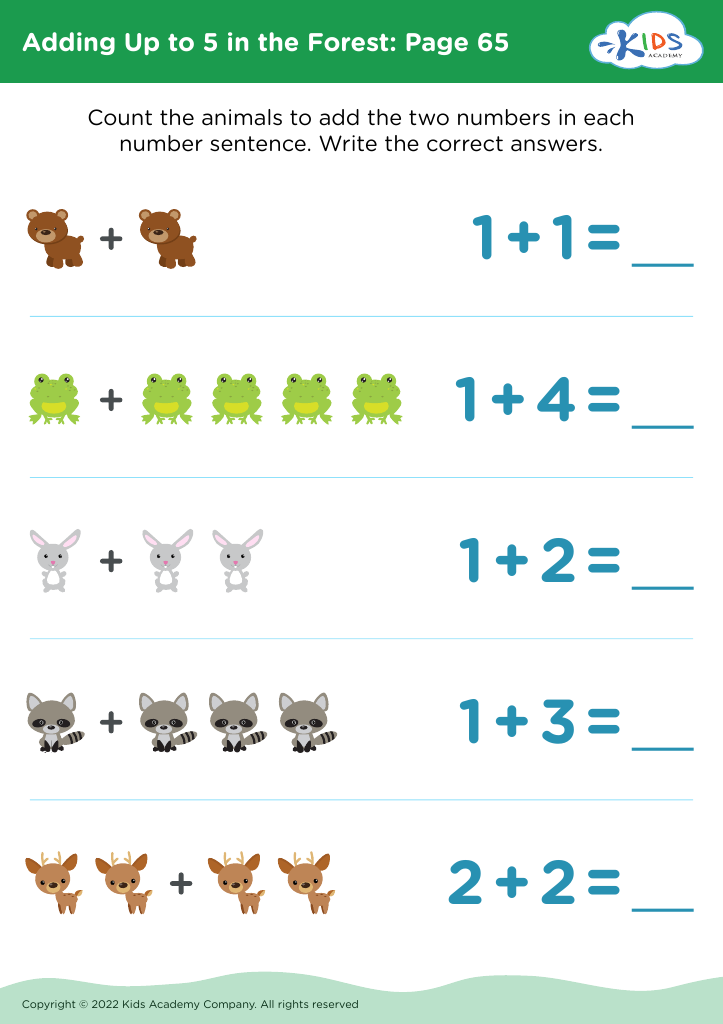
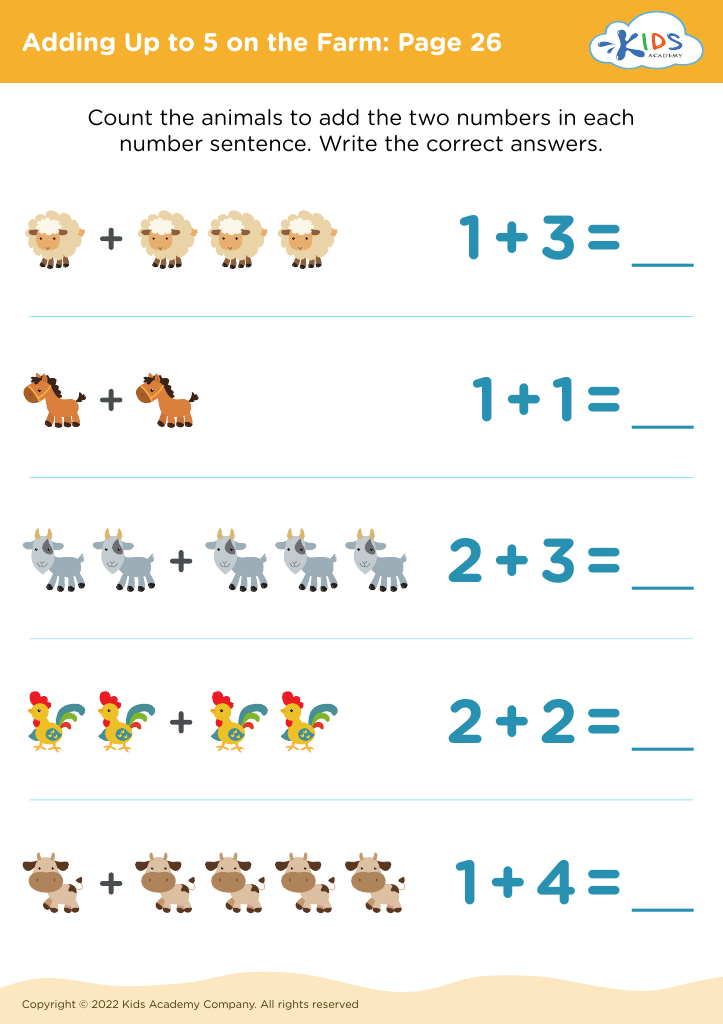








Cognitive development in early childhood, particularly regarding addition and subtraction for ages 5-8, is crucial for several reasons. During these formative years, children are developing foundational mathematical skills that will support their future learning. Mastery of basic addition and subtraction not only prepares children for more complex mathematical concepts but also enhances their problem-solving abilities.
Parents and teachers should pay close attention to cognitive development during this stage, as it sets the groundwork for critical thinking and reasoning skills. Engaging children in enjoyable and meaningful math activities can foster a positive attitude towards math, promoting a lifelong love for learning. Moreover, cognitive development intertwined with addition and subtraction encourages children to recognize patterns, make connections, and understand the world around them through numbers.
Additionally, supporting children in mastering these skills boosts their confidence, which is essential for academic success. When children struggle with basic arithmetic, they may develop math anxiety that could hinder their future educational opportunities. Thus, a collaborative effort from parents and educators to promote cognitive growth in addition and subtraction is vital for emotional, social, and academic development, equipping children with essential skills they will use throughout their lives.








