
Color differentiation Addition & Subtraction Worksheets for Ages 5-8
3 filtered results
Difficulty Level
Grade
Age
-
From - To
Subject
Activity
Standards
Discover our engaging Color Differentiation Addition & Subtraction Worksheets designed specifically for children aged 5-8! These interactive resources not only make math fun but also help young learners develop essential skills in color recognition and analysis. By using vibrant colors alongside addition and subtraction exercises, children enhance their cognitive abilities while practicing fundamental math concepts. Helping them master basic arithmetic becomes an exciting adventure! Ideal for classroom or home use, our worksheets are sure to motivate and inspire your little ones as they embark on their learning journey. Download today and watch their confidence in math grow with colorful learning!
Favorites
With answer key
Interactive
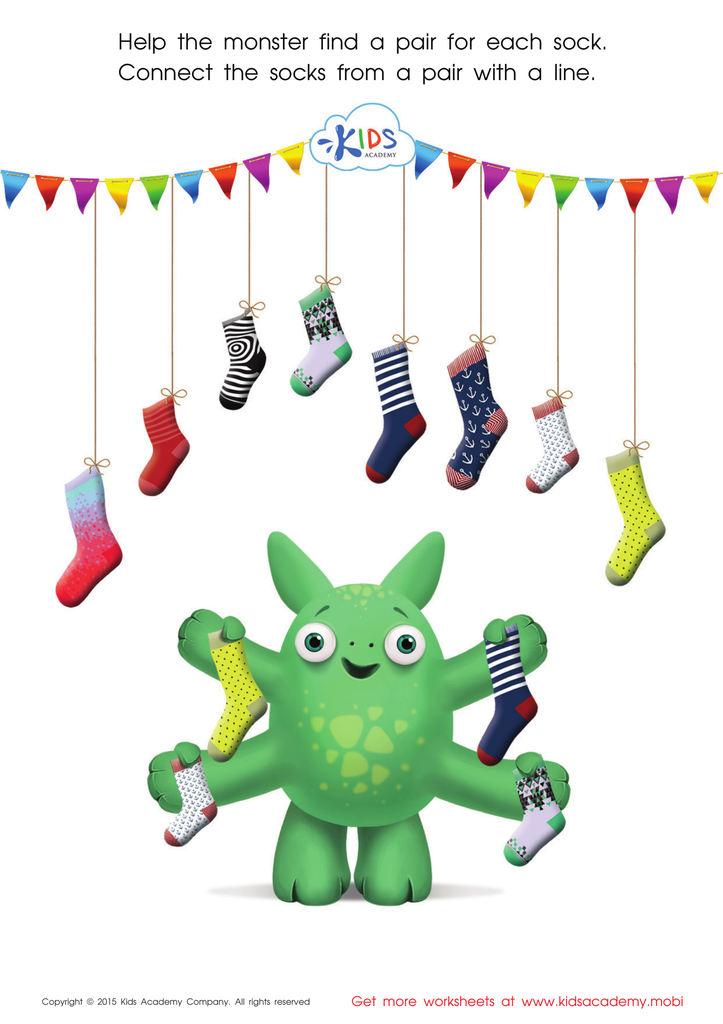
Math Matching Pairs Game: Monsterв's Socks Worksheet
Let your child learn, concentrate and practice sorting skills with this fun kindergarten worksheet. Matching polka dots, anchors, geo shapes and stripes on Monster's socks will help improve fine motor skills. Download and print this free worksheet and several others on different topics.
Math Matching Pairs Game: Monsterв's Socks Worksheet
Worksheet
Join Kids Academy for Free
Who is primarily going to use this learning content?








Color differentiation in addition and subtraction for ages 5-8 is a crucial learning strategy that can significantly enhance students’ mathematical understanding. This approach not only engages young learners but also caters to different learning styles. Colors can be used to represent different components of math problems, allowing children to visually separate addends or minuends, making it easier for them to comprehend the operations being performed.
For parents and teachers, fostering an environment where colors are incorporated into math learning can improve motivation and retention. Young learners are naturally attracted to colorful visuals, which can reduce anxiety around math and promote a more positive learning experience. This can lead to increased participation and self-confidence among children facing challenges in understanding basic arithmetic.
Moreover, using color coding can help establish foundational skills in pattern recognition and categorization; both essential for more advanced mathematical concepts. As children progress, these foundational skills will serve as stepping stones for their future learning. Ultimately, by recognizing the importance of color differentiation, parents and teachers can create an engaging, supportive learning atmosphere that helps children build critical thinking skills and maintain enthusiasm for mathematics as they grow. This holistic approach not only nurtures early arithmetic skills but also fosters a love for learning.








