Comparing lengths Addition & Subtraction Worksheets for Ages 5-8
3 filtered results
-
From - To
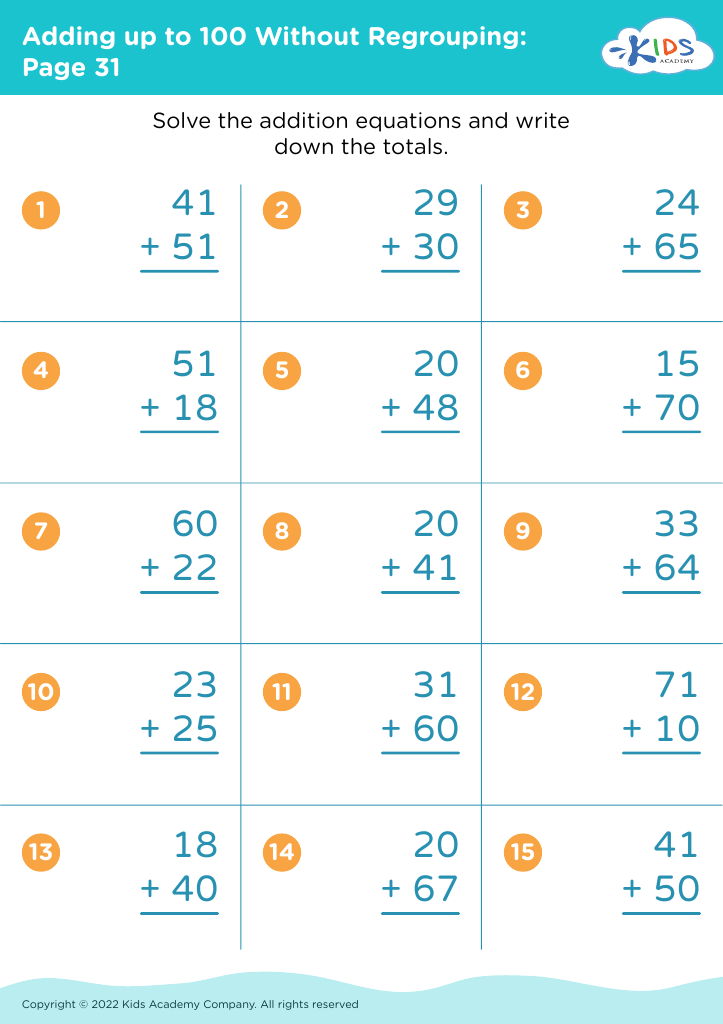
Enhance your child's math skills with our engaging "Comparing Lengths Addition & Subtraction Worksheets for Ages 5-8". Designed to blend fun and learning seamlessly, these worksheets help young learners master the concepts of measuring, comparing lengths, and performing basic addition and subtraction. Perfect for both classroom and home use, each worksheet encourages critical thinking, problem-solving, and reinforces essential math skills while keeping kids entertained. Whether your child is just starting to learn about measurements or needs extra practice, these worksheets provide the perfect balance of challenge and education. Unlock your child's potential in math with our expertly crafted resources.
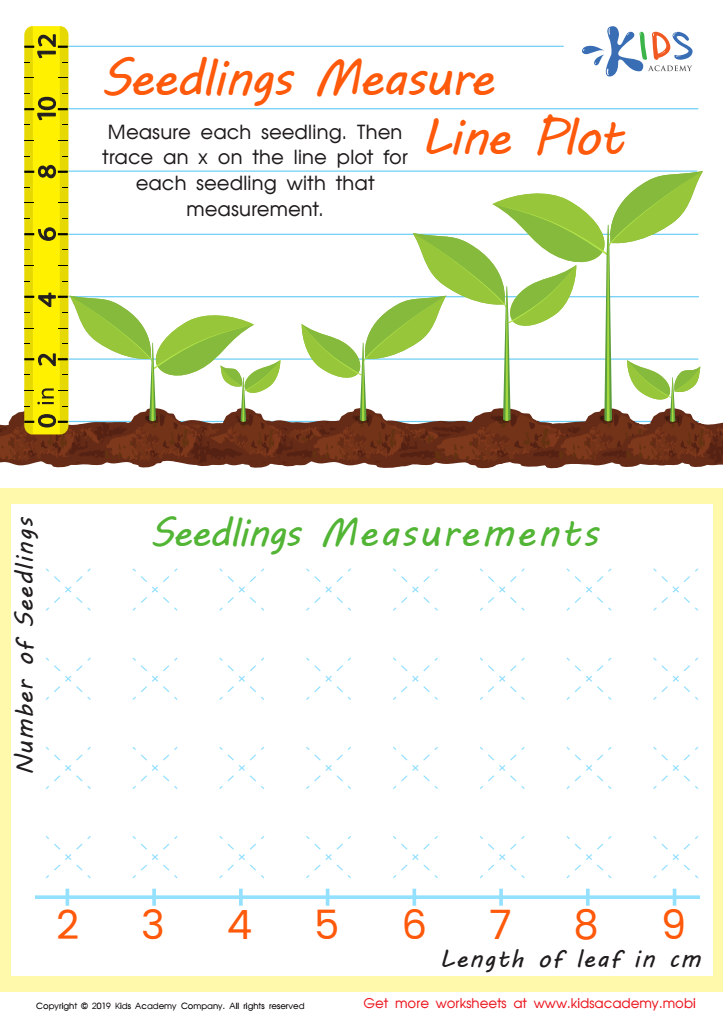
Seedling Measure Line Plot Worksheet
 Assign to My Students
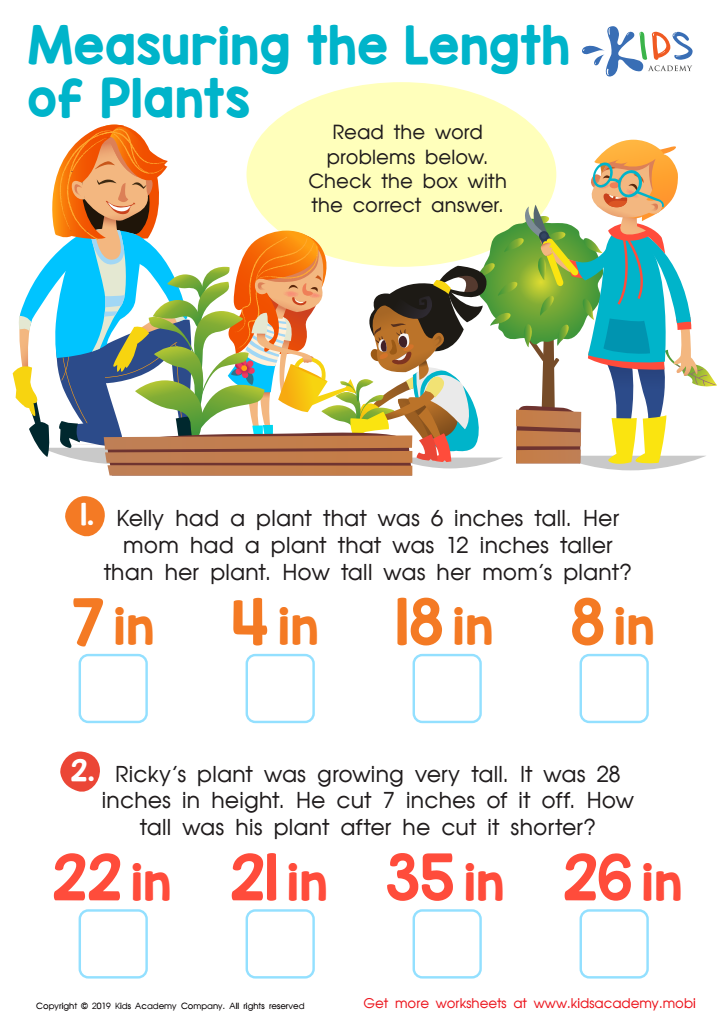
Measuring the Length of Plants Worksheet








Comparing lengths and understanding basic addition and subtraction are fundamental skills for children aged 5-8, resonating beyond mathematics into everyday life. These skills lay the groundwork for critical thinking, problem-solving, and logical reasoning, vital in fostering a child's cognitive development. For parents and teachers, emphasizing these concepts should be a priority as they cultivate early mathematical literacy, which in turn boosts confidence and academic success in later years.
Comparing lengths teaches children to observe, estimate, and measure objects in their environment, enriching their spatial awareness and fine motor skills. These activities foster a hands-on, interactive learning experience that engages young learners in ways that purely abstract concepts cannot. Additionally, introducing addition and subtraction at an early age equips children with the tools to handle practical situations, such as sharing toys (addition) or understanding how many candies they have left after giving some away (subtraction).
Furthermore, these activities often involve cooperative play, promoting social skills as children work together or discuss their findings with peers and adults. Nurturing these foundational skills through fun and relatable activities helps children develop a positive attitude towards math, reducing anxiety about the subject as they advance academically. By supporting early math skill development, parents and teachers empower children to become resilient problem-solvers and enthusiastic learners.








