Looking for engaging and effective worksheets to boost your child's math skills? Our "Counting Objects Addition & Subtraction Worksheets" are designed specifically for kids aged 5-8. These worksheets provide a fun way to learn fundamental math concepts by counting real objects. Each activity encourages young learners to practice addition and subtraction through visual representation, making math both approachable and enjoyable. With a variety of interactive exercises, these worksheets enhance counting skills while laying a solid foundation for future math learning. Perfect for home or classroom use, these resources will keep your child motivated and excited about mastering math concepts!
Check out this FREE Trial Lesson on Addition & Subtraction for age 5-8!

T

Favorites
With answer key
Interactive
  • 5-8
  • Counting objects
  • Addition & Subtraction
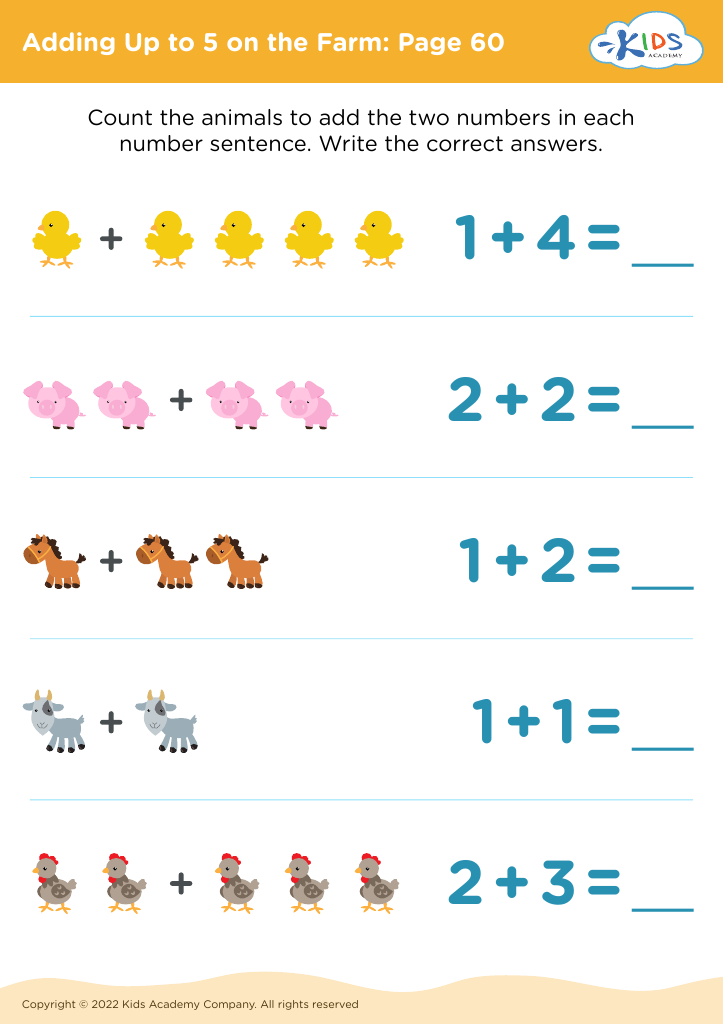
Adding Up to 5 in the Forest: Page 16
Worksheet
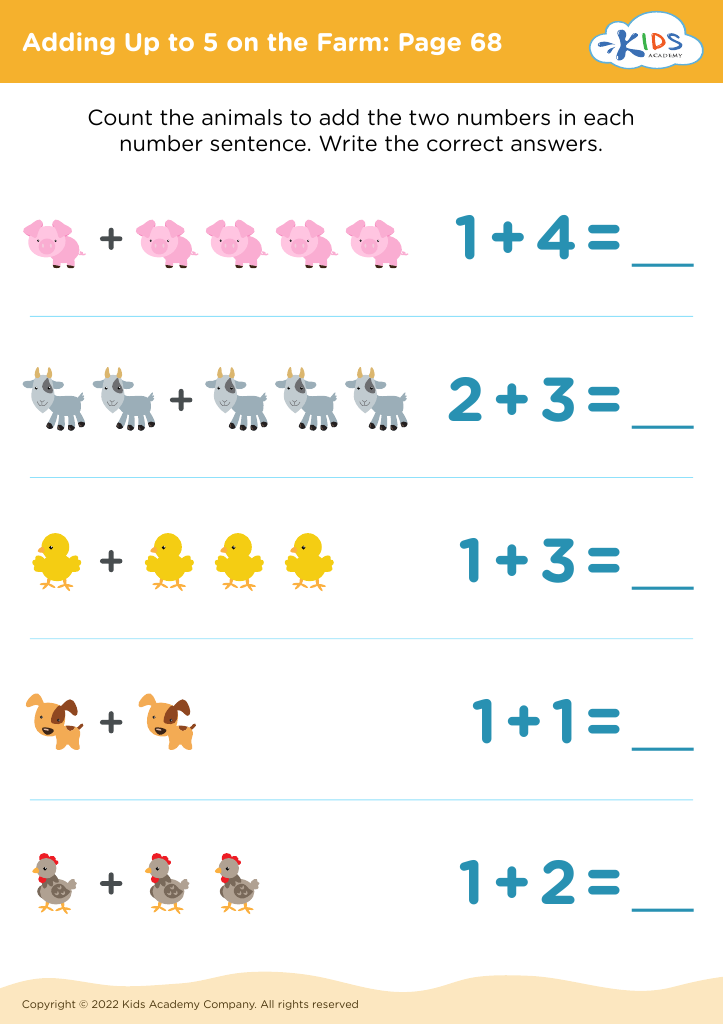
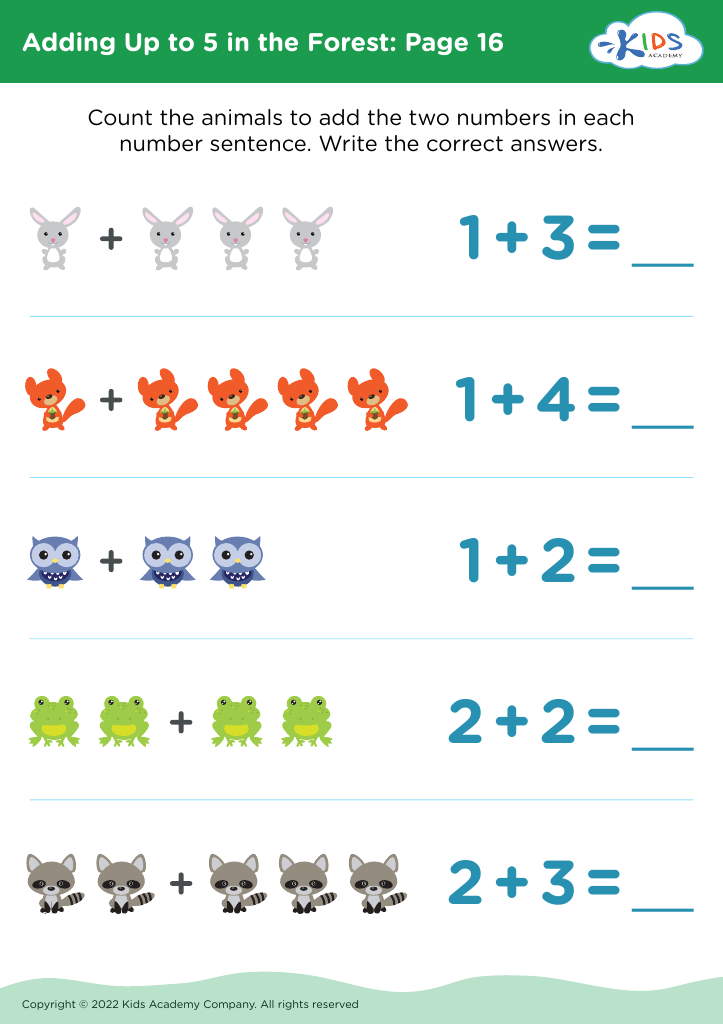
Adding Up to 5 on the Farm: Page 56
Worksheet
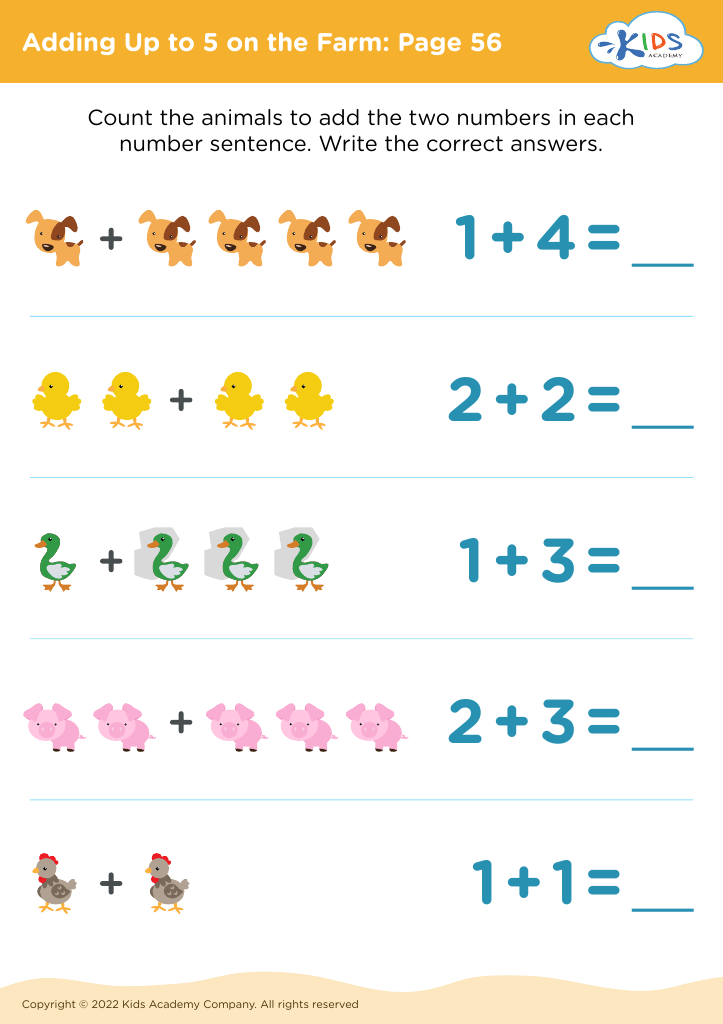
Adding up to 1000 with Regrouping: Page 42
Worksheet
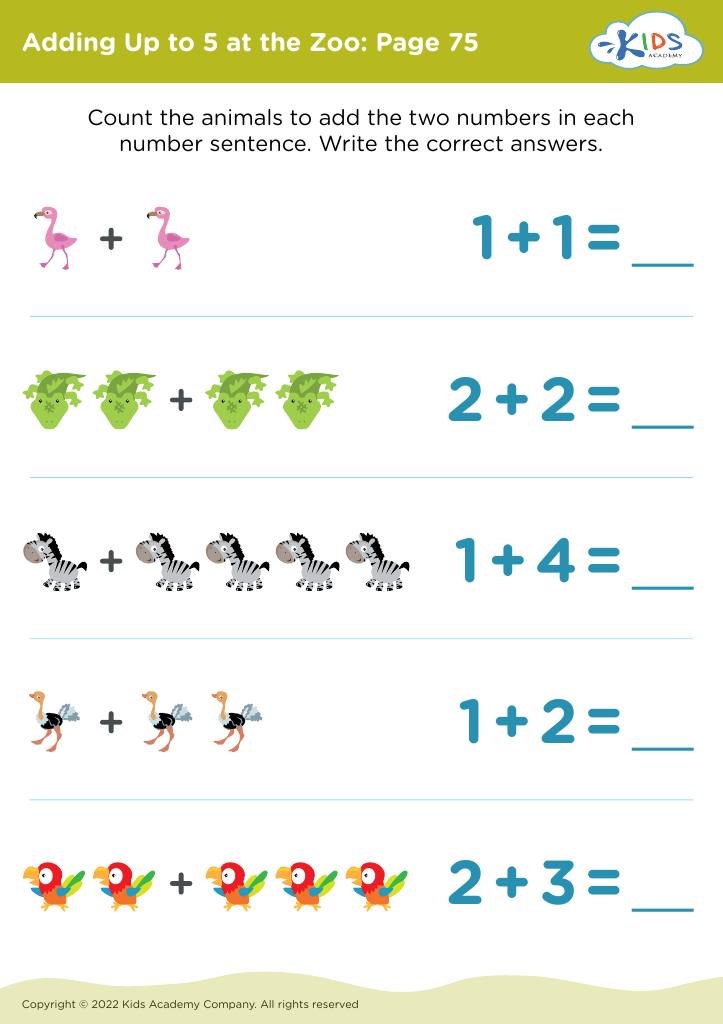
Adding Up to 5 at the Zoo: Page 75
Worksheet
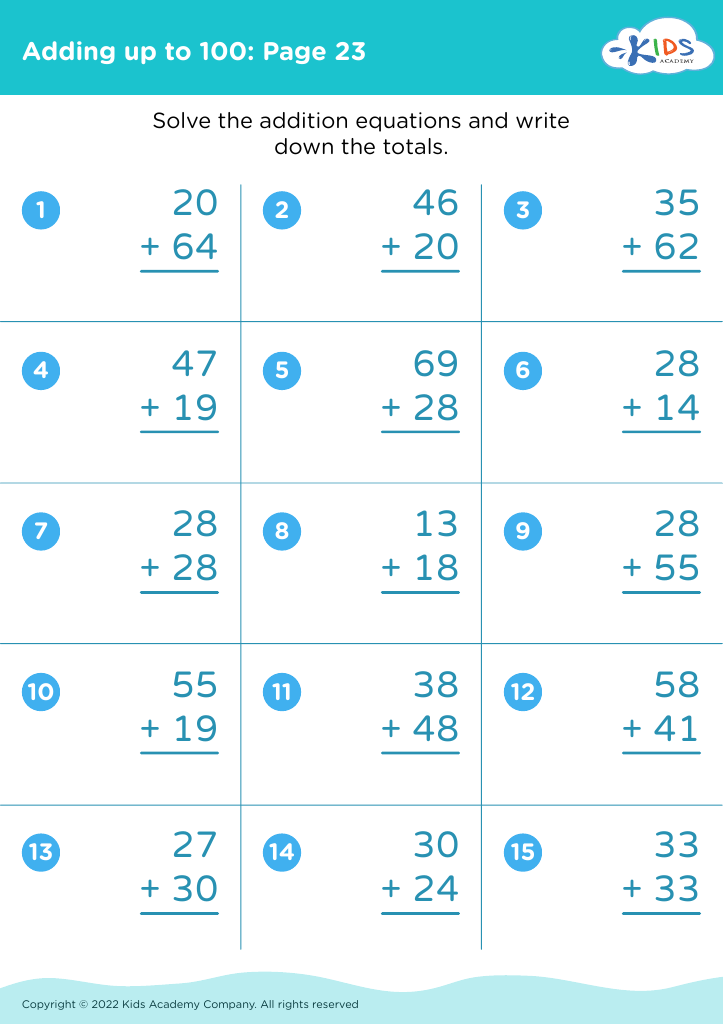
Adding up to 100: Page 23

Adding up to 100: Page 23

Adding up to 100: Page 23
Worksheet
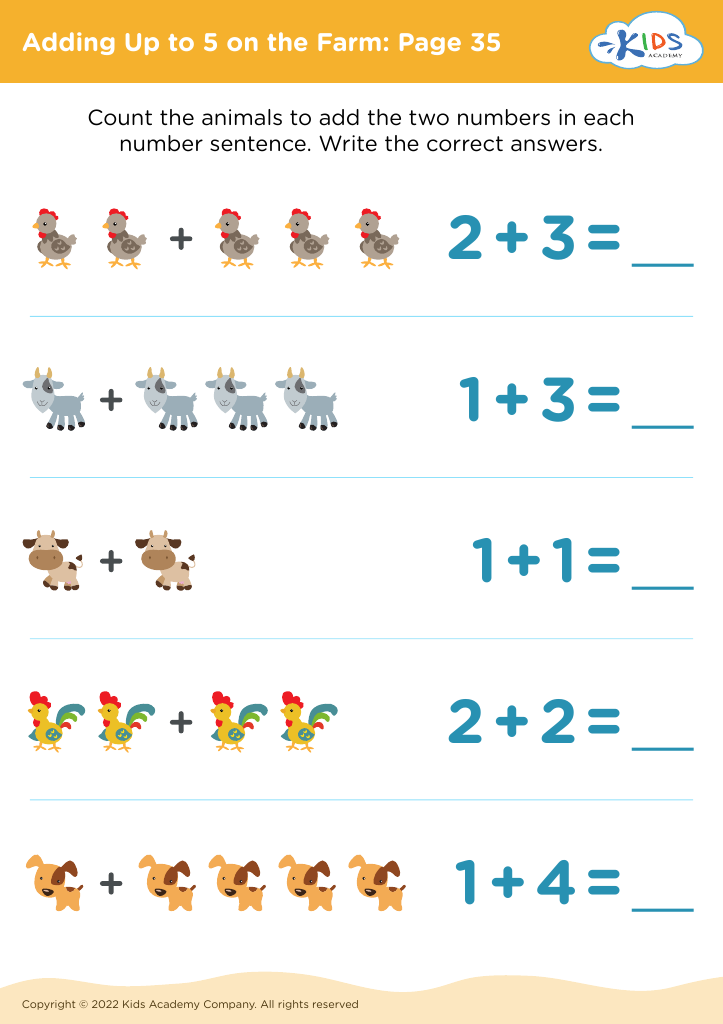
Adding Up to 5 on the Farm: Page 35
Worksheet
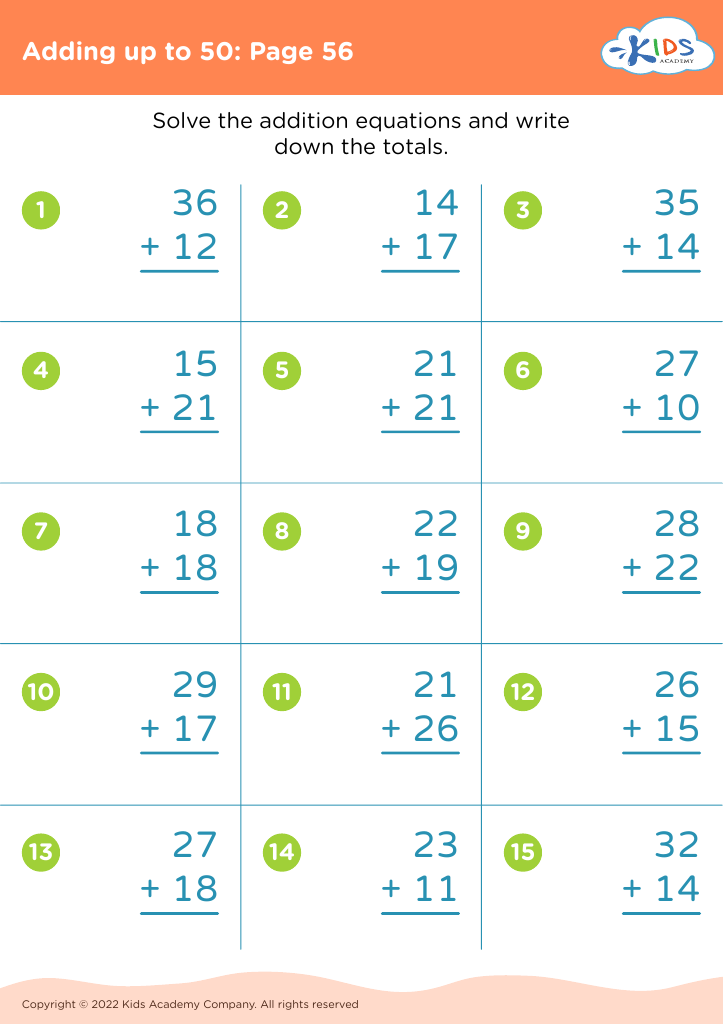
Adding up to 50: Page 56

Adding up to 50: Page 56

Adding up to 50: Page 56
Worksheet
Adding Up to 5 on the Farm: Page 68
Worksheet
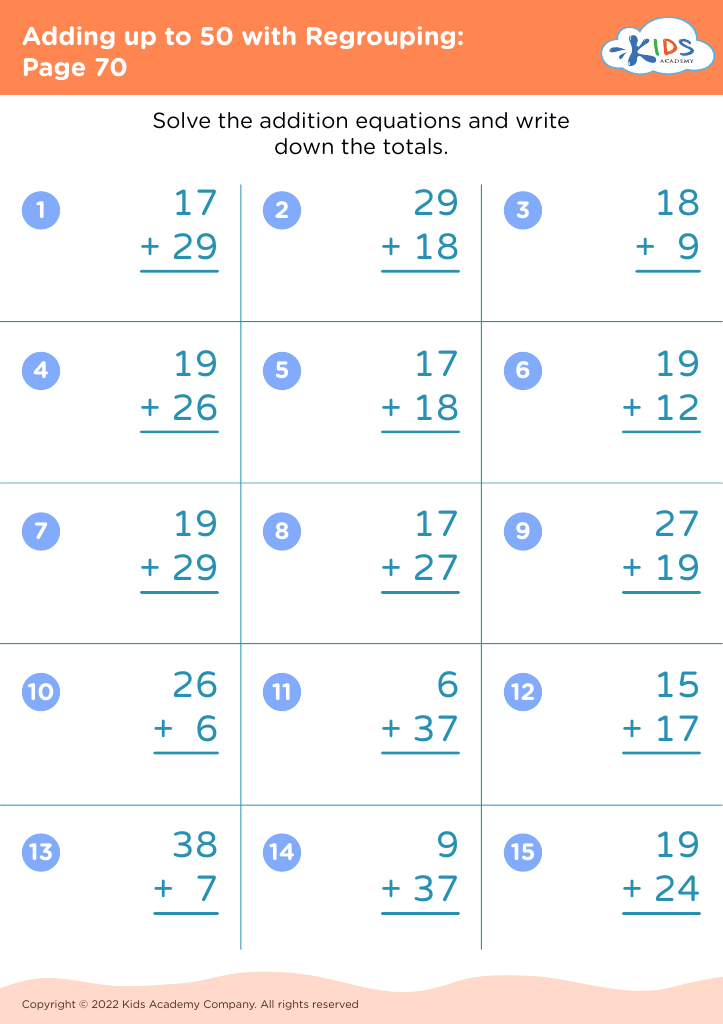
Adding up to 50 with Regrouping: Page 70
Worksheet
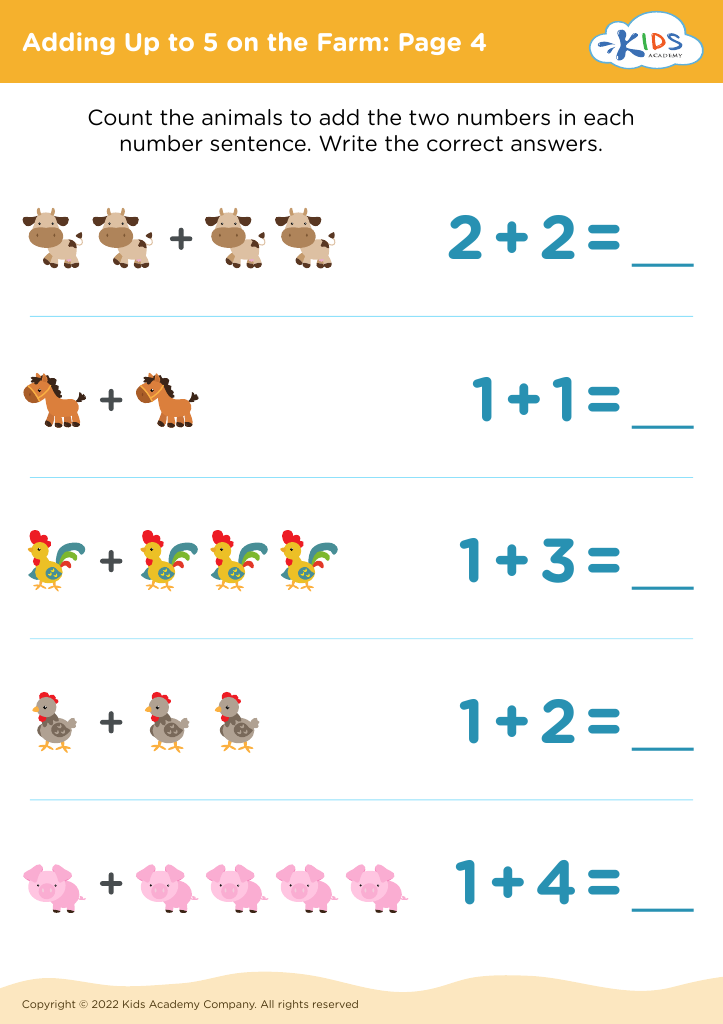
Adding Up to 5 on the Farm: Page 4
Worksheet
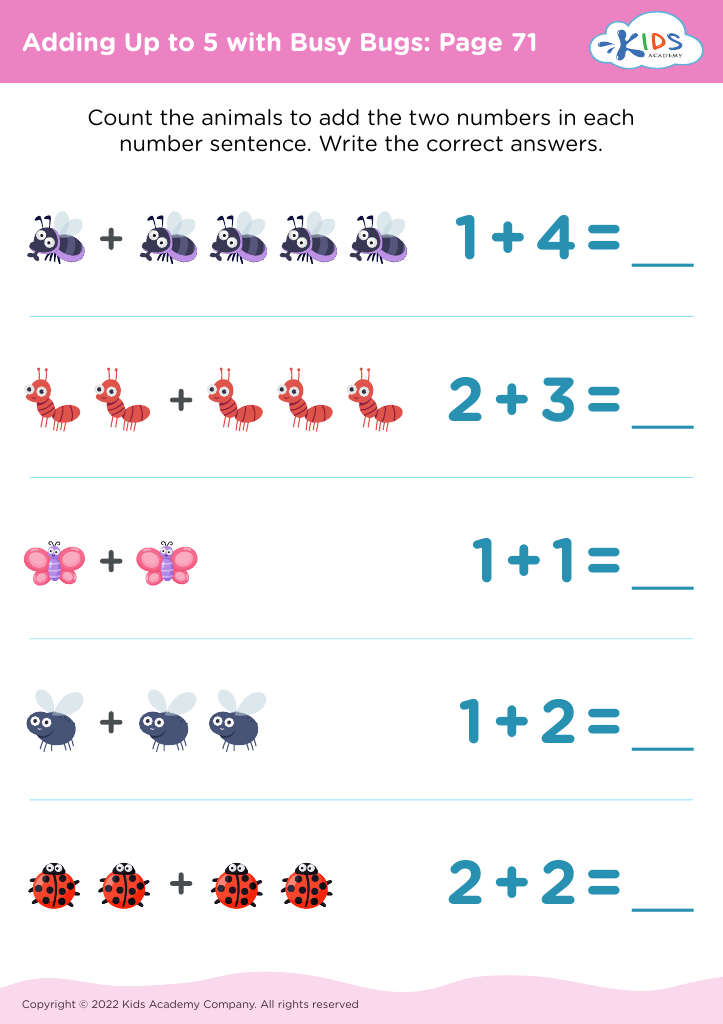
Adding Up to 5 with Busy Bugs: Page 71
Worksheet
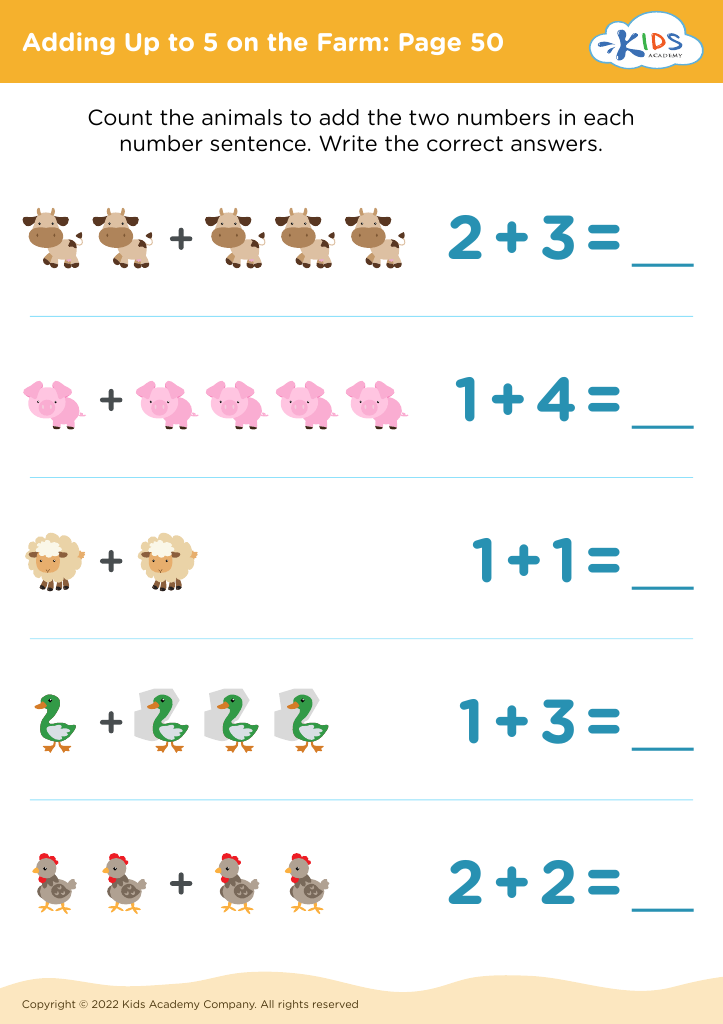
Adding Up to 5 on the Farm: Page 50
Worksheet
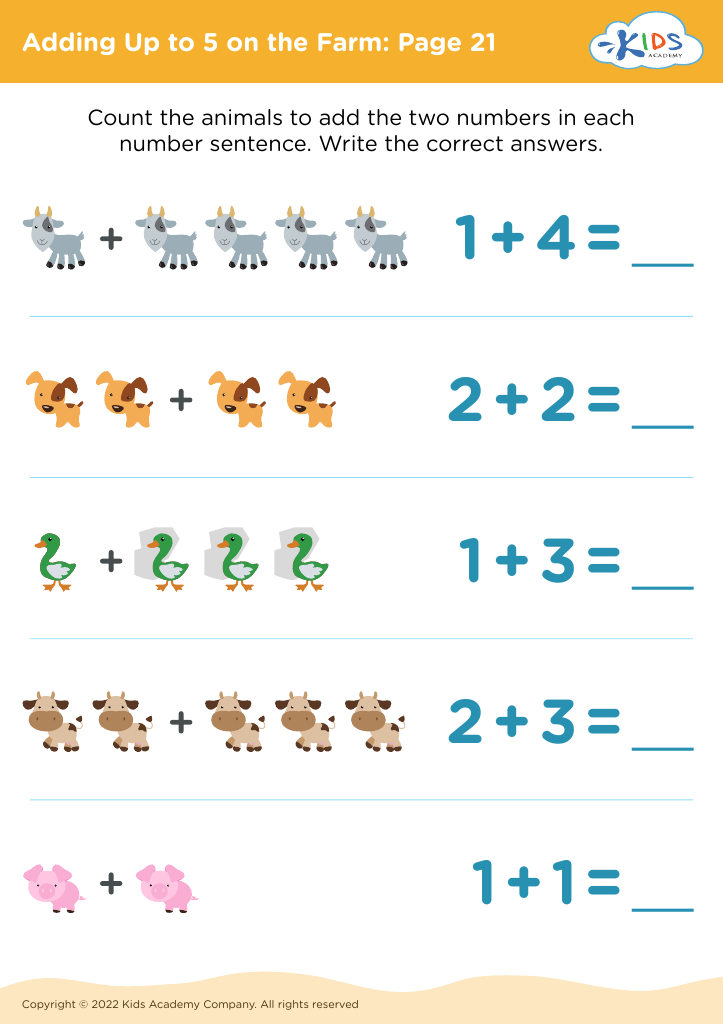
Adding Up to 5 on the Farm: Page 21
Worksheet
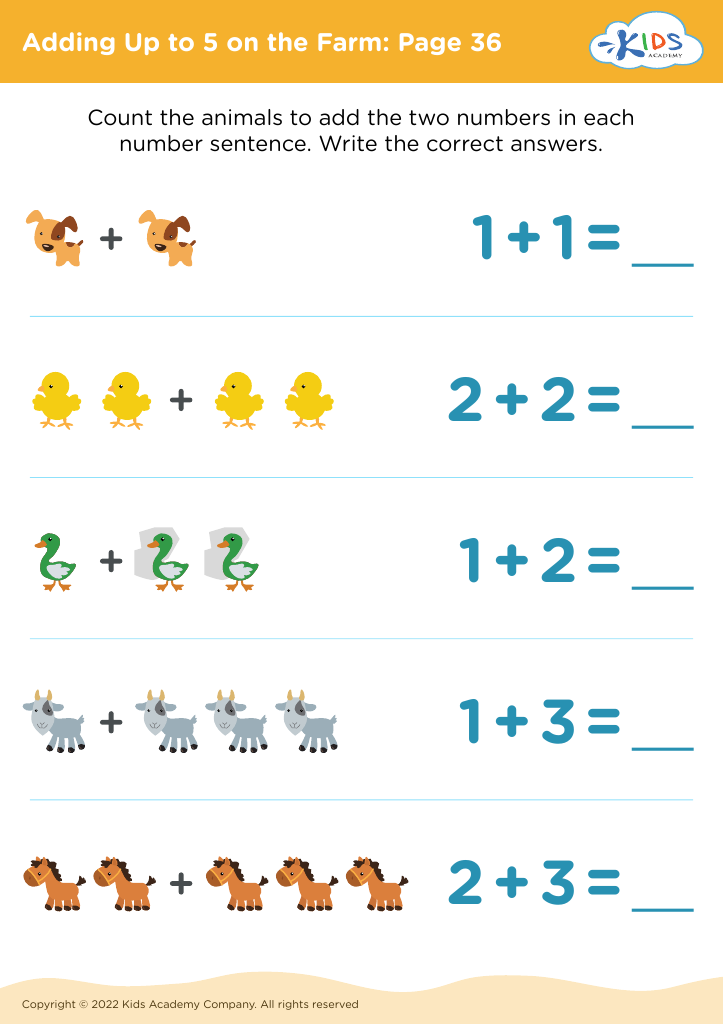
Adding Up to 5 on the Farm: Page 36
Worksheet
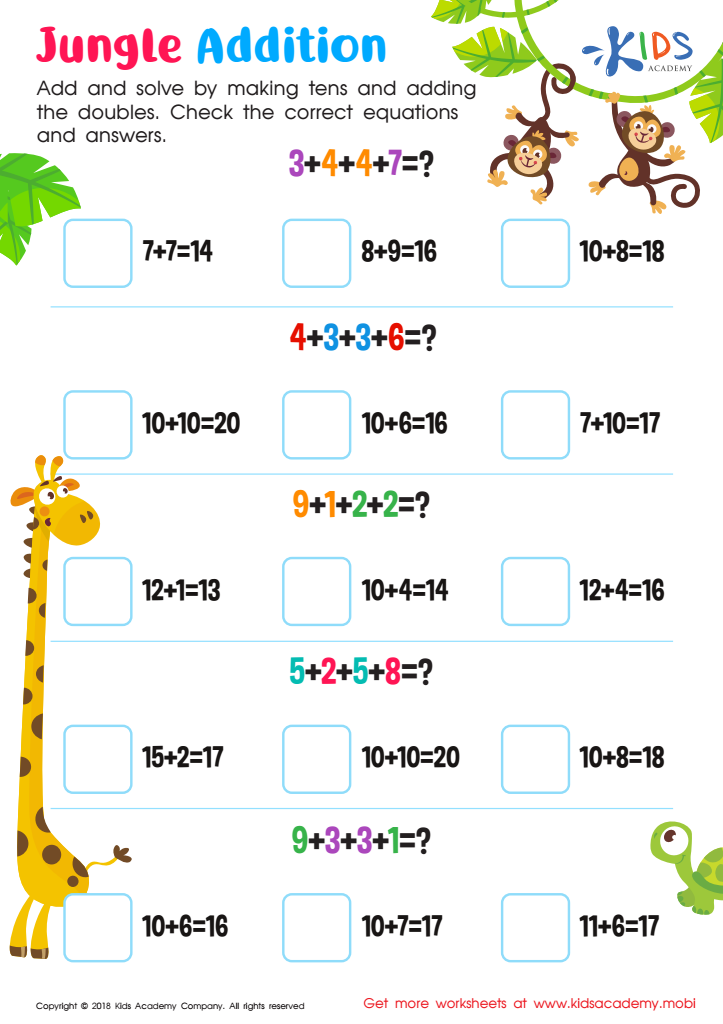
Jungle Addition Worksheet

Jungle Addition Worksheet

With this worksheet, kids can use the strategies of making tens and adding doubles to add numbers with more than three addends. They'll practice choosing the right method and become more confident in their calculations, enabling quicker, more efficient computation.
Jungle Addition Worksheet
Worksheet
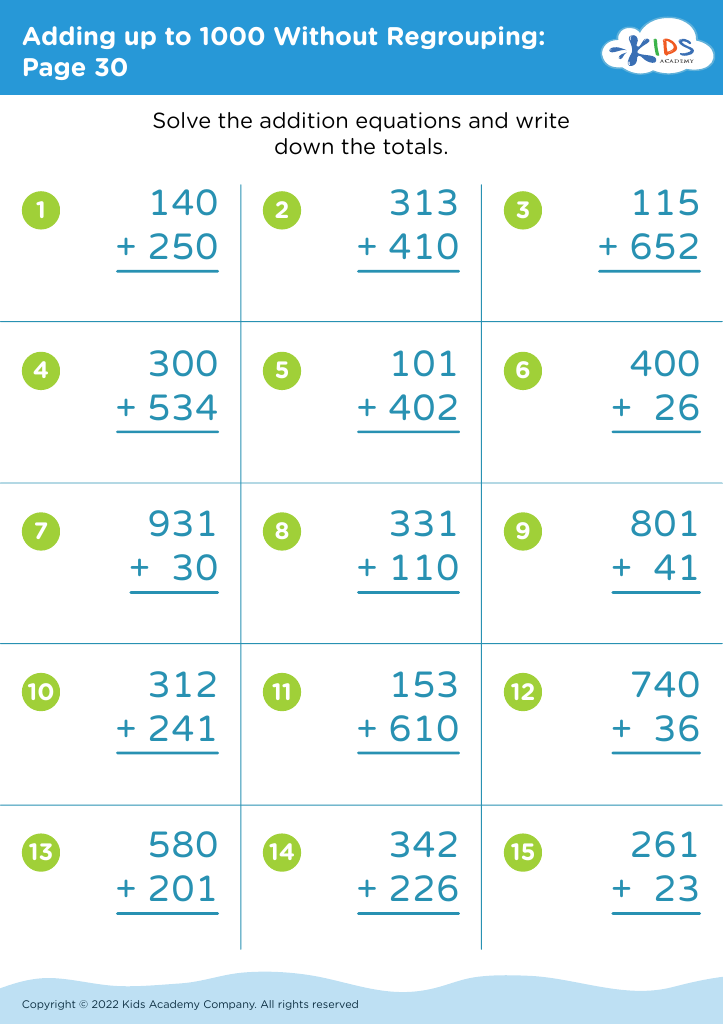
Adding up to 1000 Without Regrouping: Page 30
Worksheet
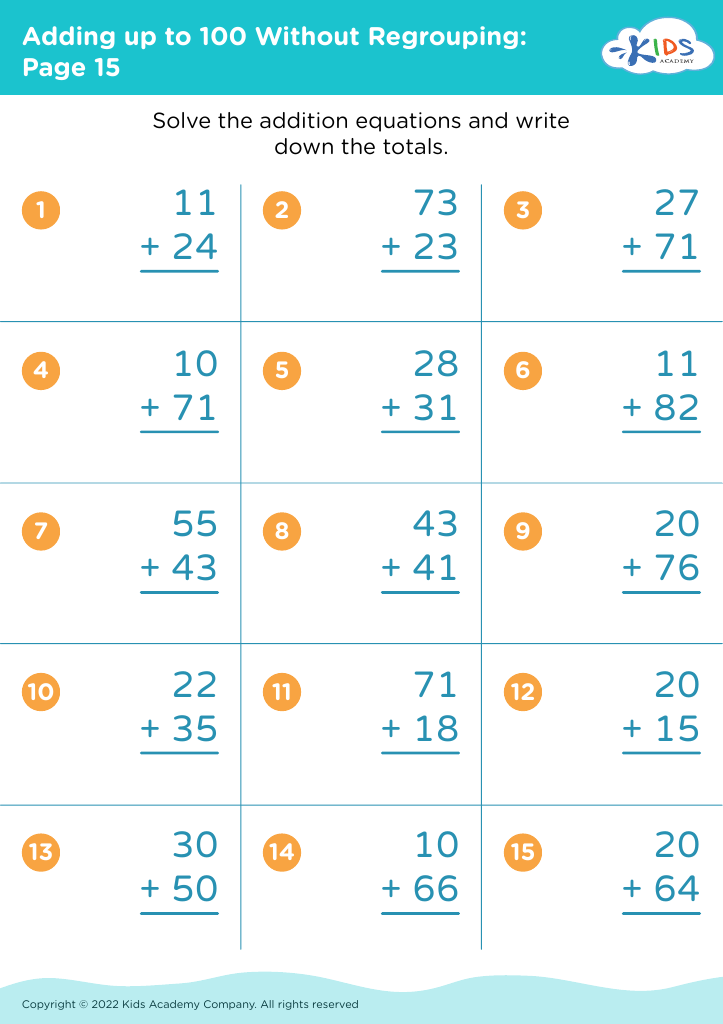
Adding up to 100 Without Regrouping: Page 15
Worksheet
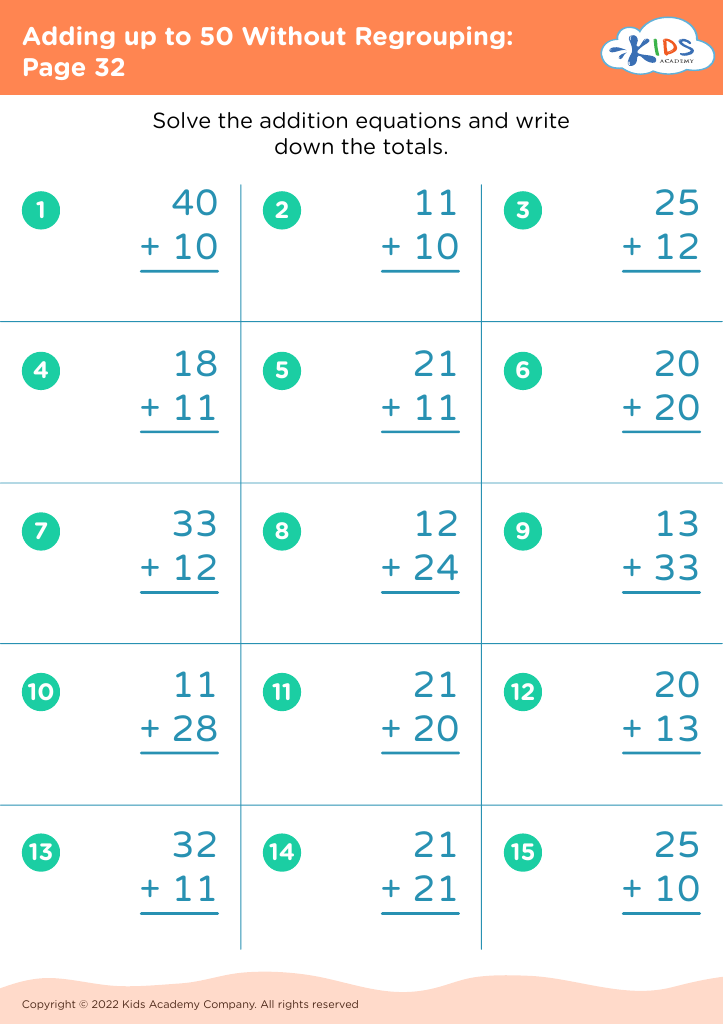
Adding up to 50 Without Regrouping: Page 32
Worksheet
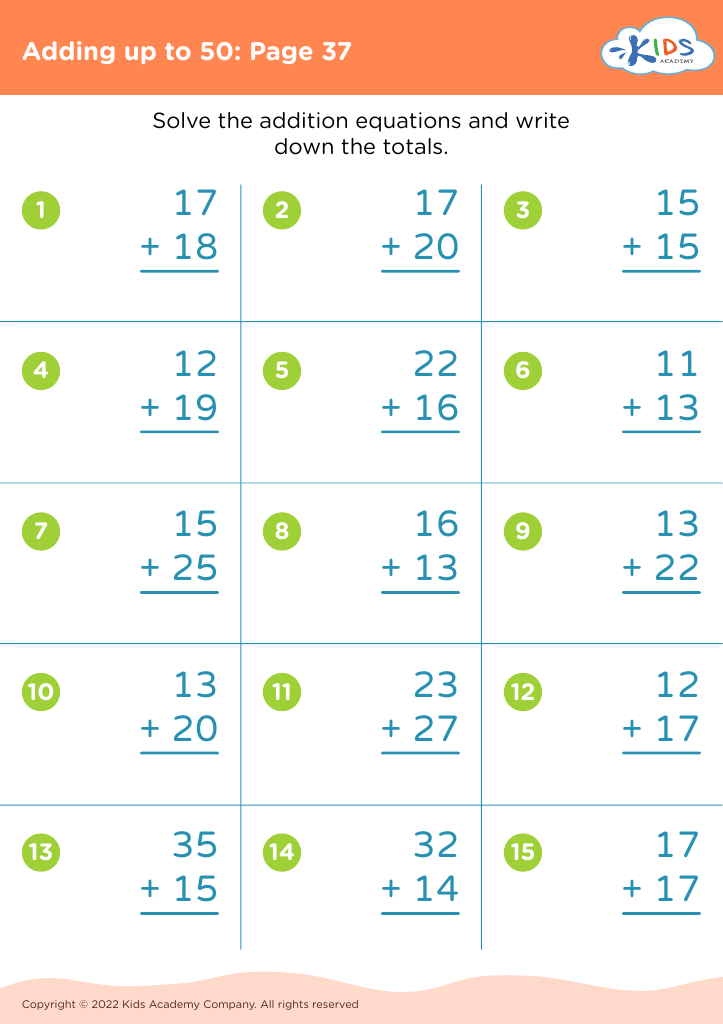
Adding up to 50: Page 37

Adding up to 50: Page 37

Adding up to 50: Page 37
Worksheet
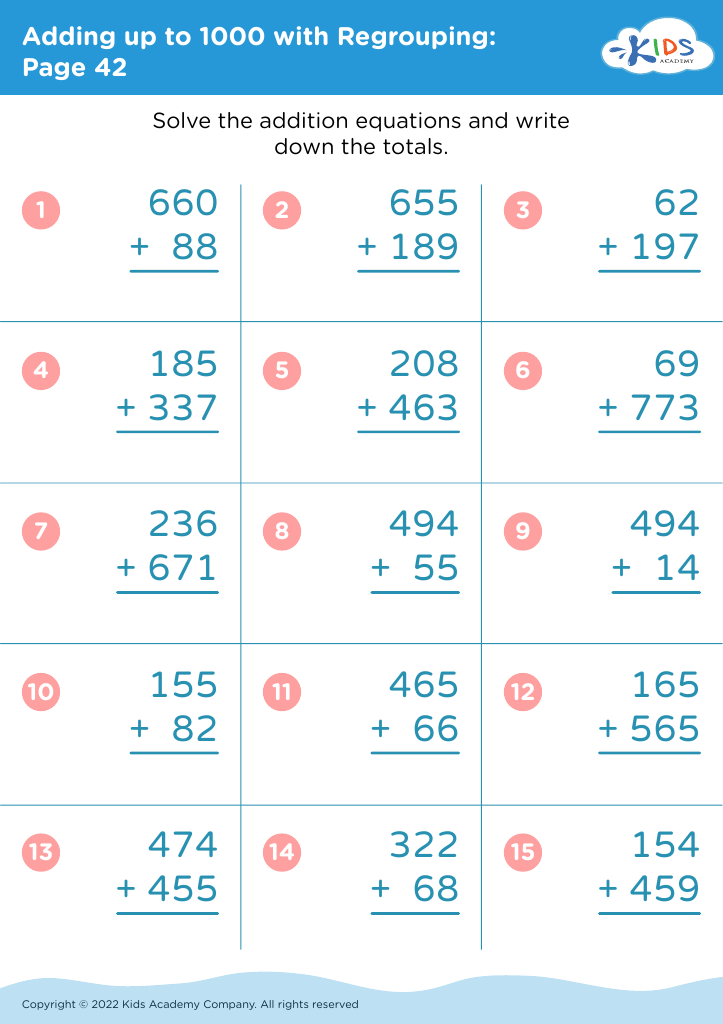
Adding Up to 5 on the Farm: Page 60
Worksheet


Counting objects, addition, and subtraction are foundational skills that play a crucial role in a child's early mathematical development. For ages 5-8, mastering these concepts lays the groundwork for more complex mathematical reasoning and problem-solving abilities needed in later grades.

First, counting using tangible objects helps children develop number sense—an understanding of quantities and how they relate to each other. This concrete experience makes abstract mathematical concepts more relatable and less intimidating.

Moreover, addition and subtraction are the building blocks of all future math learning. Early experiences with these operations foster critical thinking skills as children learn to manipulate numbers and understand relationships. Activities involving counting, adding, or subtracting everyday objects enhance cognitive development and improve concentration and patience.

Additionally, engaging children in these activities at home or in the classroom promotes a positive attitude toward math. It equips them with essential life skills, such as budgeting and time management, encountered later in life.

Finally, support from parents and teachers fosters confidence in young learners, showing them that math can be fun and rewarding. Involvement in early counting and simple math fosters a love of learning, setting the stage for lifelong academic success.