Develop problem-solving abilities Addition & Subtraction Worksheets for Ages 5-8
3 filtered results
-
From - To
Enhance your child's math skills with our engaging Addition & Subtraction Worksheets for ages 5-8. Designed to develop problem-solving abilities, these worksheets offer interactive and fun activities that stimulate young minds. Perfect for both classroom and home use, they cover a range of difficulties to ensure continuous progress and confidence-building. By combining colorful illustrations and thought-provoking problems, children not only practice math but also improve their critical thinking and analytical skills. Browse our extensive collection to give your child a head start in math proficiency and a solid foundation for future learning.
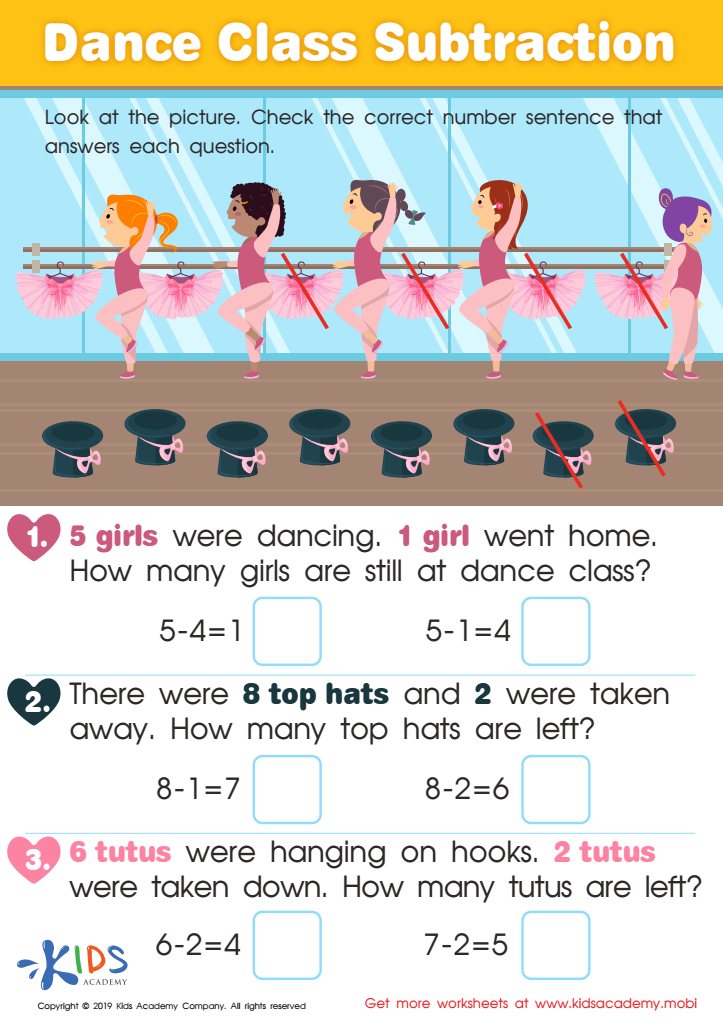
Dance Class Subtraction Worksheet
 Assign to My Students
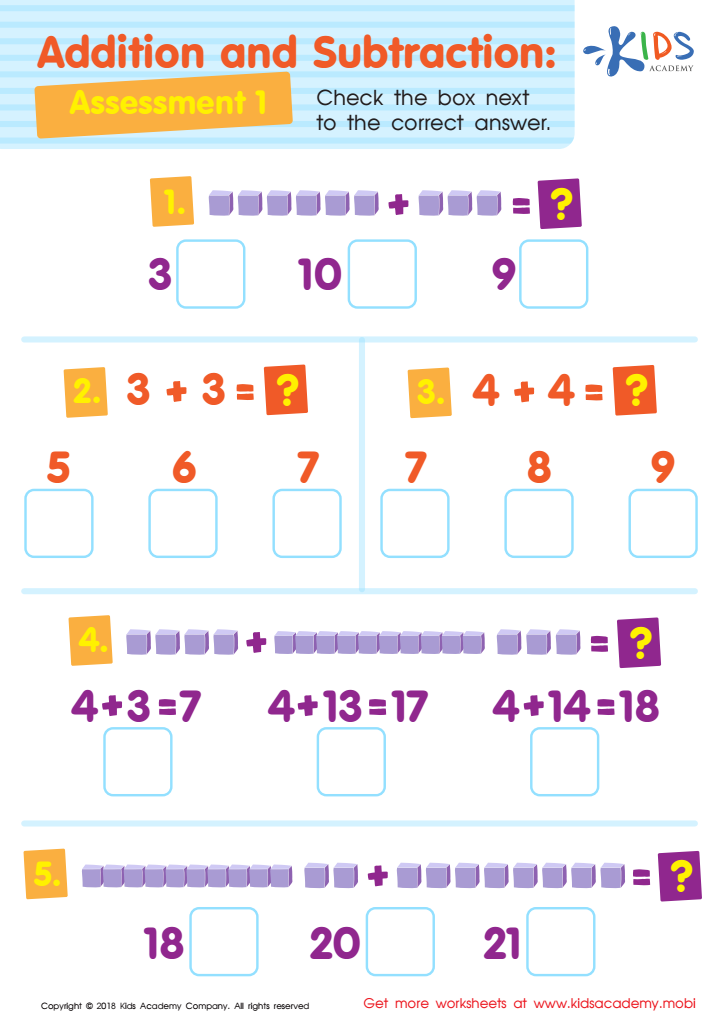
Addition and Subtraction Assessment 1 Worksheet
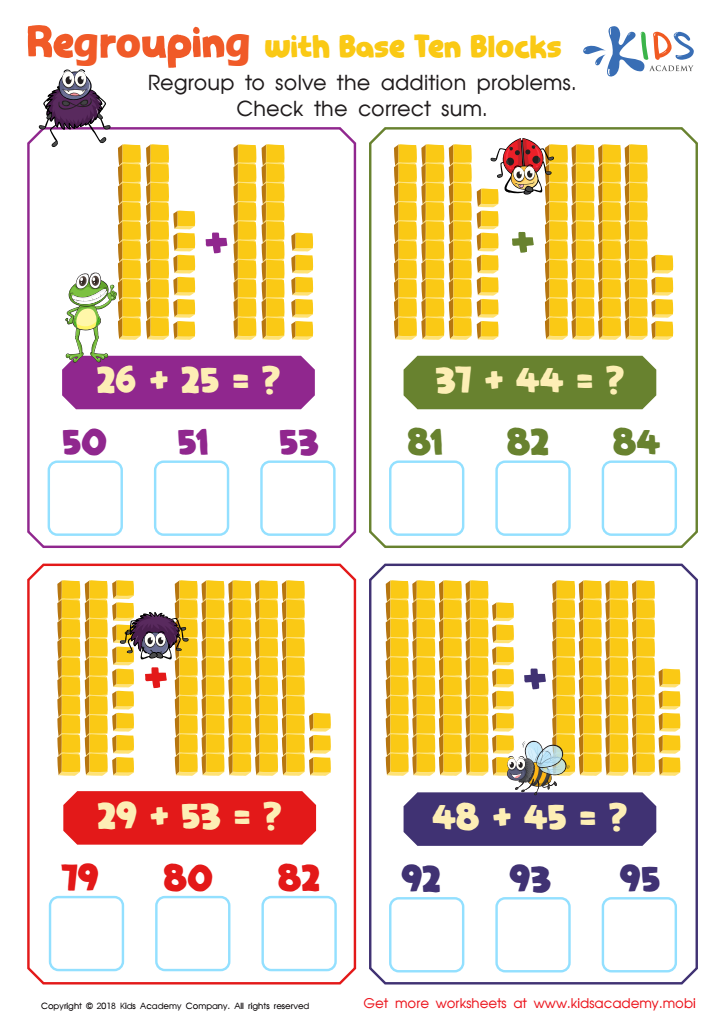
Regrouping With Base Ten Blocks Worksheet








Ensuring that children aged 5-8 develop problem-solving abilities in addition and subtraction is crucial for their foundational mathematical understanding and overall cognitive development. This age range is a pivotal period when young brains are highly receptive to learning new concepts and skills. Introducing problem-solving early can nurture critical thinking, logical reasoning, and analytical skills that are essential for academic success and everyday life.
First, addition and subtraction are fundamental operations on which more complex mathematical concepts are built. Mastery of these basics forms the groundwork for future learning in subjects such as multiplication, division, and beyond. Early competence in these areas boosts confidence and sets a positive tone for continued math education.
Second, engaging with addition and subtraction problems enhances concentration and perseverance. Children learn to approach problems methodically, testing different solutions and learning from errors, which fosters resilient and innovative thinking.
Furthermore, when parents and teachers focus on developing these skills in young learners, it helps bridge gaps in understanding and identifies students who may need additional support, ensuring no child falls behind. Finally, the practical applications of mathematical problem-solving in everyday activities, such as sharing toys fairly or making simple transactions, demonstrate to children the real-world relevance of what they are learning, making education more engaging and meaningful. Prioritizing this aspect of education lays a robust foundation for lifelong learning and problem-solving capabilities.








