Introducing our engaging "Fraction Comparison Addition & Subtraction Worksheets" designed specifically for children aged 5-8! These interactive worksheets help young learners build foundational math skills by comparing fractions and practicing addition and subtraction. With colorful visuals and age-appropriate questions, your child will enjoy exploring and mastering the concept of fractions in a fun and supportive environment. Whether in the classroom or at home, our worksheets are perfect for reinforcing critical thinking and problem-solving skills. Watch your child gain confidence as they enhance their math abilities while having a blast! Perfect for early grade teachers and parents alike!
Check out this FREE Trial Lesson on Addition & Subtraction for age 5-8!

Z

Favorites
With answer key
Interactive
  • 5-8
  • Fraction comparison
  • Addition & Subtraction
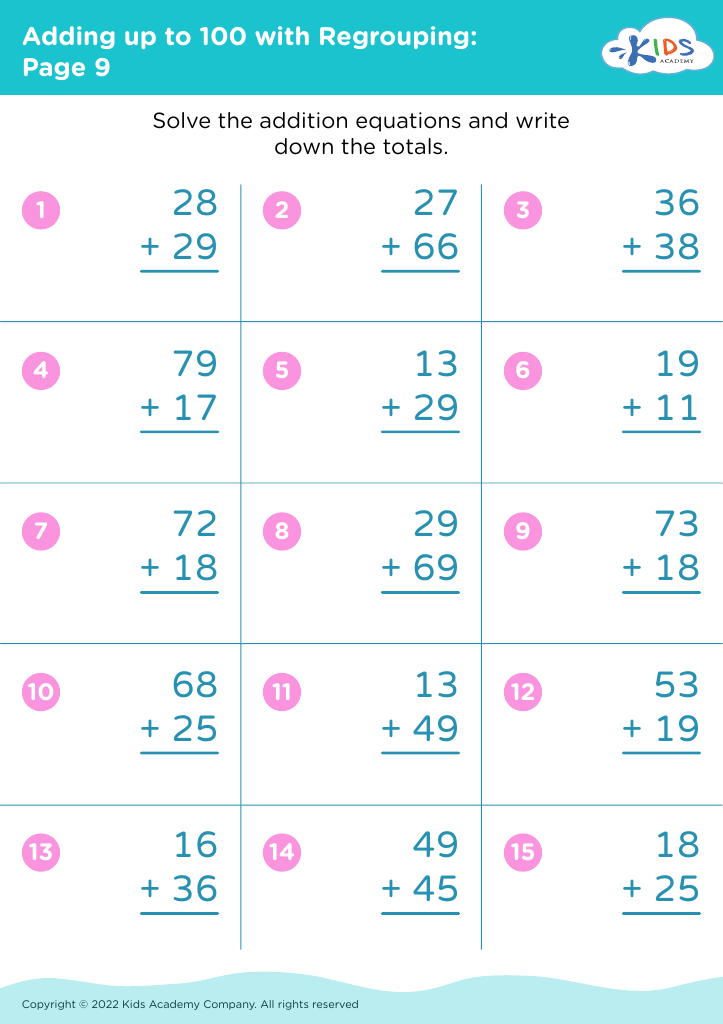
Adding up to 100 with Regrouping: Page 9
Worksheet
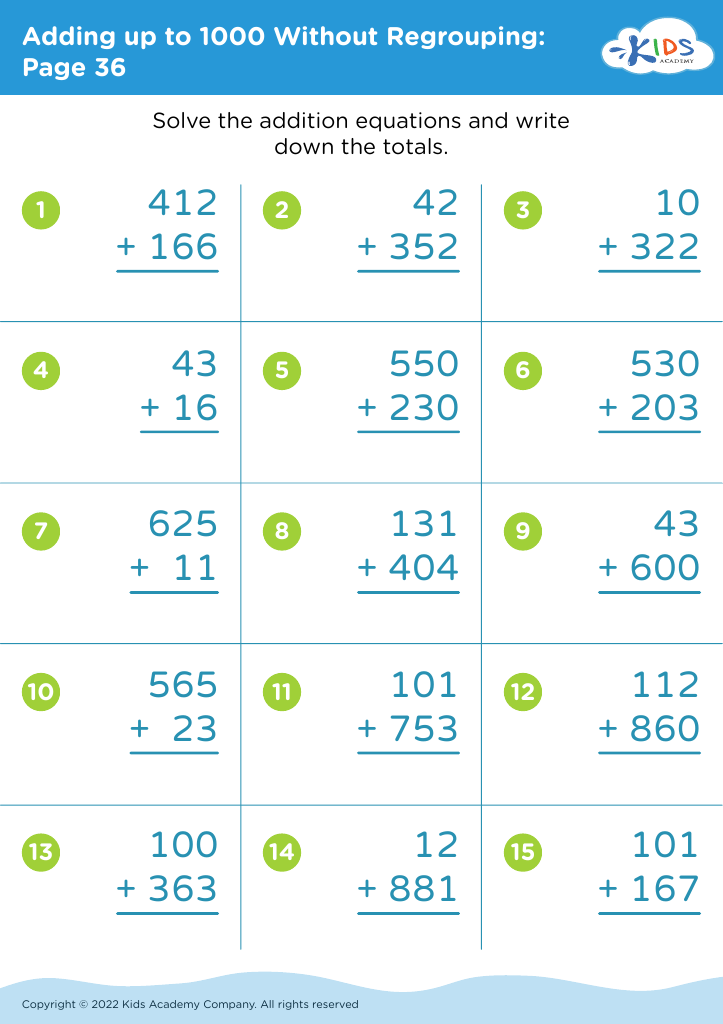
Adding up to 1000 Without Regrouping: Page 36
Worksheet
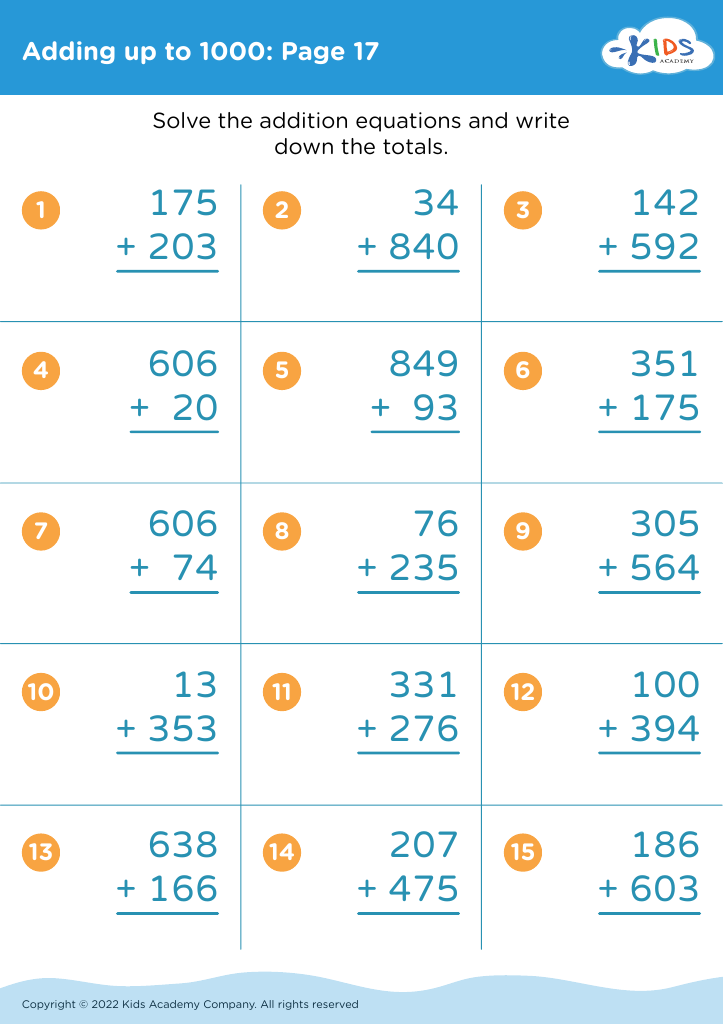
Adding up to 1000: Page 17

Adding up to 1000: Page 17

Adding up to 1000: Page 17
Worksheet
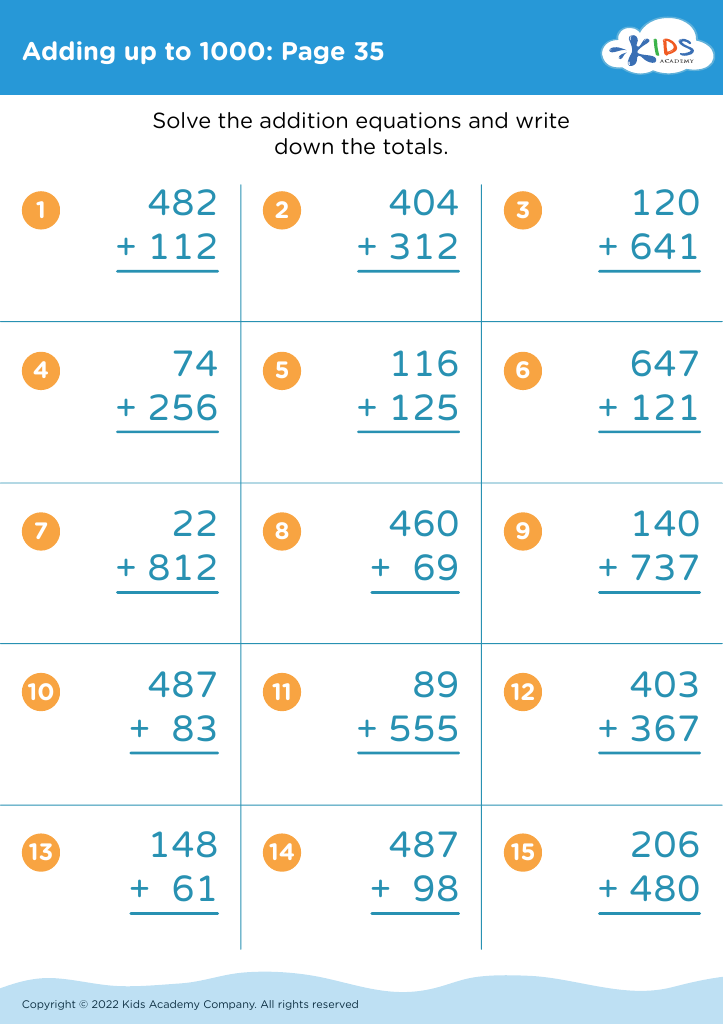
Adding up to 1000: Page 35

Adding up to 1000: Page 35

Adding up to 1000: Page 35
Worksheet
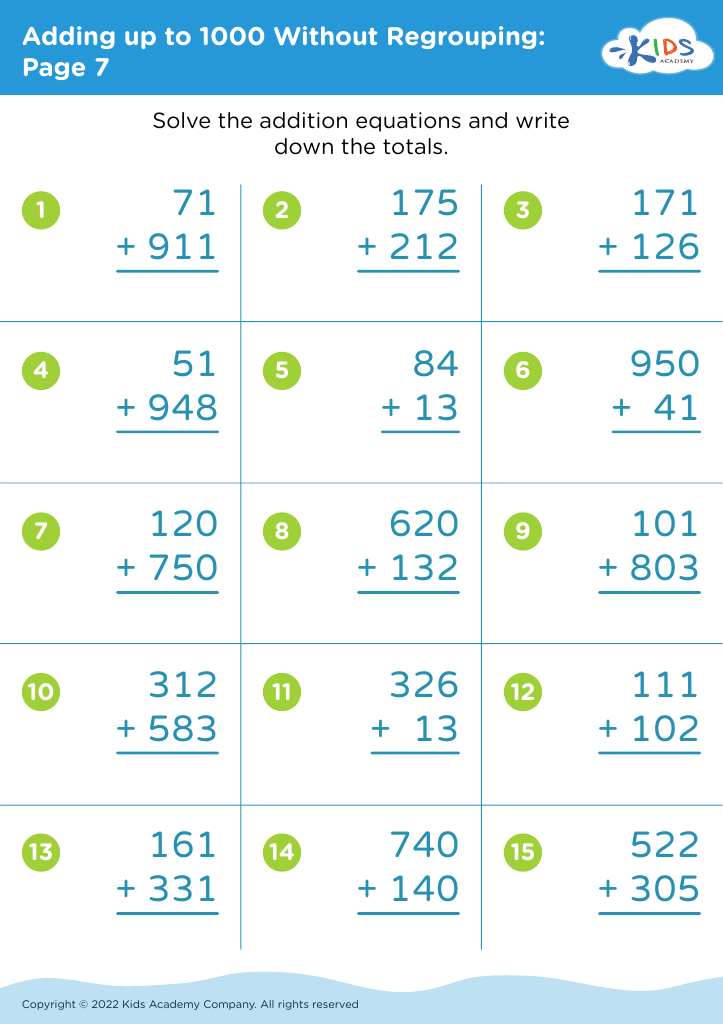
Adding up to 1000 Without Regrouping: Page 7
Worksheet
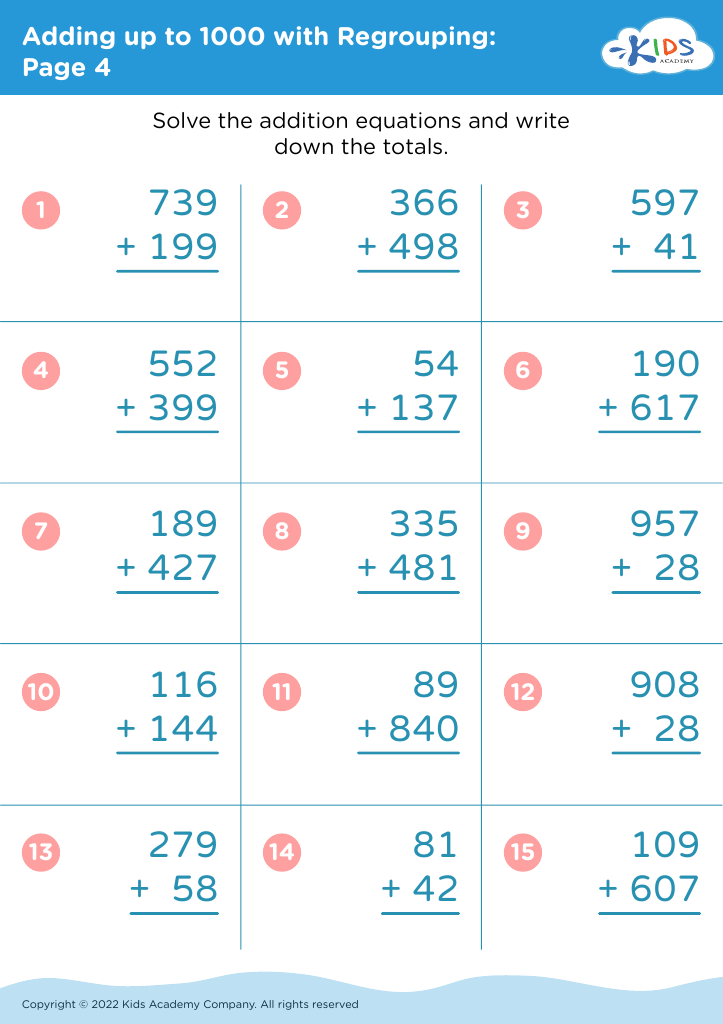
Adding up to 1000 with Regrouping: Page 4
Worksheet
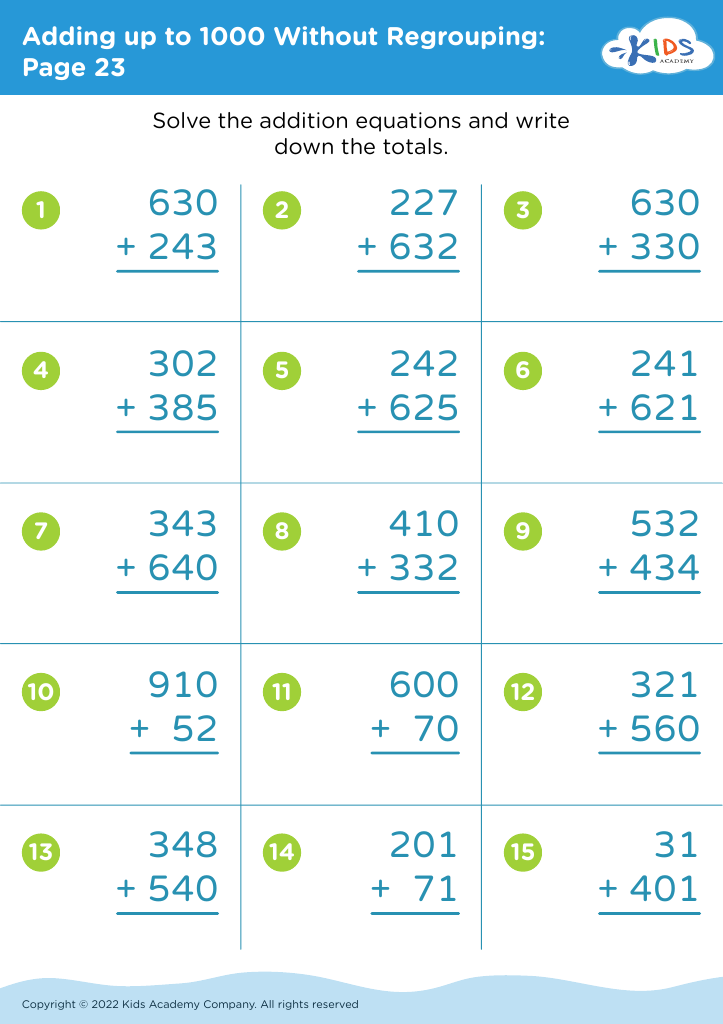
Adding up to 1000 Without Regrouping: Page 23
Worksheet
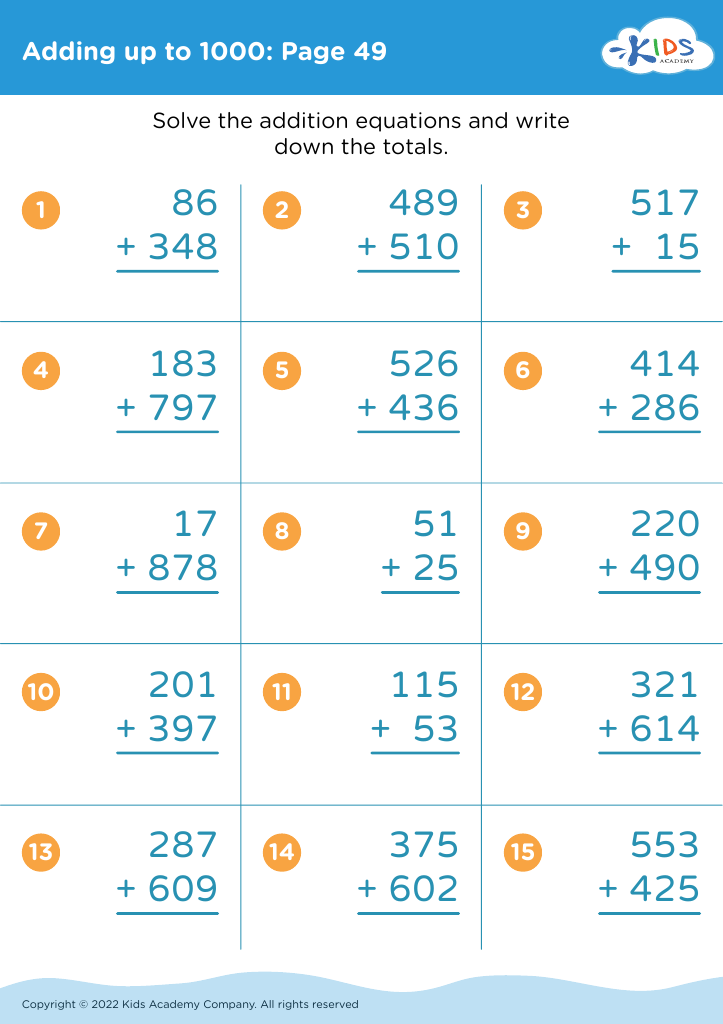
Adding up to 1000: Page 49

Adding up to 1000: Page 49

Adding up to 1000: Page 49
Worksheet
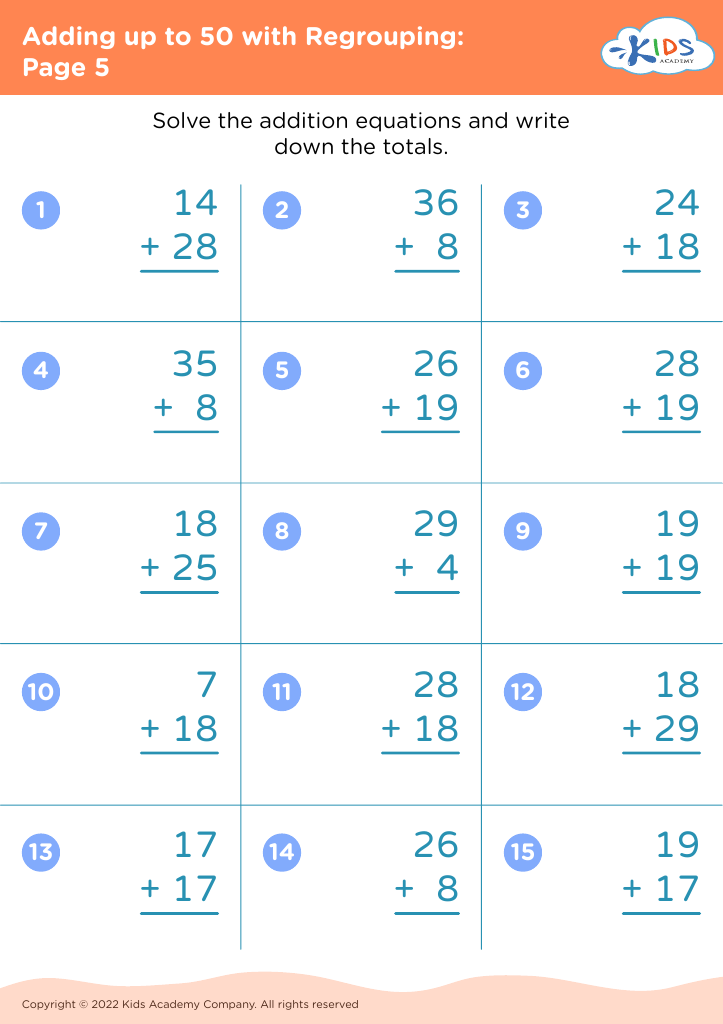
Adding up to 50 with Regrouping: Page 5
Worksheet
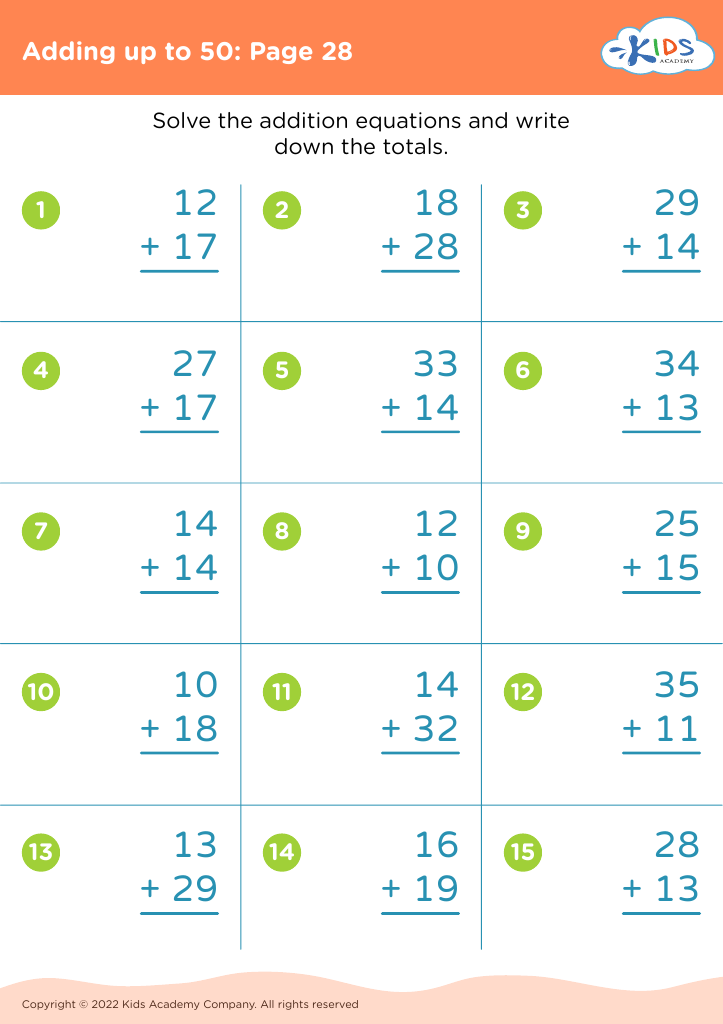
Adding up to 50: Page 28

Adding up to 50: Page 28

Adding up to 50: Page 28
Worksheet
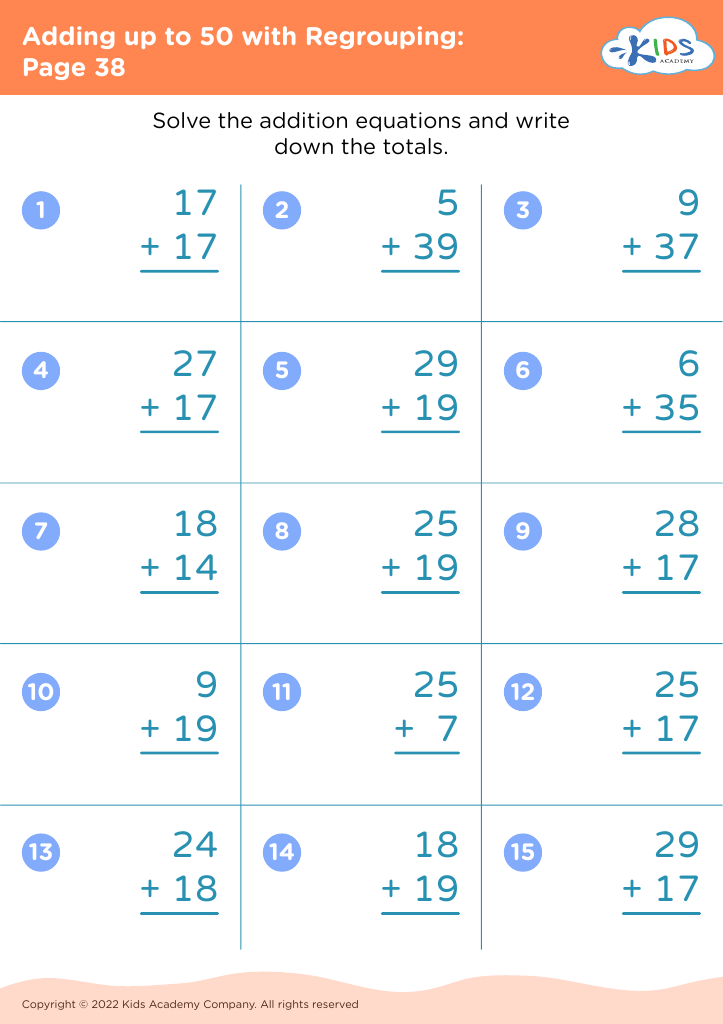
Adding up to 50 with Regrouping: Page 38
Worksheet
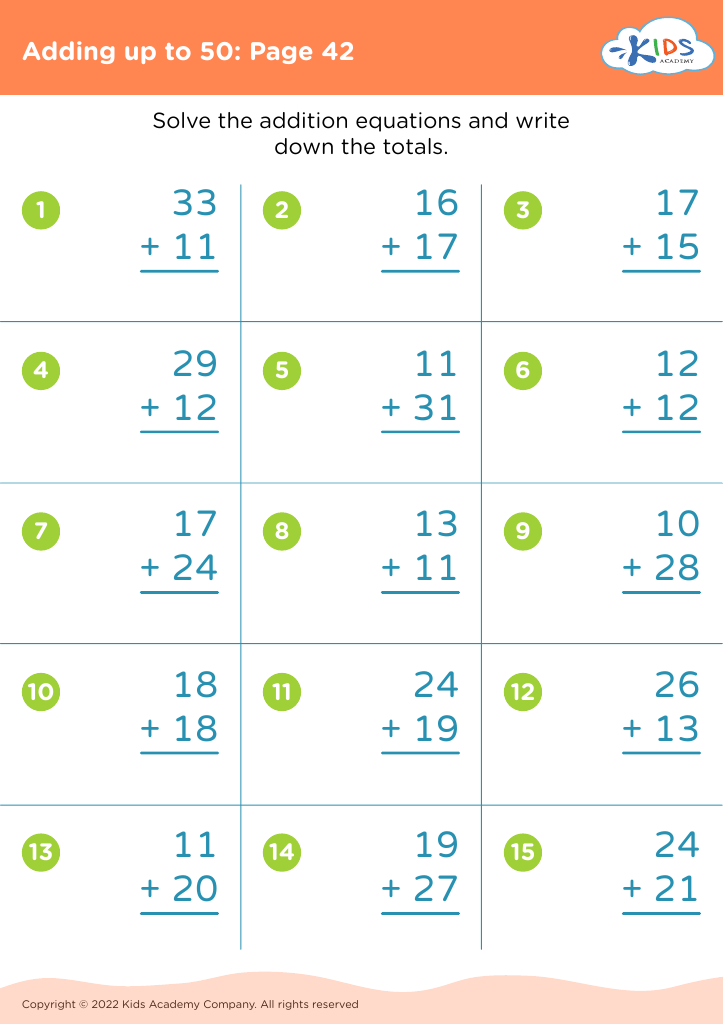
Adding up to 50: Page 42

Adding up to 50: Page 42

Adding up to 50: Page 42
Worksheet
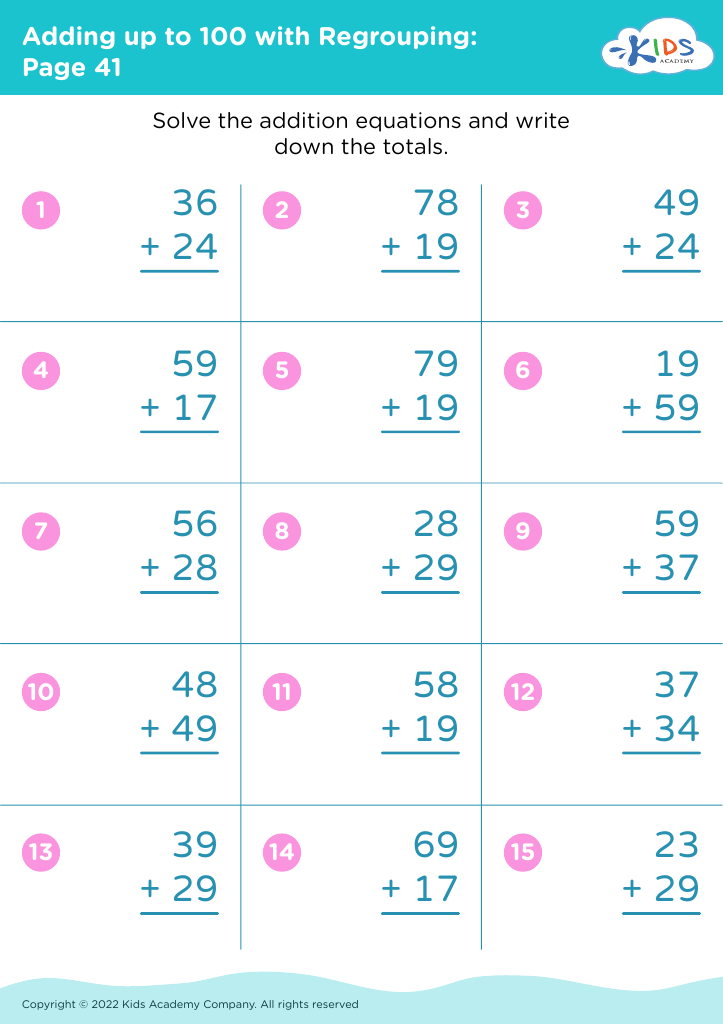
Adding up to 100 with Regrouping: Page 41
Worksheet
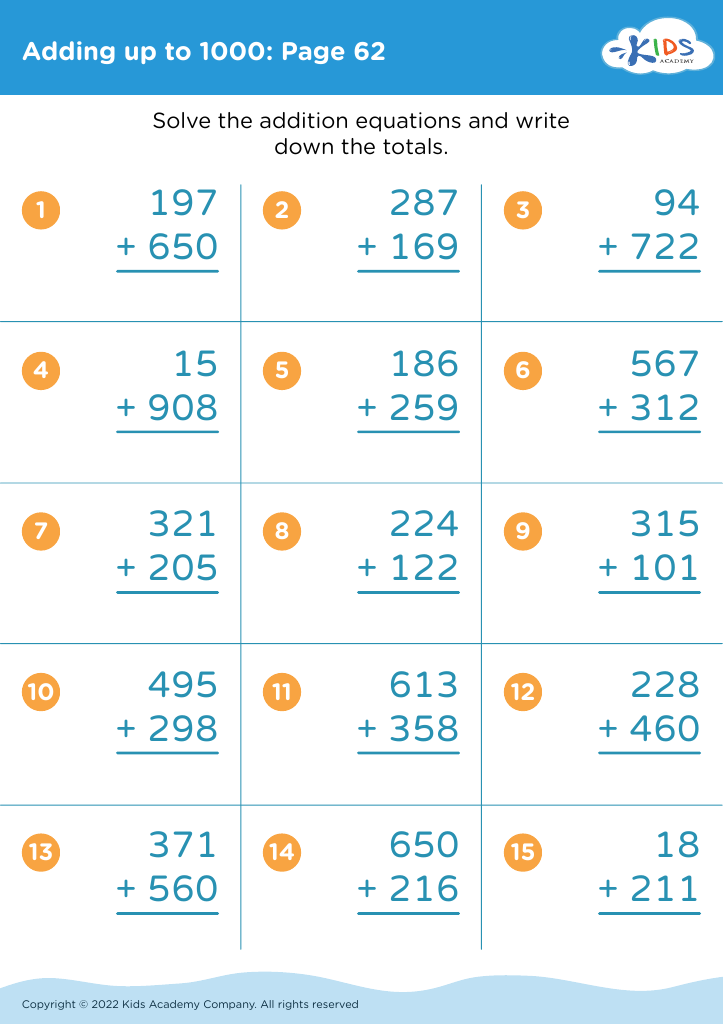
Adding up to 1000: Page 62

Adding up to 1000: Page 62

Adding up to 1000: Page 62
Worksheet
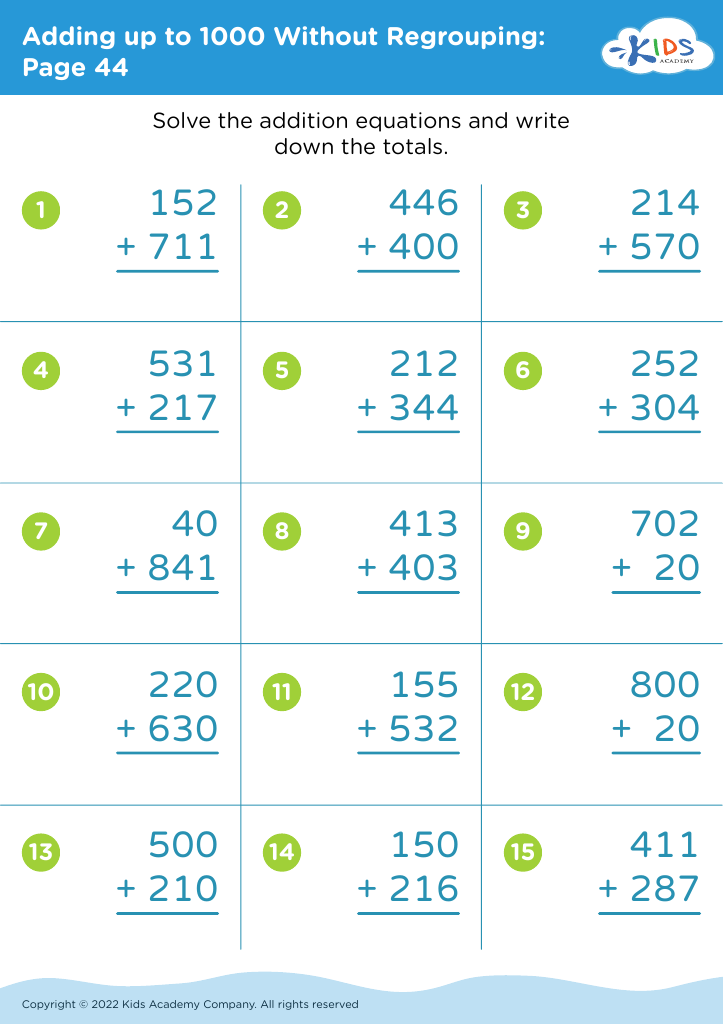
Adding up to 1000 Without Regrouping: Page 44
Worksheet
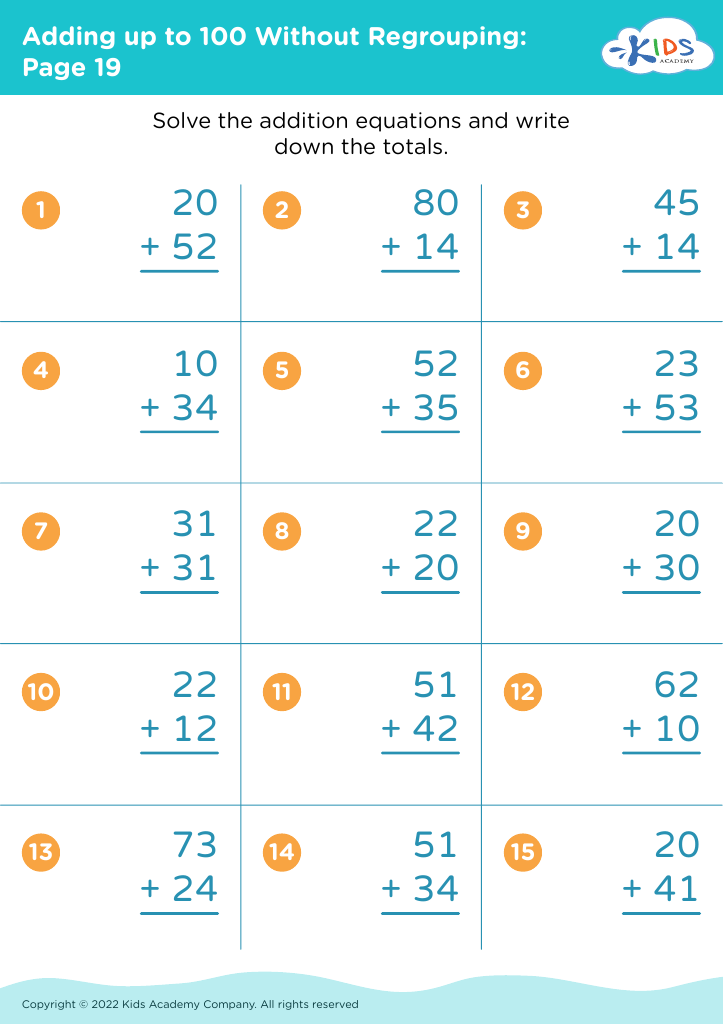
Adding up to 100 Without Regrouping: Page 19
Worksheet
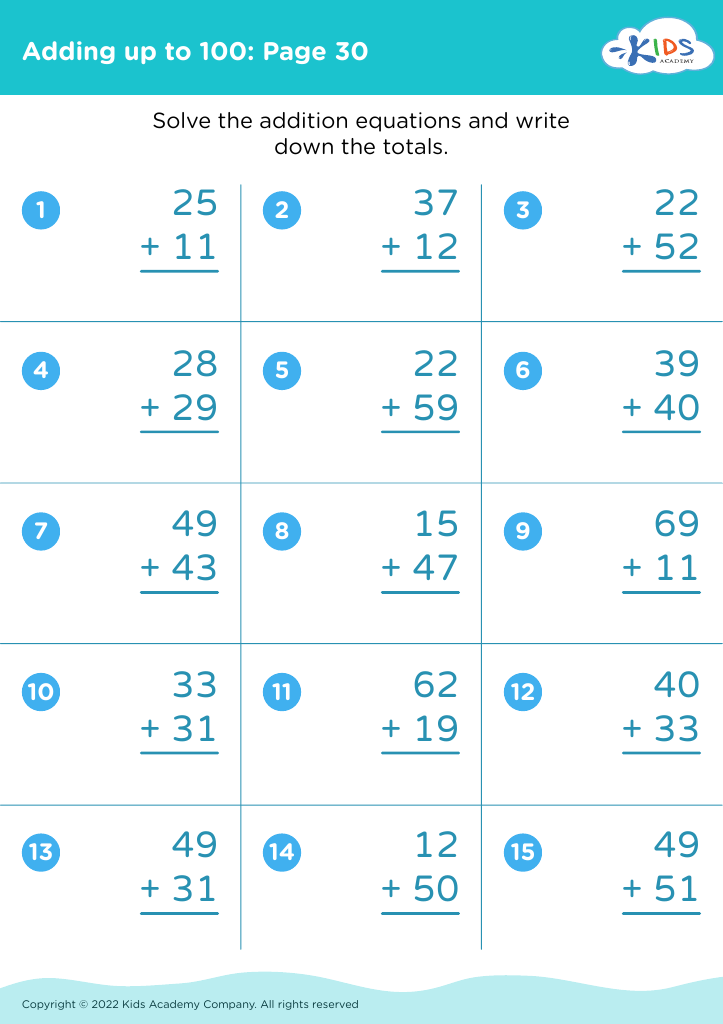
Adding up to 100: Page 30

Adding up to 100: Page 30

Adding up to 100: Page 30
Worksheet
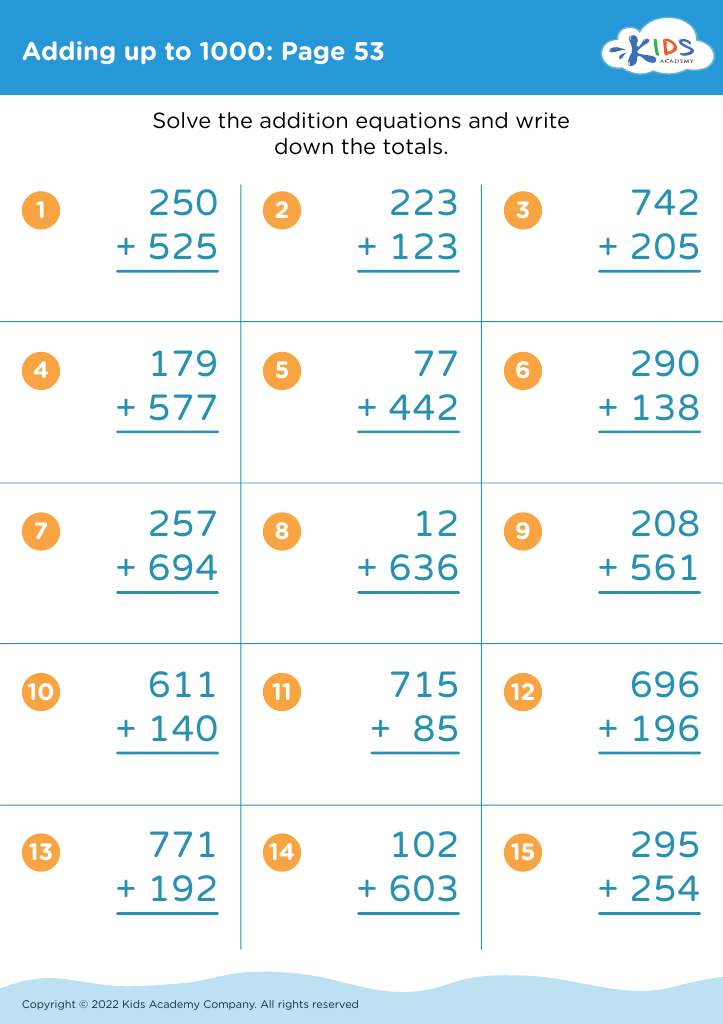
Adding up to 1000: Page 53

Adding up to 1000: Page 53

Adding up to 1000: Page 53
Worksheet
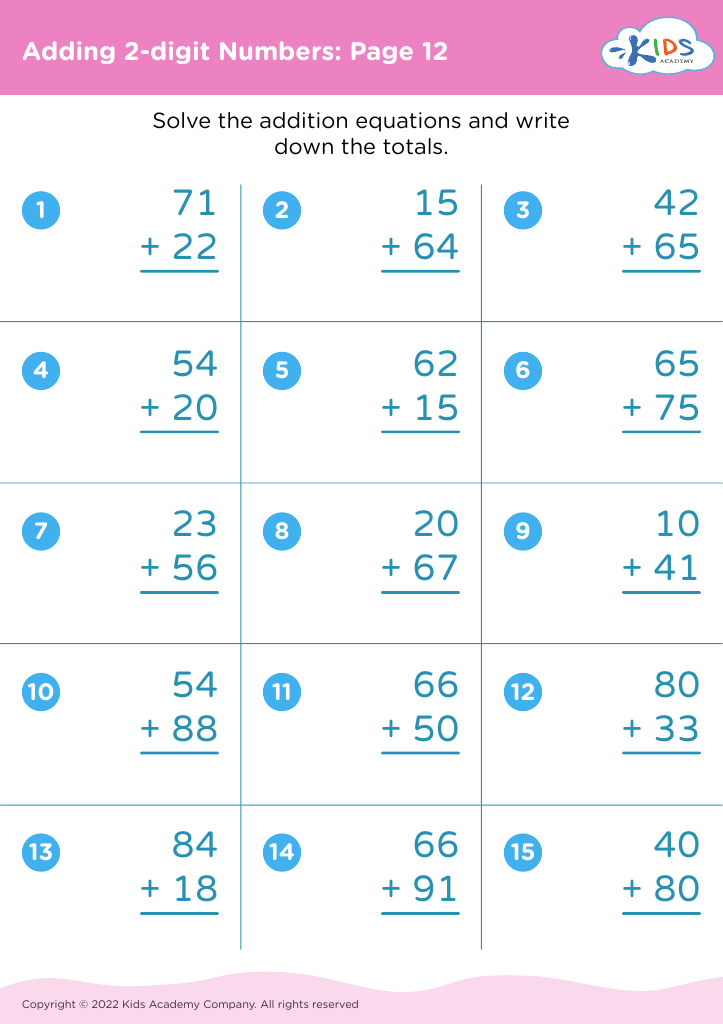
Adding 2-digit Numbers: Page 12

Adding 2-digit Numbers: Page 12

Adding 2-digit Numbers: Page 12
Worksheet
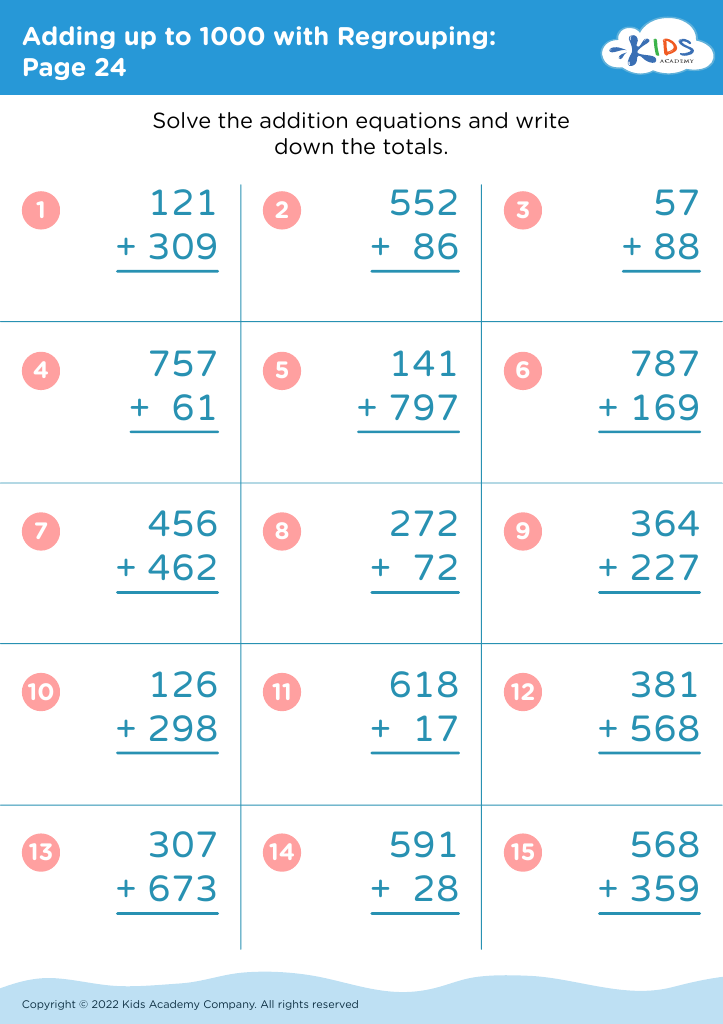
Adding up to 1000 with Regrouping: Page 24
Worksheet
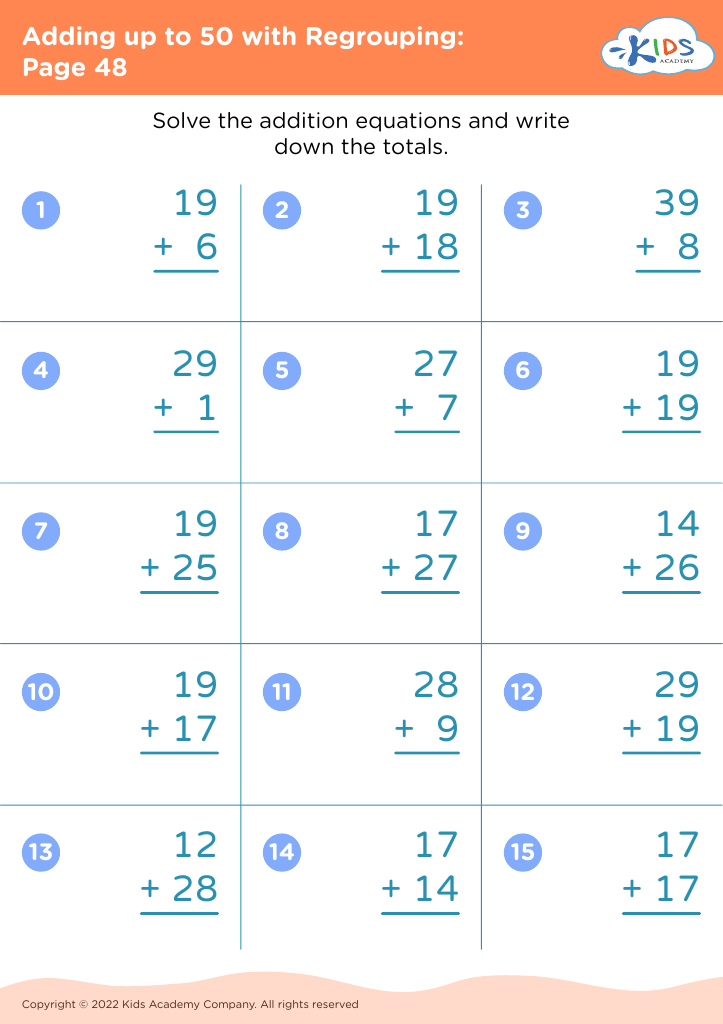
Adding up to 50 with Regrouping: Page 48
Worksheet
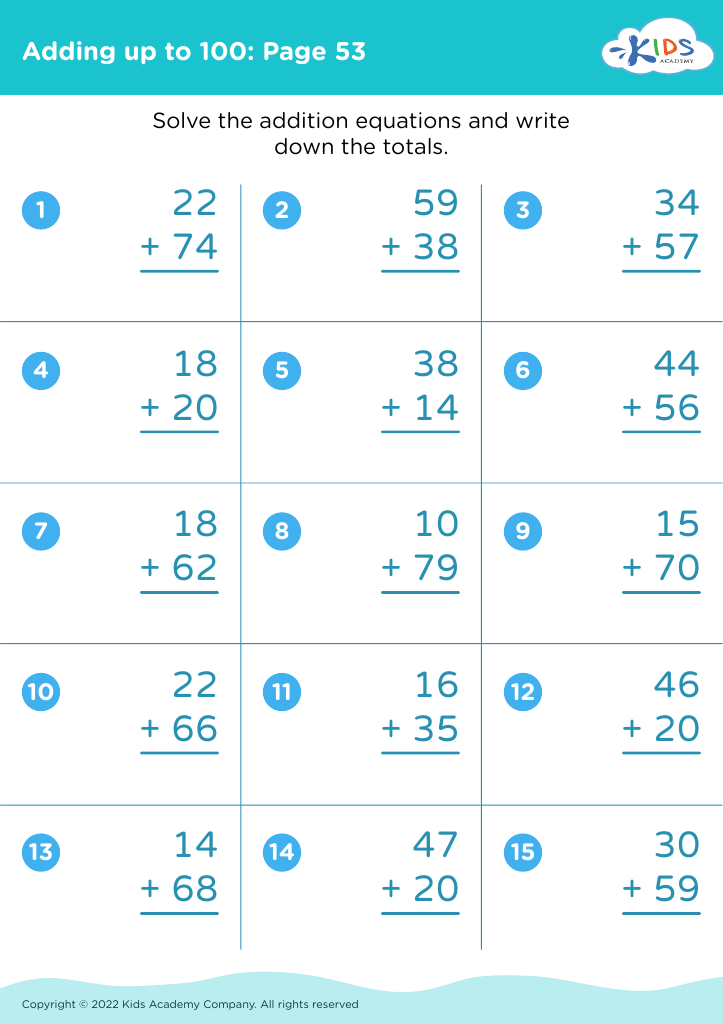
Adding up to 100: Page 53

Adding up to 100: Page 53

Adding up to 100: Page 53
Worksheet
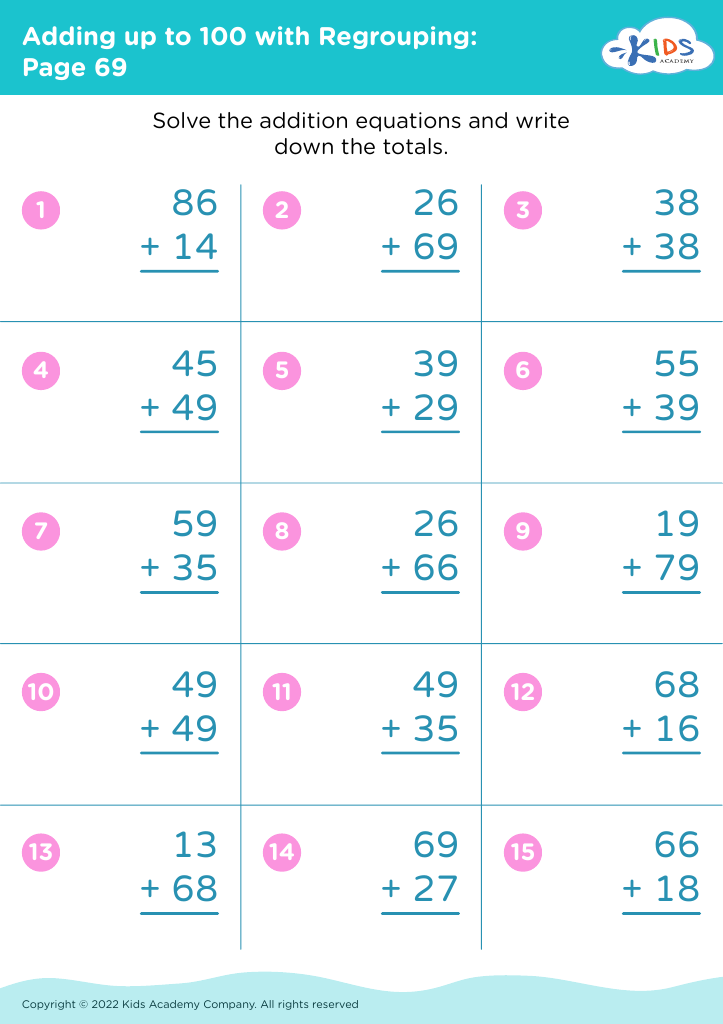
Adding up to 100 with Regrouping: Page 69
Worksheet
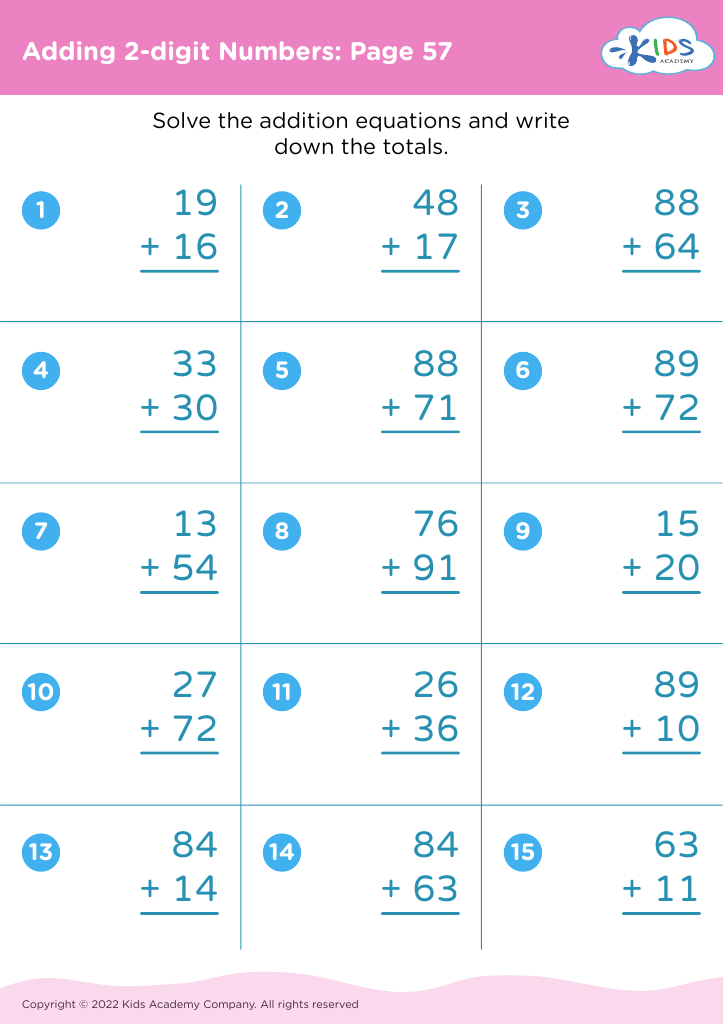
Adding 2-digit Numbers: Page 57

Adding 2-digit Numbers: Page 57

Adding 2-digit Numbers: Page 57
Worksheet


Understanding fraction comparison, addition, and subtraction is crucial for children ages 5-8 as it lays the foundation for more advanced mathematical concepts. At this early age, children are developing critical thinking and problem-solving skills, and working with fractions enhances these abilities. It introduces them to essential concepts of part-to-whole relationships, which are fundamental in everyday life.

Parents and teachers play a significant role in fostering this understanding by integrating fraction comparisons into engaging activities and discussions. By doing so, children learn to recognize and compare different fractional values, a skill that will serve them well in understanding ratios and proportions later in their education. Furthermore, incorporating addition and subtraction with fractions helps children grasp the concepts of grouping and decomposition, which are vital elements of mathematical reasoning.

Learning these skills early can help build confidence and a positive attitude towards math. Children who understand fractions will find it easier to tackle more complex mathematical operations in the future. For parents and teachers, nurturing early fraction skills not only supports academic success but also helps children apply math in real-life situations, such as cooking or sharing, thus making learning meaningful and relevant.