
Handwriting practice Addition & Subtraction Worksheets for Ages 5-8
5 filtered results
Difficulty Level
Grade
Age
-
From - To
Subject
Activity
Standards
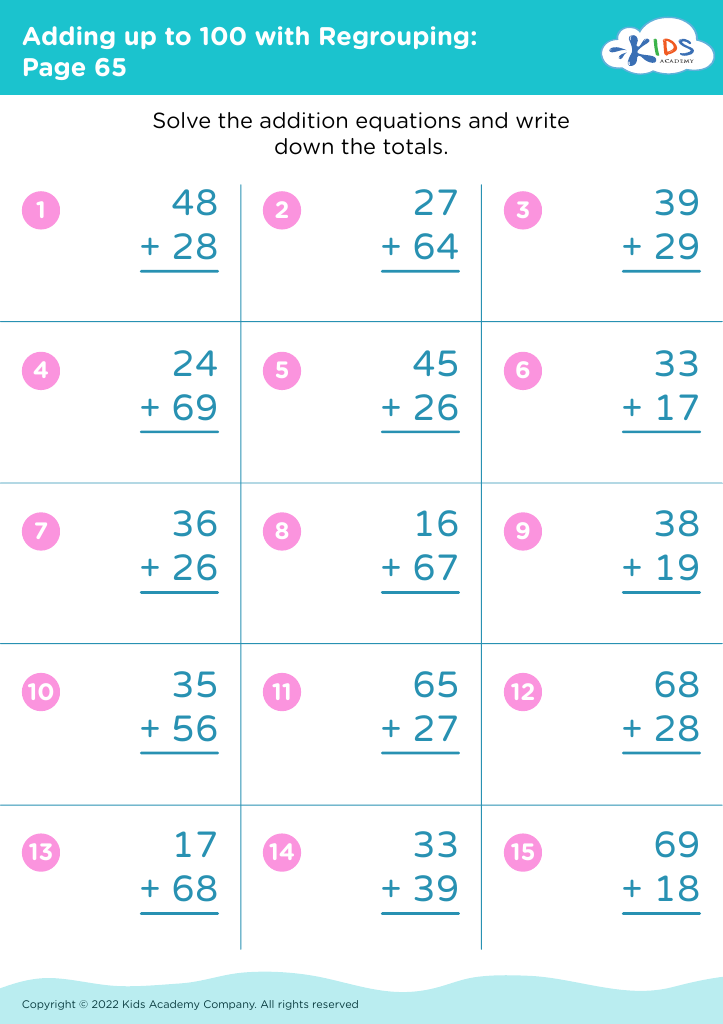
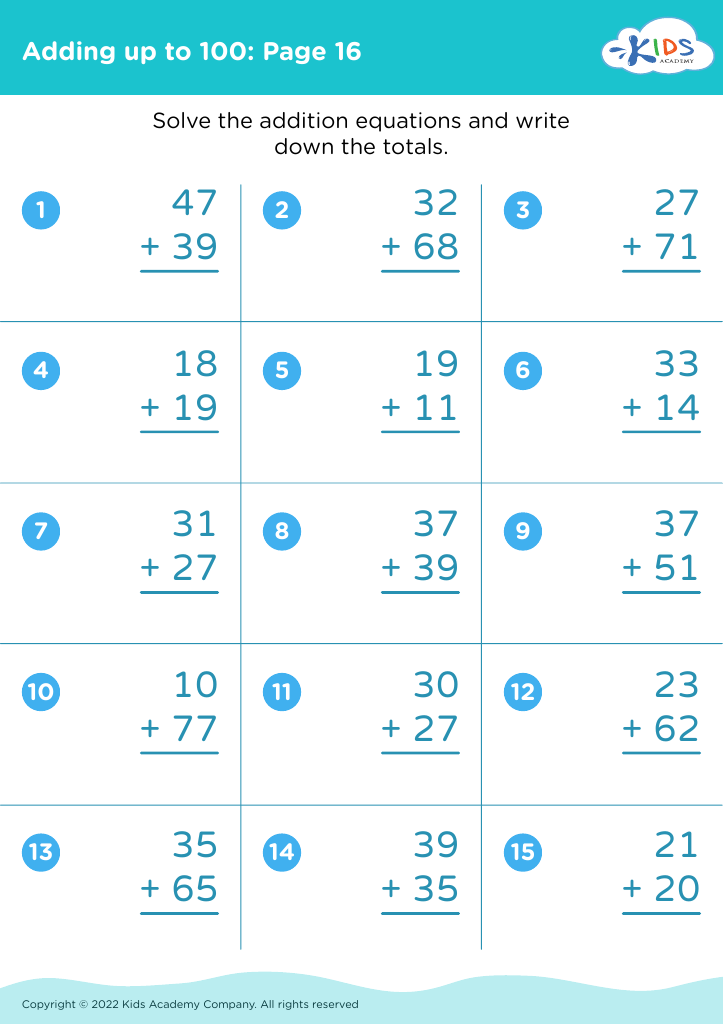
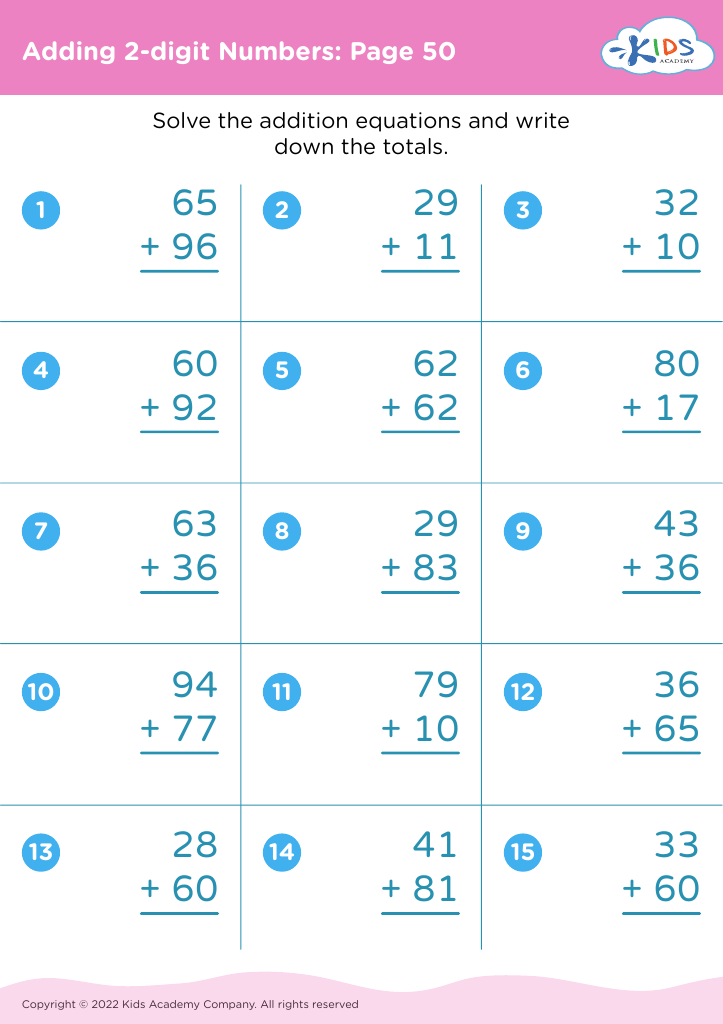
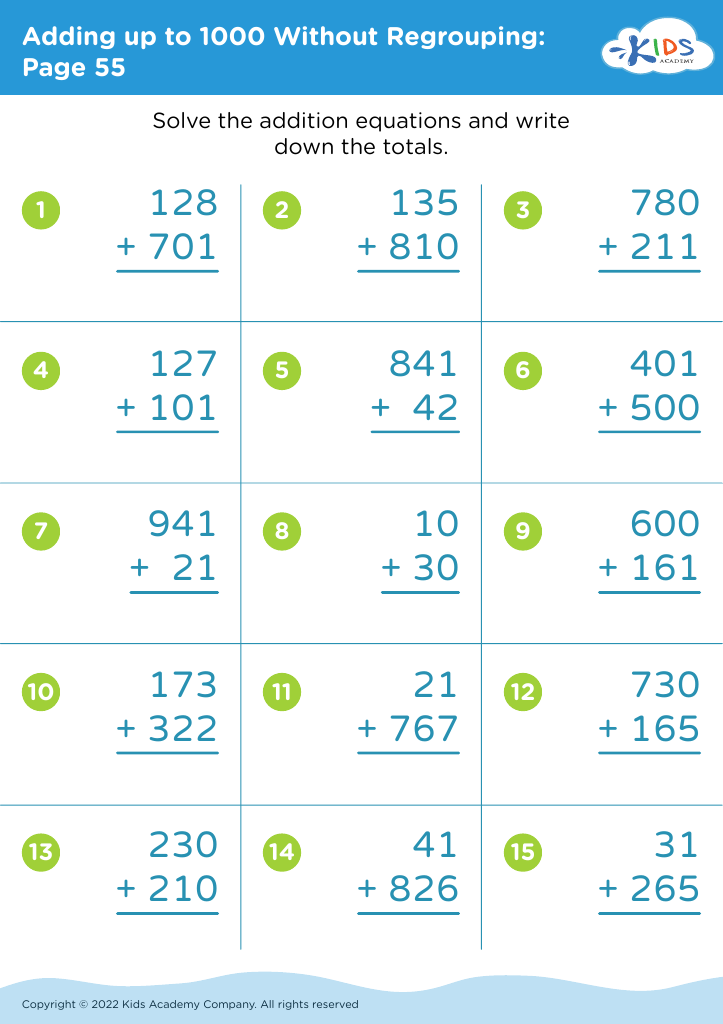
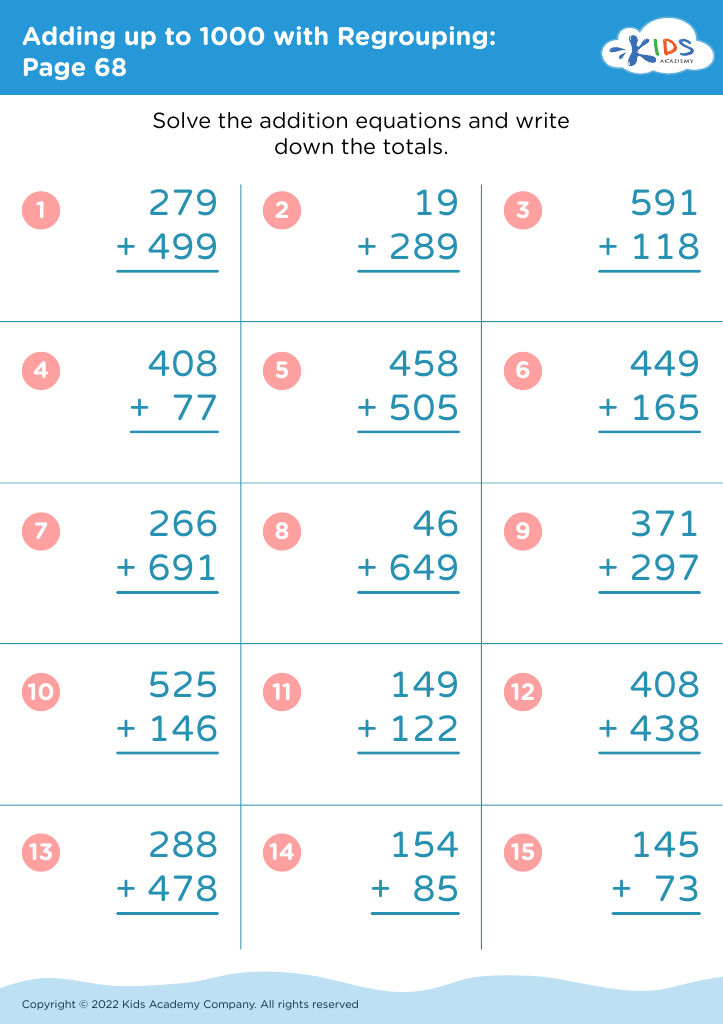
Boost your child's arithmetic and writing skills with our Handwriting Practice Addition & Subtraction Worksheets designed specifically for ages 5-8. These engaging and interactive worksheets guide young learners through essential math concepts while reinforcing proper handwriting techniques. Featuring a variety of attractive exercises, children can practice writing numbers and solving addition and subtraction problems in a fun, engaging way. Ideal for home or classroom use, these worksheets support early math understanding and promote neat penmanship. Help your child build confidence and mastery in both writing and math with our comprehensive, easy-to-use resources designed for young learners. Get started today!
Favorites
With answer key
Interactive
Join Kids Academy for Free
Who is primarily going to use this learning content?








Parents and teachers should prioritize handwriting practice for addition and subtraction for children aged 5-8 because it lays a strong foundation for mathematical proficiency and overall academic success. At this developmental stage, handwriting helps children develop fine motor skills, which are crucial for writing numbers legibly. Proper formation of numbers aids cognitive recognition, enabling young learners to better understand mathematical concepts.
Engaging in handwriting practice correlates with enhanced focus and concentration, crucial for mastering arithmetic. Children who learn to write out their math problems are often more meticulous, leading to fewer errors. This practice also encourages the internalization of math processes, as physically writing out equations can help reinforce understanding and retention.
Handwriting practice creates an opportunity for parents and teachers to instill patience and perseverance in children, teaching them that mastery takes time. Furthermore, math skills developed through these exercises contribute significantly to a child’s confidence, encouraging an enthusiastic approach to learning. Enabling children to develop their handwriting skills alongside their math abilities fosters a holistic educational experience, ensuring they are well-equipped for future academic challenges. Investing time in these practices can yield long-lasting benefits throughout their schooling years and beyond.








