Mental math skills Addition & Subtraction Worksheets for Ages 5-8
19 filtered results
-
From - To
Enhance your child's mathematical understanding with our engaging Mental Math Skills Addition and Subtraction Worksheets, specifically designed for ages 5-8! These worksheets promote mental agility and help young learners strengthen their ability to perform calculations without the aid of a calculator or pen and paper. Through fun and interactive activities, children will build confidence in their math skills while developing critical problem-solving strategies. Tailored for different learning styles, our worksheets encourage children to think creatively about numbers. Start your child’s journey towards mathematical success today with our comprehensive, easy-to-follow worksheets, perfect for home or classroom use!
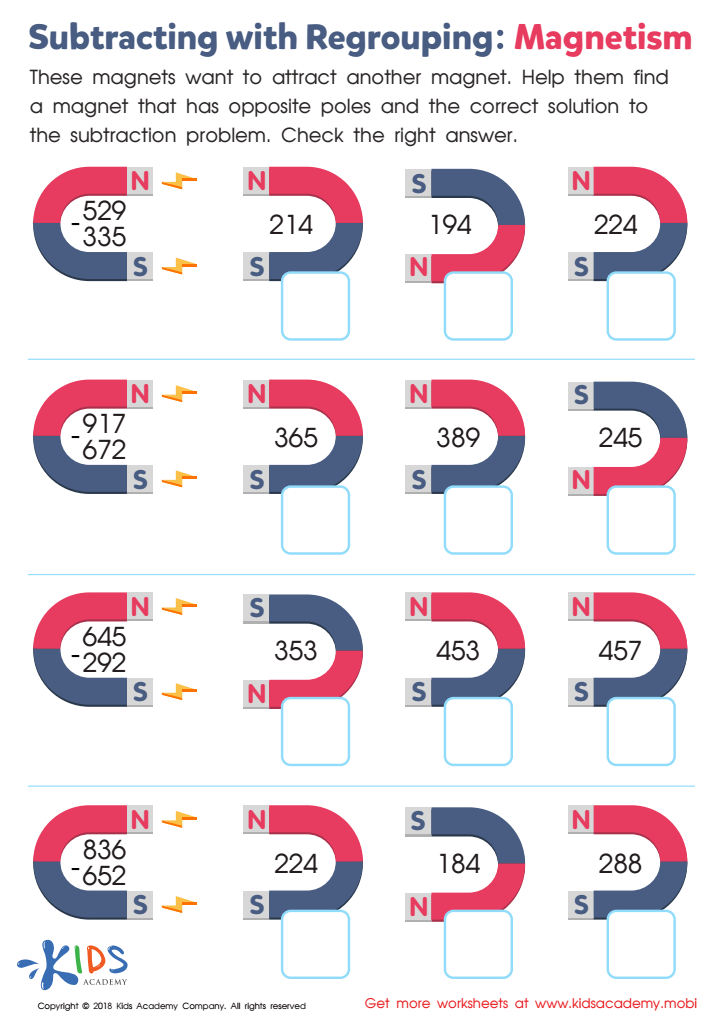
Subtracting with Regrouping: Magnetism Worksheet
 Assign to My Students
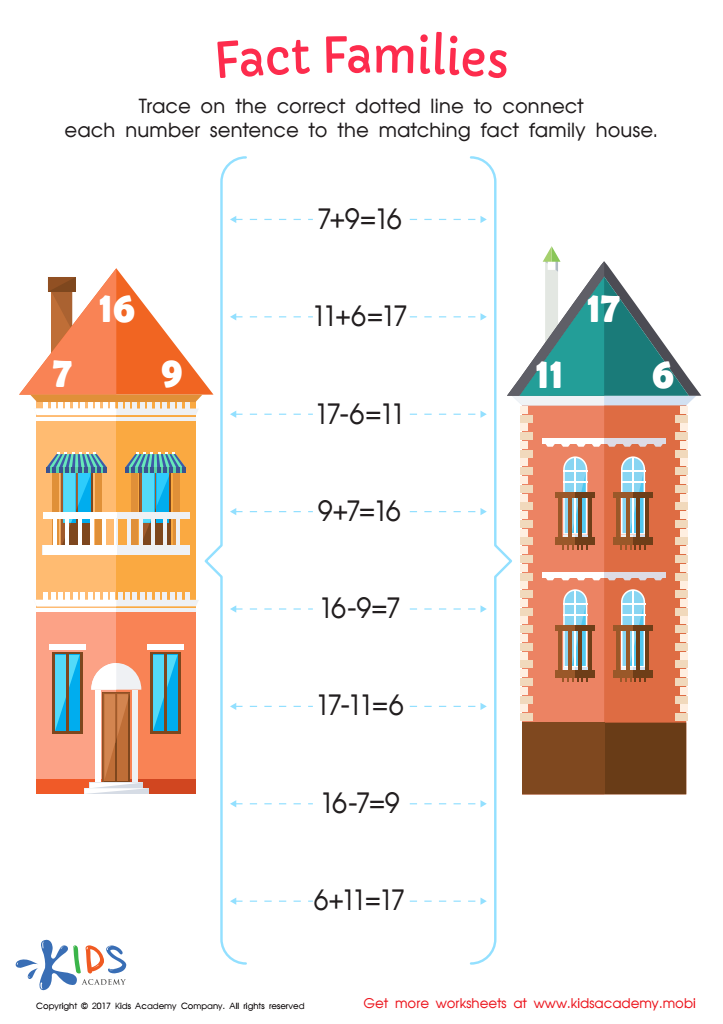
Fact Families — Add and Subtract Worksheet
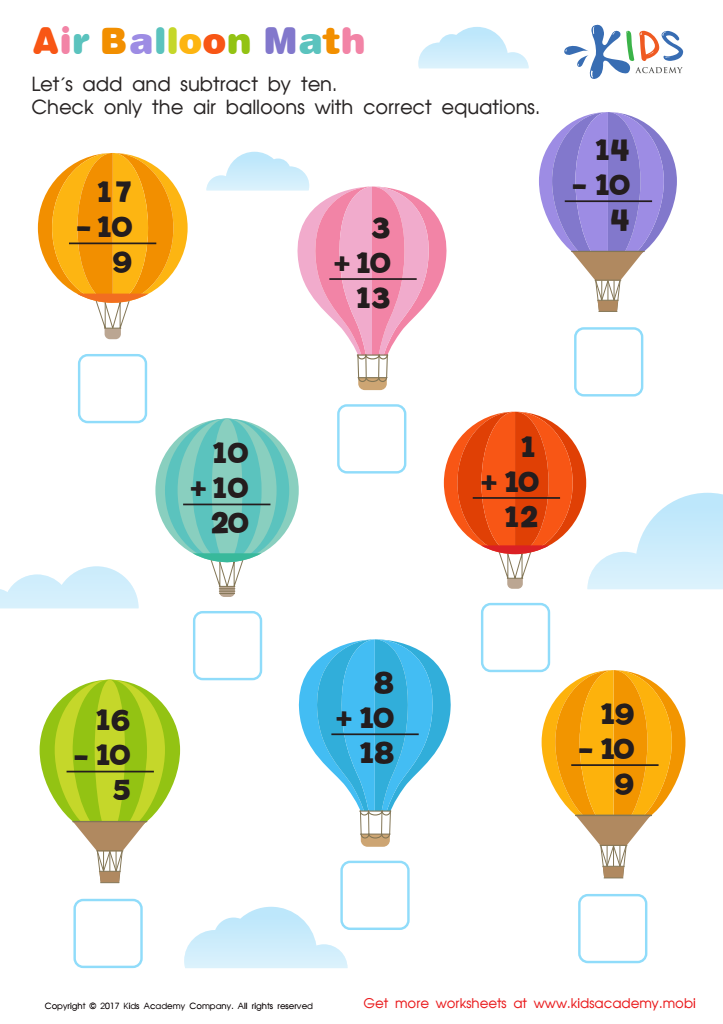
Air Balloon Math Worksheet
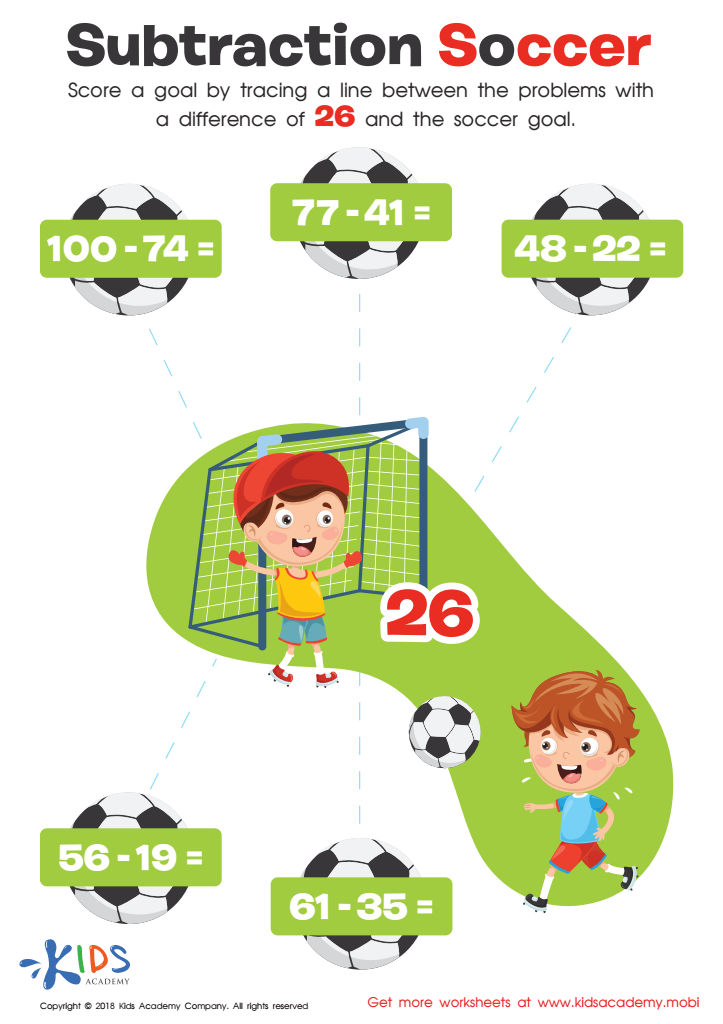
Subtraction Soccer Worksheet
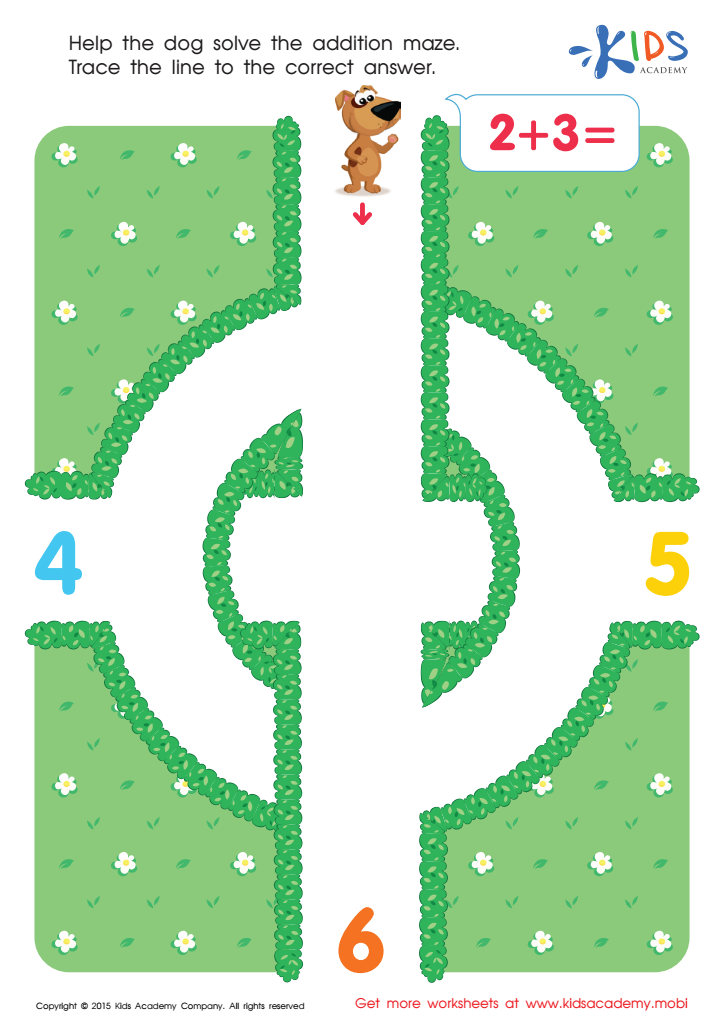
Two And Three Addition Worksheet
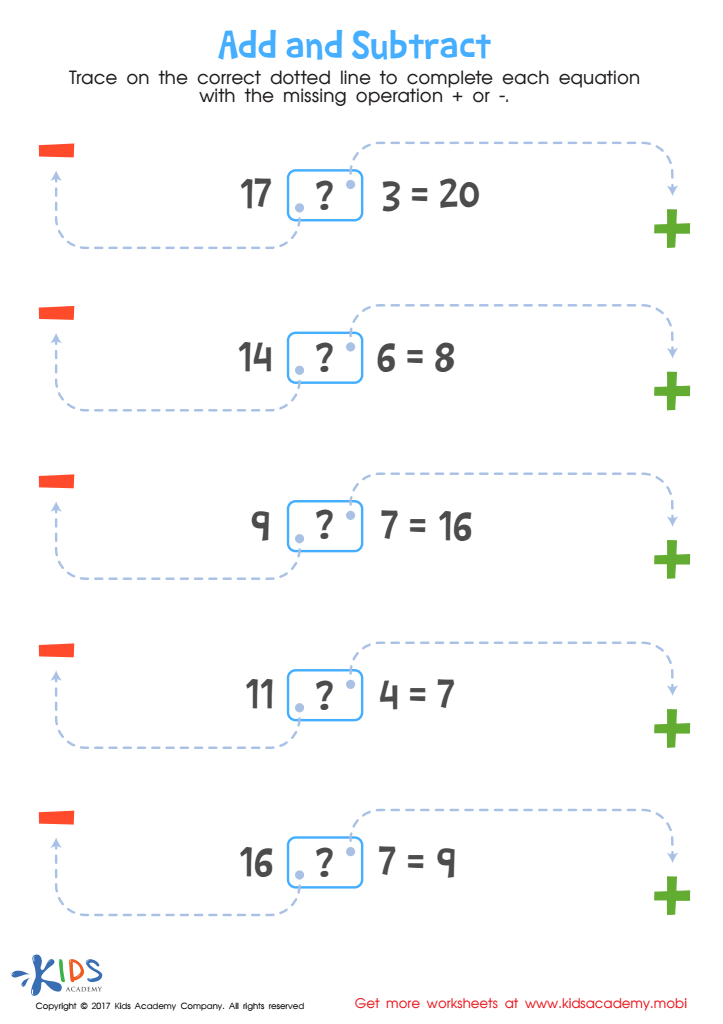
Add and Subtract Worksheet
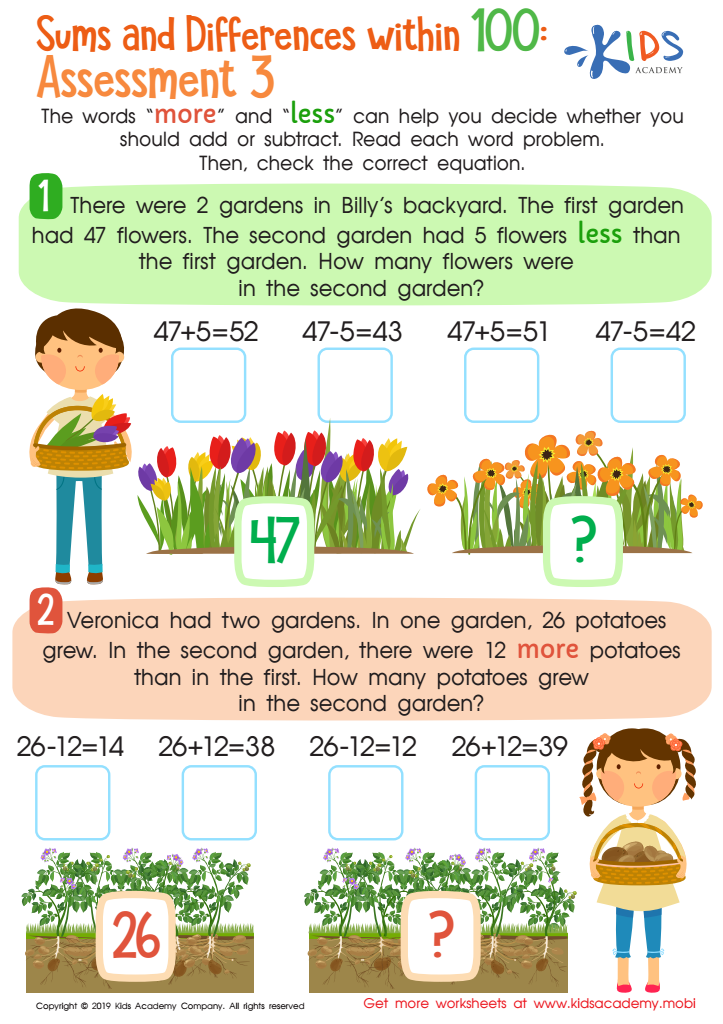
Sums and Differences Within 1 - Assessment 1 Worksheet
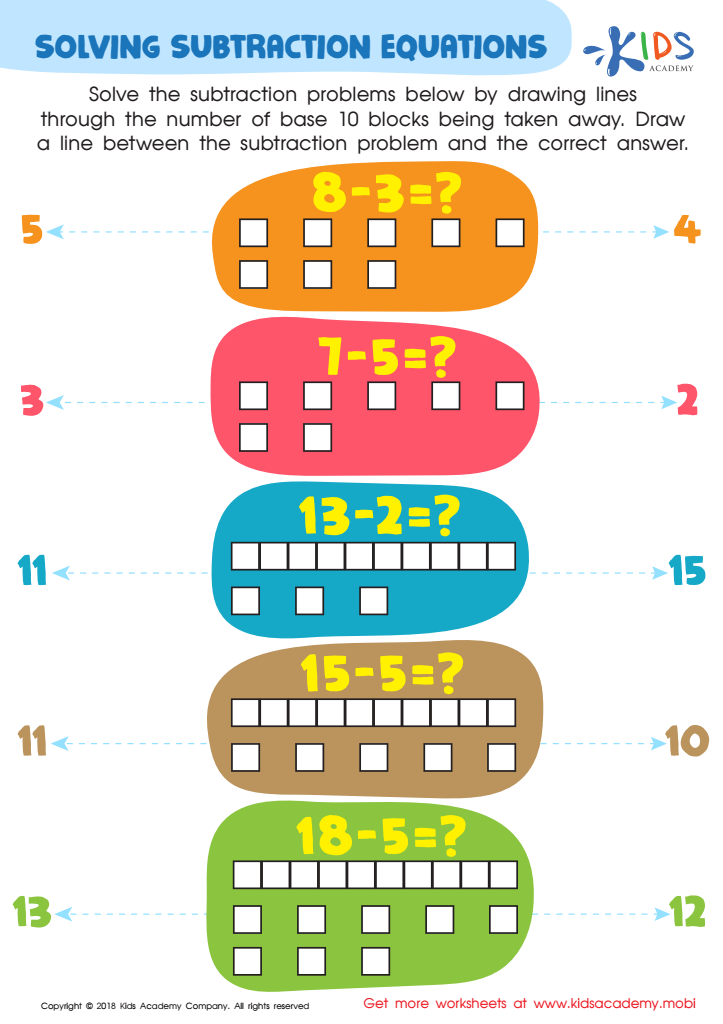
Solving Subtraction Equations Worksheet
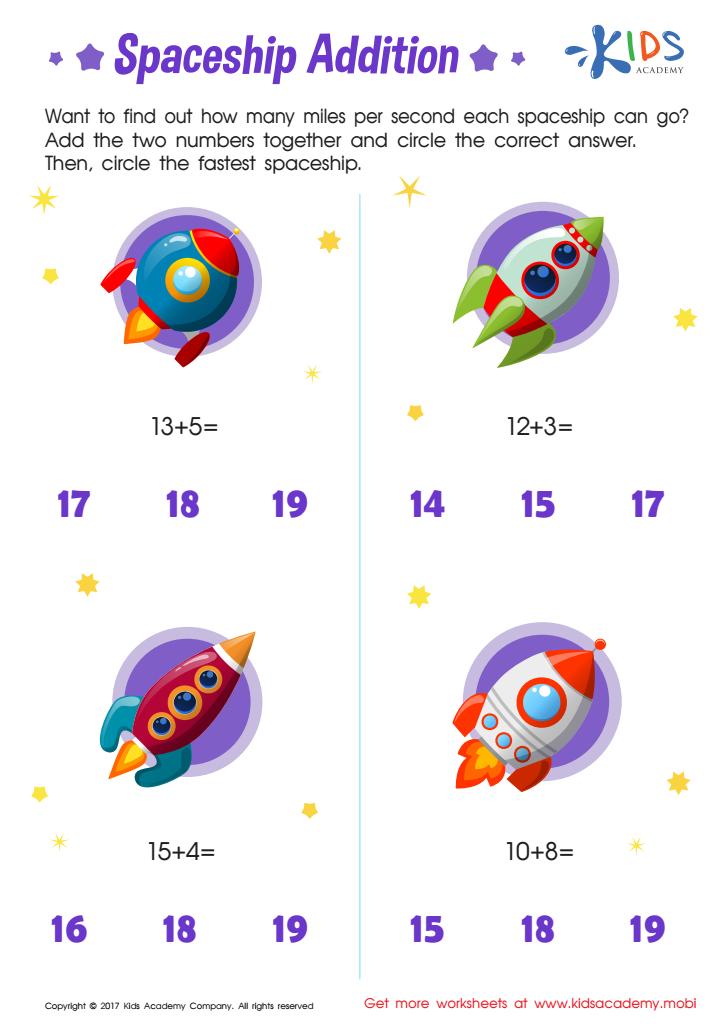
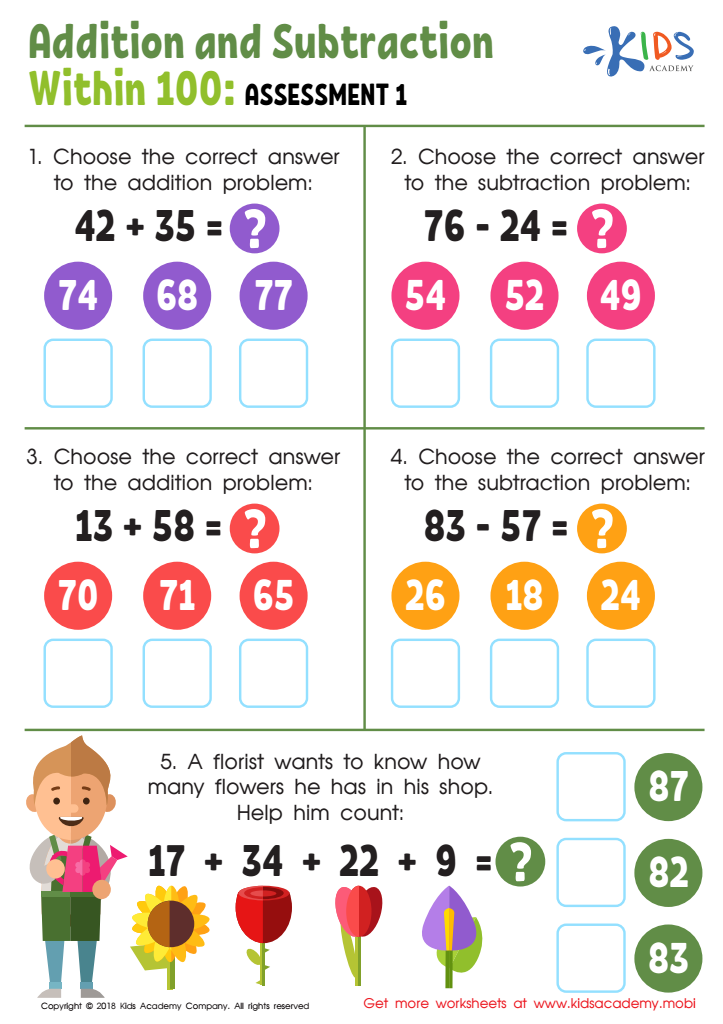
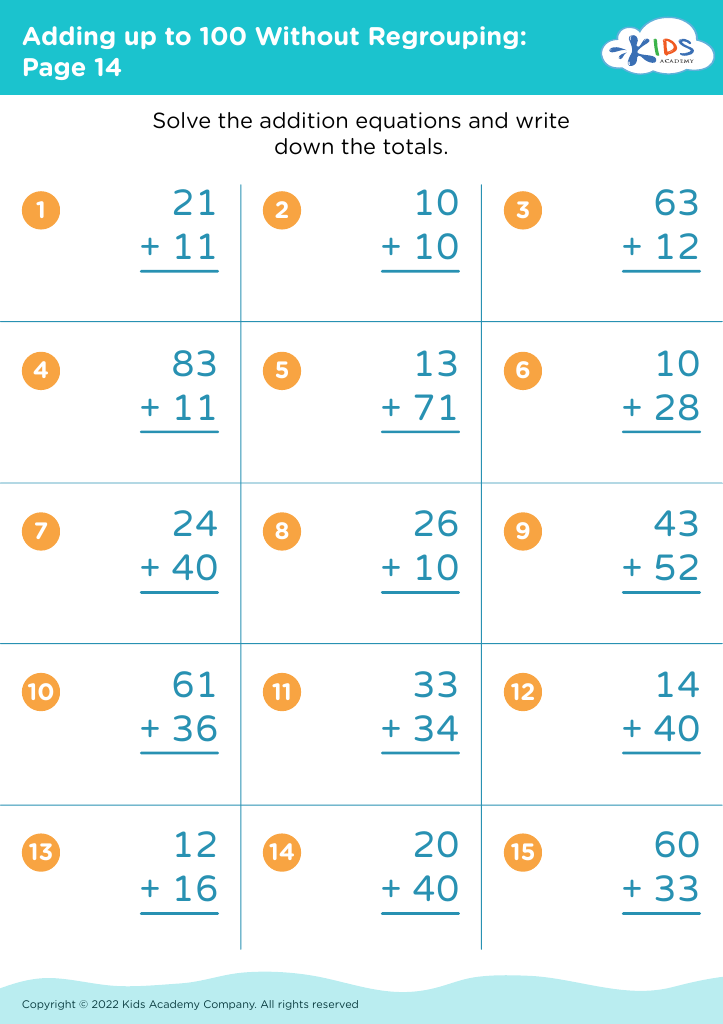
Addition and Subtraction Within 100 Worksheet
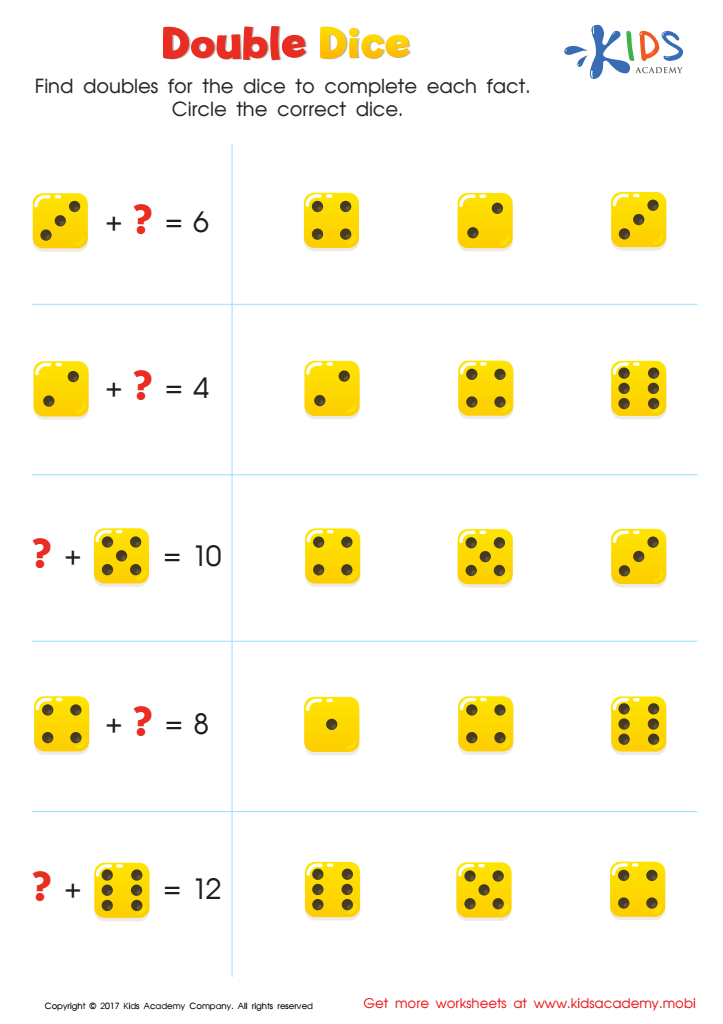
Addition Facts: Double Dice Worksheet
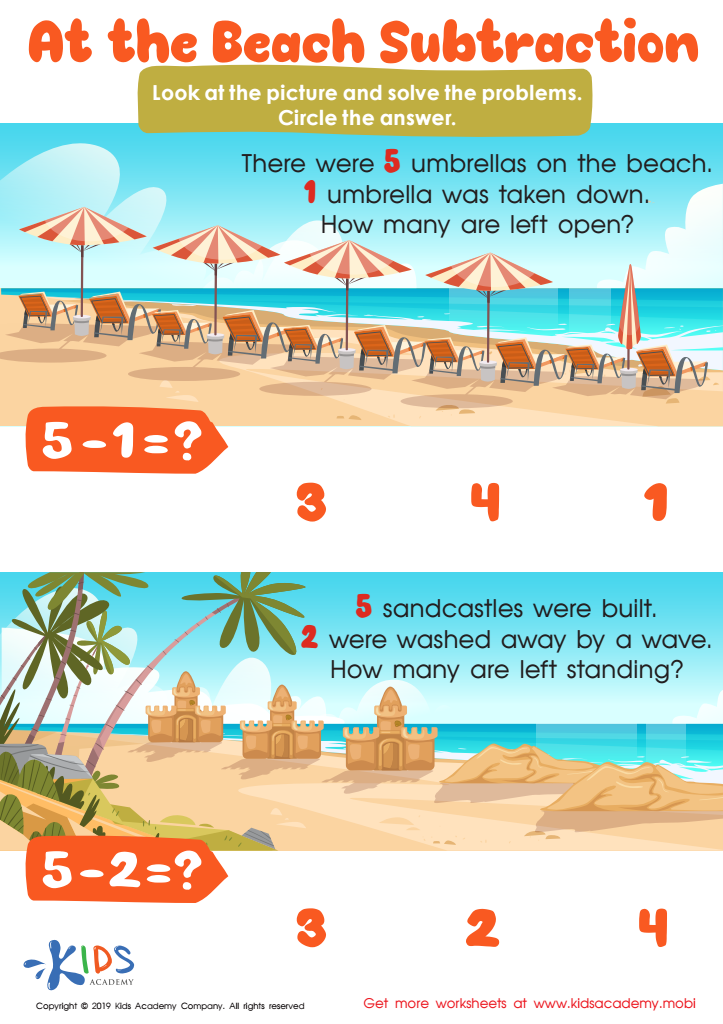
At the Beach Subtraction Worksheet
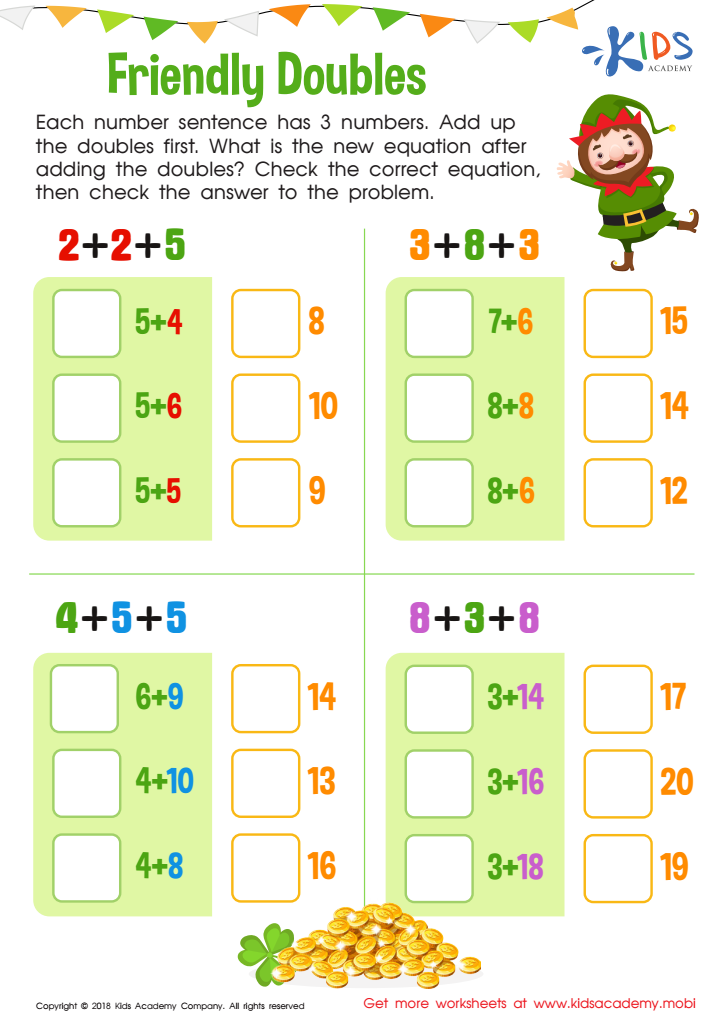
Friendly Doubles Worksheet
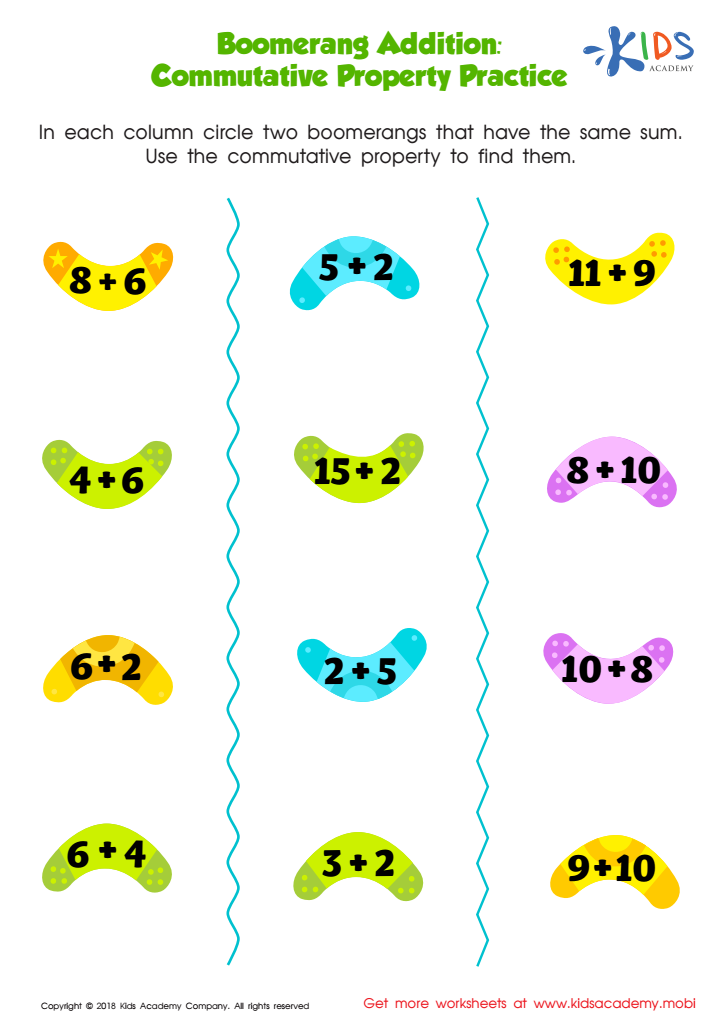
Boomerang Addition Worksheet
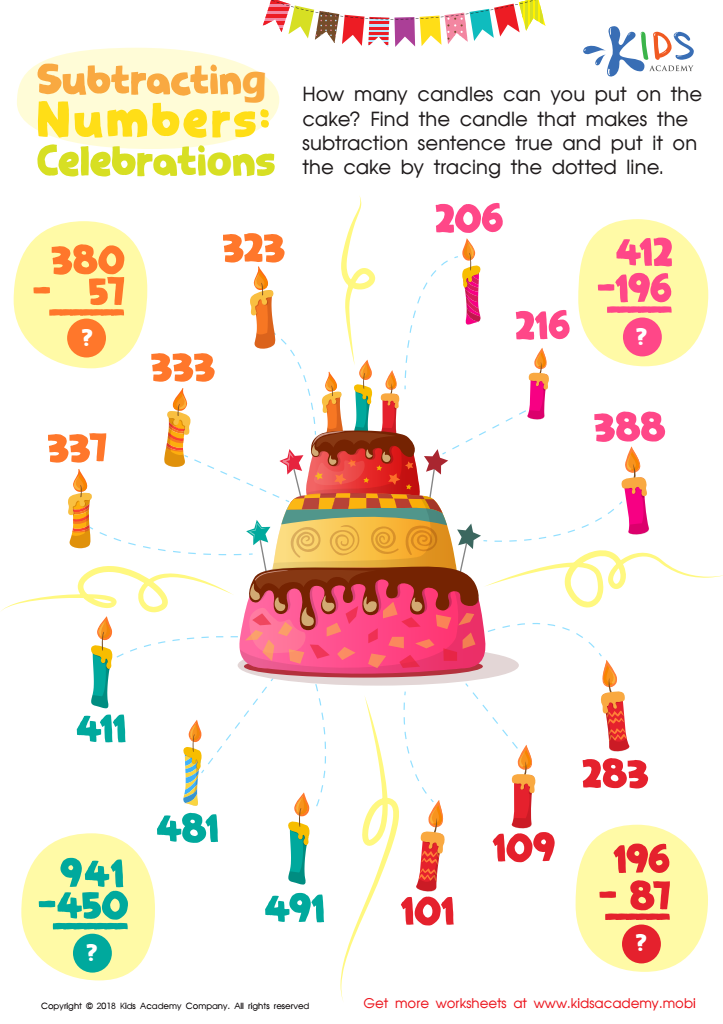
Subtracting Numbers: Celebrations Worksheet
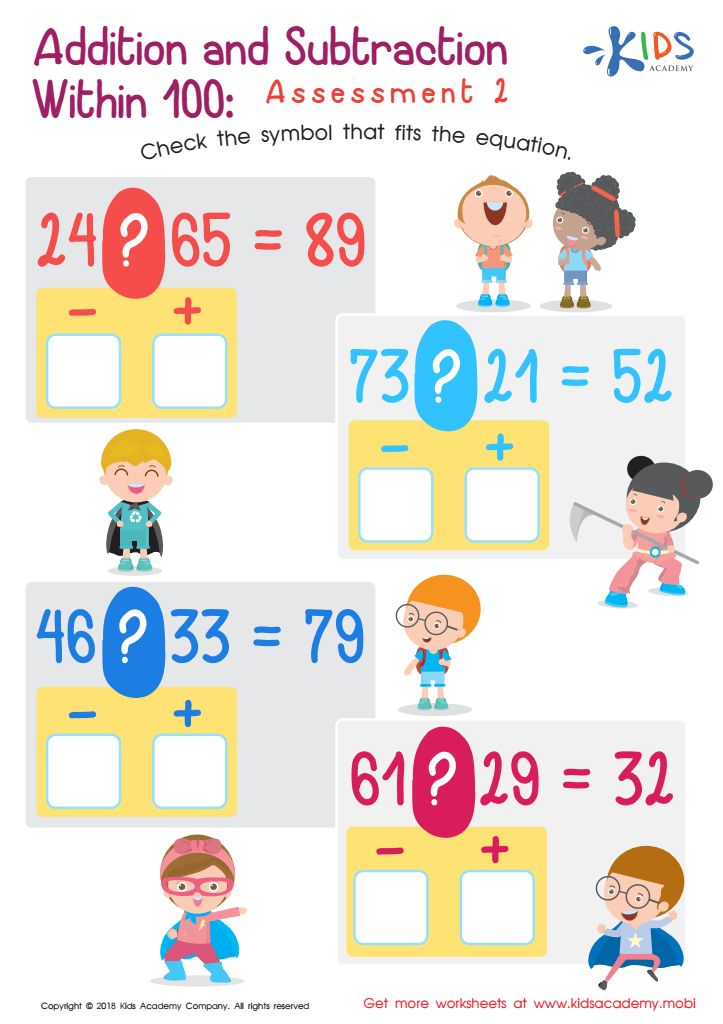
Addition and Subtraction Within 1: Assessment 2 Worksheet
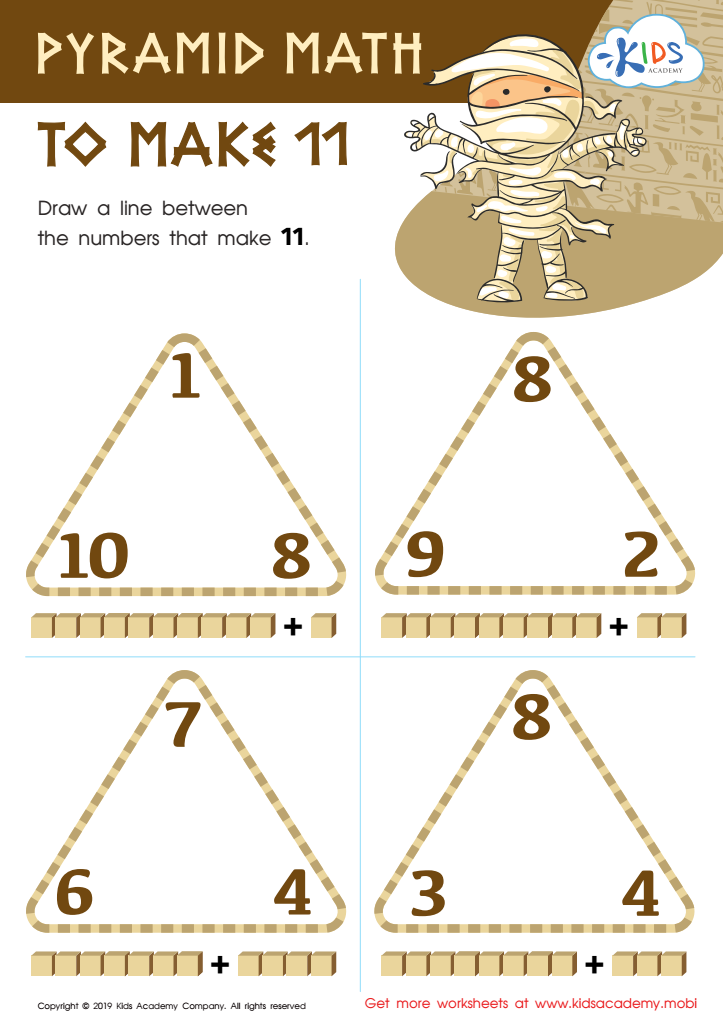
Pyramid Math to Make 11 Worksheet
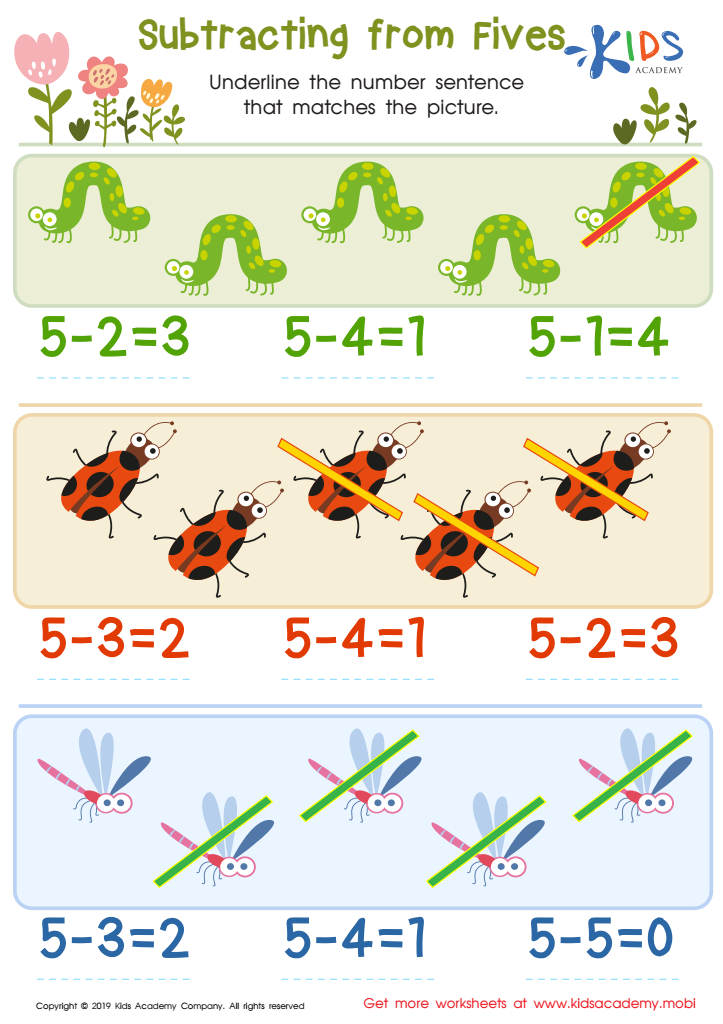
Subtracting From Fives Worksheet








Parents and teachers should prioritize mental math skills, particularly in addition and subtraction, for children aged 5-8 because these foundational skills are critical for long-term academic success. Mental math not only enhances computational fluency but also fosters problem-solving abilities and boosts children's confidence in handling numbers.
At this age, developing mental math encourages children to understand mathematical concepts rather than relying solely on counting or external tools, which builds a stronger number sense. Mastering these skills at an early age lays the groundwork for more complex mathematics in later years, such as multiplication and division.
Moreover, mental math aids in everyday life, empowering children to manage basic financial tasks, like adding items in a shopping cart or understanding change while shopping. In a world increasingly dominated by technology, the ability to calculate mentally provides an essential counterbalance, ensuring that children remain adept in traditional problem-solving.
Additionally, engaging in mental math activities, such as games and interactive exercises, enhances critical thinking and concentration. This skill helps youngsters navigate academic challenges with resilience, ultimately leading to a positive attitude towards learning and fostering a lifelong love for mathematics. Overall, nurturing these skills greatly contributes to a child’s cognitive development and self-esteem.








