Numeracy development Addition & Subtraction Worksheets for Ages 5-8
3 filtered results
-
From - To
Boost your child's numeracy skills with our engaging Addition & Subtraction Worksheets tailored for ages 5-8. These carefully designed worksheets focus on developing a strong foundation in addition and subtraction through fun, interactive activities. Each sheet provides a variety of exercises to enhance problem-solving abilities, critical thinking, and mathematical confidence. Ideal for both classroom and home learning, our worksheets make math enjoyable and accessible for young learners. Download now to support your child’s early math development and help them build essential numeracy skills for future success.
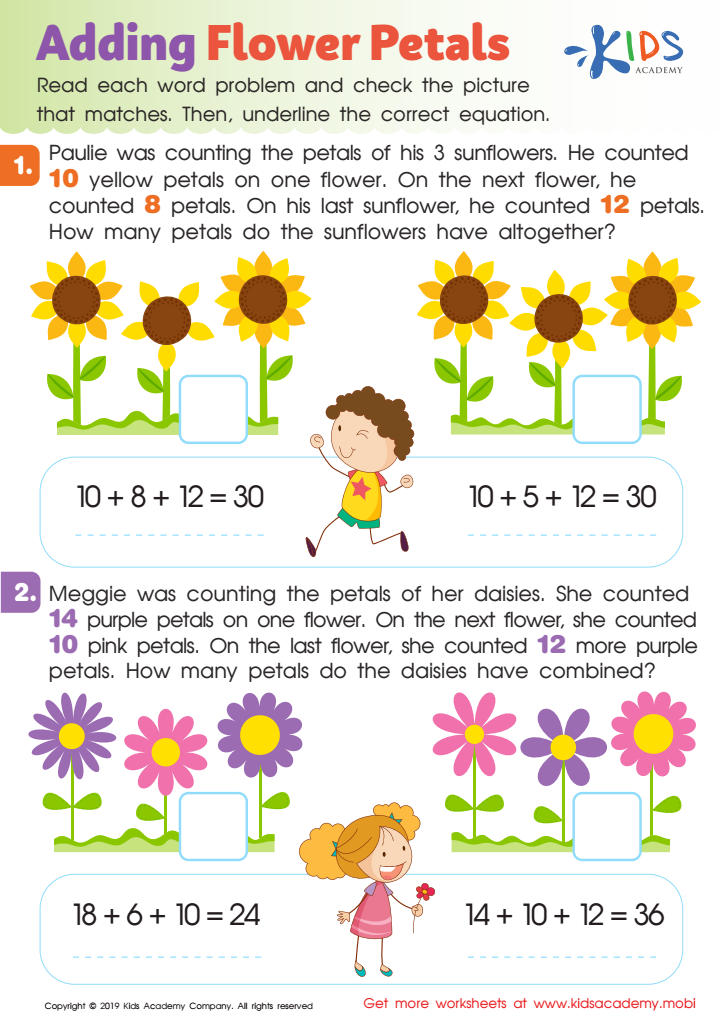
Adding Flower Petals Worksheet
 Assign to My Students
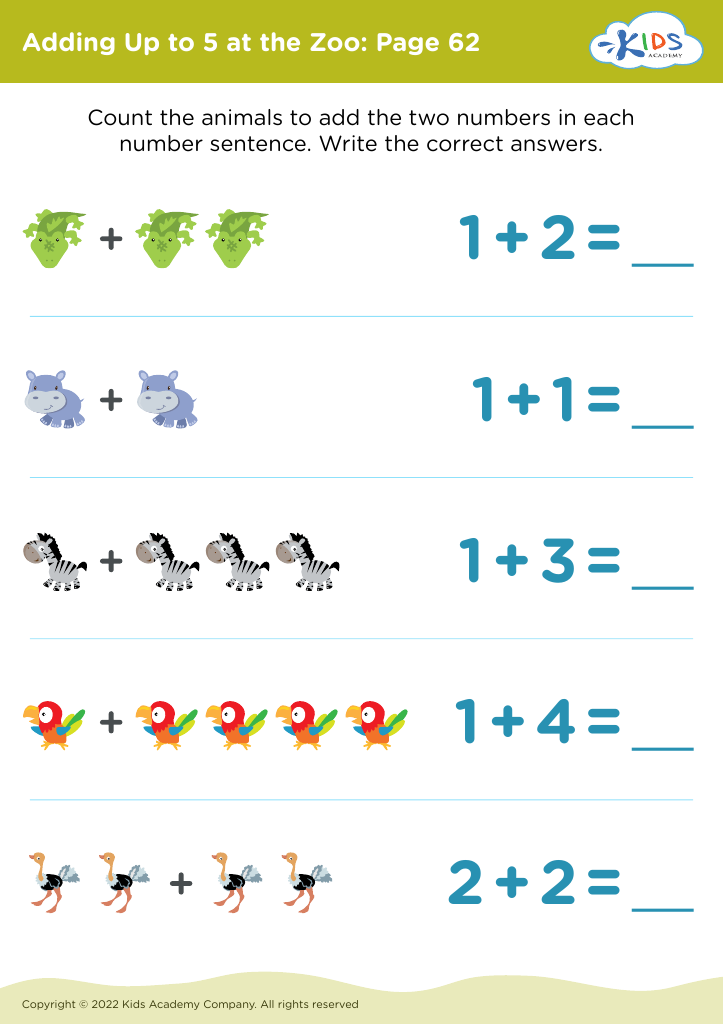
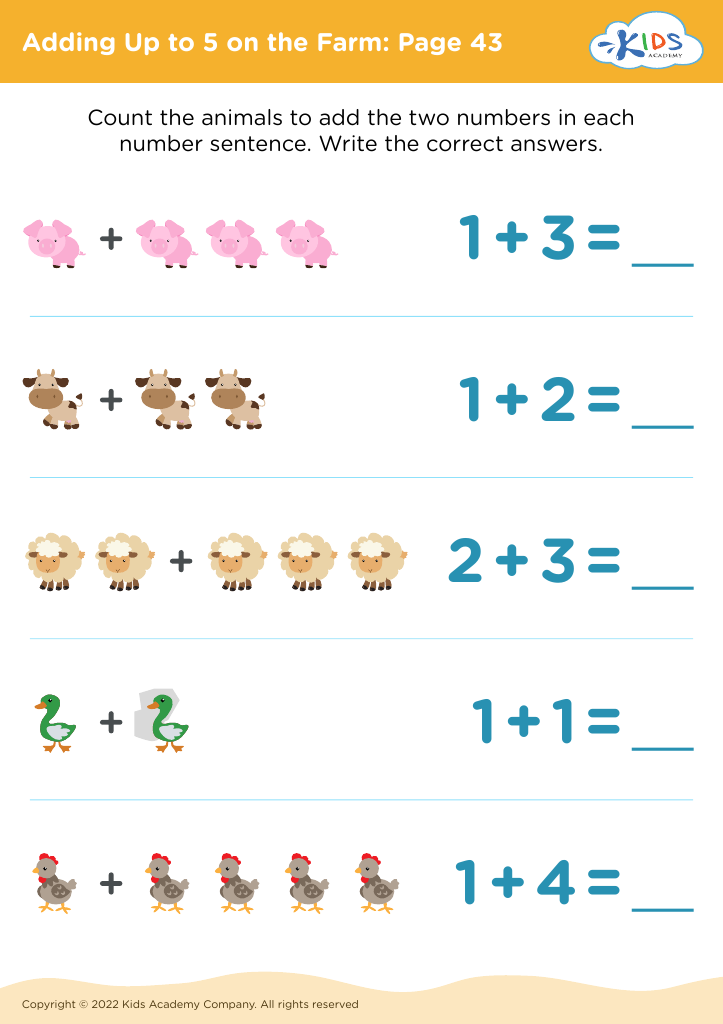








Numeracy development, specifically the foundations of addition and subtraction, is crucial for children aged 5-8. At this critical stage, young learners establish the building blocks for all future mathematical concepts. Proficiency in these basic arithmetic skills is linked to their overall academic success and everyday life skills.
Addition and subtraction form the basis for more advanced math topics such as multiplication, division, fractions, and problem-solving. Mastery of these concepts ensures children develop confidence and a positive attitude toward math, which can impact their performance in other subjects. Moreover, early competence in these areas often correlates with better logical reasoning and analytical thinking skills.
From a practical standpoint, children begin to use addition and subtraction in everyday activities, such as counting money, measuring ingredients for a recipe, or telling time. These real-life applications demonstrate the importance of math not just as an academic subject, but as an essential life skill.
Parents and teachers play a vital role in nurturing numeracy development. By creating a supportive and engaging learning environment, they can encourage children to explore numbers, experiment with problem-solving, and develop a robust understanding of addition and subtraction. Consistent support and the integration of fun, relatable math activities can make a significant difference in a child's educational trajectory and future success.








