Practicing mental arithmetic Addition & Subtraction Worksheets for Ages 5-8
3 filtered results
-
From - To
Enhance your child's mathematical skills with our engaging Addition and Subtraction Worksheets tailored for ages 5-8! Designed to improve mental arithmetic, these worksheets offer a variety of fun and interactive exercises to help young learners practice essential addition and subtraction concepts. Perfect for homeschooling or classroom use, our resources encourage students to develop fast and accurate mental calculation strategies. With colorful visuals and age-appropriate challenges, your child will build confidence in their abilities while enjoying the learning process. Explore our collection today and give your child the tools they need for a strong foundation in math!
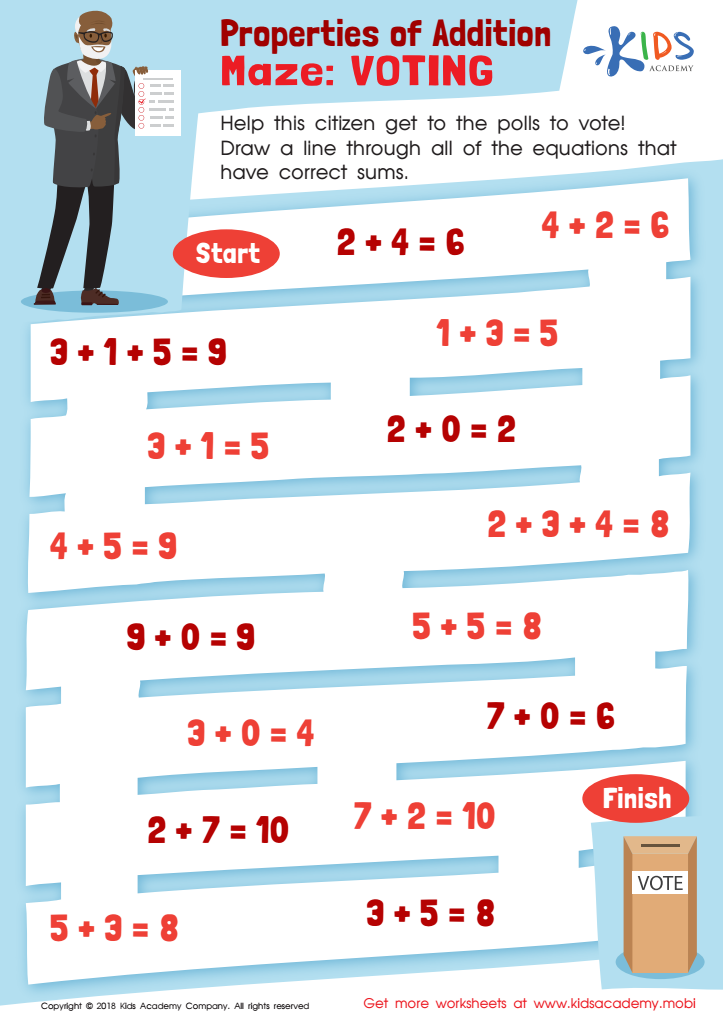
Properties of Addition Maze: Voting Worksheet
 Assign to My Students
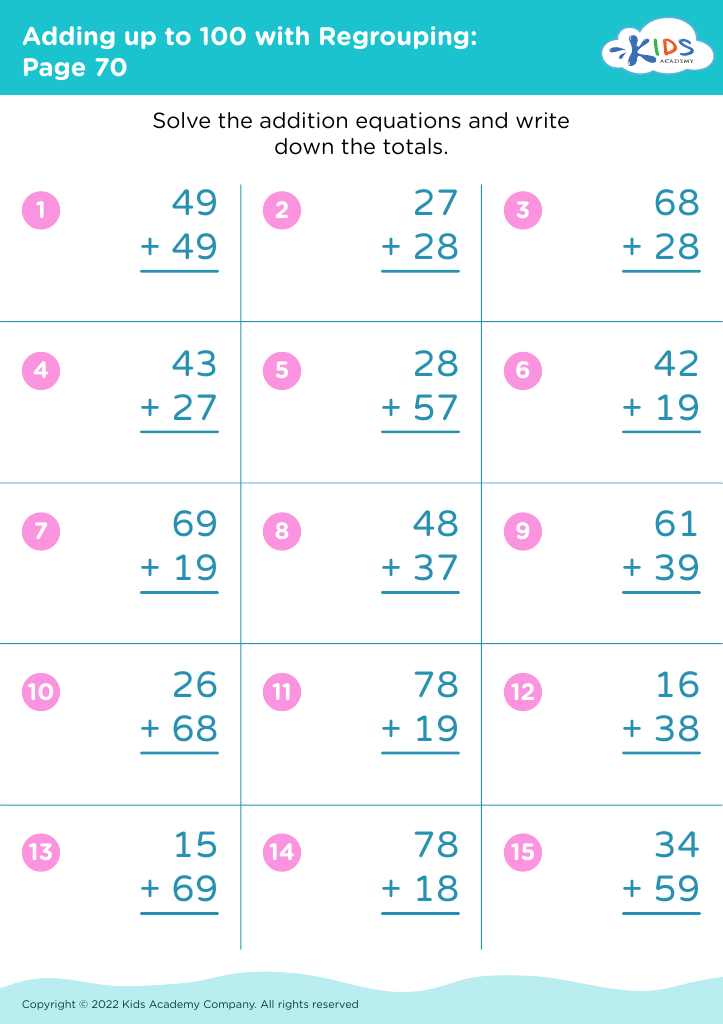
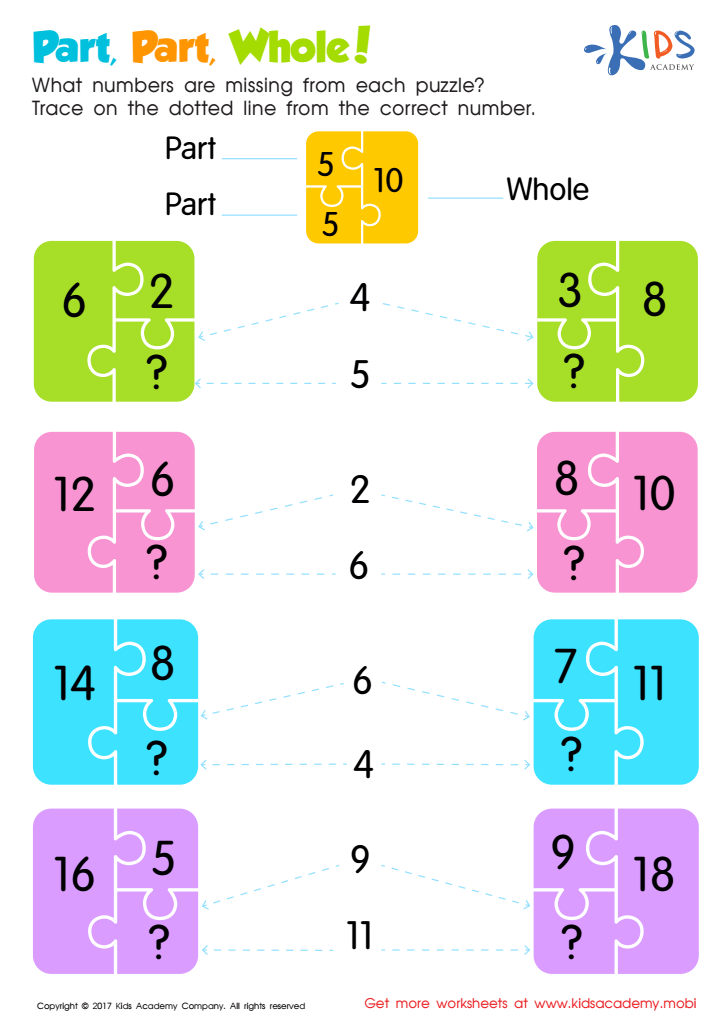
Part, Part, Whole Worksheet








Practicing mental arithmetic, specifically addition and subtraction, is crucial for children aged 5-8 for several reasons. First, it builds a strong foundational understanding of numbers, essential for later math concepts. By mastering these basic operations, children can become more confident and capable in their mathematical abilities, fostering a positive attitude towards math as they progress.
Additionally, mental arithmetic enhances cognitive skills such as memory, attention, and problem-solving. These skills are not just vital for math but also for overall academic success. It encourages children to think critically and improves their ability to process information quickly and accurately.
Moreover, mental arithmetic promotes independence and resilience. When children learn to solve problems in their heads, they can tackle challenges with less reliance on tools or aids, cultivating self-sufficiency. This can translate into other areas of learning as well.
Lastly, practicing mental math can be a fun and engaging activity for parents and teachers to partake in with students, fostering positive interactions and enhancing the learning experience. Overall, prioritizing mental arithmetic in early education sets the stage for lifelong mathematical literacy and confidence.








