Problem-solving ability Addition & Subtraction Worksheets for Ages 5-8
3 filtered results
-
From - To
Enhance your child’s math skills with our Problem-Solving Addition & Subtraction Worksheets designed for ages 5-8! These engaging worksheets help young learners develop critical thinking and problem-solving abilities through fun, interactive exercises. Your child will explore addition and subtraction concepts in various contexts, improving their understanding and fostering a love for math. Each worksheet is crafted to challenge students while boosting their confidence in tackling math problems. Perfect for homeschooling or supplementary practice, our resources support individual learning styles and paves the way for success in early mathematics. Unlock your child's potential with our thoughtfully designed worksheets!
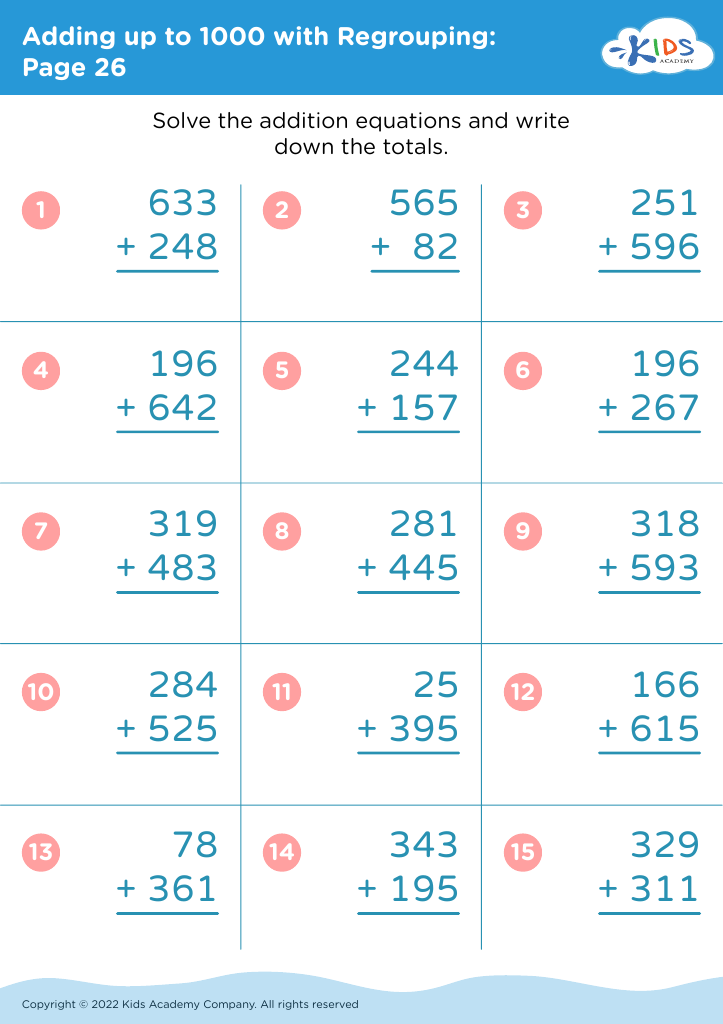
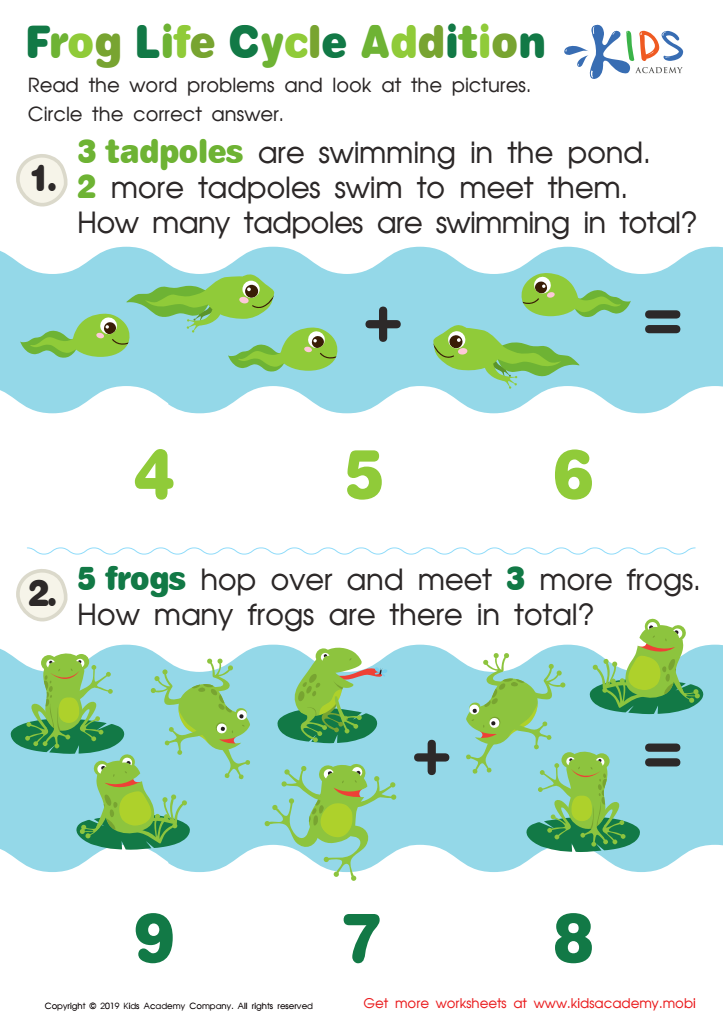
Frog Life Cycle Addition Worksheet
 Assign to My Students
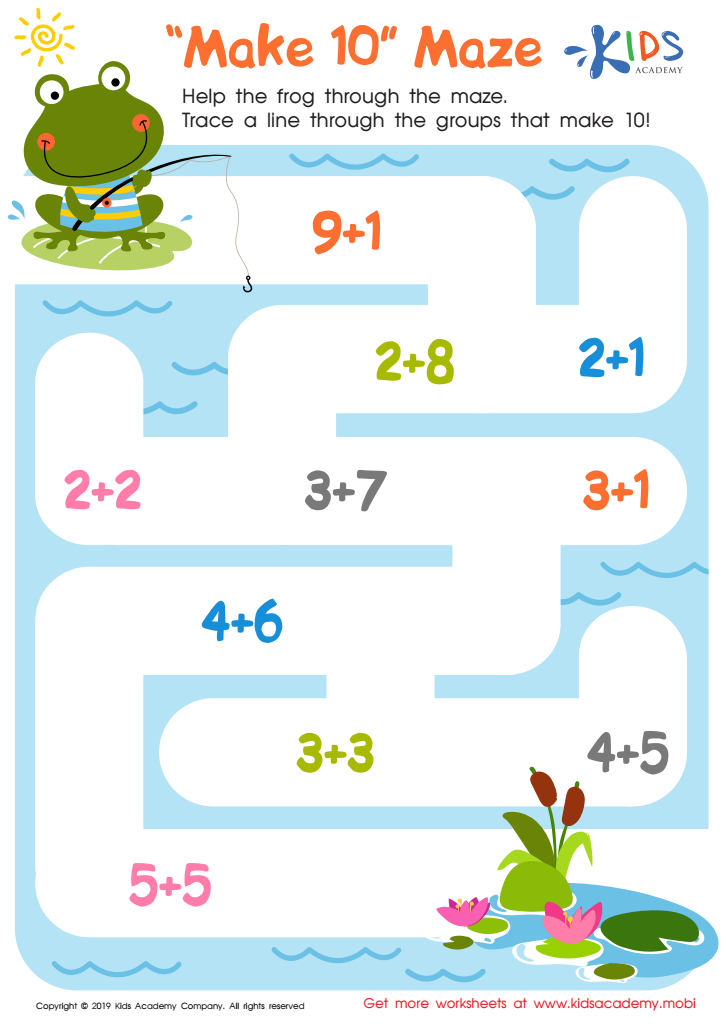
Make 10 Maze Worksheet








Problem-solving ability in addition and subtraction is crucial for children ages 5-8, serving as the building blocks for their mathematical understanding. At this developmental stage, fostering these skills promotes cognitive growth, enhances critical thinking, and encourages independence in learning. Parents and teachers should prioritize this ability as it directly influences a child's confidence in handling math-related tasks.
Incorporating problem-solving into addition and subtraction lays the groundwork for more complex mathematical concepts introduced later. Children learn how to analyze situations, identify operations needed, and apply their knowledge, all of which are essential life skills. Furthermore, engaging children in problem-solving activities reinforces their numerical fluency, helping them understand not just how to perform calculations, but also why those calculations matter.
This focus is also vital for nurturing a positive attitude towards math. The inability to solve problems can lead to frustration, anxiety, and negative perceptions of math, creating barriers to learning. By emphasizing problem-solving during early education, parents and teachers foster resilience and a love for learning, setting children up for future academic success. In essence, prioritizing problem-solving skills in young learners equips them with tools essential for their educational journey and everyday life.








