Understanding number bonds Addition & Subtraction Worksheets for Ages 5-8
3 filtered results
-
From - To
Unlock your child's math potential with our "Understanding Number Bonds: Addition & Subtraction Worksheets" designed for ages 5-8! These engaging worksheets help kids grasp the concept of number bonds, making addition and subtraction easier and more fun. Perfect for at-home practice or classroom use, our worksheets feature colorful illustrations and playful activities to keep young learners motivated. Reinforce fundamental math skills while boosting confidence and proficiency. Explore a variety of exercises that will turn your child's learning experience into an exciting adventure. Visit Kids Academy to access these effective and educational worksheets today!
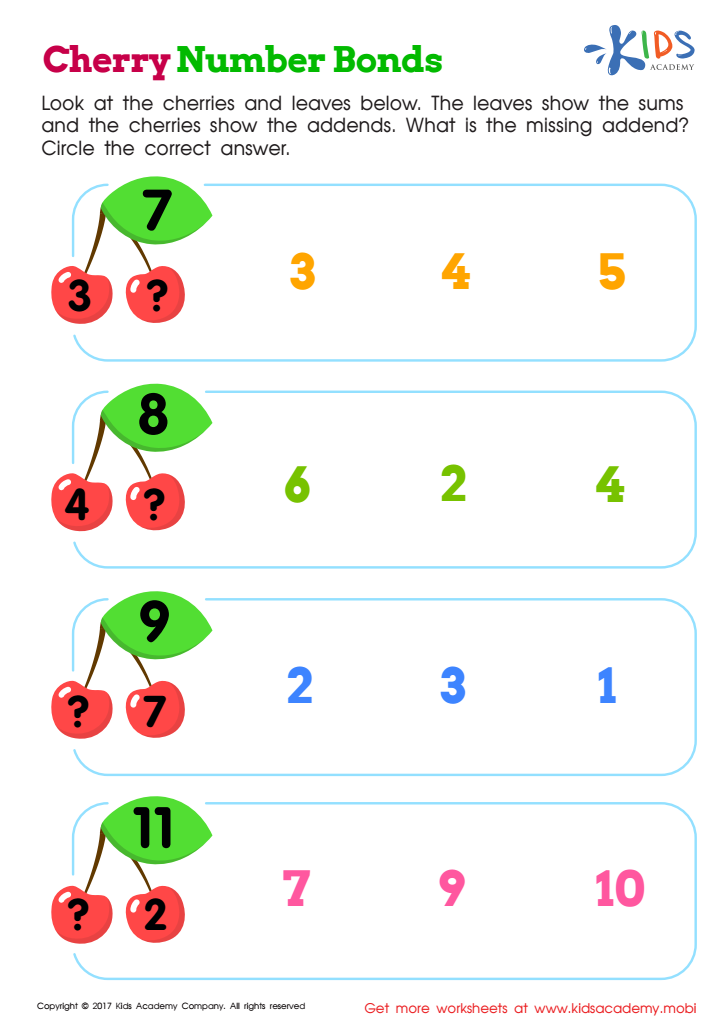
Cherry Number Bonds Worksheet
 Assign to My Students
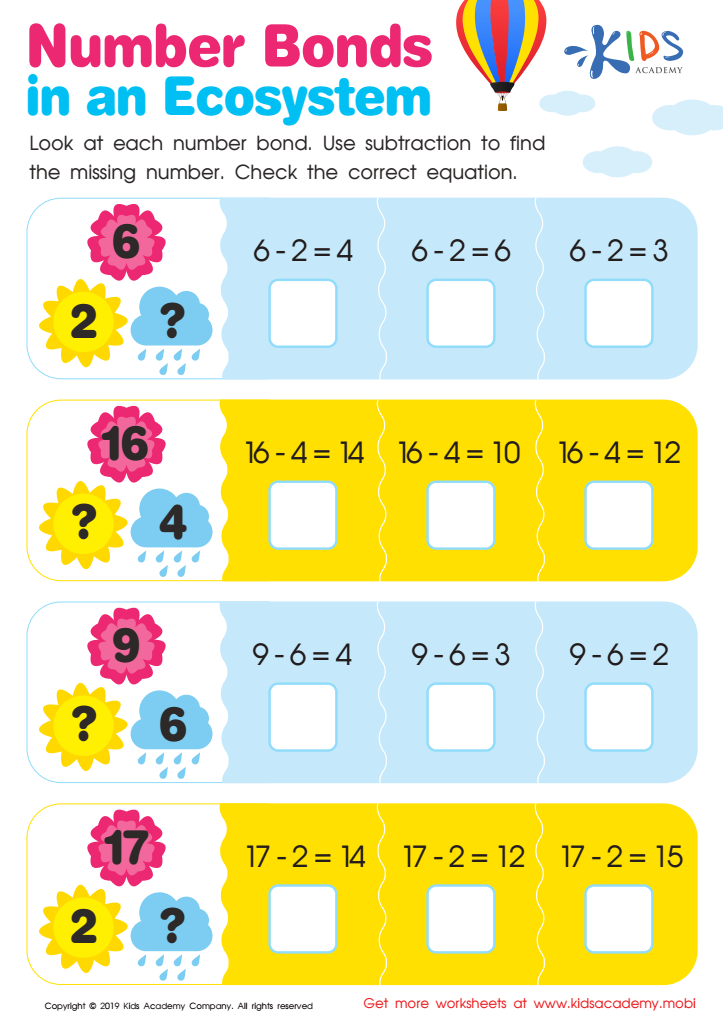
Number Bonds in an Ecosystem Worksheet
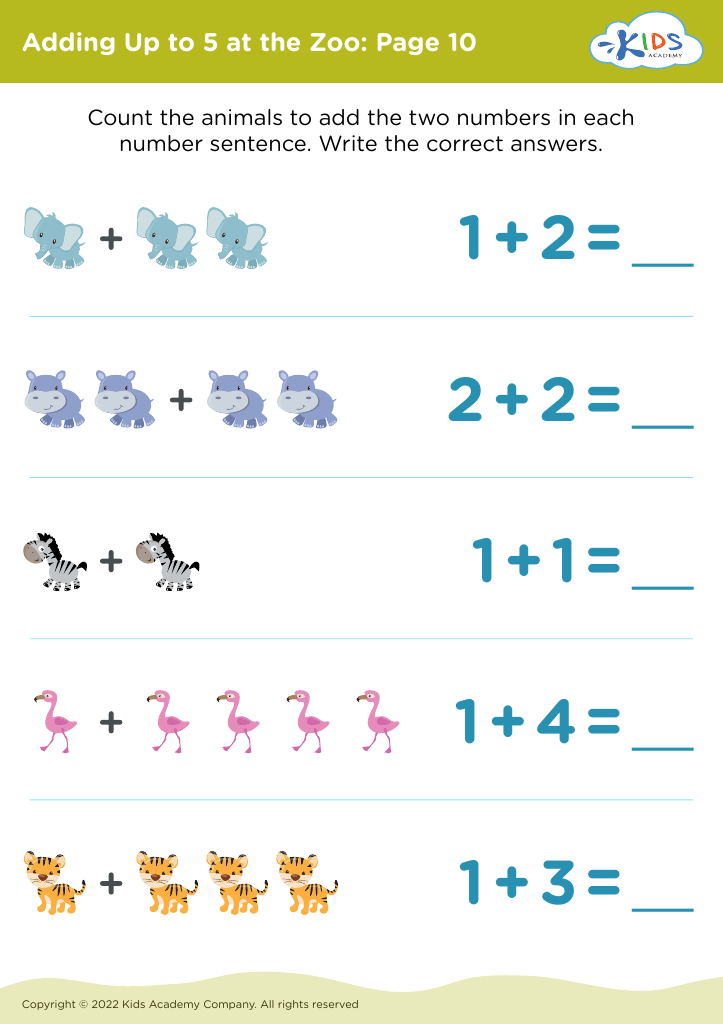








Understanding number bonds for addition and subtraction is crucial for young children ages 5-8 because it lays a strong mathematical foundation. Number bonds help children grasp the concept of how numbers combine and separate to form other numbers, fostering early computational skills crucial for future math learning.
Firstly, number bonds promote mental arithmetic skills. By recognizing relationships between numbers, children can quickly solve basic addition and subtraction problems without relying solely on counting. This efficiency builds confidence and fluency, essential for progressing to more complex math.
Secondly, understanding number bonds aids in the development of problem-solving strategies. Kids learn to break apart numbers in different ways, which can enhance their ability to tackle various mathematical challenges. This flexibility in thinking is invaluable as it encourages logical reasoning and critical thinking.
Moreover, mastering number bonds strengthens the ability to partition numbers. This skill becomes particularly useful in areas such as regrouping in addition and understanding place value, which are pivotal concepts in primary math curricula.
Lastly, early familiarity with number bonds can make math more engaging and less intimidating. When children see numbers as friendly, interconnected entities instead of formidable figures, they are more likely to develop a positive attitude towards learning math, fostering a more inviting environment for educational growth.
For these reasons, parents and teachers should prioritize teaching number bonds as a fundamental step in early mathematical education.








