Understanding sequencing Addition & Subtraction Worksheets for Ages 5-8
7 filtered results
-
From - To
Explore our "Understanding Sequencing Addition & Subtraction Worksheets" designed for children aged 5-8! These engaging worksheets enhance critical thinking skills by guiding young learners through the step-by-step process of solving addition and subtraction problems. By mastering sequencing, children can develop a stronger grasp of mathematical concepts and improve problem-solving abilities. Our carefully crafted activities focus on visual aids and interactive exercises that make learning fun and accessible. Perfect for parents and teachers aiming to strengthen foundational math skills, these worksheets provide a fresh approach to early education. Start your child's journey to math mastery today!
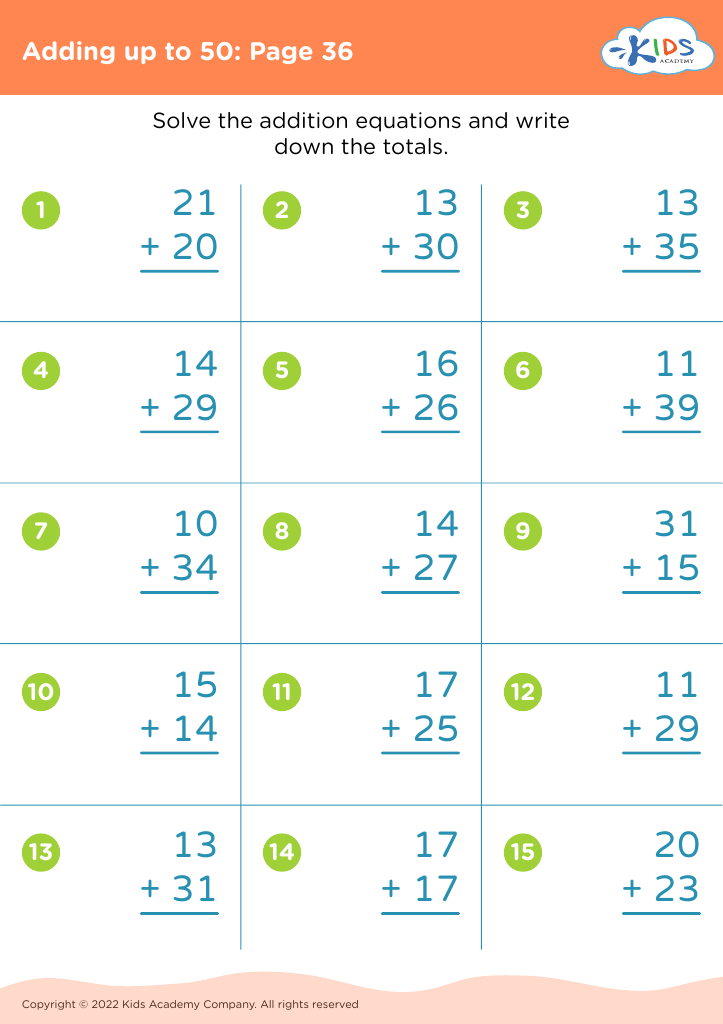
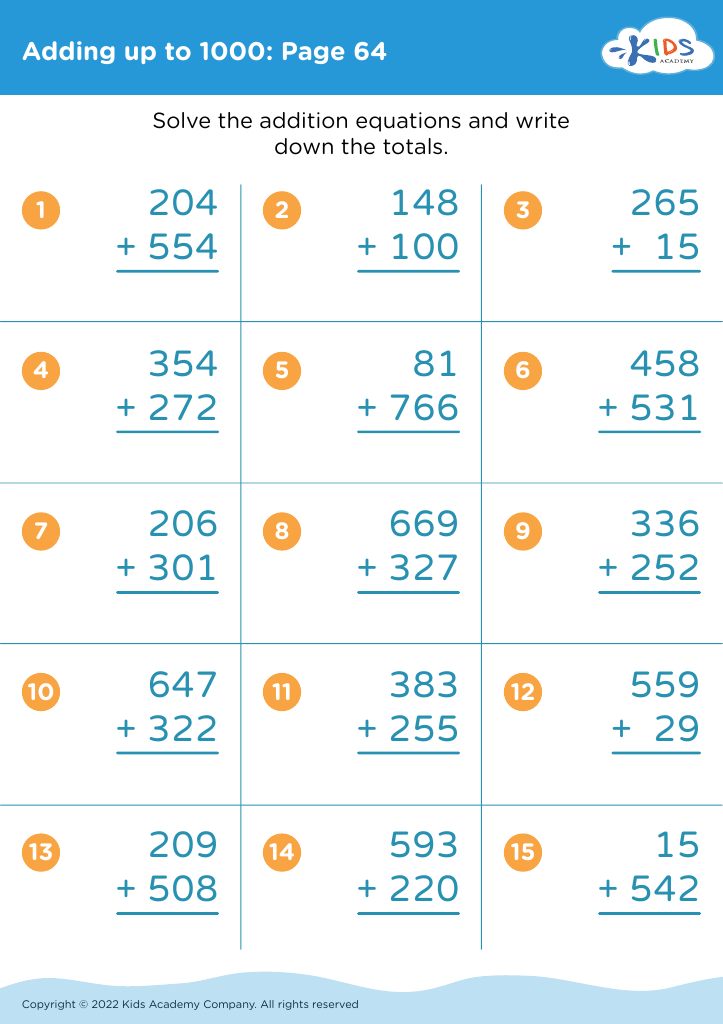
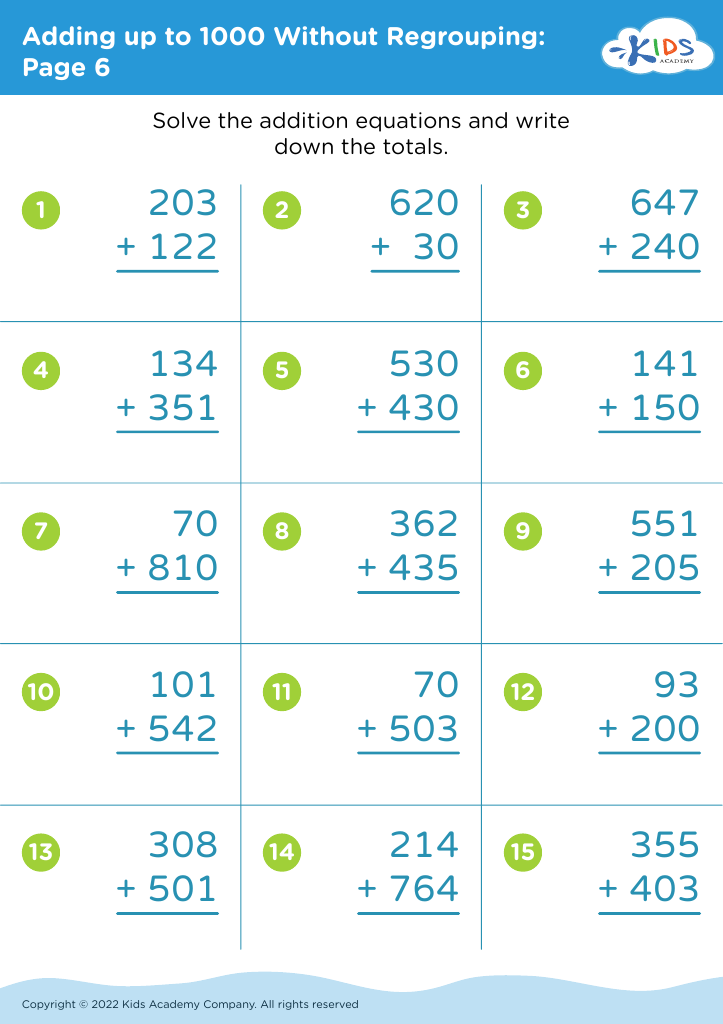
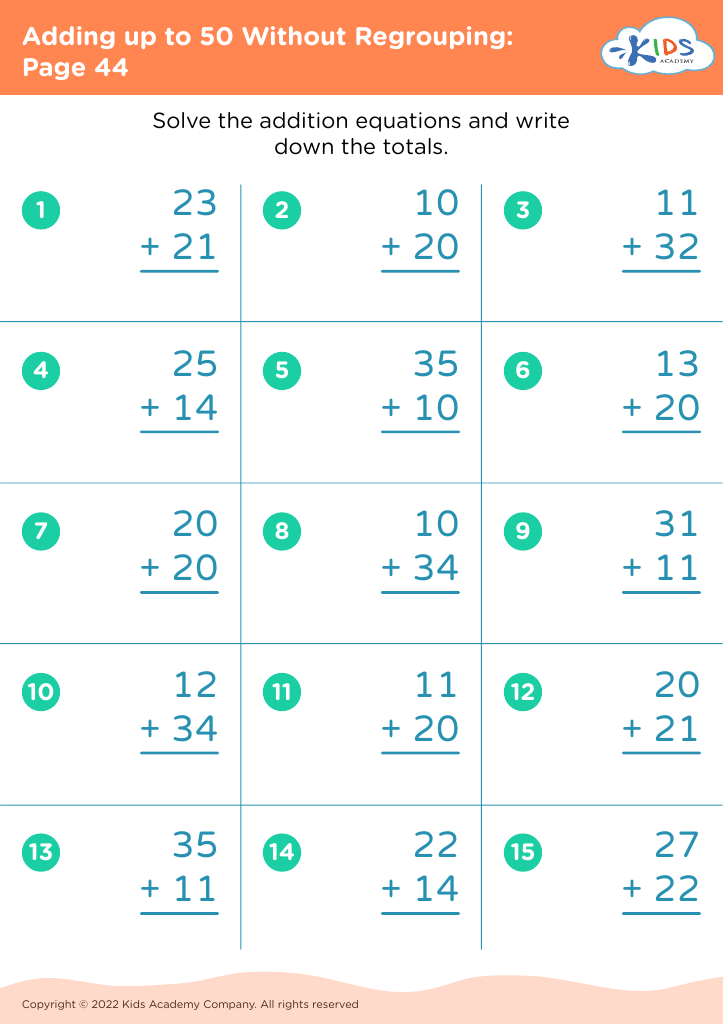
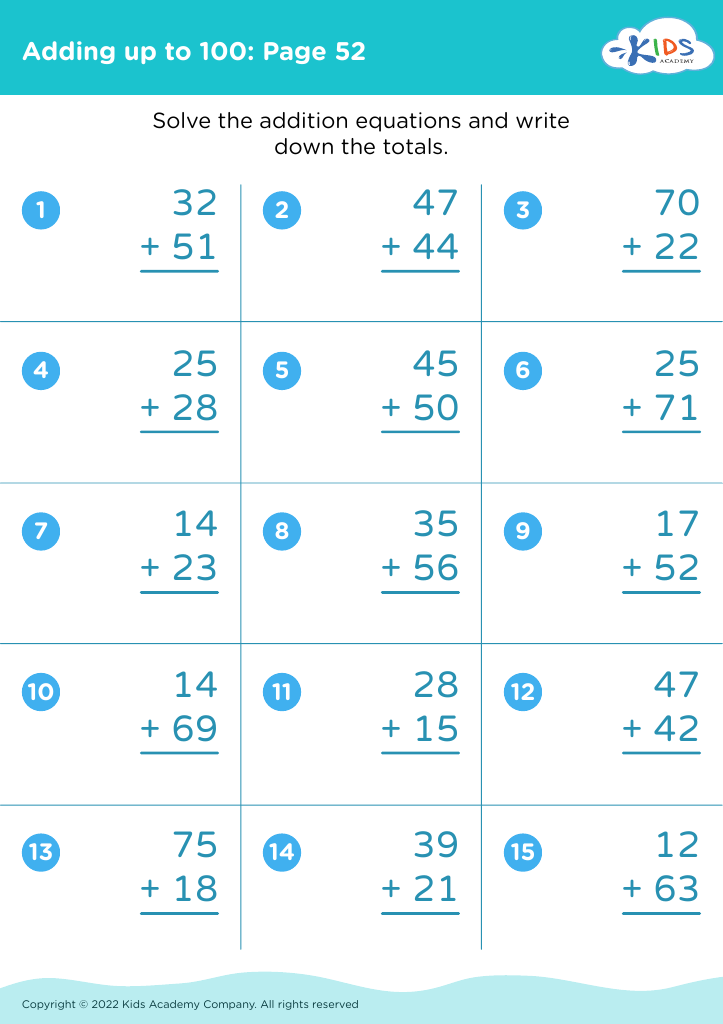
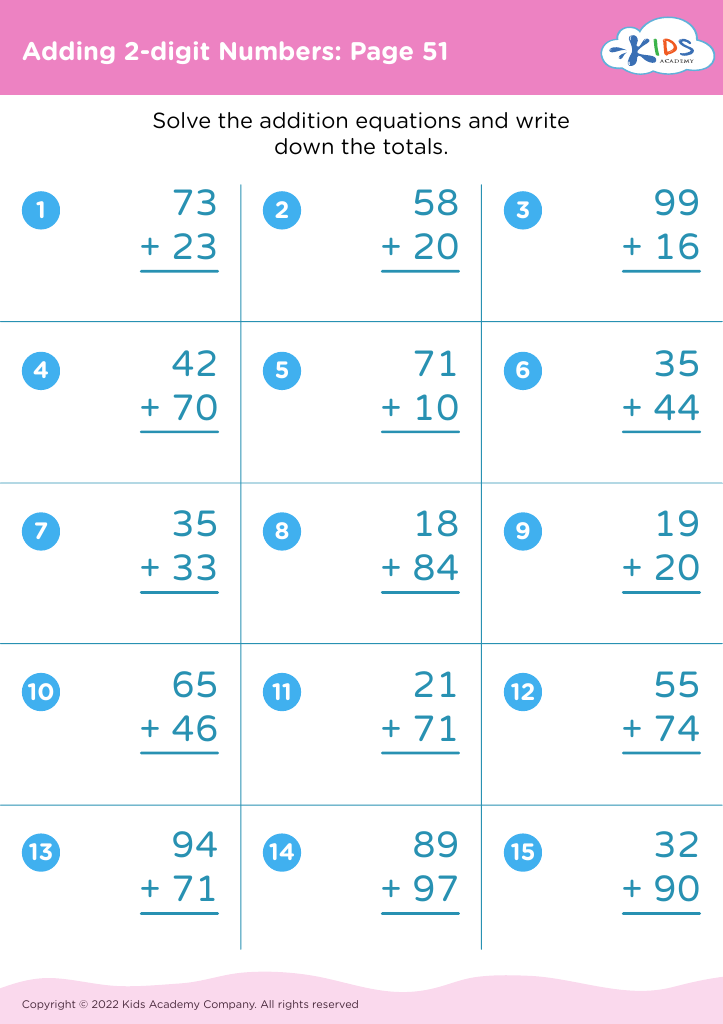
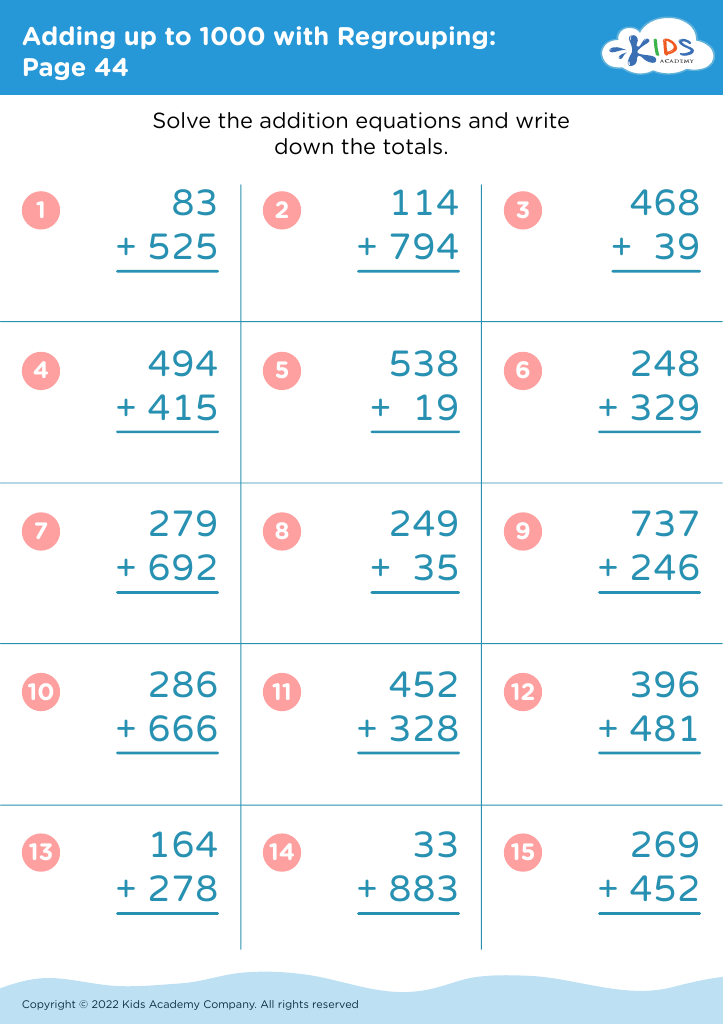








Understanding sequencing in addition and subtraction is crucial for children aged 5-8 as it lays the foundation for their mathematical skills. When parents and teachers focus on this concept, they help children grasp how numbers relate to each other in a logical order. Sequencing enables young learners to recognize patterns, which enhances their problem-solving abilities and critical thinking skills.
Furthermore, when children understand how to sequence numbers, they can effectively approach addition and subtraction with confidence. For example, they learn that in adding 2 + 3, the sequence leads them to 5, and in subtracting 5 - 3, starting from 5 and recounting backwards can guide them to the answer. This logical progression not only supports their early math development but also fosters a better understanding of the number system.
By prioritizing sequencing in math education, parents and educators arm children with essential tools for lifelong learning. These skills enhance their ability to tackle more complex math concepts in the future. Additionally, developing a solid grounding in sequencing promotes academic success and boosts children's confidence, making math a more enjoyable subject for all students. By nurturing these foundational skills early on, parents and teachers contribute significantly to a child’s educational journey.








