Filters

16 filtered results

Clear all filters
Favorites
With answer key
Interactive

16 filtered results

Difficulty Level

Grade


Discover our engaging and educational Basic Addition Worksheets designed for children ages 5-8. These printable worksheets provide a fun and interactive way for young learners to master essential addition skills. With vibrant illustrations and a variety of activities, our worksheets cater to different learning styles, making math practice enjoyable. These resources support foundational math skills, building confidence and proficiency in basic addition. Ideal for home or classroom use, they are perfect for parents and educators aiming to enhance their child's math abilities. Unlock a world of numerical knowledge with our expertly crafted Basic Addition Worksheets. Promoting learning through play!
Check out this FREE Trial Lesson on Addition for age 5-8!

L

Favorites
With answer key
Interactive
  • 5-8
  • Basic Addition
  • Addition
Adding 2-digit Numbers: Page 23

Adding 2-digit Numbers: Page 23

Adding 2-digit Numbers: Page 23
Worksheet
Adding up to 1000: Page 8

Adding up to 1000: Page 8

Adding up to 1000: Page 8
Worksheet
Adding up to 100: Page 4

Adding up to 100: Page 4

Adding up to 100: Page 4
Worksheet
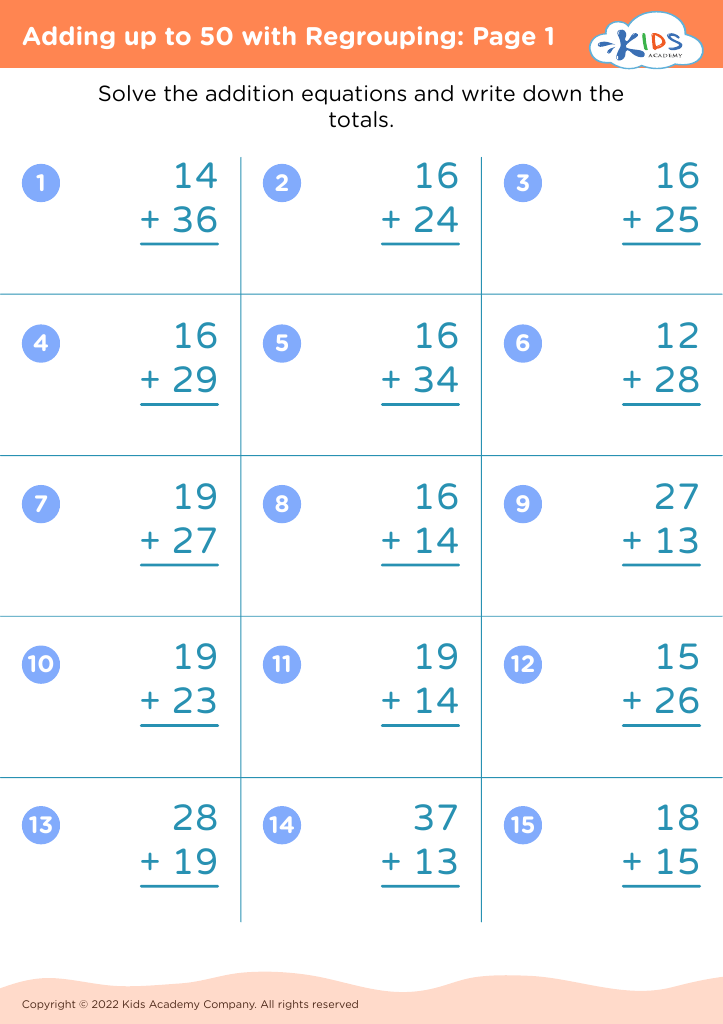
Adding up to 50 with Regrouping: Page 1
Worksheet
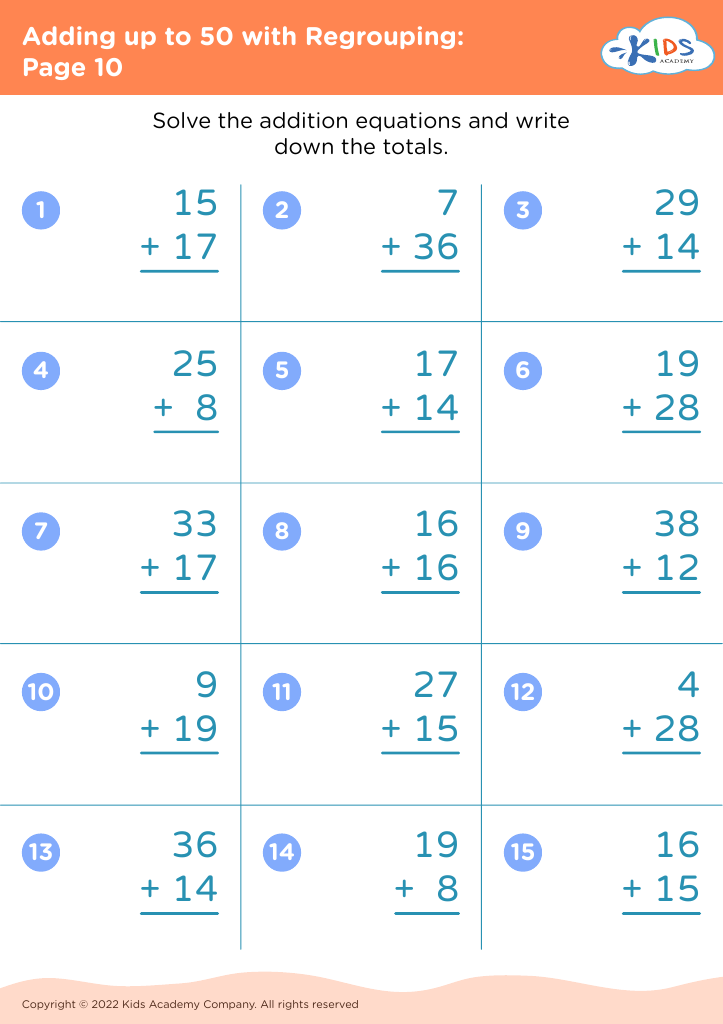
Adding up to 50 with Regrouping: Page 10
Worksheet
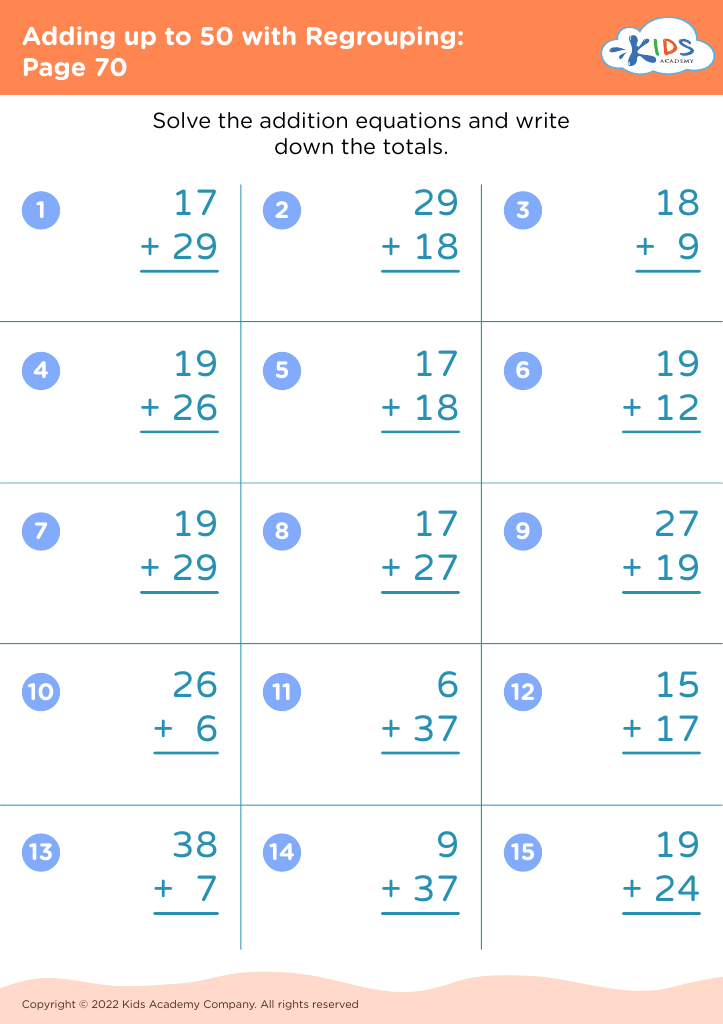
Adding up to 50 with Regrouping: Page 70
Worksheet
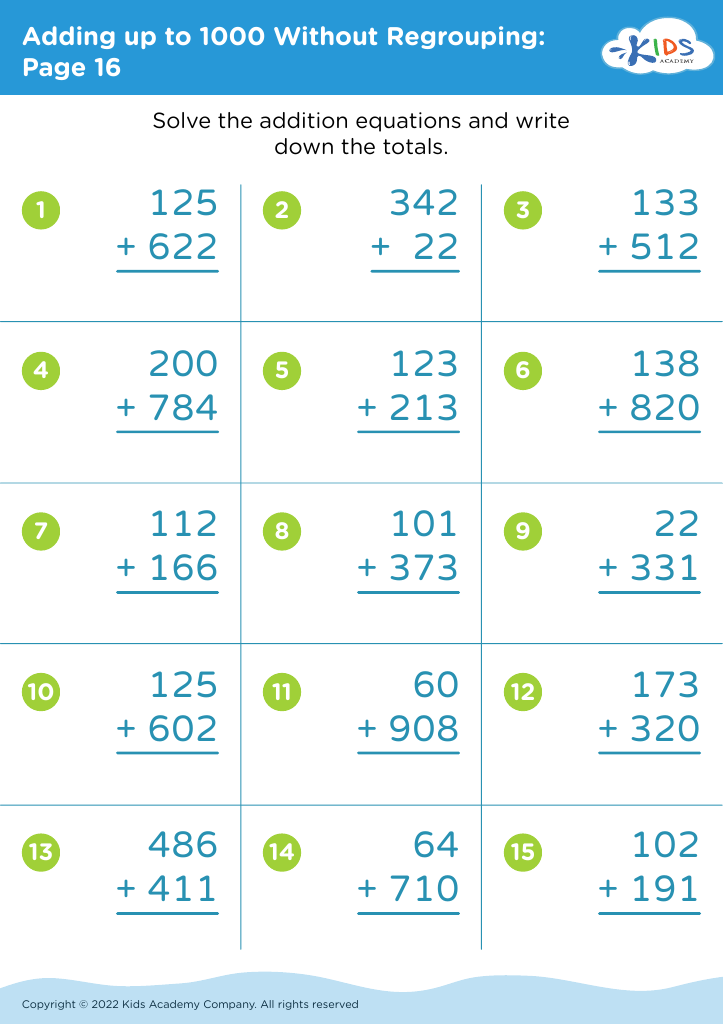
Adding up to 1000 Without Regrouping: Page 16
Worksheet
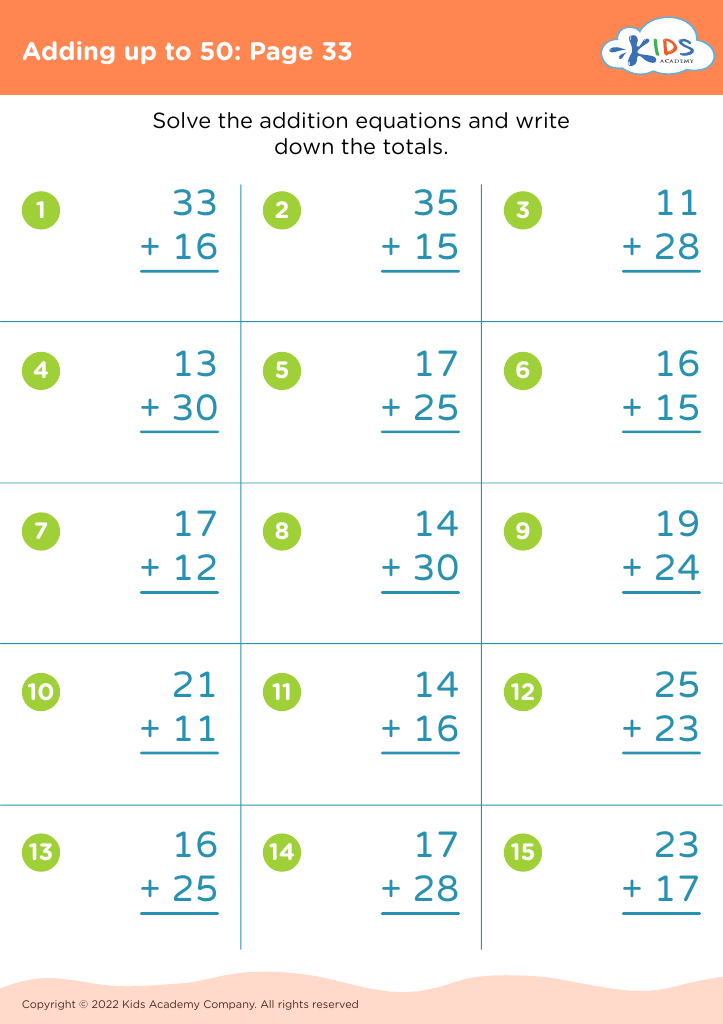
Adding up to 50: Page 33

Adding up to 50: Page 33

Adding up to 50: Page 33
Worksheet
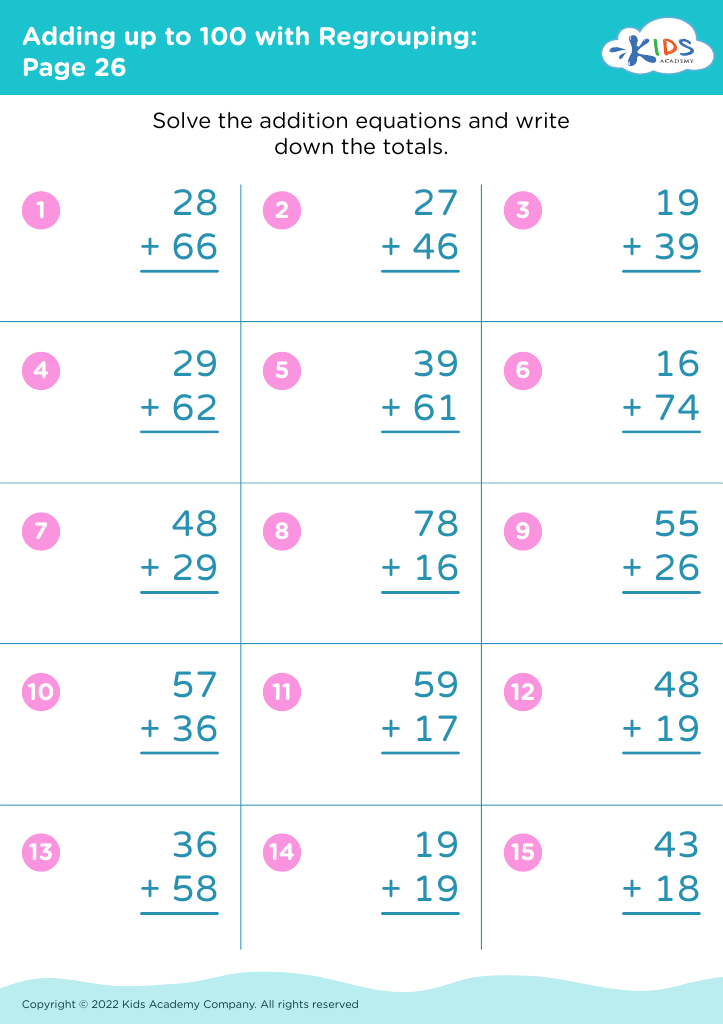
Adding up to 100 with Regrouping: Page 26
Worksheet
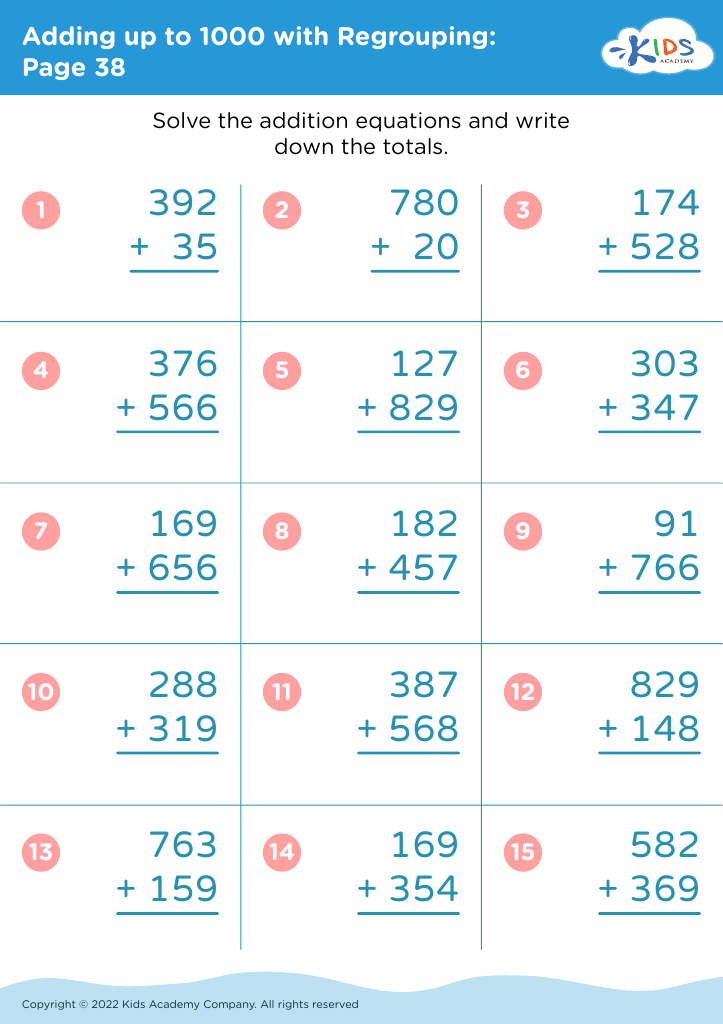
Adding up to 1000 with Regrouping: Page 38
Worksheet
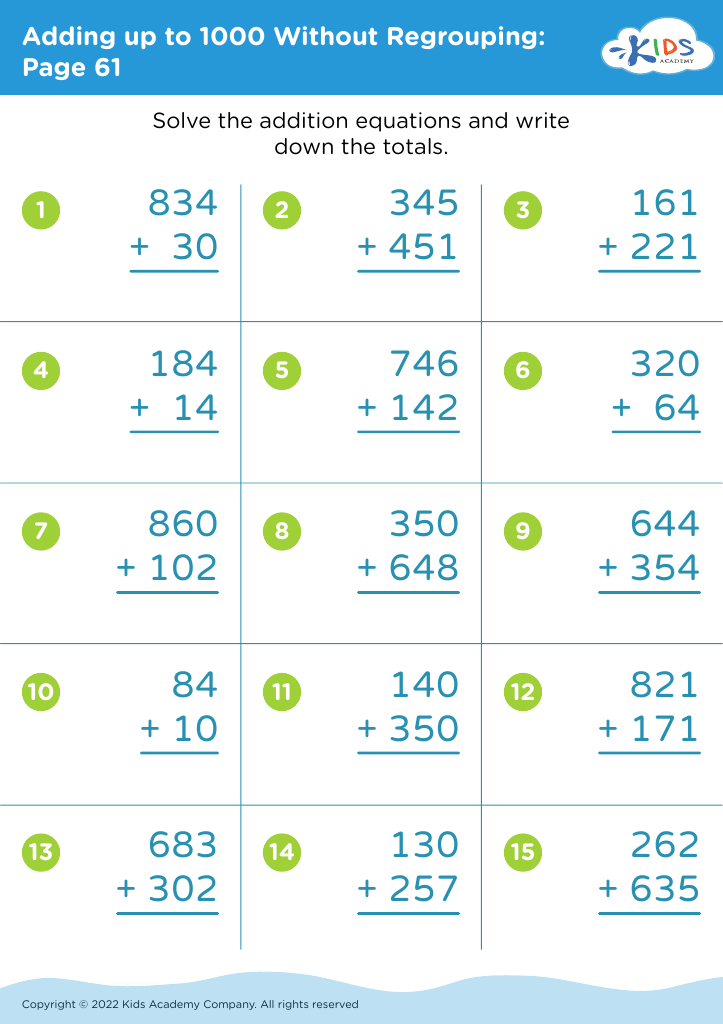
Adding up to 1000 Without Regrouping: Page 61
Worksheet
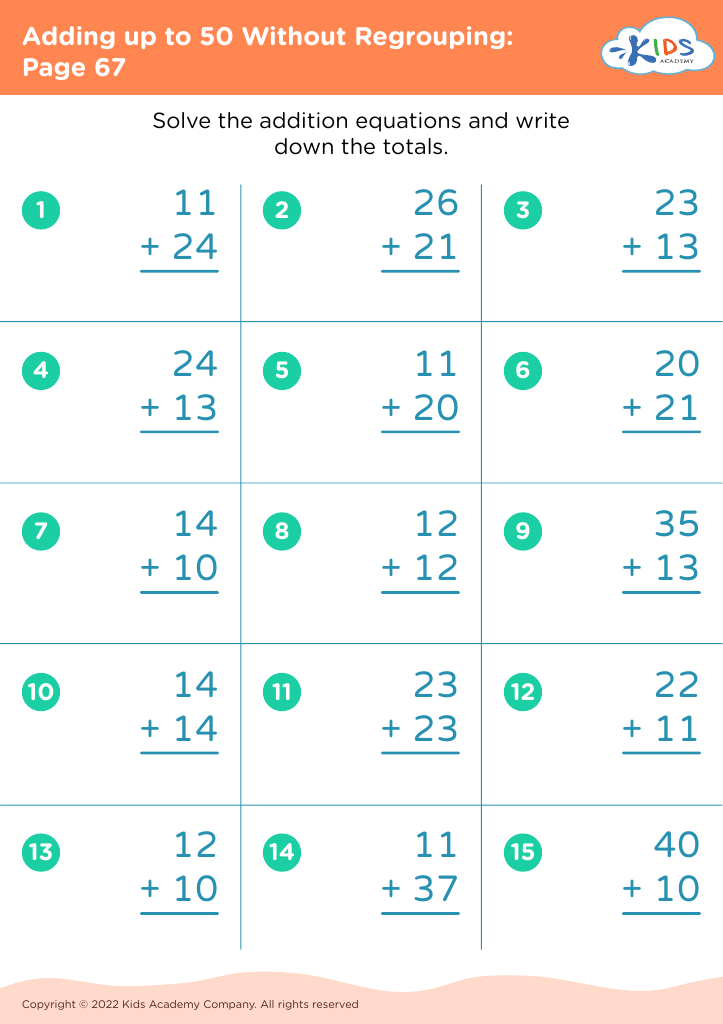
Adding up to 50 Without Regrouping: Page 67
Worksheet
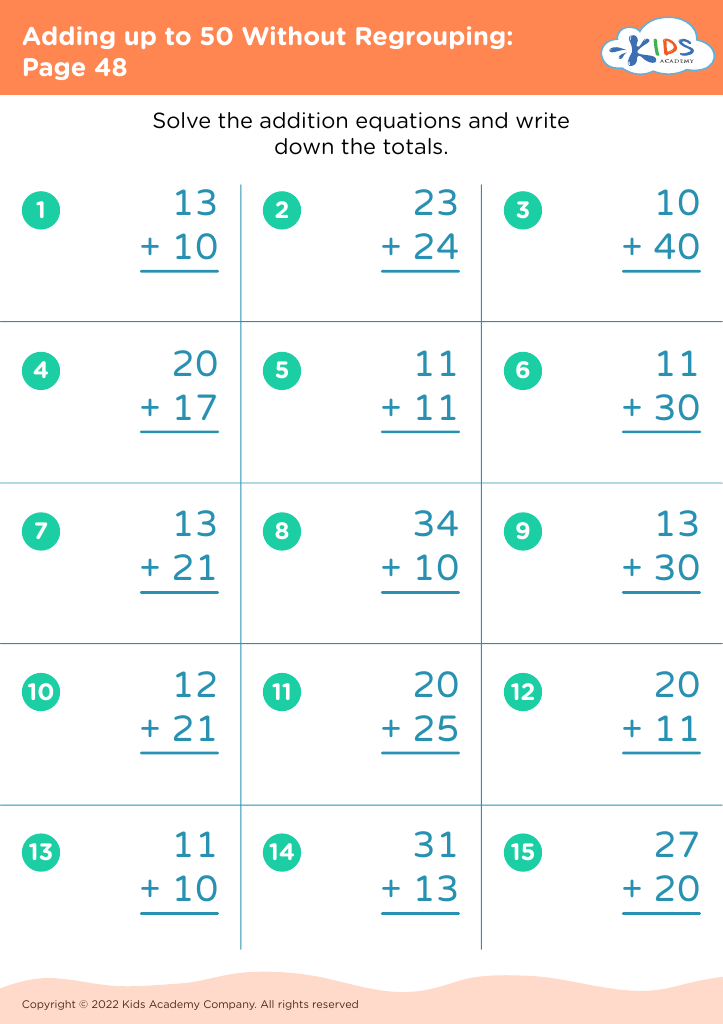
Adding up to 50 Without Regrouping: Page 48
Worksheet
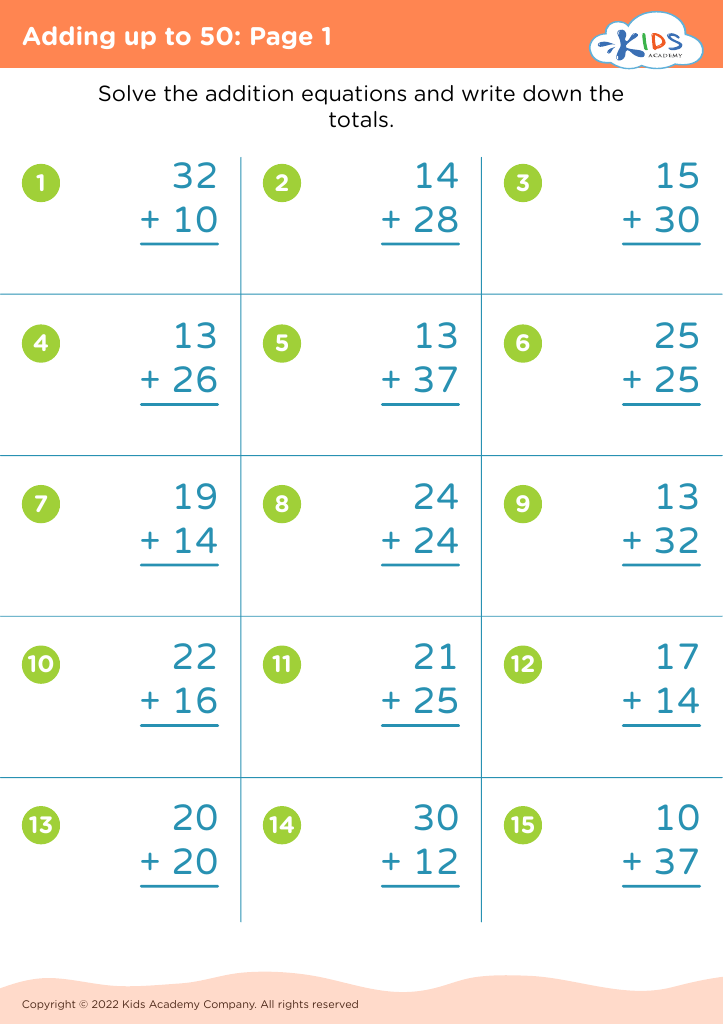
Adding up to 50: Page 1

Adding up to 50: Page 1

Adding up to 50: Page 1
Worksheet
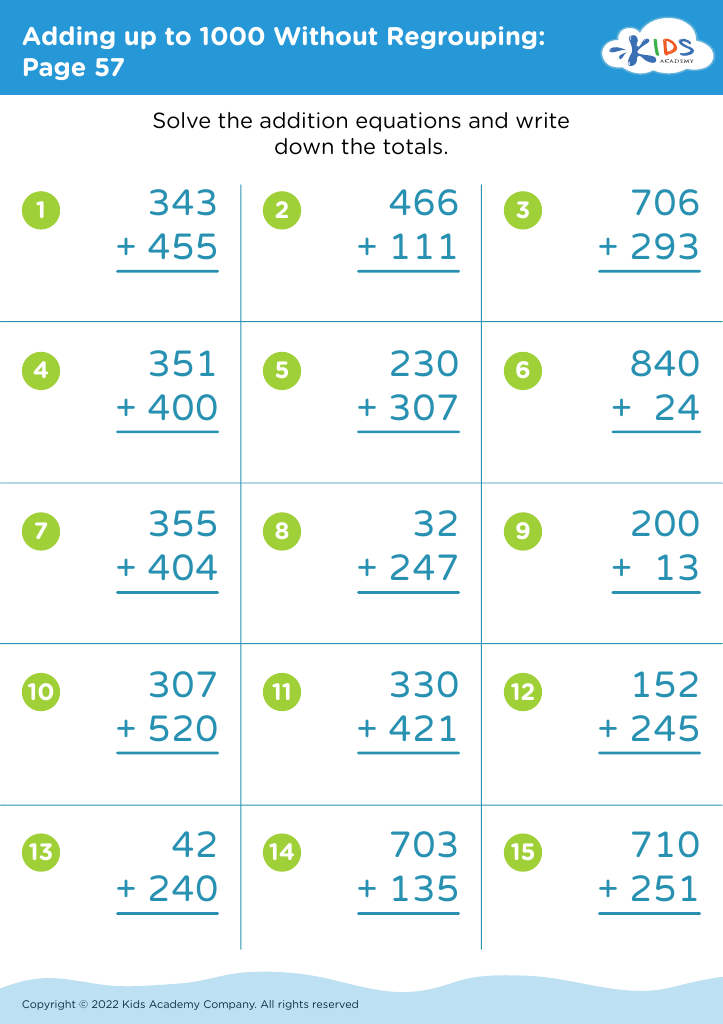
Adding up to 1000 Without Regrouping: Page 57
Worksheet
Adding up to 1000 Without Regrouping: Page 70
Worksheet


Parents and teachers should care deeply about basic addition for ages 5-8 because it lays the foundation for all future mathematical learning and everyday decision-making. At this age, children's brains are highly receptive to learning new concepts, and mastering basic addition is pivotal because it serves as the building block for more complex mathematical skills like subtraction, multiplication, and division. Understanding addition enhances problem-solving abilities, logical thinking, and critical reasoning. These skills are not only essential in academics but are also invaluable in daily life situations such as counting money, measuring ingredients for a recipe, or determining the time left before an event.

Furthermore, successfully learning basic addition builds confidence and a positive attitude towards math, which can have long-lasting effects on a child’s overall academic journey. Struggles with fundamental skills can lead to math anxiety, undermining academic performance and self-esteem. Early intervention by parents and teachers through engaging activities, real-life applications, and hands-on learning encourages a child's curiosity and eagerness to learn more.

Investing in a child's early numerical skills nurtures their cognitive development and equips them with essential life skills. Hence, ensuring that children grasp basic addition concepts is crucial for both their academic success and their practical day-to-day functionality.