Filters

18 filtered results

Clear all filters
Favorites
With answer key
Interactive

18 filtered results

Difficulty Level

Grade


Explore our collection of Basic Addition Worksheets designed specifically for children aged 5-8! These engaging resources help young learners master essential addition skills through fun, interactive exercises. Ideal for boosting confidence and building a strong math foundation, our worksheets include a variety of activities such as visual aids, number lines, and themed problems. Whether at home or in the classroom, these printable worksheets cater to different learning paces, making it easier for children to grasp basic math concepts. Encourage a love for numbers with our colorful, easy-to-use worksheets that turn learning into an enjoyable adventure. Start practicing today!
Check out this FREE Trial Lesson on Addition for age 5-8!

H

Favorites
With answer key
Interactive
  • 5-8
  • Basic addition practice
  • Addition
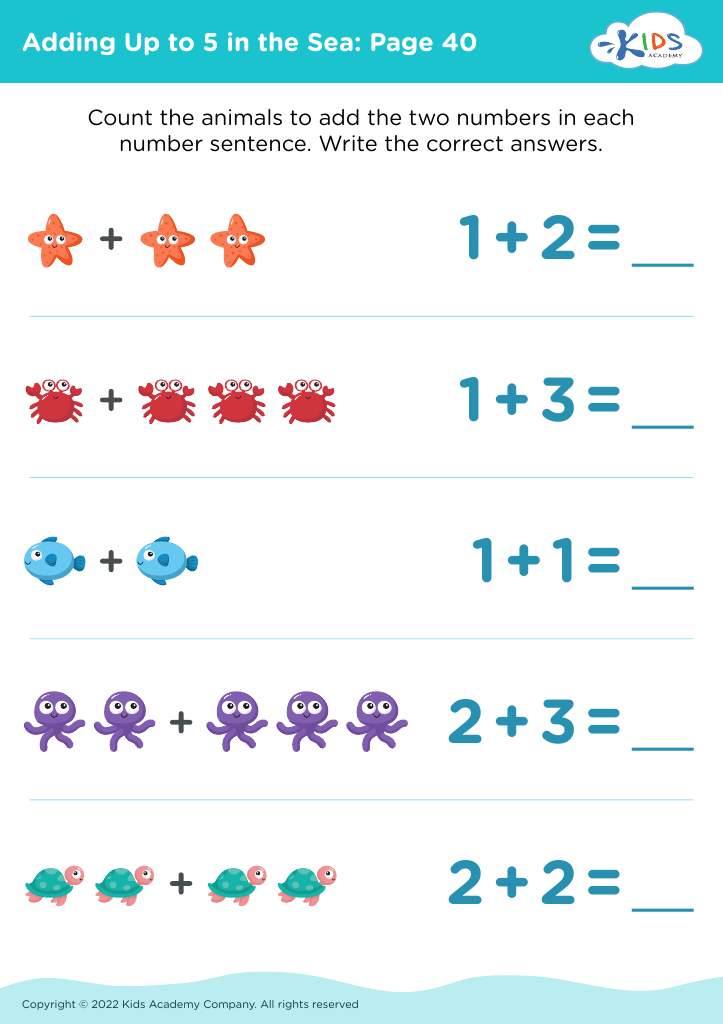
Adding Up to 5 in the Sea: Page 40
Worksheet
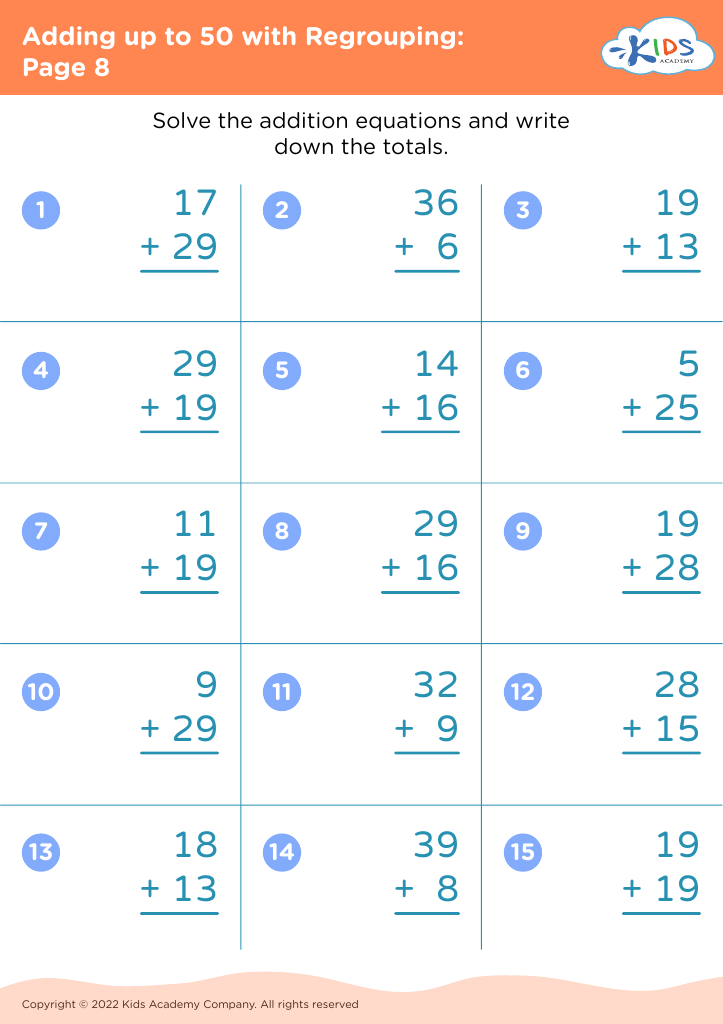
Adding up to 50 with Regrouping: Page 8
Worksheet
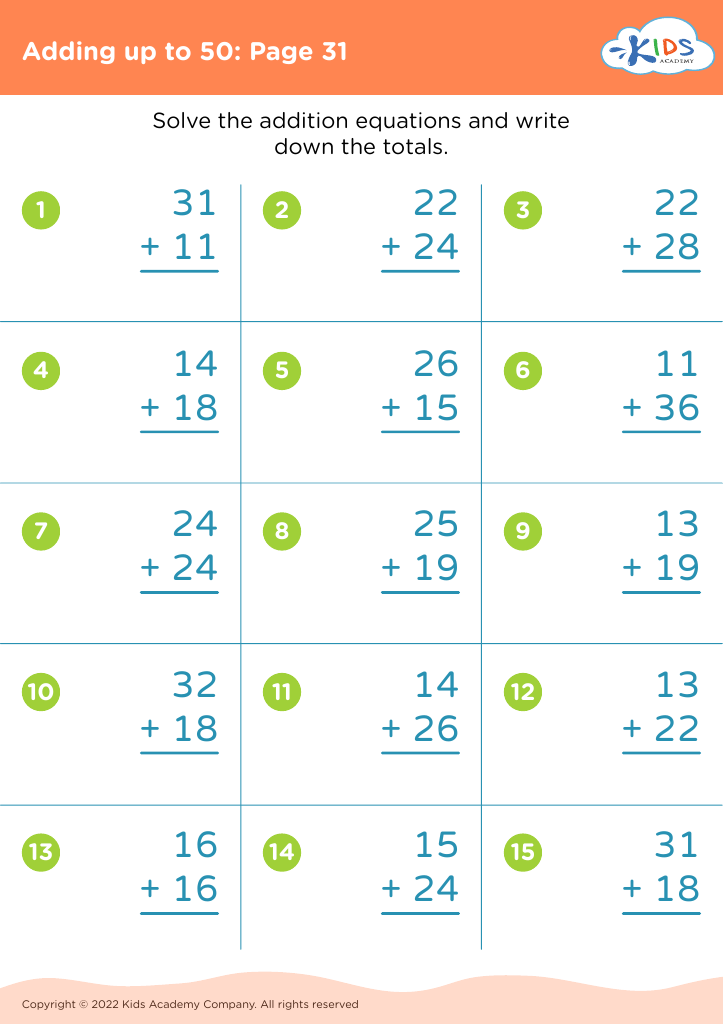
Adding up to 50: Page 31

Adding up to 50: Page 31

Adding up to 50: Page 31
Worksheet
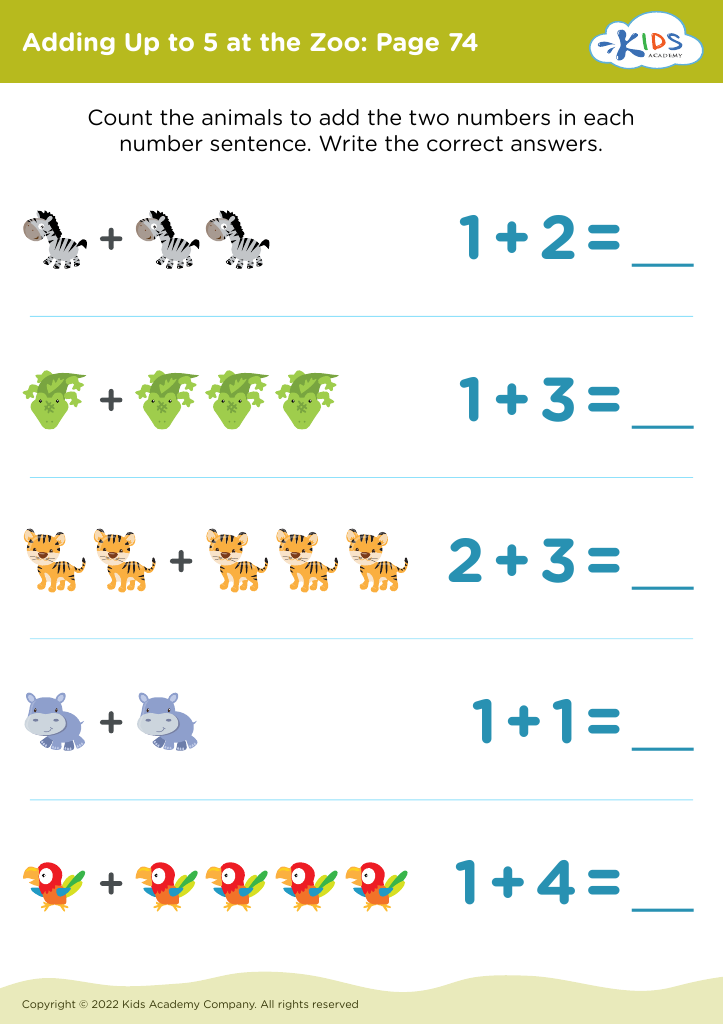
Adding Up to 5 at the Zoo: Page 74
Worksheet
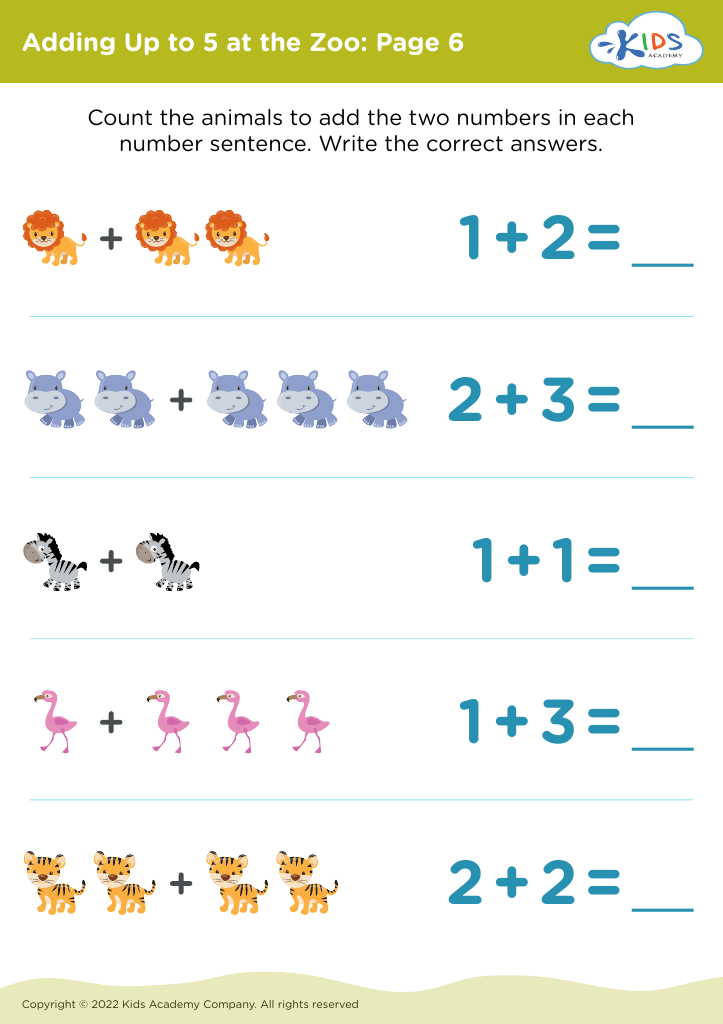
Adding Up to 5 at the Zoo: Page 6

Adding Up to 5 at the Zoo: Page 6

Adding Up to 5 at the Zoo: Page 6
Worksheet
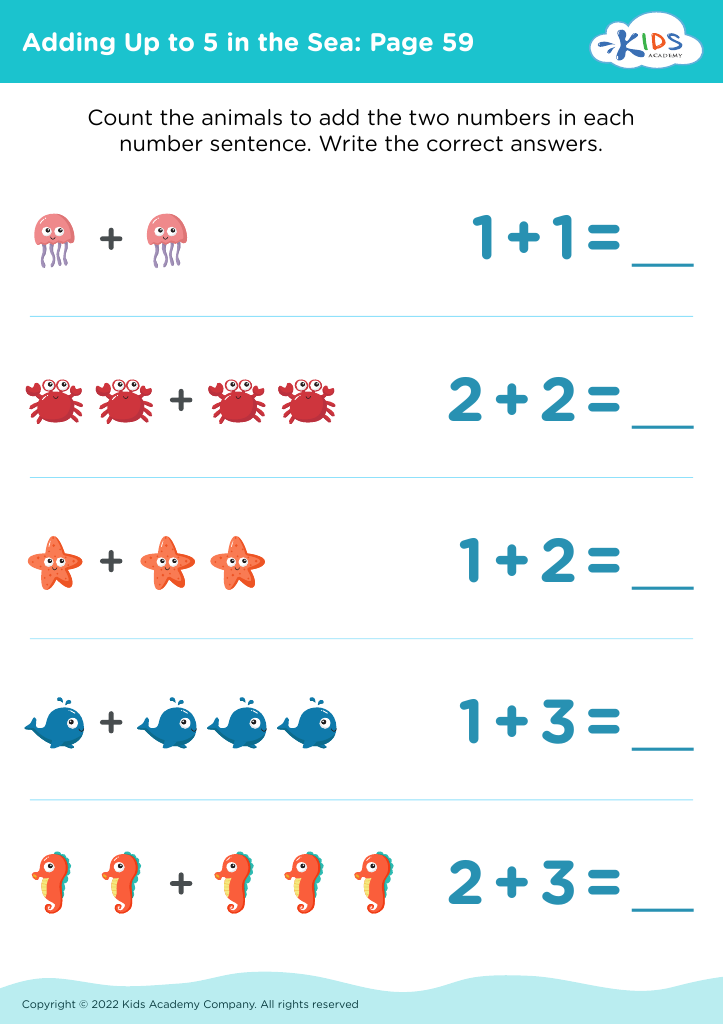
Adding Up to 5 in the Sea: Page 59
Worksheet
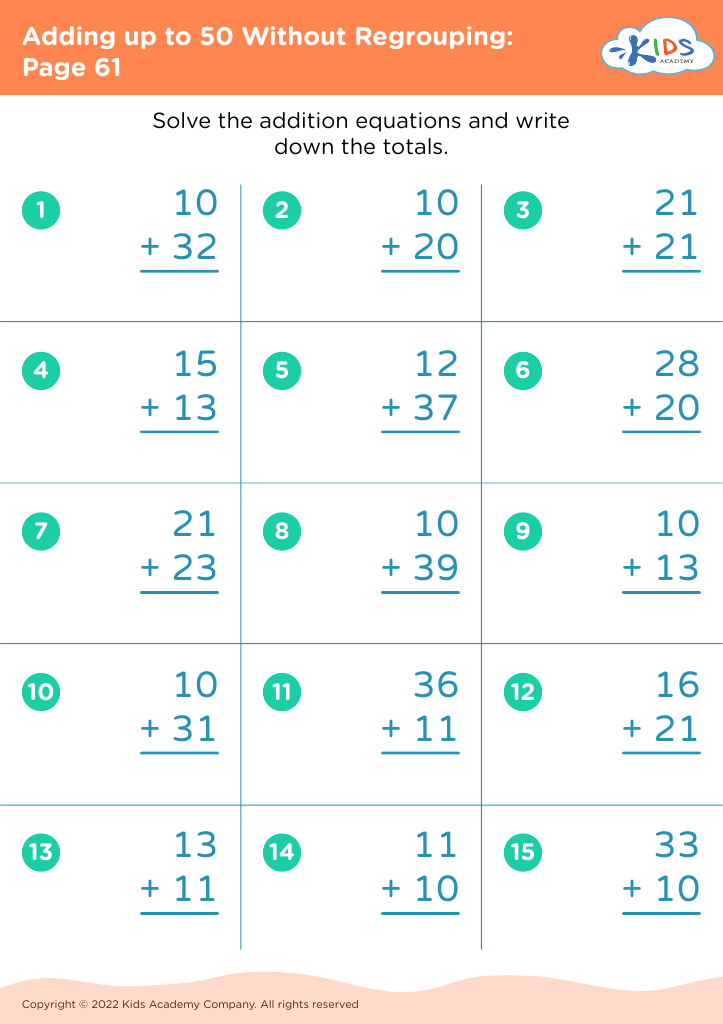
Adding up to 50 Without Regrouping: Page 61
Worksheet
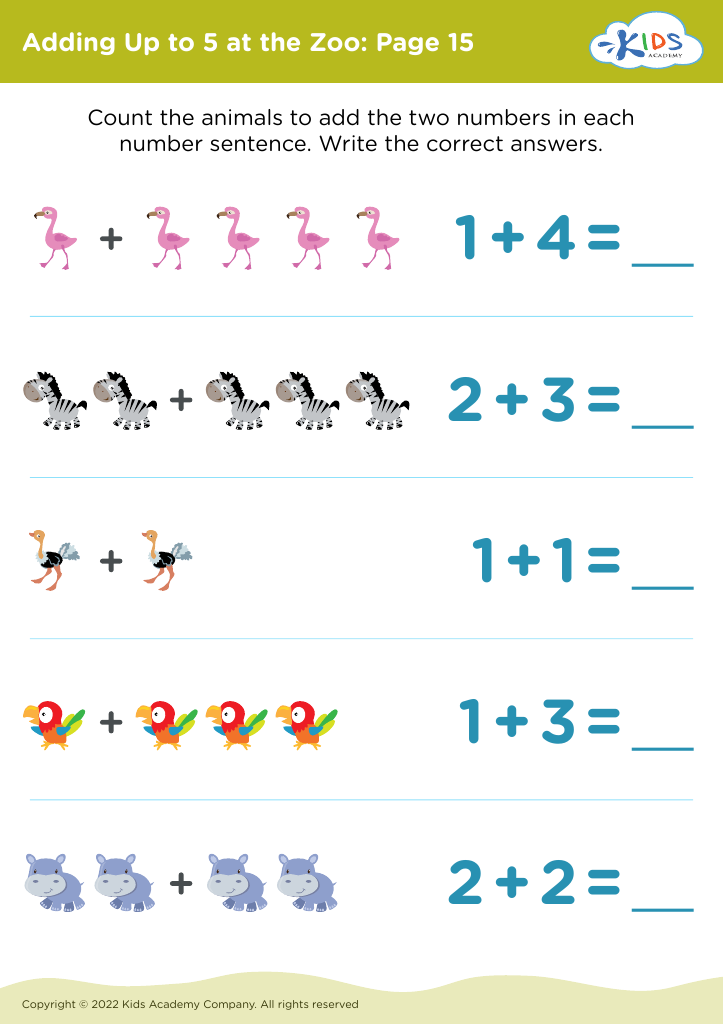
Adding Up to 5 at the Zoo: Page 15
Worksheet
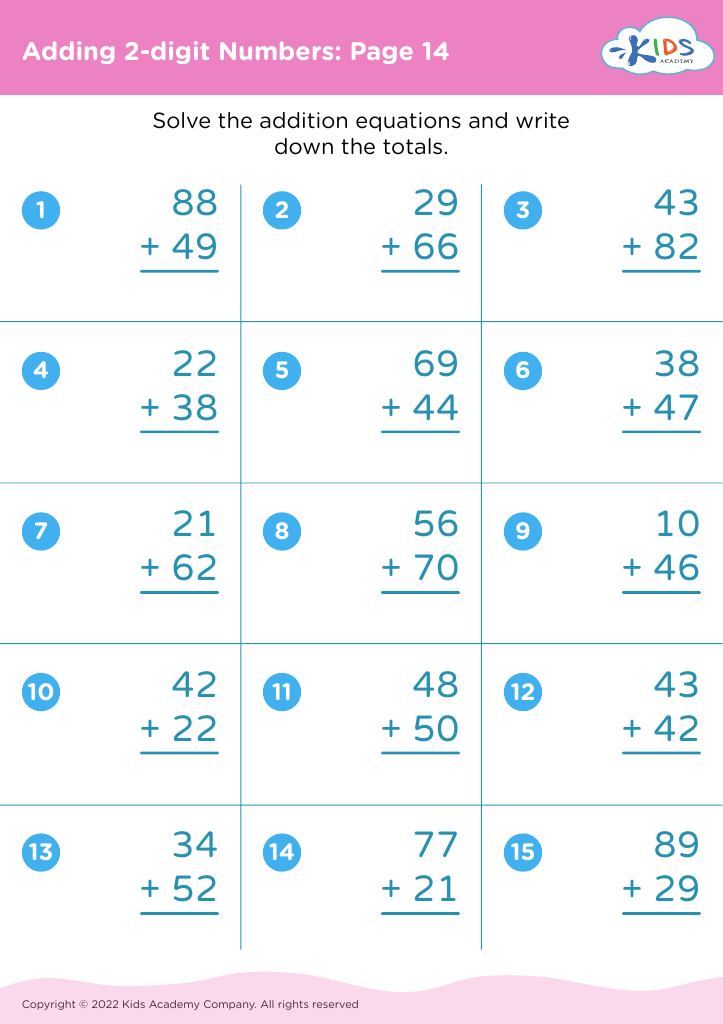
Adding 2-digit Numbers: Page 14

Adding 2-digit Numbers: Page 14

Adding 2-digit Numbers: Page 14
Worksheet
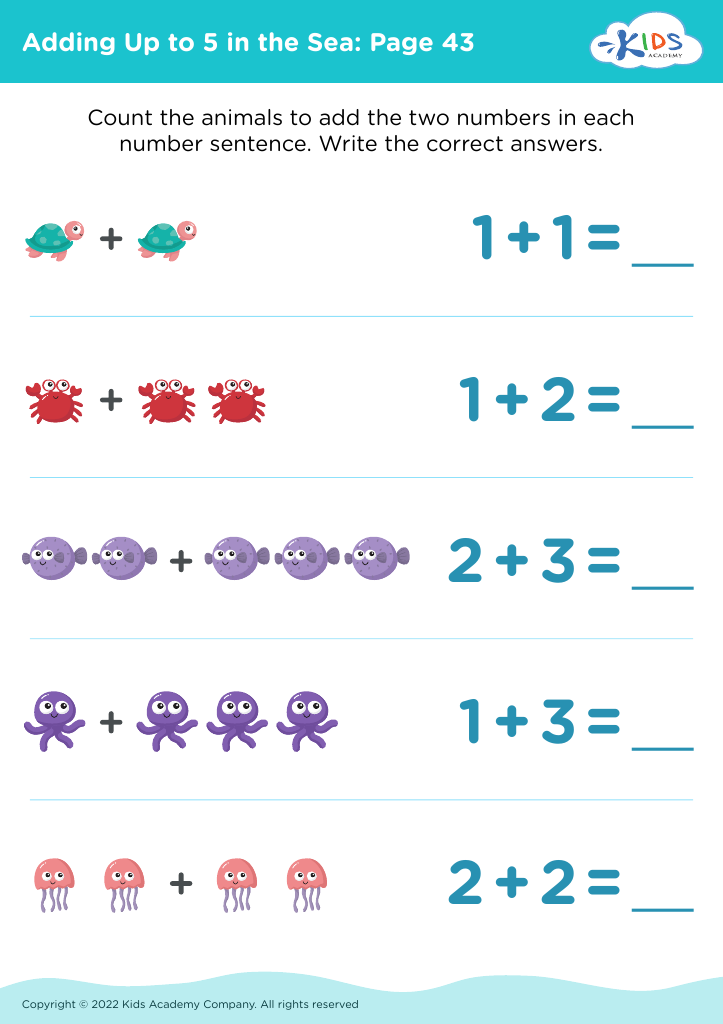
Adding Up to 5 in the Sea: Page 43
Worksheet
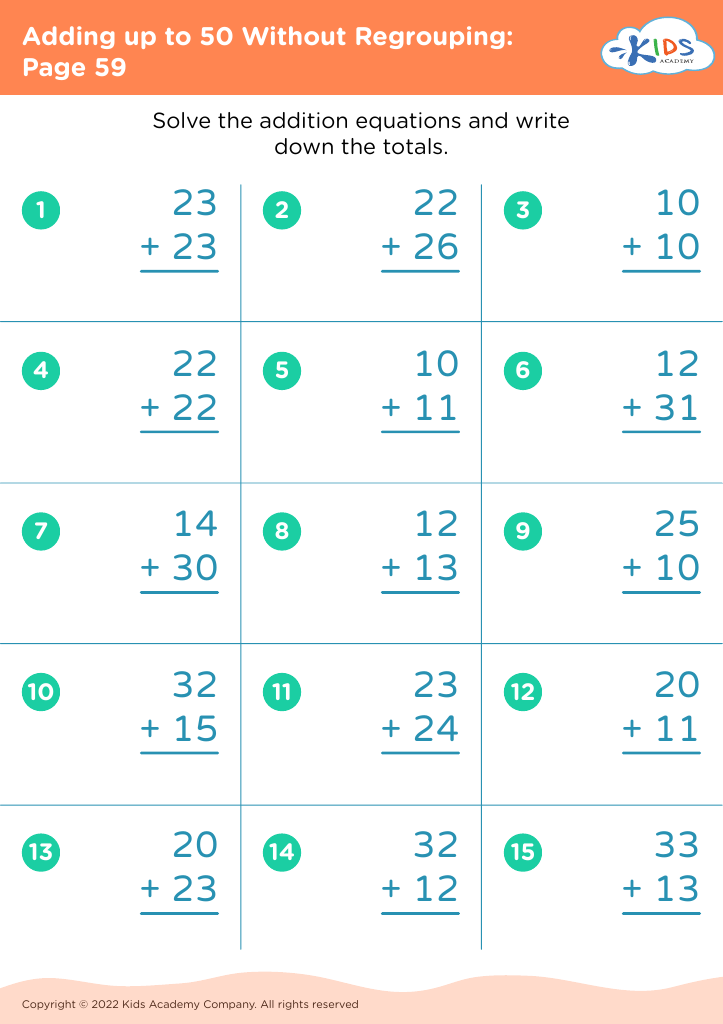
Adding up to 50 Without Regrouping: Page 59
Worksheet
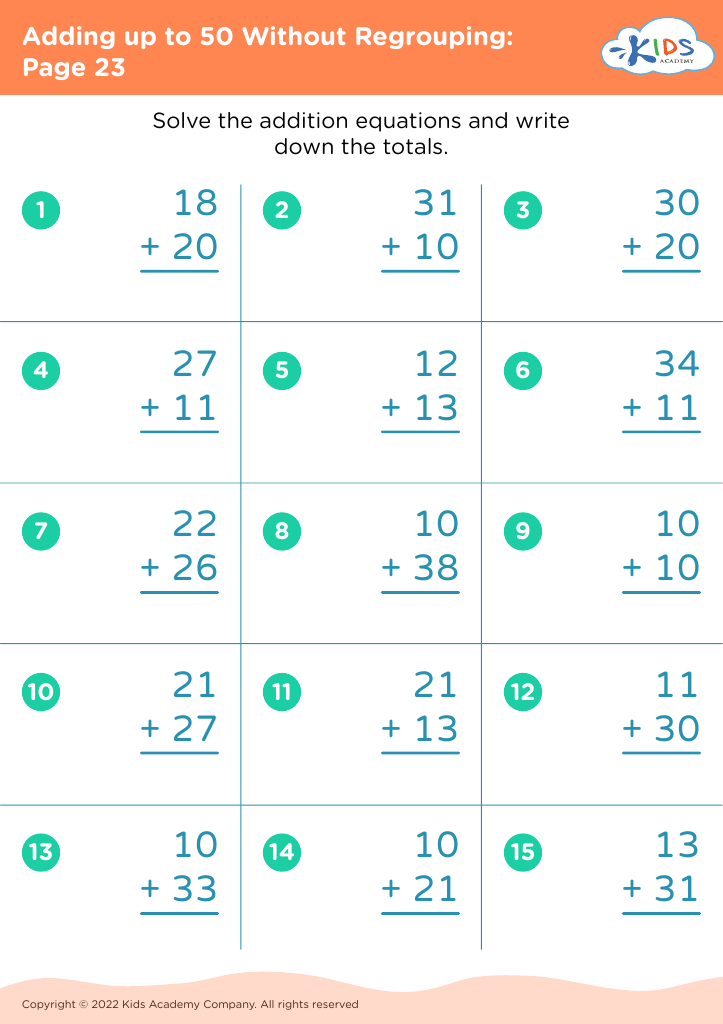
Adding up to 50 Without Regrouping: Page 23
Worksheet
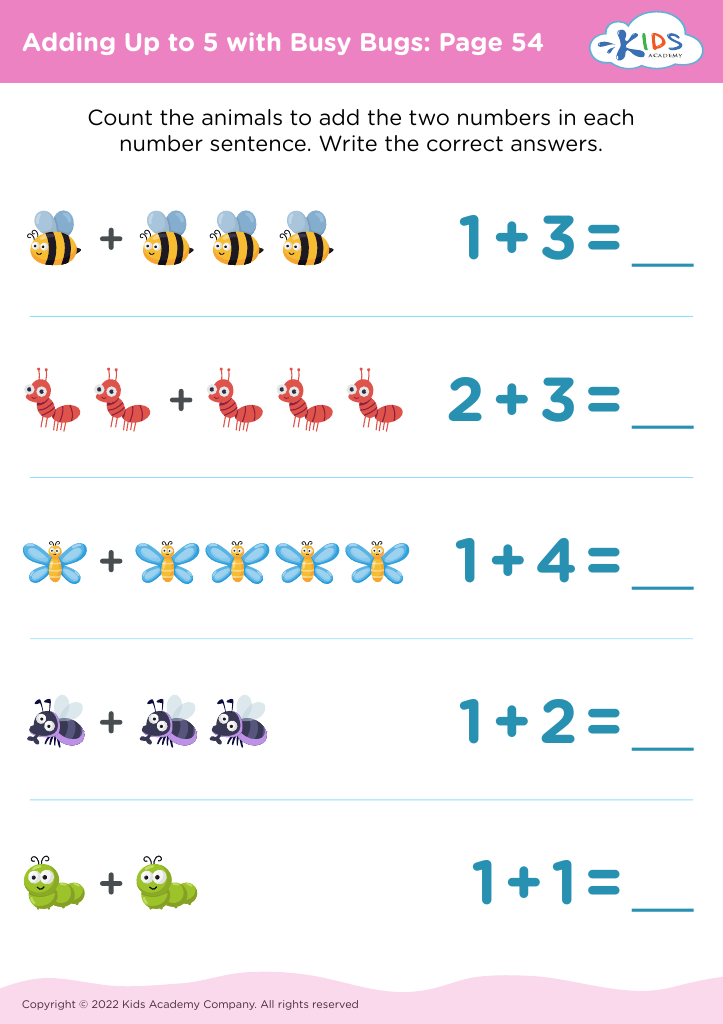
Adding Up to 5 with Busy Bugs: Page 54
Worksheet
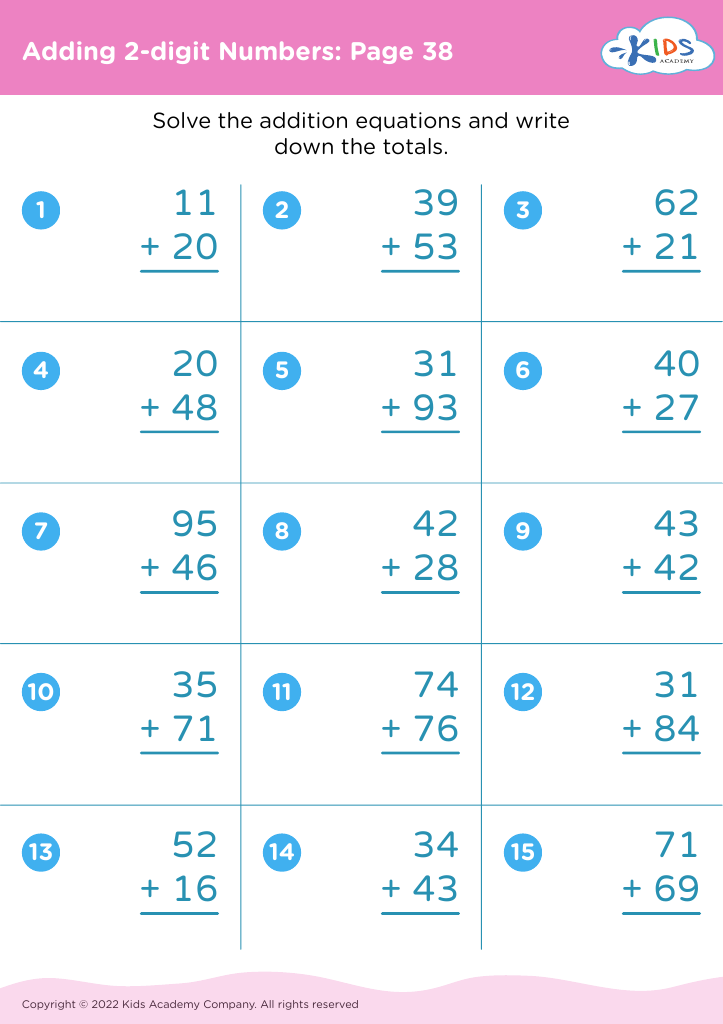
Adding 2-digit Numbers: Page 38

Adding 2-digit Numbers: Page 38

Adding 2-digit Numbers: Page 38
Worksheet
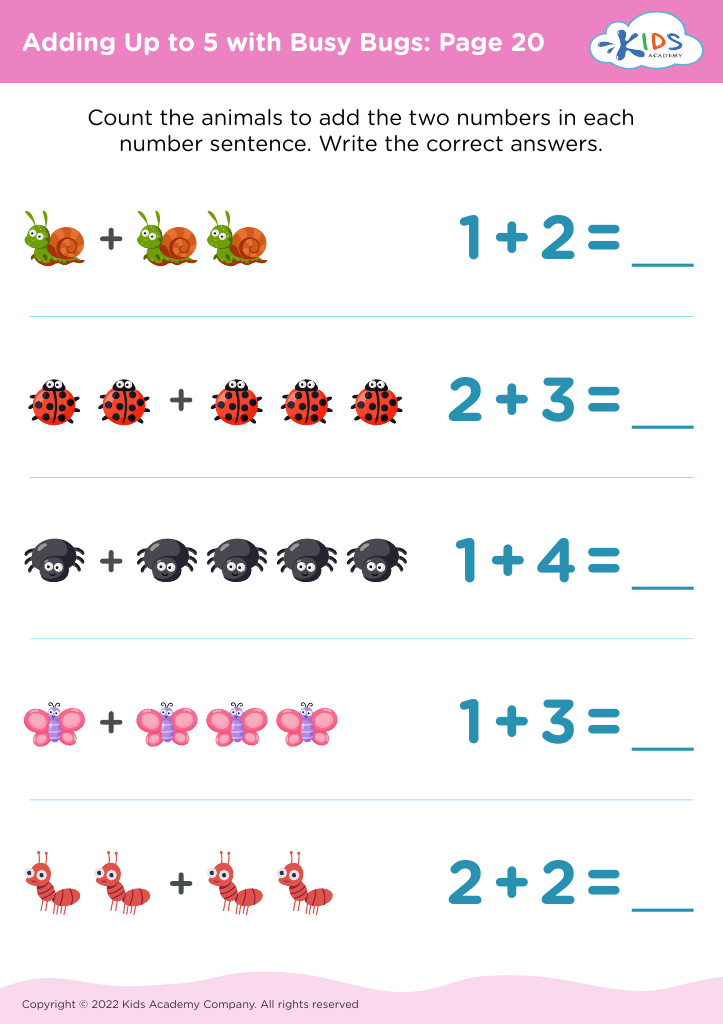
Adding Up to 5 with Busy Bugs: Page 20
Worksheet
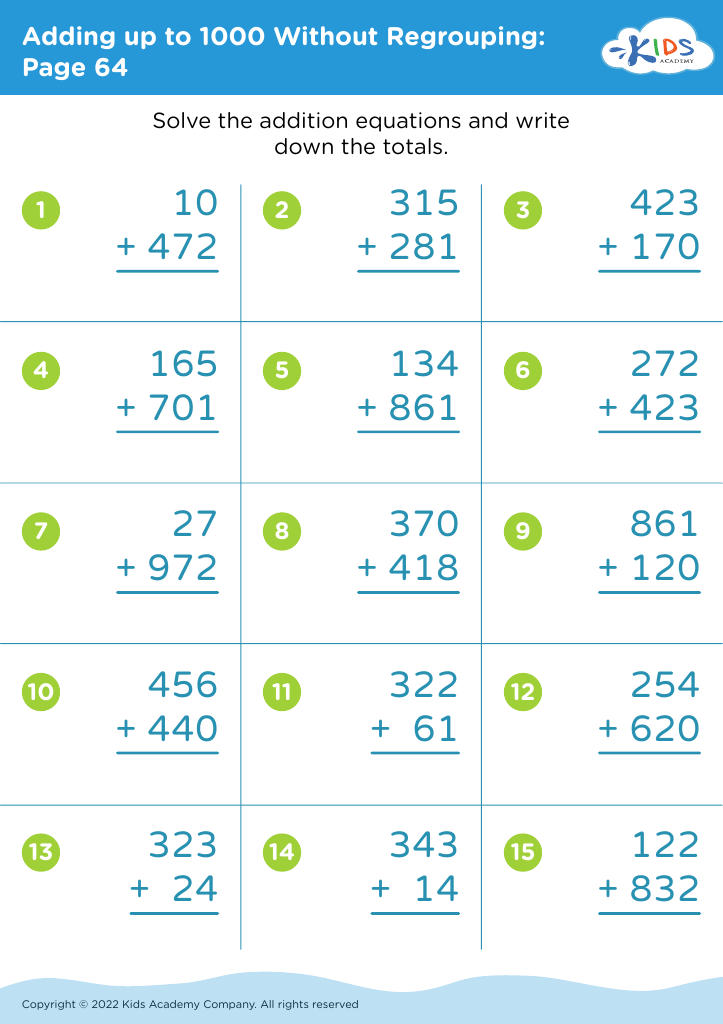
Adding up to 1000 Without Regrouping: Page 64
Worksheet
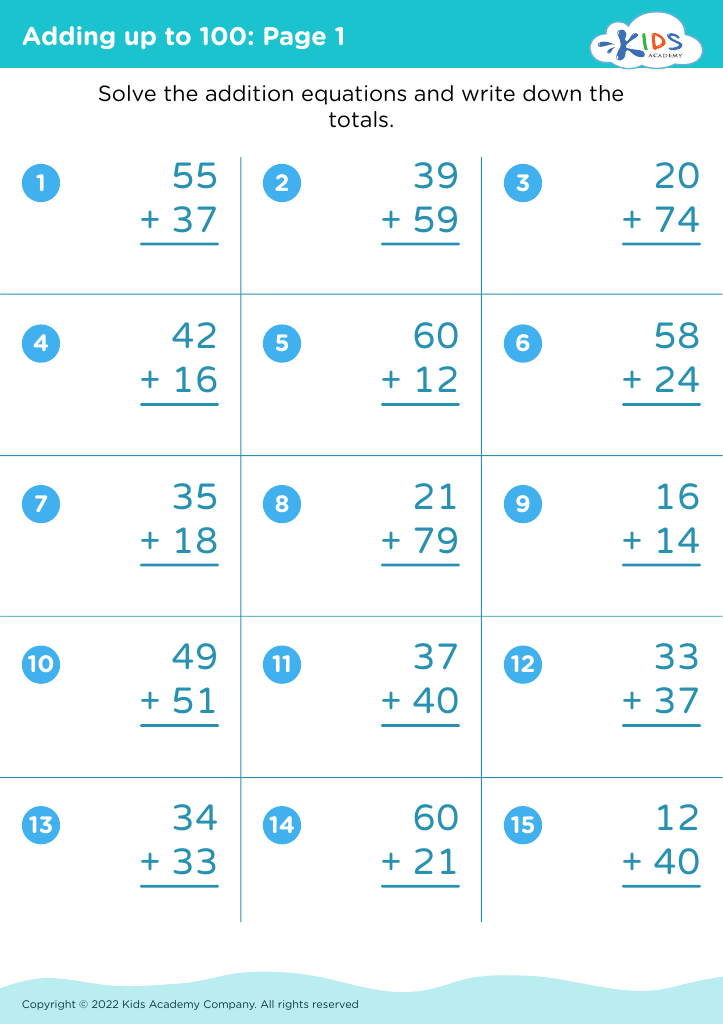
Adding up to 100: Page 1

Adding up to 100: Page 1

Adding up to 100: Page 1
Worksheet
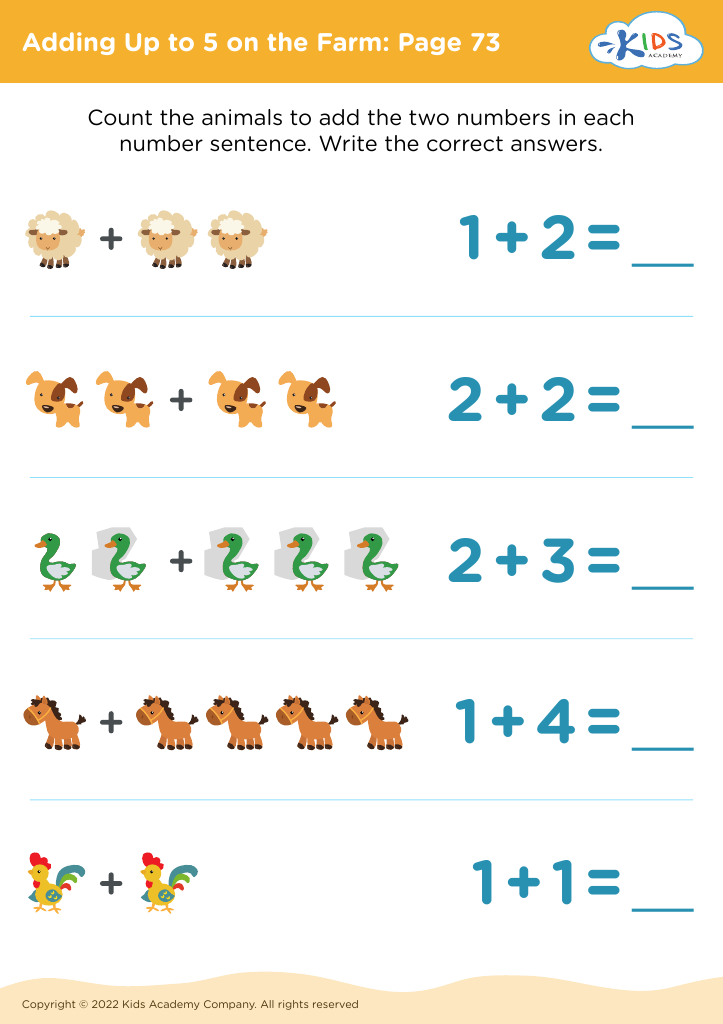
Adding Up to 5 on the Farm: Page 73
Worksheet


Parents and teachers should prioritize basic addition practice for children aged 5-8 because this foundational skill is crucial for future mathematical understanding. Mastery of addition sets the stage for more complex operations, such as subtraction, multiplication, and even division. At this age, children are developing essential cognitive and problem-solving skills. Regular practice not only enhances their familiarity with numbers but also boosts their confidence in handling mathematics.

Furthermore, basic addition practice enhances critical thinking and mental agility. As children learn to solve simple equations, they develop concentration and the ability to follow sequential steps—skills that are applicable across various subjects and real-life situations. Engaging in addition activities also promotes social interactions, as children often work together in paired or group settings, aiding in communication and teamwork abilities.

Additionally, a solid grasp of basic addition fosters a love for learning and makes math less intimidating as children encounter more advanced concepts in later grades. By incorporating fun and interactive methods—like games, songs, and hands-on activities—parents and teachers can create positive learning experiences that motivate young learners. Ultimately, emphasizing basic addition lays the groundwork for academic success and lifelong mathematical proficiency.