Basic Addition Skills Addition Worksheets for Ages 5-8 - Page 12
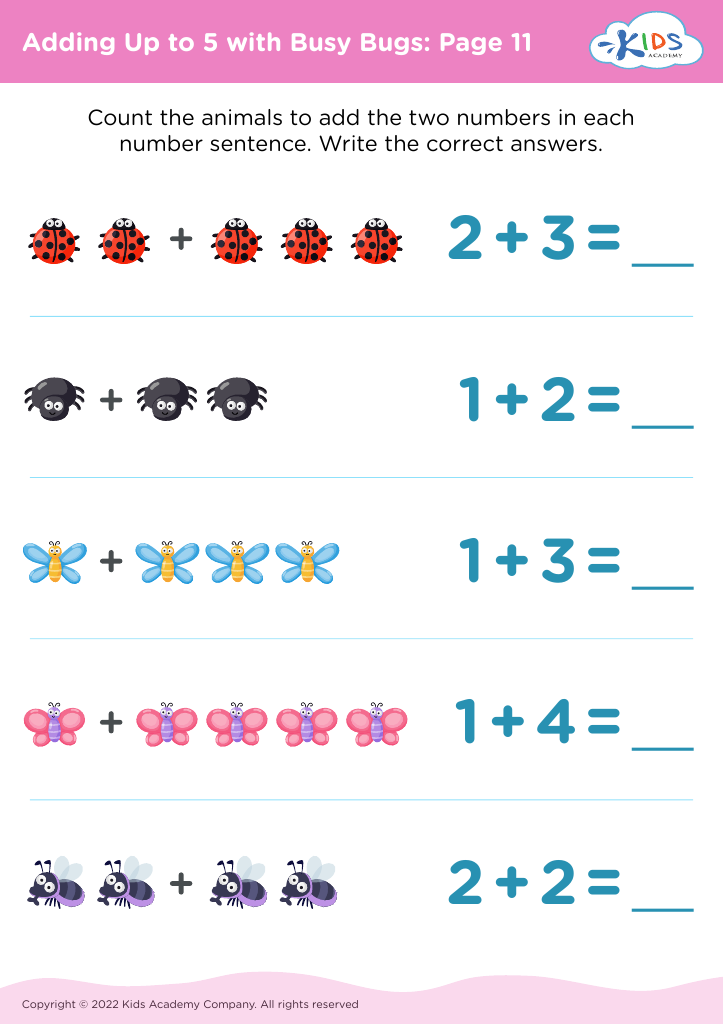
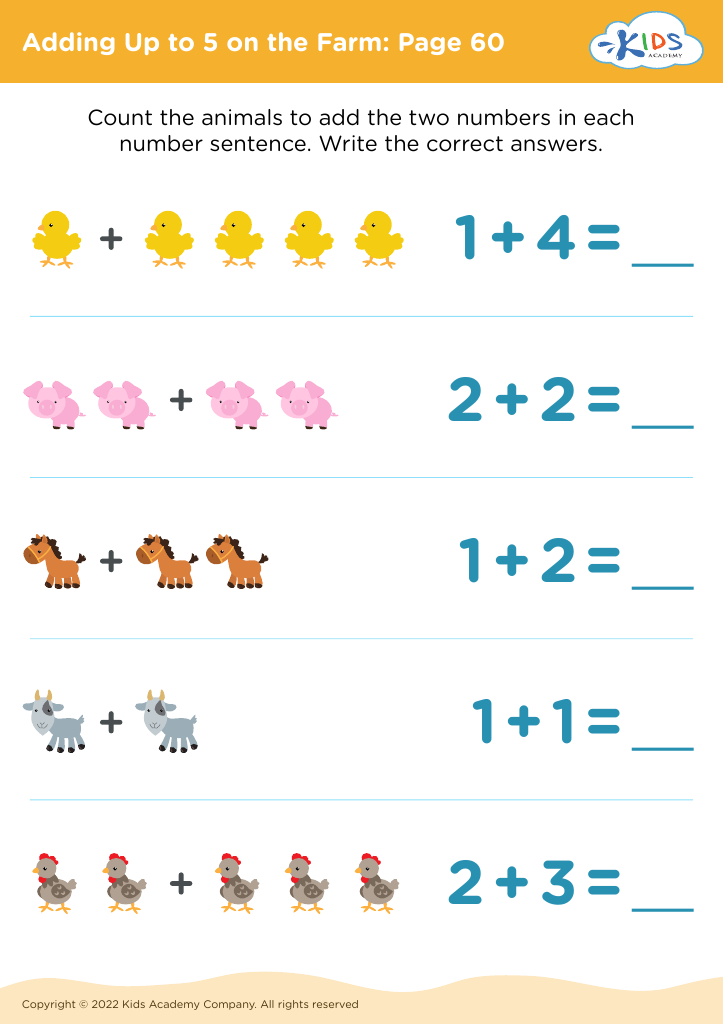
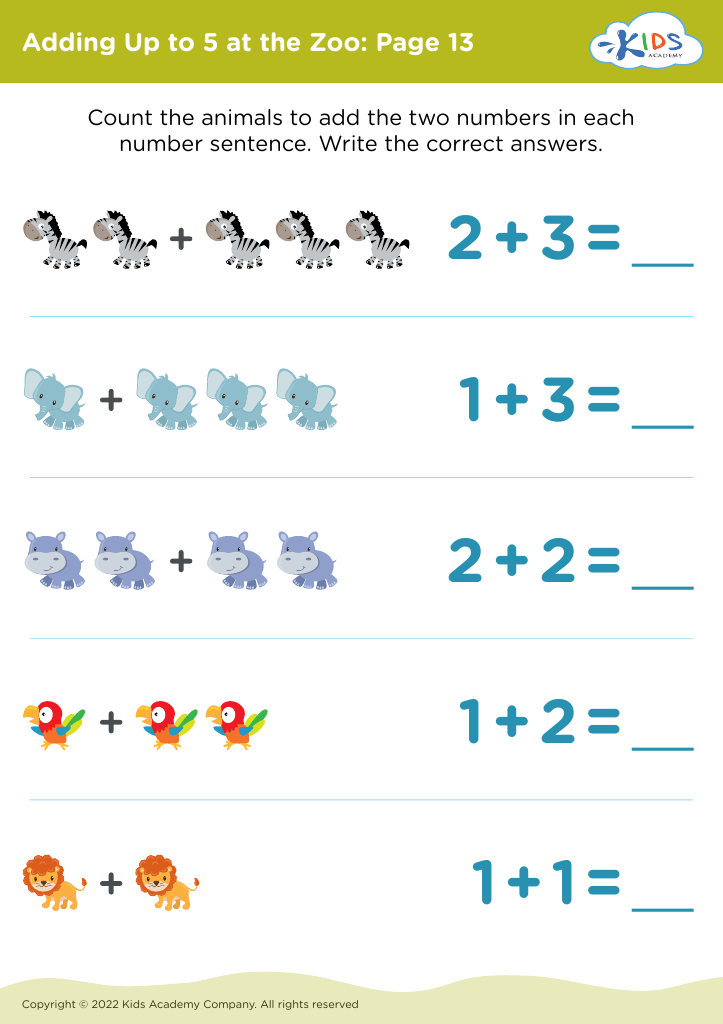
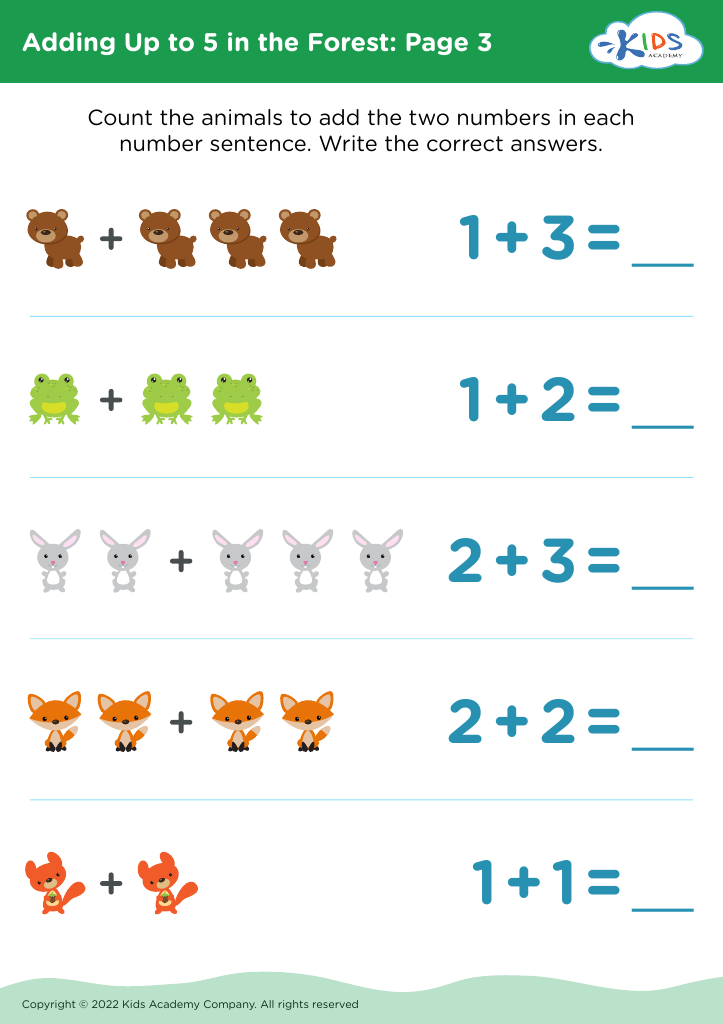








Basic addition skills are foundational to a child’s education and crucial for cognitive development in ages 5-8. During this period, children are not just learning numbers; they are constructing the skills that underpin future mathematical concepts. Mastery of addition fosters logical reasoning and problem-solving abilities, allowing children to make sense of complex ideas as they progress in their academic journey.
Parents and teachers should care about basic addition skills because they are interconnected with everyday tasks, including budgeting, time management, and understanding other subjects like science and art. When children grasp the basics of addition, they build confidence in their mathematical abilities, which motivates them to engage further with learning. Additionally, strong addition skills can significantly affect a child's self-esteem and overall attitude towards school – a solid grounding in math makes learning more enjoyable.
Moreover, recognizing and addressing any difficulties in mastering addition early can prevent larger learning gaps in the future. Thus, involved adults need to provide support and encouragement, ensuring children develop a strong mathematical foundation that will benefit them long-term, both academically and in everyday life. Prioritizing addition skills sets the stage for continued success in more advanced topics as they grow.








