Develop number recognition Addition Worksheets for Ages 5-8
5 filtered results
-
From - To
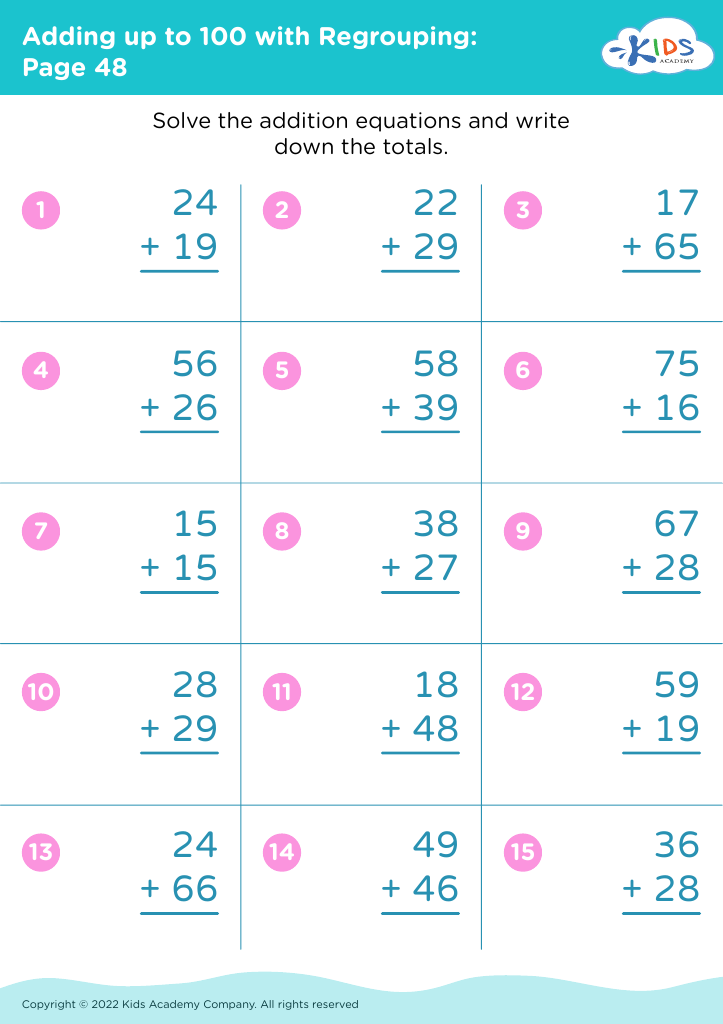
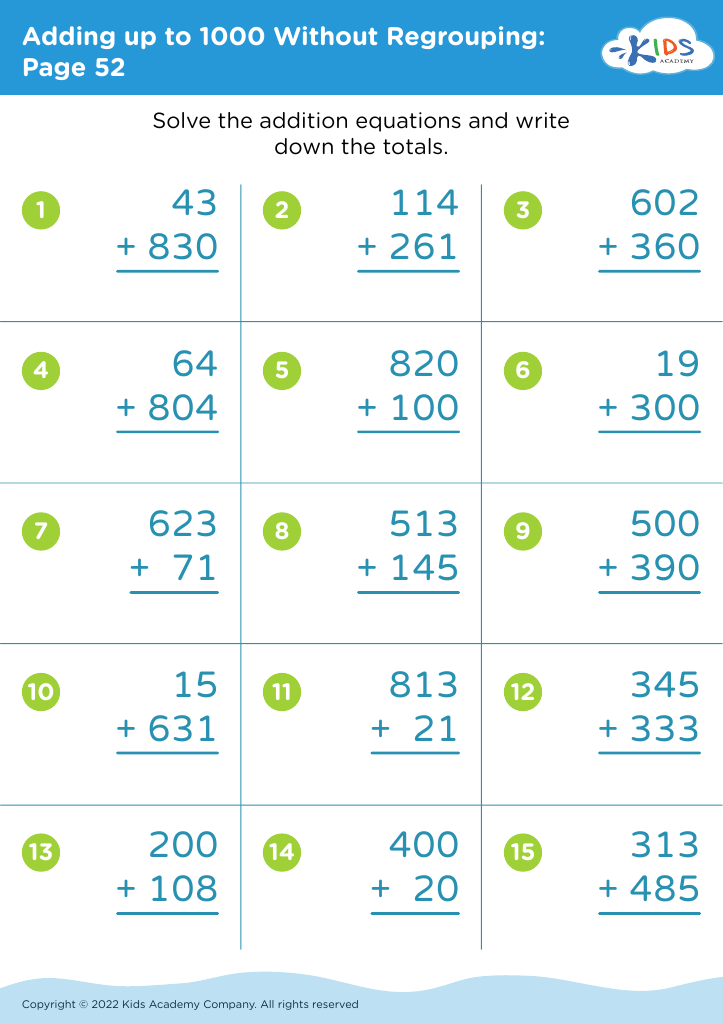
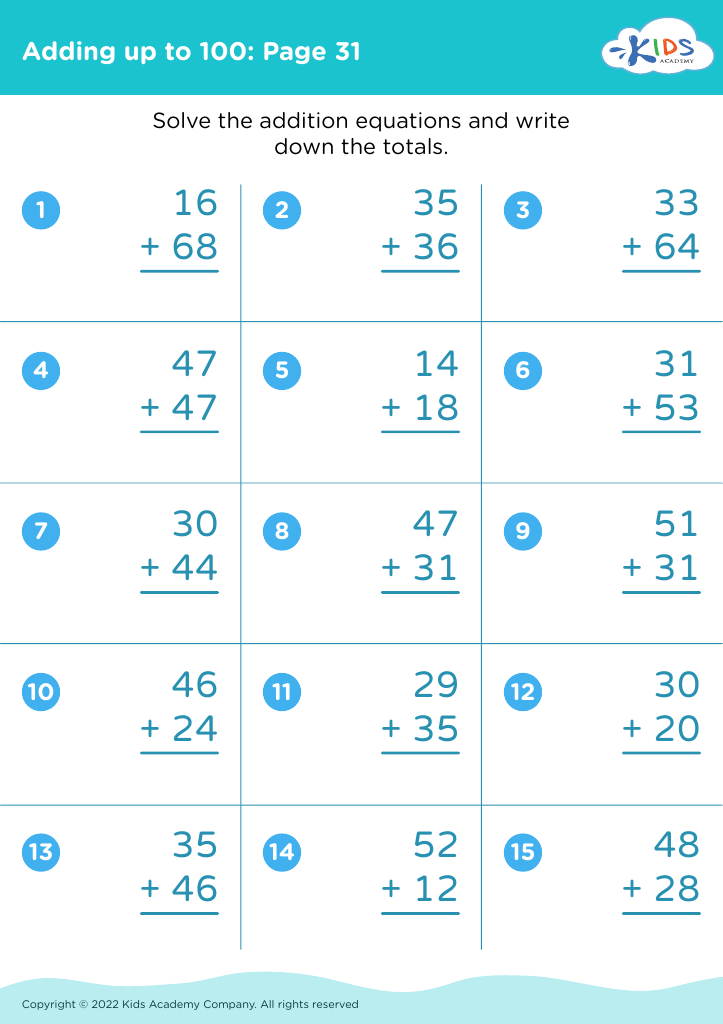
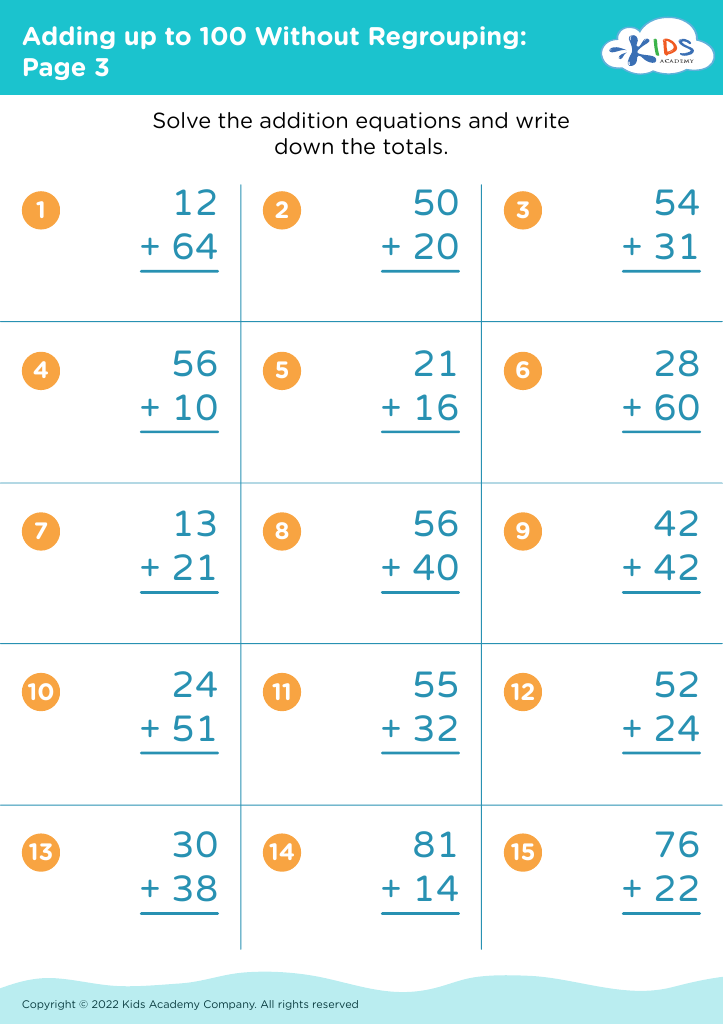
Our "Develop Number Recognition Addition Worksheets for Ages 5-8" are expertly designed to enhance your child's familiarity with numbers while fostering crucial addition skills. Tailored for young learners, these engaging activities make math both fun and educational. Each worksheet is crafted to help children easily recognize numbers and understand basic addition concepts. By integrating vibrant visuals and interactive exercises, we aim to build confidence and foundational math skills. Perfect for school or home use, these worksheets provide a solid math foundation, setting the stage for future academic success. Explore our effective resources and watch your child's math abilities flourish!
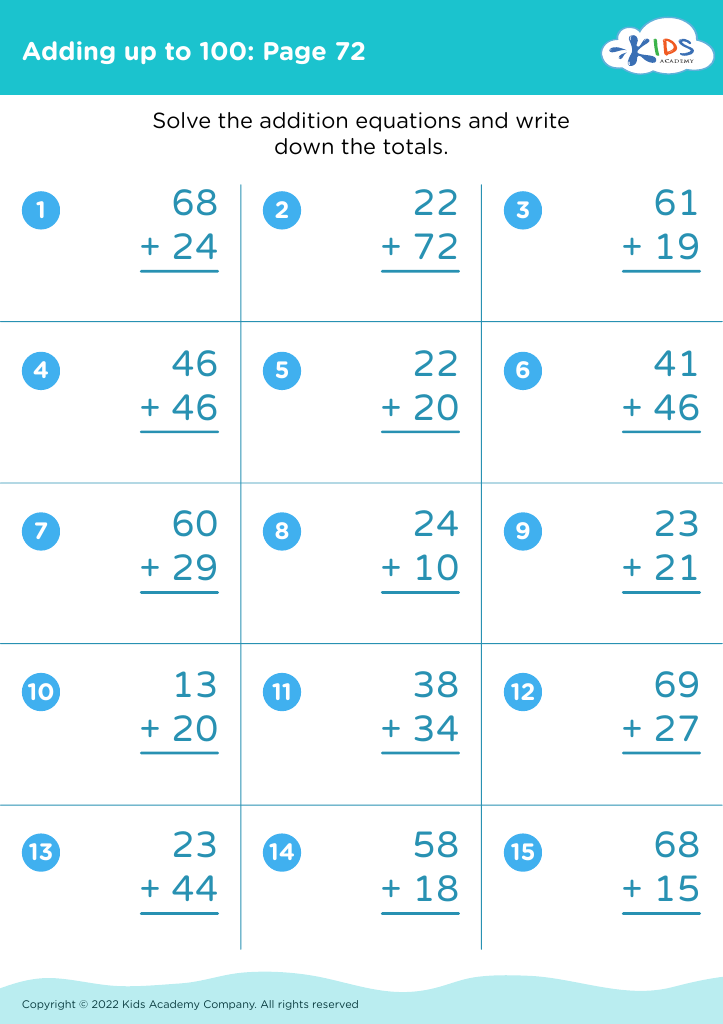







.jpg)
Number recognition and basic addition for children aged 5-8 are cornerstone skills critical for their academic and everyday lives. As parents and teachers, fostering these skills lays the groundwork for future mathematical understanding and problem-solving abilities.
Firstly, number recognition—being able to identify and name numbers—promotes early mathematical literacy. This foundational skill enables children to understand and interpret numbers in various contexts, like counting objects, telling time, or recognizing addresses. It also builds confidence, as children who recognize numbers can participate more fully in classroom activities and daily routines.
Addition, the simplest form of arithmetic, is equally essential. It introduces children to the concept of combining quantities, which is a fundamental mathematical operation. Mastery of addition boosts their ability to tackle more complex mathematical problems and enhances logical thinking skills. These benefits are not limited to math; problem-solving skills nurtured by early math education spill over into other areas, including reading comprehension and scientific reasoning.
When parents and teachers invest time in developing number recognition and addition skills, they are not only boosting academic achievement but also equipping children with critical life skills. Mathematics is omnipresent in our world, and a solid foundation in early math prepares children for future success and confident engagement with the everyday numerical aspects of life.








