Developing problem-solving skills Addition Worksheets for Ages 5-8
6 filtered results
-
From - To
Boost your child's arithmetic skills with our "Developing Problem-Solving Skills: Addition Worksheets" designed for ages 5-8. These engaging worksheets from Kids Academy focus on building strong foundational math skills while enhancing problem-solving abilities. Kids will enjoy solving a variety of addition problems that challenge their critical thinking and reasoning. Our expertly crafted exercises ensure a gradual learning curve, catering to different learning paces and styles. Perfect for hands-on practice, these worksheets pave the way for a comprehensive understanding of addition, essential for future math success. Unlock your child's potential today with our fun and educational resources!
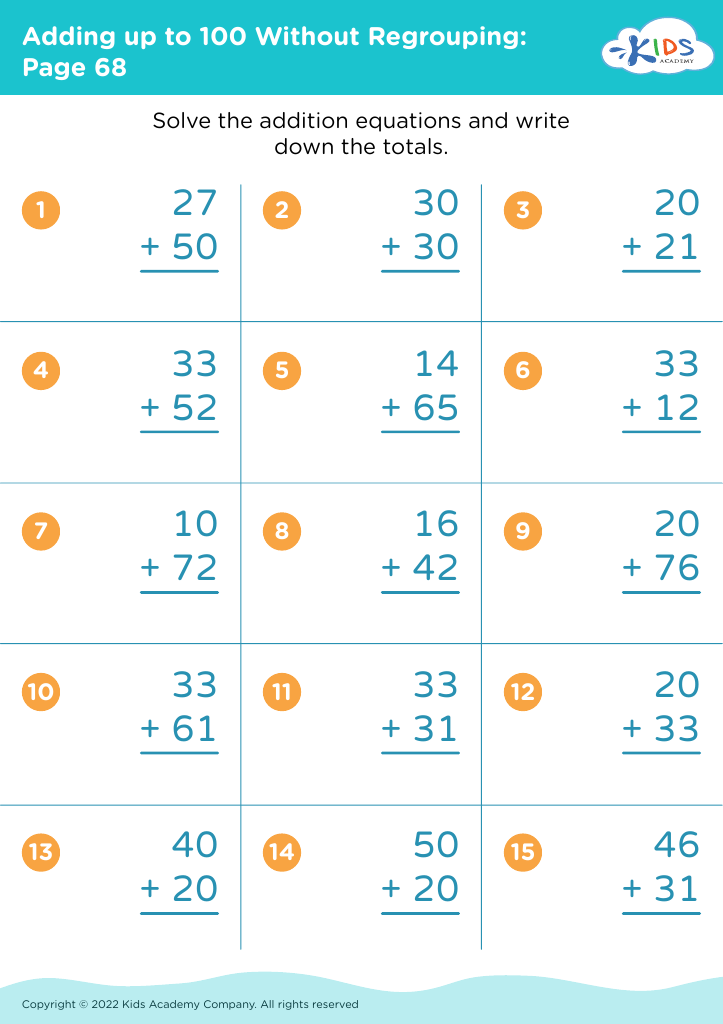
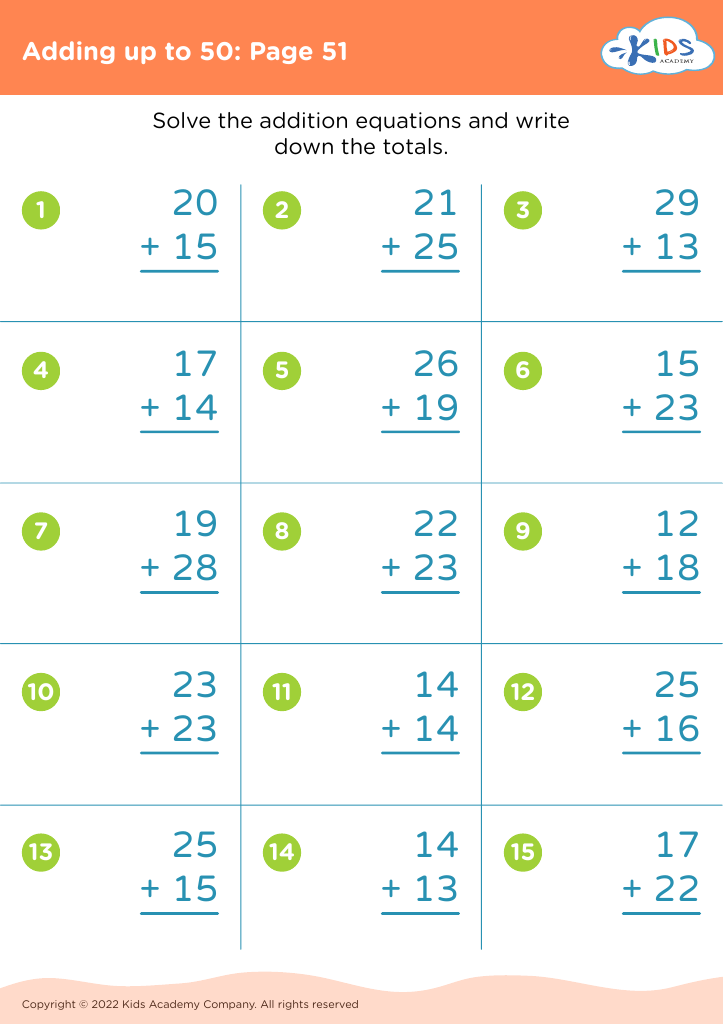
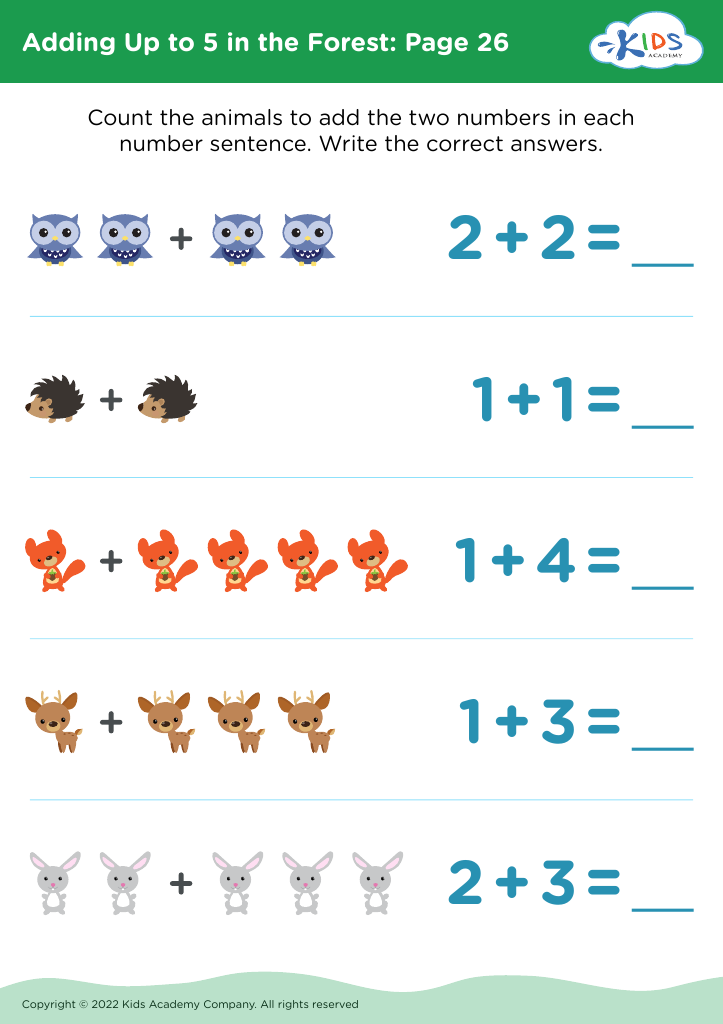
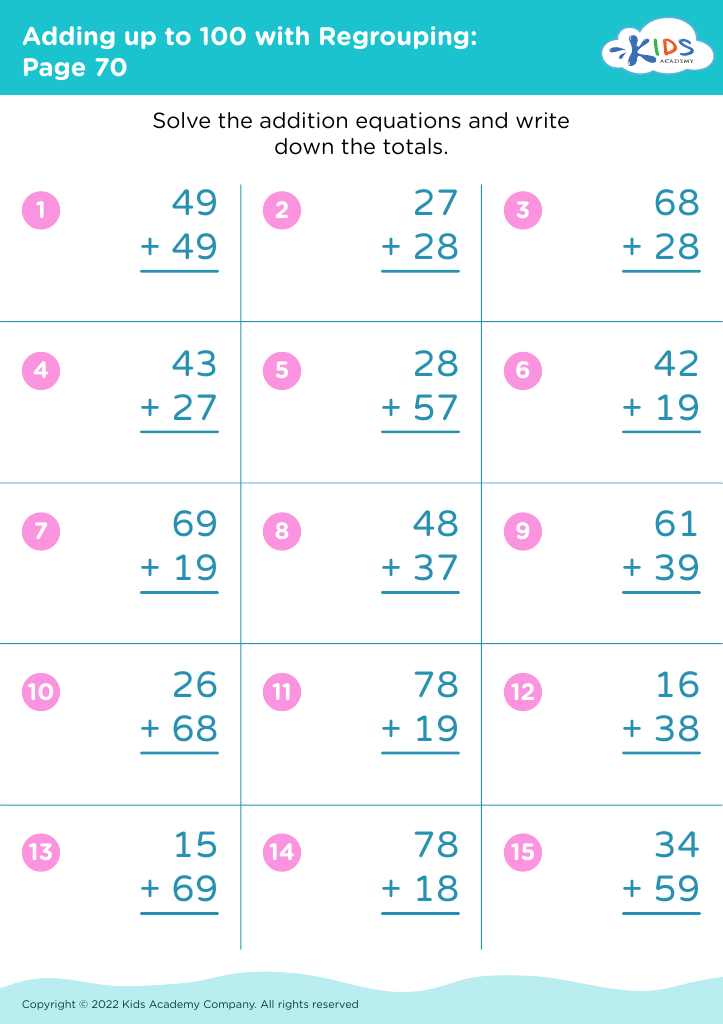
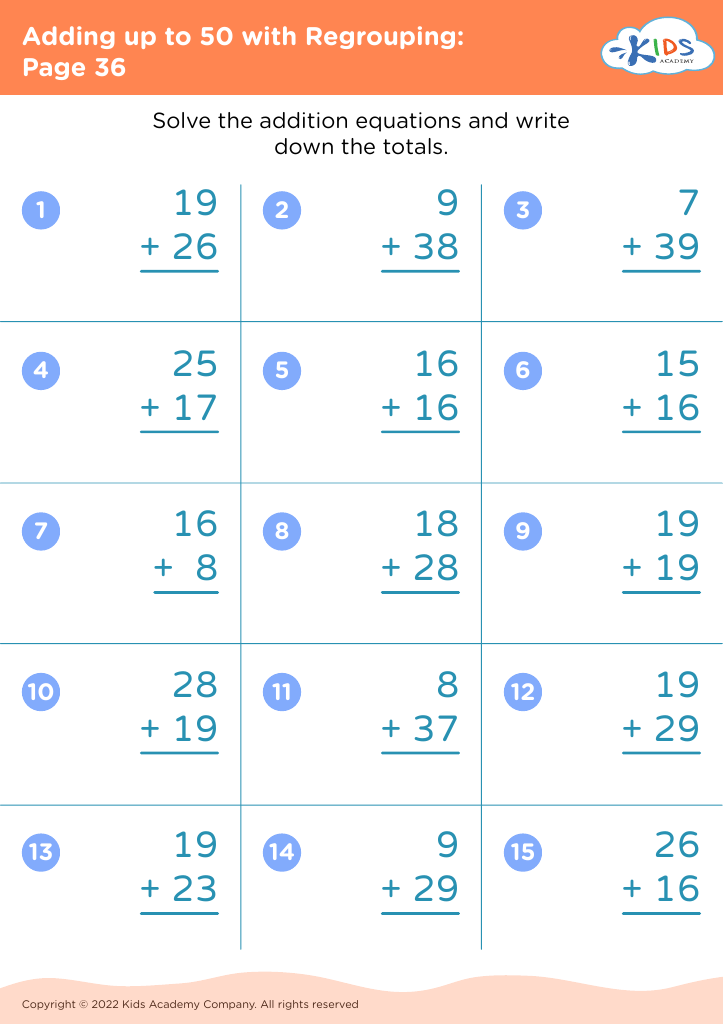
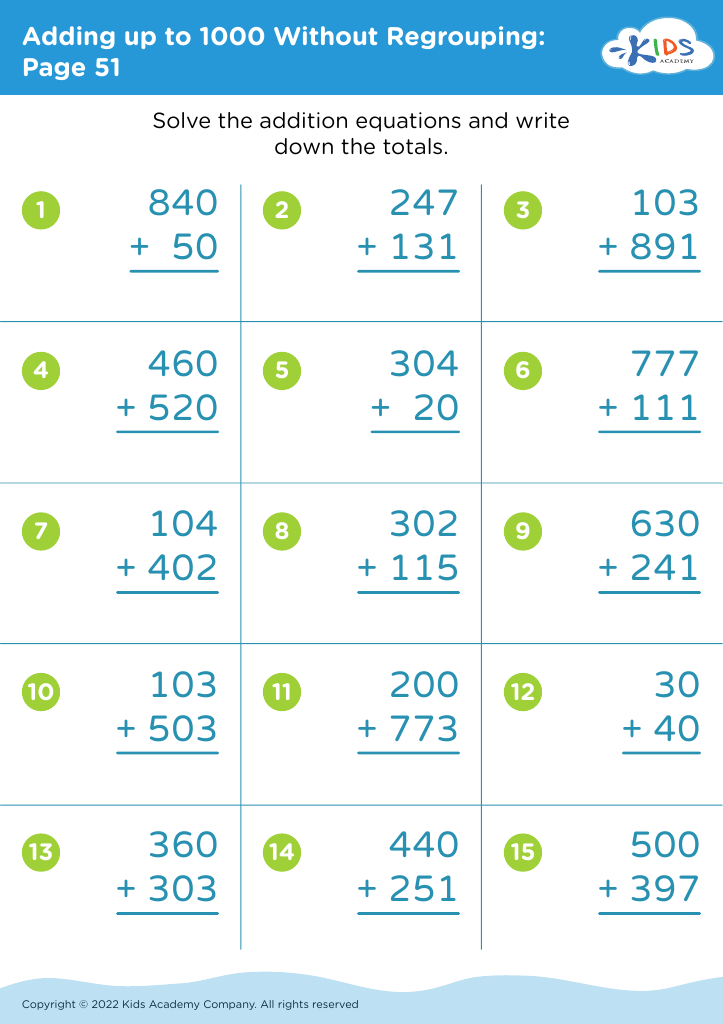








Developing problem-solving skills in addition for children aged 5-8 is essential for several reasons. These foundational years are critical for cognitive development, and arithmetic problem-solving nurtures fundamental brain functions such as logic, memory, and analytical thinking. For instance, when children encounter basic addition problems, they learn to comprehend, plan, and solve them systematically, which enhances their ability to approach challenges methodically in diverse areas.
Math skills, particularly addition, are pivotal for everyday activities, from counting money to telling time, and are linked to broader academic achievement. Early mastery of these skills can boost children’s confidence and enjoyment in learning, preventing negative attitudes towards math in later years.
Moreover, learning to solve addition problems equips children with perseverance and patience as they work through difficulties to find solutions. These character traits are indispensable across all walks of life, fostering resilience and adaptability.
Socially, collaborative problem-solving in math encourages teamwork, communication, and the sharing of strategies, which are vital interpersonal skills.
In essence, developing problem-solving skills in addition from an early age prepares children not just for further mathematical learning, but also fosters critical life skills, setting a strong foundation for academic success and everyday competency.








