Boost your child's number recognition skills with our engaging Addition Worksheets designed specifically for ages 5-8. These worksheets offer a variety of activities that make learning fun and interactive, helping young learners master numbers while developing their addition abilities. From identifying numbers to solving simple addition problems, each worksheet is tailored to enhance cognitive development and reinforce foundational math skills. Perfect for classroom use or at home, our resources promote self-confidence and ensure a solid grasp of essential math concepts. Empower your child’s educational journey with these colorful, easy-to-follow worksheets that encourage practice and progression in a vital area of early learning.
Check out this FREE Trial Lesson on Addition for age 5-8!

Sorting Objects into 3 Categories

Favorites
With answer key
Interactive
  • 5-8
  • Enhance number recognition
  • Addition
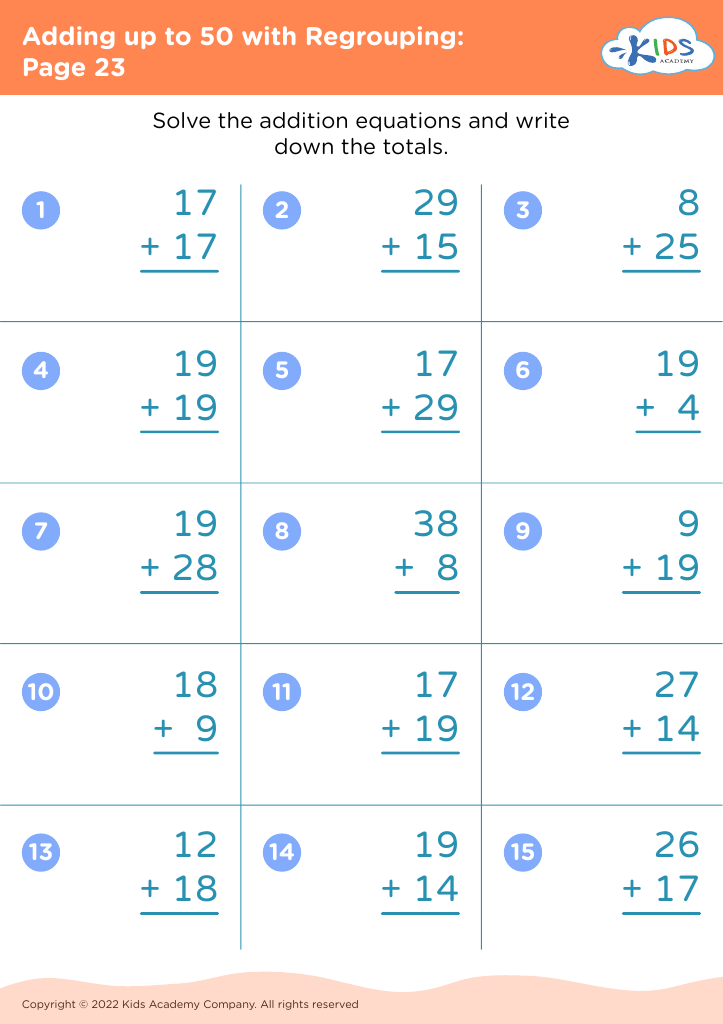
Adding up to 50 with Regrouping: Page 23
Worksheet
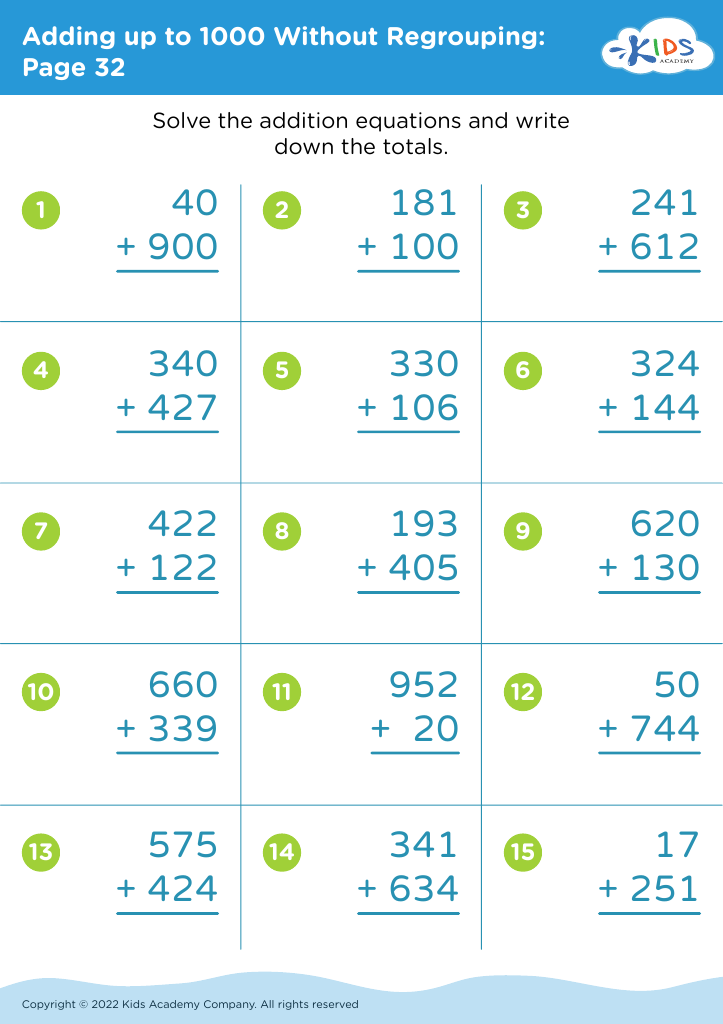
Adding up to 1000 Without Regrouping: Page 32
Worksheet
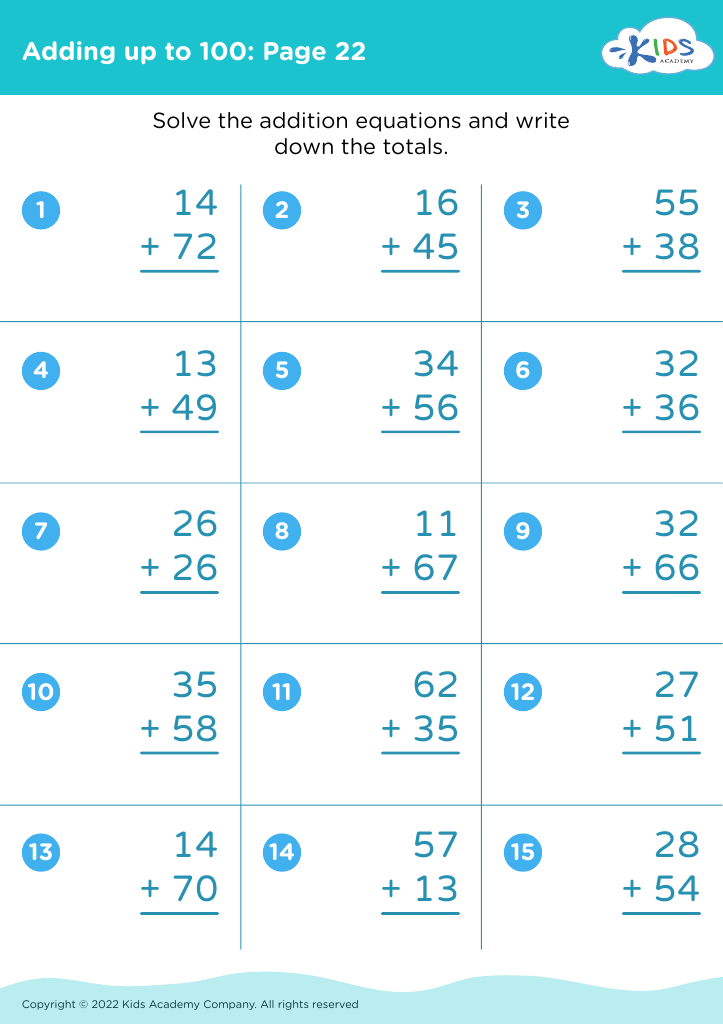
Adding up to 100: Page 22

Adding up to 100: Page 22

Adding up to 100: Page 22
Worksheet
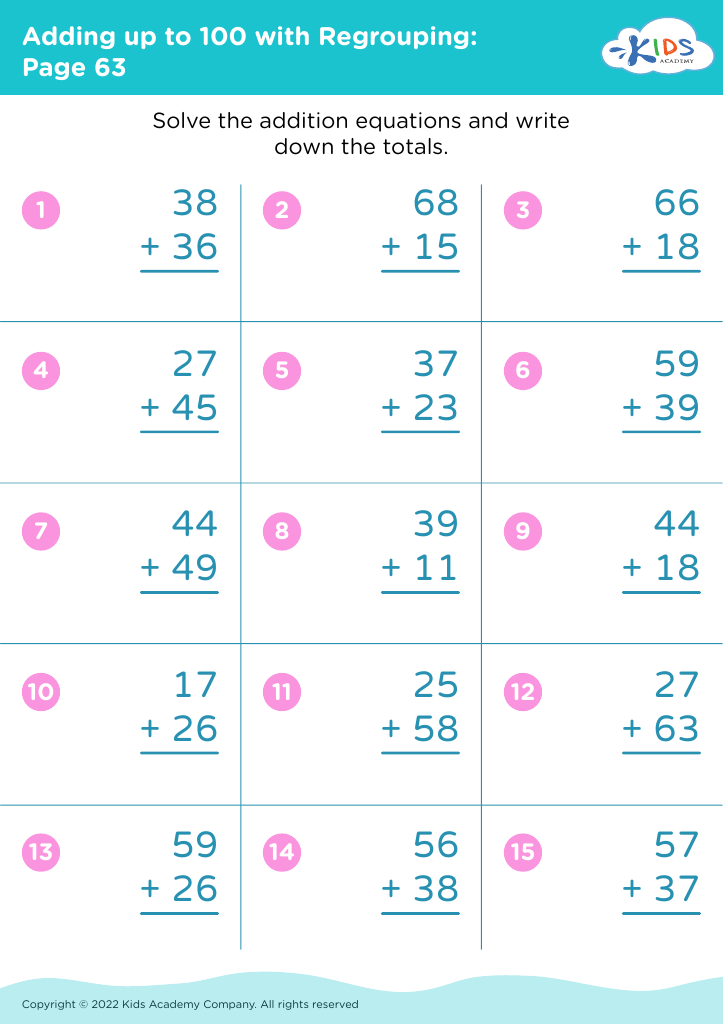
Adding up to 100 with Regrouping: Page 63
Worksheet
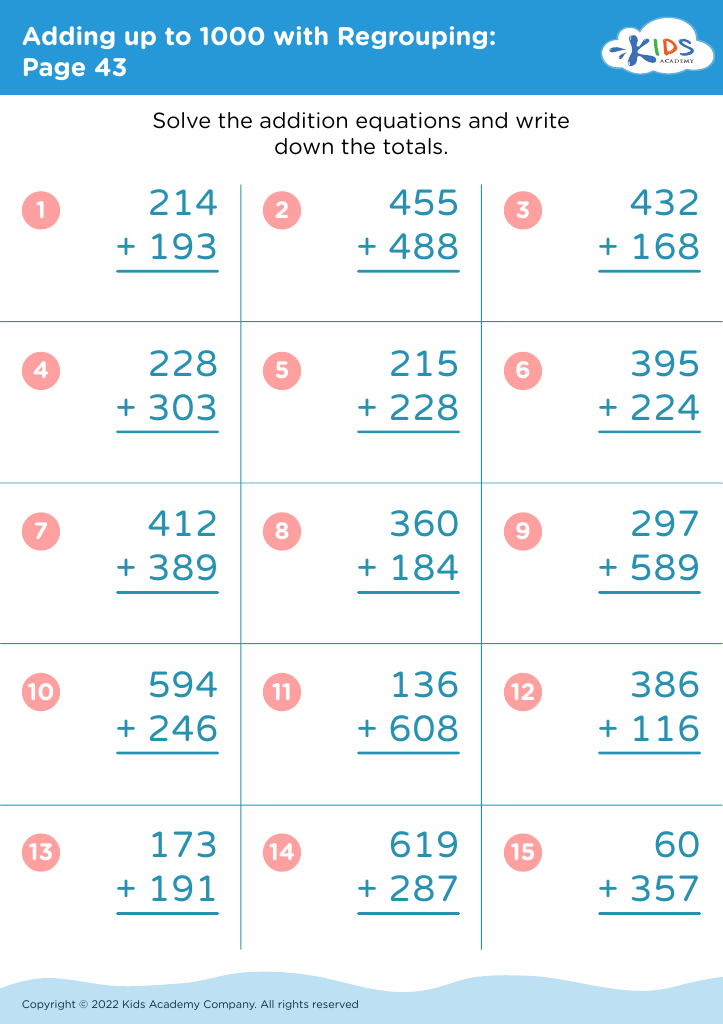
Adding up to 1000 with Regrouping: Page 43
Worksheet
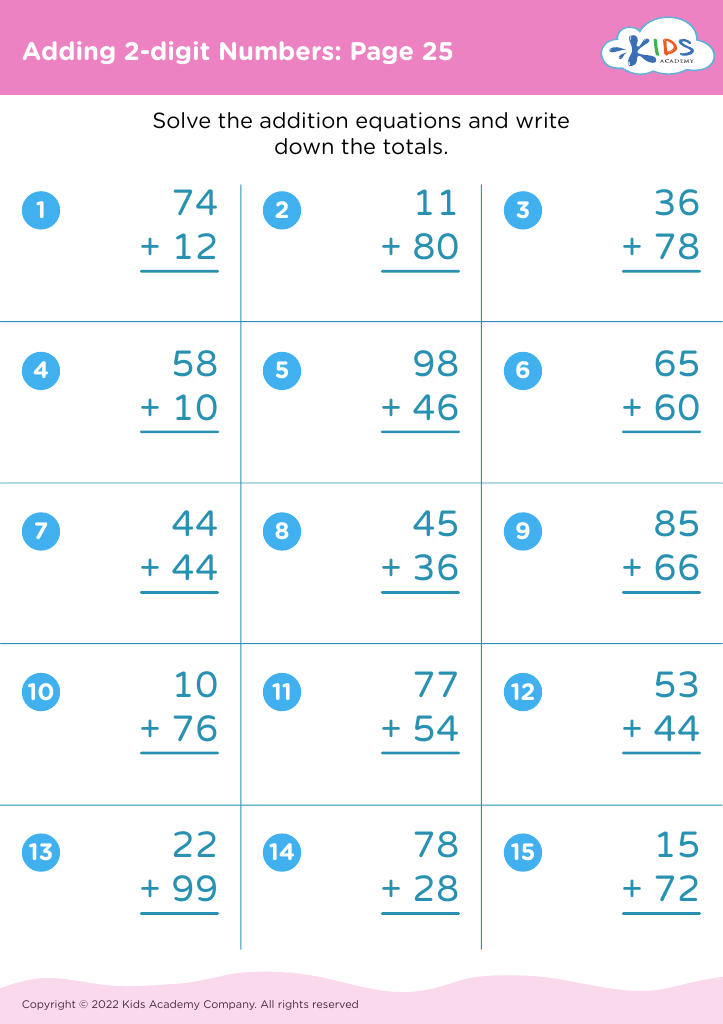
Adding 2-digit Numbers: Page 25

Adding 2-digit Numbers: Page 25

Adding 2-digit Numbers: Page 25
Worksheet
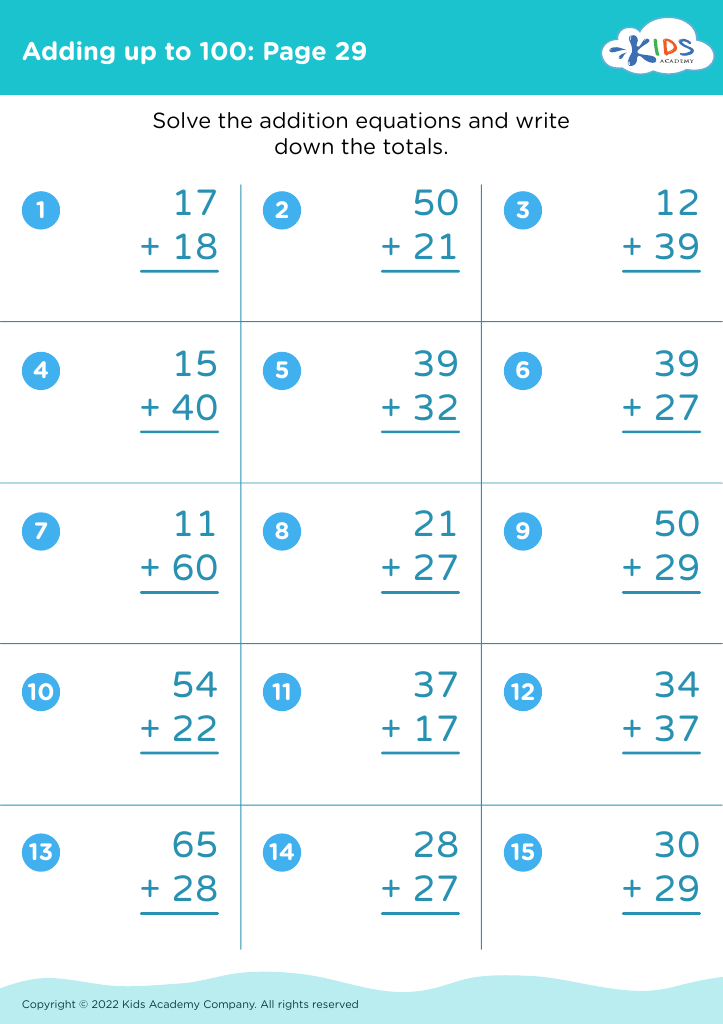
Adding up to 100: Page 29

Adding up to 100: Page 29

Adding up to 100: Page 29
Worksheet
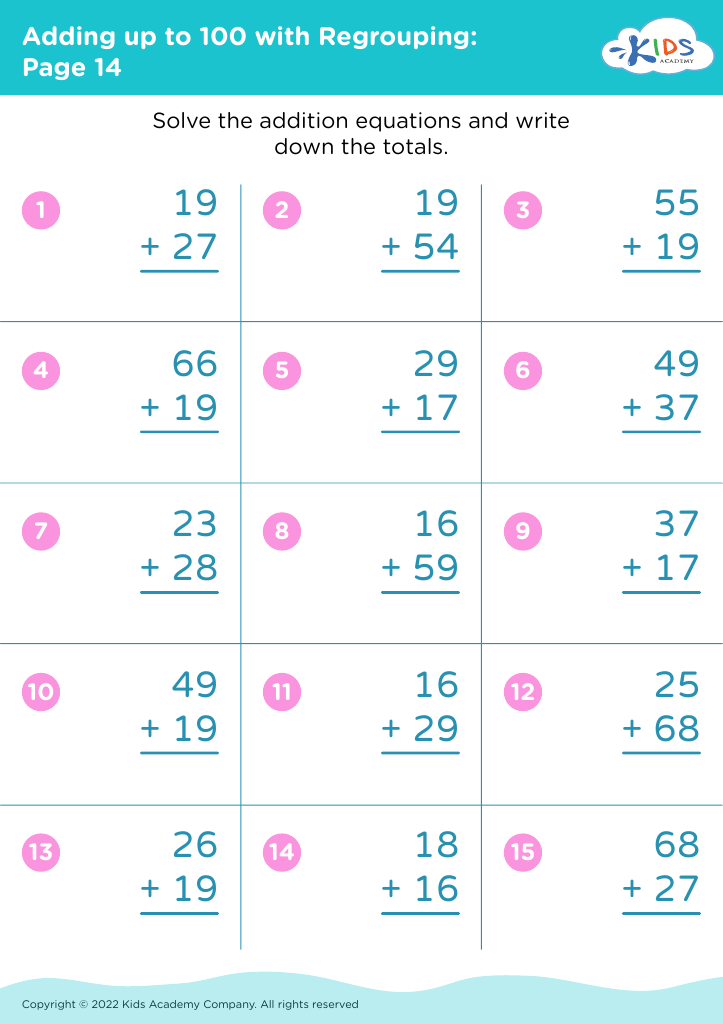
Adding up to 100 with Regrouping: Page 14
Worksheet
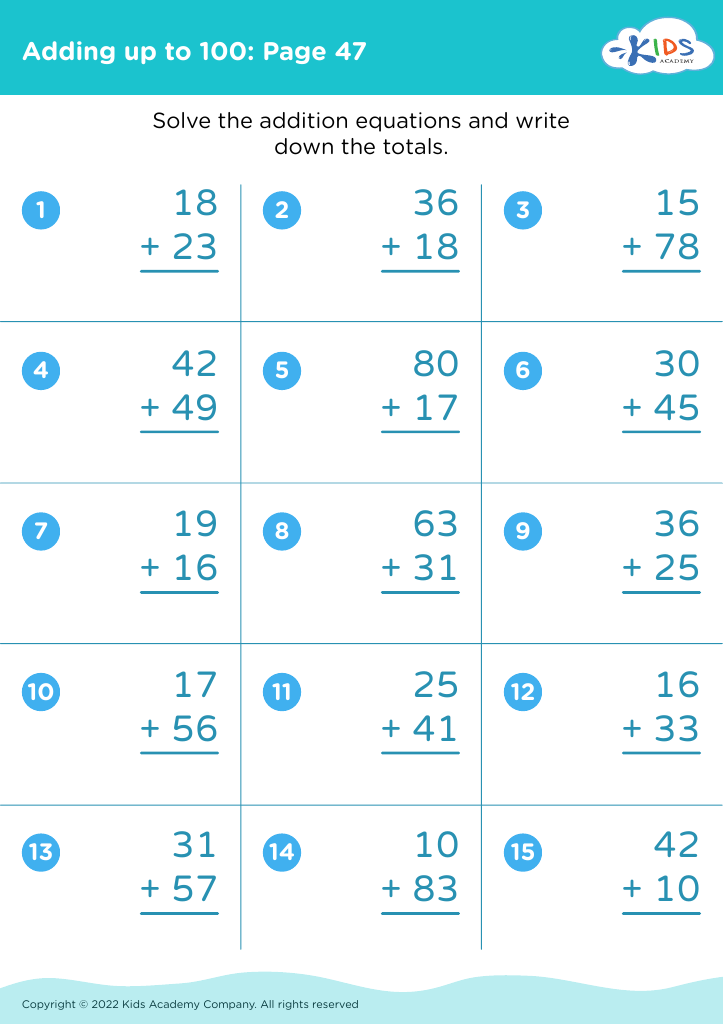
Adding up to 100: Page 47

Adding up to 100: Page 47

Adding up to 100: Page 47
Worksheet
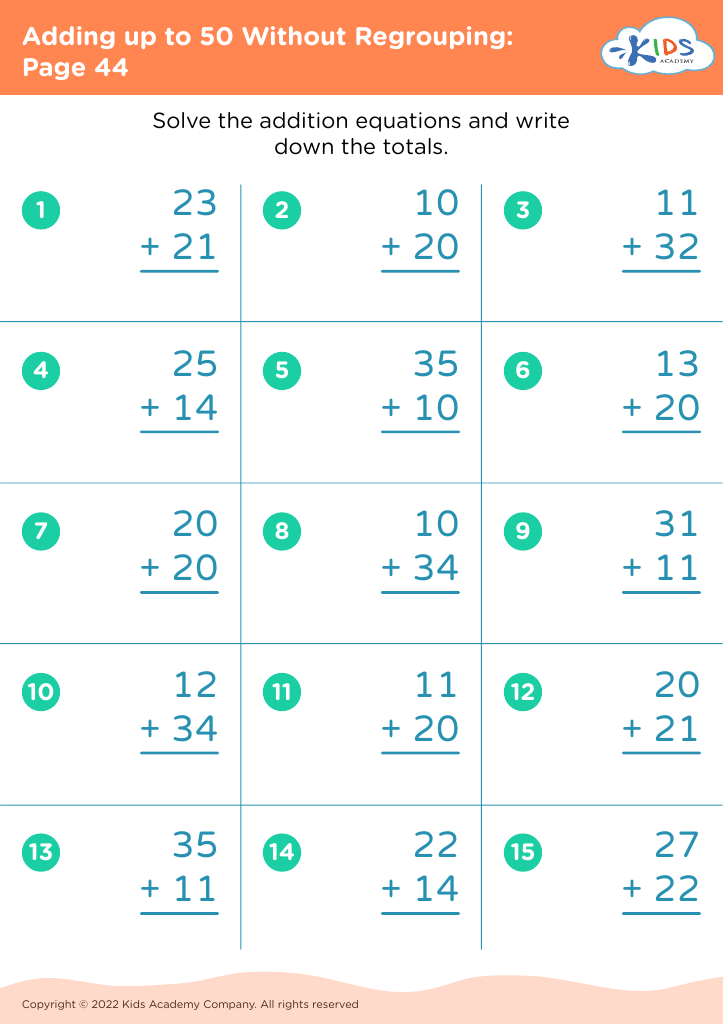
Adding up to 50 Without Regrouping: Page 44
Worksheet
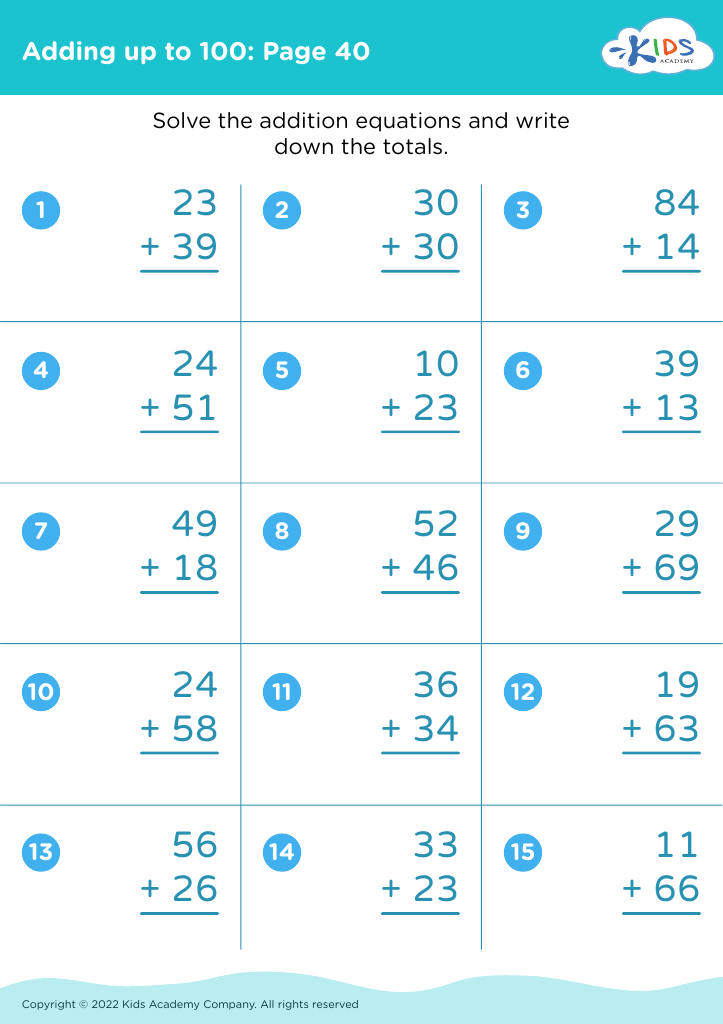
Adding up to 100: Page 40

Adding up to 100: Page 40

Adding up to 100: Page 40
Worksheet
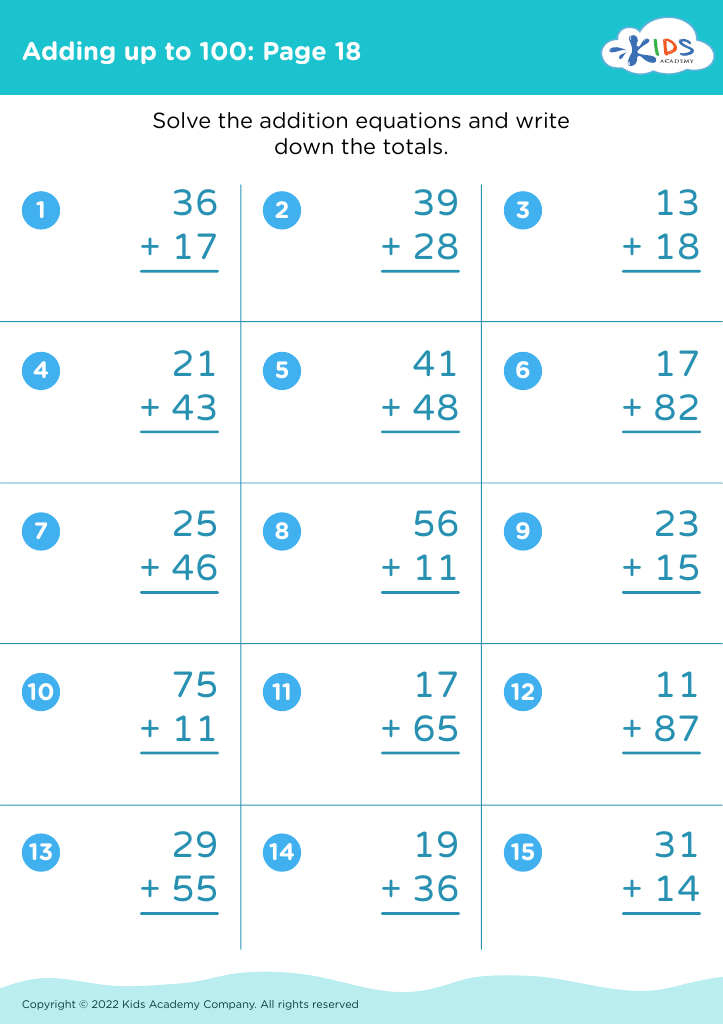
Adding up to 100: Page 18

Adding up to 100: Page 18

Adding up to 100: Page 18
Worksheet
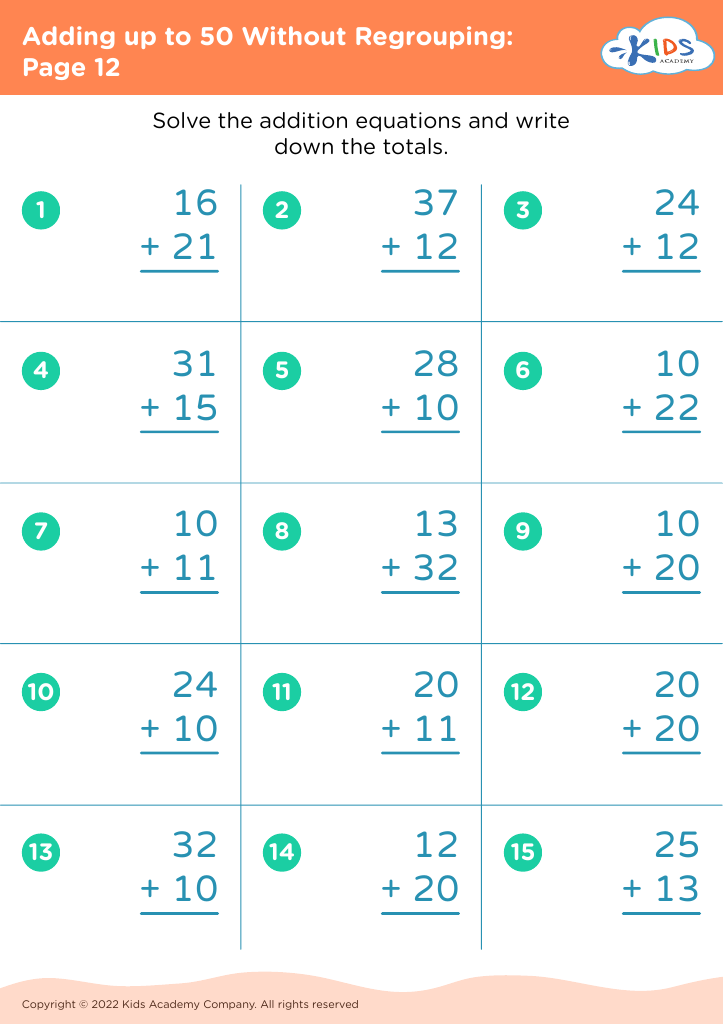
Adding up to 50 Without Regrouping: Page 12
Worksheet
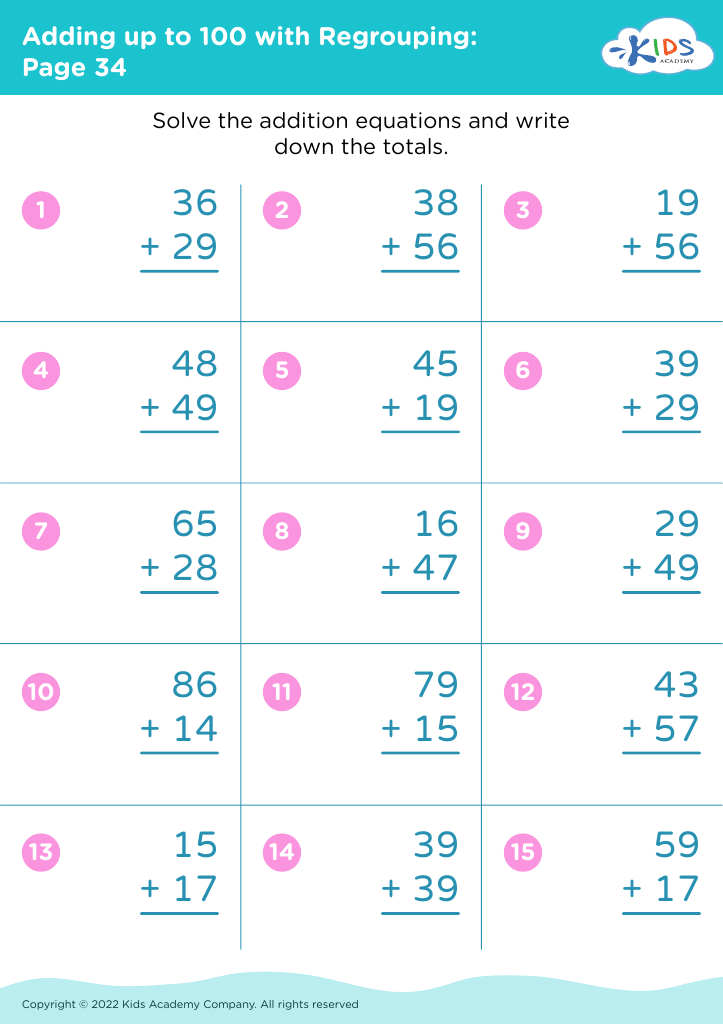
Adding up to 100 with Regrouping: Page 34
Worksheet
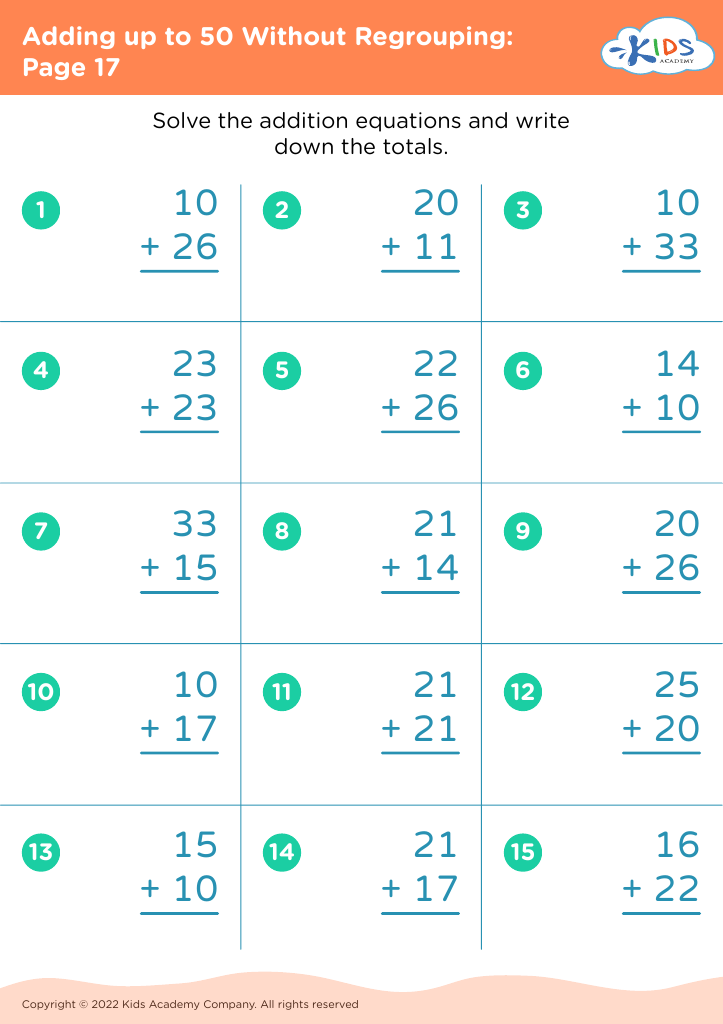
Adding up to 50 Without Regrouping: Page 17
Worksheet
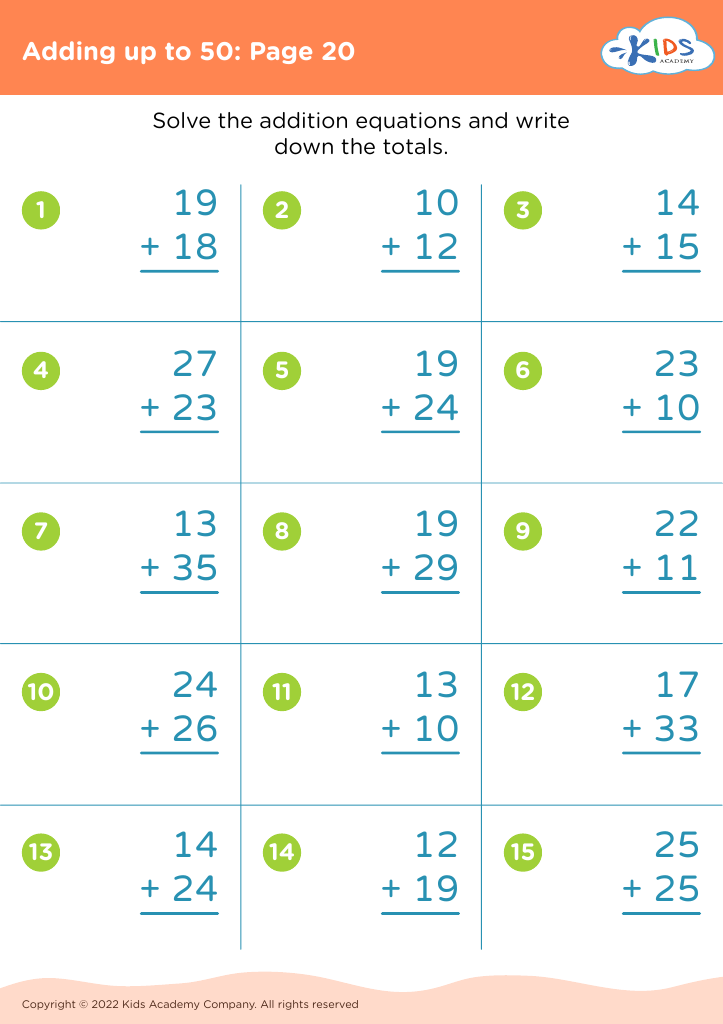
Adding up to 50: Page 20

Adding up to 50: Page 20

Adding up to 50: Page 20
Worksheet
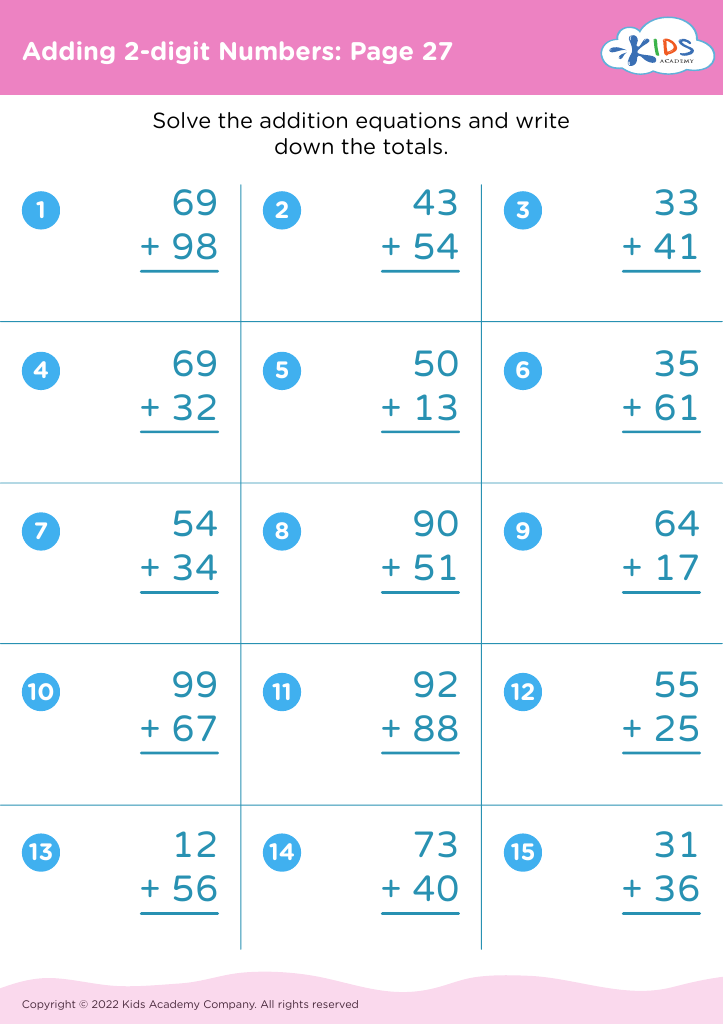
Adding 2-digit Numbers: Page 27

Adding 2-digit Numbers: Page 27

Adding 2-digit Numbers: Page 27
Worksheet


Enhancing number recognition and addition skills for children aged 5-8 is crucial for a variety of reasons. First, these foundational math skills form the basis for more complex mathematical concepts that students will encounter in later grades. Mastery in number recognition allows children to confidently engage with quantitative data, while proficiency in addition equips them to tackle tasks involving larger numbers and basic problem-solving.

Furthermore, developing these skills at a young age fosters cognitive growth and boosts overall academic confidence. When children successfully recognize numbers and perform addition, they experience a sense of accomplishment that can encourage positive attitudes towards learning. This sense of achievement is vital during early education, as it can prevent math anxiety and motivate them to embrace future challenges.

Moreover, number recognition and addition play an essential role in everyday life. From managing money to telling time, these skills are practical and apply directly to real-world situations. Assisting children in this learning journey also involves collaboration between parents and teachers. By engaging in activities focused on number recognition and addition, both parties ensure that children develop a strong mathematical foundation, paving the way for lifelong learning and critical thinking skills essential for their future success.