
Enhances number recognition Addition Worksheets for Ages 5-8
4 filtered results
Difficulty Level
Grade
Age
-
From - To
Subject
Activity
Standards
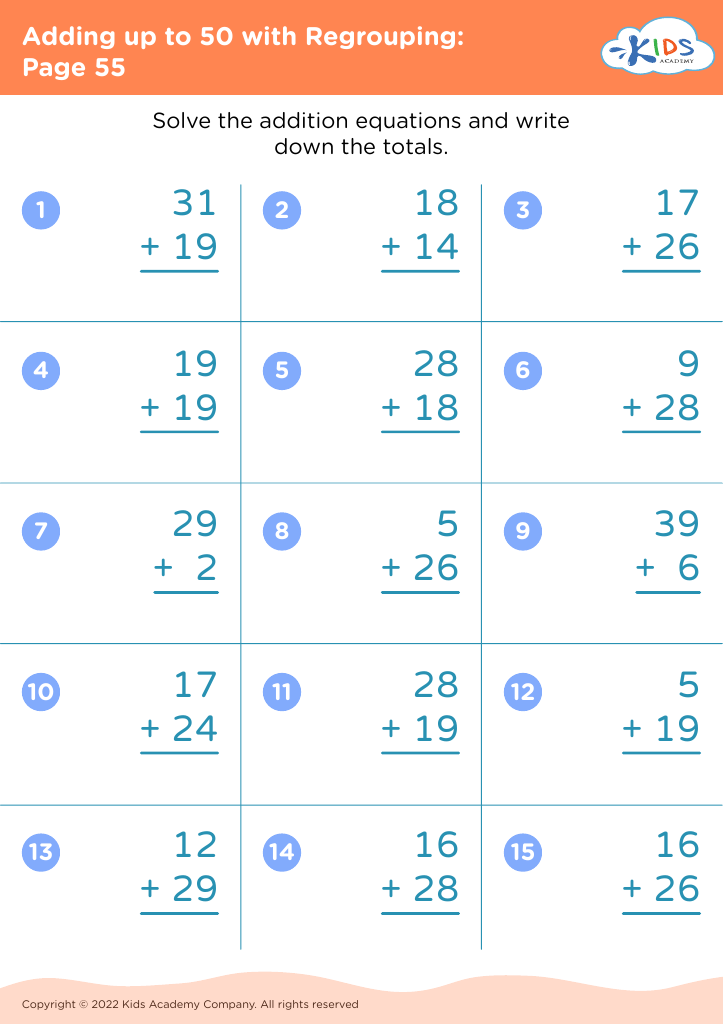
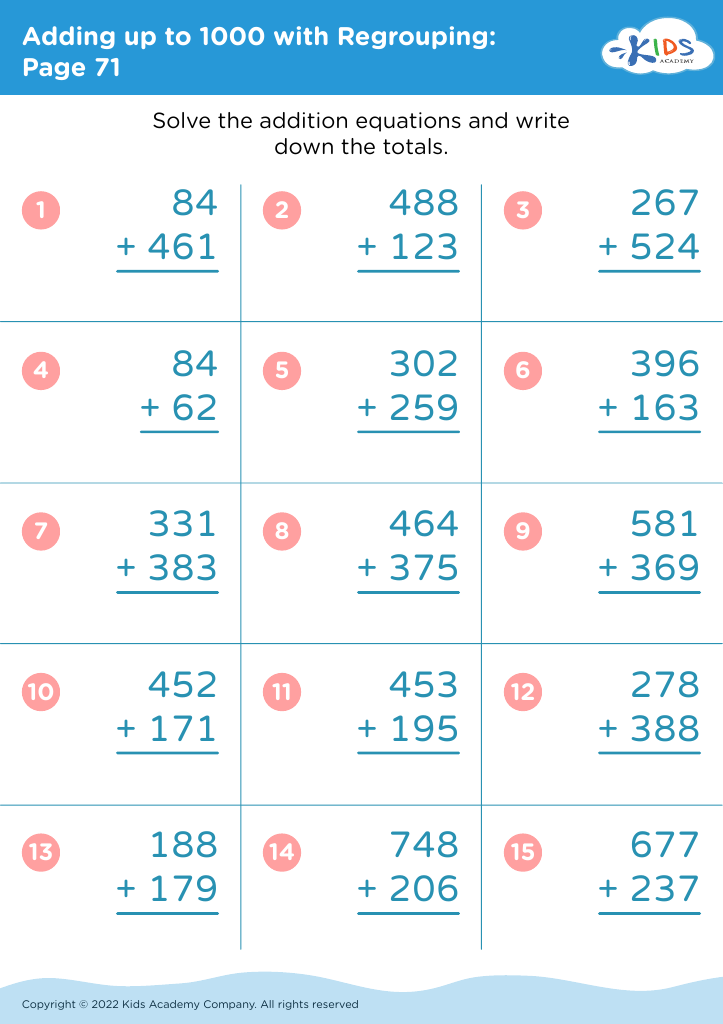
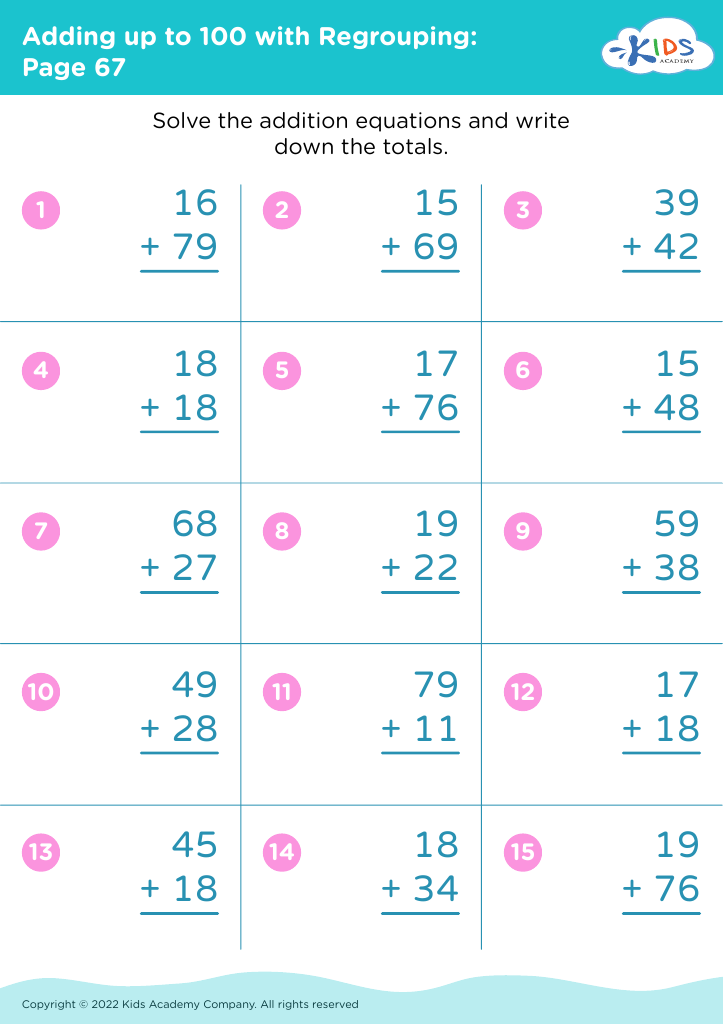
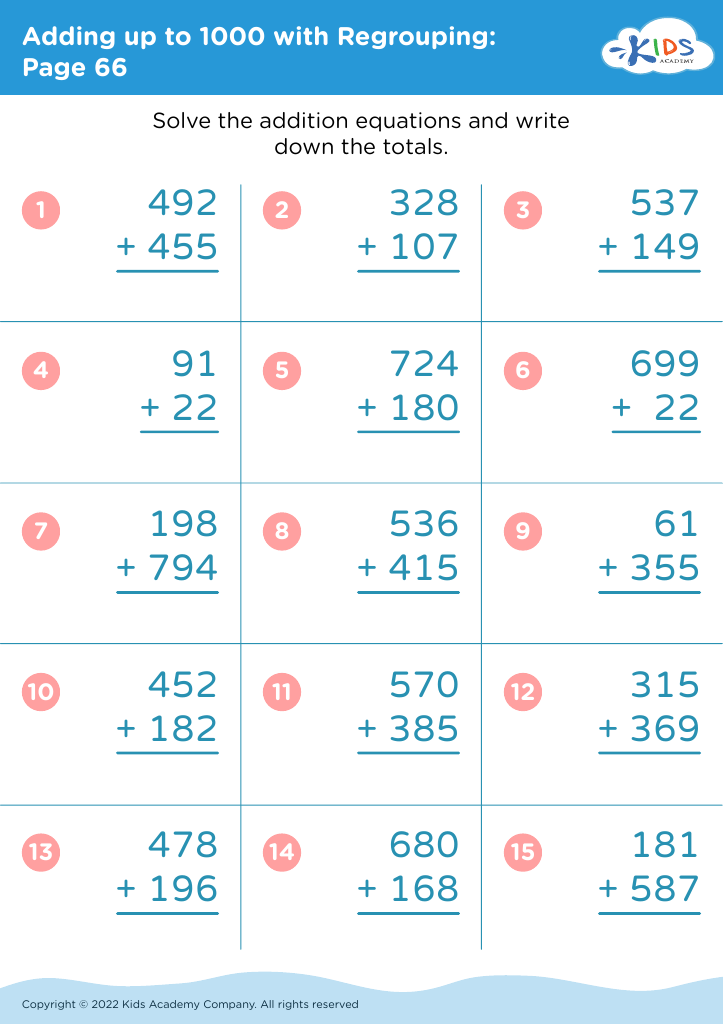
Unlock the potential of young learners with our "Enhances Number Recognition Addition Worksheets for Ages 5-8." Expertly designed, these engaging printables seamlessly combine fun and education to boost number recognition skills. Ideal for early graders, our worksheets include a variety of colorful and interactive activities that guide children through the basics of addition. By solving simple equations, kids not only improve their math proficiency but also build a strong foundation for future learning. Perfect for parents and teachers alike, these tools make mastering math both enjoyable and effective. Equip your child for success with our state-of-the-art resources today!
Favorites
With answer key
Interactive
Join Kids Academy for Free
Who is primarily going to use this learning content?








Enhancing number recognition and addition skills for children aged 5-8 is crucial due to the significant role these competencies play in their overall cognitive and academic development. At this stage, children's brains are exceptionally malleable and absorb information rapidly. Strong number recognition and addition skills lay a foundational understanding of more complex mathematical concepts that children will encounter later in their education.
Parents and teachers should prioritize this because early competency in these areas not only boosts mathematical abilities but also enhances problem-solving skills. Number recognition helps children make sense of the world around them, recognizing quantities and understanding money and time. Mastering addition aids in developing logical thinking and pattern recognition, which are essential for tackling everyday problems.
A robust grasp of these basic mathematical skills also builds confidence in young learners. As children experience success in math at an early age, their self-esteem improves, leading them to become more engaged and fearless in tackling new challenges. Moreover, this competence aligns closely with other crucial academic areas such as reading comprehension and critical thinking, making a positive impact across their entire curriculum.
Ultimately, focusing on these early math skills prepares children for future academic success, nurtures a love for learning, and equips them with vital life skills. Thus, it is vital for parents and teachers to nurture these capabilities from a young age.








