Fraction Addition Addition Worksheets for Ages 5-8
14 filtered results
-
From - To
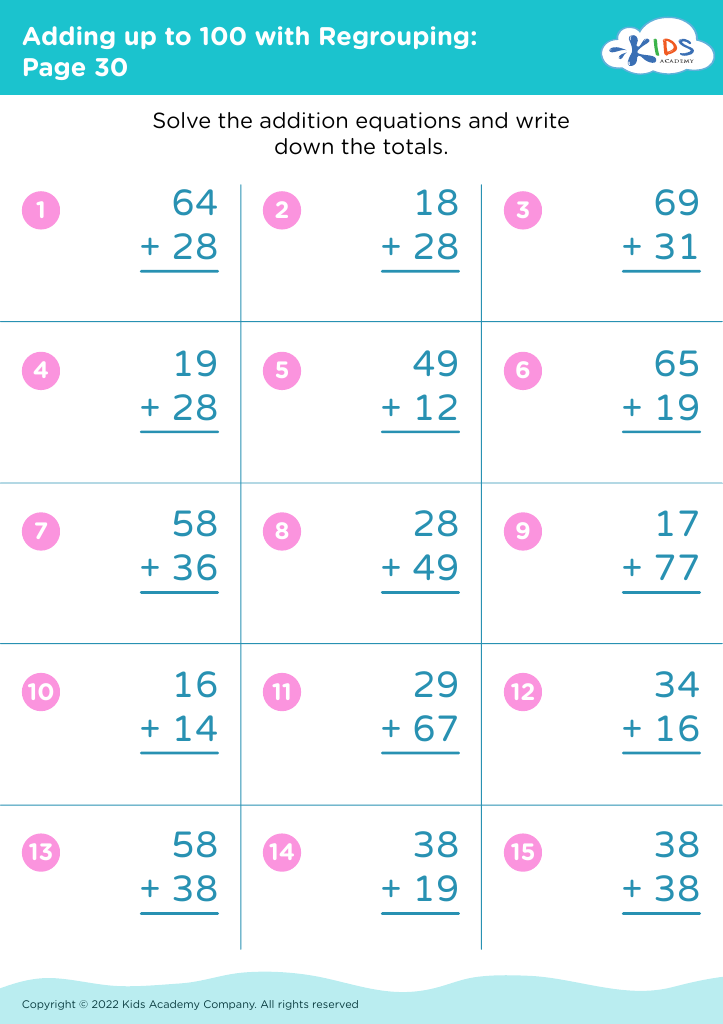
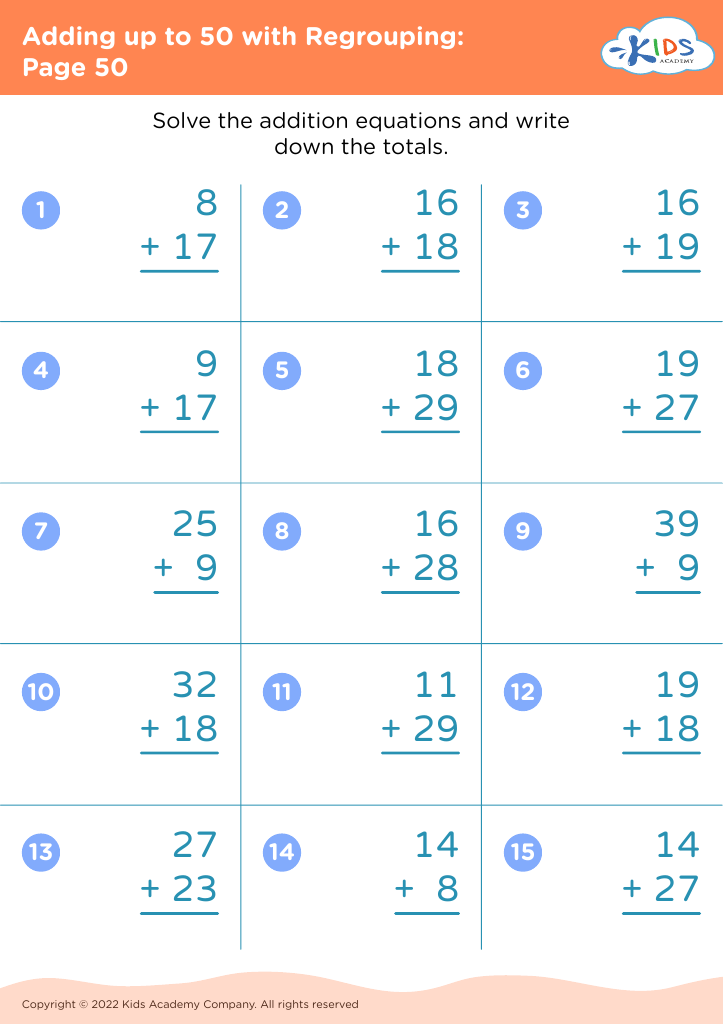
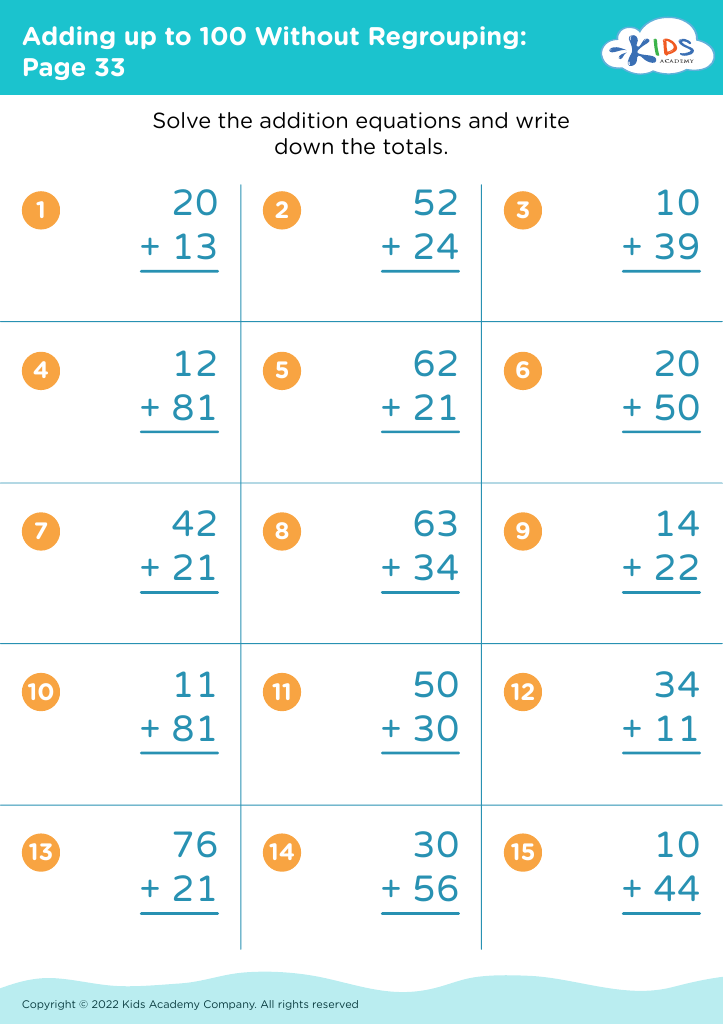
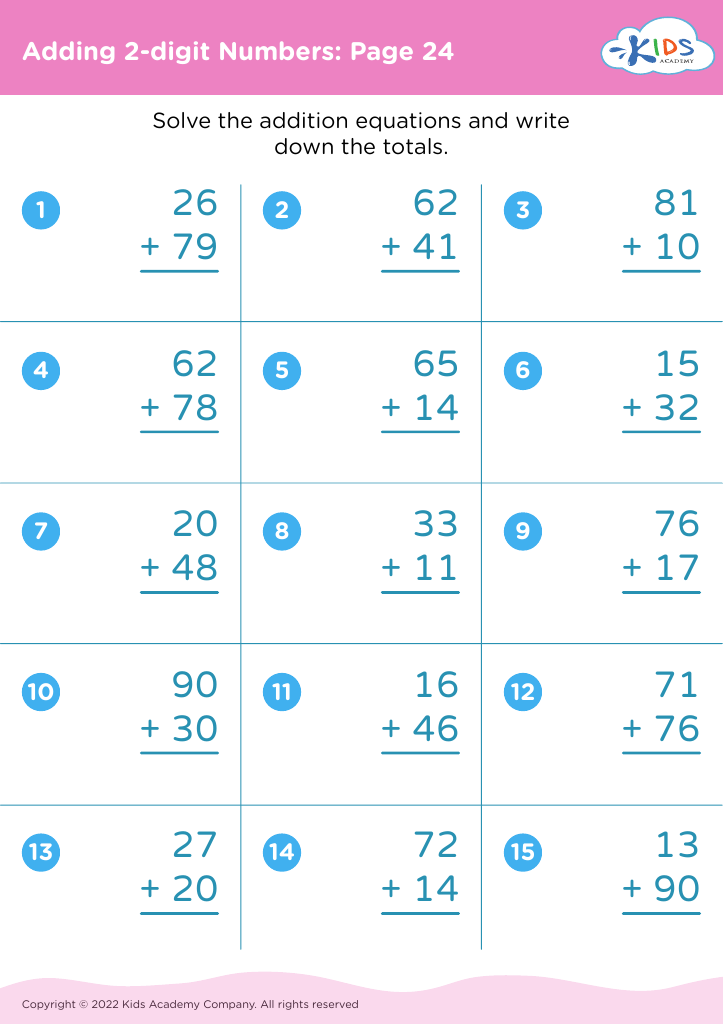
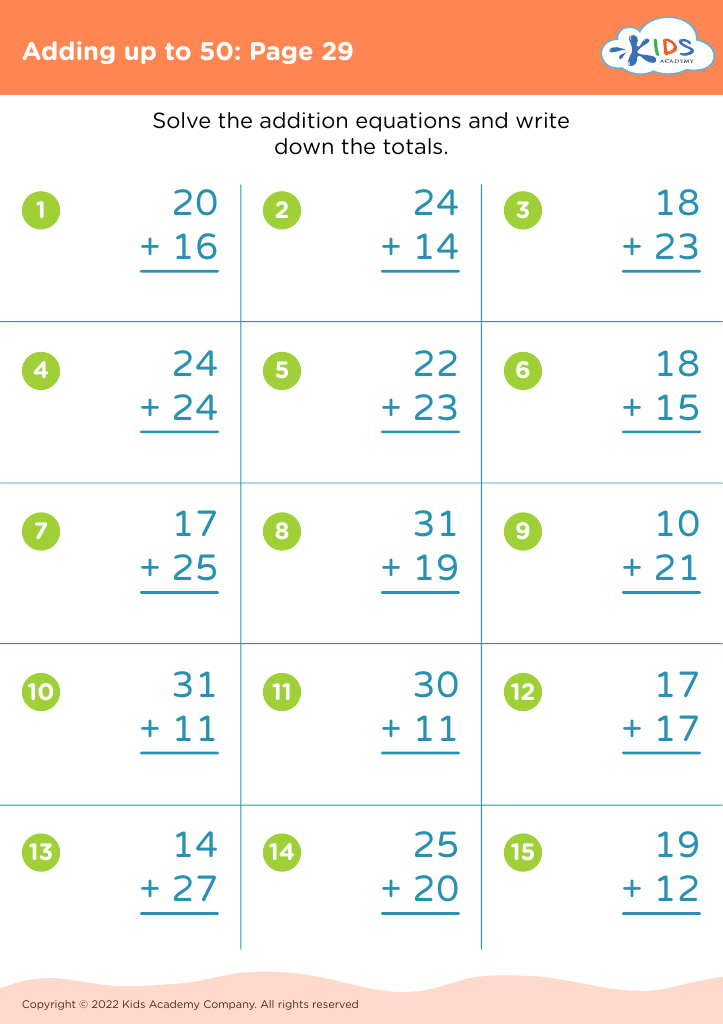
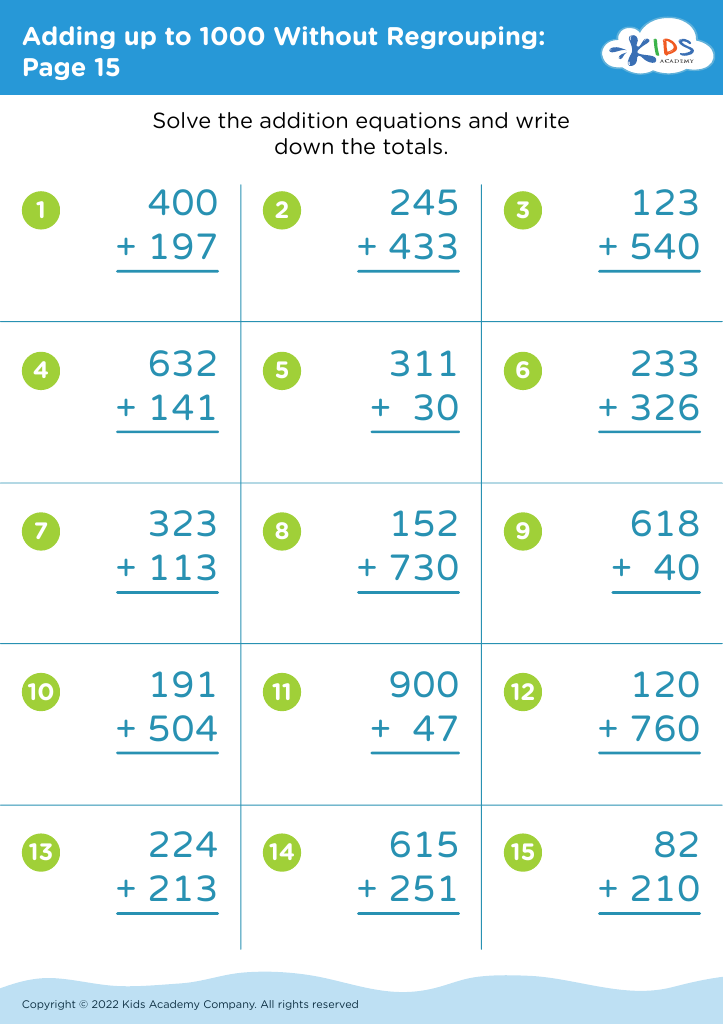
Discover our engaging Fraction Addition Worksheets designed for young learners aged 5-8! These vibrant and interactive resources will help your child understand the concept of adding fractions in a fun and effective way. Each worksheet provides a variety of exercises that gradually increase in difficulty, ensuring that children build confidence as they develop their math skills. Whether used in the classroom or at home, our worksheets encourage practice and reinforce understanding through colorful visuals and practical examples. Join the adventure of math learning today and watch your child excel in fraction addition with our thoughtfully crafted materials!





.jpg)


Fraction addition is a crucial skill for children aged 5-8 as it lays the groundwork for advanced mathematical concepts and everyday problem-solving skills. At this age, children begin to understand basic fractions, such as halves and quarters, which helps develop their number sense and introduces them to the concept of parts being part of a whole. Understanding how to add fractions is not just about numbers; it enhances critical thinking and logical reasoning.
Parents and teachers should prioritize fraction addition as it fosters a positive attitude toward math. When children grasp this concept early, they build confidence and a solid foundation for more complex mathematical operations in the future, such as mixed numbers or equivalent fractions. Moreover, engaging with fractions through real-life scenarios—like cooking or sharing—makes learning more relatable and fun, encouraging children to apply math in practical situations.
Ultimately, a strong grasp of fraction addition prepares children for higher education and equips them with essential life skills. By caring about this aspect of their education, parents and teachers can ensure that children develop both numeracy skills and a love for learning, paving the way for success in mathematics and beyond.








