Improve number recognition Addition Worksheets for Ages 5-8
15 filtered results
-
From - To
Welcome to our Improve Number Recognition Addition Worksheets tailored for children ages 5-8! These engaging and colorful activities are designed to reinforce essential math skills while enhancing number recognition. Our worksheets incorporate playful themes and fun illustrations to keep young learners motivated. Each sheet focuses on connecting number recognition with basic addition concepts, ensuring a seamless learning experience. Perfect for both classroom settings and at-home practice, these worksheets help children build a solid foundation in math while boosting their confidence. Explore our comprehensive collection and watch your child's numerical skills flourish as they practice critical addition through interactive learning!
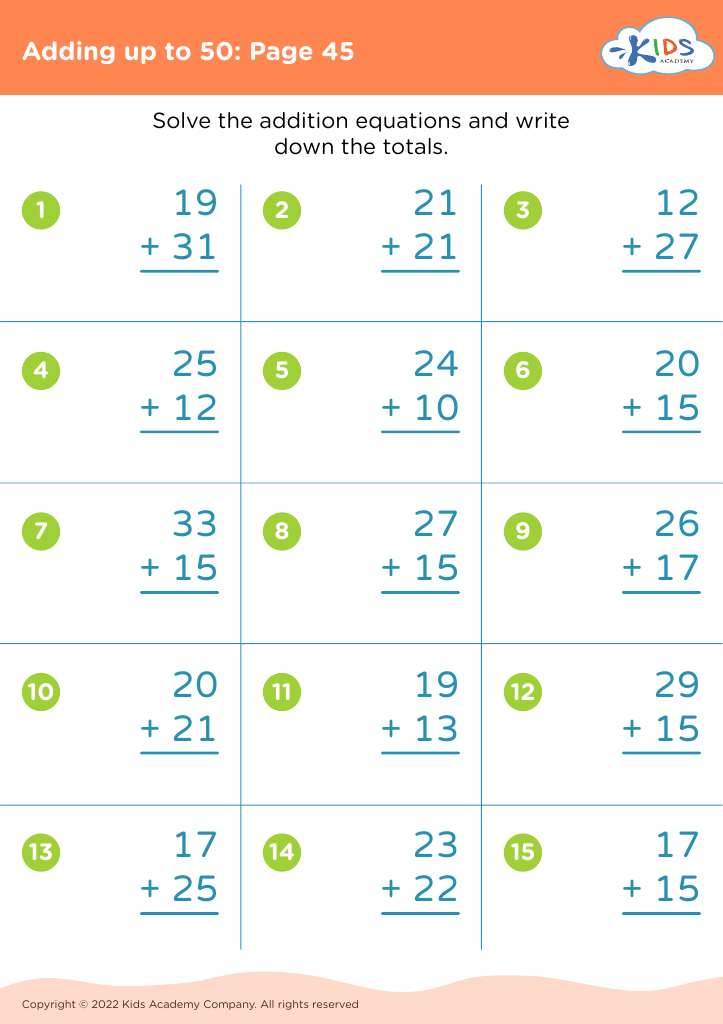
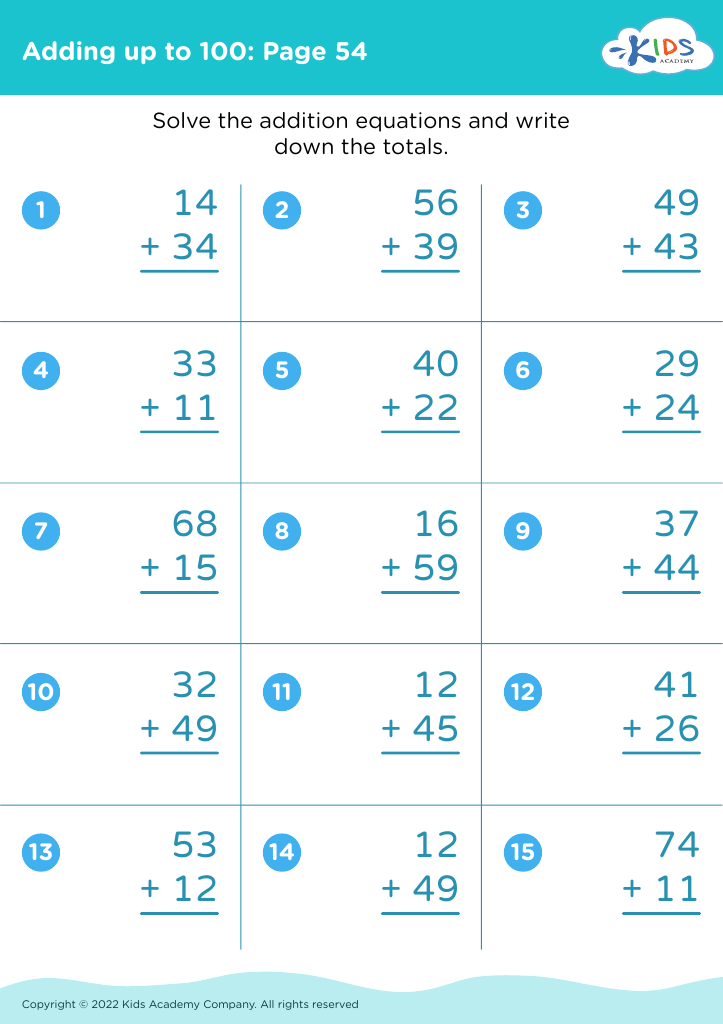
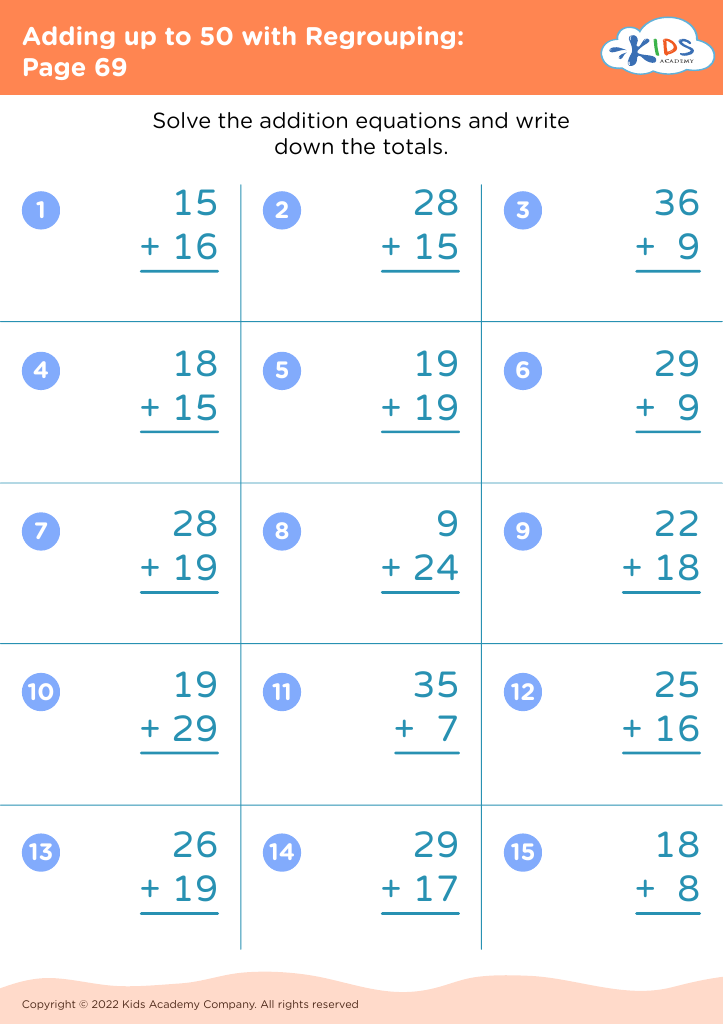
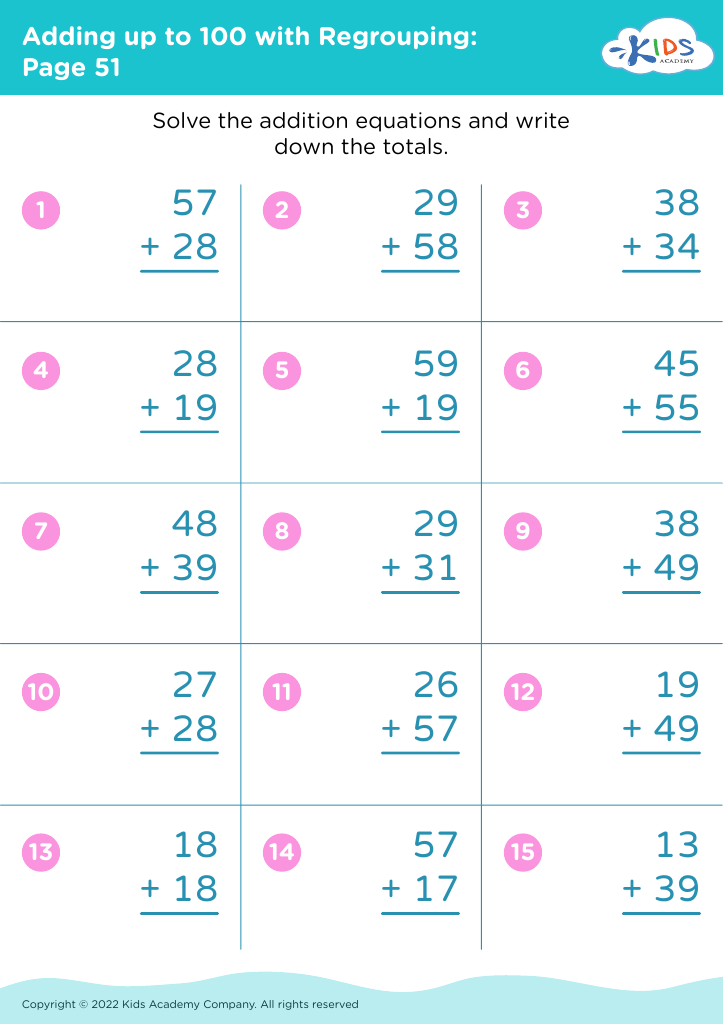
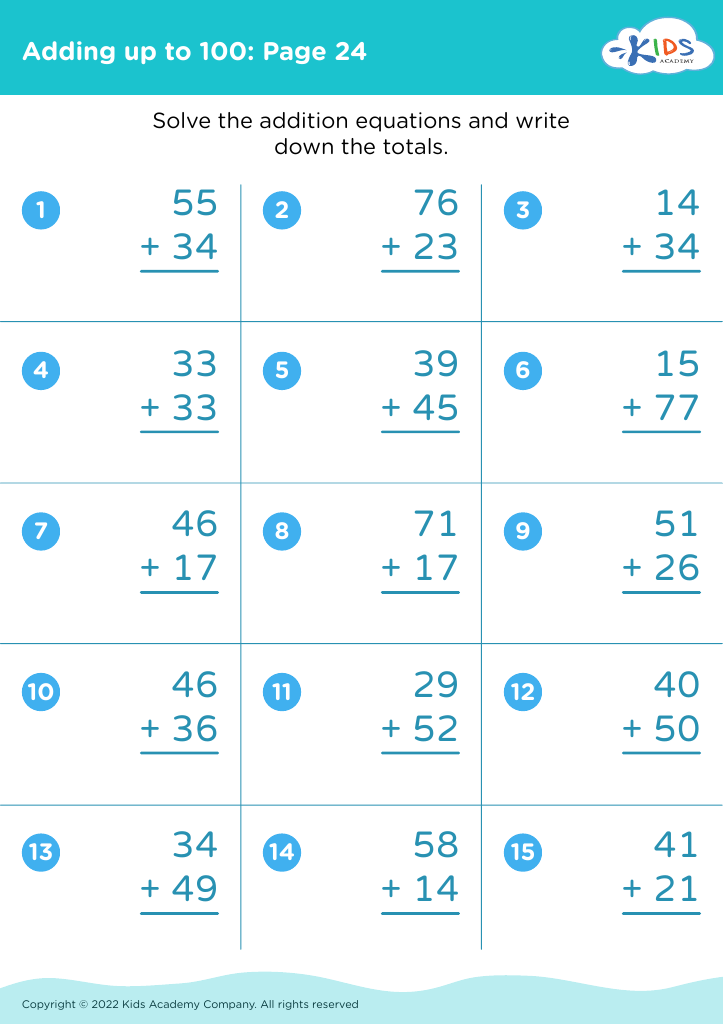
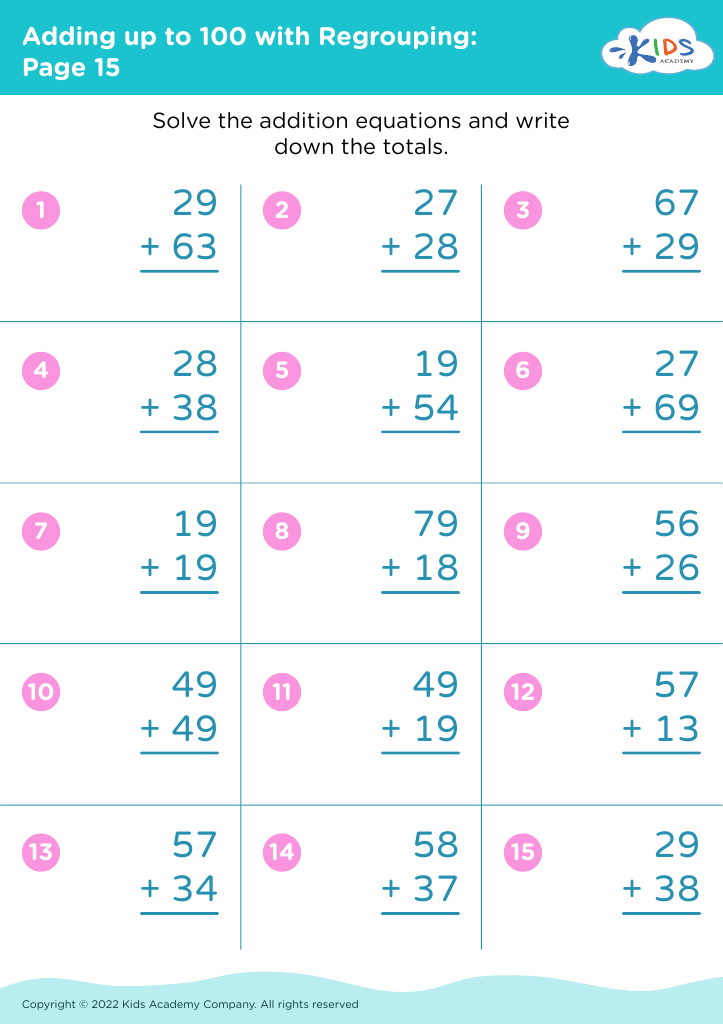
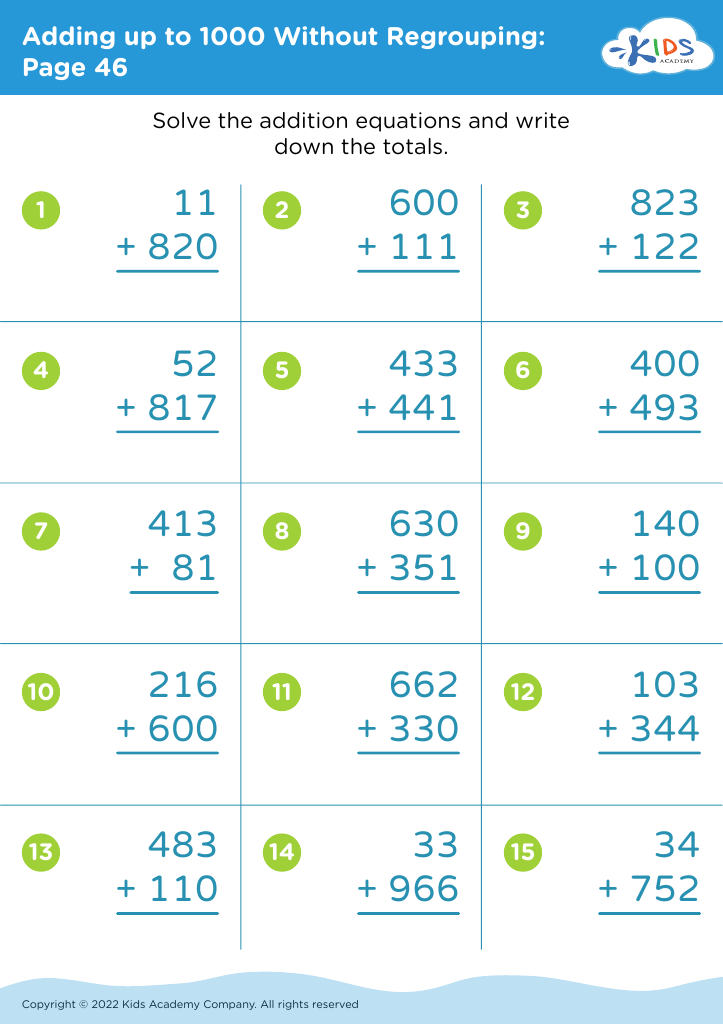
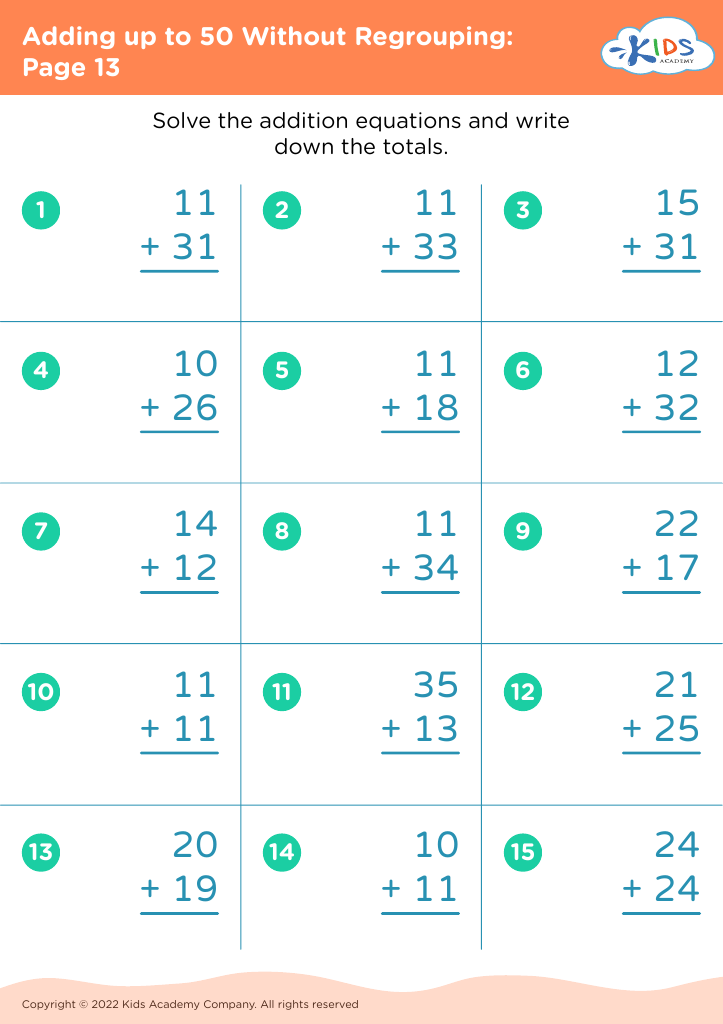
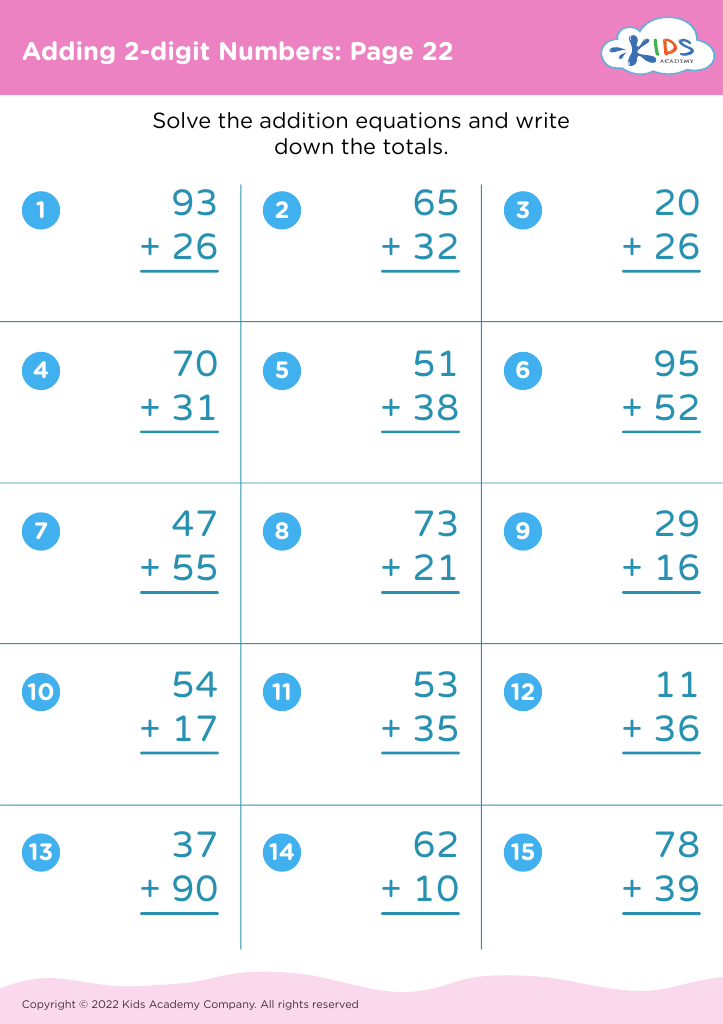
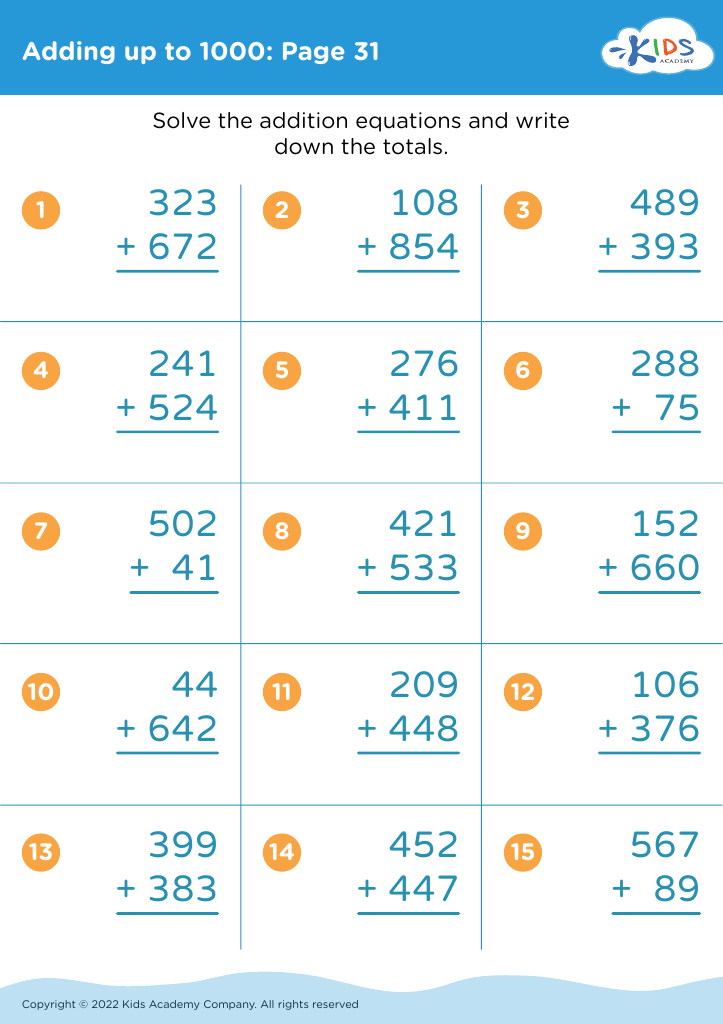
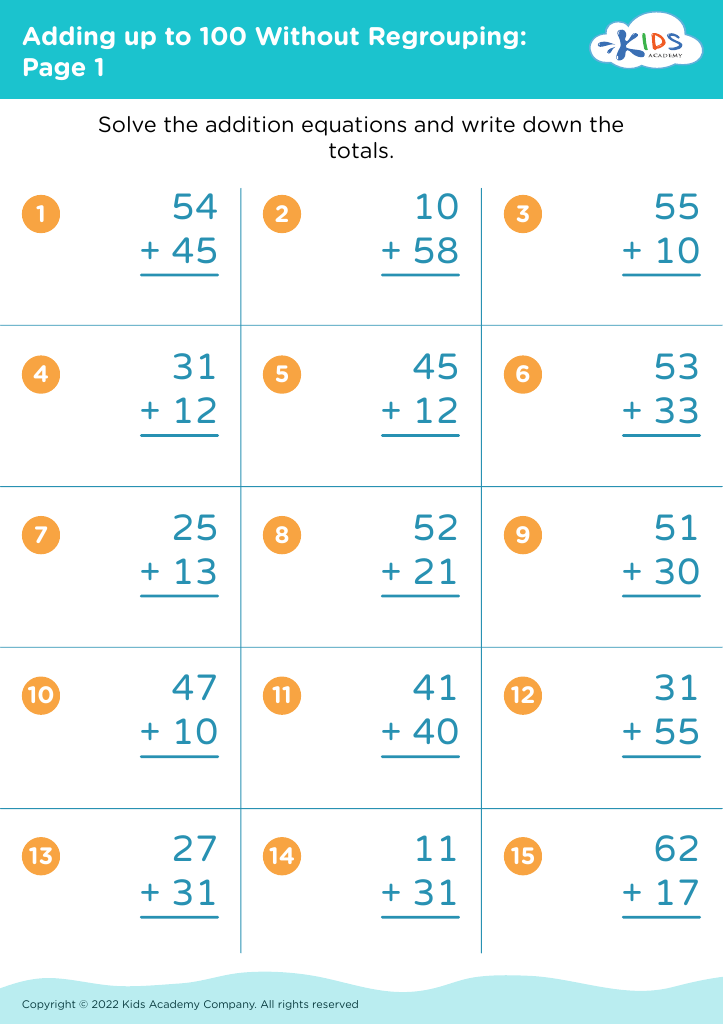
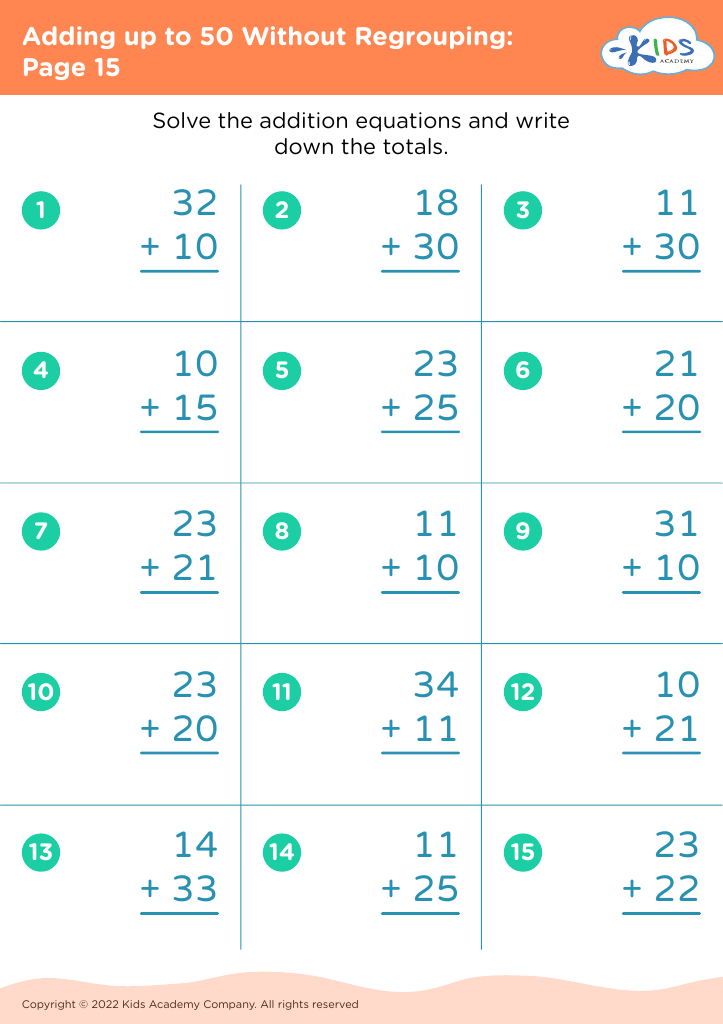
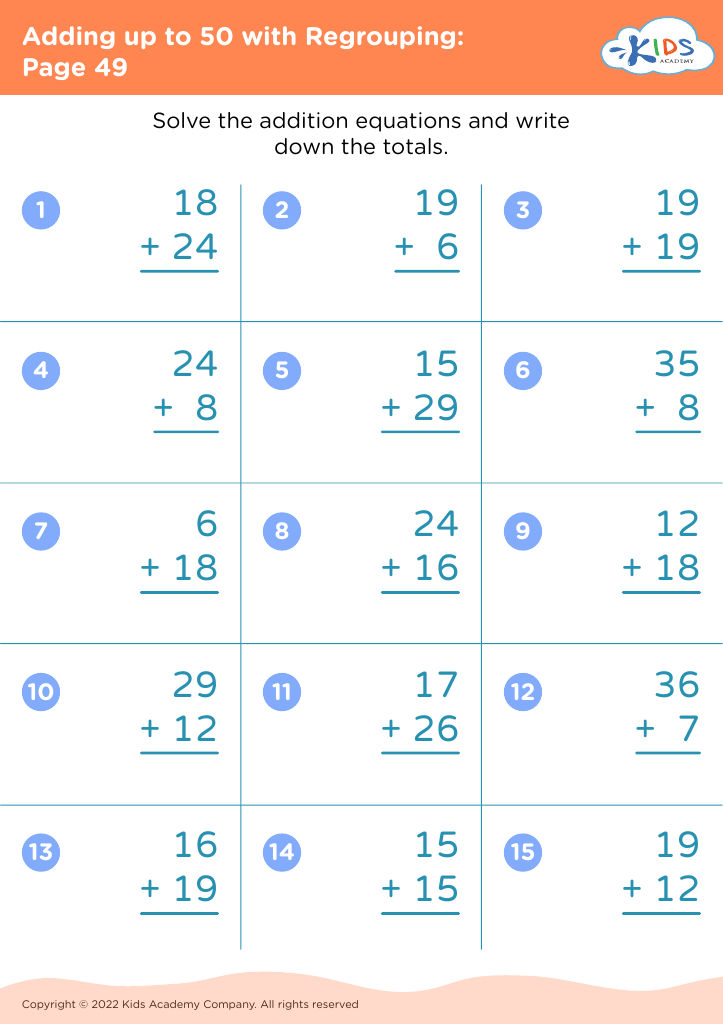
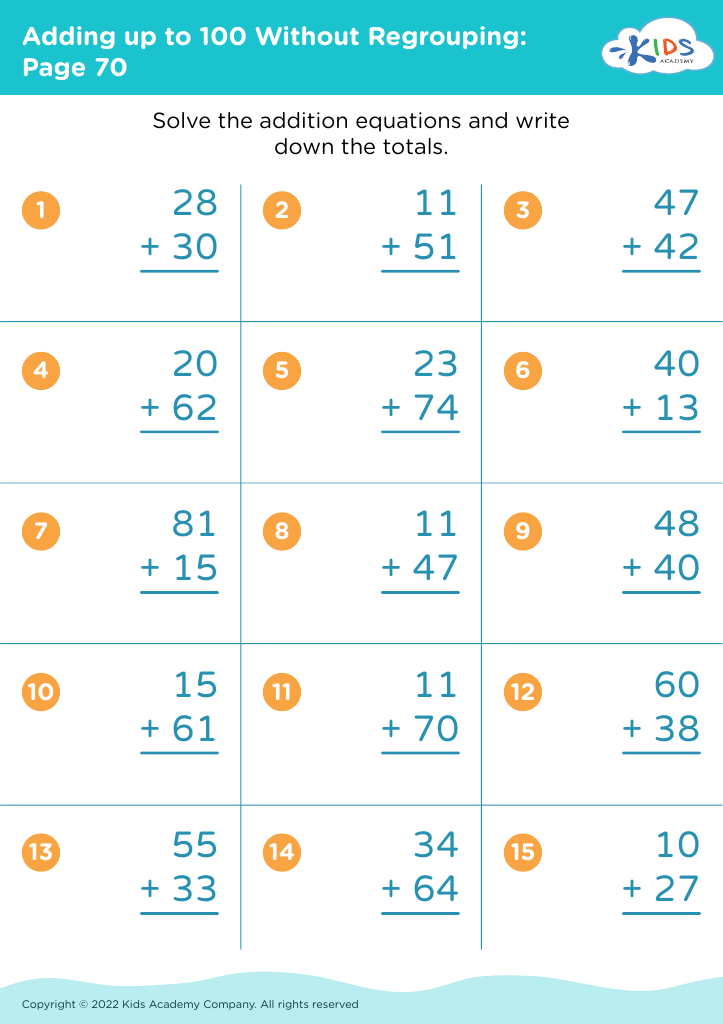
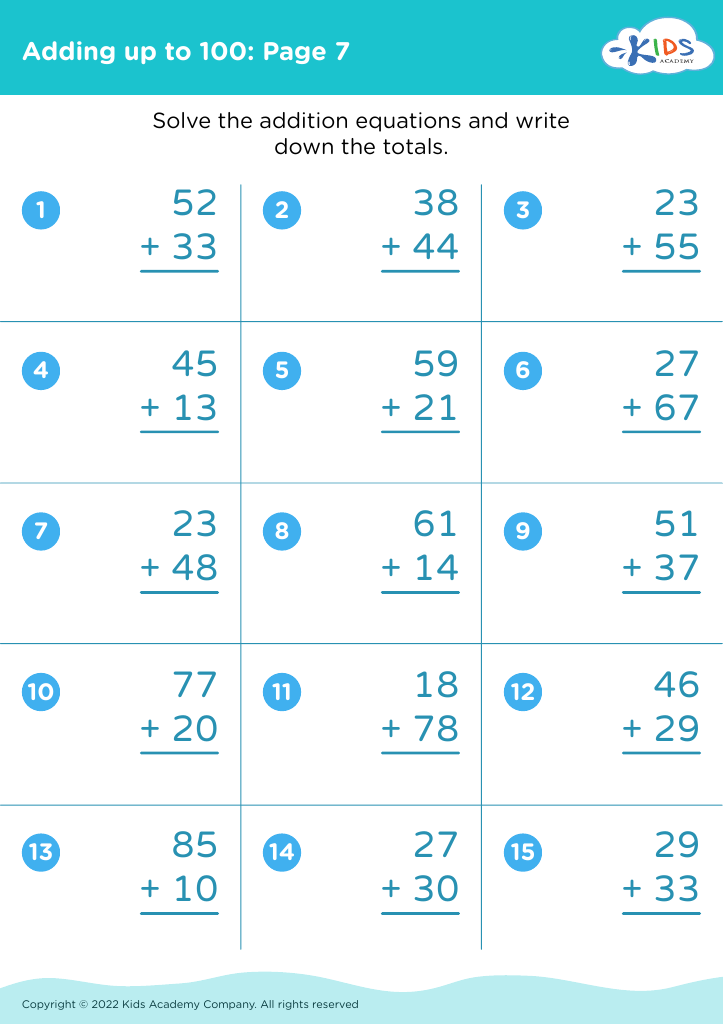








Improving number recognition and addition skills in children aged 5-8 is crucial for their overall mathematical development. At this age, children are forming foundational skills that will support their future learning in mathematics and related subjects. Number recognition allows children to understand the concept of quantities and sets, which is essential in everyday life and more advanced math principles later on.
Additionally, mastering basic addition helps children develop problem-solving strategies and enhances their cognitive abilities. It lays the groundwork for more complex operations like subtraction, multiplication, and division. When parents and teachers focus on these skills, they foster a child's confidence and mathematical fluency, which encourages a positive attitude towards learning.
Engaging in activities that improve number recognition and addition can make math enjoyable and relatable, rather than intimidating. It can nurture a lifelong appreciation for the subject and encourage further exploration of mathematical concepts. When children feel supported in their learning from an early age, they’re more likely to succeed in school and use their math skills in real-life situations—building a strong numeric foundation that extends beyond the classroom. Therefore, it is vital for parents and teachers to prioritize these essential skills in early education.








