Improve reading skills Addition Worksheets for Ages 5-8 - Page 2
29 filtered results
-
From - To
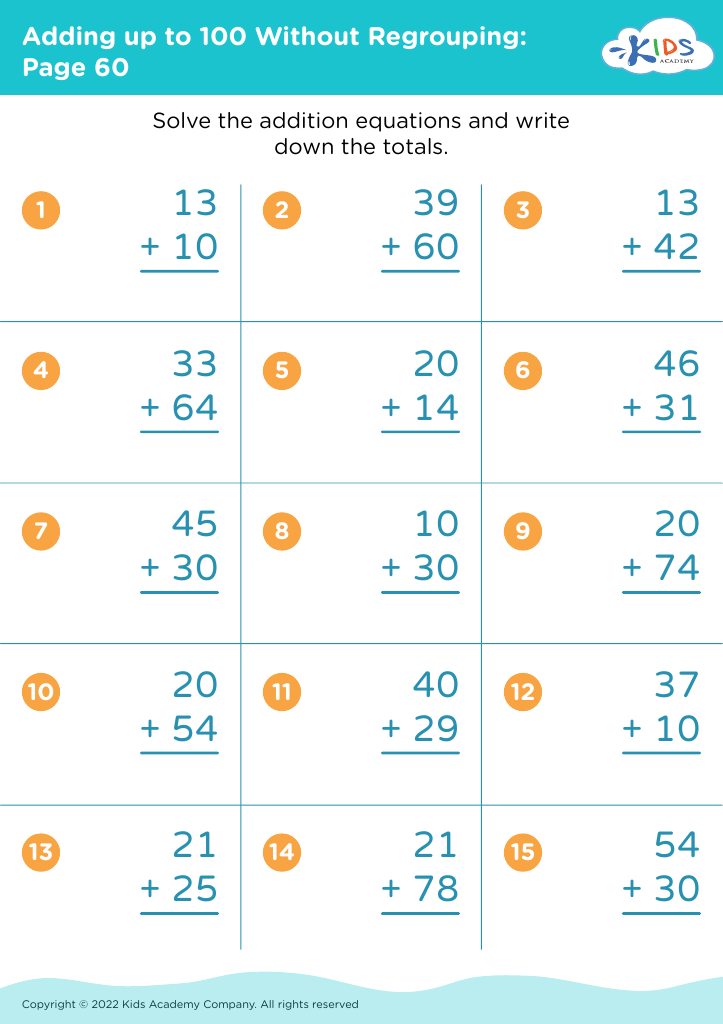








Parents and teachers should be keenly focused on improving reading skills for children aged 5-8 because these early years form the foundation for all future learning. Reading is not just another subject; it's a vital skill that facilitates learning across all areas of the curriculum. When children develop strong reading abilities, they are better equipped to understand and engage with new concepts, whether in math, science, or social studies.
At this critical age, children's brains are particularly receptive to acquiring new skills. Early reading proficiency can ignite curiosity and foster a lifelong love of learning. It also builds essential cognitive skills such as memory, attention, and problem-solving. Moreover, strong reading skills are crucial for effective communication, which is vital for social and emotional development.
Poor reading skills at an early age can lead to a cycle of academic struggle and low self-esteem. Children may find themselves lagging behind their peers, which can influence their overall attitude toward school and education. On the other hand, when children are confident readers, they are more likely to participate in class, complete homework, and engage with educational activities.
Therefore, investing time and effort in improving reading skills early on sets the stage for a brighter academic future and well-rounded development, making it an essential focus for parents and teachers alike.








