Learning number patterns Addition Worksheets for Ages 5-8
3 filtered results
-
From - To
Discover our engaging Learning Number Patterns Addition Worksheets designed for children aged 5-8! These worksheets help young learners recognize and understand basic number patterns, enhancing their addition skills in a fun and interactive way. Through a variety of exercises, kids will explore sequences, identify patterns, and solve addition problems that reinforce their mathematical understanding. Ideal for both classroom settings and at-home learning, these resources promote critical thinking and number sense. Encourage your child's love for math while building a solid foundation for future concepts. Get started today and watch your child's confidence soar as they master number patterns and addition!
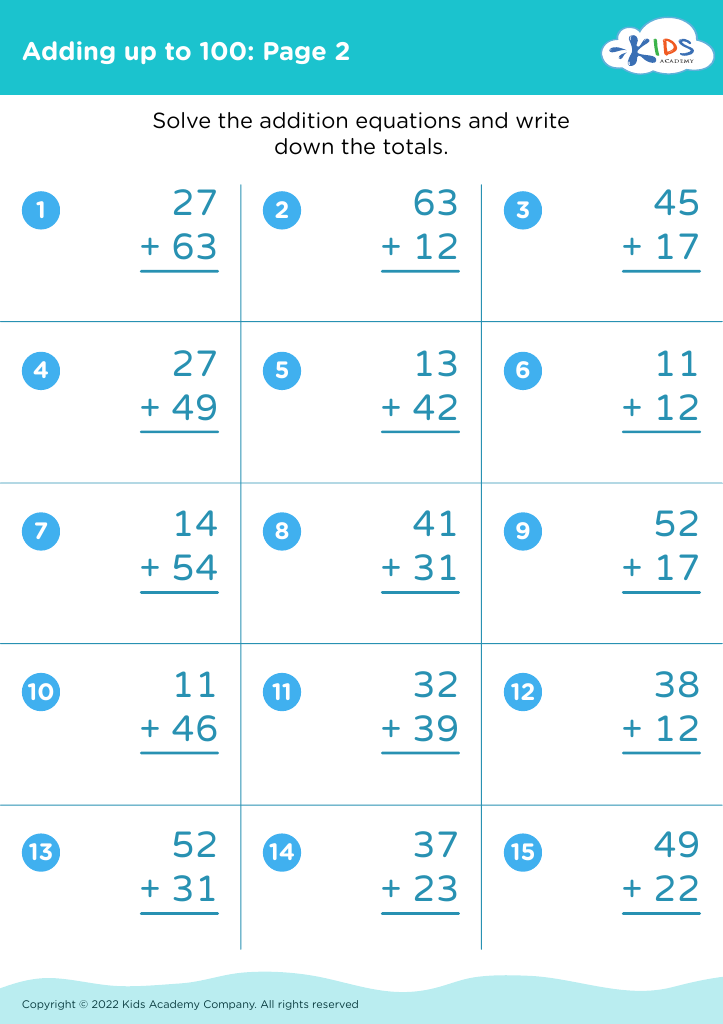
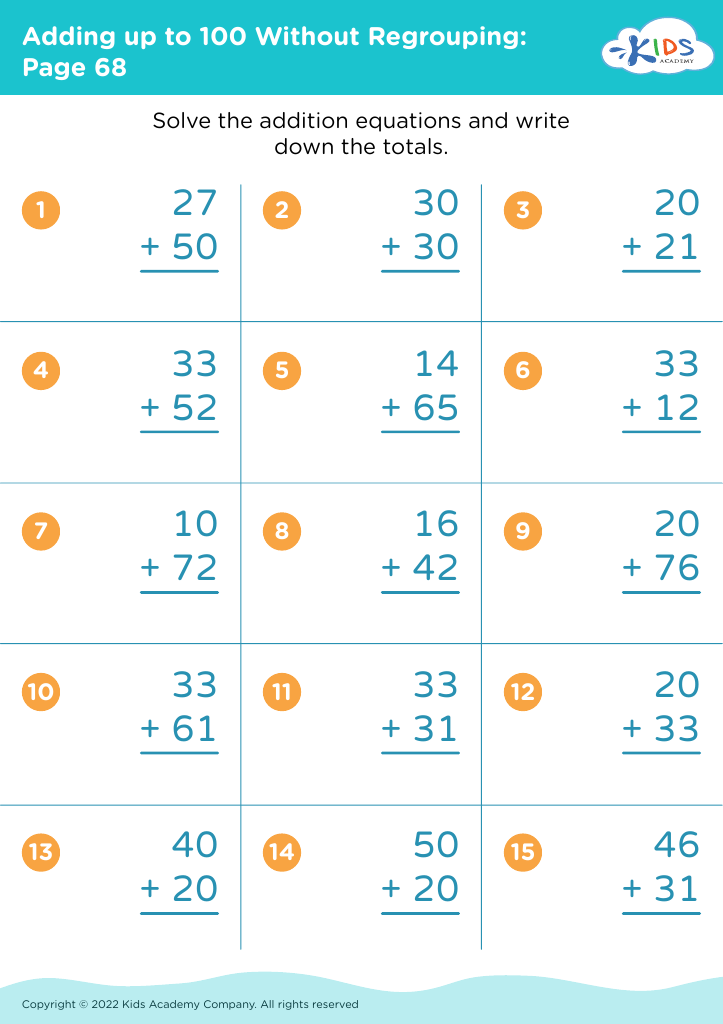
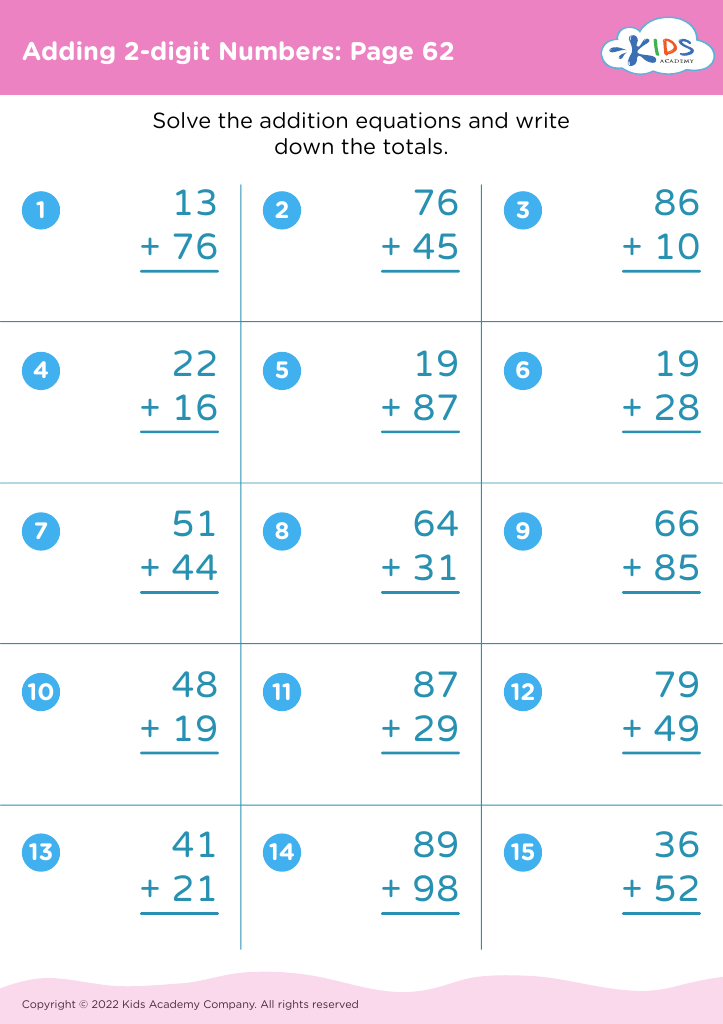








Learning number patterns in addition is crucial for children aged 5-8, as it lays a foundational understanding for future mathematical concepts. Recognizing patterns helps young learners develop critical thinking and problem-solving skills. When children can identify and manipulate number patterns, they gain confidence in their abilities, encouraging a positive attitude towards mathematics.
Moreover, understanding addition patterns facilitates number fluency. For instance, knowing that 2 + 2 is the same as 2 + 3 can help children make quick mental calculations, which are essential for higher-level arithmetic as they progress in school.
Additionally, number patterns enhance memory retention and cognitive skills. Young minds are naturally curious and learn best through engaging activities; discovering patterns in numbers through games or visual aids makes the learning process enjoyable and effective. This excitement nurtures a lifelong interest in math and logical reasoning.
Finally, supporting children's engagement with number patterns sets the stage for advanced mathematics later in their education, including multiplication, division, and algebra. Parents and teachers play a pivotal role in fostering these skills, ensuring that children are equipped to navigate the complexities of math in their academic journeys. By prioritizing number patterns in addition, they help create a solid mathematical foundation.








