Logical thinking Addition Worksheets for Ages 5-8
9 filtered results
-
From - To
Boost your child's mathematical skills with our Logical Thinking Addition Worksheets for ages 5-8. Designed to foster critical thinking alongside basic addition, these engaging worksheets encourage students to solve problems creatively and develop a deeper understanding of mathematical concepts. Each worksheet includes a variety of fun activities that challenge young learners to apply logic and reasoning as they tackle different addition problems. Perfect for classroom use or at-home learning, these worksheets are an excellent resource for parents and educators aiming to enhance students’ problem-solving abilities while strengthening their arithmetic skills. Unlock the joy of learning with our thoughtfully crafted materials!
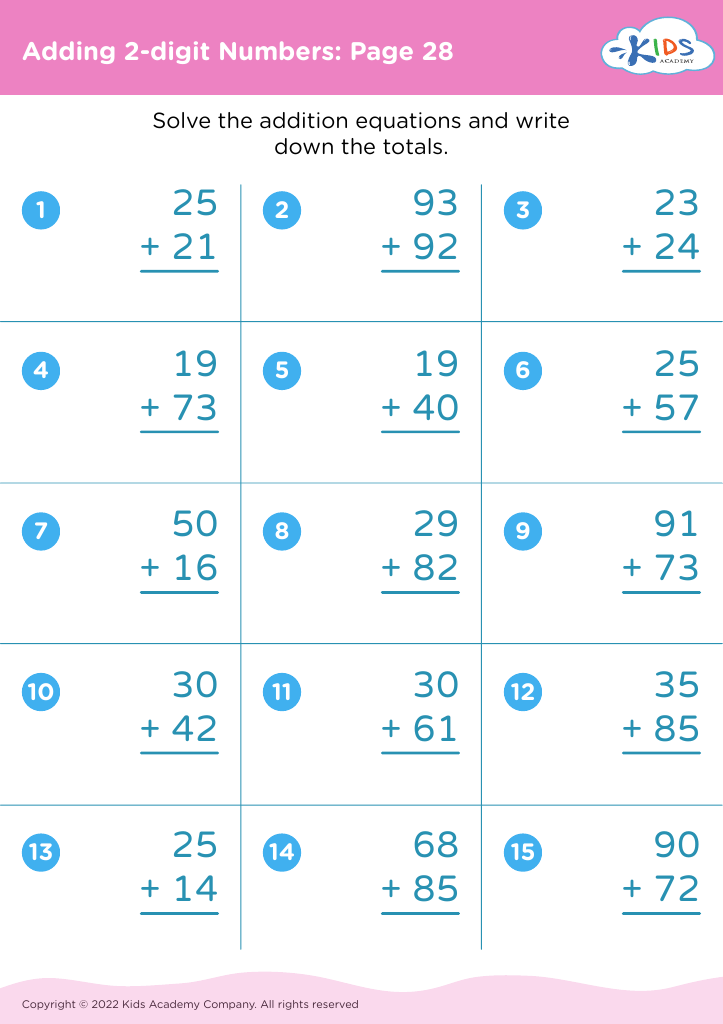
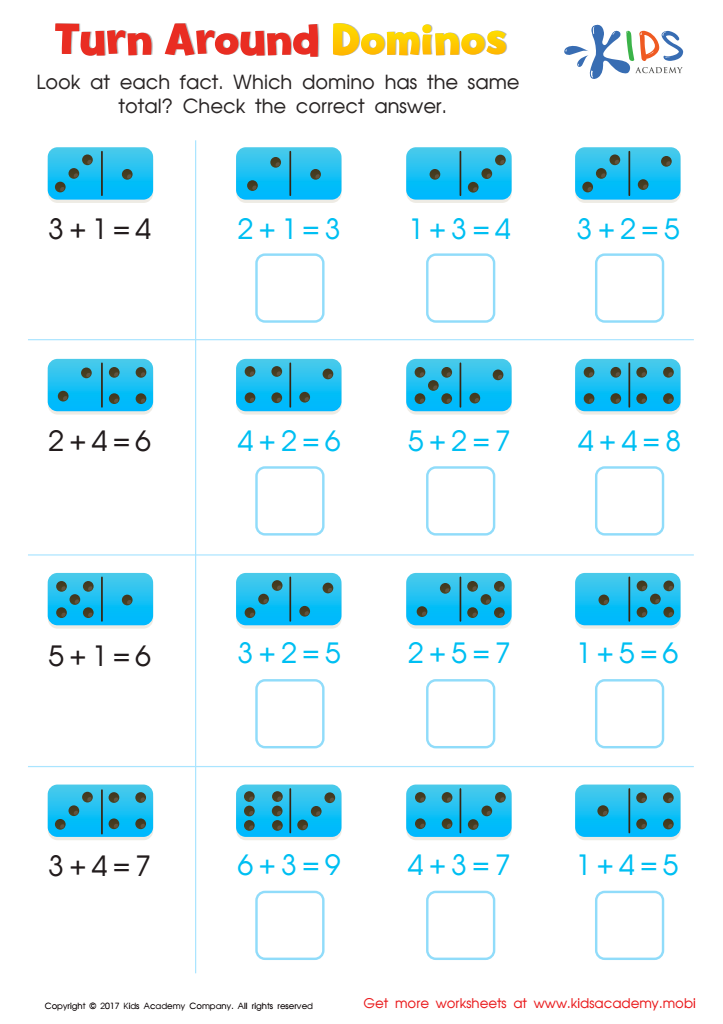
Turn Around Dominos Worksheet
 Assign to My Students
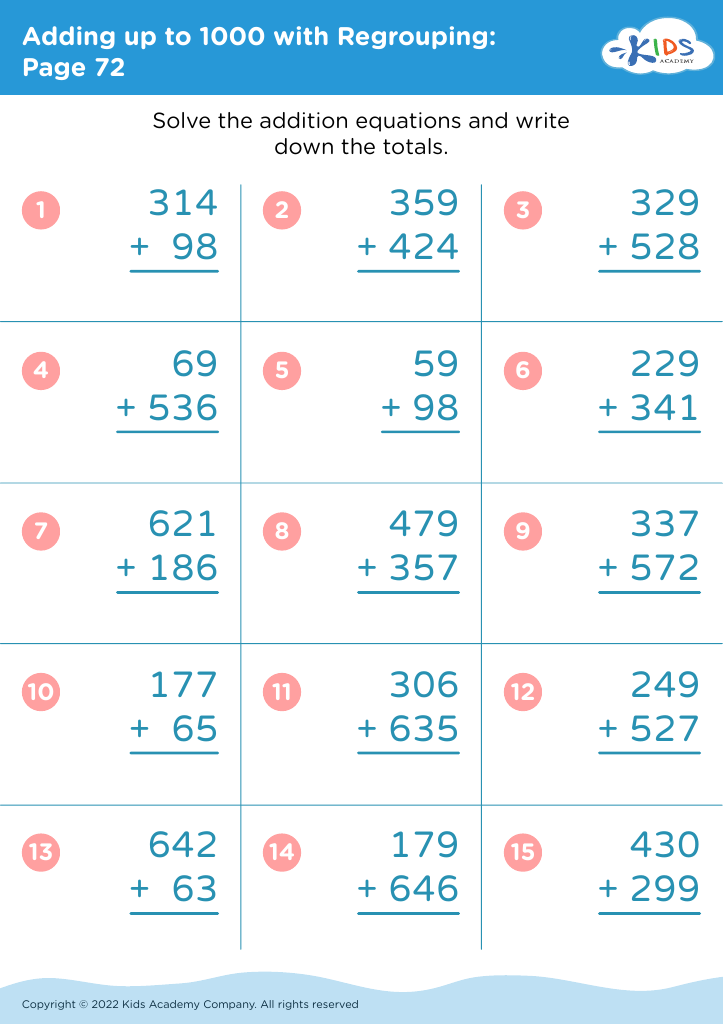
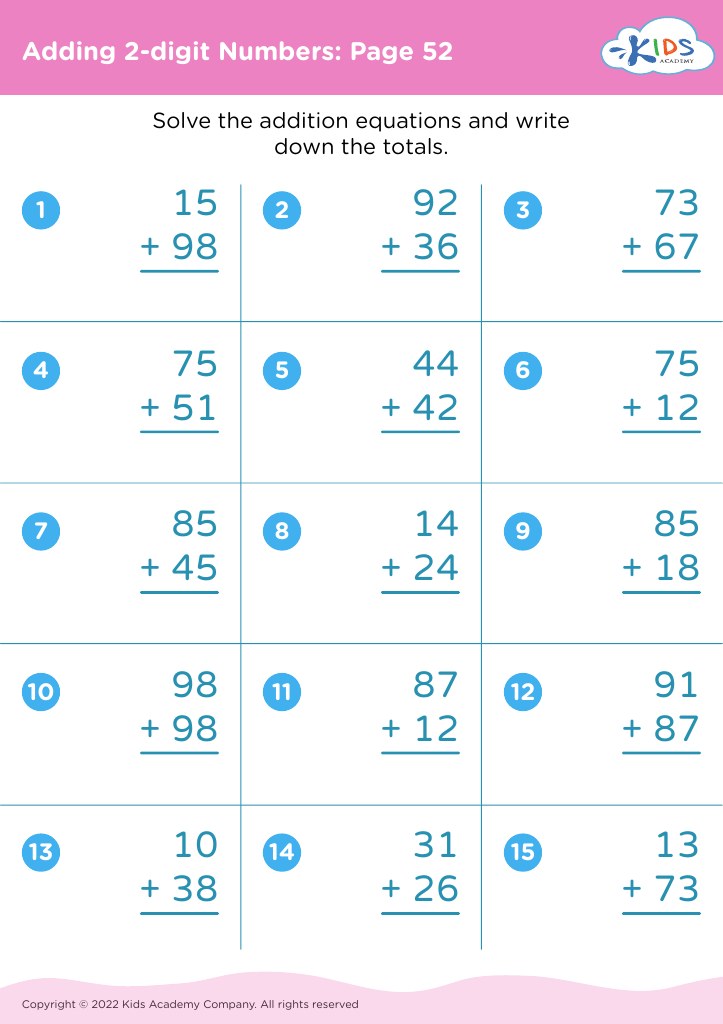
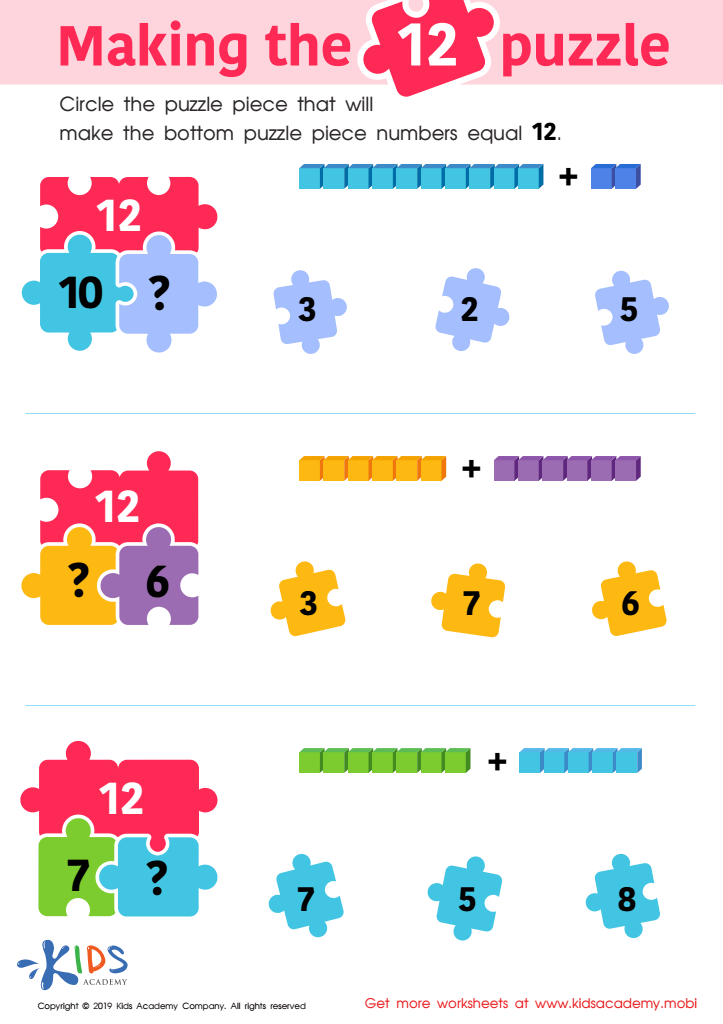
Making the 12 Puzzle Worksheet
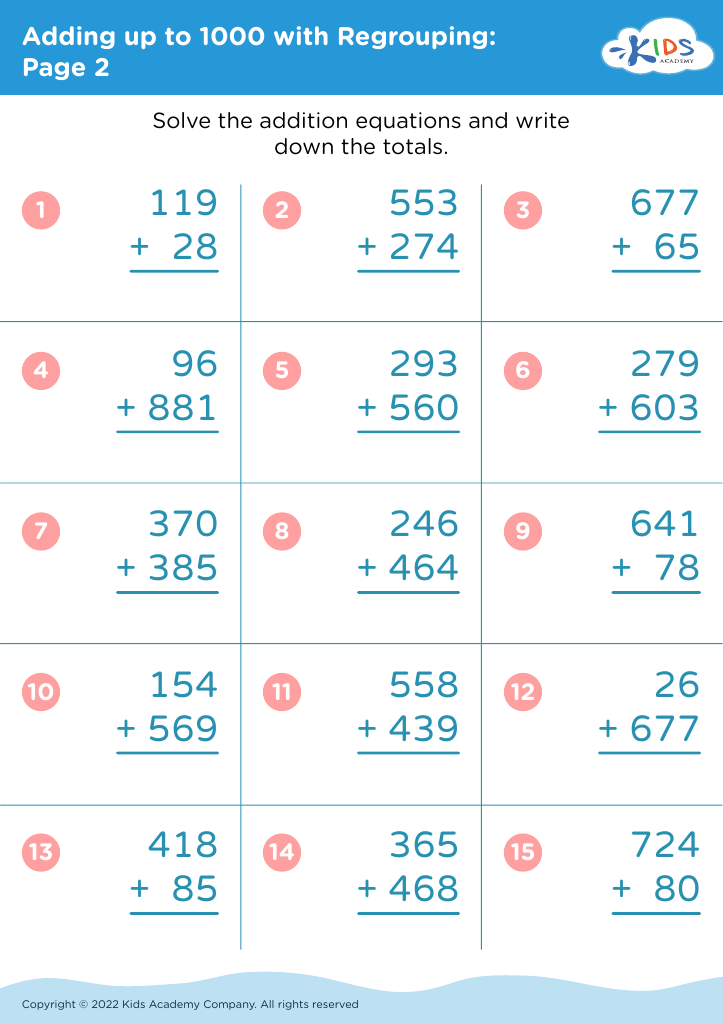








Logical thinking and addition are foundational skills that play a crucial role in a child's overall cognitive development, particularly for children aged 5 to 8. During this age, children are developing critical thinking abilities that allow them to approach problems systematically. Logical thinking helps children analyze situations, make connections, and draw conclusions, essential skills not only in mathematics but also in everyday life.
Encouraging logical thinking alongside addition helps students grasp the underlying principles of mathematics rather than just memorizing facts. It fosters a deeper understanding of number relationships and problem-solving strategies. For instance, instead of simply adding numbers, children who apply logical thinking can discern patterns, utilize strategies like grouping, and even approach word problems with increased confidence.
Moreover, the skills acquired through logical thinking and addition form the basis for more complex mathematical concepts in later grades. By nurturing these abilities early on, parents and teachers can build a strong foundation for academic success. Additionally, improved logical thinking enhances decision-making skills and promotes independent learning, empowering children to tackle challenges confidently both inside and outside the classroom. Thus, investing in these competencies is crucial for holistic development.








