Numeracy skills Addition Worksheets for Ages 5-8
10 filtered results
-
From - To
Discover a vibrant selection of Numeracy Skills Addition Worksheets designed for children aged 5-8 at Kids Academy. These engaging printables support young learners in mastering basic addition through colorful activities and fun challenges. Created by educational experts, the worksheets focus on enhancing mathematical thinking, counting abilities, and problem-solving skills. Perfect for at-home practice or classroom use, these exercises help build a strong foundation in numeracy, ensuring your child gains confidence and expertise in addition. Unlock your child's potential and make learning enjoyable with our expertly crafted addition worksheets!
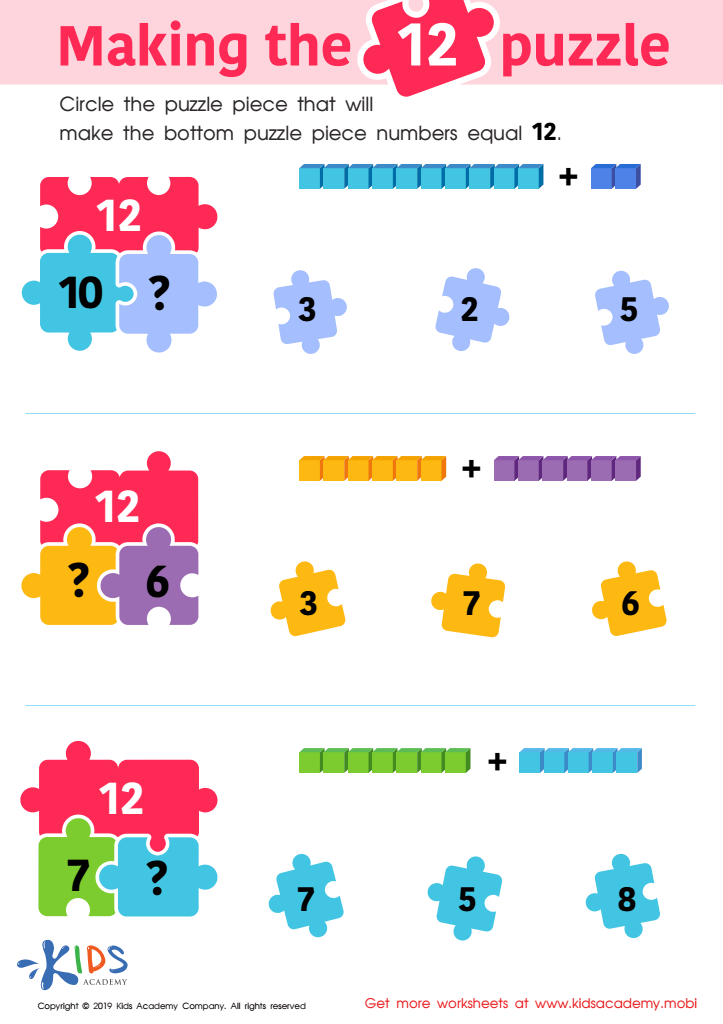
Making the 12 Puzzle Worksheet
 Assign to My Students
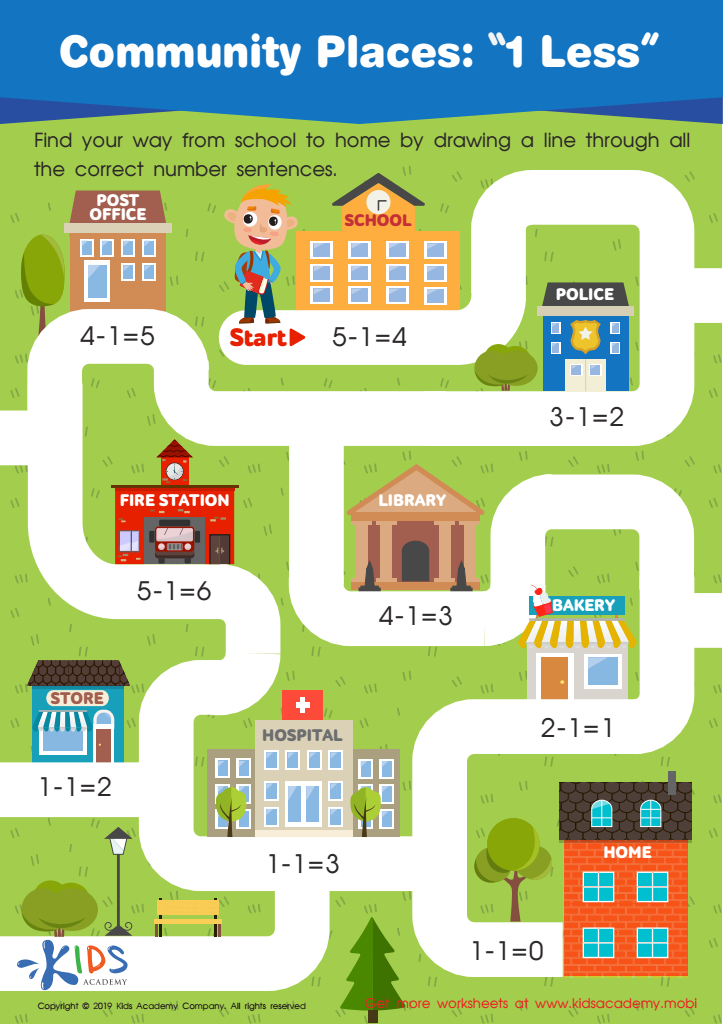
Community Places: 1 Less Worksheet
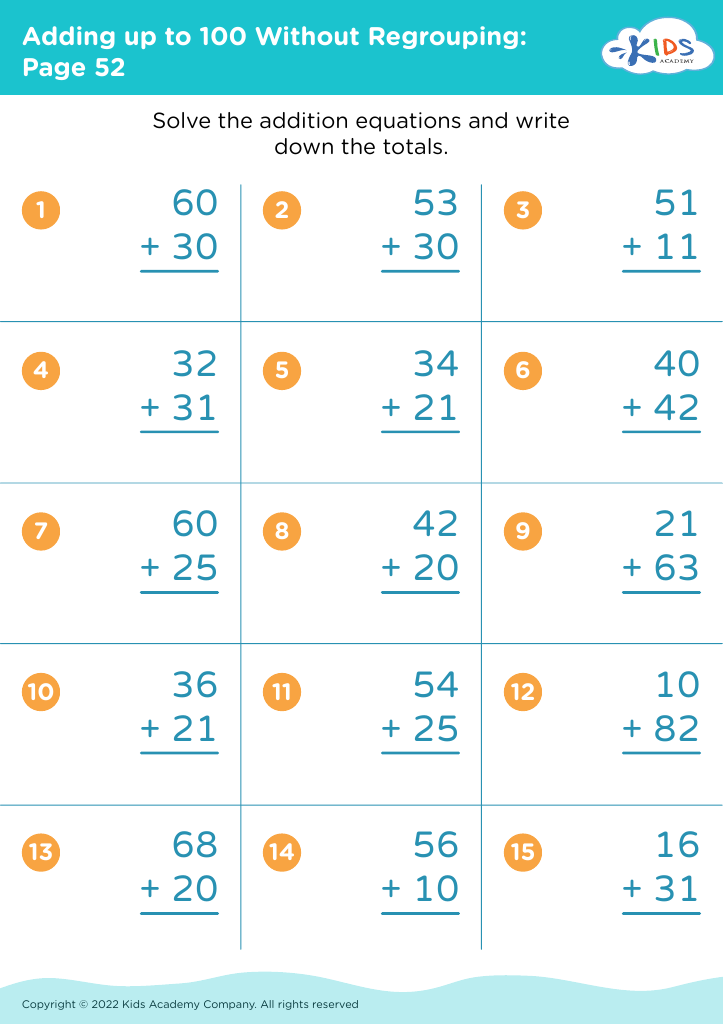







.jpg)
Numeracy skills, particularly addition, play a fundamental role in a child’s early development and future academic success. For ages 5-8, mastering addition is not just about performing well in mathematics, it sets the foundation for logical thinking, problem-solving abilities, and real-life skills. Research shows that early math proficiency often predicts higher academic achievement in later years, more so than early reading skills.
For parents and teachers, focusing on addition skills helps children understand the concept of numbers and their relationships. This comprehension transforms abstract numbers into meaningful concepts, enabling children to tackle more complex mathematical operations as they advance in their education. Activities like adding blocks, counting coins, or simple word problems make learning interactive and enjoyable, fostering a positive attitude toward math.
In everyday life, addition is indispensable—from counting toys to calculating expenses. Proficiency in addition fosters confidence and autonomy, empowering children to navigate the world more independently. Additionally, early math skills can boost self-esteem as children experience the joy of overcoming challenges and mastering new skills.
By emphasizing addition skills at a young age, parents and teachers can ensure a strong mathematical foundation, promoting cognitive development and academic success, while equipping children with essential life skills.








