
Reinforce math concepts Addition Worksheets for Ages 5-8
3 filtered results
Difficulty Level
Grade
Age
-
From - To
Subject
Activity
Standards
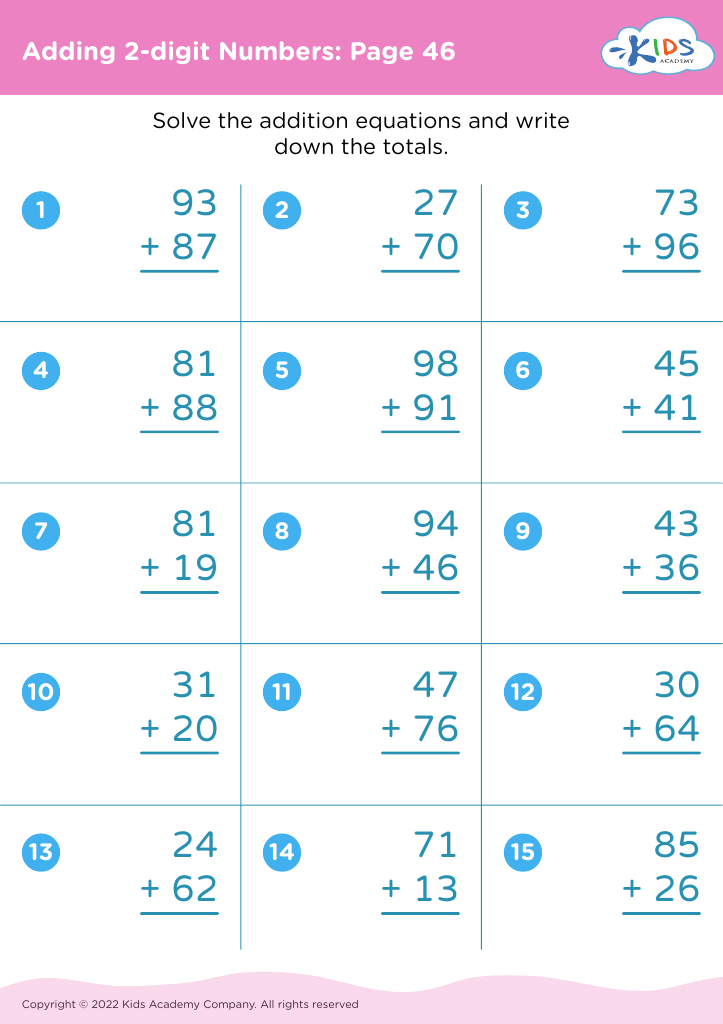
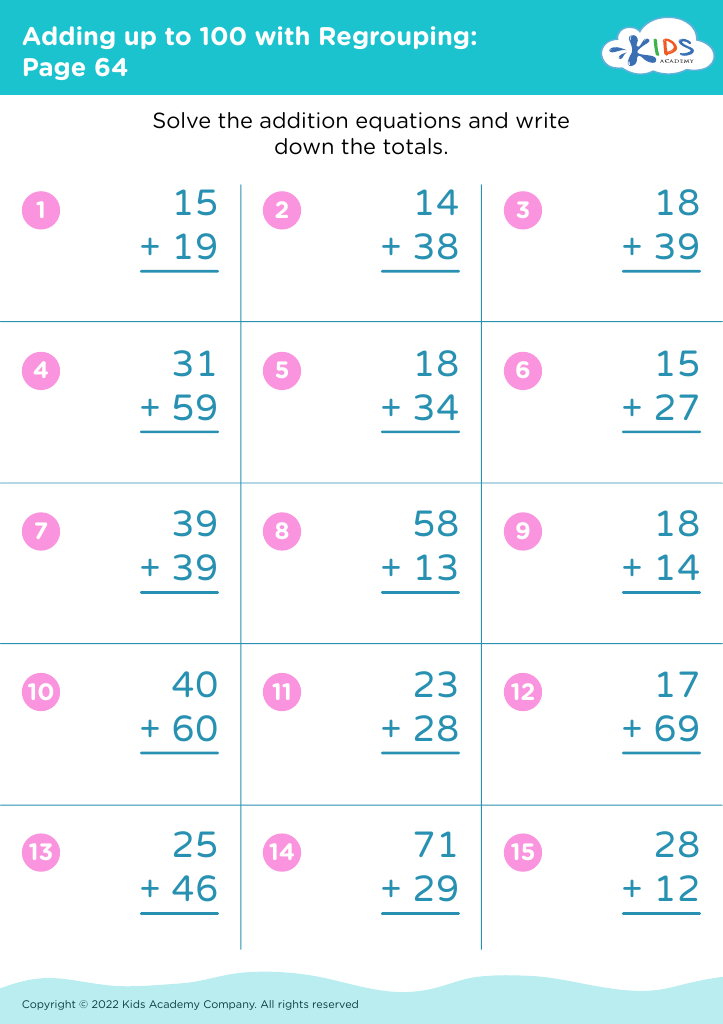
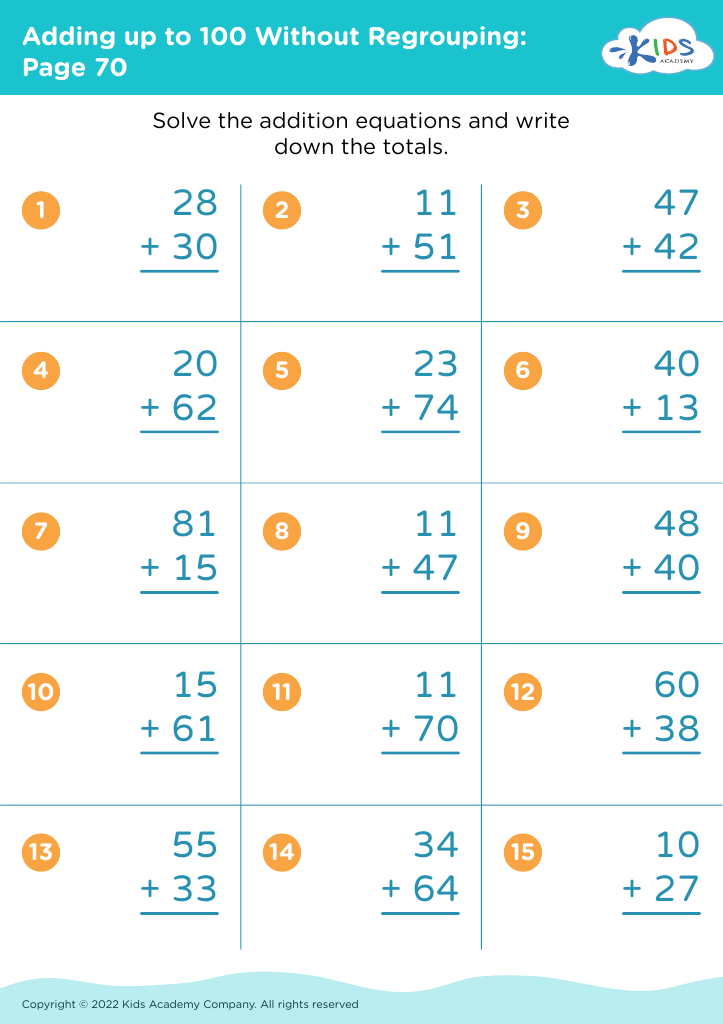
Enhance your child's understanding of addition with our engaging Reinforce Math Concepts Addition Worksheets tailored for ages 5-8. These worksheets provide a fun and interactive approach to learning basic addition skills, helping young learners master the fundamentals while building confidence. Each activity is designed to reinforce key concepts through colorful illustrations and relatable scenarios, making math enjoyable and accessible. Perfect for use at home or in the classroom, these worksheets promote not only arithmetic skills but also critical thinking and problem-solving abilities. Dive into a world of educational fun and watch your child flourish in math with our thoughtfully crafted resources!
Favorites
With answer key
Interactive
Join Kids Academy for Free
Who is primarily going to use this learning content?








Reinforcing math concepts like addition for children aged 5-8 is crucial for several reasons. First, this foundational skill sets the stage for more advanced mathematical concepts. When children master addition, they gain confidence in their abilities, making them more willing to engage with challenging material in the future. Consistent reinforcement helps deepen understanding, transforming rote memorization into a genuine comprehension of the concept.
Moreover, addition is not limited to academic contexts; it plays a significant role in daily life. Children will encounter addition in situations like counting money, telling time, or measuring ingredients. By reinforcing addition skills early, parents and teachers equip children with tools they’ll use throughout their lives.
Additionally, nurturing an interest in math at a young age helps develop critical thinking and problem-solving skills. Engaging and interactive practices can make learning enjoyable, transforming math anxiety into enthusiasm.
Finally, reinforcing these concepts can foster a positive attitude toward education and can bridge gaps in learning. With early support, children are more likely to excel not just in mathematics but in broader academic areas as well. Ultimately, a strong grasp of addition opens doors for future academic success and practical life skills.








