
Visual discrimination Addition Worksheets for Ages 5-8
5 filtered results
Difficulty Level
Grade
Age
-
From - To
Subject
Activity
Standards
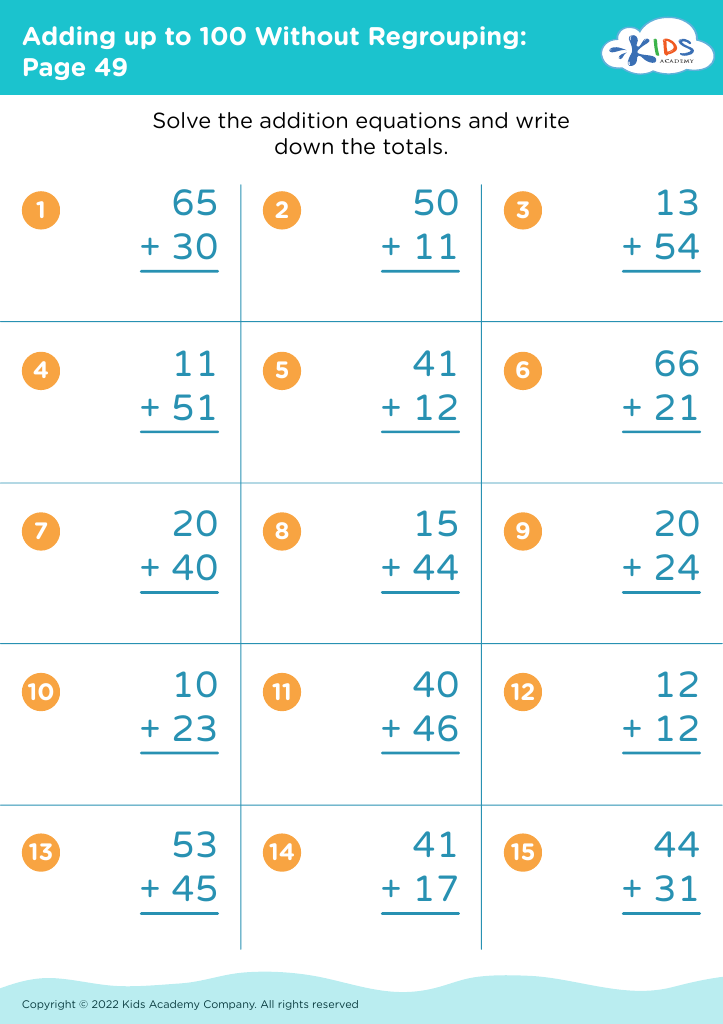
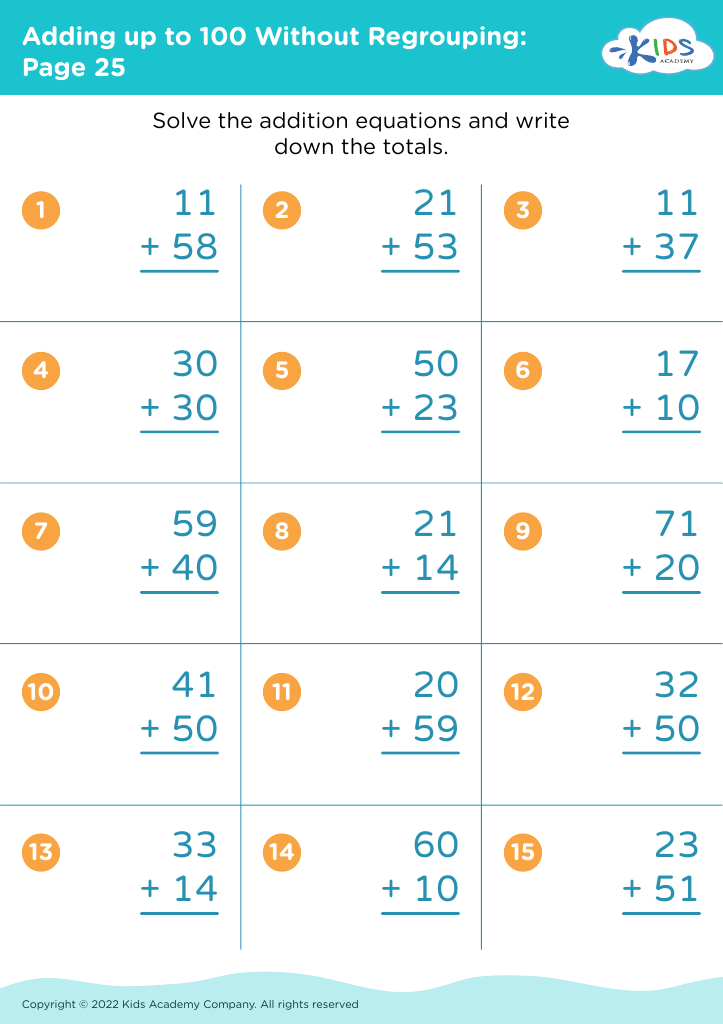
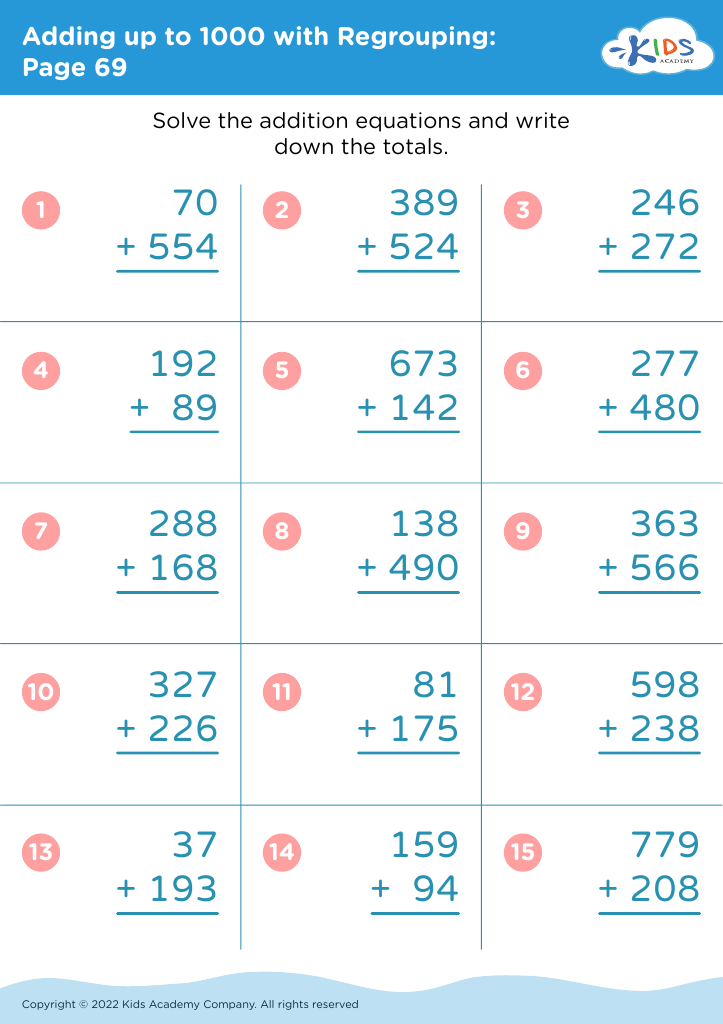
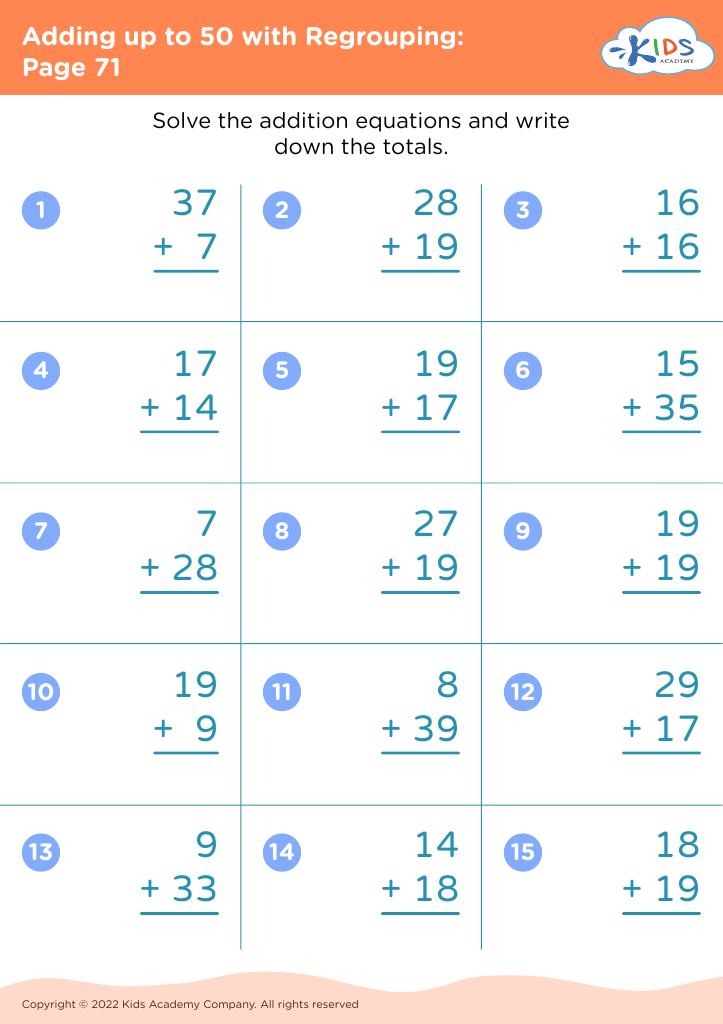
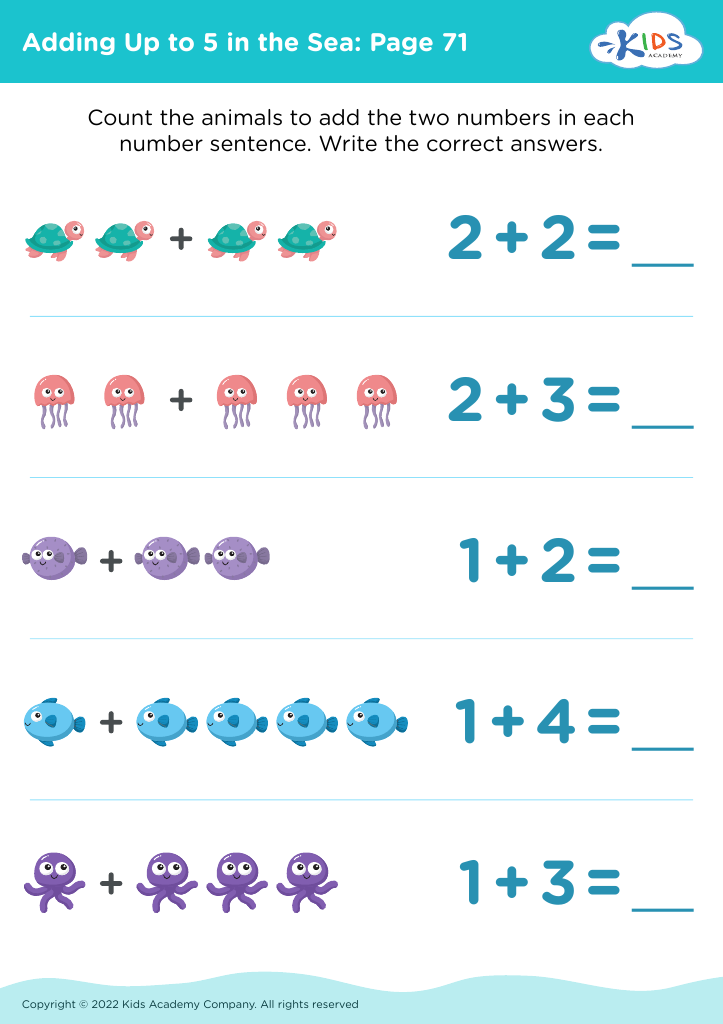
Enhance your child's math skills with our Visual Discrimination Addition Worksheets designed for ages 5-8! These engaging worksheets help young learners strengthen their ability to identify differences and similarities among various visual elements while practicing addition. By combining critical thinking and mathematical concepts, children will develop essential cognitive skills necessary for problem-solving. Our worksheets are thoughtfully crafted to make learning fun and interactive, ensuring your child stays motivated. Perfect for classroom or home use, these resources provide a solid foundation in early math while fostering visual discrimination. Download your printable worksheets today and watch your child's confidence soar in mathematics!
Favorites
With answer key
Interactive
Join Kids Academy for Free
Who is primarily going to use this learning content?








Visual discrimination is a crucial skill for children aged 5 to 8, as it involves the ability to recognize and interpret visual cues, which are critical for learning foundational concepts like addition. For parents and teachers, fostering this skill plays an essential role in a child's academic development. Enhanced visual discrimination facilitates better understanding of numbers, shapes, and patterns, which are integral to mathematics. When children can easily distinguish between different quantities and slots, they are more likely to grasp basic addition concepts, leading to greater success in math.
Additionally, visual discrimination promotes overall cognitive development, as it involves attention, memory, and categorization. By practicing these skills, children can improve their critical thinking and problem-solving abilities, which will continue to support their learning across various subjects.
Moreover, engaging in visual discrimination tasks during learning can make mathematics more enjoyable and interactive. Parents and teachers can create fun activities that combine visual learning with addition, enhancing both motivation and engagement. In summary, fostering visual discrimination in early learners helps establish a strong foundation in math, nurtures cognitive skills, and lays the groundwork for continuous academic growth and enthusiasm for learning.








